• Blog
  • About
  • Press
  • Privacy

Let’s be social!

  • Skip to primary navigation
  • Skip to main content
  • Skip to primary sidebar
  • Skip to footer
Sawdust 2 Stitches

Sawdust 2 Stitches

  • Tutorials
    • Around the House
    • Organization
    • Wall Decor
    • Sewing
  • Makeovers
    • R.V.
    • Room Makeover
    • Furniture Makeover
    • Decor Makeover
  • Build Plans
    • Small Builds
    • Wall Decor
    • Dresser
    • Tables
    • Seating
    • Shelving
    • Hidden Compartment
  • Seasonal
    • Summer
    • Spring
    • Fall
    • Winter
  • Home Tours
    • First Home
    • Current Home
    • 70’s Ranch Home
  • Workshop

Blog

How to: R.V. Curtains

May 12, 2020

*This post contains affiliate links and is paid for in part by DAP partnership.

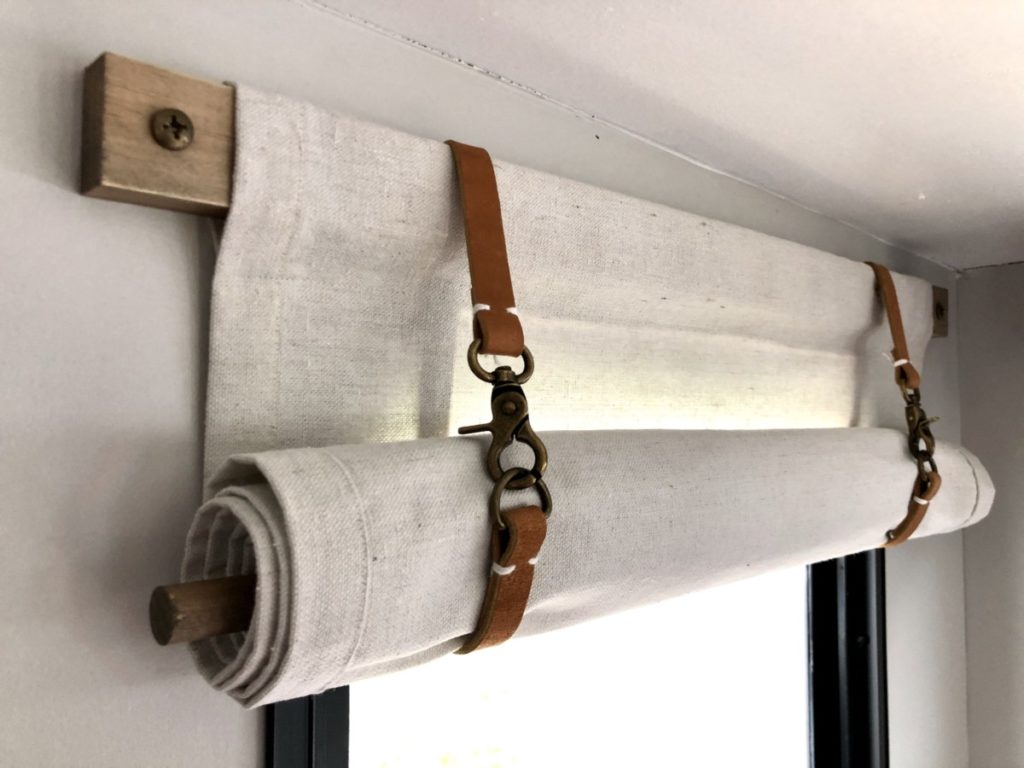
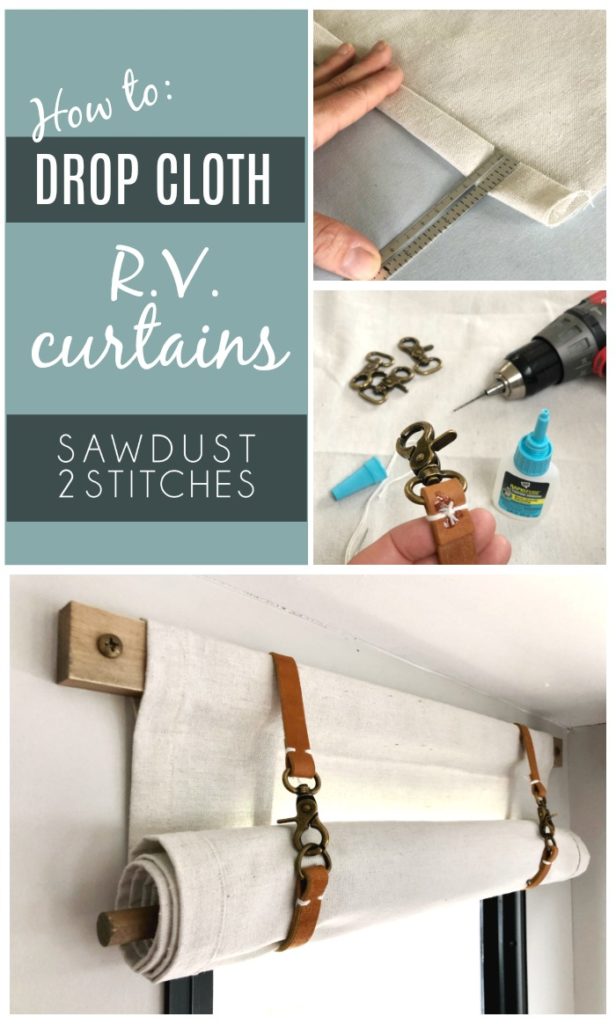
We are currently in the midst of our second camper renovation. (You can see our first one here.) There have been plenty of decorative decisions to be made, but the fate of the R.V. curtains had already been decided. I made these curtains for our last R.V. and I absolutely loved them! Actually it would seem a ton of readers loved them, so I finally took the time to write up the process I used to create these R.V. curtains that add a ton of character.
Tools Used

  • Rotary Cutter
  • Cutting Mat
  • Straight Edge
  • Sewing Machine
  • Upholstery Needle
  • Straight Pins
  • Drill
  • Saw
  • 1/8″ Drill Bit
  • 1/4″ Drill Bit

Supplies Needed

  • Drop Cloth
  • Brass Lobster Clasp
  • 3/4 Brass D- Rings
  • 5/8″ Leather Strap – Amazon
  • White String (Thin)
  • DAP Rapid Fuse
  • 1 1/4″ x 1/4″ Button Head Screws
  • Gold Spray Paint
  • Oil Rubbed Bronze Spray Paint
  • 1″x 2″ Select Prime Boards
  • 3/4″ Dowel Rods

R.V. Curtain Panel Material

Measure the total width you would like your curtain to be. (I determined the width of mine by measuring the window and adding an additional 1 inch on each side to allow some overhang.)

Window Width” + Overhang “(Opt.) + 1.5″ Hem + 1.5” Hem = Fabric Width

Window Height ” + Over Hang “(Opt.) + 6.5″ Top Rod Pocket + 5” Dowel Rod Pocket = Fabric Height
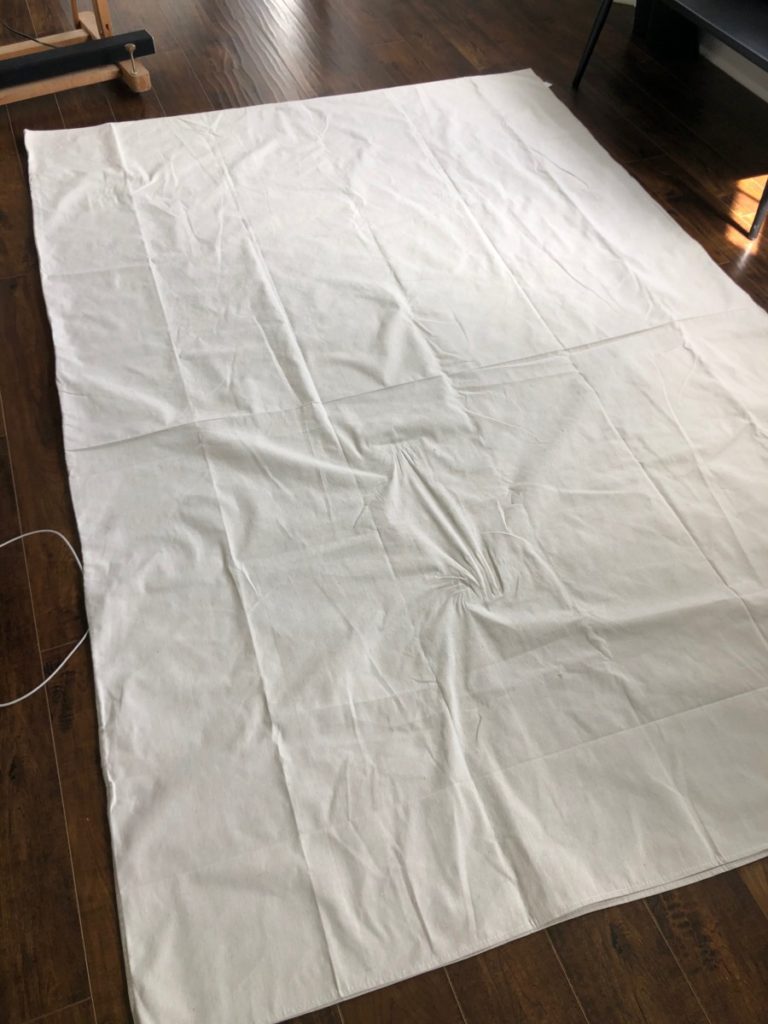
How to sew a R.V./ Toy Hauler  curtain using drop cloths.

After measuring, double, and triple checking we are ready to cut.  Before cutting any piece of fabric I like to iron the fabric.  When cutting large pieces of fabric I use a rotary cutter, a straight edge and cutting mat.  If you do not have access to these tools,  you can always use scissors, a tape measurement and all of your patience. 
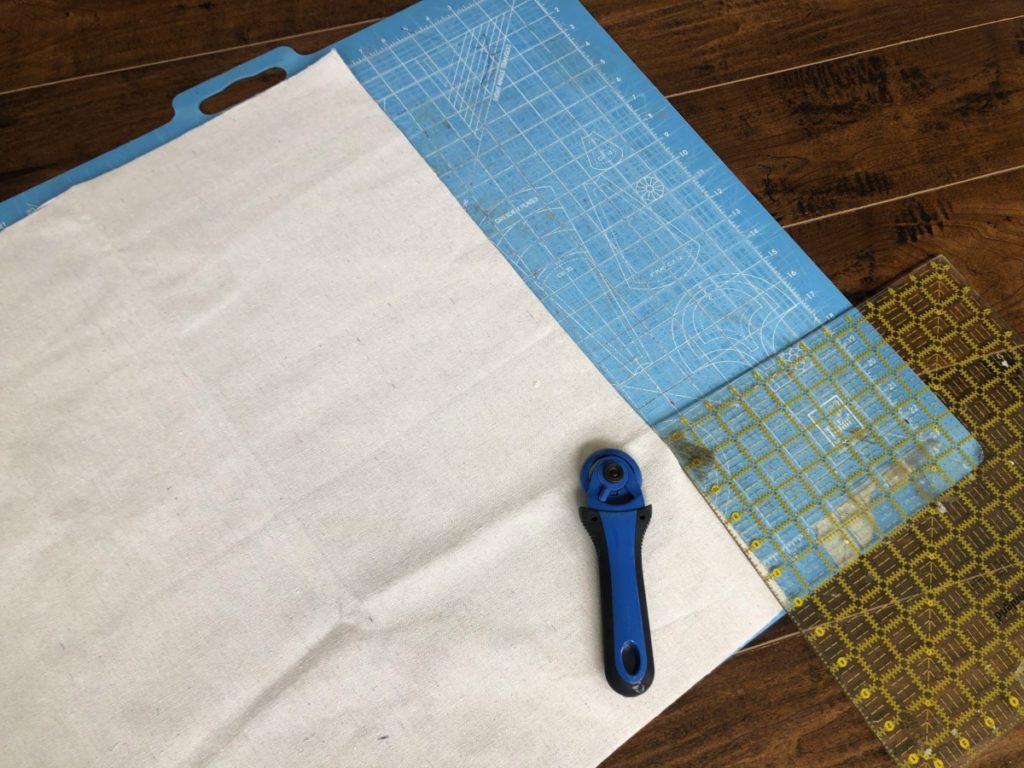
How to sew a R.V./ Toy Hauler  curtain using drop cloths.

R.V. Curtain: Side Hem

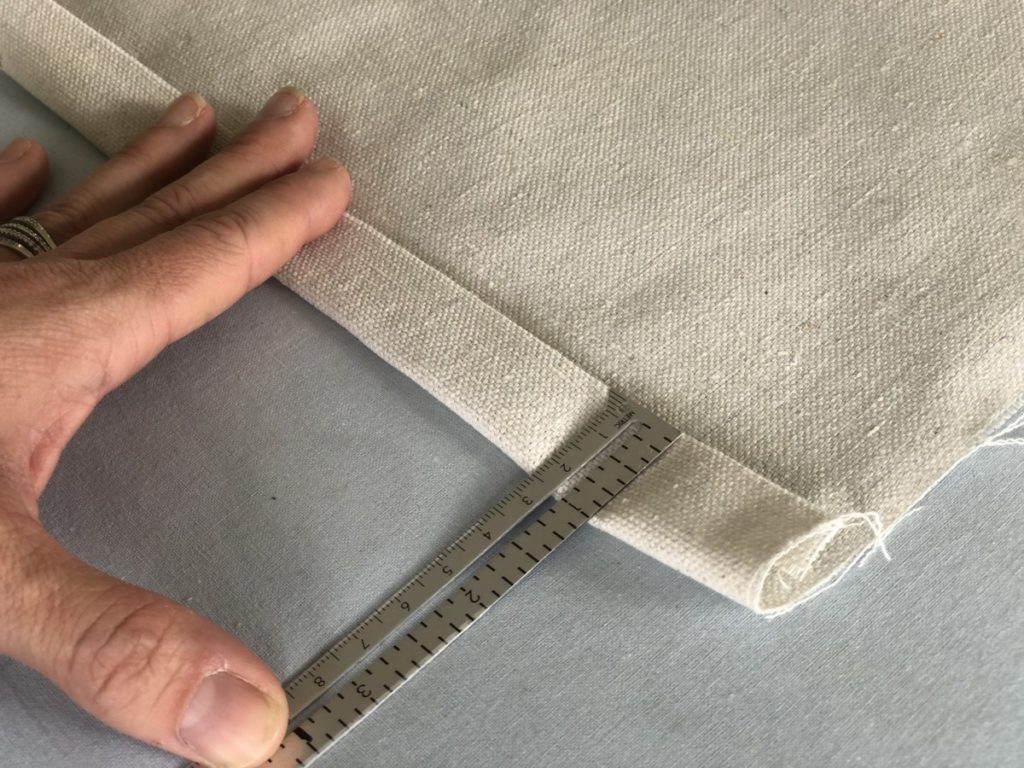
Once the fabric is cut establish the orientation of the curtain. We are going to being by hemming the sides of the curtains. (Not the top and bottom.)
How to sew a R.V./ Toy Hauler  curtain using drop cloths.

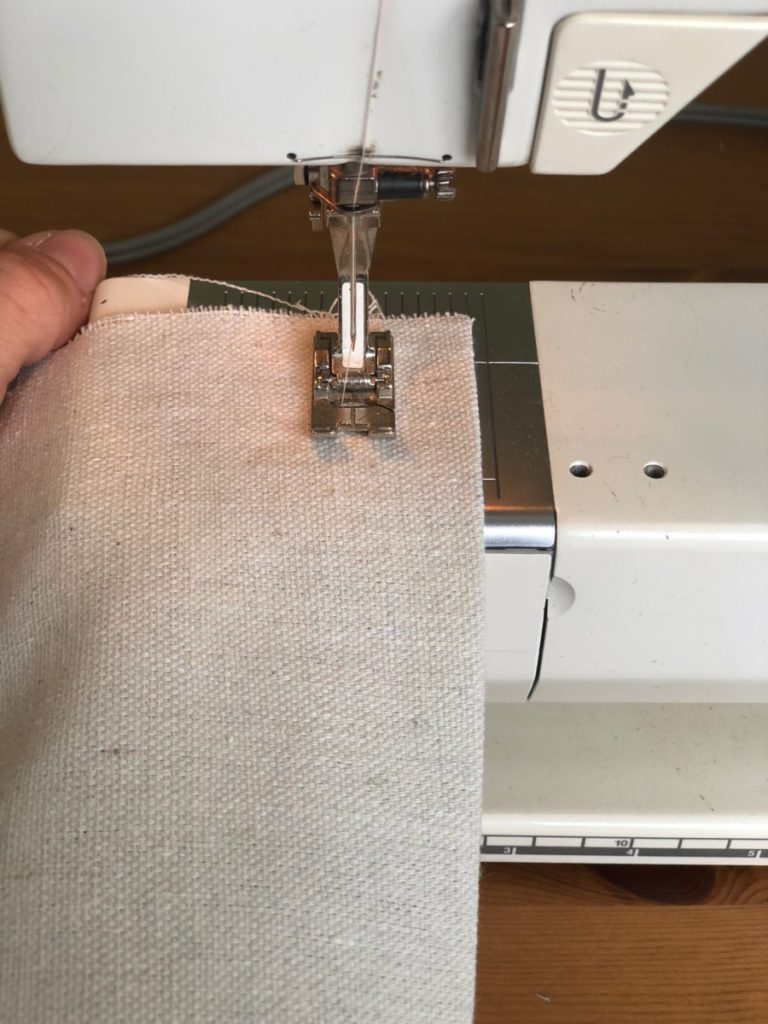
When hemming the sides I turned over the edge 1/2″ and then ironed it to create a crease. After that I did this same process again, only this time I turned it down 1″ then ironed to solidify the fold.
How to sew a R.V./ Toy Hauler  curtain using drop cloths.

Once the sides were both ironed down I proceeded to stitched the pressed hem. I stitched about 3/4″ from the edge on the front side of the curtain. I repeated this on both sides of the curtain.

R.V. Curtain: Top Hem (1×2 Pocket)

Next up is the top pocket that will house the 1 x 2″ board that will serve as the curtain rod.

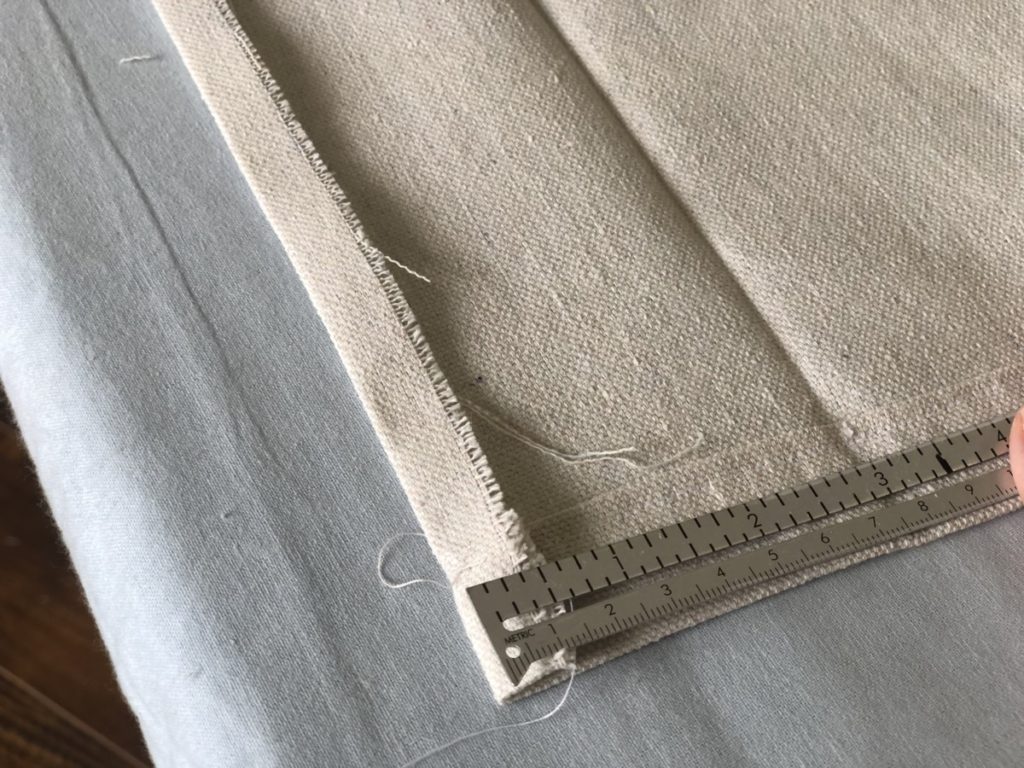
To do this I turned down the top of the fabric 1/2″ and ironed the fold to create a crease.
How to sew a R.V./ Toy Hauler  curtain using drop cloths.

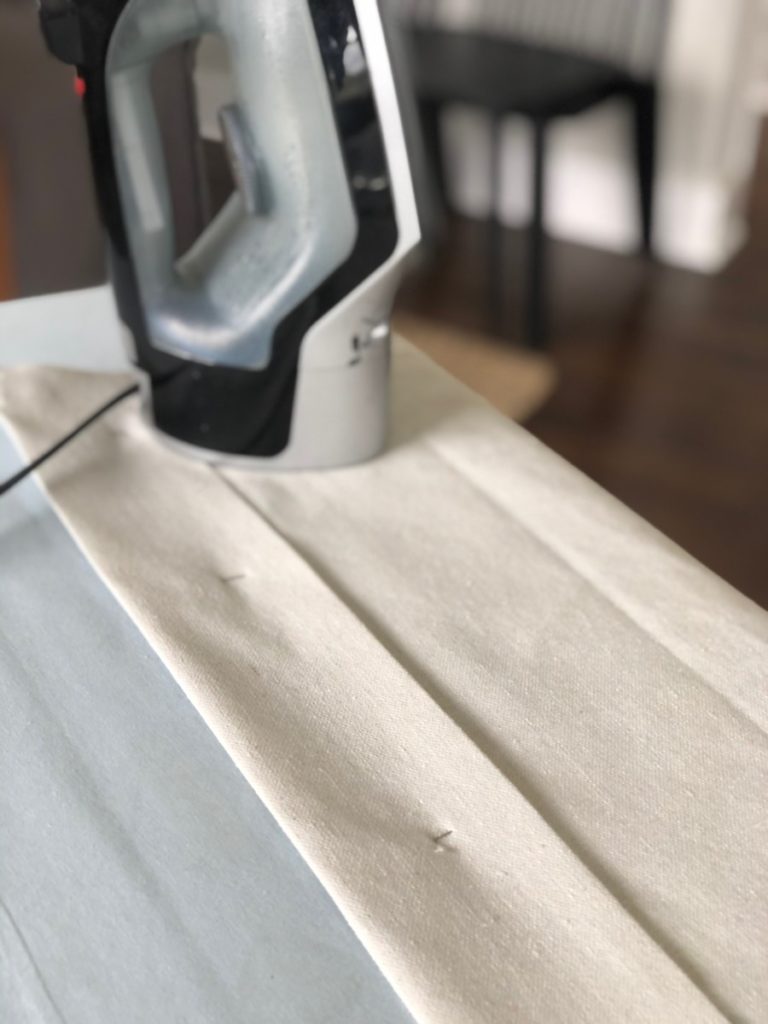
I then turned down the fabric an additional 3″ from the edge of the iron crease, pinned in place, and then ironed again. This will be the pocket that the 1×2″ board will slide in.
How to sew a R.V./ Toy Hauler  curtain using drop cloths.

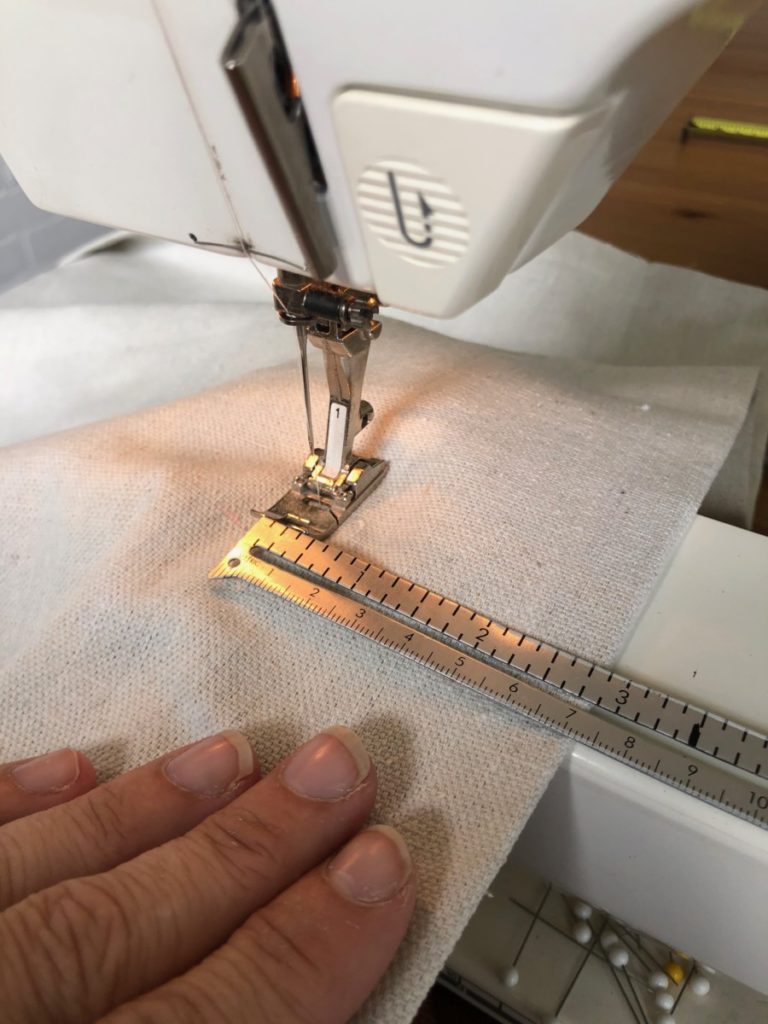
Once securely pinned, flip front side facing up and stitch approximately 2 3/4″ inches from the edge of the fabric. (This will be stitching the fold shut.)
How to sew a R.V./ Toy Hauler  curtain using drop cloths.

R.V. Curtains: Bottom Hem (Rod Pocket)

Next I hemmed the bottom edge while also creating a pocket that would house the dowel rod. I first measured 1 1/2″ from the edge of the fabric, folded up and used and iron to crease the fabric.
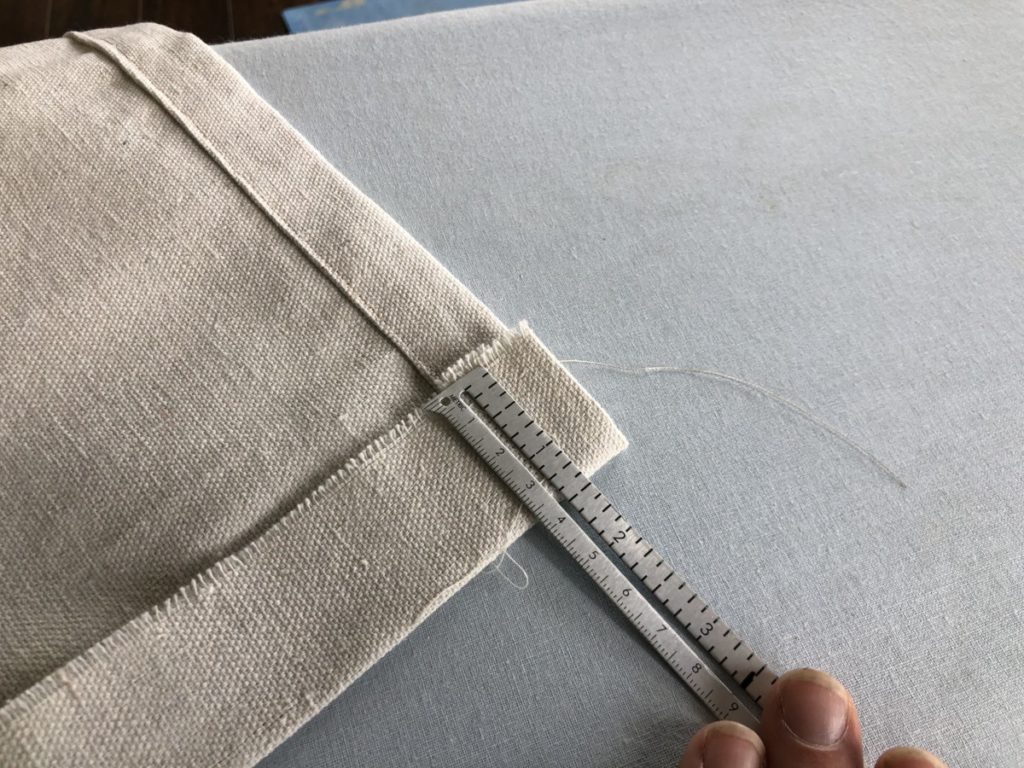
How to sew a R.V./ Toy Hauler  curtain using drop cloths.

I then repeated the same step again, folded up 1 1/2″ from the bottom hem and then used an iron to crease the fabric.
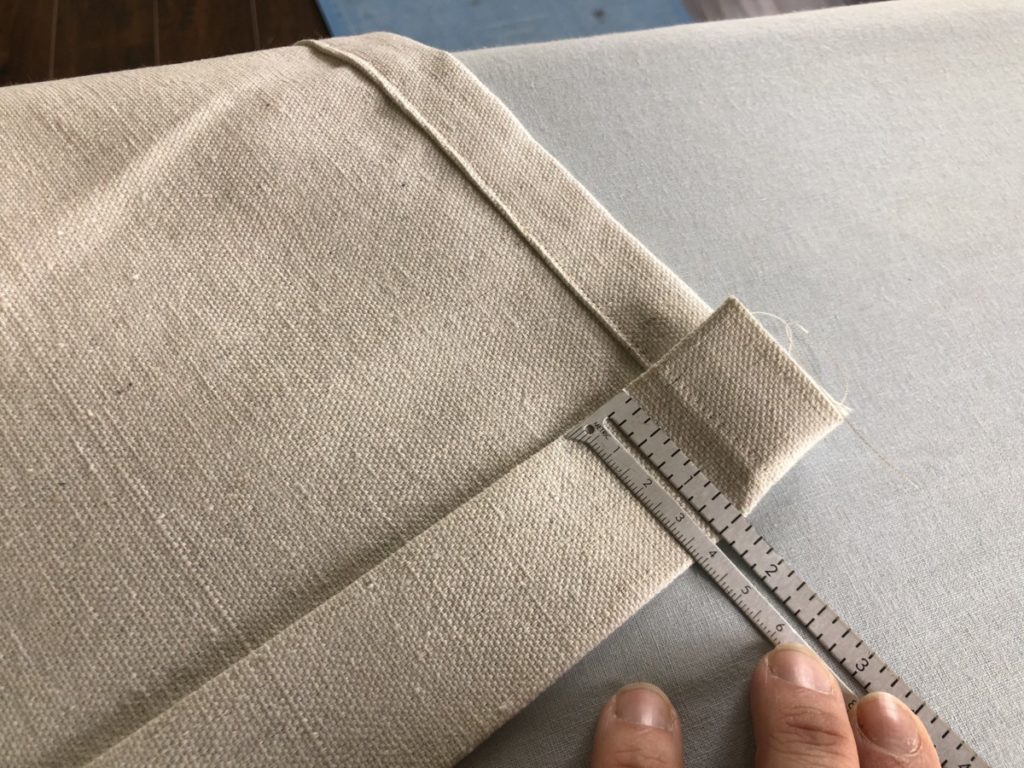
How to sew a R.V./ Toy Hauler  curtain using drop cloths.

Once the hem/pocket was precisely measured and crisply ironed I flipped it front side facing up and ran it through my sewing machine. I stitched approximately 1 1/4″ from the bottom crease. This will create a long pocket for the dowel rod to slide into.
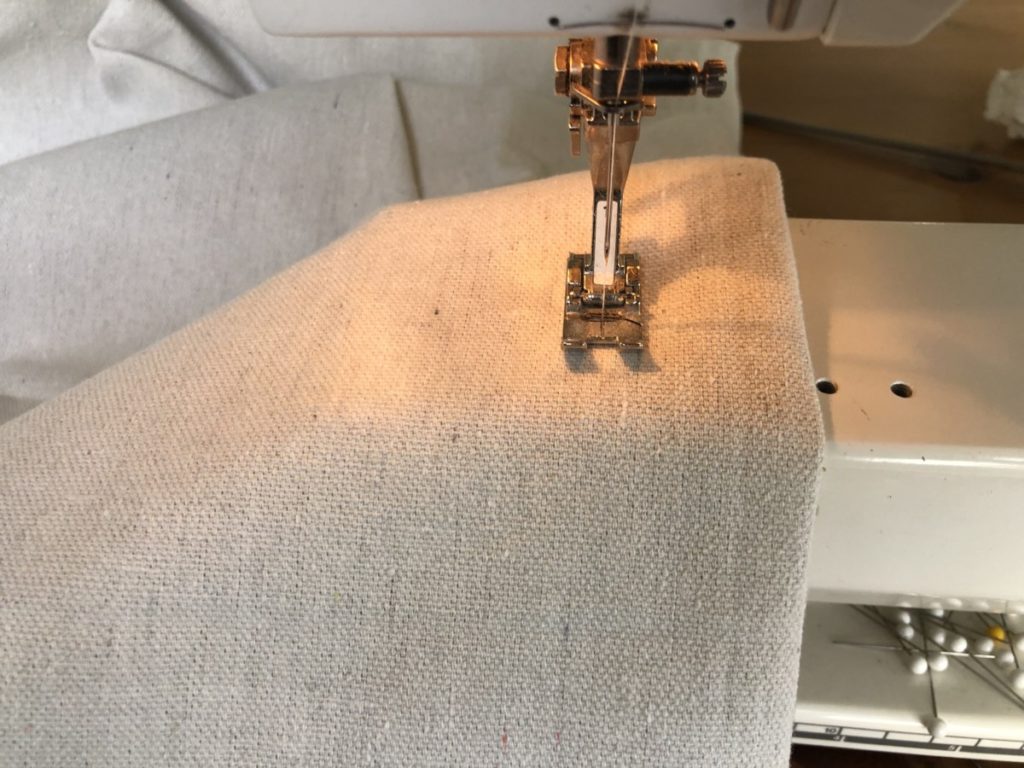
How to sew a R.V./ Toy Hauler  curtain using drop cloths.

R.V. Curtains: Straps

Next up, the straps that will hold the rolled up curtains in place! This is my second camper that I have used this method in and I love it! I have also looked high and low for different options when it comes to hardware and straps and I finally found my favorites. I ordered these leather straps online. The straps are originally 72″ long, I found that I could get two full curtains from one 72″ roll of leather strips. So, I cut the strap into 4 equal parts, creating x4 strips roughly 18″ long.
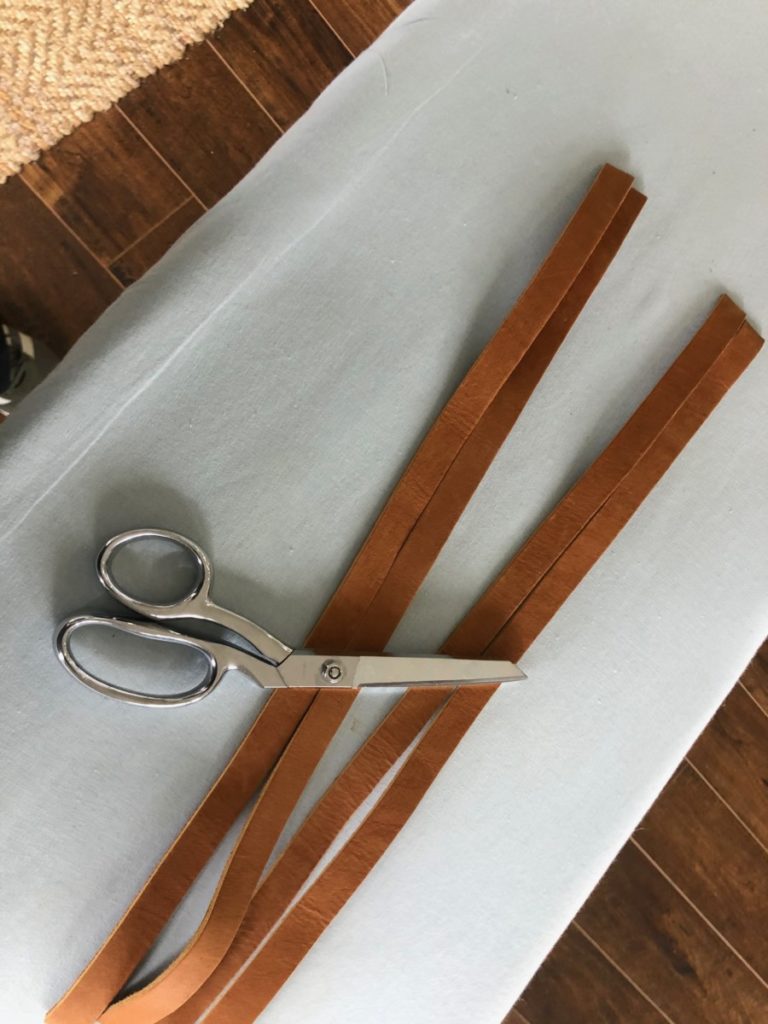
 Creating a leather strap for an r.v. curtain.

Once the straps were cut I headed out to the work shop. While it is possible to sew through a leather strap with a lot of effort and patience, I opted for an easier route… a drill. I turned the strap over on itself and using an 1/8″ drill bit I drilled two sets of holes. I did this on both ends of each strap. So there should be a total of 8 holes in each strap, 4 on each end. (See images below for clarification.)
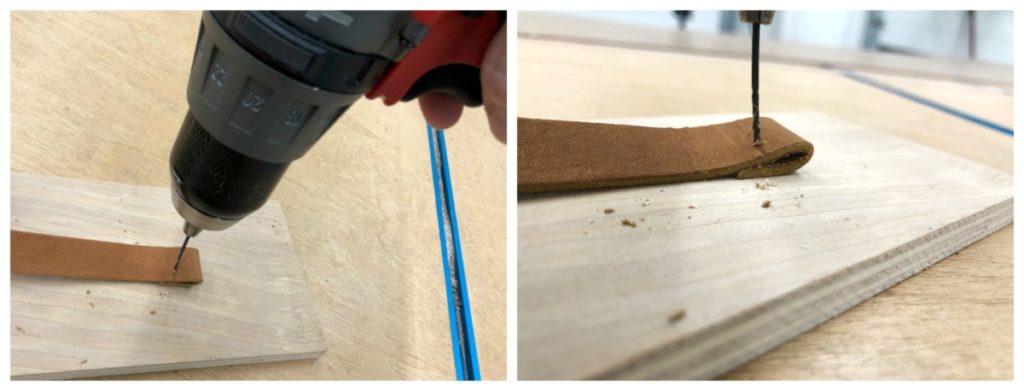
 Creating a leather strap for an r.v. curtain.

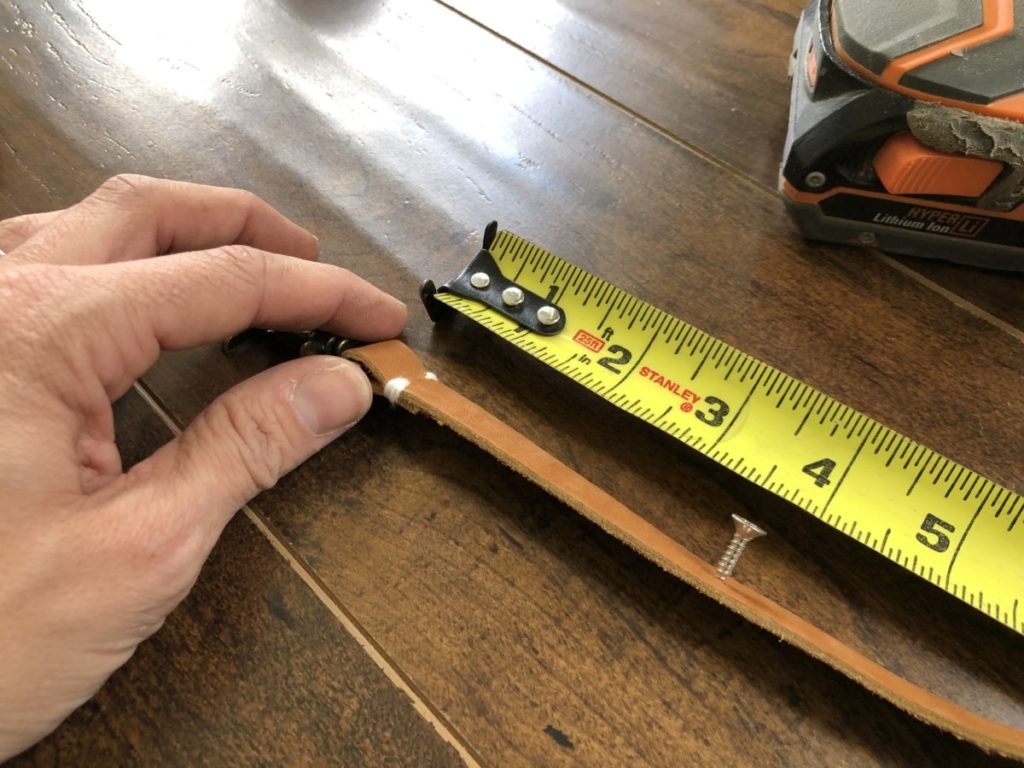
Once all the holes were drilled I was ready to secure the “D-Ring“. Again I searched all over and I found these antique brass ones online. In order to sew these d-rings in place, I used an upholstery needle and some thick thread (Cross-stich floss should do the trick). Below I show the steps I used to sew the d-rings in place.
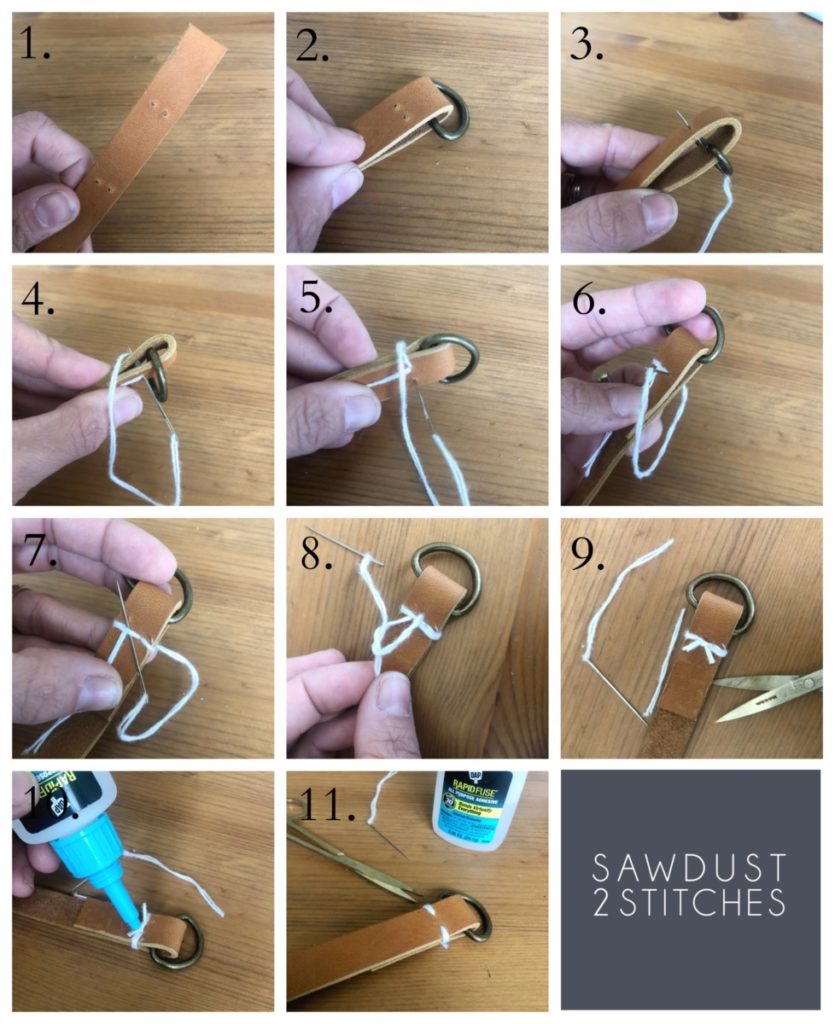
Making a r.v. curtain panel with leather straps.

Once all the d-rings are secured on one end of the strap it is time to install the brass lobster clasp on the opposing end.

Pro tip: I like to secure the final knot with just a dab of DAP RapidFuse glue. It ensures that the knot, and the hardware aren’t going anywhere after all of that hard work!
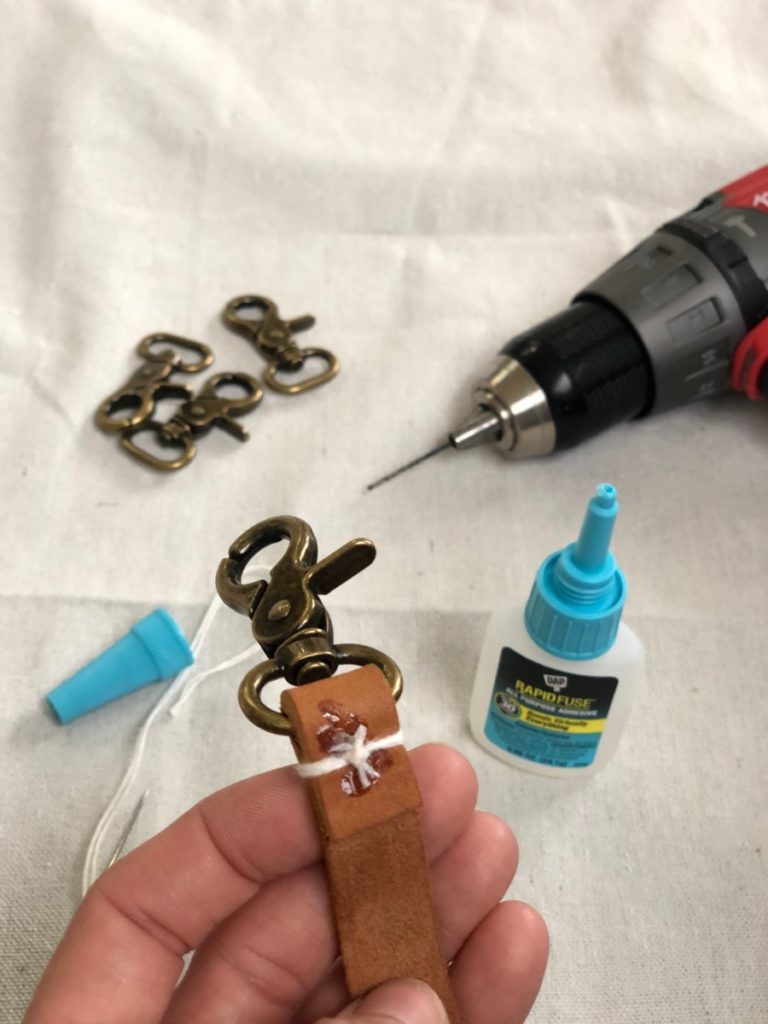
DIY R.V. Toy Hauler curtains with roll-up leather straps and lobster clasps

R.V. Curtains: Installing Rod

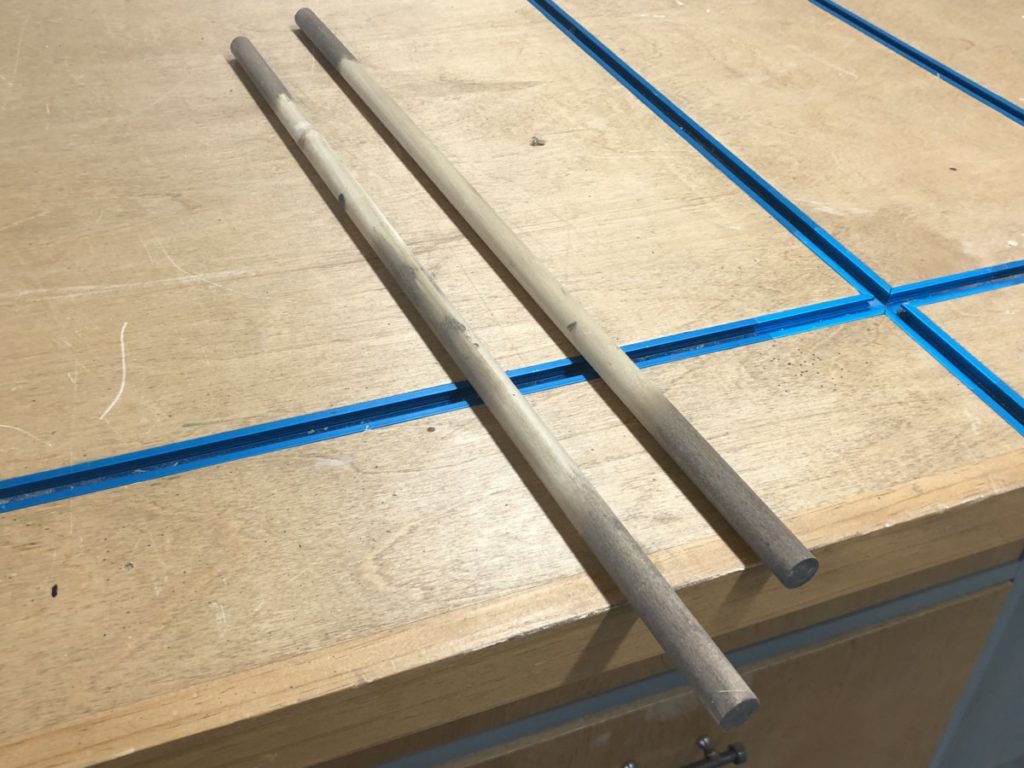
Next up the “curtain rod”. Not really are curtain rod at all, but it is the system by which the curtain panel will hang. For this I used a standard prime 1×2 pine board. To determine the length of my board I measured the finished width of my curtains and added 3 inches. (Allowing 1.5″ to be exposed on both sides.)
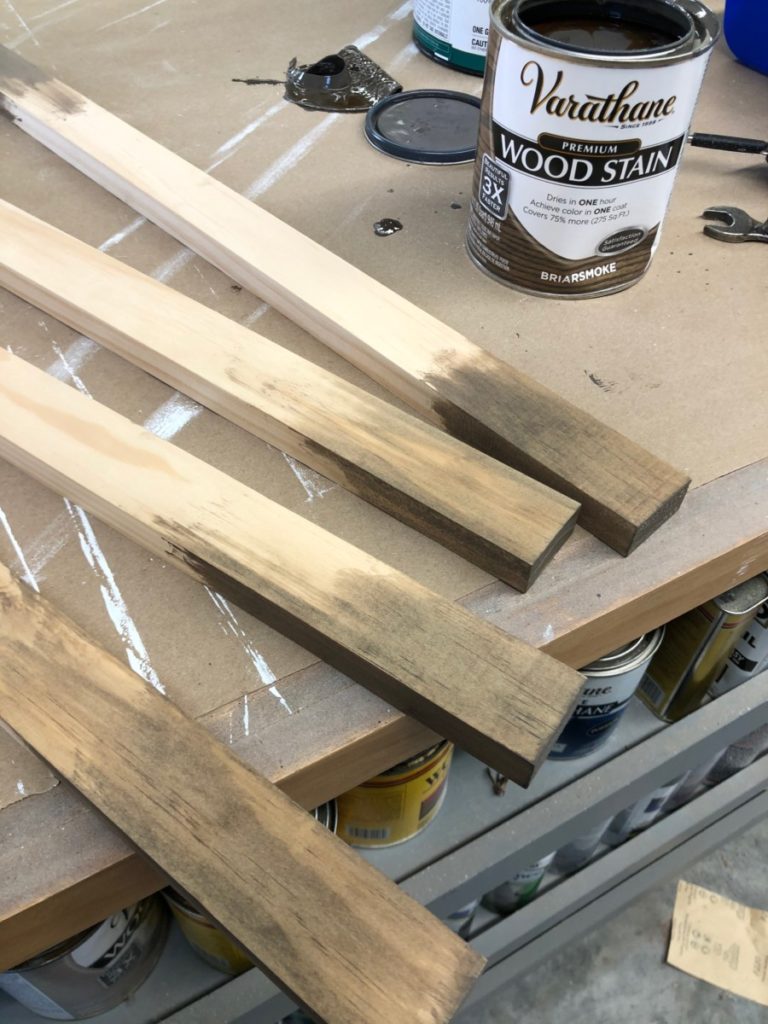
Installing diy r.v. curtains

Before installing pick a stain or paint color of your choosing. I opted for Briarsmoke by Varathane. (You can stain the whole board but only the last few inches on either end will be exposed.)
Installing diy r.v. curtains

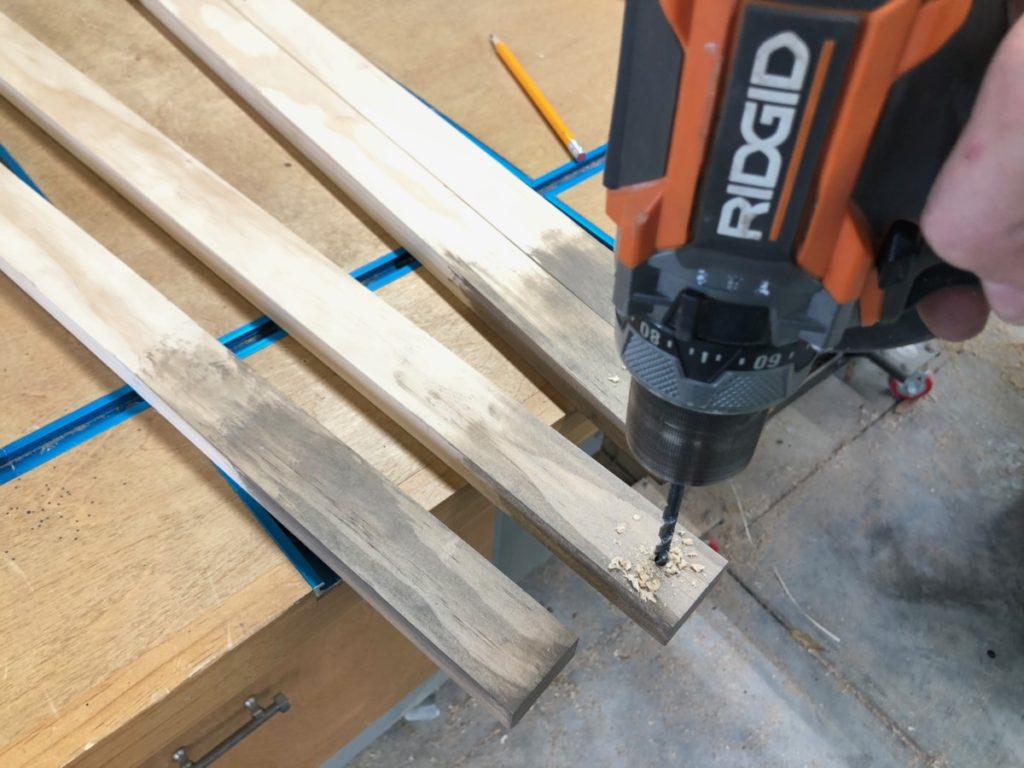
Once the stain was dry, I used a 1/4″ drill bit to pre-drill a hole through the ends of both boards. I placed mine approximately 3/4″ from the end of the board centered. I did this on both ends.
Installing diy r.v. curtains

Prepping Install Hardware

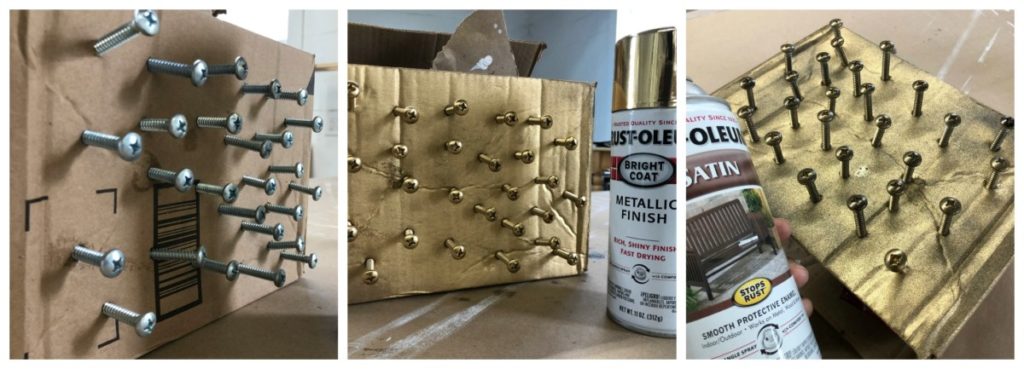
At this point the board can be installed using your own choice of faster. I wanted mine to have a vintage industrial vibe so I opted for a large button head screw and utilized some spray paint.
How to spray paint hardware antique brass for r.v. curtains.

If you want to achieve that vintage brass look for your R.V. curtains, here is what I did. I sprayed all my screws with Rustoleum Metallic Finish Gold Paint, once it was dry I lightly dusted the gold screws with a spritz of Oil Rubbed Bronze. It seemed to do the trick and was a nice match for the d-rings and lobster clasps I used on the curtain straps.
Installing diy curtains in an r.v.

Once the 1×2″ board is dry, slide it into the top (wider pocket). If all your calculations are done properly, the 1×2″ board should hang about of the pocket with about 1 1/2″ exposed on both sides.

In order to prevent the curtain panel from shifting on the board I used small screws to hold the straps and the r.v. curtain panel in place.
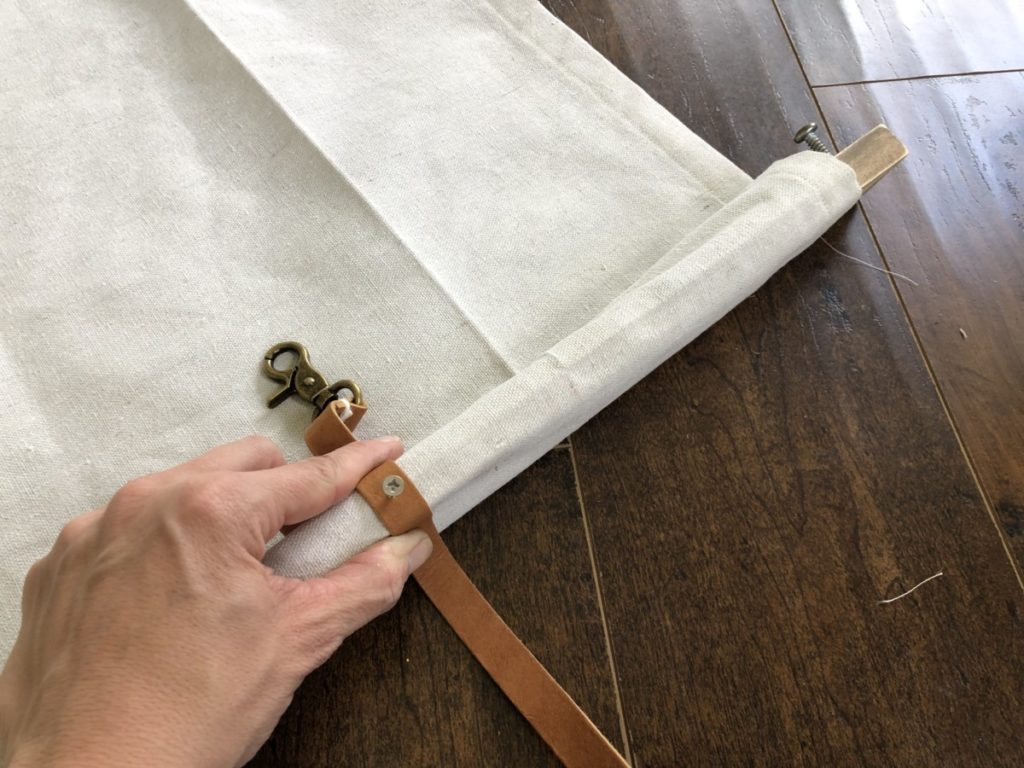
Installing roll up diy curtains in an r.v.

Using a drill drive the screws through the 1×2″ board into the the wall. (Depending on what type of wall/placement you may need to enlist the help of a mollie to help secure the curtain in place.) 
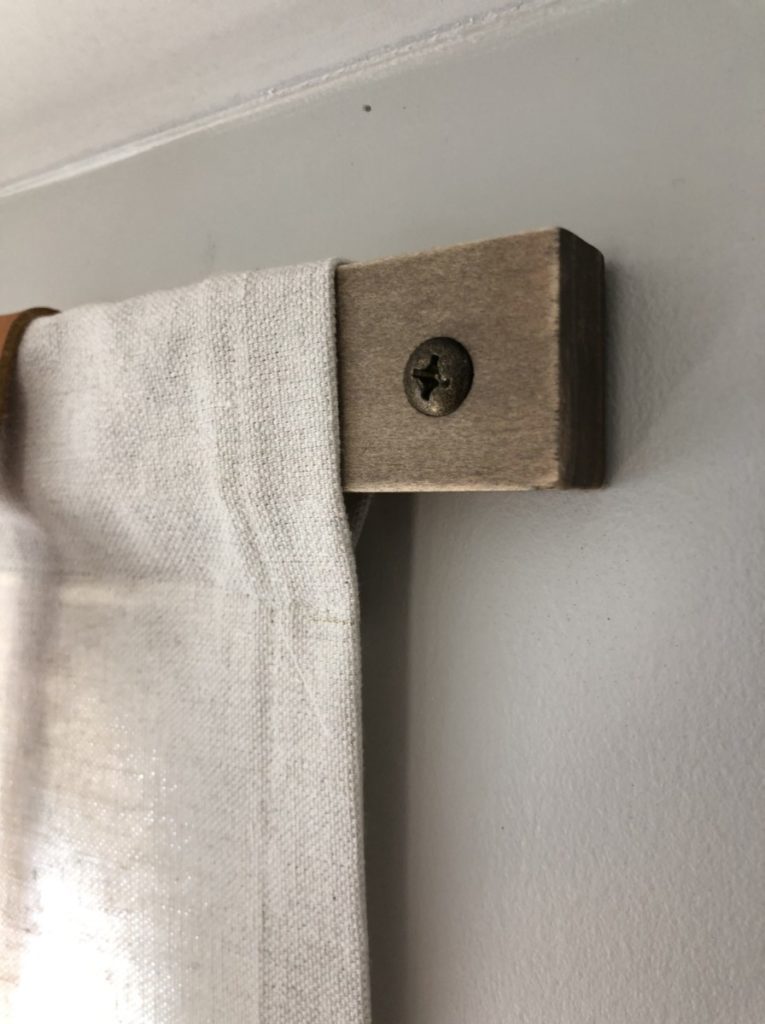
Securing roll up r.v. curtains to the wall.

Last thing you need for these R.V. curtains is to slide the bottom dowel in place.
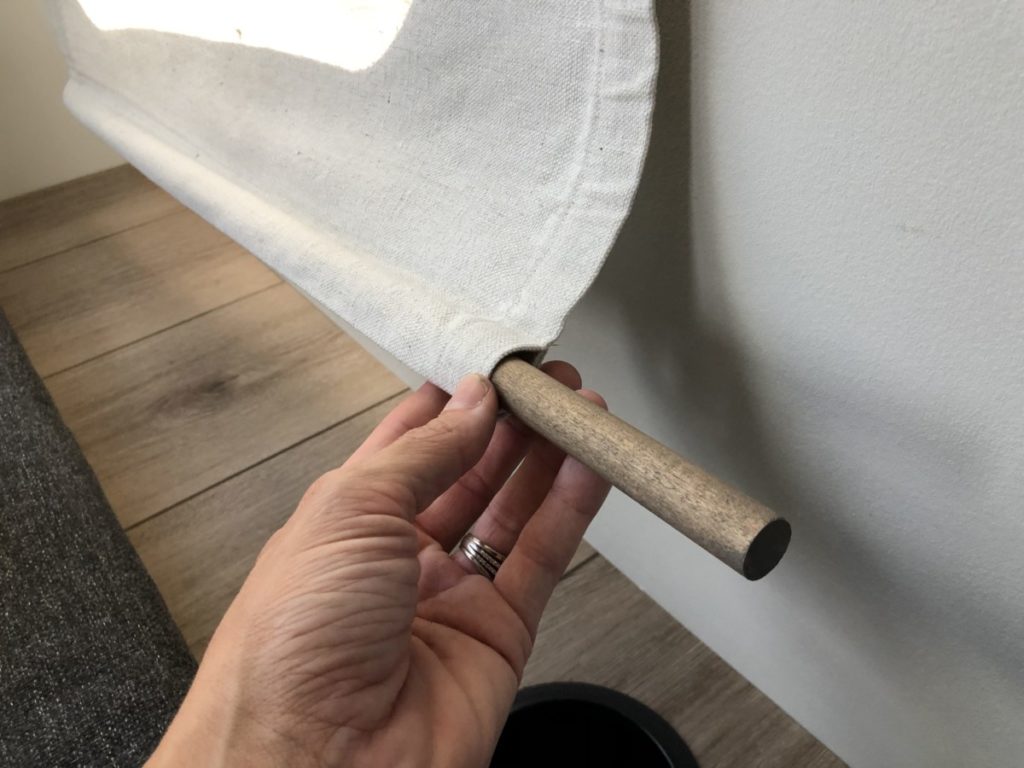
DIY. R.v. Curtain panel that roll up with a leather strap.

In my opinion these are the perfect option for a R.V. curtains! They are low profile and still add a lot of character to an otherwise bland space. In general there aren’t that many places you can add decor to a camper, so this is a great way to add some pizzaz!
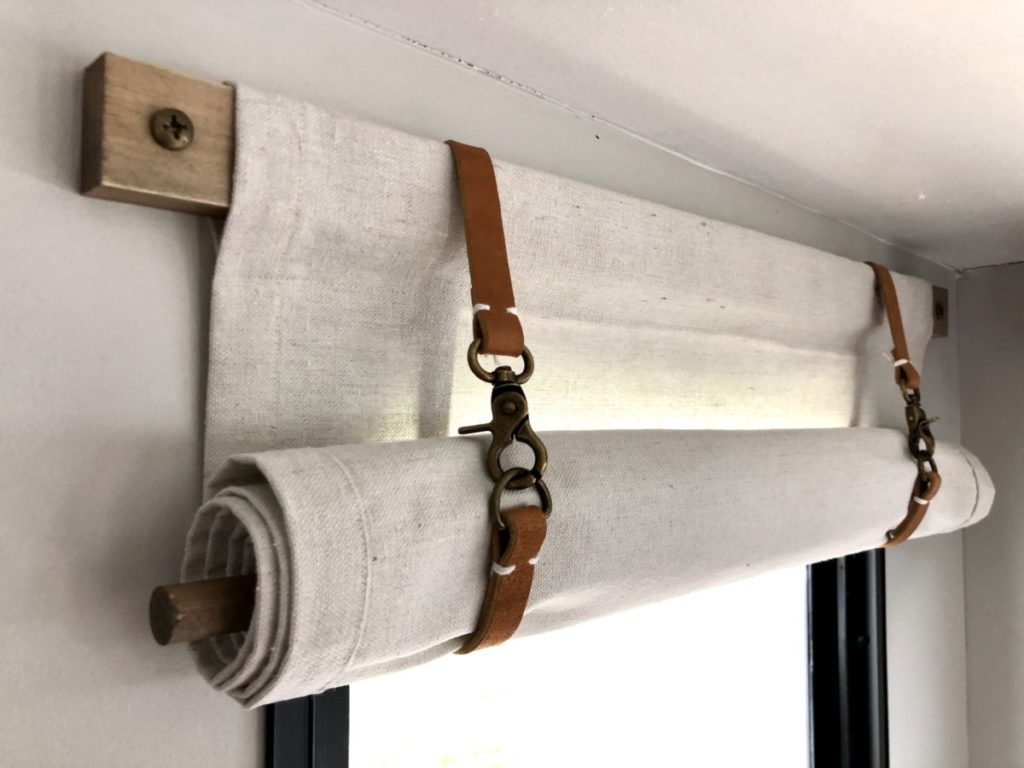
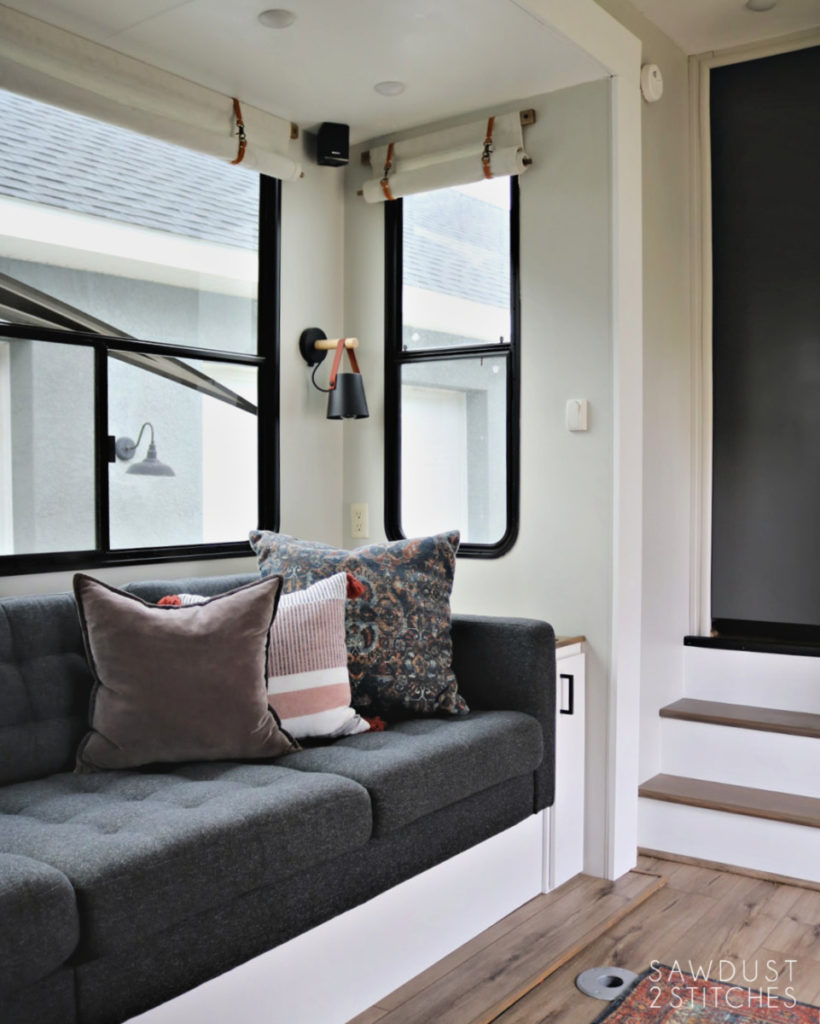
R.V. Roll up Curtains with leather straps.
DIY  Curtains for R.V. with leather straps.

Looking for more inspiration? Make sure you check out the rest of this toy hauler renovation and our first camper makeover below.

  • R.V. Makeover Painting with a roller
  • R.V. Bathroom Makeover
  • R.V. Sofa and Dinette Makeover
  • R.V. Makeover Reveal
  • Kitchen- Toy Hauler
  • Living Area- Toy Hauler (Coming Soon)
  • Master Bedroom- Toy Hauler (Coming Soon)
  • Bathroom- Toy Hauler (Coming Soon)
  • Dining/Garage- Toy Hauler (Coming Soon)
Toy Hauler/R.V. Kitchen Makeover

April 28, 2020

This post does contain affiliate links and is paid for in part by DAP and Frogtape partners.

 I feel like it was only yesterday that I said that I never, ever, ever wanted to makeover over another camper ever again.  EVER.

It was almost a year ago that I completed our first camper makeover and yet here I am, working on another.  Truth be told,  we LOVED our first  camper and I may have cried  when we sold it.  However, after having our first camper for a year  we realized we may have rushed into the first one and we really wanted a few other features.

You see, we are a motorsport loving family and we really wanted to combine our two loves of camping and four-wheeling. So we sold our first camper and invested in a toy hauler.

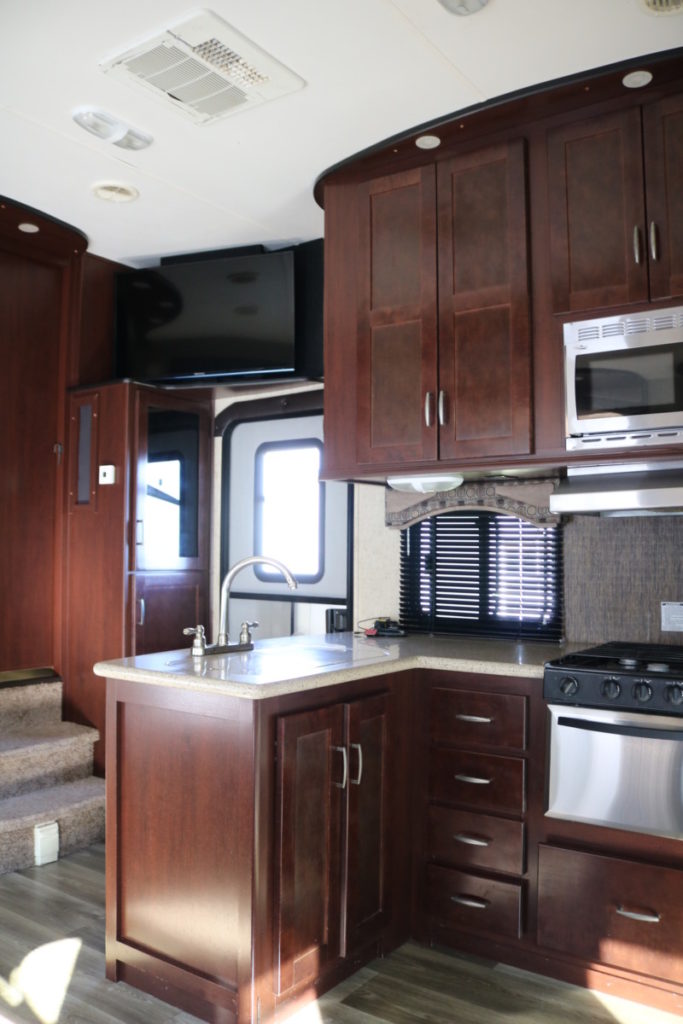
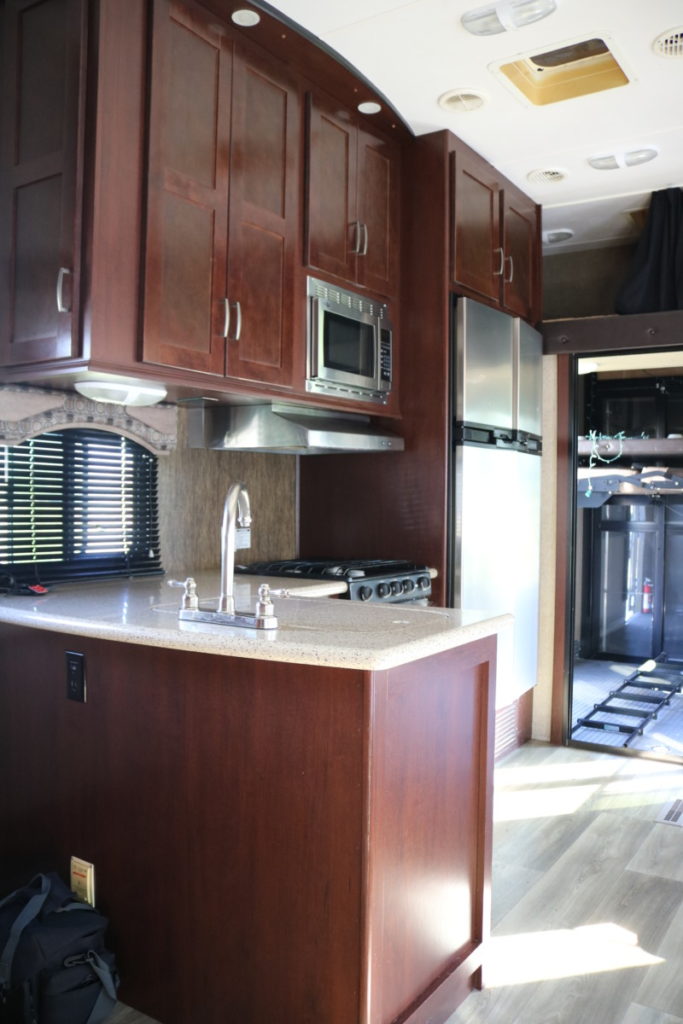
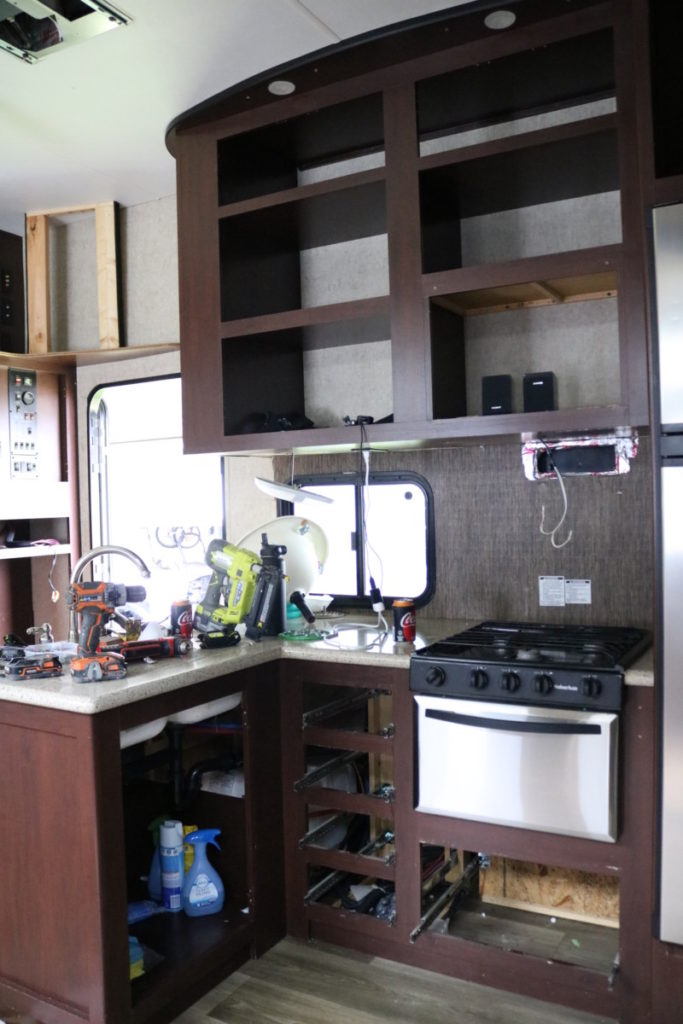
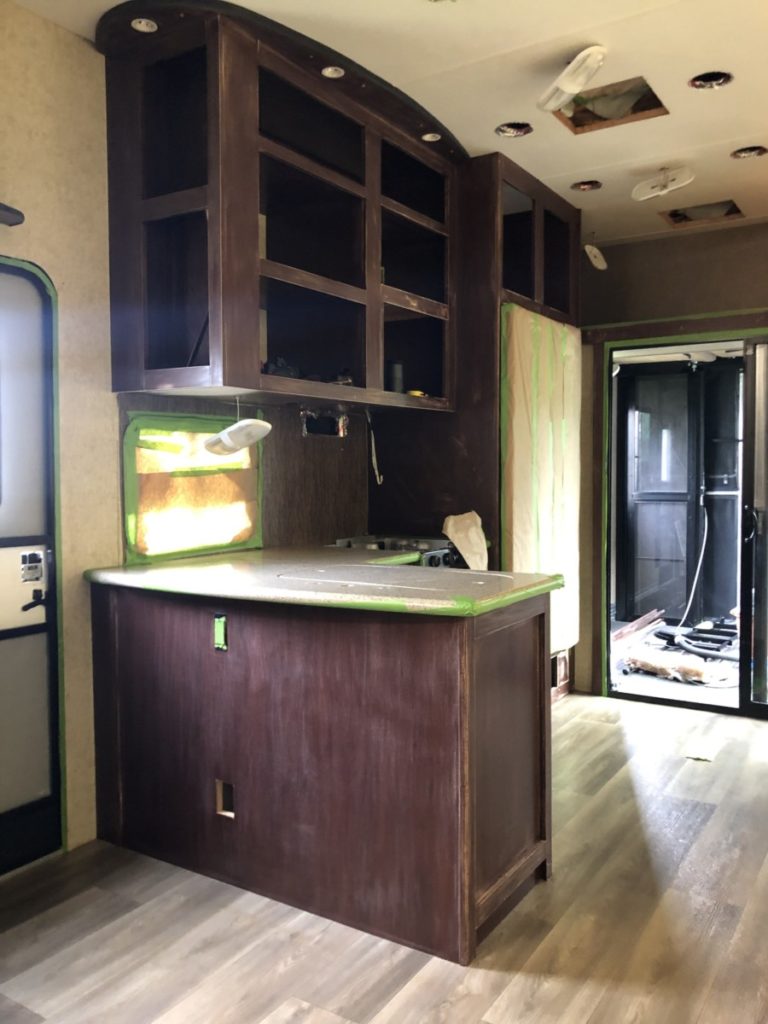
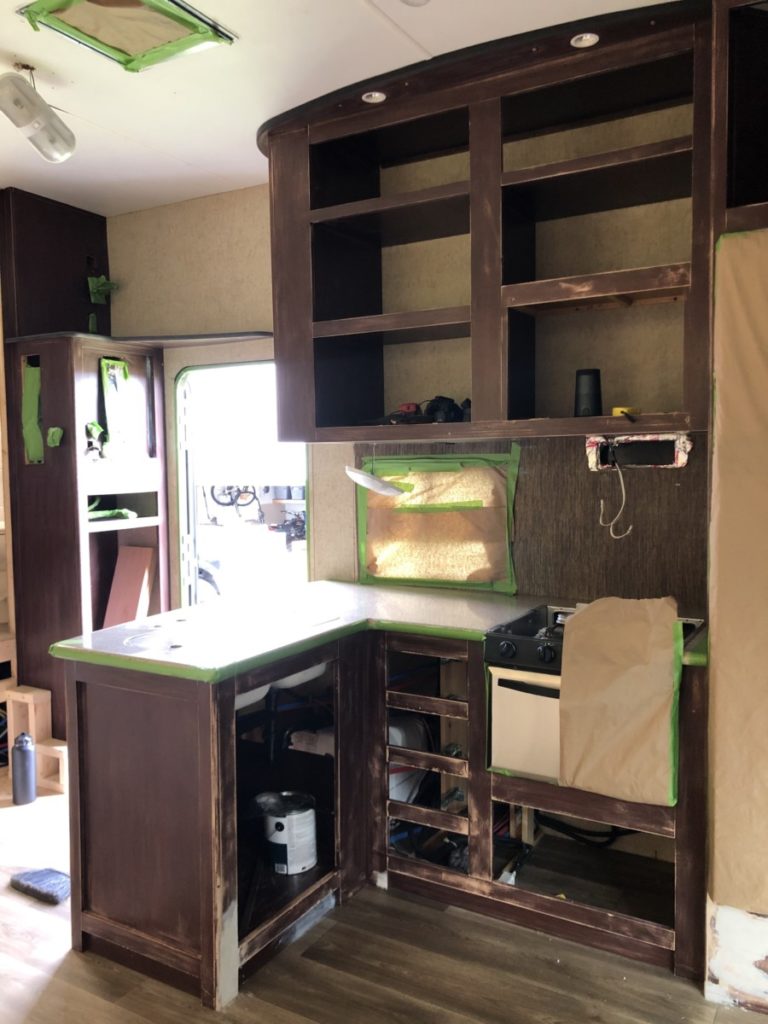
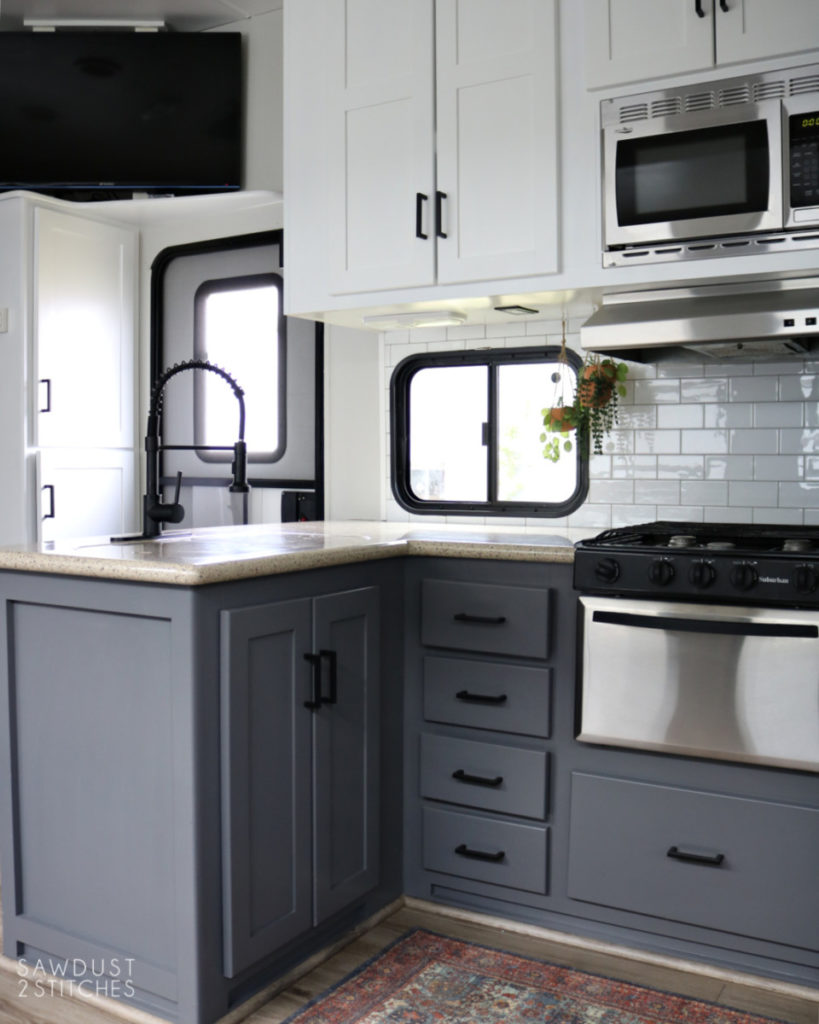
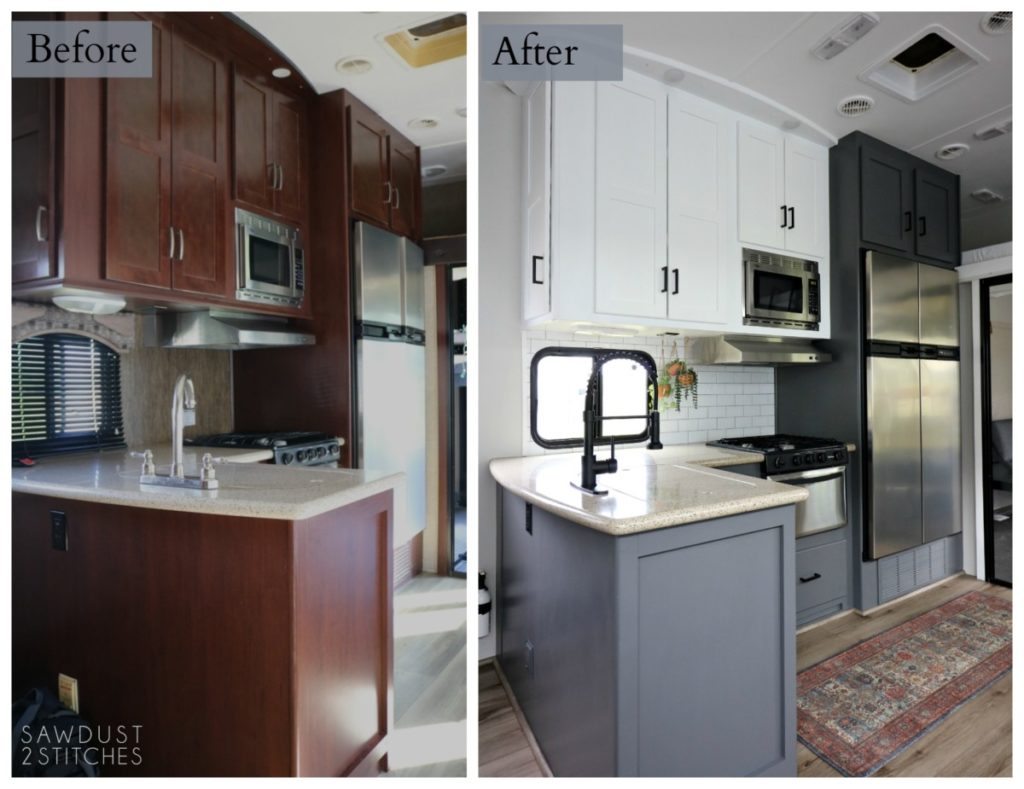
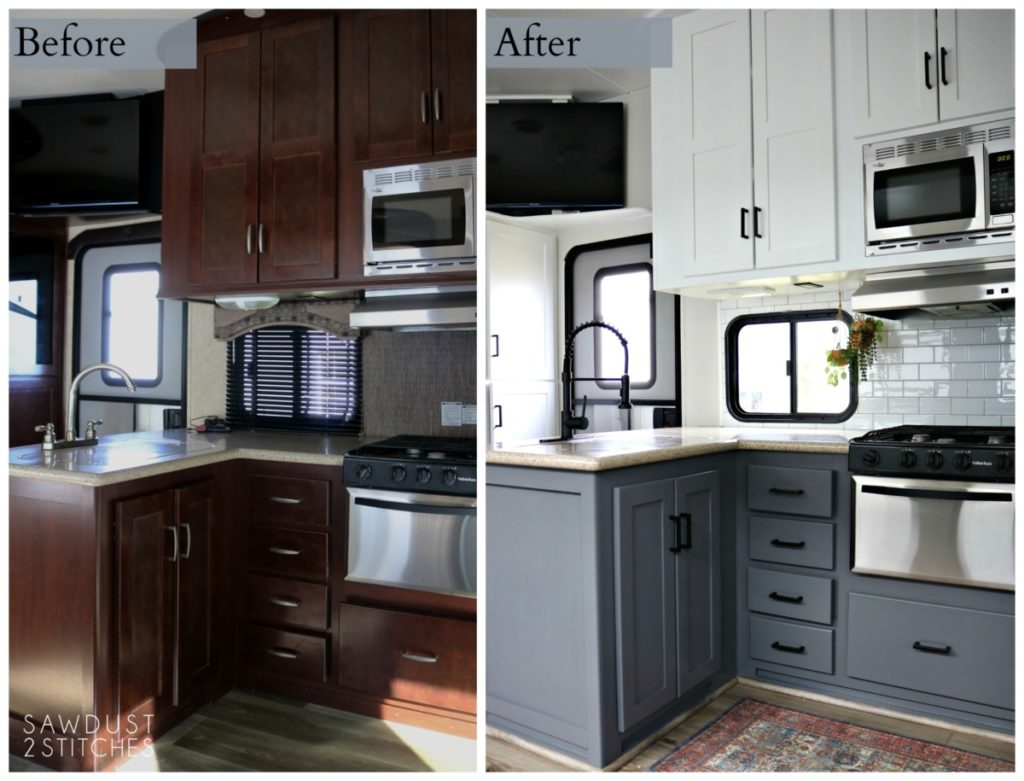
So let me show you the kitchen in the new toy hauler!   This toy hauler was a great deal, but it did have quite a few issues, and the images definitely make it look better than it actually was.  ( I really wish there was a way to do a “before” and “after” smell, but let me tell you , it was rough and completely gutting this thing was entirely necessary.) 
To begin,  I removed all the doors, hinges and light fixtures that I did not want covered in  paint.  ( With this R.V. makeover I decided to use a paint sprayer instead of rolling it.) 
Cleaning Surfaces

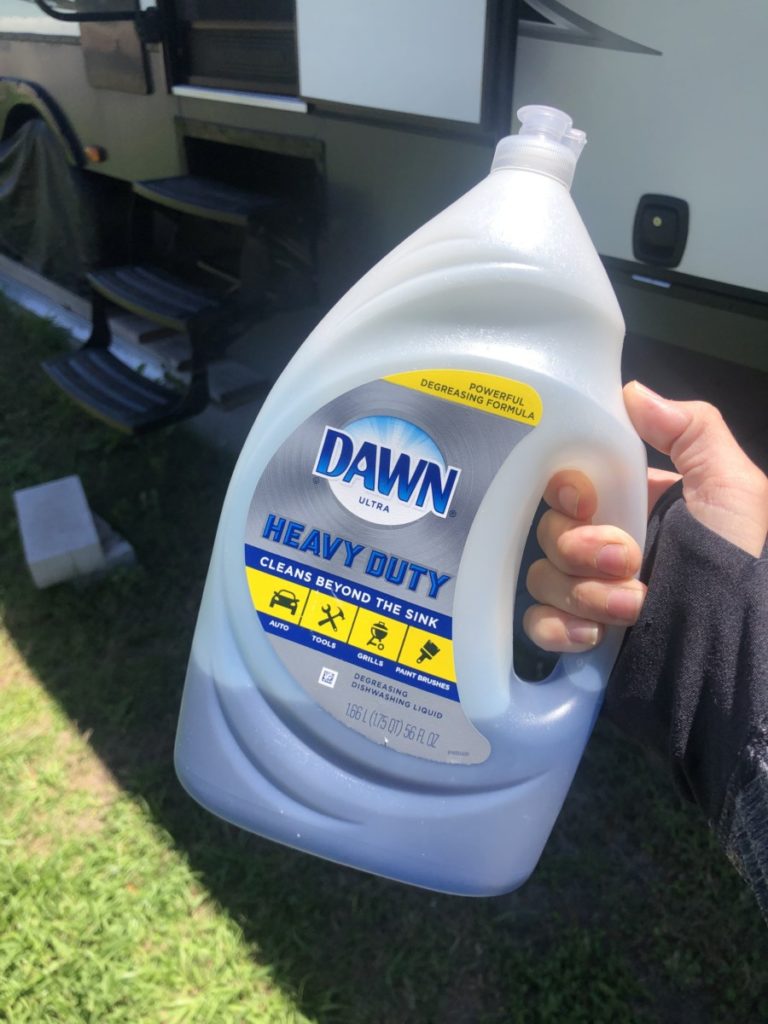
Before you even think about picking up a paint brush there are several necessary steps that must be made in order to achieve a positive painting experience. Once all the doors and hardware are removed it is time  to clean every paintable square inch of this sucker!   I used Dawn Heavy Duty soap and warm water. I made sure I was extremely thorough with this step.   I used abrasive sponges, and once I was positive there was zero oils or grime remaining I went over it with a clean damp rag. It is all about the prep work people!  

After everything was throughly wiped down I prepped for sanding.  I  realize there maybe differing opinions when it comes to the order of washing vs. sanding.  Here is my take,  I want to wipe off as much of the stains and grease as possible.  Reason being,  the more I can get off with soap the less aggressive I need to be about sanding, ALSO you can actually grind and set stains further into a surface when sanding.  So I opt to clean throughly first, then sand,  then a light wipe down.  

Sanding

When sanding you do not need to be overly aggressive.  The goal is to simply rough it up enough to remove the glossy sheen. By scuffing up the shiny surface we are preparing the surface to be receptive to our primer.  Just be meticulous and scuff up every surface!

When sanding you can use either an electric sander or a hand sander. I prefer using an electric sander on the large flat  surfaces and hand sponge sander for any small crevices or curved surfaces.  Again, the goal is to simply get rid of the glossy sheen. 

Final Wipe Down

Once all the surfaces are completely scrubbed and sanded it is ready for a final wipe down. I typically go through with my shop vac using a bristle attachment and throughly vacuum every surface. Once I have vacuumed up all the dust I go over all the surfaces with a damp cloth. Yes, this is kind of meticulous work, but it will be worth it in the end, I promise.

Taping

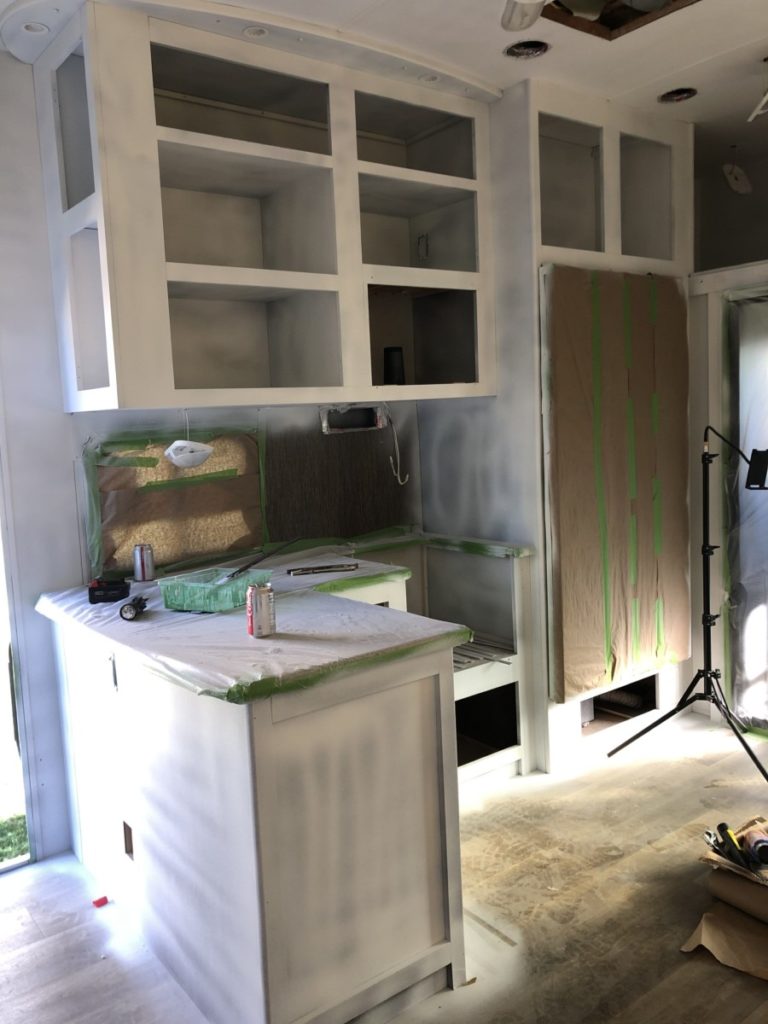
As I stated earlier, I will be using a sprayer . Because I will be using a sprayer  I needed to take a little bit of extra time to tape off any surface that I did not want to get painted,  ie:  countertops,  windows, fridge, etc. 

Priming

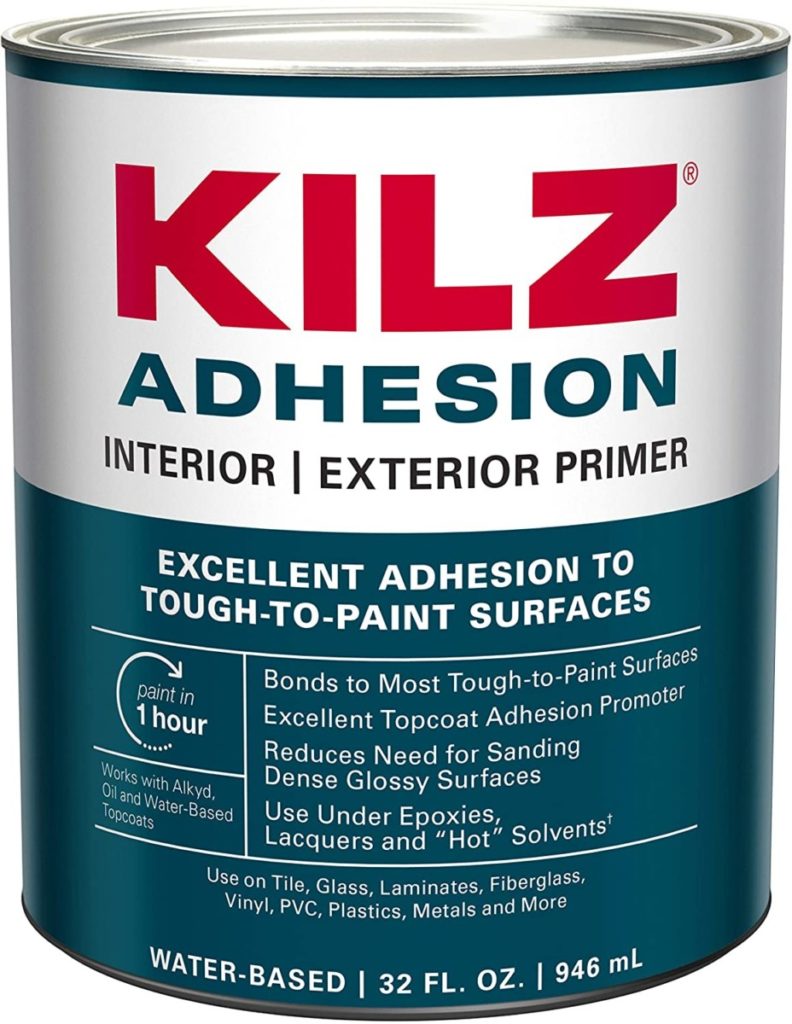
 I found a primer that I am in LOVE with.  It is a little pricey but worth its weight in gold.  It is Kilz Adhesion primer. I checked all of my local big box store and was unable to locate it.  After reading raving reviews online I had to give it a try.  I  ordered mine online and I DO NOT REGRET IT,  I highly recommend it.

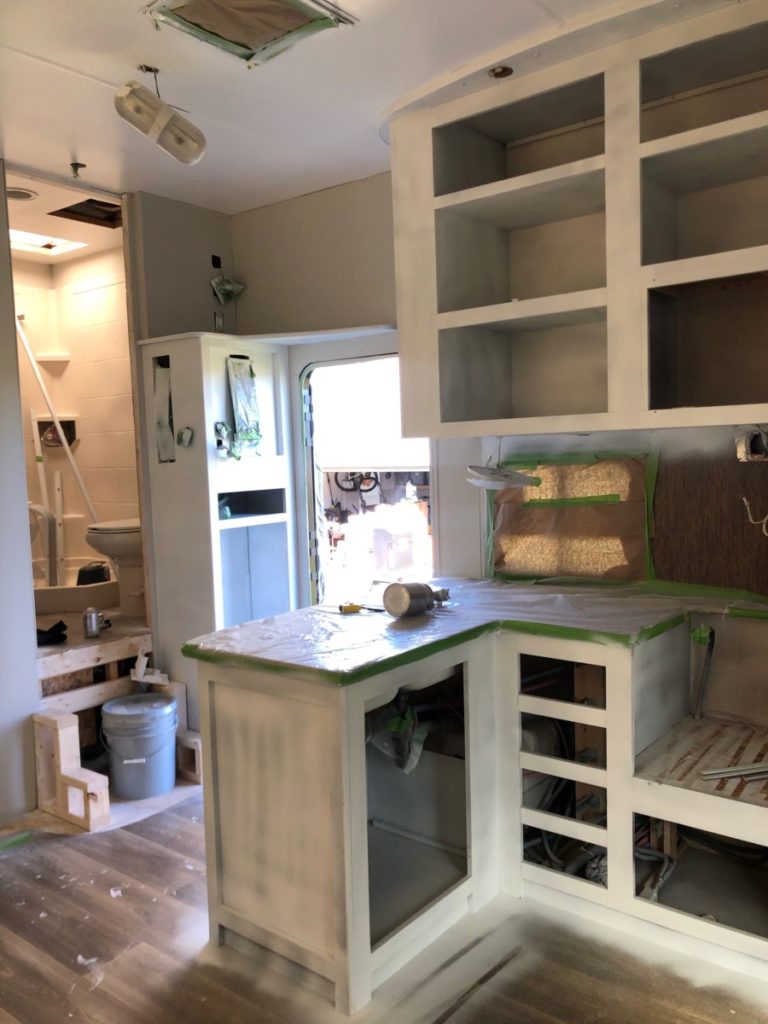
Using my Fuji “Semi-Pro” I sprayed nearly every exposed surface of the R.V. including the ceiling! On this R.V. makeover I decided to paint the interior of the cabinets. I did not do it on my last R.V. Makeover and I always regretted it. It definitely takes some extra time, but it is totally worth it.

After priming a surface I typically will go over the dried primer with a “fine” sanding sponge to remove any rough patches of primer. (If you are spraying with a decent sprayer you can normally skip this step.) However, if you are painting by hand I would highly recommend you do a once over with a sponge sander followed by a damp cloth. This small additional step can make a HUGE difference in your final product.

Painting Ceiling and Walls

Once my primer was completely dry (see your primer for specific guidelines) I was able to move on to the painting portion of this endeavor. The purpose of this tutorial is more pointed towards painting the kitchen cabinets, but here is a quick re-cap of what I did to the walls and ceiling. BEFORE painting my cabinets.

Ceiling: I prepped the ceiling the same way I did the walls and the cabinets. It was thoroughly cleaned, sanded, wiped down, and primed. There really isn’t any special way to paint the ceiling, you can use a roller or a sprayer. I used the a sprayer and had it done in no time. On the ceilings I used “Ultra Pure White” by Behr.

Walls: Again, the walls were prepped the same way as the cabinets. They were thoroughly cleaned, sanded, wiped down and primed. I also used my sprayer to apply the paint to the walls. The only surface I needed to protect from paint at this point was the ceiling. This can easily be done with painters tape and painters paper. I sprayed all the walls with “Repose Gray” (lightened 50%) by Sherwin Williams.

Painting Cabinets

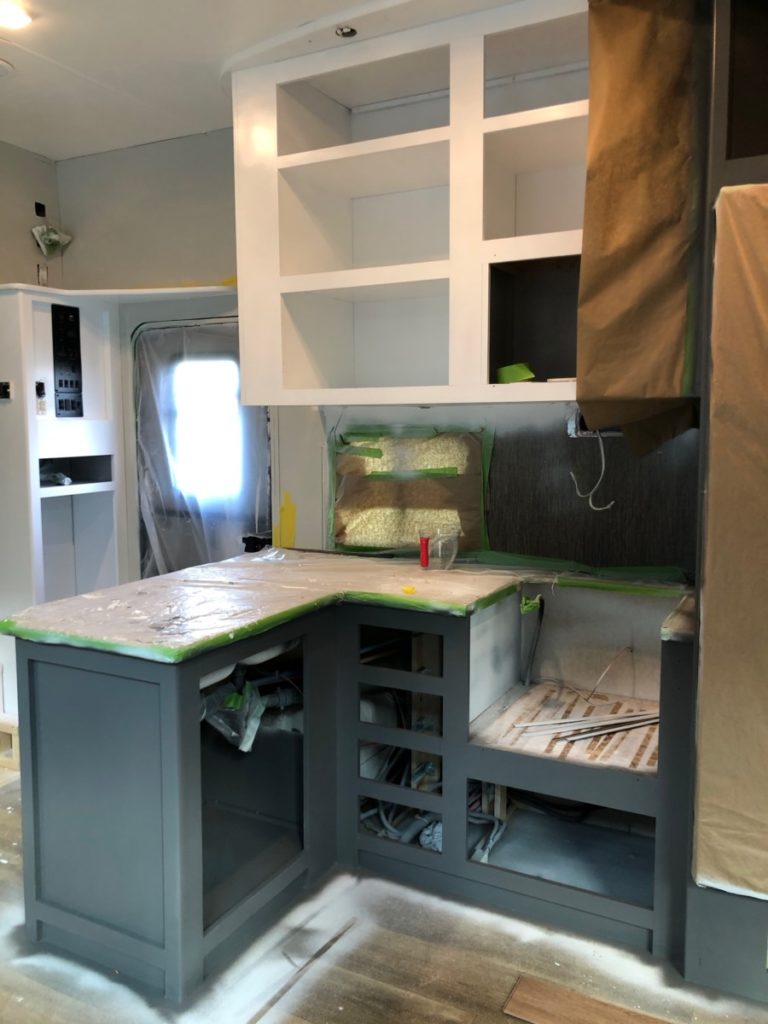
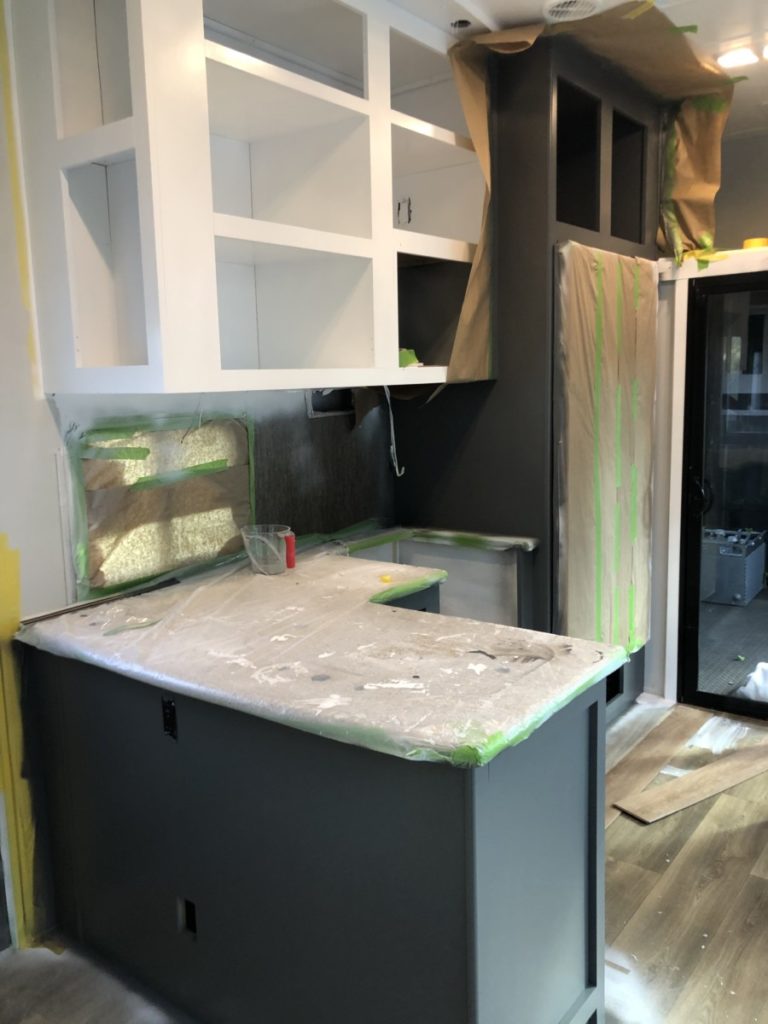
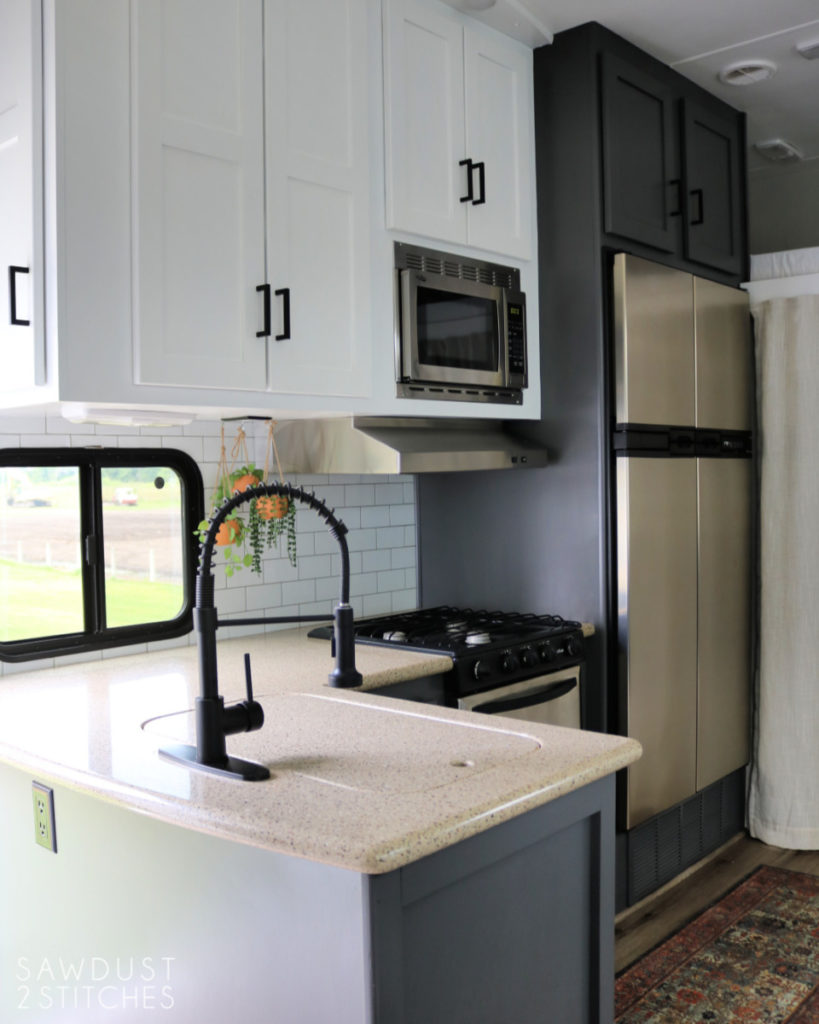
The plan for the cabinets was to create a two tone look, using a darker color on the base units and white on the uppers. Seeing as I was using a sprayer and the overspray dust will settle I decided to start with the upper cabinets.

The upper cabinets are painted “Ultra Pure White” by Behr. (Yes, I definitely planned for the ceiling to be the same shade of white. It is easy for any future touch-ups AND I didn’t need to worry about cutting in, or taping off my cabinets where they meet the ceiling.

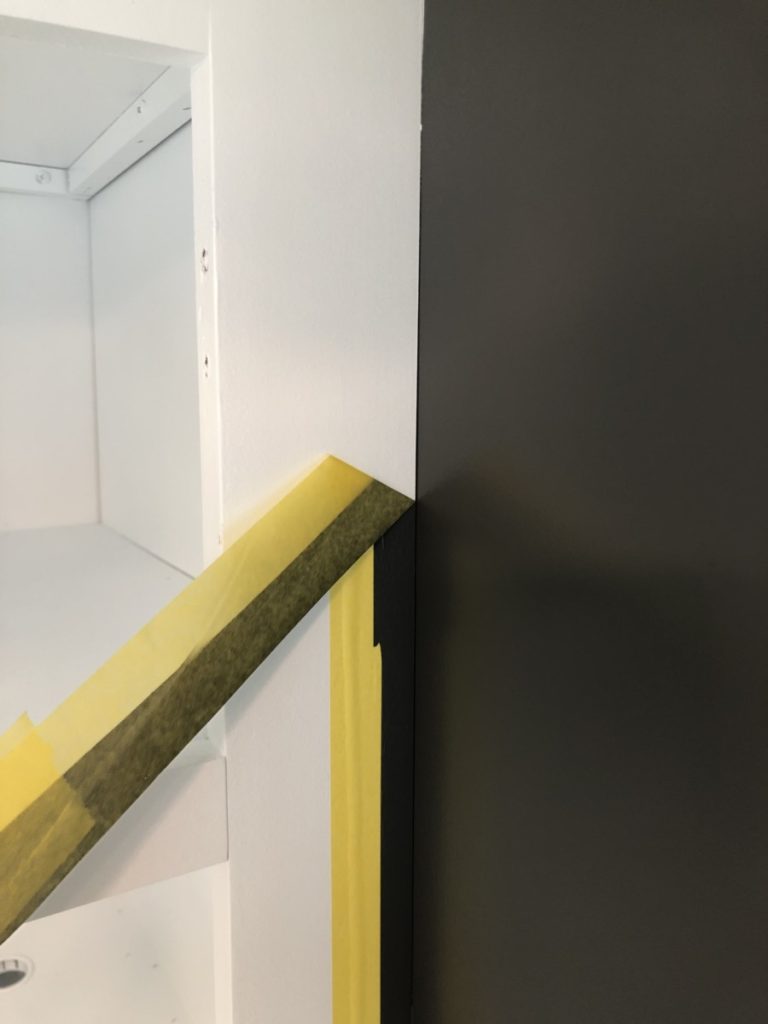
Honestly, the actual painting portion of refinishing cabinets is the easy part. The prep work is what seems to take forever. I ended up spraying two coats of Ultra Pure White on my uppers. Once they were dry I was able to tape them off using yellow Frogtape. ( It is a painters tape intended to freshly painted surfaces!)

Perfect seal on recently painted cabinets (white) without damaging them! Normally you would need to wait for the paint to cure before taping safely.

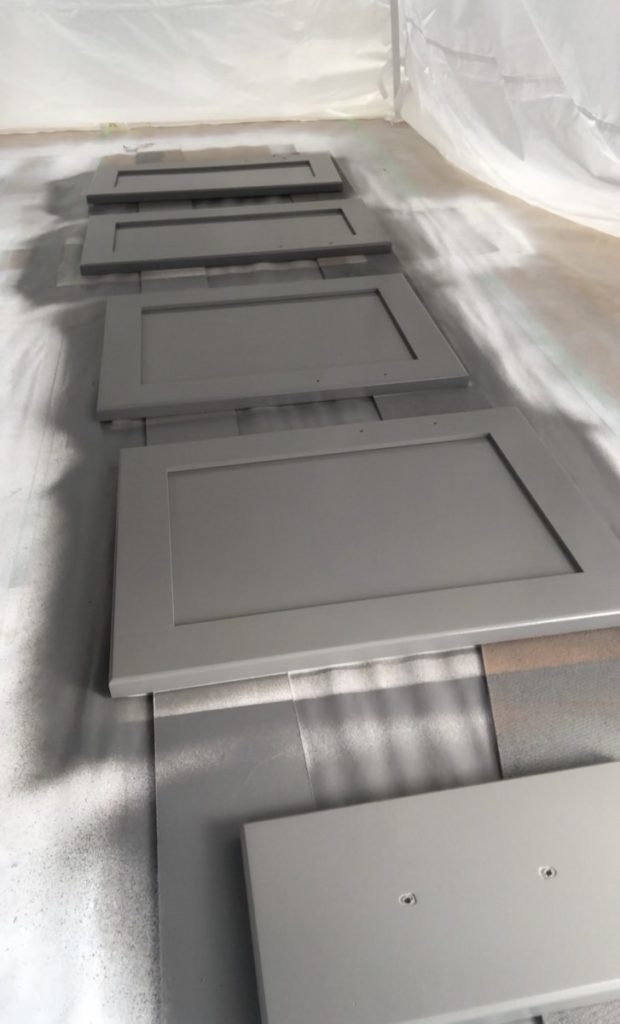
Once the freshly painted upper cabinets were protected with yellow Frogtape and painters paper I proceeded to spray the lower cabinets. On the base cabinets I used “Peppercorn” by Sherwin Williams. Again, I used my Fuji “Semi-Pro” sprayer and was able to get a perfect finish with just two coats.

Cabinet Doors

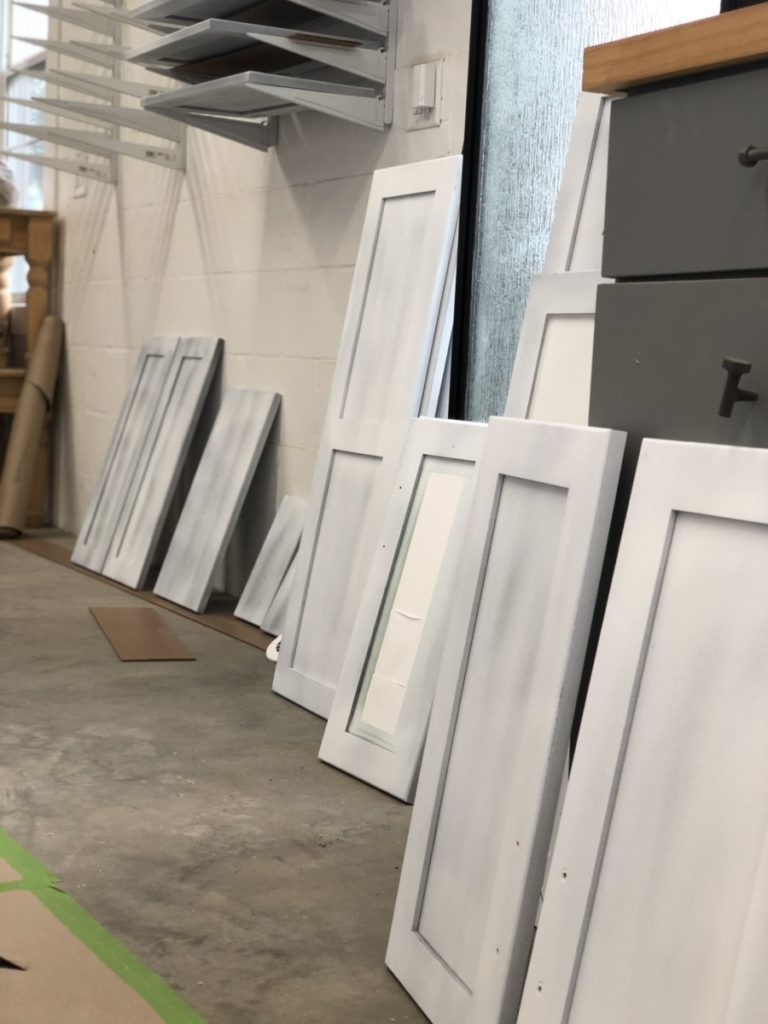
  All the above steps also applies to the cabinet doors. Wash with strong cleaner, rinse well,  sand/scuff, wipe down.  If at all possible I like to set up my cabinet doors to be painted in separate room.  I set up a small spray shelter in my garage so that I could continue to use a sprayer to apply the primer and the paint. 

Again, I did two coats of primer on both sides of the doors, followed by two coats of paint on both sides of the doors.

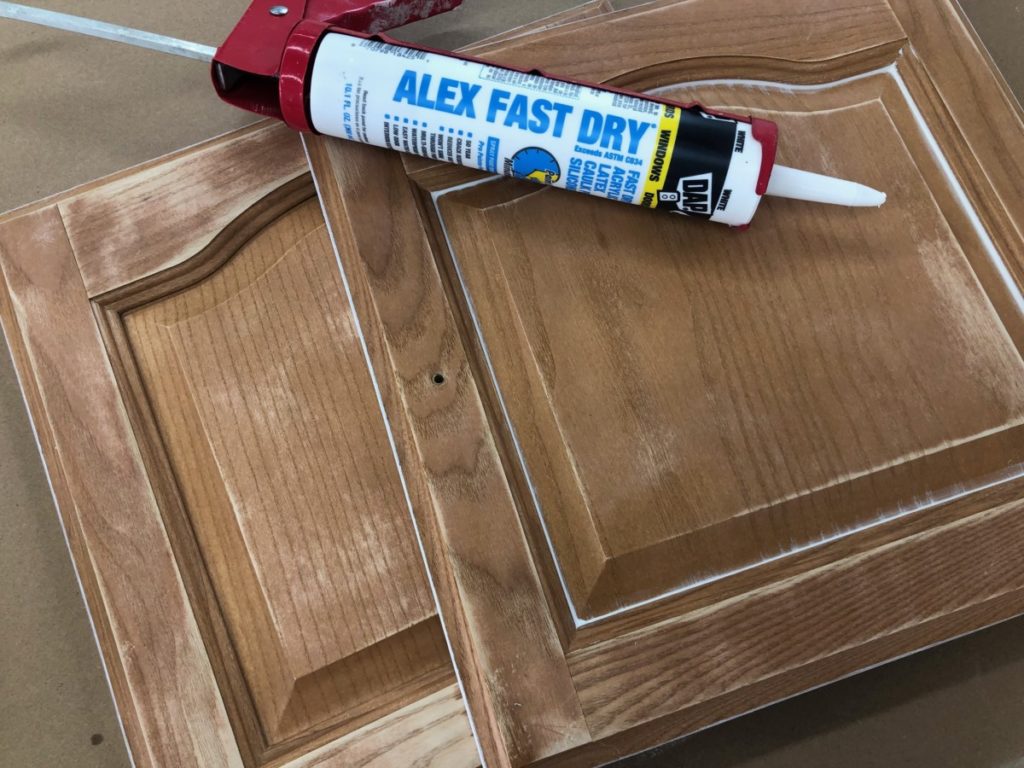
If you have cabinets that are in less than stellar condition I might suggest caulking the paneling. You can get all the details on how I did this in my last camper renovation here.

Backsplash

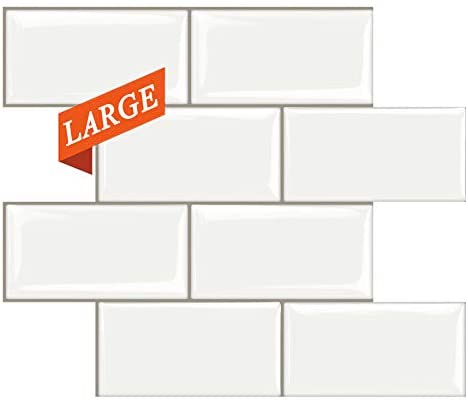
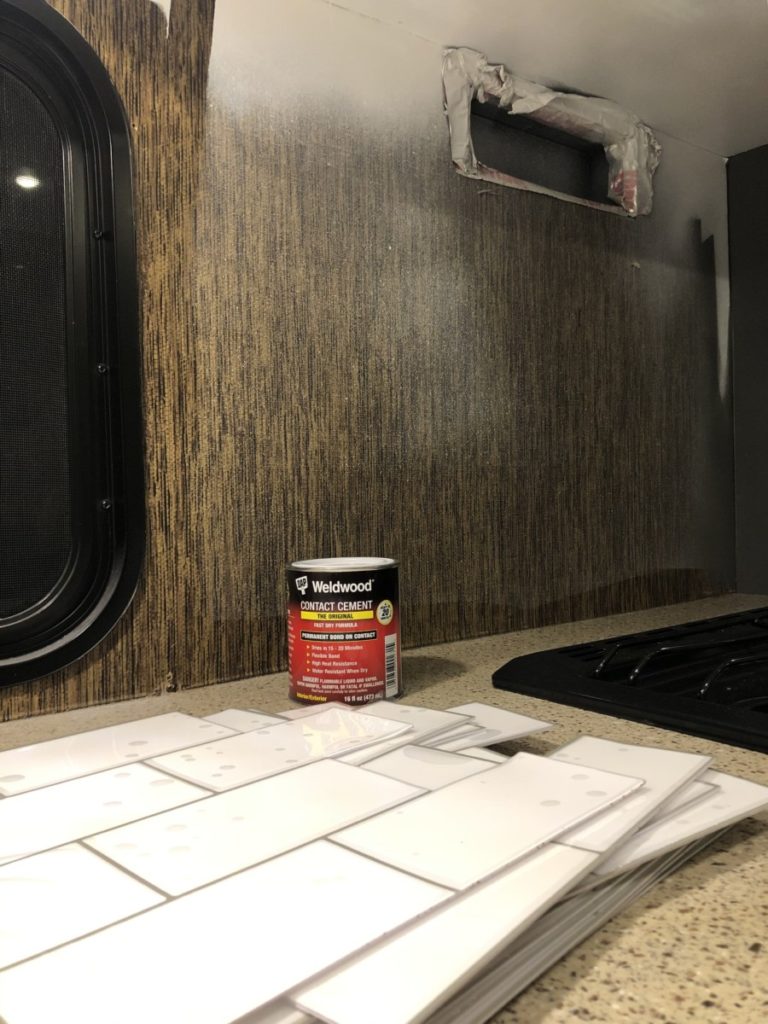
If you hadn’t noticed, I purposefully did NOT paint the backsplash.  There is a reason for that, I planned on applying a peel and stick  backsplash.  I did something similar in my last R.V. makeover and had great success.  However, I did make one change this time around, I opted for a larger subway tile. After a few trial and error purchases I found this “Peel and Stick Subway Tile”  and I love it!

While the adhesive on the back of most peel and stick tiles it pretty good, I have yet to find one that can withstand the constant movement that an R.V. wall experiences when driving down the road. The peel and stick just needed a little bit of reinforcements, I used Weldwood Contact Cement and I have had ZERO problems. You can see how I did it on my last camper here.

Finishing Touches

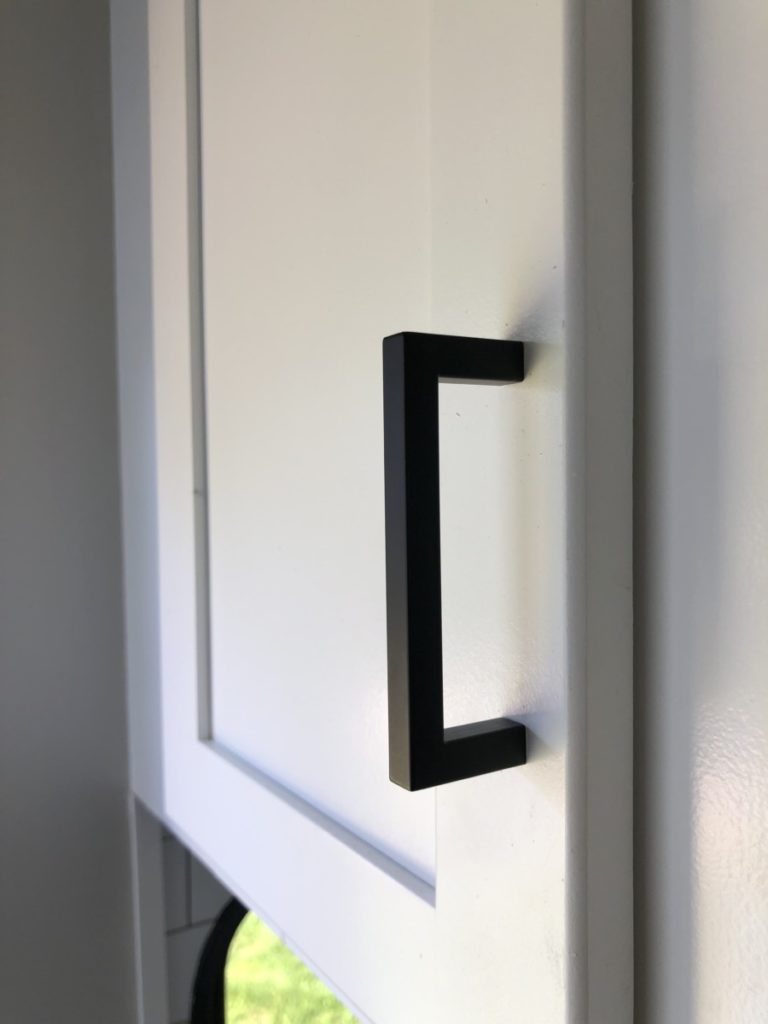
Once all the cabinet doors, and units were completely dry I was able to re-install all the doors using their original hinges. The original pulls were in decent condition, but I firmly believe that sometimes small changes can make huge impacts. That was the case with the kitchen hardware. I found these great Square Matte Black Drawer pulls online that give this kitchen an updated look.

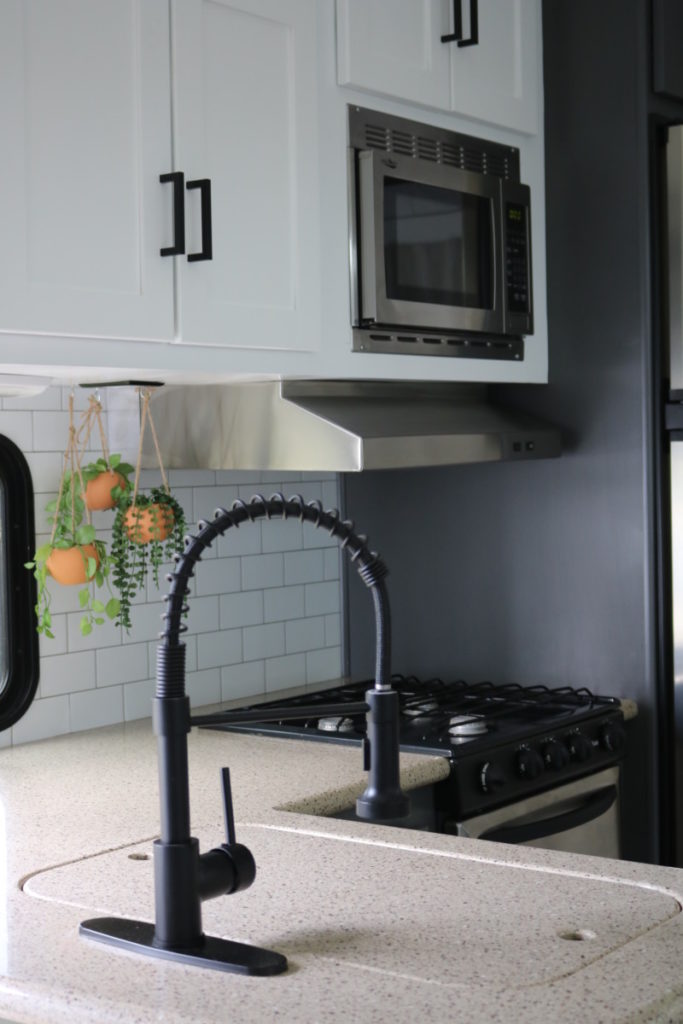
The last investment I made in the kitchen was swapping out the existing faucet with this gorgeous Matte Black Pull-down Faucet. This small upgrade unifies the entire space. Honestly, does it even look like an R.V. kitchen? I submit that it does not!

Alright folks, there you have it another successful R.V. Kitchen Makeover! There is still plenty to be done and I cannot wait to share the rest of this makeover soon. So check back soon because I promise, it is going to be good!

Sources-

  • Painters Tape- Green Frogtape
  • Delicate Painters Tape- Yellow Frogtape
  • Paint Sprayer- Fuji “Semi-Pro” HVLP Sprayer
  • Primer- Kilz Adhesion
  • Base Cabinet Paint- Sherwin Williams “Peppercorn”
  • Upper Cabinet Paint Color- Behr “Ultra Pure White”
  • Backsplash Adhesive – Weldwood Contact Cement
  • Subway Backsplash- Peel and Stick Subway Tile
  • Door Pulls- Square Matte Black Drawer pulls
  • Sink Faucet- Matte Black Pull-down Faucet
  • Rug Runner- T.J. Maxx
  • Hanging Plants- Target Dollar Spot
  • Flooring- NuCore “Morel”

24 hr. Bathroom Makeover

January 25, 2020

Sponsored by DAP*

This post does contain affiliate links * 

The very last rooms in our house to get any attention were the bathrooms. I wasn’t ready to take on a major overhaul and I knew that re-tiling would just entail a lot of dust and mess. I just was not emotionally prepared for that kind of commitment.  The more I thought about it, the more I realized, there is no reason I can’t just work with what I have!  (You can read all about the process picking this color palette and design process here.)  

Today I am going to show you some quick fixes that won’t break the bank!  It is by working with great products and partners like DAP that I can bring you these awesome makeovers! So let’s get started.

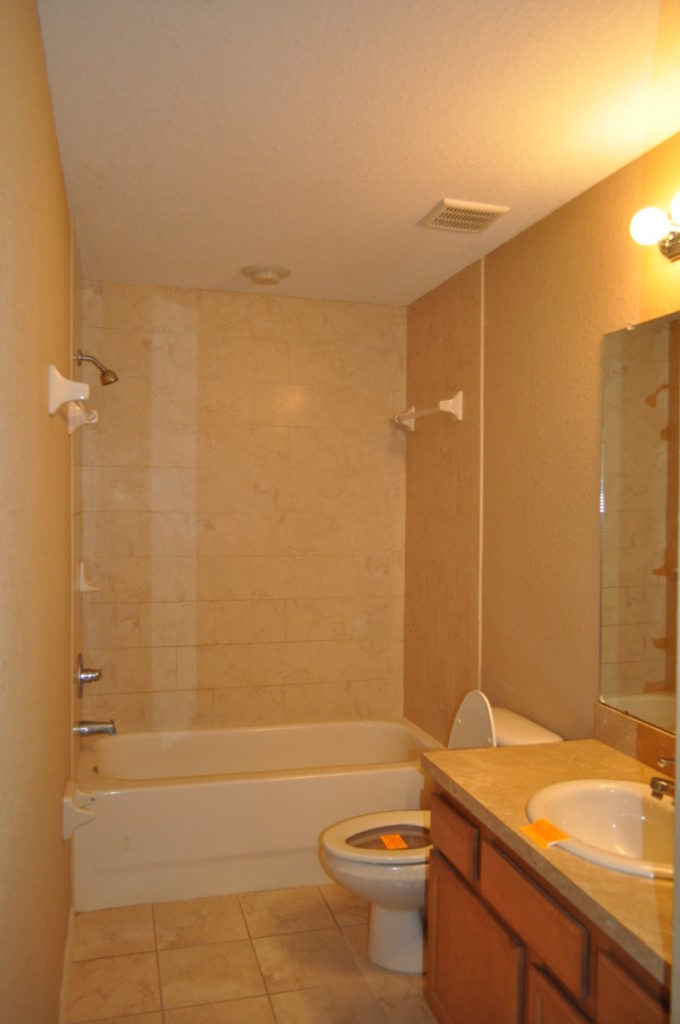
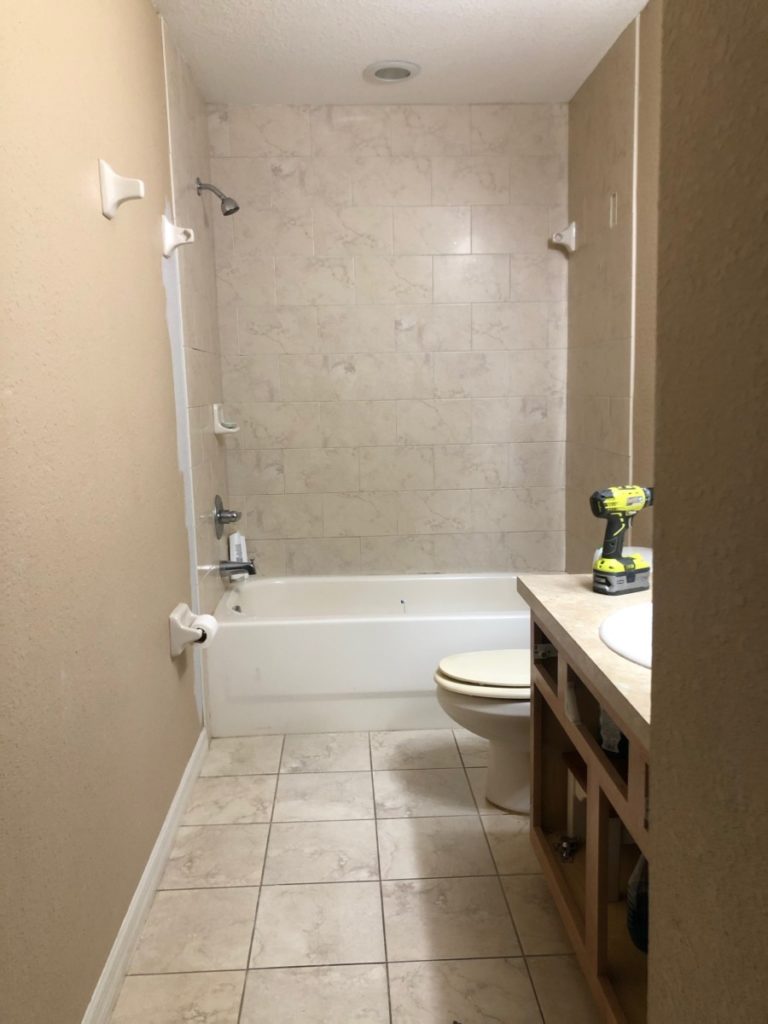
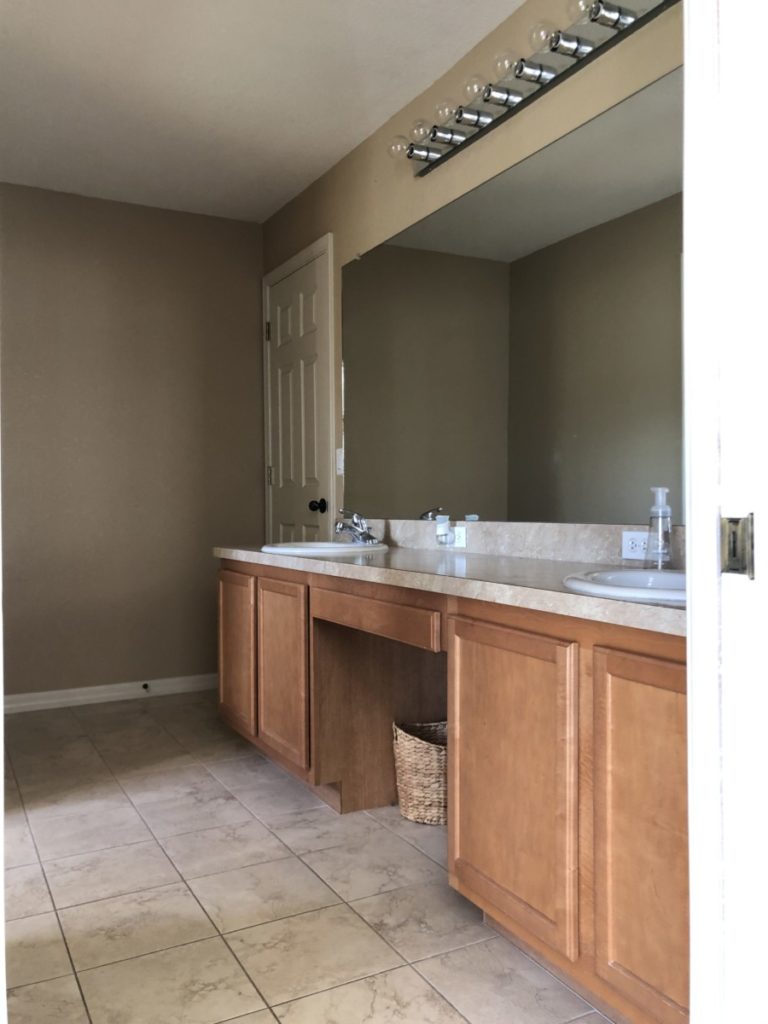
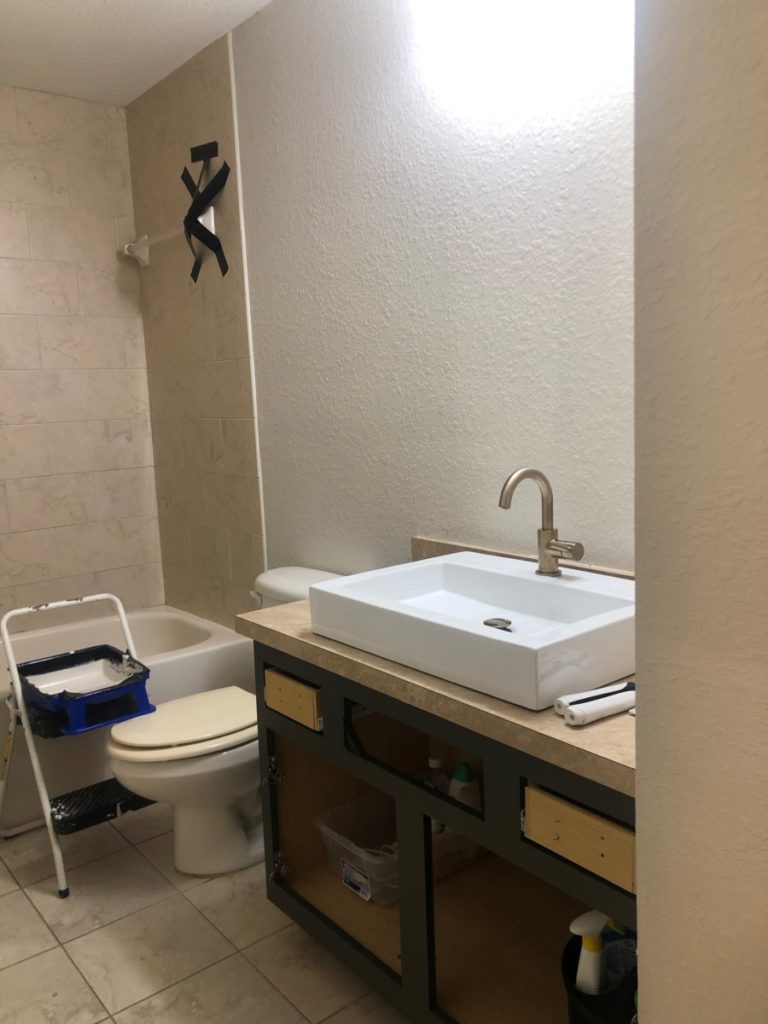
 I found this gem of a photo from the day we first toured the house. It was your basic builder grade bathroom. Which was fine for 4 years,  but let me show you what you can do in as little as a weekend!

Before Bathroom Makeover

Cabinet Update

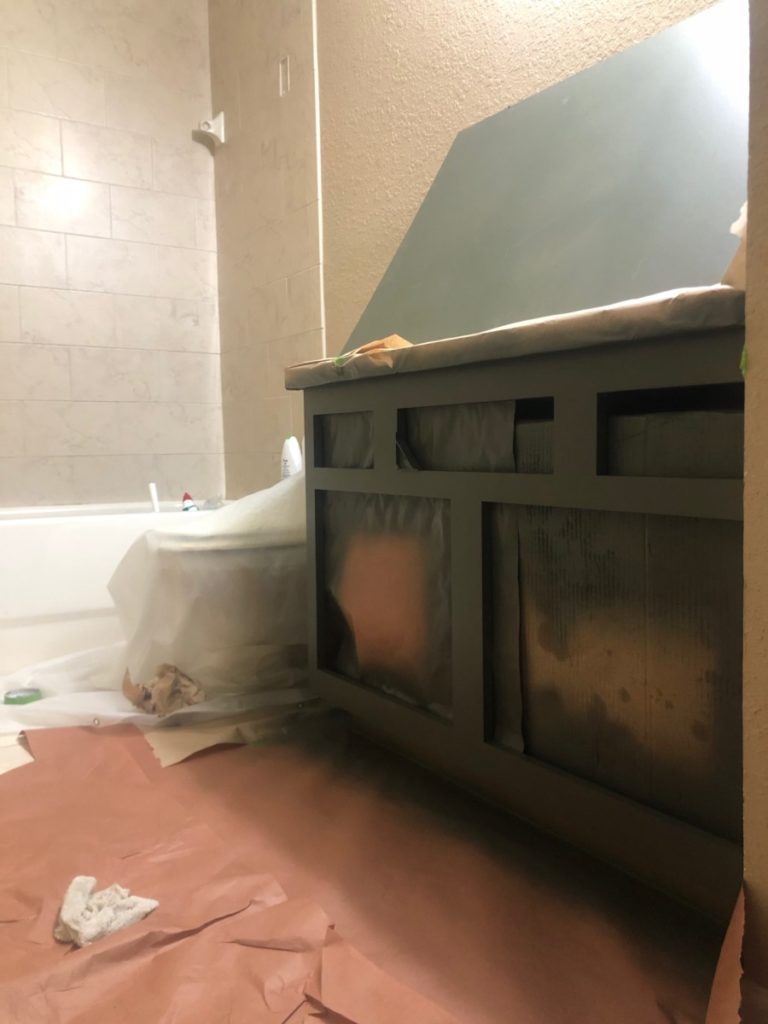
 I  attacked this project the same way I did my previous bathroom. I removed the cabinet doors and prepped the cabinet for paint.  If you would like more information regarding painting cabinets, you can check out my post here. 

Process Bathroom Makeover

 I used the same color scheme that I did in the guest bathroom as well.   I literally moved from one bathroom to the next and it made the process go by so quickly!  I had everything out, and honestly if you are considering giving two bathrooms a makeover  I would knock them both out at once! 

Sink Replacement

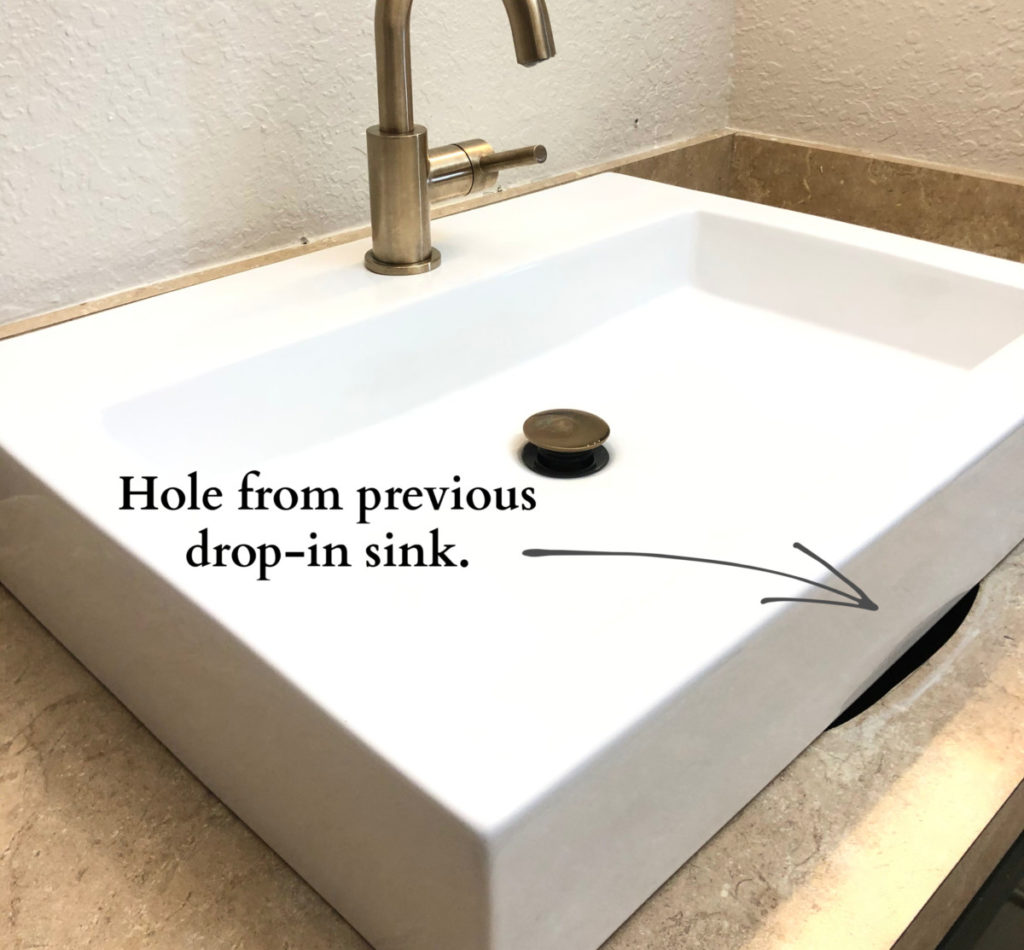
  When it comes to “bang for your buck”  in a room makeover, paint is hands down your best option.   It just is. It is moderately priced and can change the entire look of a room. Bathrooms have a bad rep for being an $$$ makeover, but I think there is a happy medium.  I was determined to work with the existing countertops, tile, showers and toilets.  HOWEVER, I didn’t invest in a new sink.   A sink and new faucet is a simple change  that can completely update the entire look of a bathroom. 

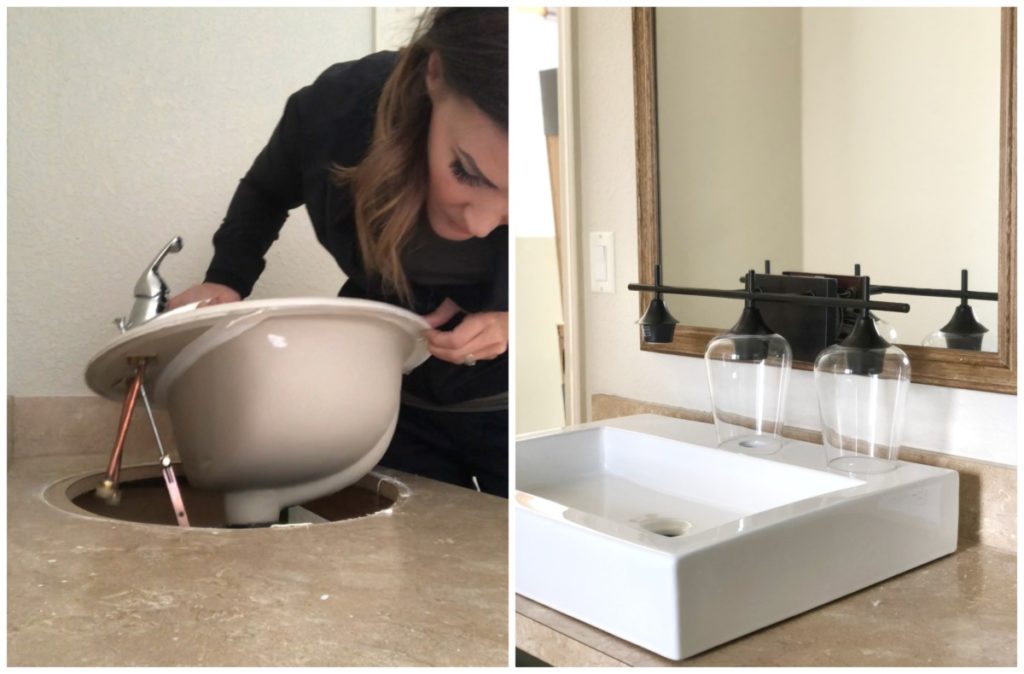
Like I said I did not want to replace the existing countertops, so it was simply an issue of finding a sink that would cover the hole from the builder grade drop in sinks. 

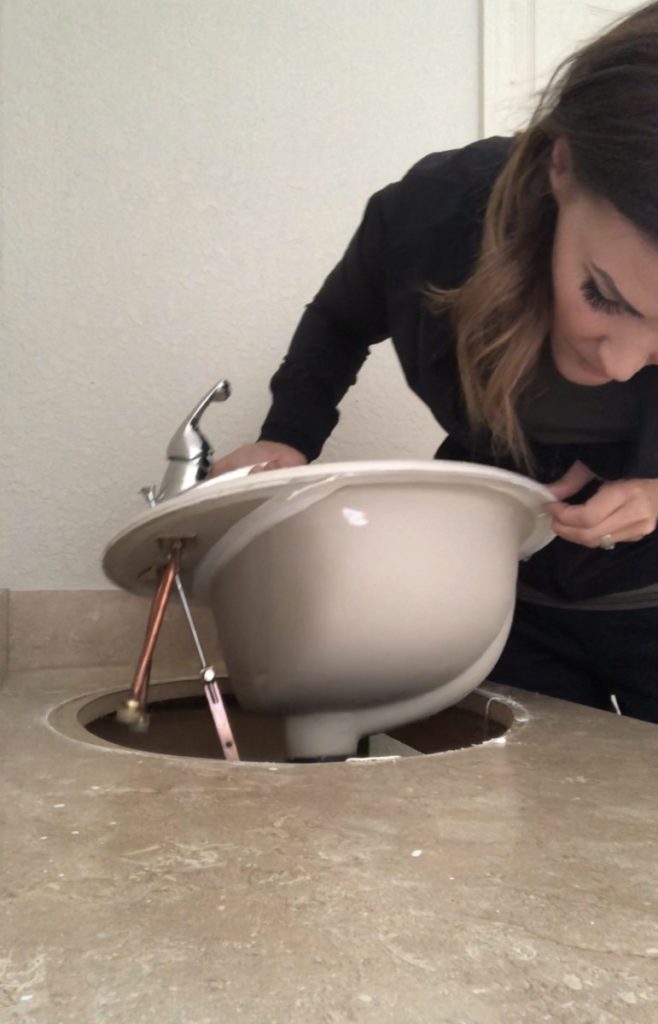
 I am still learning the ropes when it comes to plumbing and  I did enlist the help of my husband to help walk me through the process.  I am not an authority on the field, but I will say there are plenty of pro’s out there with detailed tutorials.  

Sink affiliate link:

  • Basin Porcelain Sink– Amazon 
  • Brass Single Hole Faucet- Amazon (Not exact but close.)

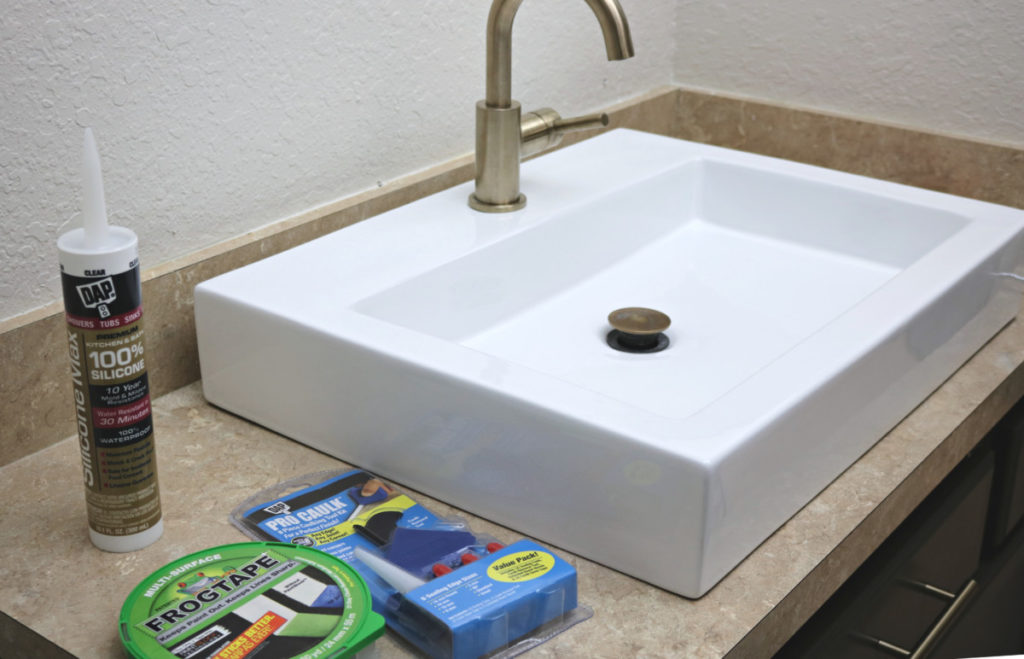
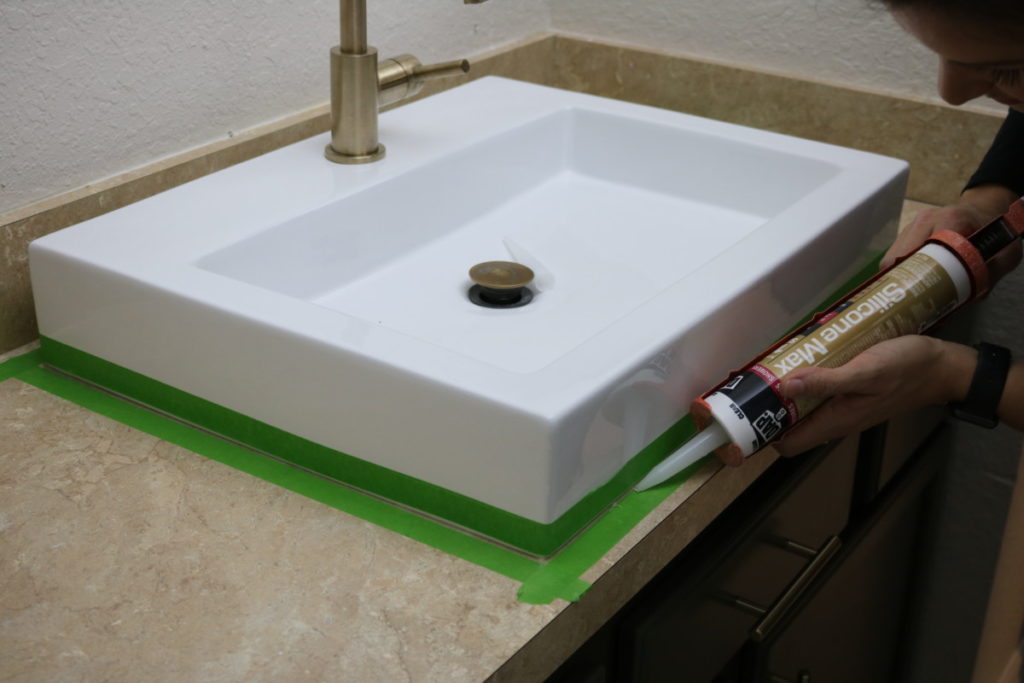
One thing  I  do know well, and that is caulk and silicone.  In order to make this bathroom ready, we do need to water-proof the seam around the perimeter where the sink meets the countertop. 

When sealing an area that will be subject to water I would highly recommend a silicone based sealer as opposed to a latex.  Think of it like oil vs. latex paint.  Oil is a little more heavy duty, and it is also a little messier to clean up. 

So when using silicone I like to use a the DAP Pro-Caulk tool kit.  It came with all the tools  necessary t o get the job done, with out the sticky fingers

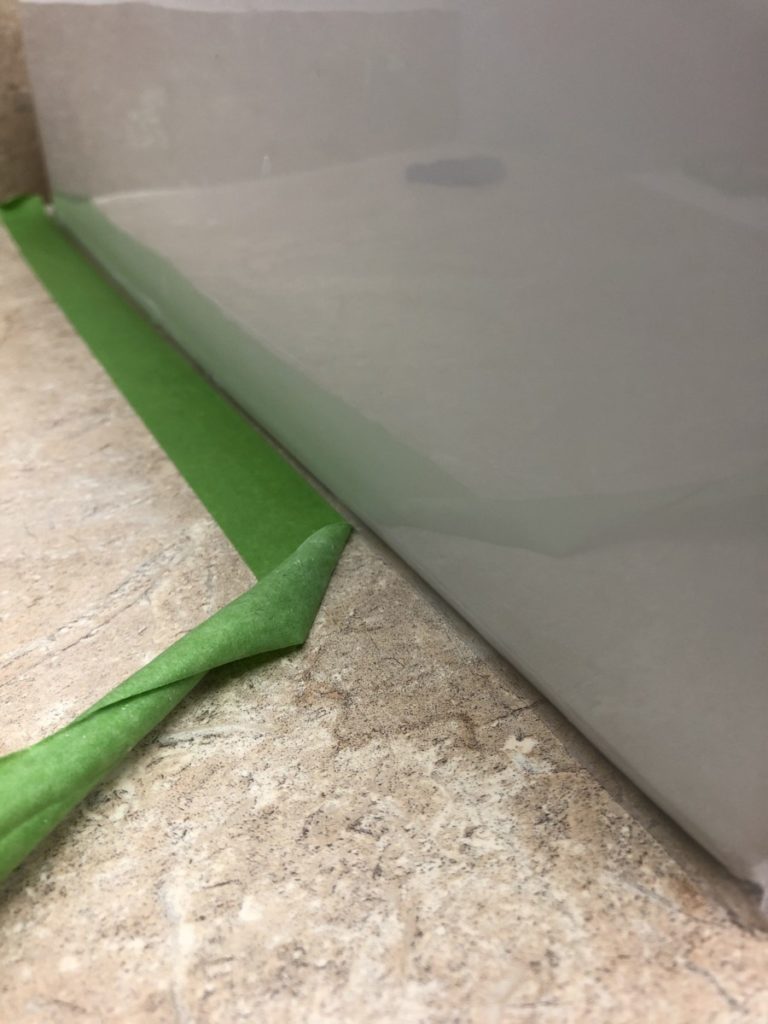
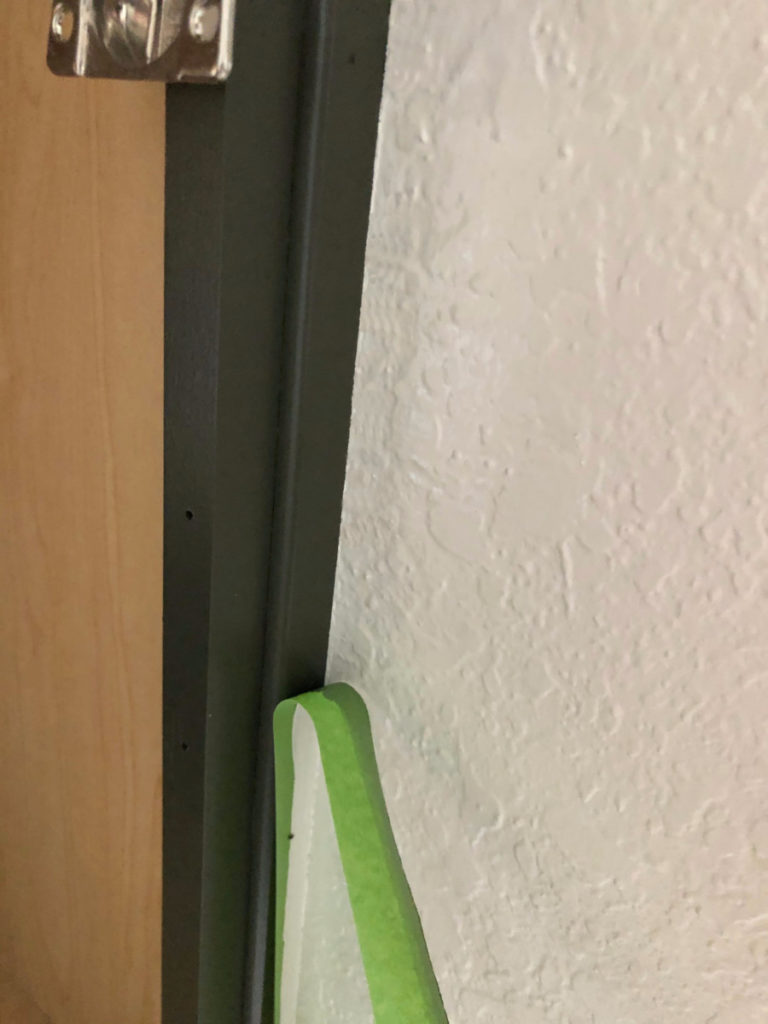
If you are  new to caulking here is a trick that will  help you in the process.  You can use this Frogtape trick.  You simply  use painters tape the same way you would if paining a wall,  you use tape to create a straight edge that will also protect the rest of the surface from the paint/silicone/caulk. It gives you some leniency in your application and creates a perfect line! 

After the caulk/silicone is applied use your preferred corner tool in the Caulking Tool Kit to achieve the perfect finish. Simply slide the corner along the applied bead of caulk to create a perfect uniform seam.  Immediately after smoothing out the silicone remove the painters tape. Failing to do so can result in the silicone curing to the tape. 

Upgrade Towel Bars

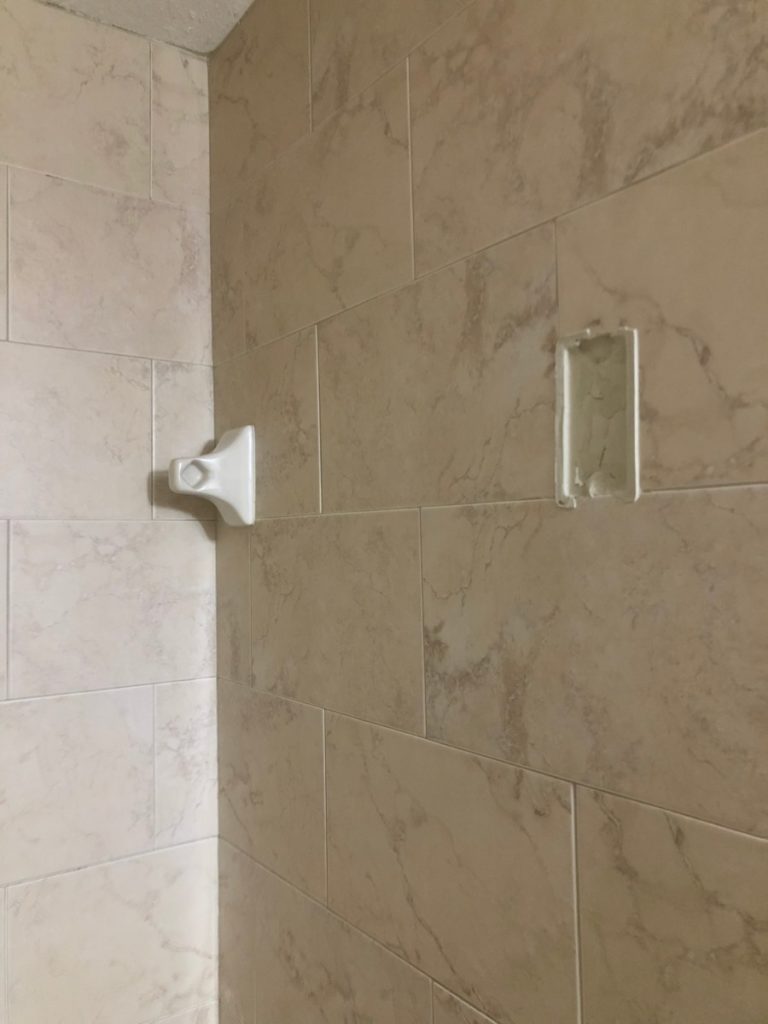
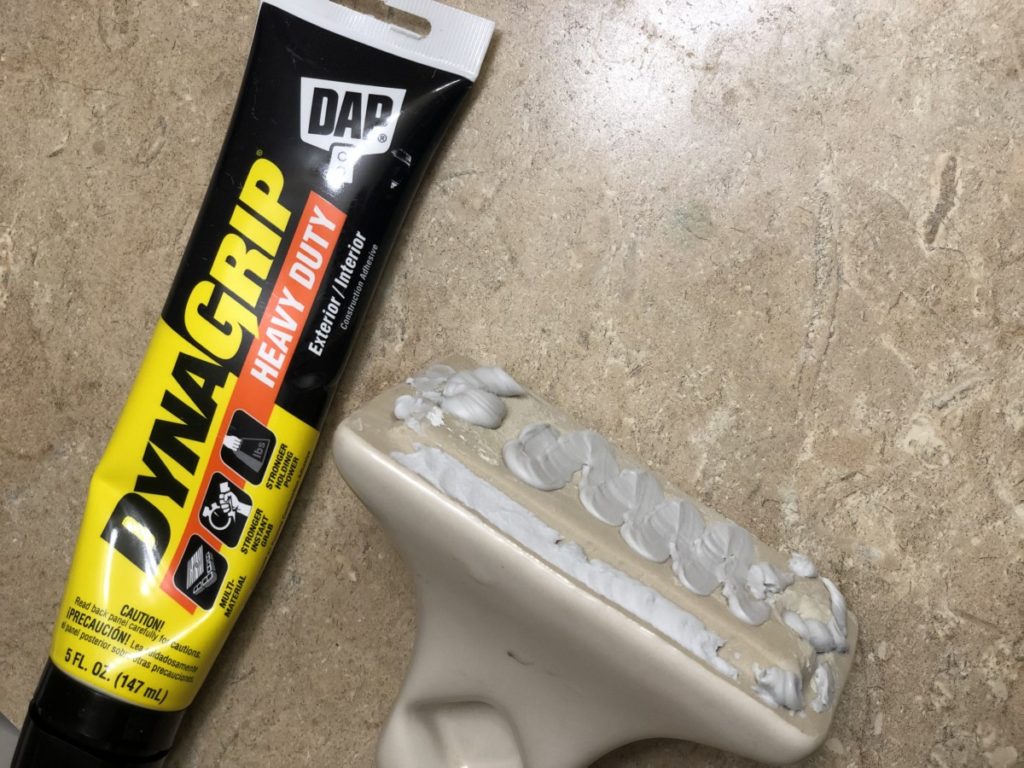
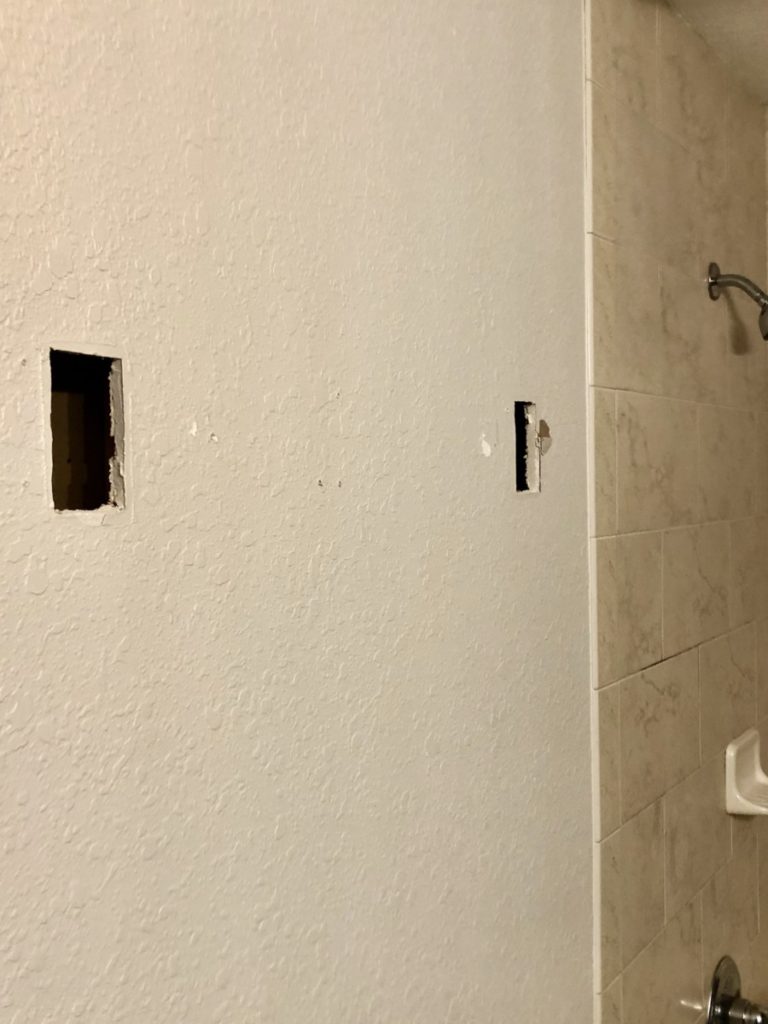
More than anything this bathroom makeover was just a series of covering up or repairing holes!  I already tackled the sink hole, now onto the partial hole created from little boys that shall not be named using the towel rack as a pull-up bar.  Fortunately, this was an easy fix. 

Just a few dollops of DYNAGRIP and we were back in business. 

Ceramic Towel Bar Repair

 I just braced it up with some duct tape while it cured. 

Paint

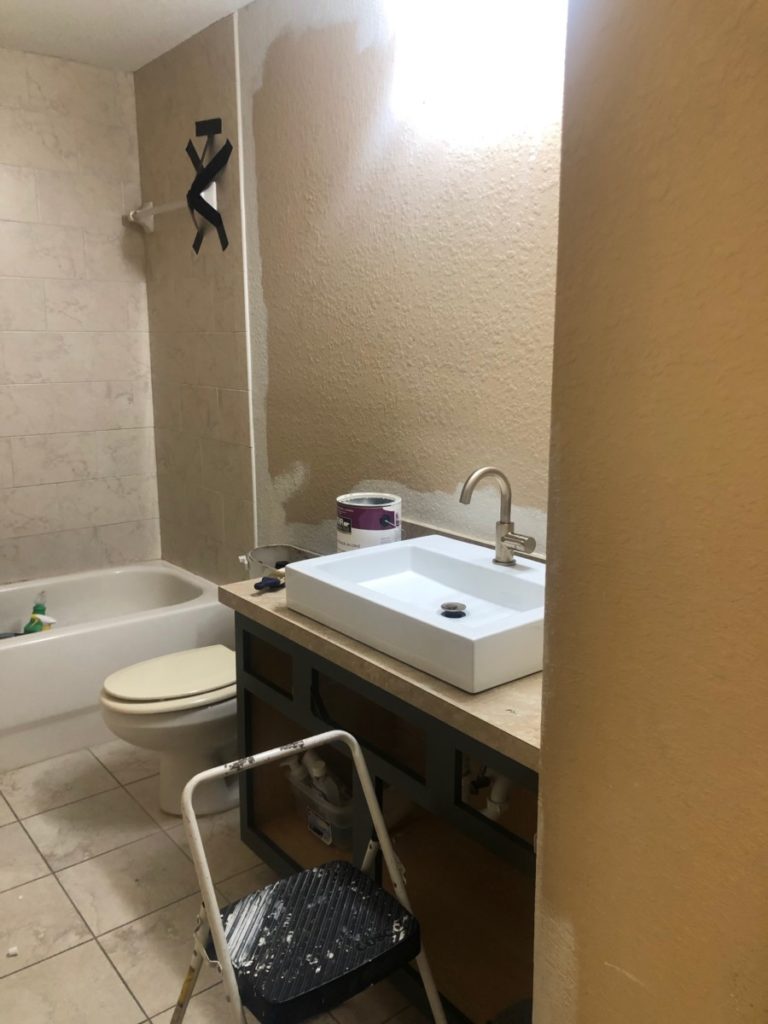
While all my adhesives were curing I finished up painting all the walls. For the walls I used the same color as  the recently renovated guest bathroom. 

  This was actually a makeover that took me less than 24 hours to complete. Mind blowing right?  Like I said, most of it was just covering holes and paint. In order to get everything painted that quickly I enlisted my Fuji-Spray Semi-Pro sprayer, and when painting  the walls. FROGTAPE!  A good painters tape can cut your labor time considerably, and for some one that has orange peel knock-down walls, having a straight line is no small feat! 

Custom Towel Rack

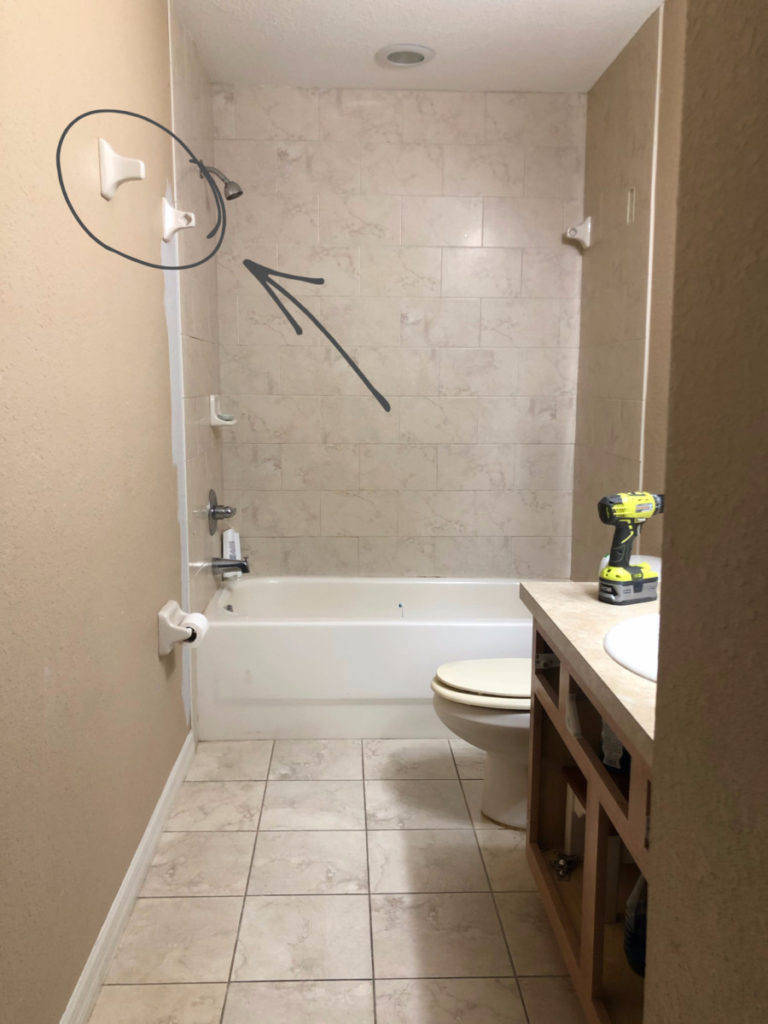
Everything was coming along quickly, and I was actually in a time crunch… but I kept getting distracted by the other builder grade towel bar. The one in the shower didn’t bother me much.  It was a sensible option in the shower and would rarely be seen.

Upgrade builder grade towel bars.

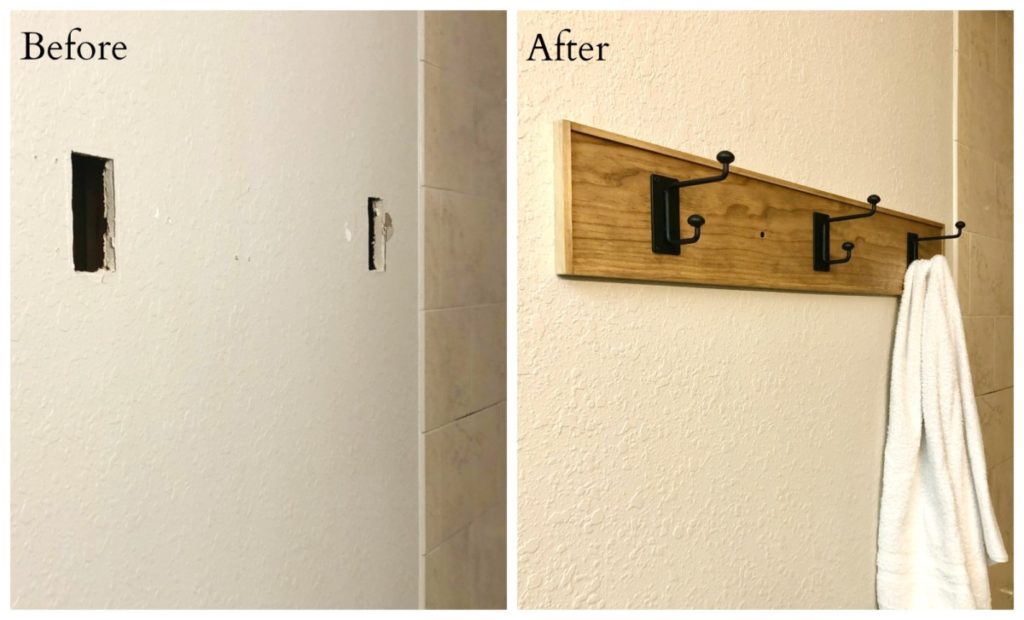
However, the one at eye-level was bugging me… so what did I do?  I created two new holes to cover! 

Remember how I said I was trying to complete this project in less than 24 hours?! Well you might think I am crazy for trying to create a custom towel rack as opposed to simply installing new hooks, but in reality this was a very quick fix opposed to patching the drywall and then adding hooks. 

So I ran to the shop and whipped together a towel bar that would add character, and cover the holes.  Win-Win! 

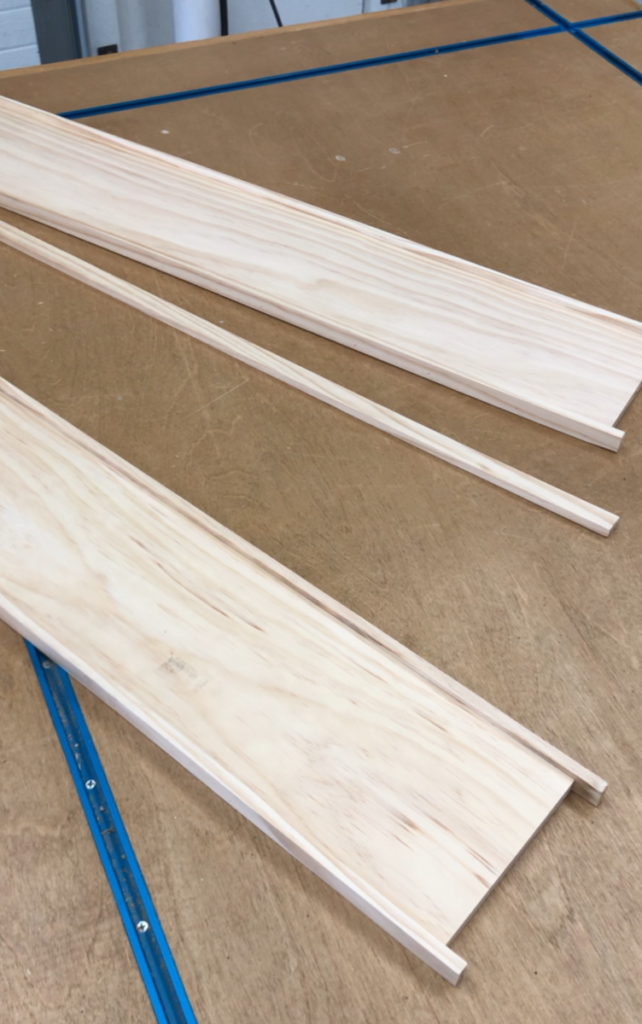
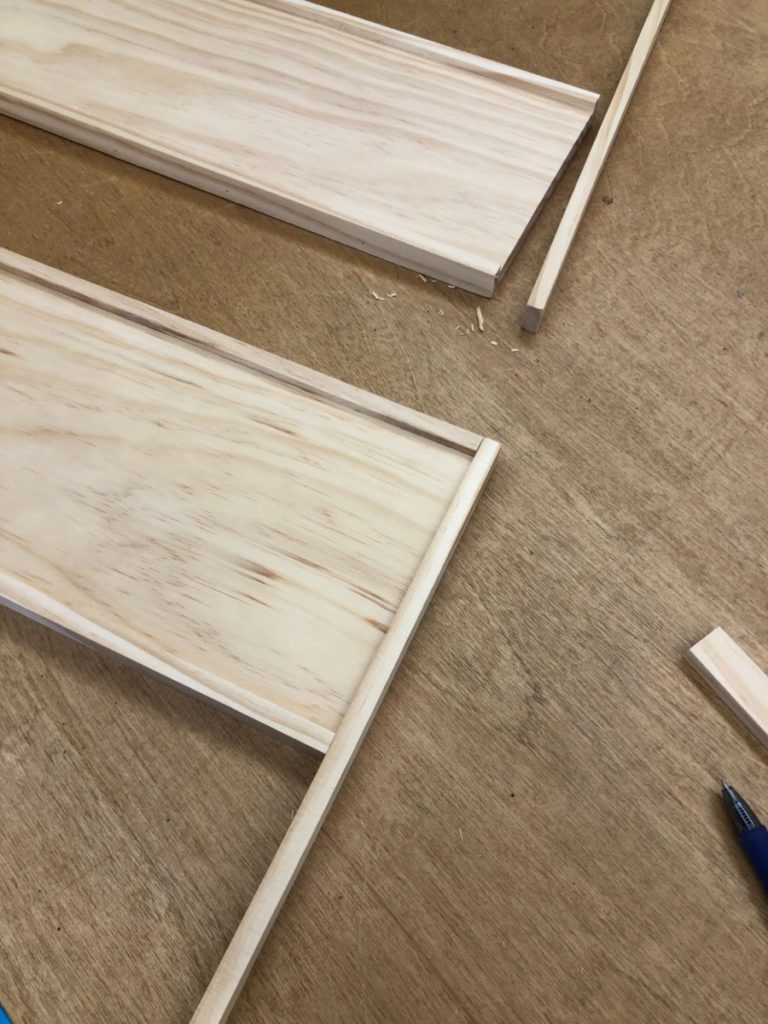
 I used a 1/2″ x 6″ pine board, and a 1/2″ x 1 1/4″ board to create the base for my towel rack. (  I personally wanted the profile to be low, so I ripped the 1 1/2″ board in half, so that it would only be 1/2″x 3/4″.) 

 I cut the 1/2″ board to the dimensions needed to cover my holes.  I then used DAP RapidFuse to glue the (smaller) ripped down board to both of the long edges of the board. 

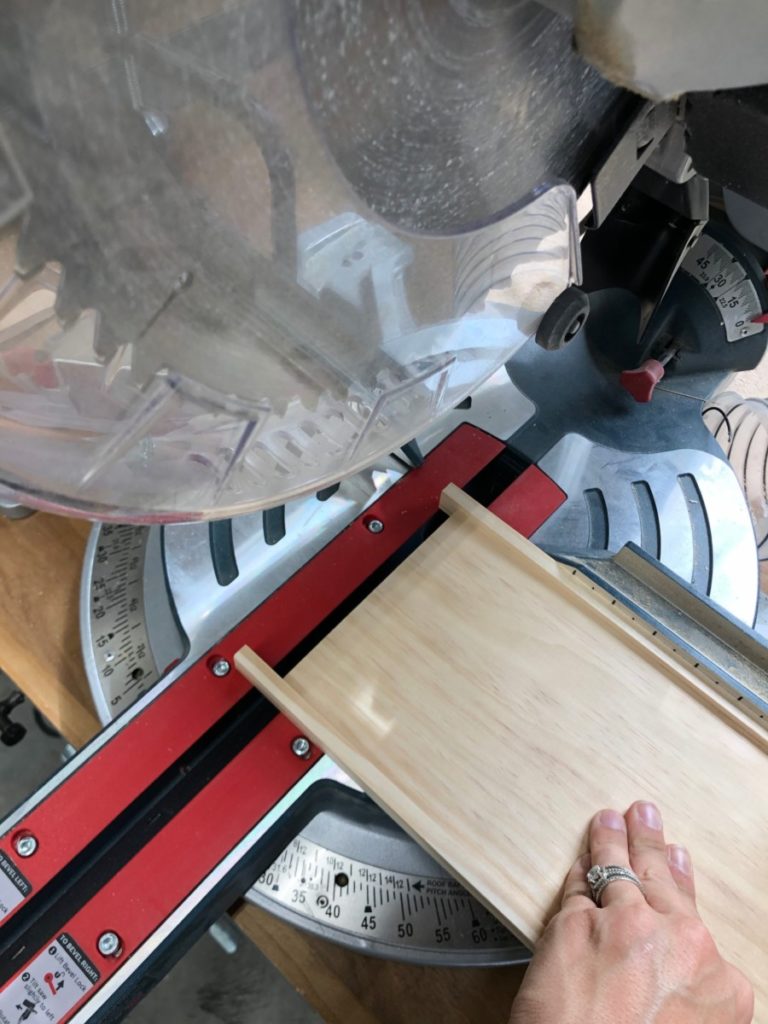
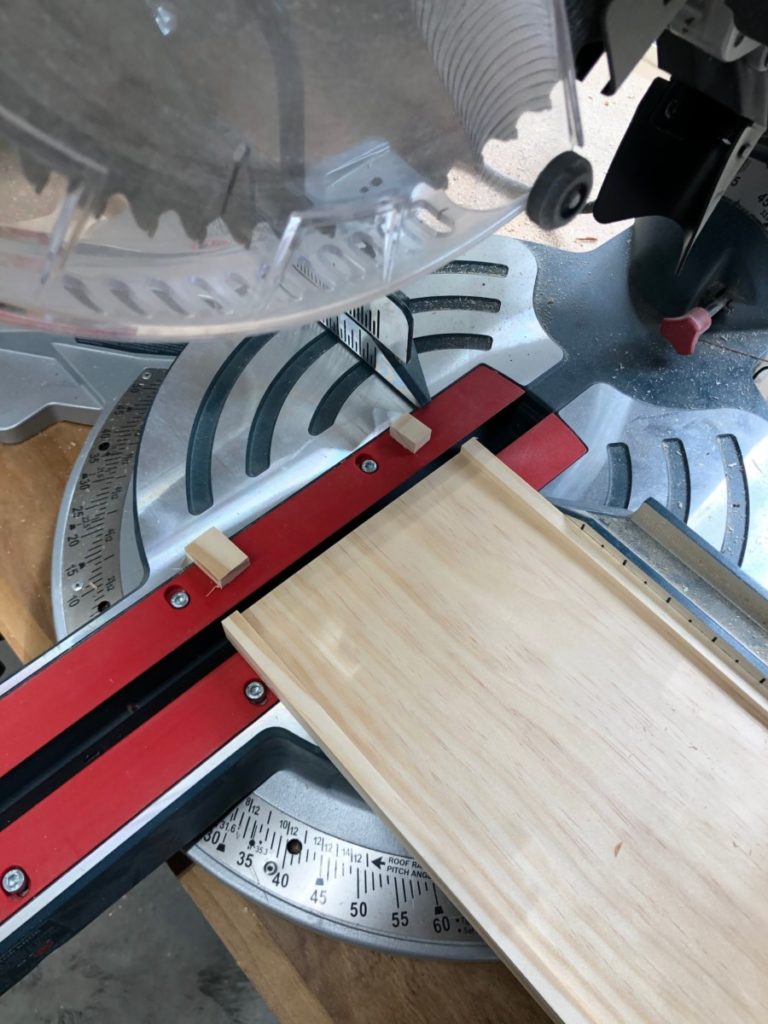
When adding my border pieces I intentionally made them too long.  I did this so that I could simply shave off the end using a miter saw.  By doing this it eliminated the need for precise measurements. 

See perfectly flush! 

Lastly, I needed to add the end cap. You can measure the end and transfer the dimensions OR you can hold the trim piece in place, mark and then cut before gluing in place.  I timed it, and this whole process took less than 5 minutes! 

I slapped on some Early American stain by Minwax and set it in front of a fan to dry so that I could add poly, and hooks. 

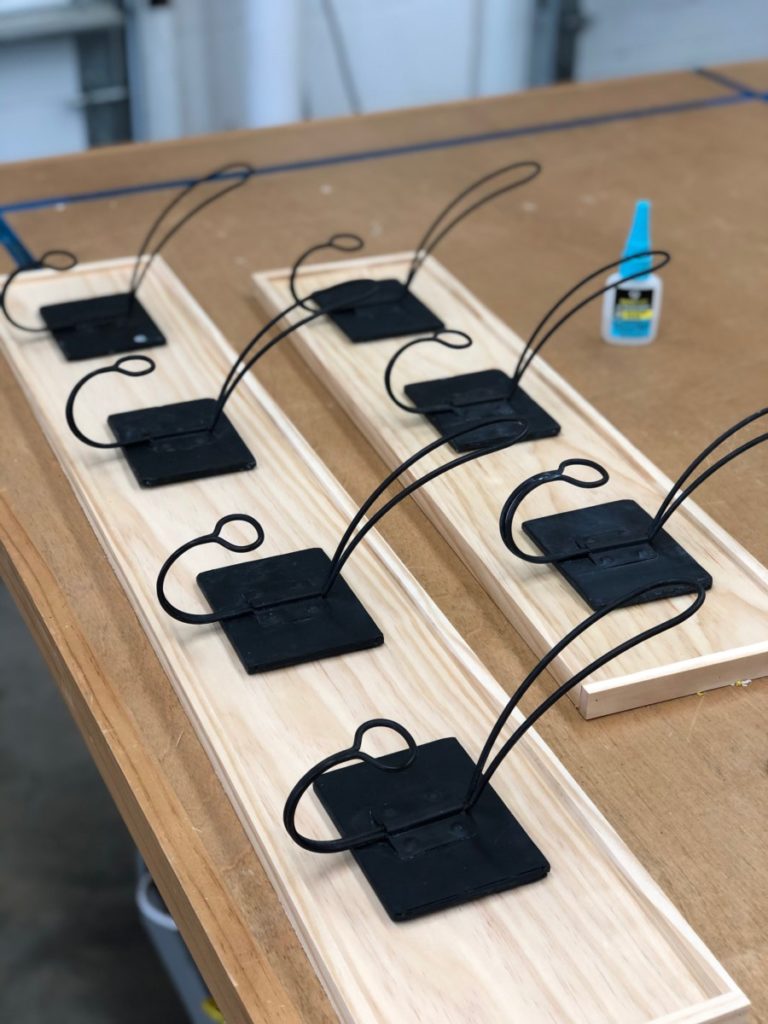
I used 2 1/2″ screws to secure  the new towel rack to the wall.  Mark the locations of your studs and drive a screw through the new plate and into the stud behind it. (When at all possible I try to hide the placement of the screw behind the hooks.  I just install the hooks after I install the base plate.) 

Finishing Touches

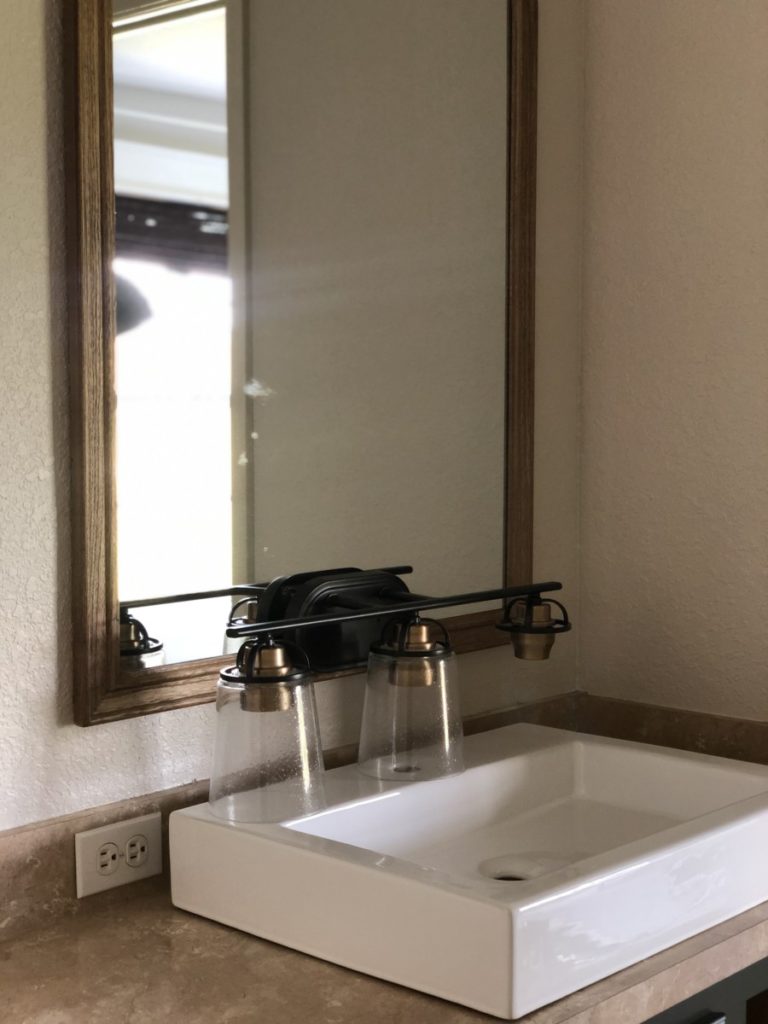
After everything was painted and holes covered it was down to the finishing touches. If you are familiar with my guest bathroom makeover you know I went back and forth in regards to light fixture multiple times. Well,  I couldn’t use both of the lights in the other bathroom so I decided to use the leftover in the boys bathroom.  

  • Two Tone Light Fixture– The Home Depot 

I also opted for the same mirrors used in the guest bathroom makeover as well. 

  • Threshold French Country Mirror– Target 


24 hour bathroom makeover

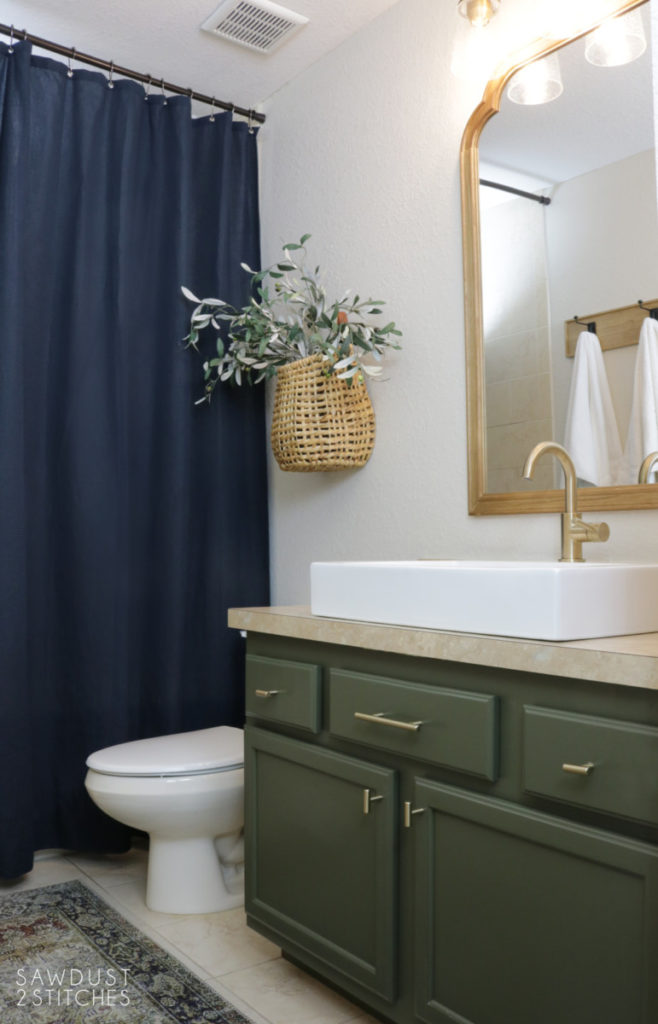
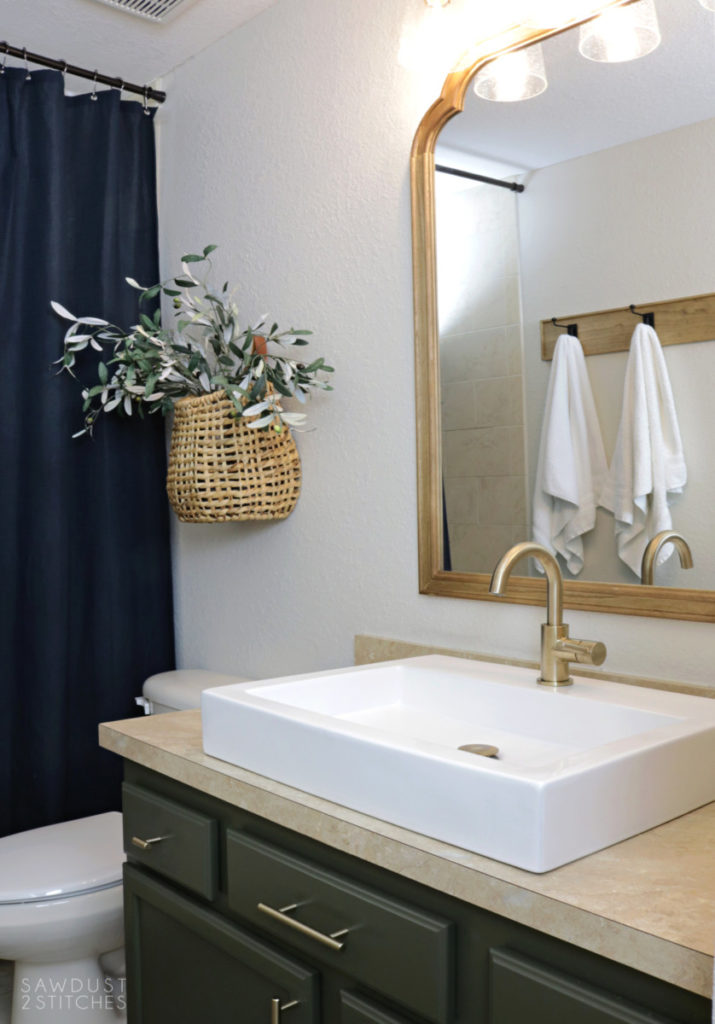
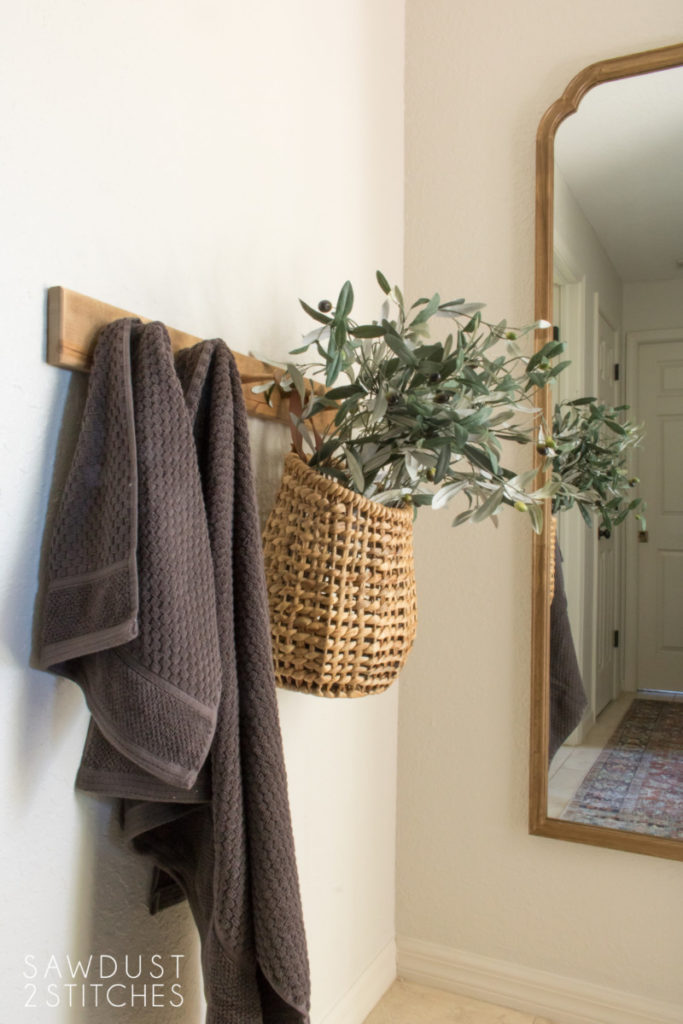
 I just added a few last touches including an extra long shower curtain to give the room some height, added a rug runner to tie  my colors together, and a  “fishing basket” filled with olives to complete the space! 

So without further ado.   The kids 24 hour bathroom makeover!

Sources

Sources 

  • Two Tone Light Fixture– The Home Depot 
  • Threshold French Country Mirror– Target 
  • Bar Drawer Pull- Home Depot 
  • Vintage Olive Rug Runner– Amazon 
  • Basin Porcelain Sink– Amazon 
  • Extra Long Shower Curtain– Amazon 
  • Brass Single-Hole Faucet- Amazon (Not exact but close.)
  •  

Tools

  • Fuji Spray Semi-Pro 2 – Amazon 
  • DAP Caulk Pro Kit- Amazon 

One Week Bathroom Makeover

January 7, 2020

This post is sponsored by The Home Depot and does contain affiliate links*

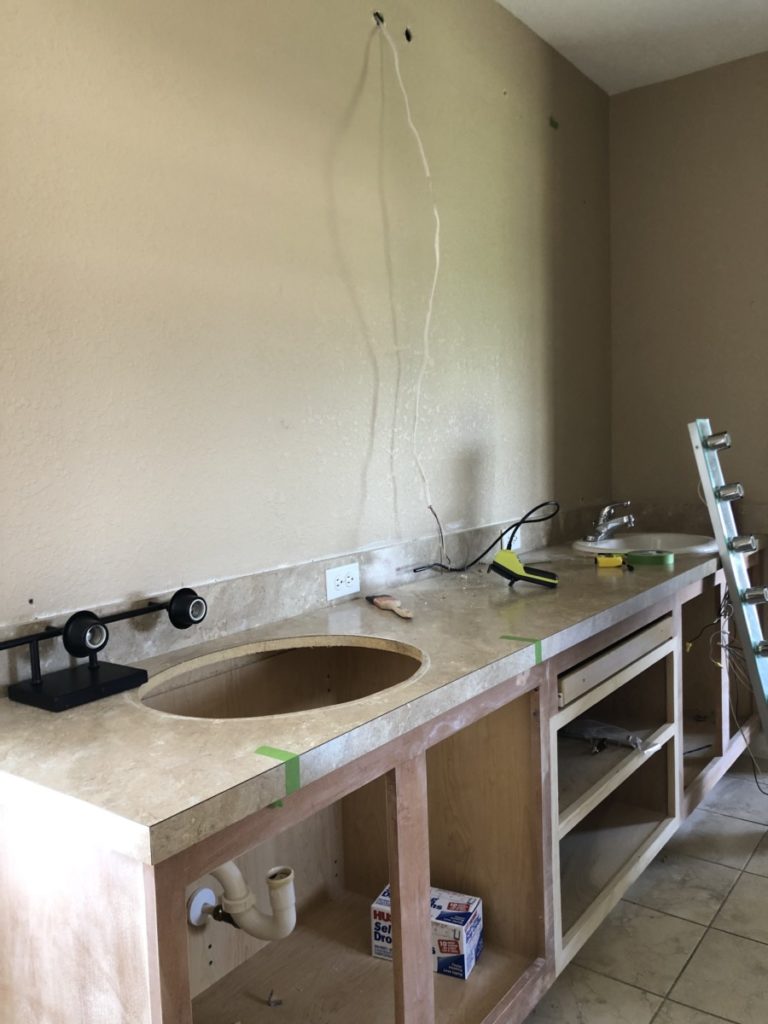
 We moved into our current home nearly 4 years ago.  Within the first four weeks I re-painted about 85% of our home.  It was then that I lost motivation and my poor bathrooms were abandoned to remain in their original band-aid colored glory….

 The loss of motivation was two-fold. First due to being sick and tired of painting.  The second?  I honestly had zero inspiration… however that all changed and I found my spark!  I decided to give my bathroom a one week makeover!

One Week Bathroom Makeover Before

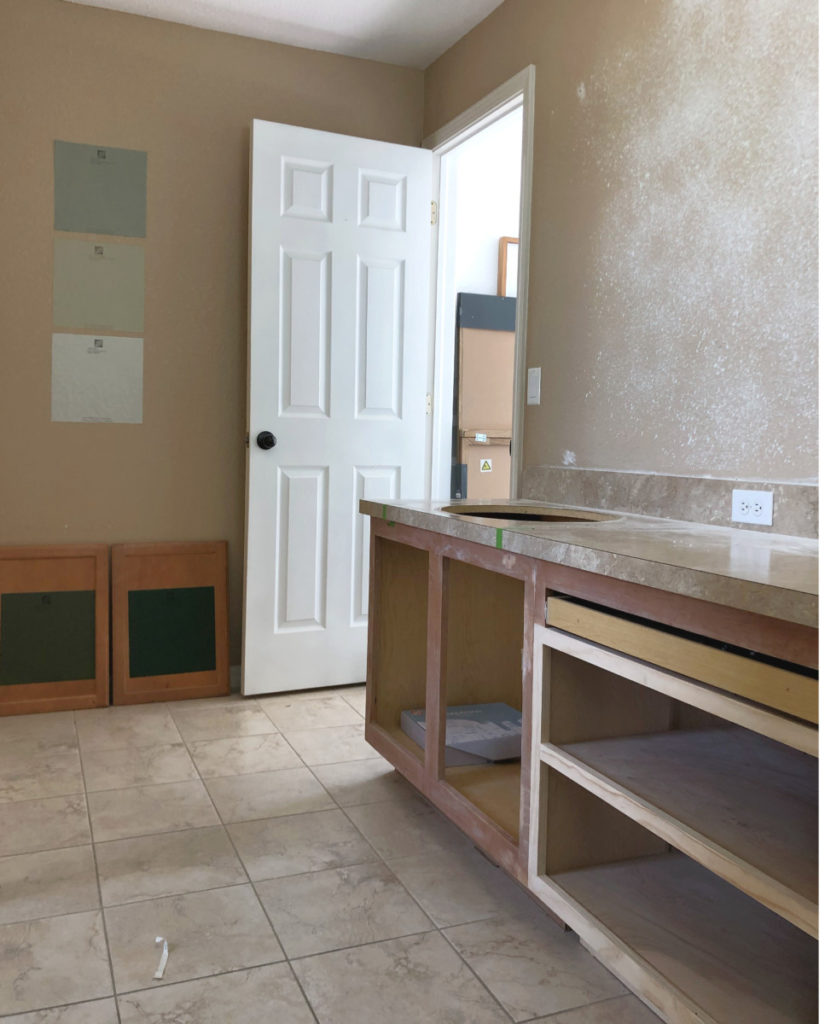
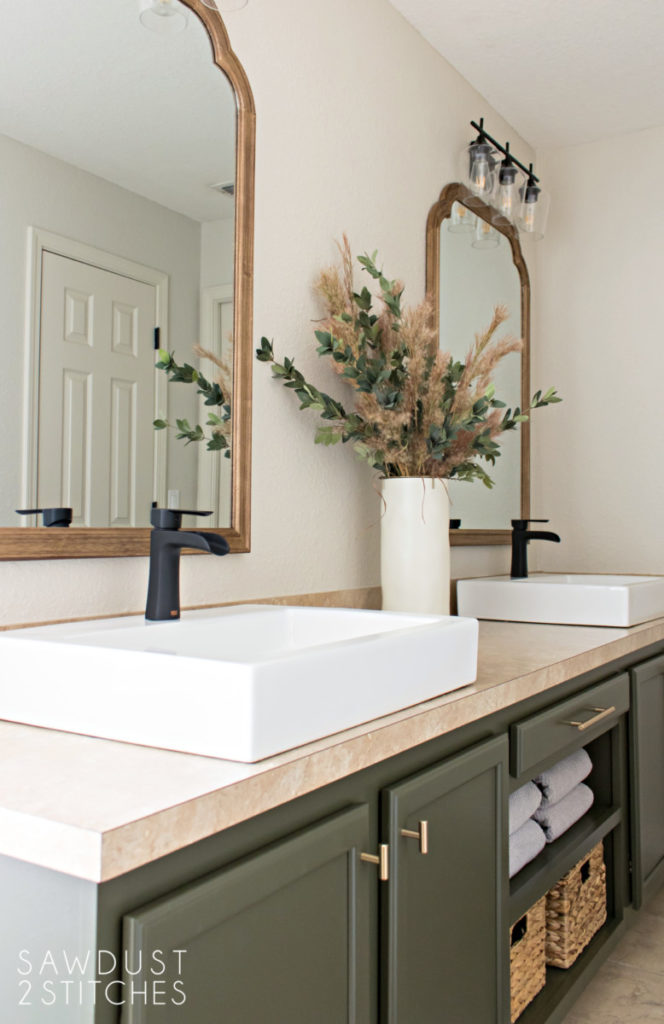
 After a lot of soul searching I decided to try something  bold.  I wanted to paint my cabinets GREEN!  Now, I typically stay in the safe, comfortable realm of neutrals, but  I really had a hankering to go bold! I figured if there was ever a  good place to expand my palette, the guest bathroom would be it.

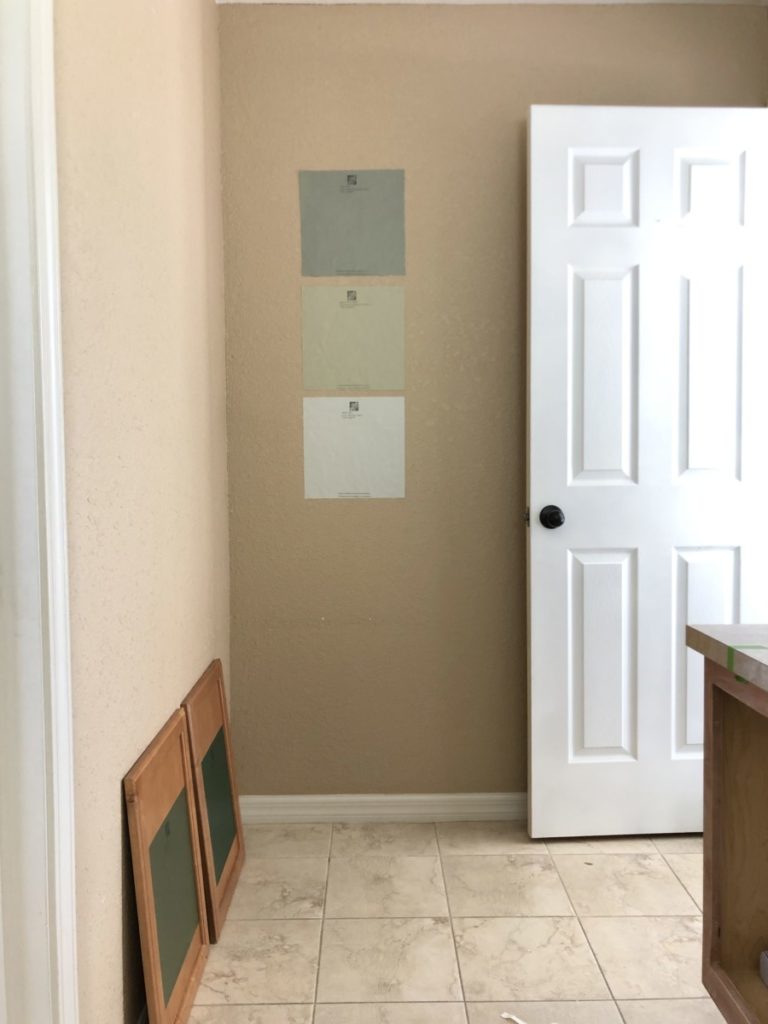
When choosing a paint color, I typically go through a few weeks of “paint selection induced anxiety” (It’s a real thing look it up. 🙂 I go through AT LEAST  a dozen different paint samples and countless color swatches. I am fairly certain the paint specialist at The Home Depot knows me by name. BUT NOT THIS TIME! That’s right, no breathing into a bag as I roll on my first coat of paint. This time I tried a new system.

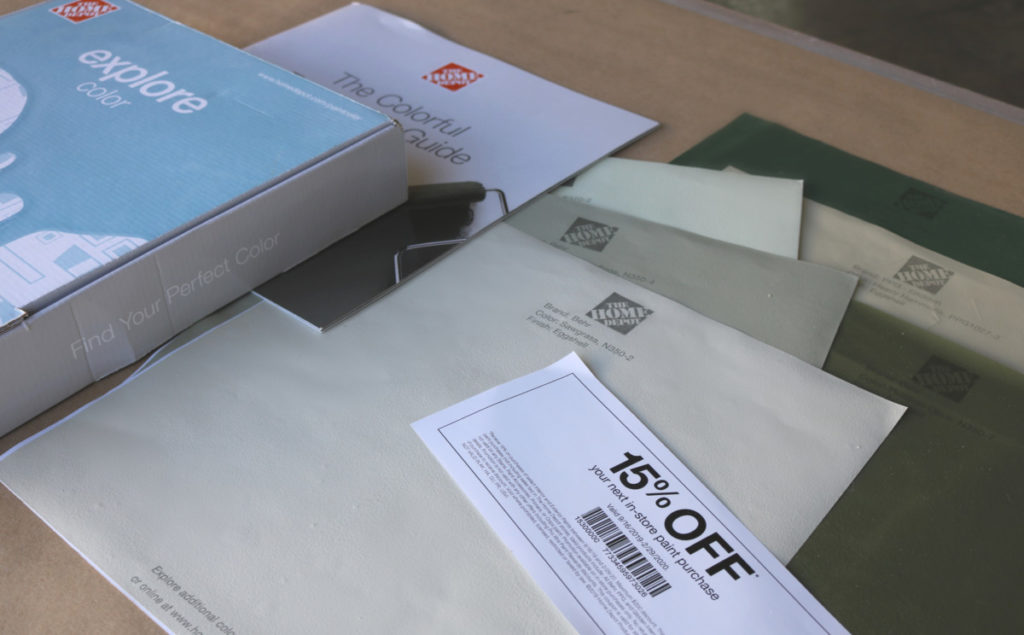
The Home Depot has partnered with Pinterest to create a new product that aids in the paint selection process.

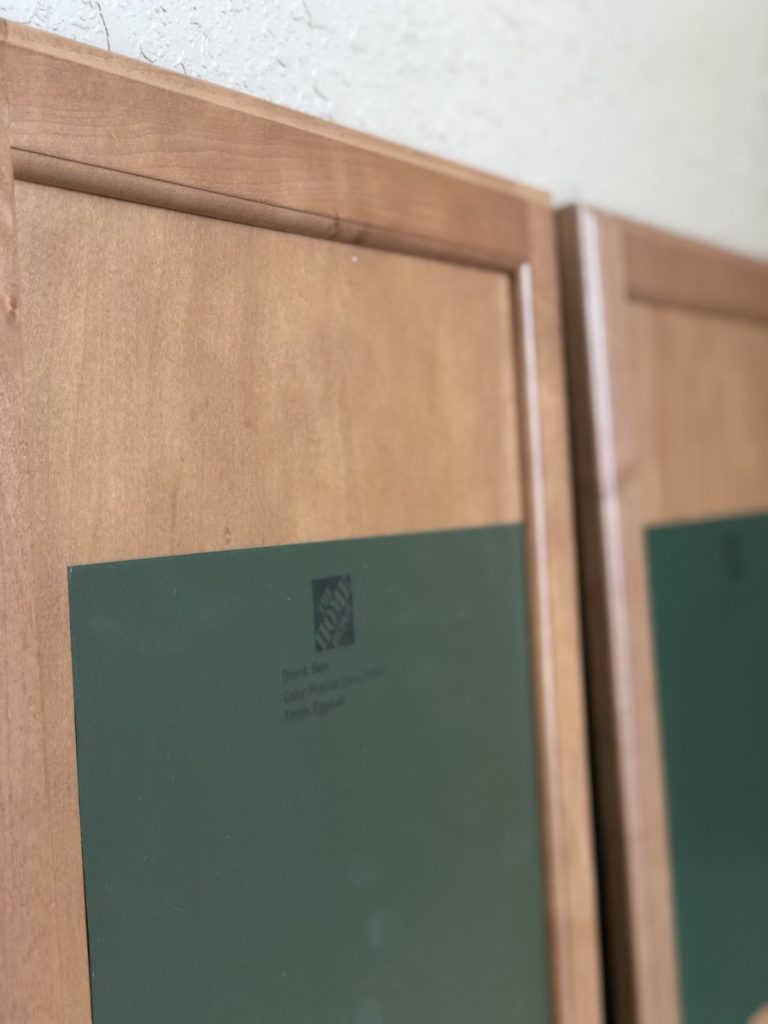
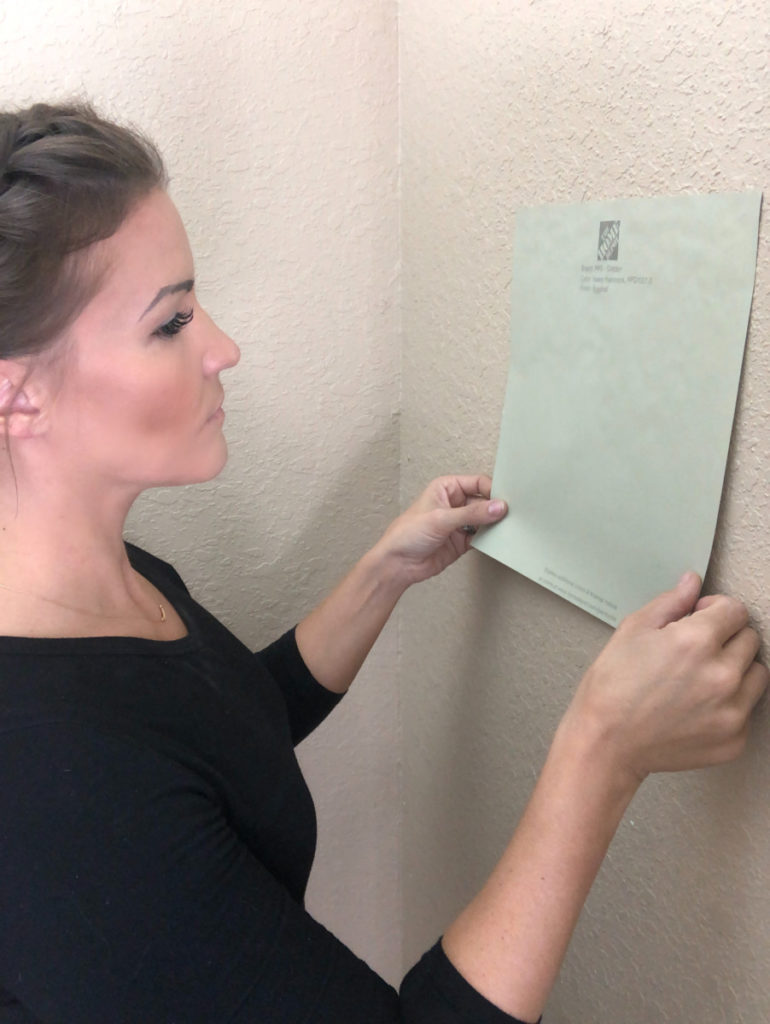
They have created a peel and stick paint sample that you can easily stick to your walls or cabinets, and effortlessly remove! When I say “paint samples” they actually are coated with 2 coats of the given paint in an eggshell sheen. These aren’t just colored stickers, they are 12″x 12″ samples of the actual PAINT. Gone are the days of tiny paint swatches, or messy paint samples. The future of paint sampling has arrived!

If that was’t enough, this kit pays for itself. Each kit contains a coupon for 15% off your total purchase of interior paint at The Home Depot!

One week bathroom Makeover Paint Selection

They currently have 8 different color kits that contain 6 carefully curated selections that will assist you in the typically nerve-racking selection process. They even break down the sometimes confusing family of whites, cool neutrals and warm neutrals!

  • Whites
  • Warm Neutrals
  • Trend Colors
  • Greens
  • Grays
  • Cool Neutrals
  • Blues
  • Accent colors

Within a half hour or receiving my paint kit in the mail, I was able to apply the samples, make a selection and head off to The Home Depot with confidence in my selections for both my walls and my cabinets! Once I had a tentative game plan, I hit the ground running.

One Week Bathroom Makeover Peel and Stick Paint Samples

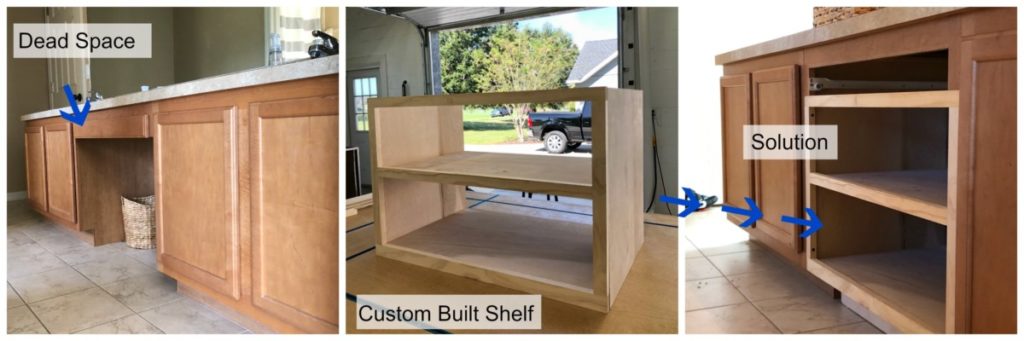
At this point in time I did not want to replace the countertops or the tile. This was going to be more of a surface level cosmetic makeover. The only structural change was a small built in.

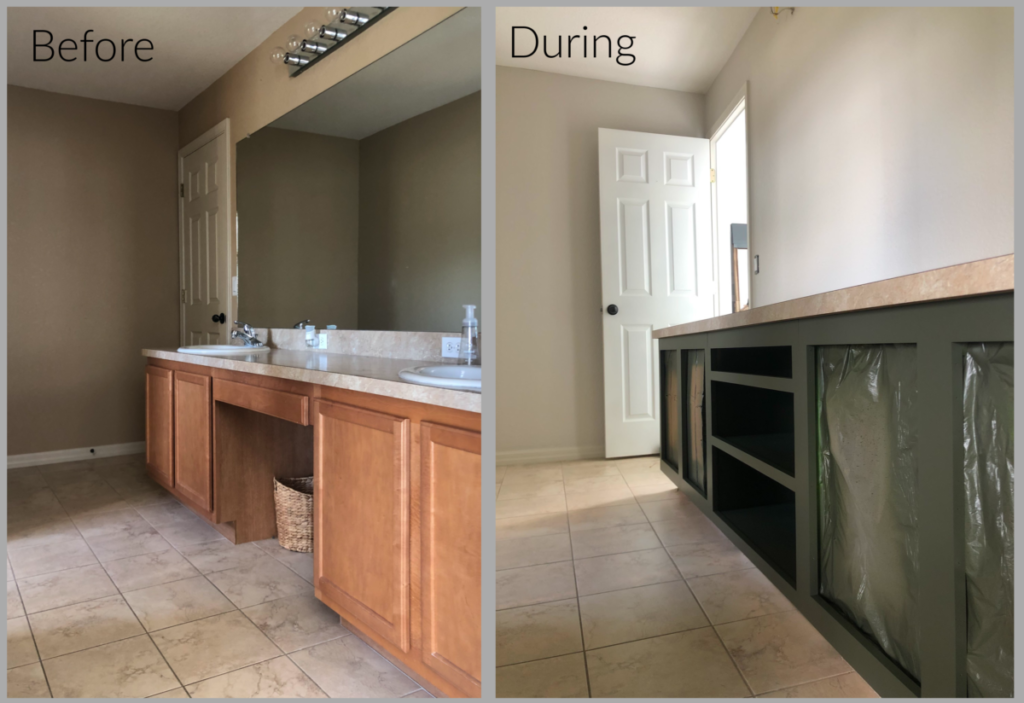
I knew I wanted the cabinets to be green, but as you can see the original design was broken up. The vanity included a sitting area, and I didn’t feel it was necessary for a guest bathroom. Instead of leaving the area open, I created a built-in that would aesthetically create a heavier/darker feel to the cabinet space.

Once the built-in was in place I was ready to prep everything for paint!  (If you are interested in a detailed plan of execution concerning painting cabinets I have a full tutorial here.) 

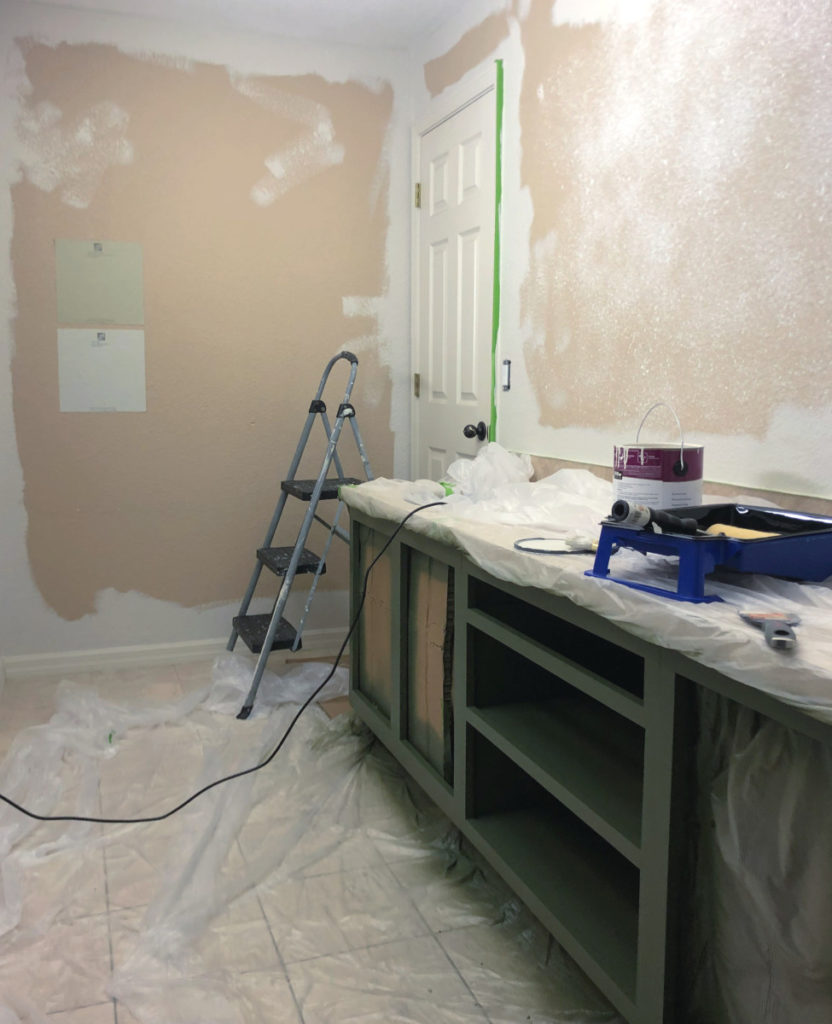
One week bathroom makeover process picture

As part of this step I removed the vanity mirror and the light fixtures. I was planning on replacing these items so it made sense to remove the obstacles before painting. 

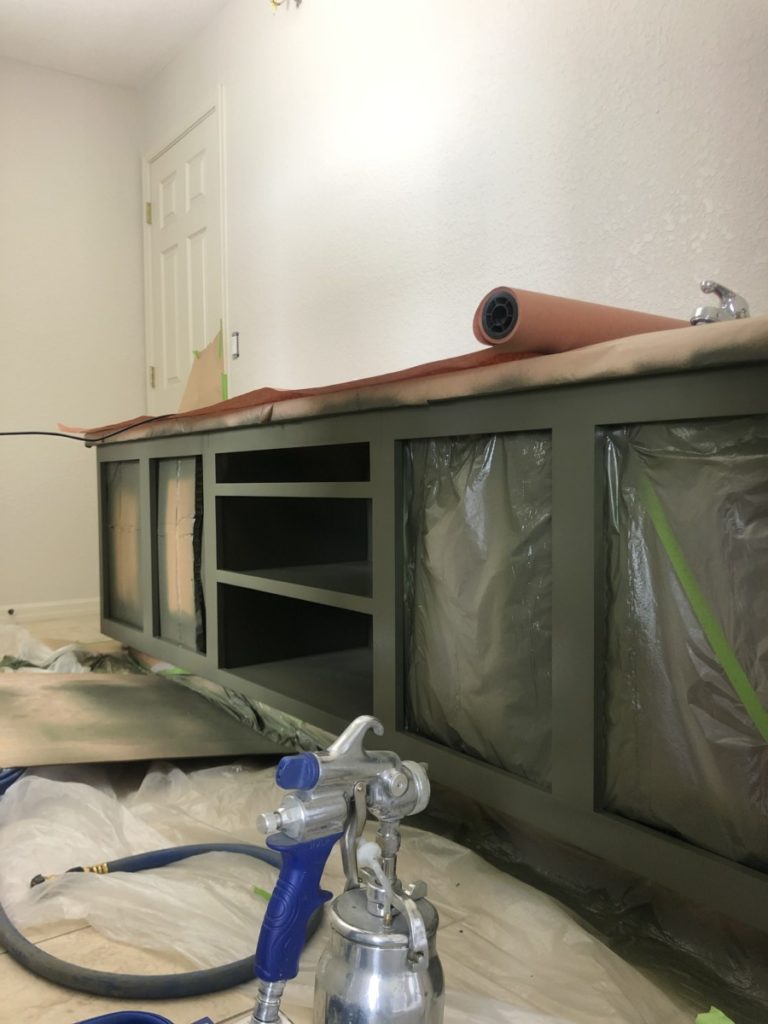
In this case I opted to use my paint sprayer. There were three reasons for this.  First, I was already repainting the entire room so I would not need to drape everything. Second,  I was on a self-inflicted time crunch and this gets the job done in MINUTES.  Third, the finish is flawless!

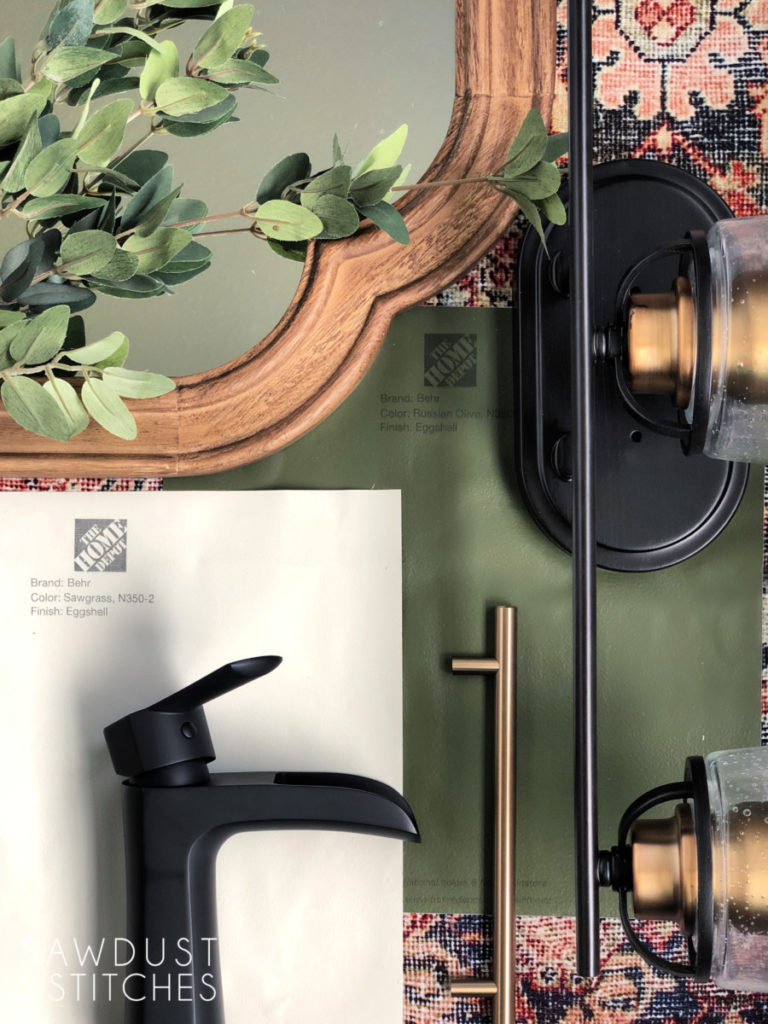
Cabinet Paint Color: Russian Olive by Behr 

I use this sprayer: Fuji Spray Semi-Pro 2  (Worth every penny!) 

While I was waiting on paint to dry I quickly started edging the room. With the use of Frogtape I was able to trim out the entire room before the cabinets were ready for their final coat.

Wall Color:  Seagrass by Behr

While I was waiting on my final cabinet coat to dry I painted the rest of the walls. Phew. I don’t know about you, but I am all about maximizing my down time. I knew if I really put my mind to it, I could knock it out in one day! (Totally did.)

If this picture isn’t a testimony of the difference one day and two gallons of paint can do, then I don’t know what is!

The bathroom was already looking about 127% better,  but I was not about to stop there.

As I stated before, this was not a gut job remodel.   I was working with the existing countertop and tile.  However, the sinks were just not jiving with my plans. Alas, after a little bit of brainstorming,  I realized I didn’t necessarily need a new counter in order to have a beautiful sink. I just needed to find a basin sink that would cover the existing hole. Problem solved! 

With a fresh paint job, and new sinks this bathroom was nearly unrecognizable, but we still aren’t done yet! Now for the fun part, the icing on the cake, the hardware and fixtures!

After browsing Home Depot online I found some very tempting options! 

  • Brass  Delta Faucet- Home Depot 
  • Solid Black Fixture– Home Depot 
  • Vintage Style Rug Runner 

I loved the vintage brass feel faucet, but there is just something so eye catching about this matte black faucet!

  • Matte Black Faucet– Home Depot 
  • Two Tone Light Fixture– Home Depot 
  • Bar Drawer Pull- Home Depot 
  • Vintage Style Rug Runner 

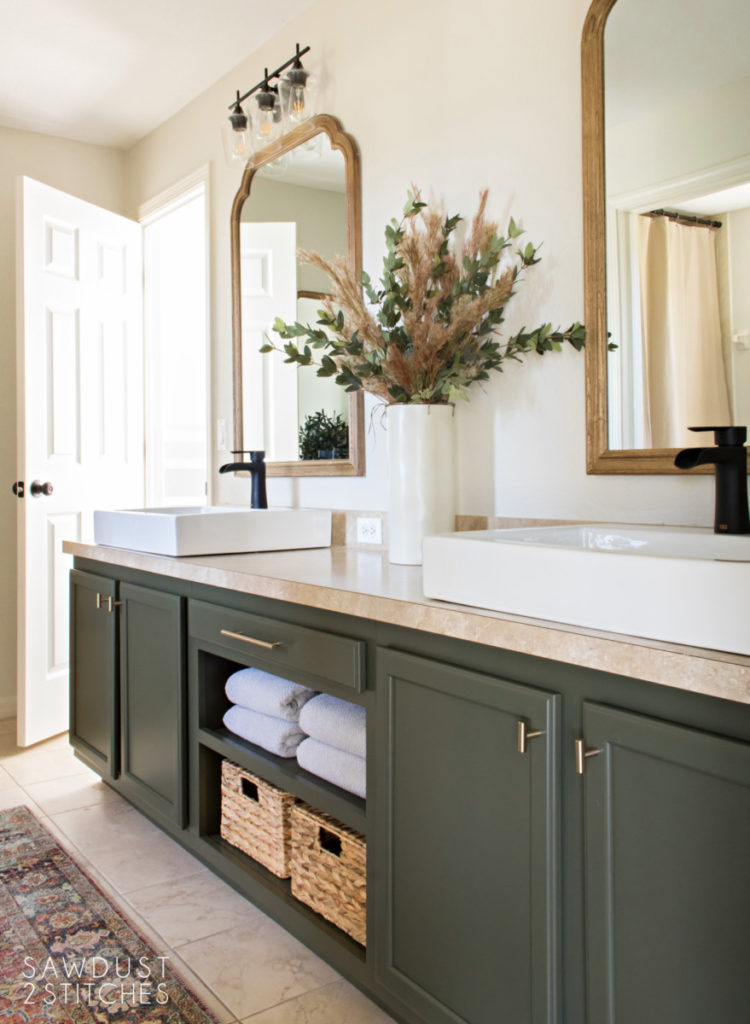
After staring at my options for nearly two days, and polling every platform of social media, and questioning all my acquaintances I FINALLY made the final decisions, and I LOVE the outcome. So without further ado. The ONE week bathroom makeover.

There you have it folks, a one-week bathroom makeover! I have learned that you don’t need to break the bank in order to create a beautiful space. Sometimes working with what you have can be a problem that just needs to be solved with some creative thinking. (Cue triumphant music.) This bathroom was a challenge, and I loved every step of it. With encouragement in the form of a dark green paint sample, I was able to step outside of my comfort zone and try new things and I am so glad I did!

Take Luck,
Corey

Paint Colors-

  • Wall Color: SeaGrass by Behr
  • Cabinet Color: Russian Olive by Behr

Home Depot and Pinterest Paint Kit Color Options:-

  • Whites
  • Warm Neutrals
  • Trend Colors
  • Greens
  • Grays
  • Cool Neutrals
  • Blues
  • Accent colors

Source Links: 

  • Brass  Delta Faucet- The Home Depot 
  • Two Tone Light Fixture– The Home Depot 
  • Matte Black Faucet– The Home Depot 
  • Solid Black Fixture– The Home Depot 
  • Bar Drawer Pull- The Home Depot 
  • Threshold French Country Mirror- Target 
  • Vintage Style Rug Runner 
  • Sink Countertop Basin-The Home Depot

How to Build: Large Floor/Leaner Mirror

November 14, 2019

Disclosure: Some of the links provided  are affiliate links. By purchasing through these links it supports this site and helps keep content free. You can read more about how we do this with no extra cost to you.

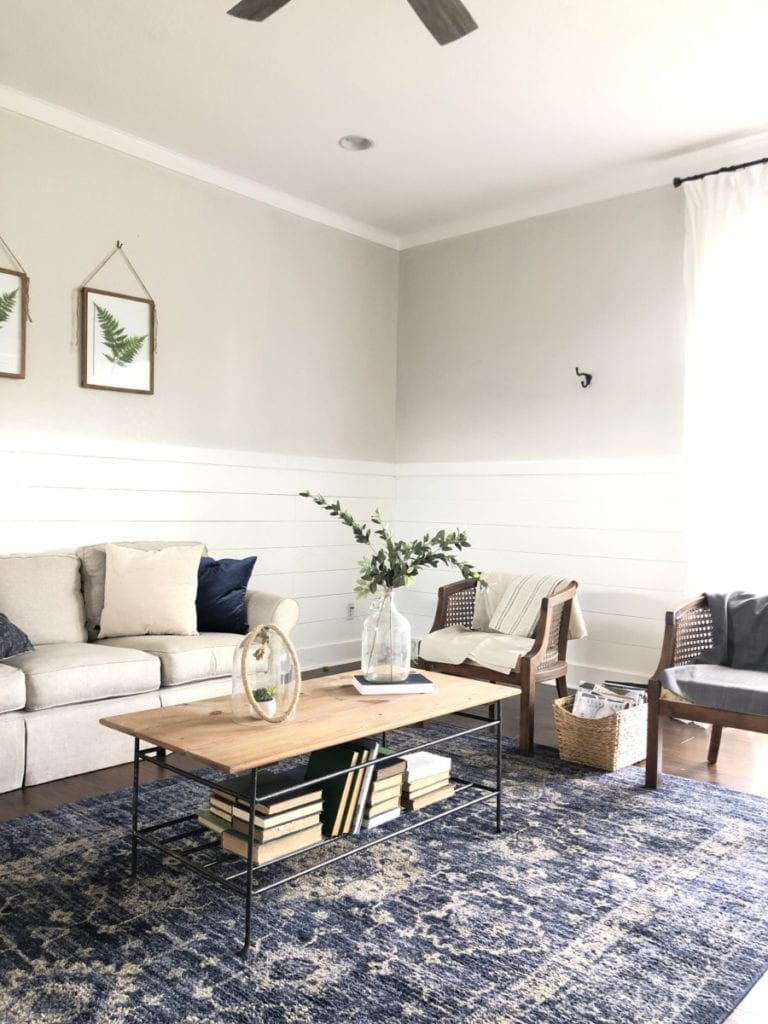
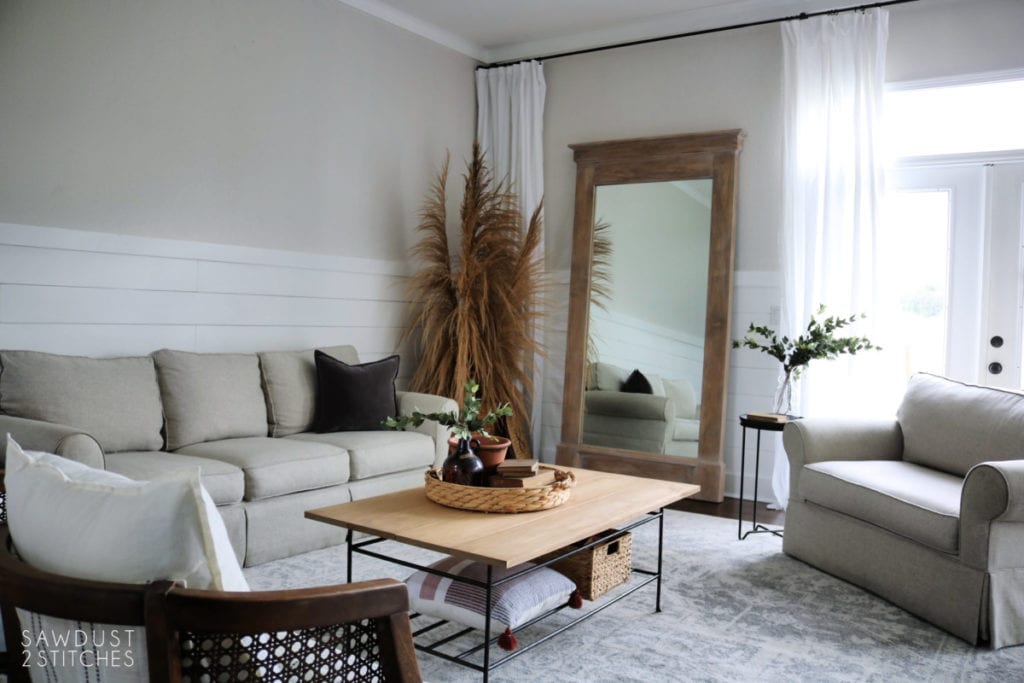
 I recently have been on a kick to “lighten up” the house.  It started innocently enough in the dining room. It then spread to the kitchen, and now the creep has entered the living room.  It was a beautiful space, but I was ready to change things up! 

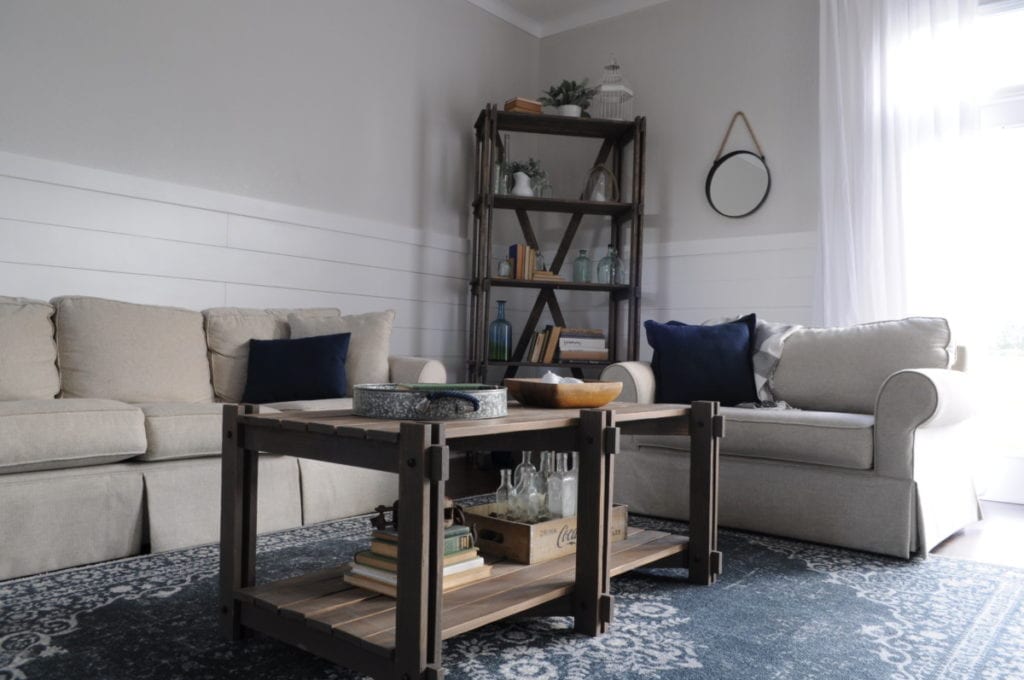
 As a starting point, I decided to take out the darker Rustic Coffee Table and Book Shelf that. I built a few years ago.  I replaced the coffee table with something lighter,  but the space felt empty. It needed SOMETHING… 

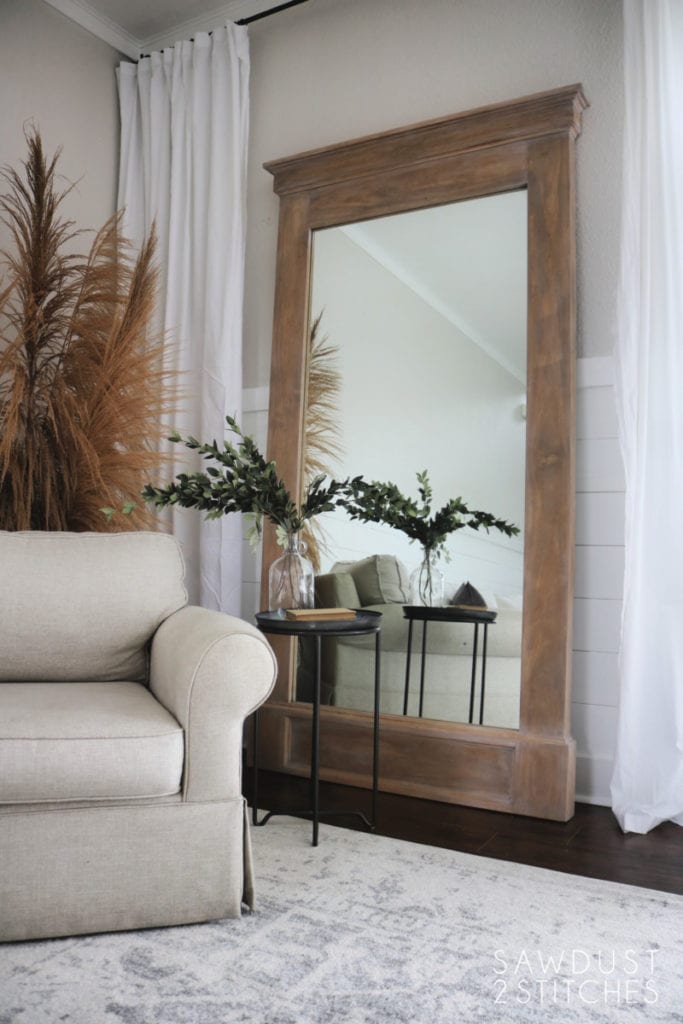
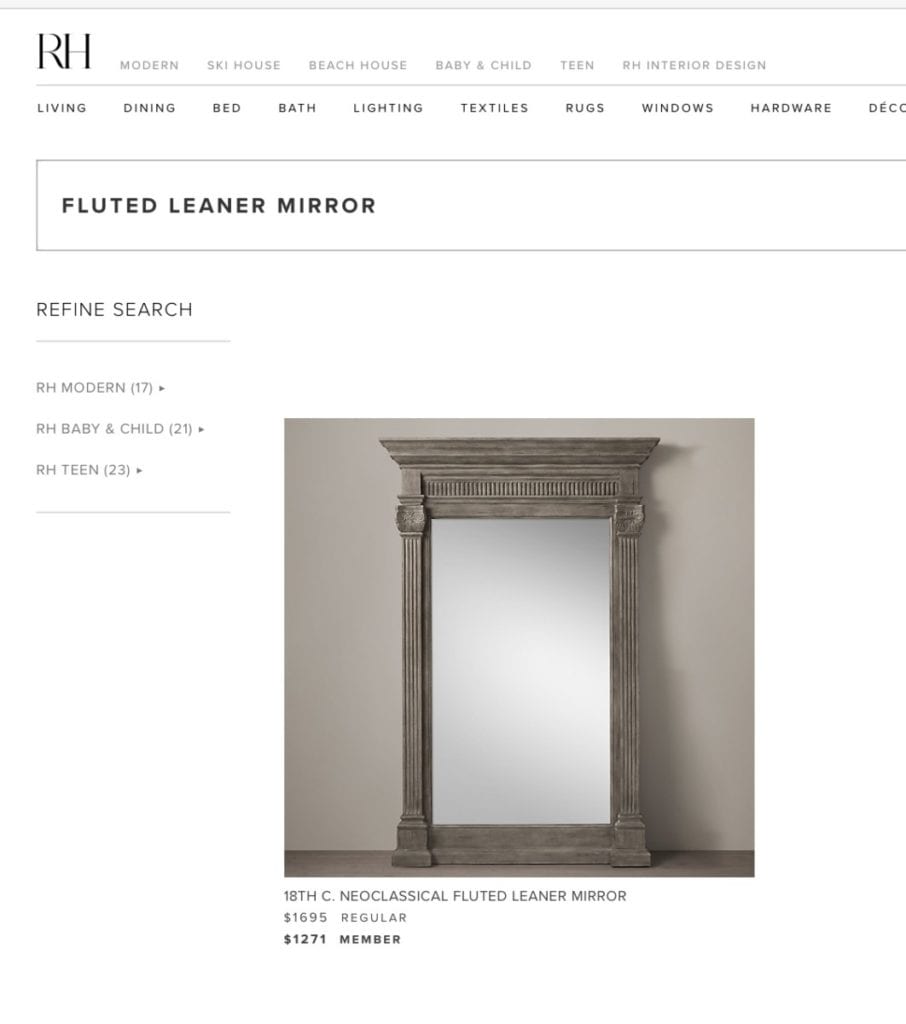
 I didn’t want to add anything too intrusive that would close in the space again. After some thought I decided a HUGE mirror would be just the ticket. I needed a HUGE Restoration Hardware style statement mirror. 

However, the price tag on the Restoration Hardware Mirror,  left little to be desired… “Who needs them anyways!?”  Am I right ?  I figured it would be so much more satisfying to build my own, and then I would be able to share the process with you lovely people.  I am proud to be able to to team up with the great folks over at DAP. (It is by working with partners like DAP that I am able to continue to provide content to you!)

Well, after one quick perusal of Craigslist I found a FREE vanity mirror from a bathroom makeover. SCORE!  The one I used for this build was a 42″ x 72″.   These build plans could easily be modified to fit other size mirrors with a little math. 

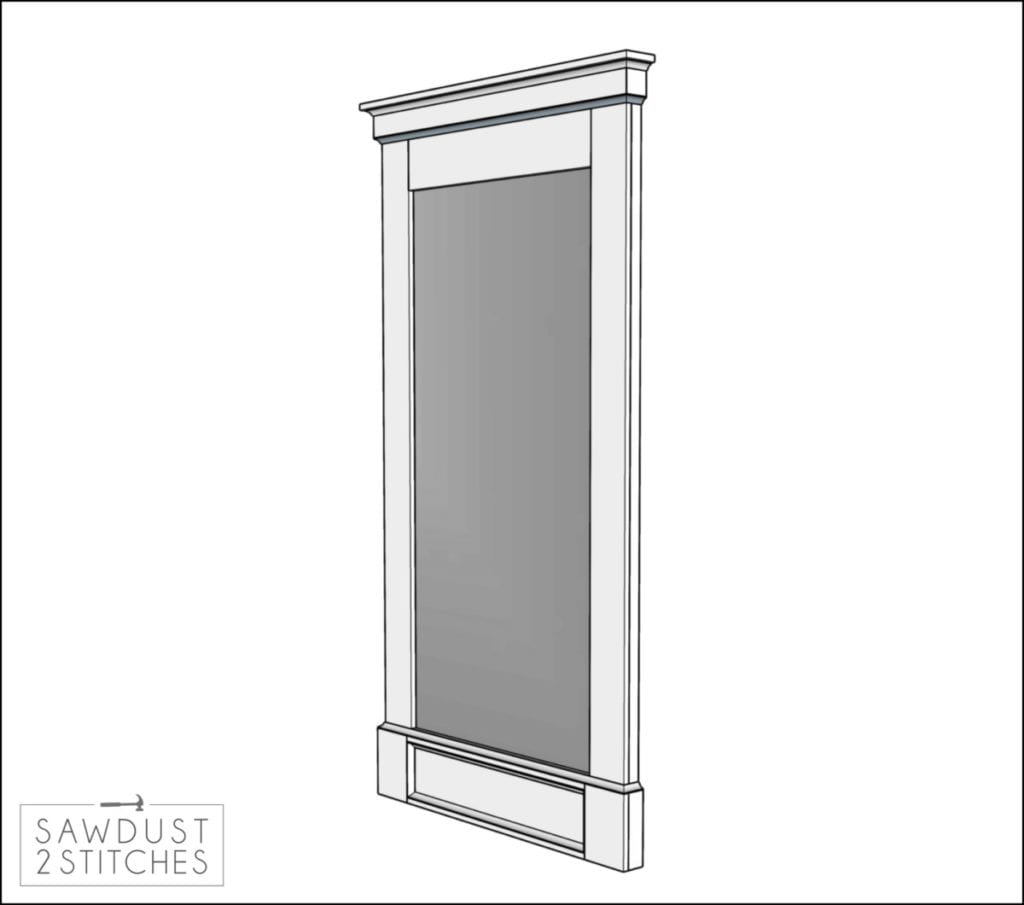
Full Build Plans Here!

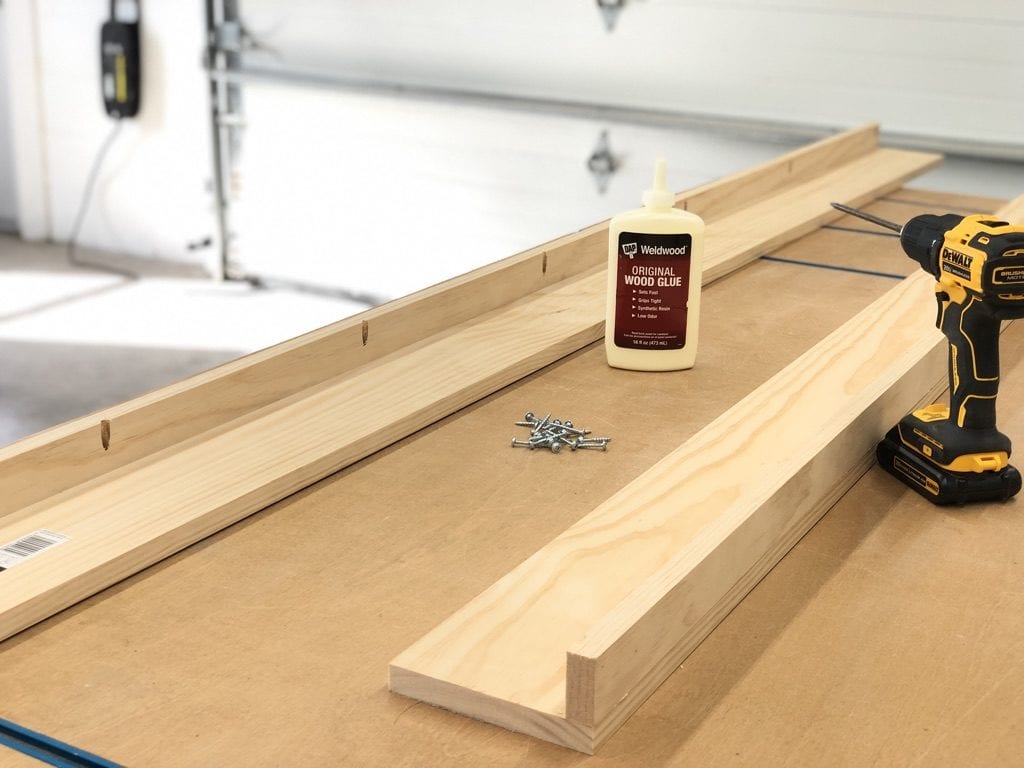
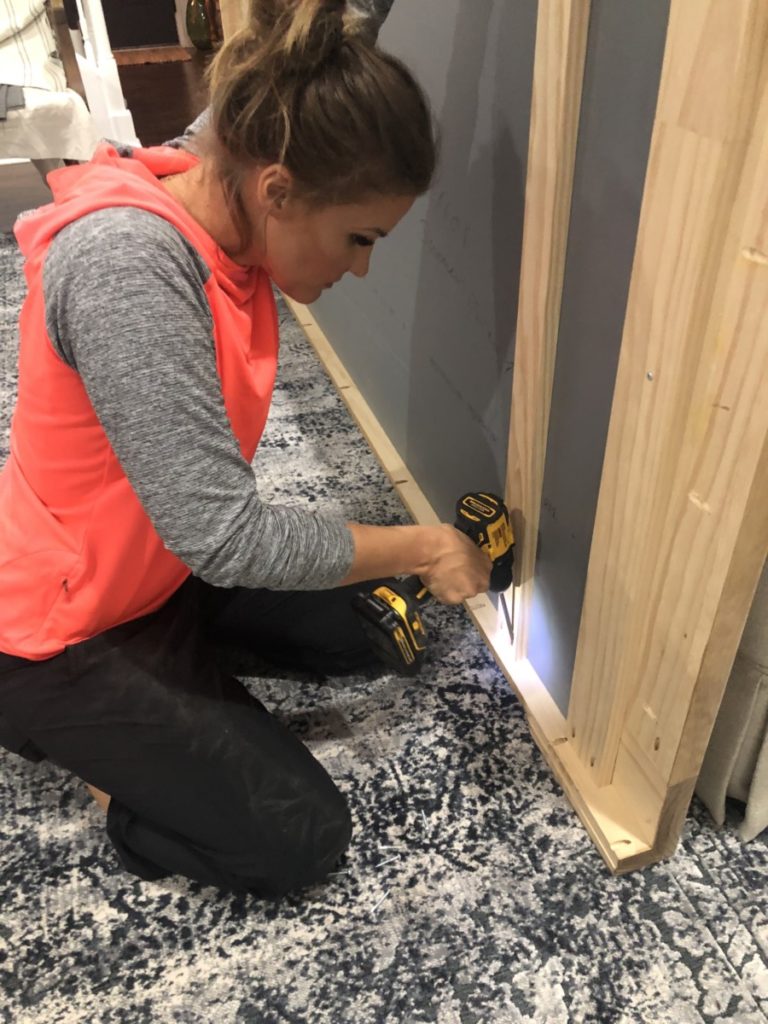
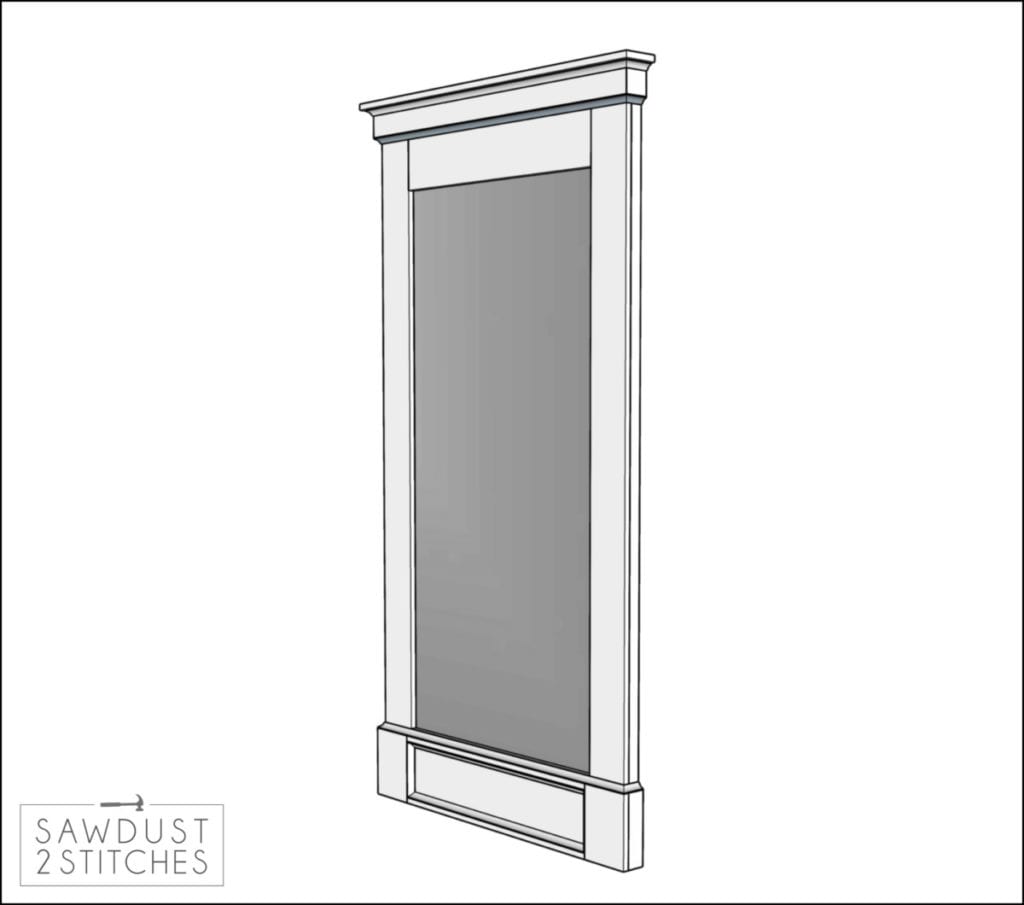
Lets’s get started! I first assembled the sides. When building this,  I knew I was going to need to take extra precautions to make sure that this frame would be solidly built and  fully support the HEAVY mirror.  I used DAP Wood Glue on all of my joints, and reinforced all of the weight bearing joints with Kreg Screws. 

If you would like to have FULL build plans, they ARE available at the bottom of the page. 

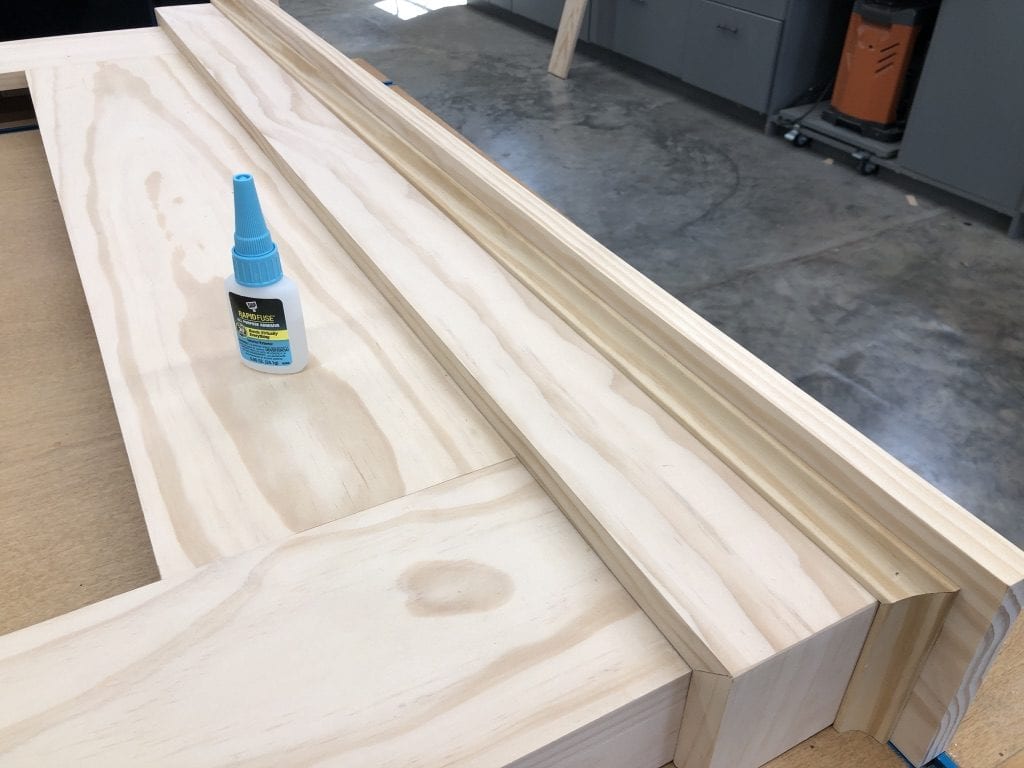
When applying the trim Rapid Fuse by DAP is ALWAYS my right-hand man.   I was able to quickly and seamlessly apply all of the cove molding without and crazy clamping strategies.  Just a few dabs and the cove molding was set! 

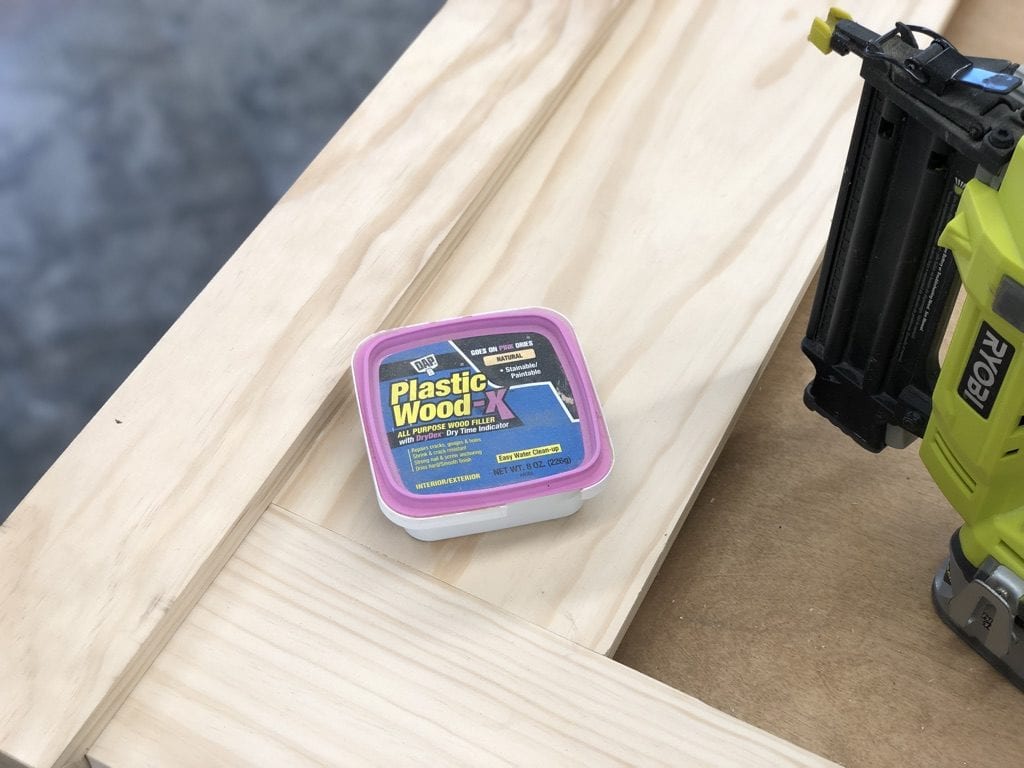
Once all the trim is installed, I was ready to prep for it’s finish.   For starters I used Plastic Wood by DAP.  I add just a small amount of this to each nail hole.  It  dries quickly, doesn’t shrink , and is stain-able.  It is perfect for woodworking projects. 

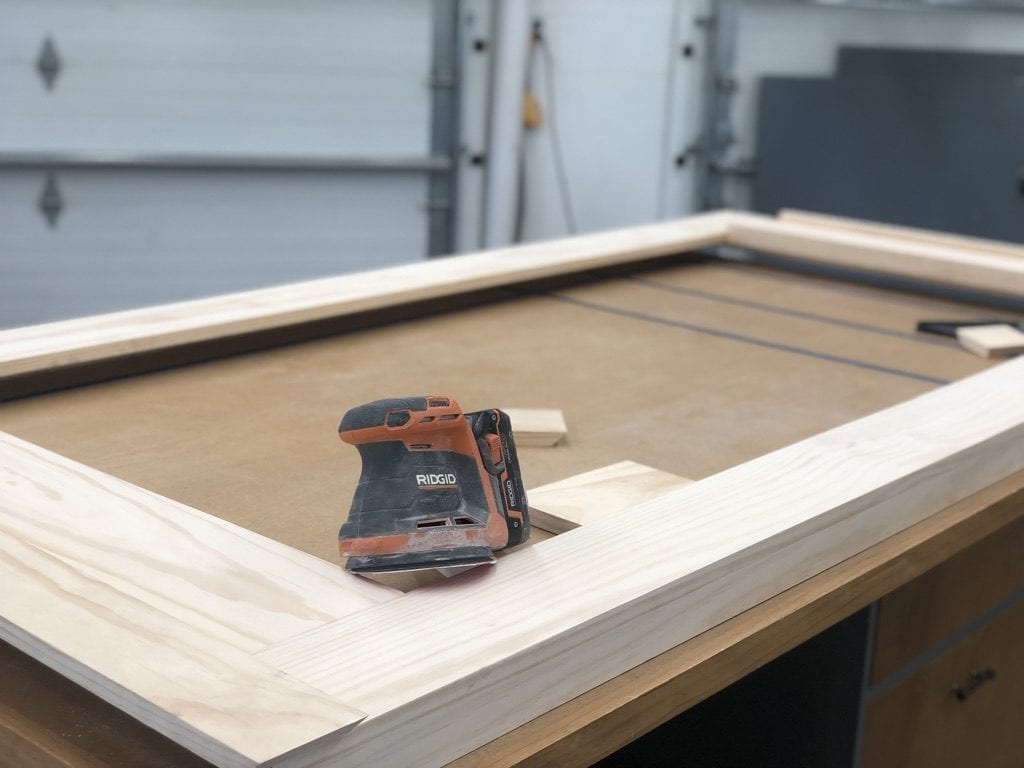
Once the wood filler was completely dry I completely sanded the entire mirror frame.  I used an orbital first, and then finished up with a “finish sander”. 

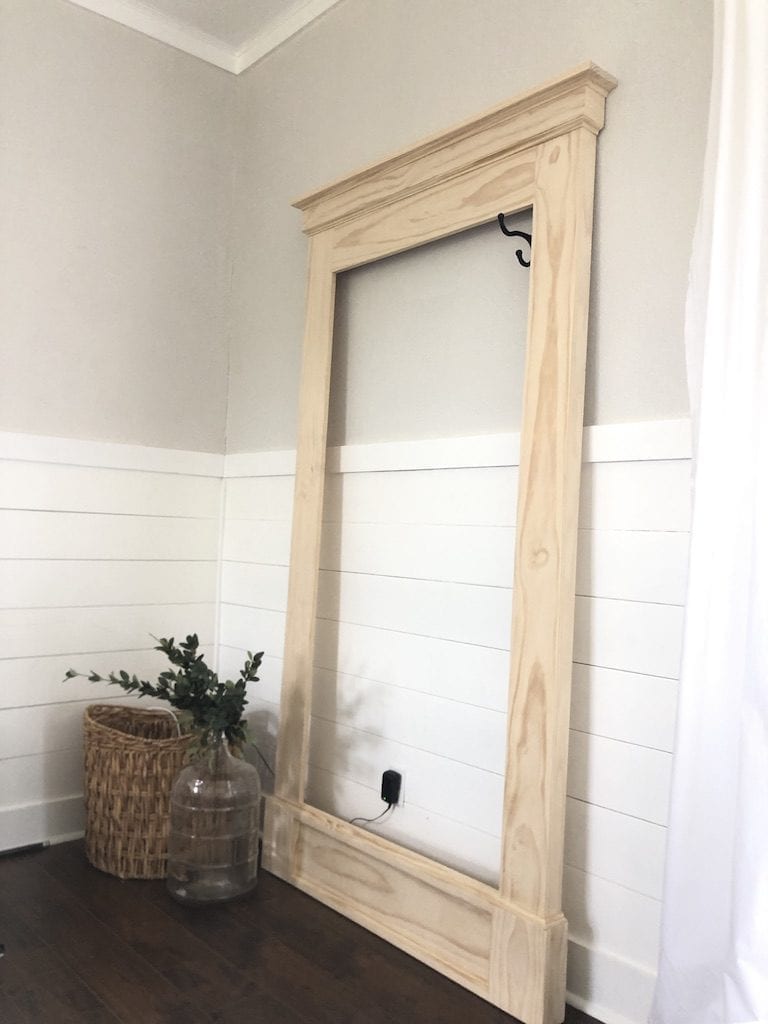
 There she is!  Isn’t she a beaut.  She is all filled, and sanded and ready for stain! 

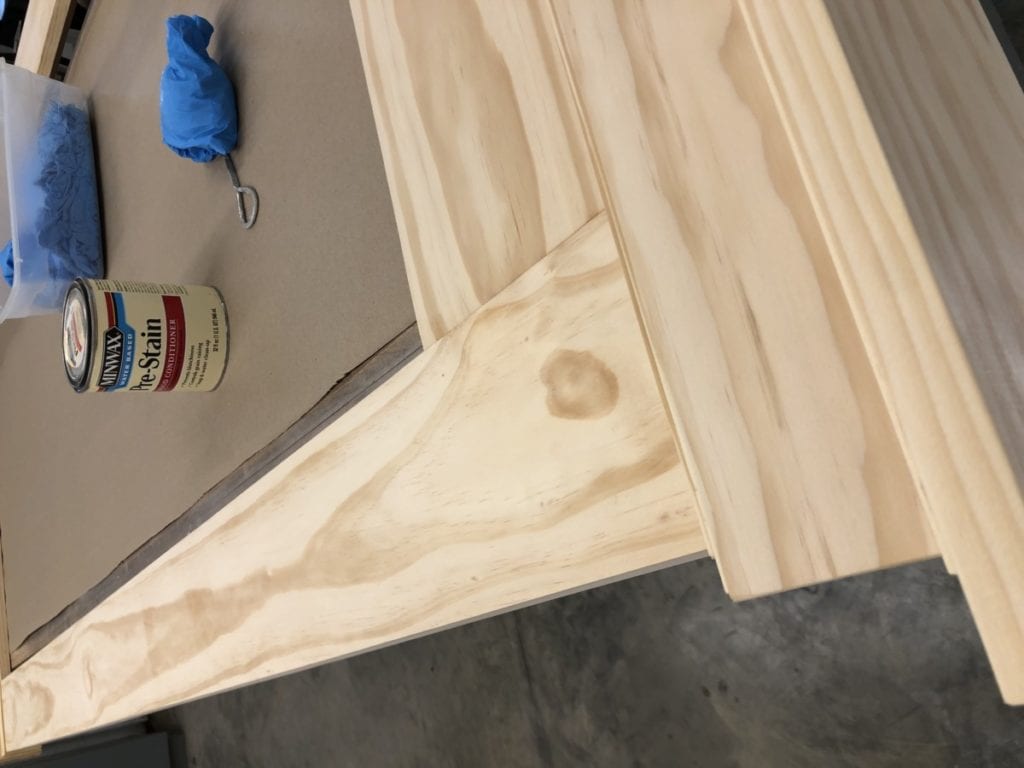
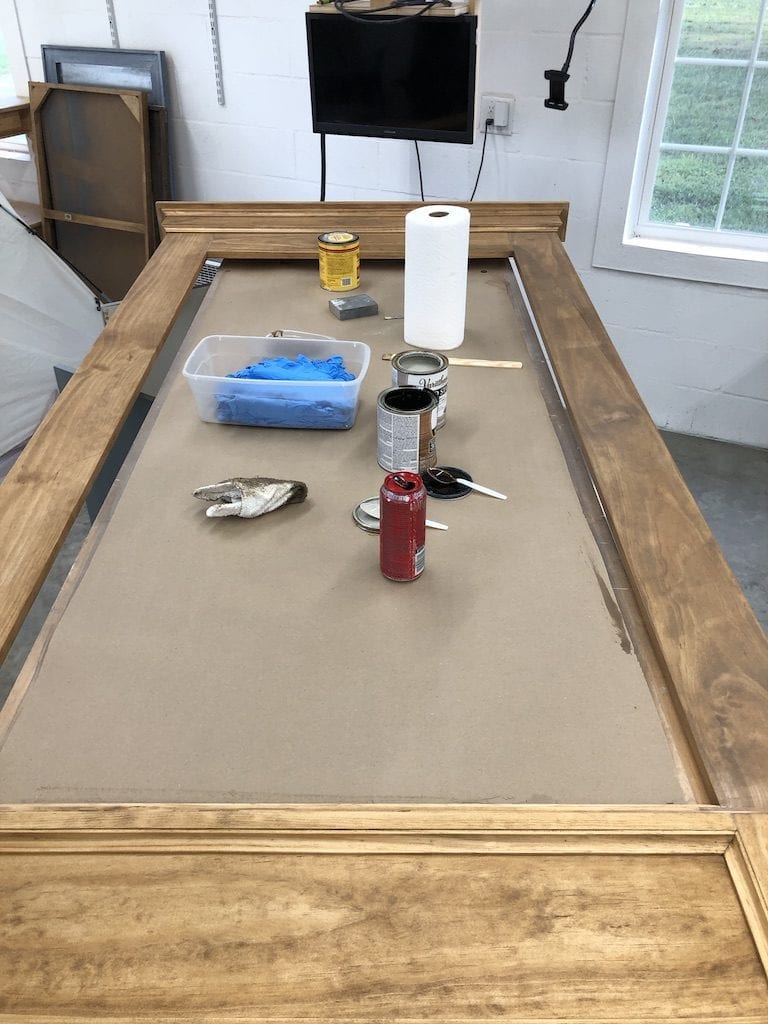
Before I begin staining, I like to start with “Pre-Stain”.  “Pre-Stain” is a wood conditioner.    Using a wood conditioner can help eliminate splotchy stain finish and helps the stain penetrate at an even rate. (Less stripes and splotch.)  I hands down recommend using this on soft woods like Pine. 

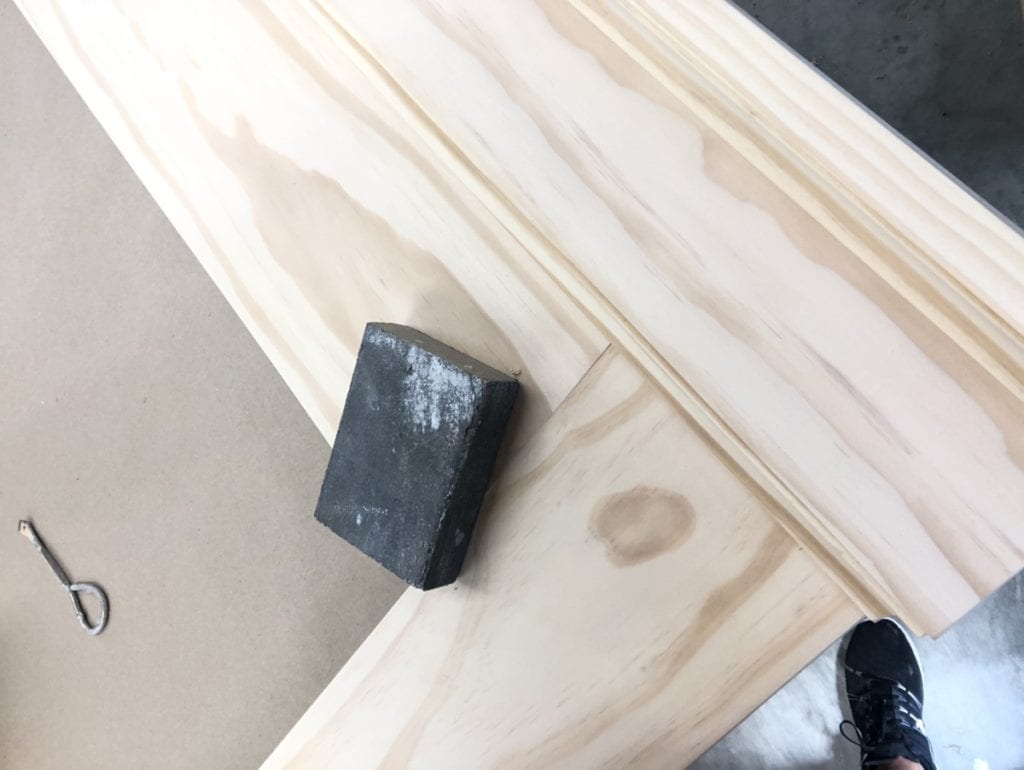
Once the wood conditioner has completely dried, I like to go over the entire piece with a fine sanding sponge.  This will eliminate any “raised grain” that can occur when conditioning wood.  Once it is smooth I run over the entire thing with a lightly damp cloth and then allow it to completely dry before moving on. 

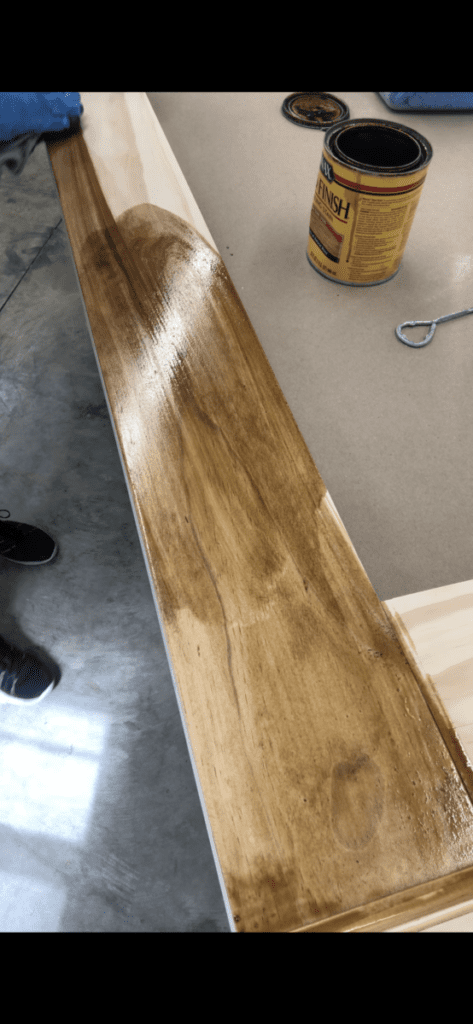
NOW we are ready to start the staining process, and yes it is a PROCESS!  I began with a light coat of “Golden Oak” by Minwax.  I did not let this sit on the wood very long.  I applied it and then immediately wiped it off.  I did not want to have this be a very dark finish. 

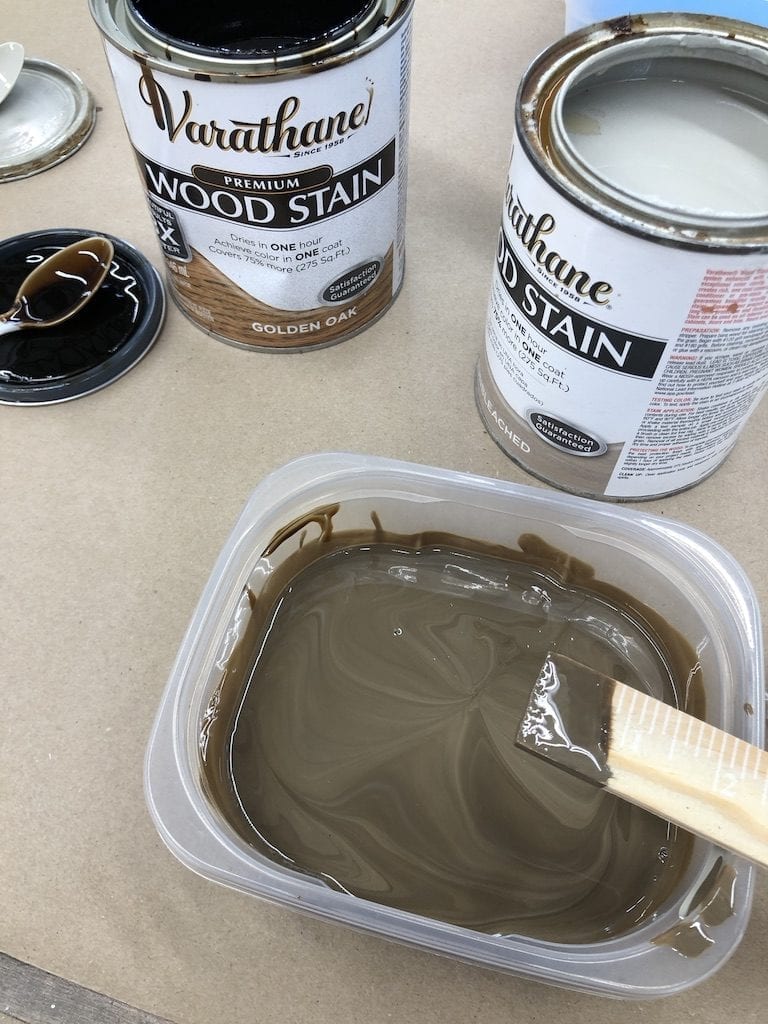
Once the “Golden Oak” had completely dried, I prepped the next layer of stain.   Minwax stain typically. is more of a wood penetrating stain.  It seeps into the wood.   I have found that Varathane Stain is a little more opaque and sits a little more at surface level. Both are great and I use them both for different projects. In this case I wanted to layer over the Minwax Golden Oak.   The Golden Oak would serve as my base color.  After some trial and error I found that mixing together Varathane “Golden Oak” and Sunbleached”, I had the perfect color for this project.   It was a 50/50 mix. 

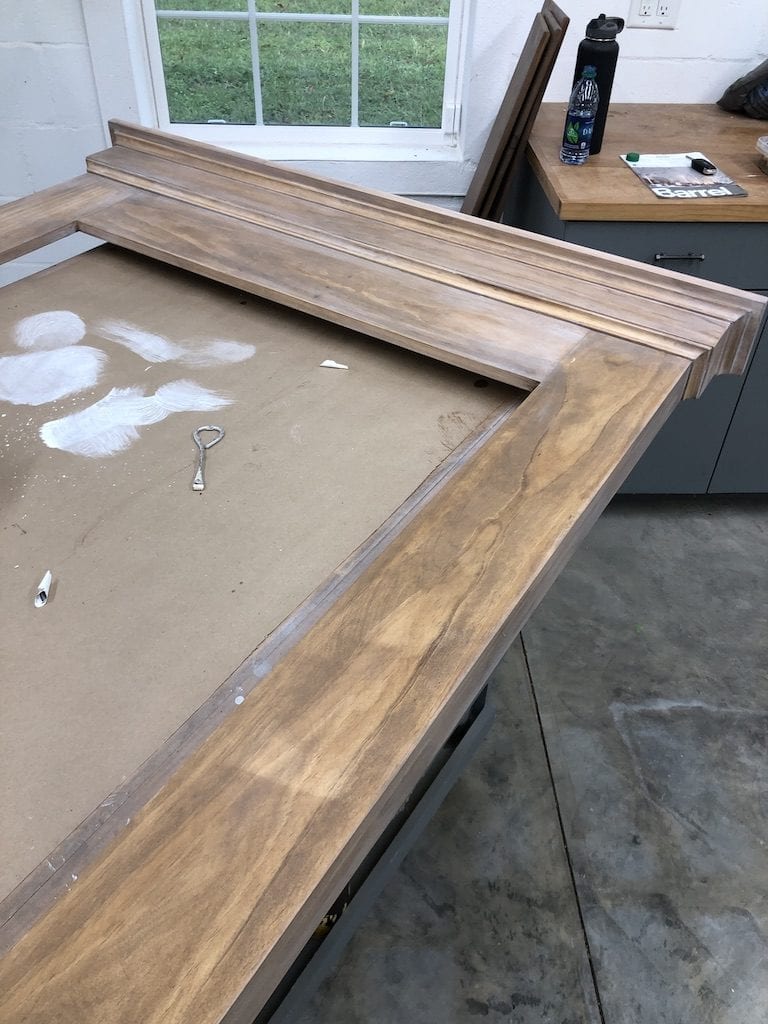
In the image below I have applied the 50/50 mixture to the right hand side.  It just gives it a little depth of color that I was not able to achieve in just one color of stain. 

 As if two layers were not enough… Seriously,  I cannot leave well enough alone. I decided to really complicate matters and use a white wash stain to finish up the look. 

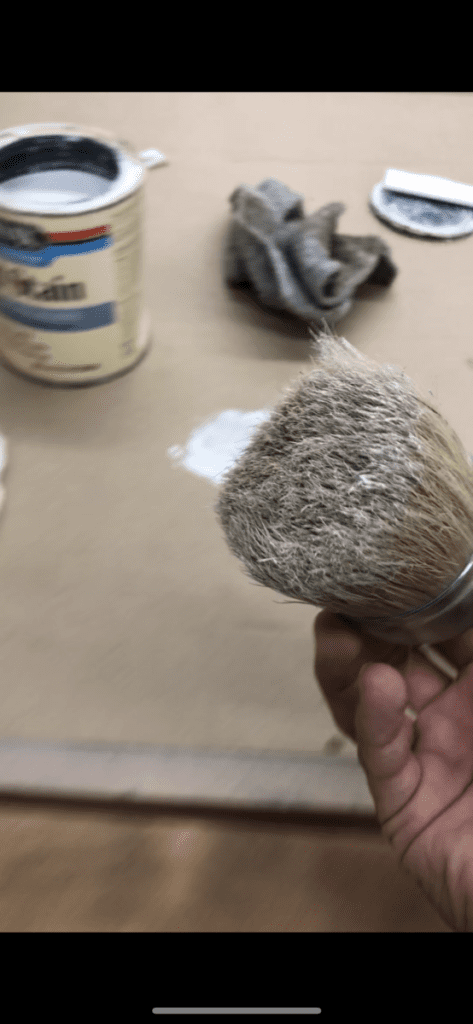
 For this step I used MinWax White Wash Pickling Stain.   I used a dry brush technique. (Use a stiff bristled brush, and add dab the brush into a very small amount of paint/stain.  Then wipe the brush off on  a cloth or paper towel,  removing a majority of the paint/stain.  Then brush it onto the intended surface.  It creates a streaky look, and that is the look I am going for.  I then used a cloth and wiped over the surface.  This blended it slightly, while still giving it a some visual texture.)  below you can see where I have used this technique on the top and far left board.  It gives it a little bit of depth and I love it! 

Once the mirror was dry, it was ready for the finishing touch.  The mirror!   The mirror will rest on a board installed across the bottom of the mirror frame.  The only thing left to do is to install back supports. 

Building a Leaner Mirror

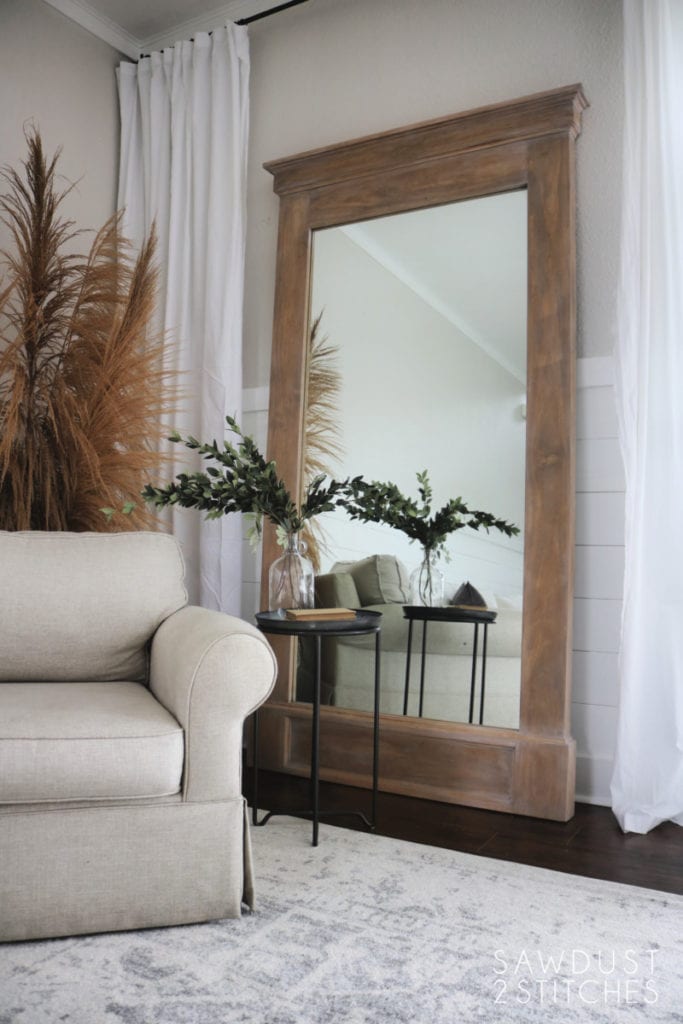
 It really is a very beautiful and very heavy piece!  I would highly suggest securing this to the floor and/or the wall. That’s it you are done!

 I am so pleased with how this project turned out. It perfectly fills the space without making it feel claustrophobic.  It still feels light and airy and I love it. 

Full Build Plans Here!

Full Build Plans Here!

Kitchen Mini-Makeover

September 24, 2019

The post is sponsored by The Home Depot* 


When we first moved into our current home  there was a very long list of “to-do’s”.  The kitchen was on the very top of that list. 

In just a few short weeks,  my husband and I took down the odd wall, and reworked the electrical.  Without skipping a beat  took the lead on building up our cabinets and updating the entire space.  (You can read more about the process here.)

As with most projects, we  stopped just short of the finish line. When I have a very long list I tend to skip the last 5%.  I call this the “95 percenter’s club”. In this case we skimmed over  something  that we couldn’t afford at the time.  New appliances. 

Well over the past few years,  our appliances  have given out, and broken down.  It was time to finally complete our kitchen… 

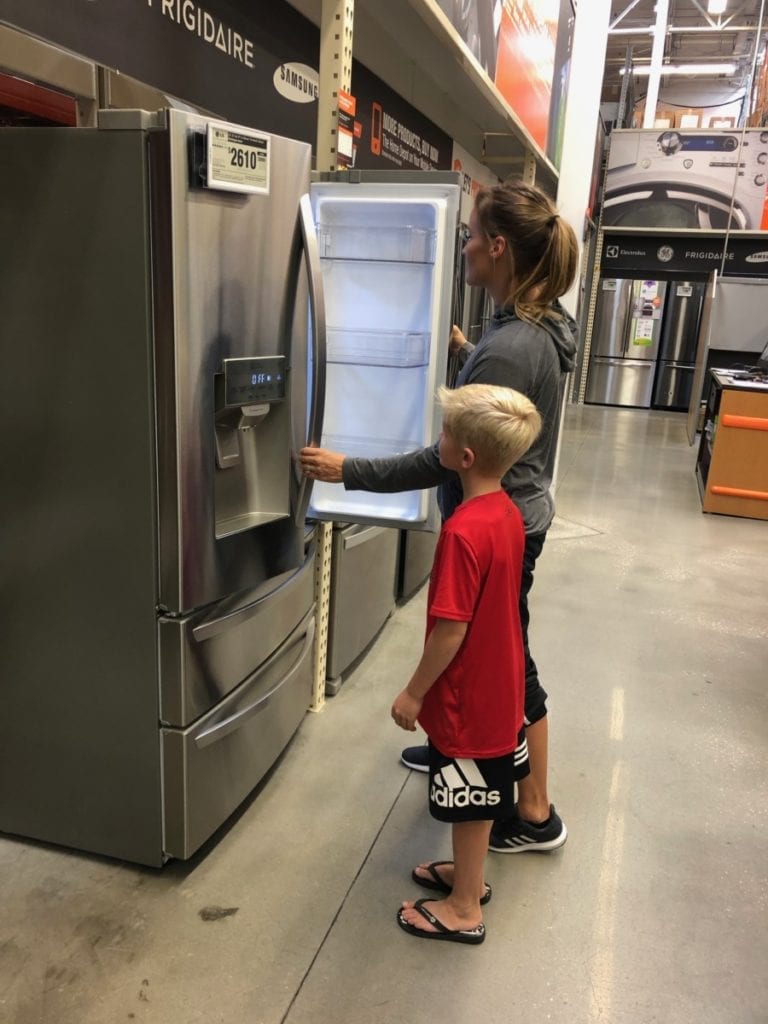
 I had been doing my research and checking out all the different features that appliances these days have to offer.   There are so many different options when it comes to appliances. After a lot of research I ultimately decided on a BEAUTIFUL set of LG Smart  Appliances. (If you want to see more about my search criteria and research check out my post here.) 


While we were waiting on our new LG appliances to arrive.  I decided to do a little bit of… updating. Naturally.   I mean it’s right in my tagline.  Sawdust 2 Stitches “Where We can’t leave well enough alone.”

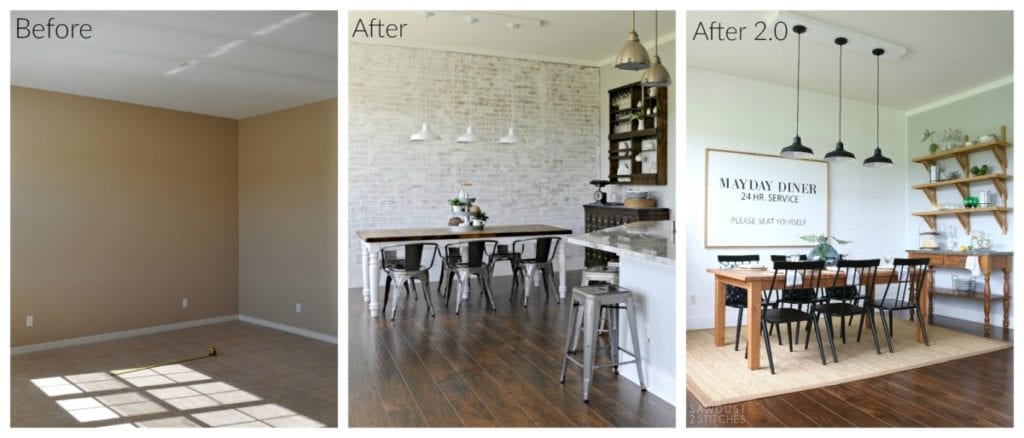
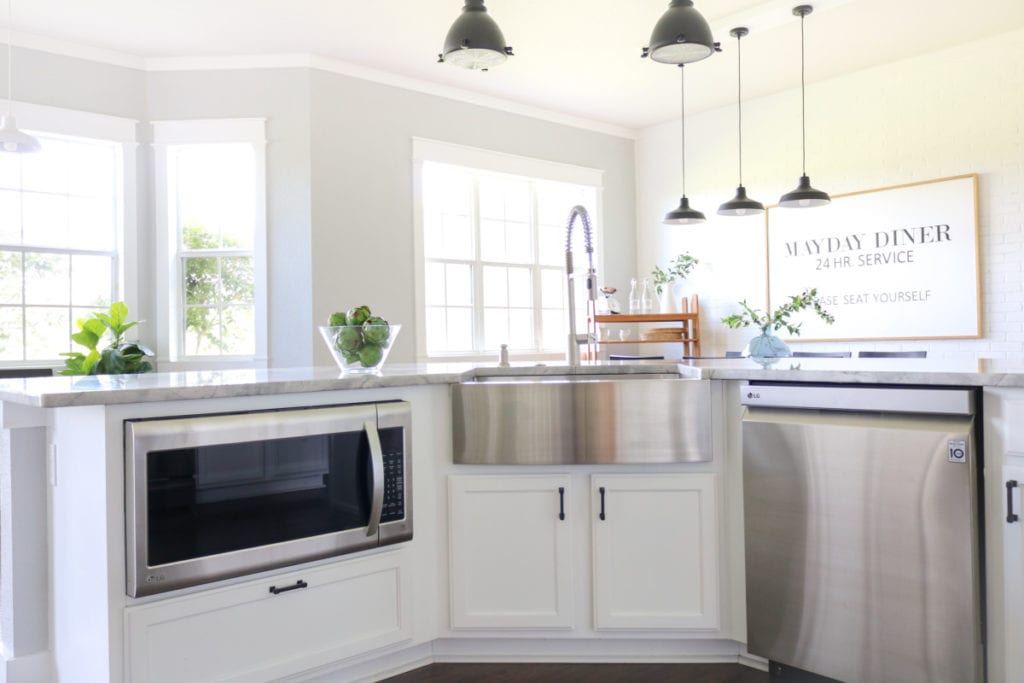
About a year ago, I had the same mentality towards our dining area. ( It is adjacent to the kitchen.) Again, the dining room did get an initial makeover when we first moved into our  home. It was lovely, but  I wanted to change things up. (You can read all about it here.) For this makeover, I  gave the existing lights a makeover, added pops of black and really leaned into the light wood trend. 

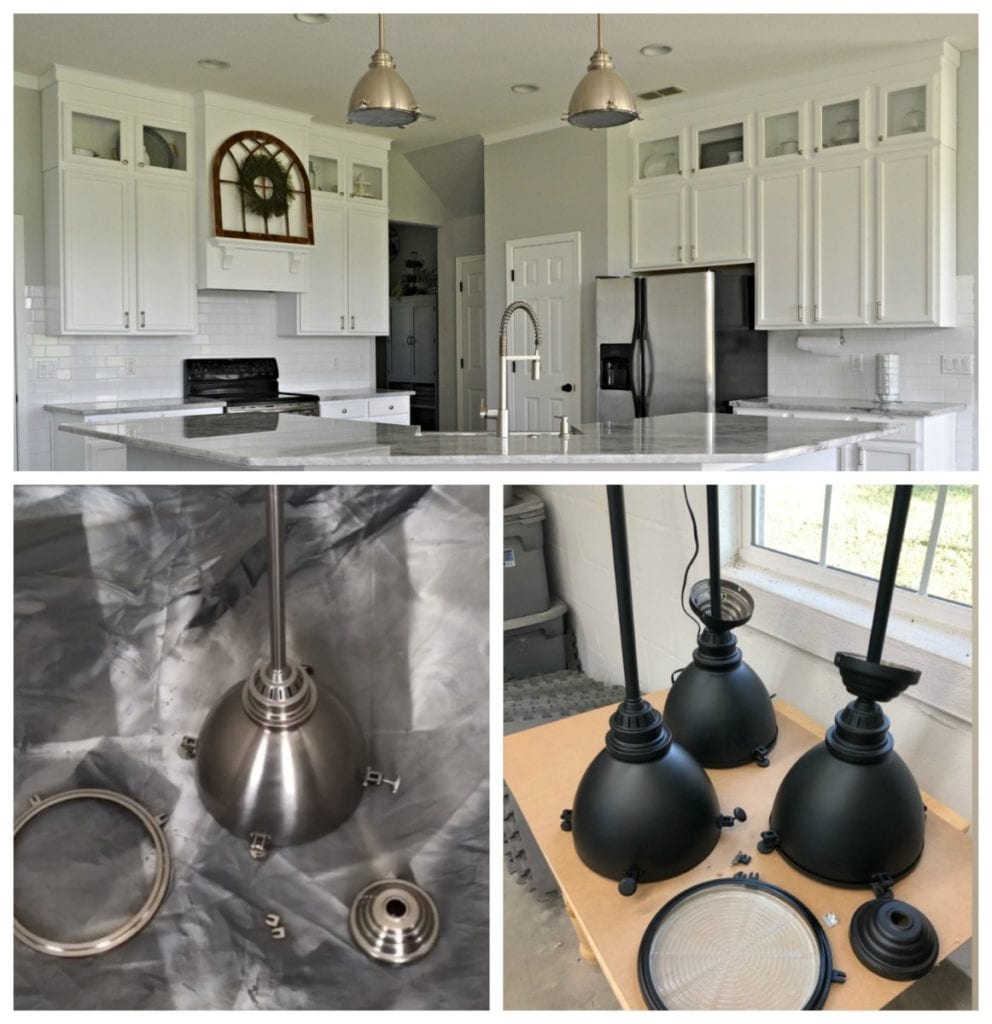
Well,  that all too familiar itch, had struck again.  Like I said, I was waiting for the new  LG appliances to arrive, so why not take advantage of that window  and do a little updating.  I took a page out of my dining room update playbook, and made a very cost effective change.  I spray painted my existing lights!  (If you are interested in the process I use to paint light fixtures you can read all about it here.)

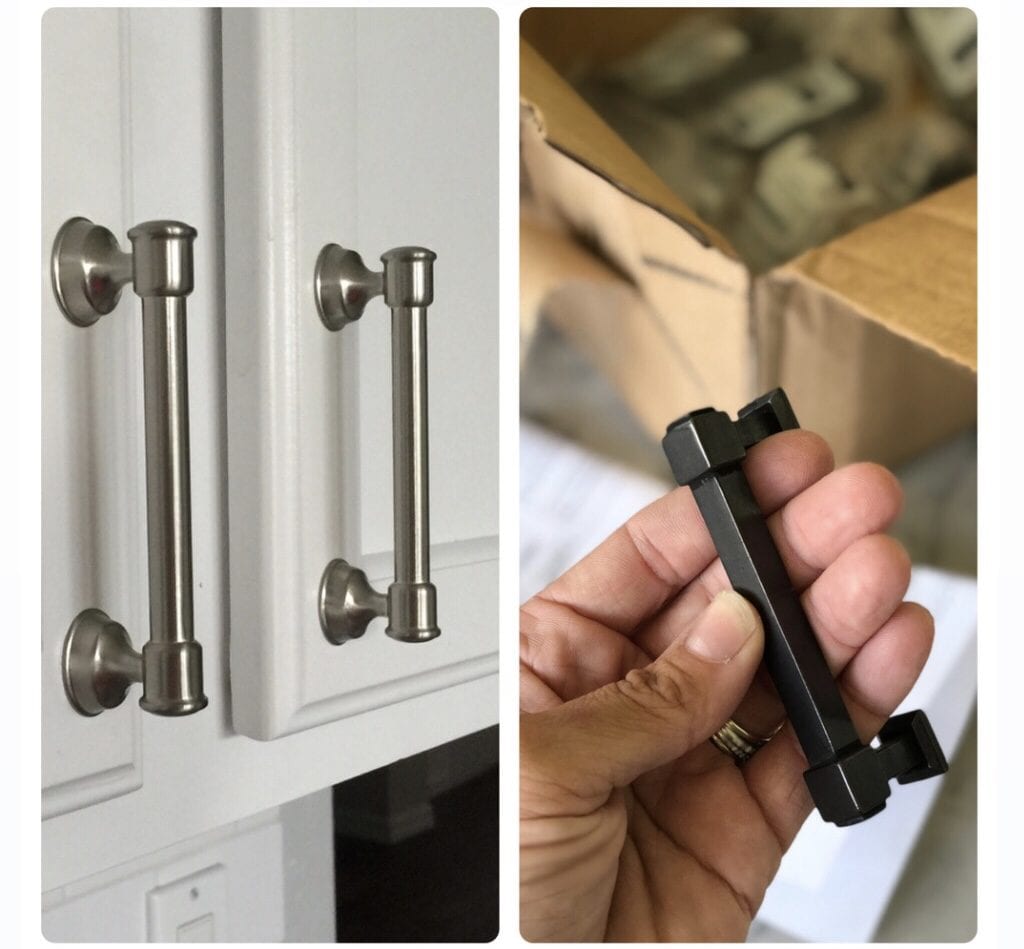
  The new light fixtures definitely  channeled that look I was going for, but I couldn’t stop there.  If you recall 2 summers ago, I helped my friend remodel her 70‘s Ranch home.   It was then that  I found and fell in love with these Liberty Hardware handles.  In all honesty. I really think that swapping out your hardware is an instant non-committal way to really update your look. 

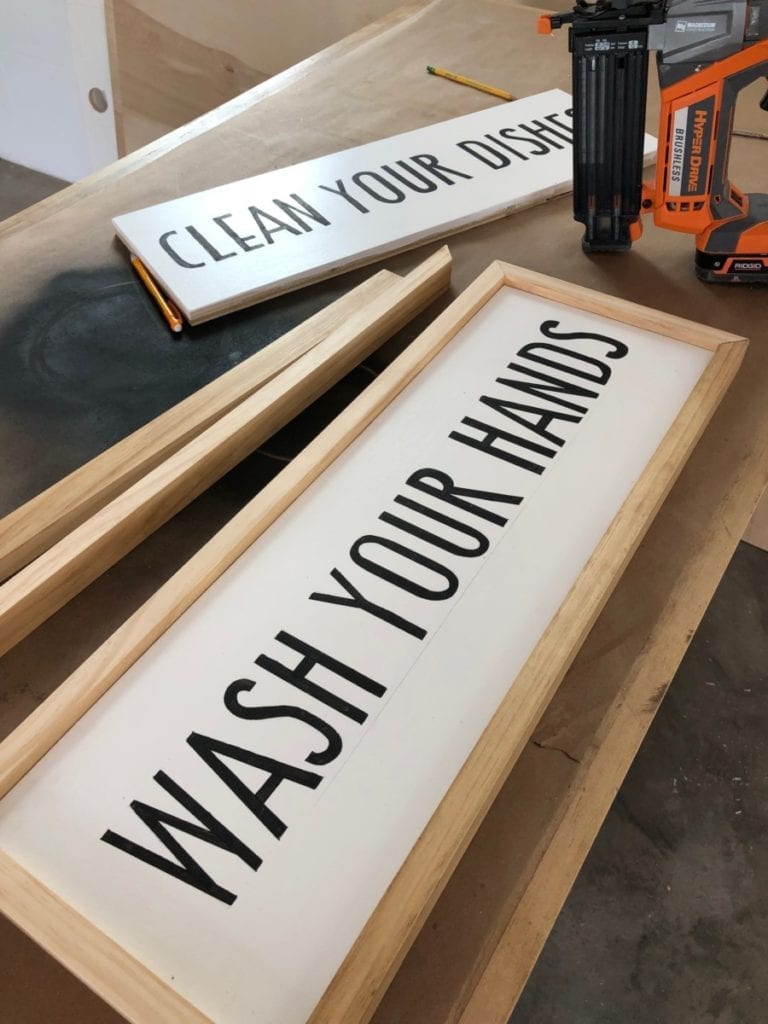
 This makeover was moving along quickly,  with simply updating the lights and the hardware the whole kitchen looked different.  But I was not stopping there.  I decided to create some quick wall art similar to my dining room wall art.  By adding some of the lighter wood tones as accents to the kitchen I thought  it would tie to the two spaces together…  I am not ALWAYS right, but in this case I totally was.  

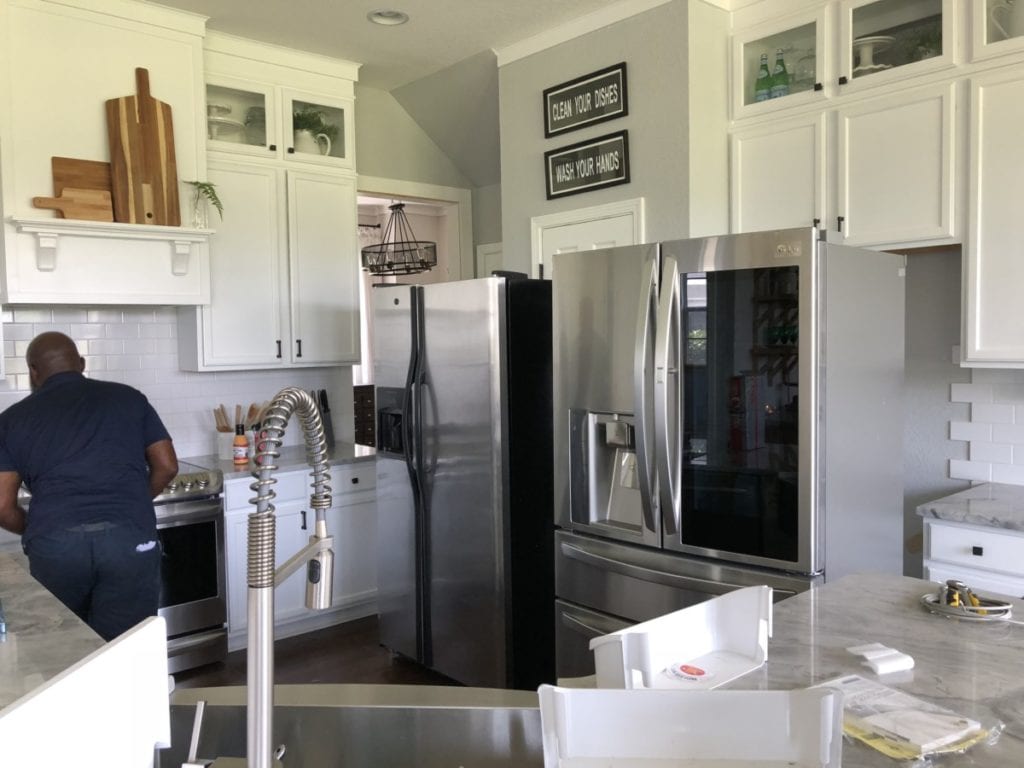
 No sooner,  than I was finishing up my last few details that I got a call that my new appliances had arrived and could be delivered!  The process was was simple and painless.  They set up for a speedy delivery and gave me a two hour window. 

What is even better, is that with their delivery includes a  free install service!  In fact at my local Home Depot they even offer a free haul-away  service at no extra charge.  They did an awesome job and had my kitchen swapped out in no time. All-in-all the entire experience was a breeze. 

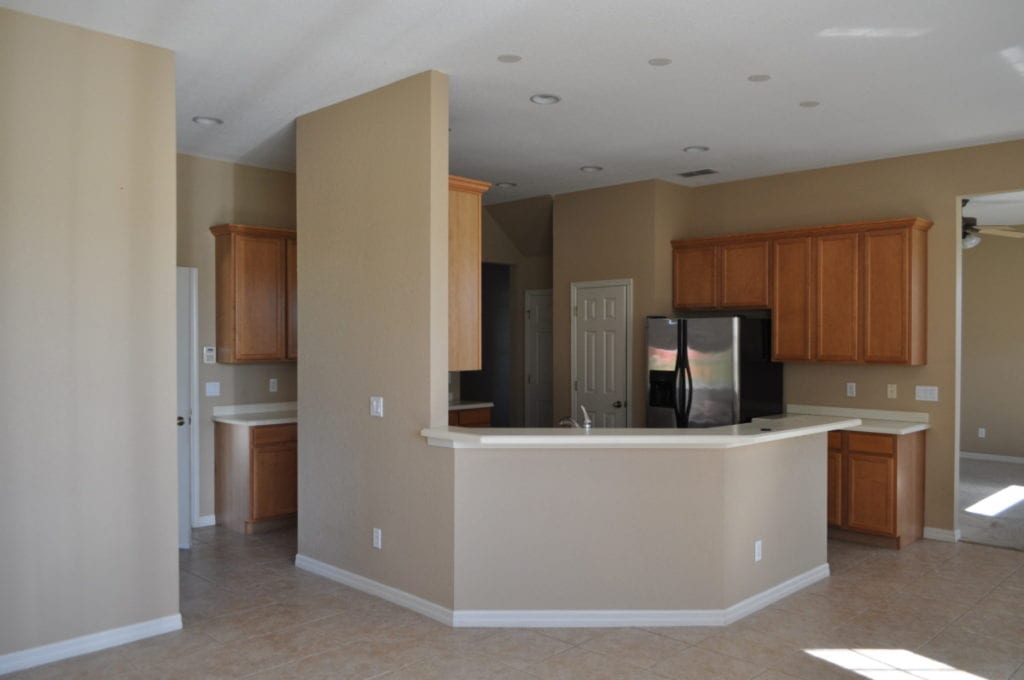
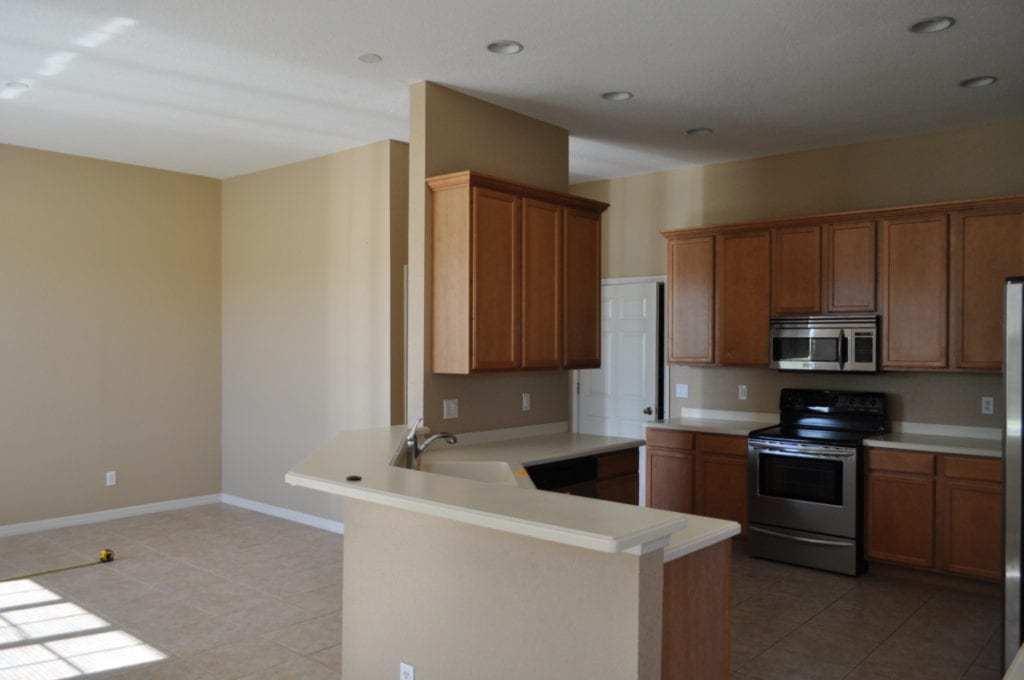
Ok are you ready to see the newly updated kitchen?  Yeah you are!  As a quick reminder… Here is the kitchen the day we moved in. 

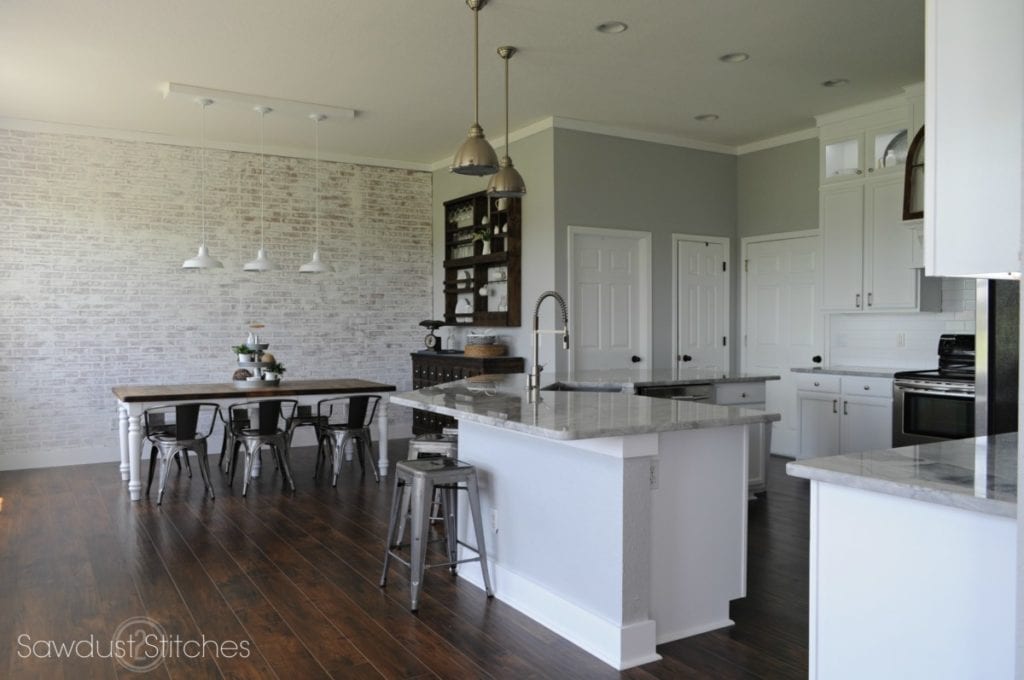
Here it is after my initial kitchen renovation. 

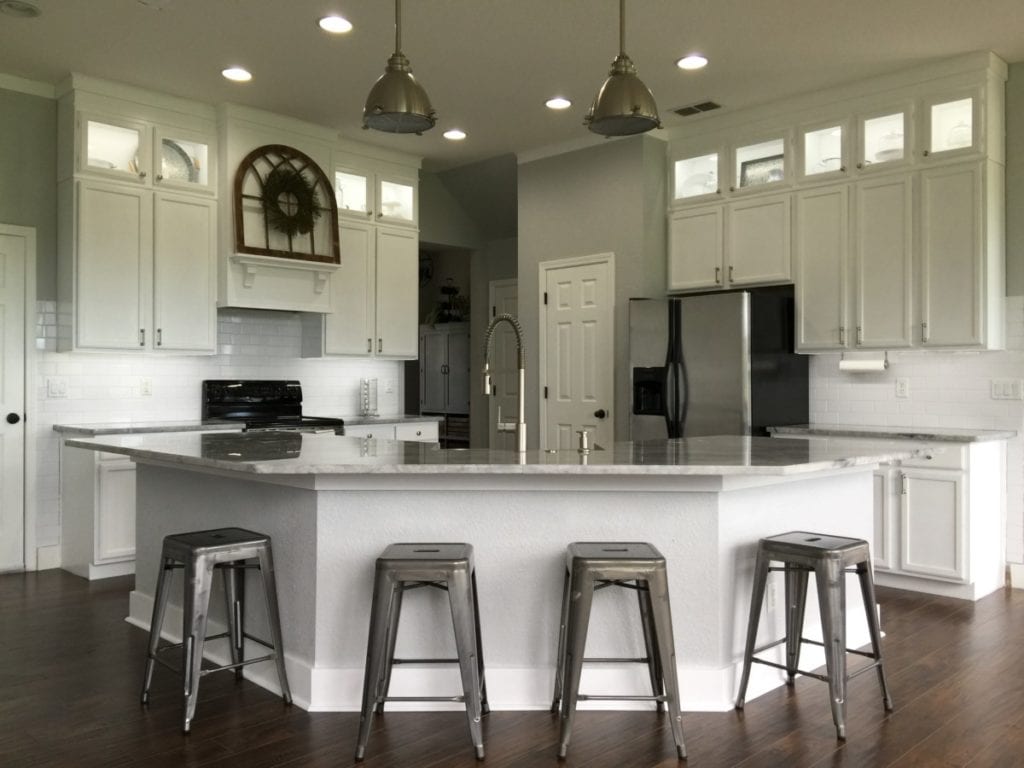
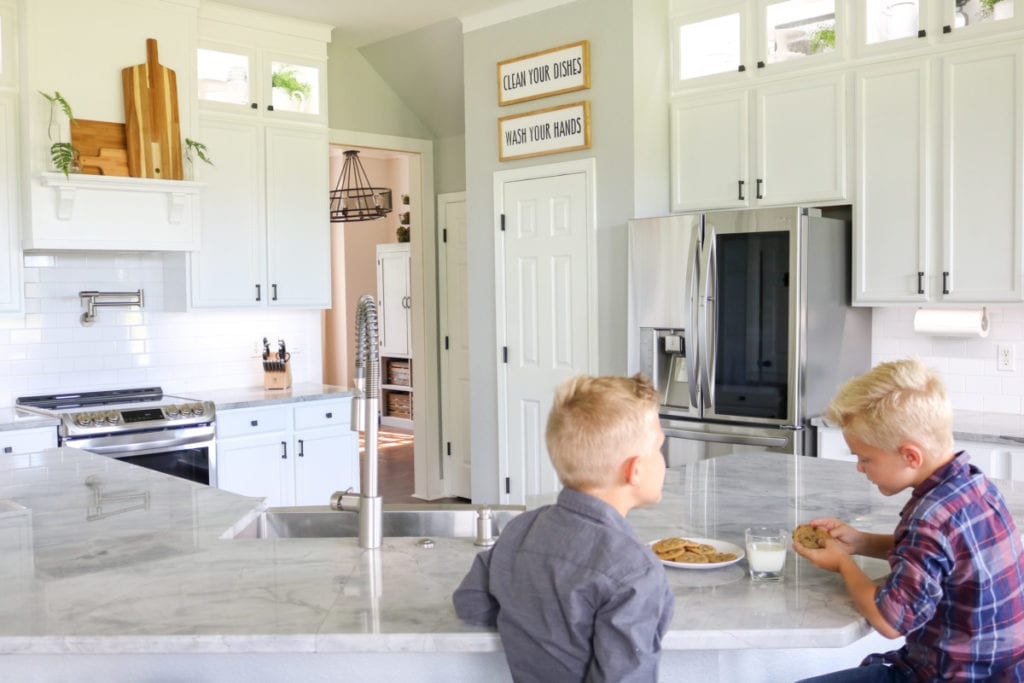
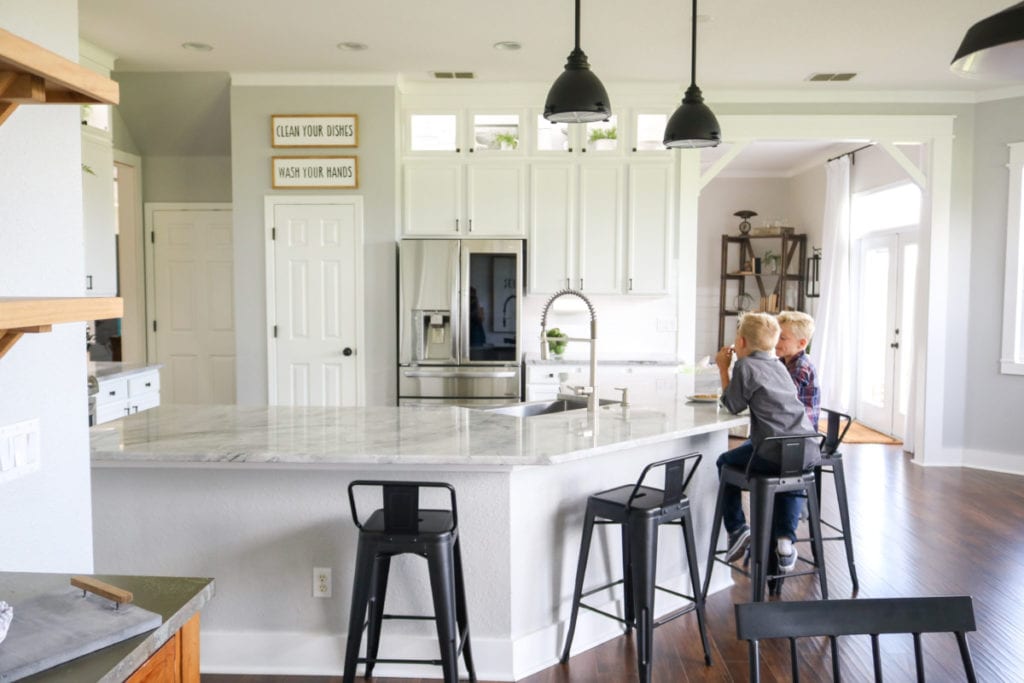
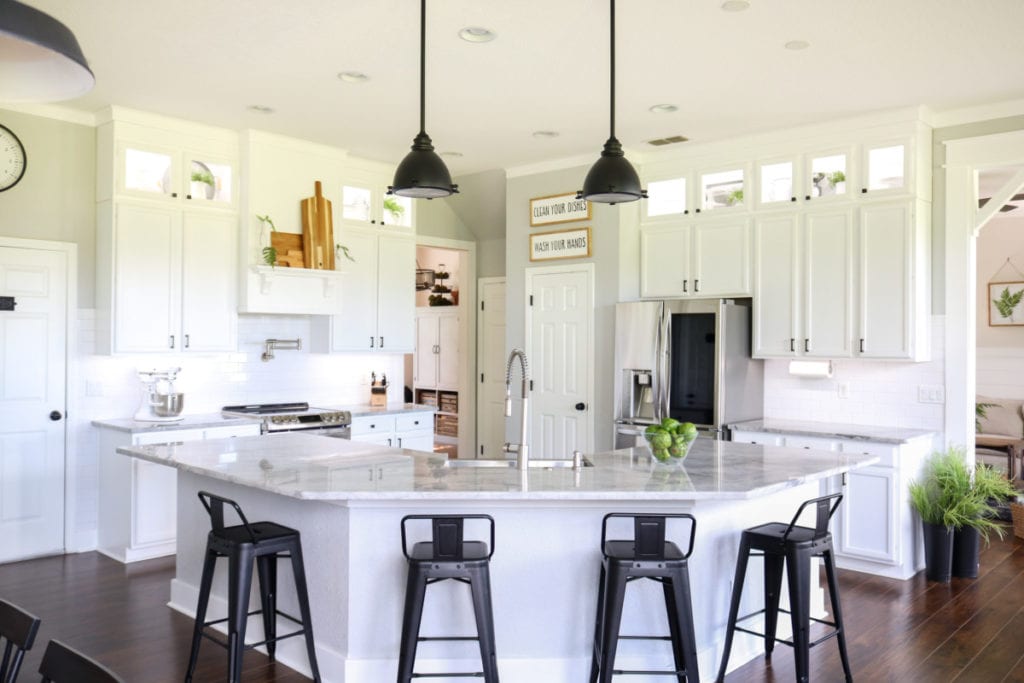
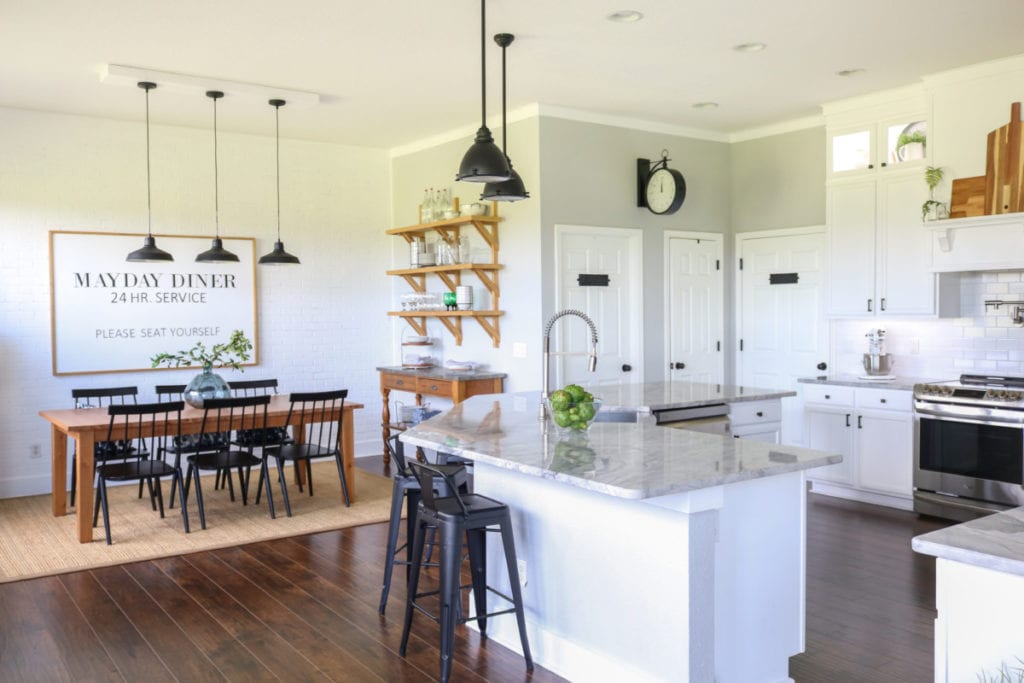
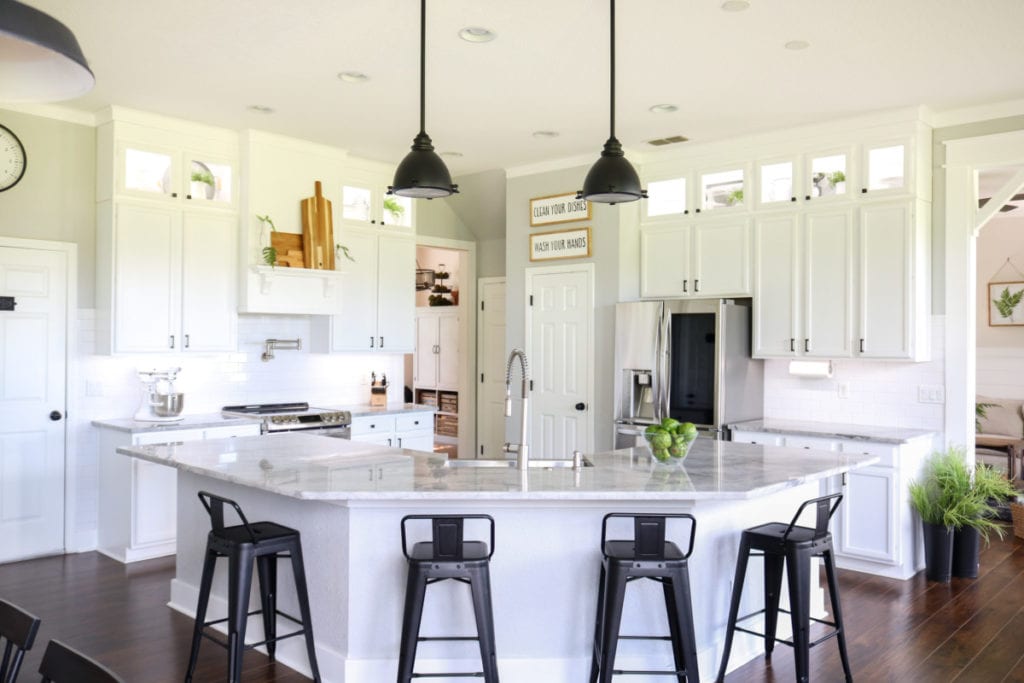
Drum roll  please… and here it is now! 

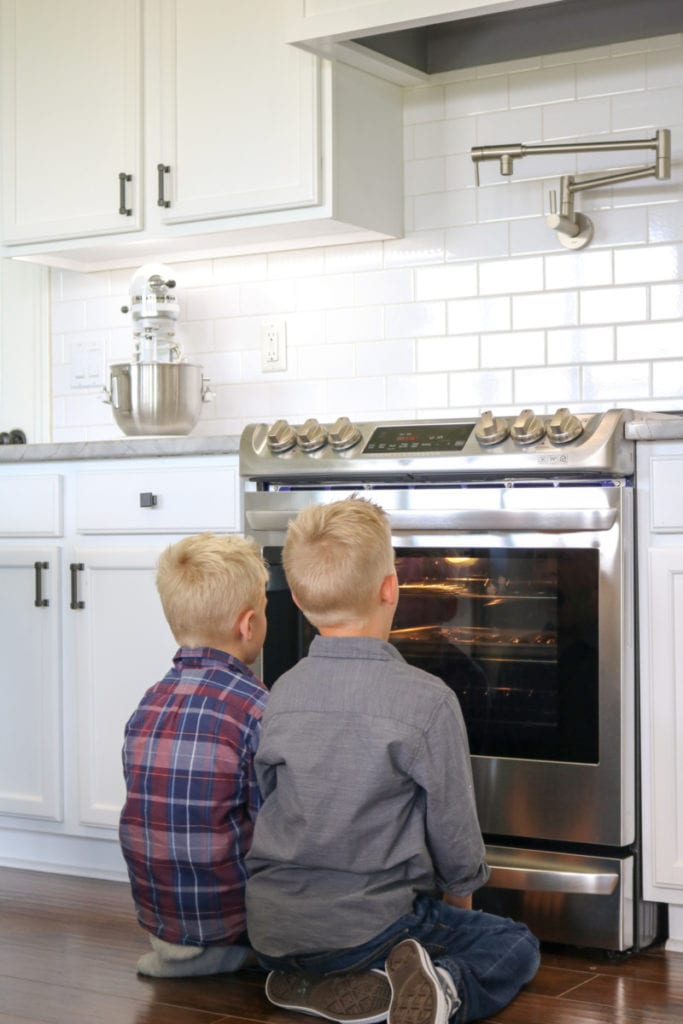
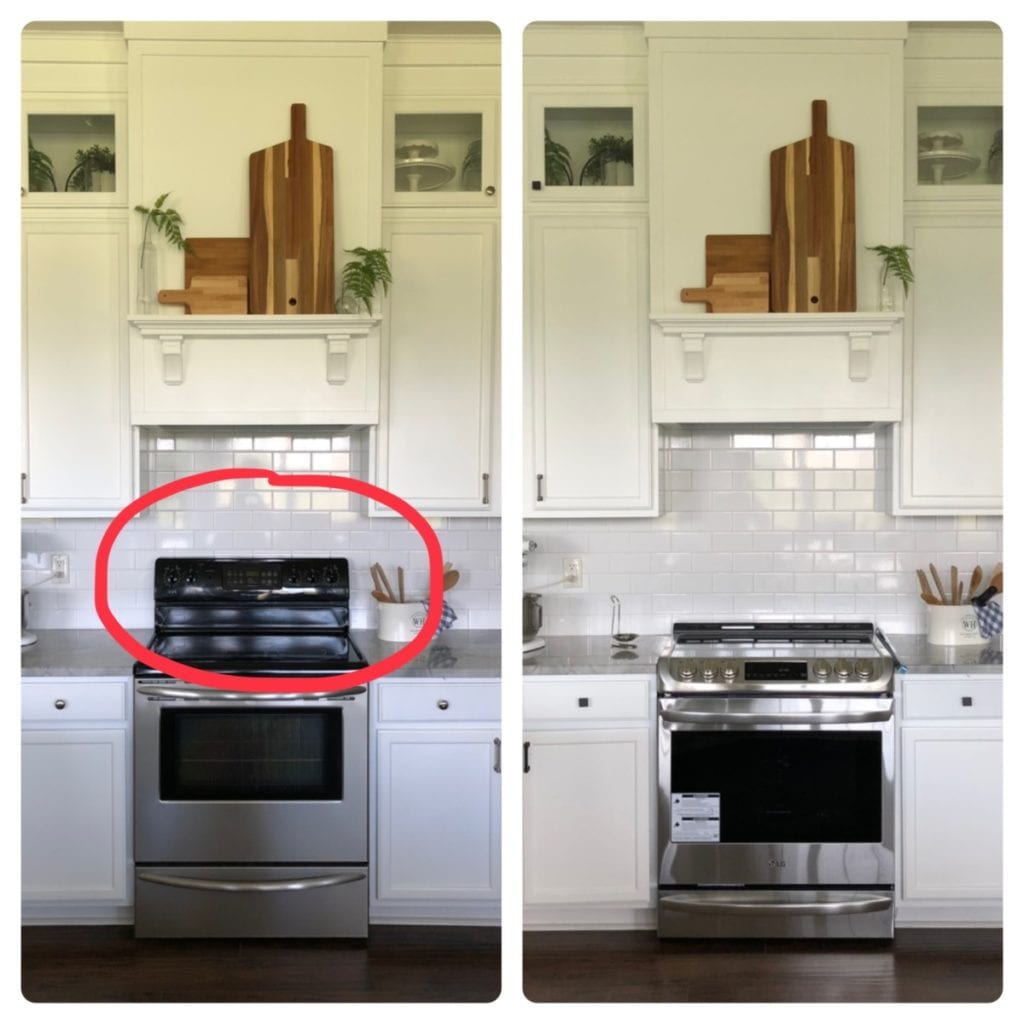
 Beautiful right !?  Ok,  let me give you a better look at these beauties.  Let’s start with the LG Range. 

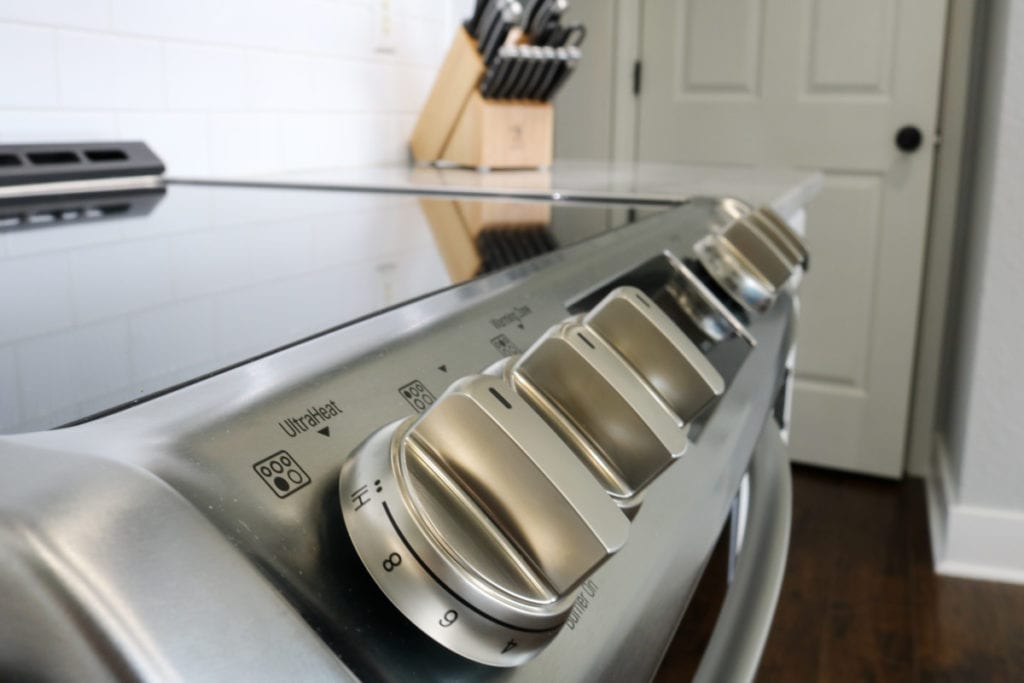
 When researching appliances I realized I really wanted a range that  had a low profile.  I found that this look was more customary with a gas range.  So when I found an electric LG Range that had all the controls on the front panel (as opposed to a taller tower on the back) I was sold! This may seem like a trivial thing,  but it was something that was very important to me.  

 Appliances can totally be sexy,  right ? 

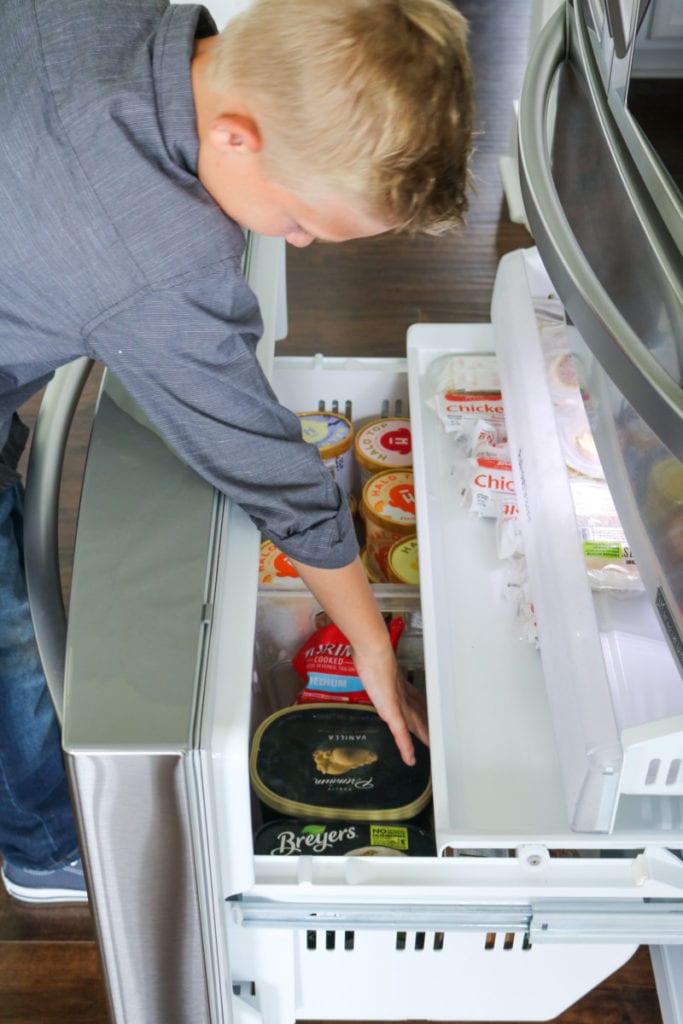
Next up the  LG counter depth, 4-door French door Fridge with an Instaview Door-in-Door.  Yup,  it is that cool.  I feel so fancy! 

 I went into the appliance shopping experience having only two criteria for the fridge.  I really wanted to get one of those new fancy-shmancy french door style fridges, and I REALLY wanted a counter-depth fridge.  “Why?” you ask? It is silly really, but it is a pet peeve of mine when the fridge protrudes out past the counter.  I feel like there is obviously a spot created for a fridge, but some how someone measured incorrecly.  Now, I realize that is not necessarily the case,  but that is just how my brain sees it. 

  I know what you are thinking. Yes, counter depth fridges do typically have a little less cu. ft.  However, this baby maximizes ever square inch!  It has awesome features like door storage,  a door-in-door storage space, which not only  maximizes organized storage it is an energy saving feature as well! 

 … and did I mention all the drawers ?  Deal closer am I right ? 

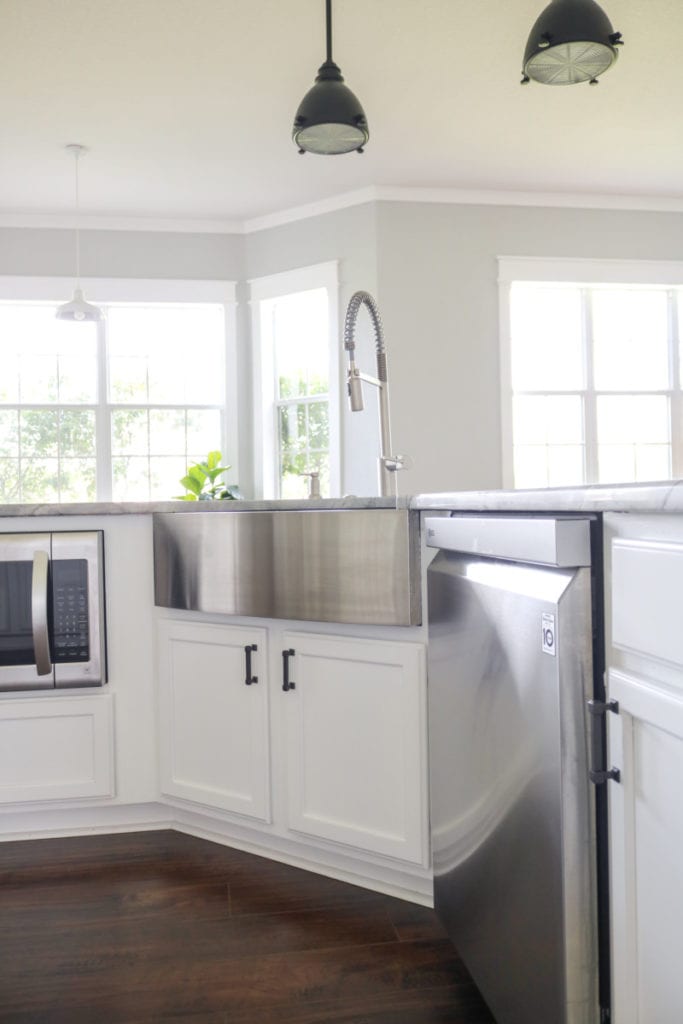
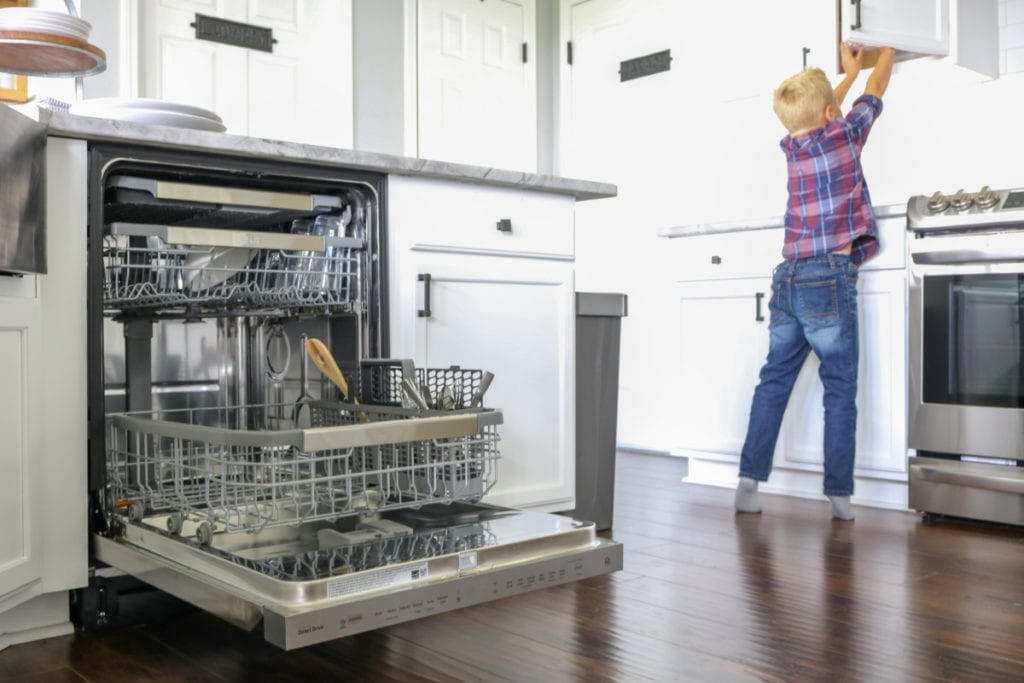
 A dishwasher is definitely  one of those items  that makes the phrase:  “You don’t know what  you’ve got until it’s gone.” ring true.  We had been having problems with ours for a while and it was hit or miss wether it would work. Forget about confidence in it producing CLEAN dishes.  We were due for an upgrade. 

 The LG Top Control Smart Dishwasher  did not disappoint.  It has all the bells and whistles including a sleek design! Every time  I pull out a clean  pot or pan, I may or may not quietly whisper ” I love you”  in my dishwashers general direction. 

  I know that often times appliances are a little overlooked  and sometimes an afterthought,  but it is amazing the difference they can make in terms of practicality and aesthetics.  

Ok,  just one more picture series featuring the progression of this space. 

Move-In Day
Dining/Kitchen After Initial Renovation ( 3 years ago.)
After Mini-Makeover

 It is still amazing to me how a few simple changes can quickly and efficiently change the feel of an entire room.

If you want to see more awesome details about the space make sure you check out my post over on The Home Depot Blog.

 Thanks for reading, and “take luck”,

 Corey  

  • previous
  • Page 1
  • Interim pages omitted …
  • Page 6
  • Page 7
  • Page 8
  • Page 9
  • Page 10
  • Interim pages omitted …
  • Page 47
  • next

Primary Sidebar

  • Facebook
  • Instagram
  • Pinterest
  • Twitter
  • YouTube
IMG_9167 (1).jpg fd
DIY & Design

Meet Corey

Hi everyone, my name is Corey, and I have a problem. I can’t leave well enough alone… The best therapy usually involves a variety of power tools. So, in the few “spare” moments I am not entertaining my two beautiful, rambunctious, boys, I can typically be found hunched over a sewing machine and/or covered in sawdust. All in the efforts to create a perfect balance of aesthetics and practicality in our home.
read more

Join our mailing list!

DIY & design ideas - right in your inbox!

Featured

Stair Tread Makeover

Categories

  • 70's Ranch Home
  • Around the House
  • Build Plans
  • Crafts
  • Current Home
  • Decor Makeovers
  • Dresser
  • Exterior
  • Fall
  • First Home
  • Furniture Makeover
  • Hidden Compartment
  • Kitchen
  • Lighting
  • Makovers
  • Master Closet
  • Organization
  • R.V.
  • Room Makeovers
  • Seasonal
  • Seating
  • Sewing
  • Shelving
  • Small Builds
  • Smart Home
  • Spring
  • Summer
  • Tables
  • Tablescape
  • Tutorials
  • Uncategorized
  • Wall Art
  • Wall Decor
  • Winter
  • Workshop

Footer

Contact Me: Corey@Sawdust2Stitches.com

Latest ‘Grams

Follow on Instagram
2020 © Your Blog Name
theme by soleilflare
Enter your name and email and get the weekly newsletter... it's FREE!
Your information will *never* be shared or sold to a 3rd party.