• Blog
  • About
  • Press
  • Privacy

Let’s be social!

  • Skip to primary navigation
  • Skip to main content
  • Skip to primary sidebar
  • Skip to footer
Sawdust 2 Stitches

Sawdust 2 Stitches

  • Tutorials
    • Around the House
    • Organization
    • Wall Decor
    • Sewing
  • Makeovers
    • R.V.
    • Room Makeover
    • Furniture Makeover
    • Decor Makeover
  • Build Plans
    • Small Builds
    • Wall Decor
    • Dresser
    • Tables
    • Seating
    • Shelving
    • Hidden Compartment
  • Seasonal
    • Summer
    • Spring
    • Fall
    • Winter
  • Home Tours
    • First Home
    • Current Home
    • 70’s Ranch Home
  • Workshop

Blog

Small Built-In Workspace for Kids

March 2, 2022

*This Small Built-In Workspace for Kids is sponsored by DAP and includes affiliate links. *
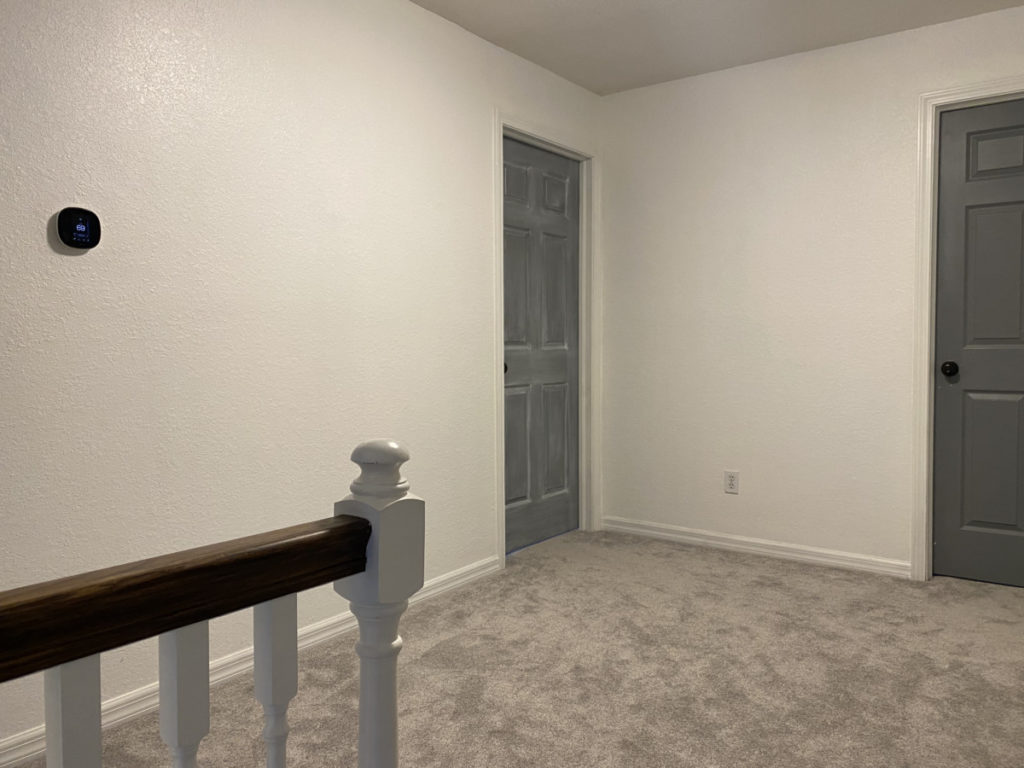
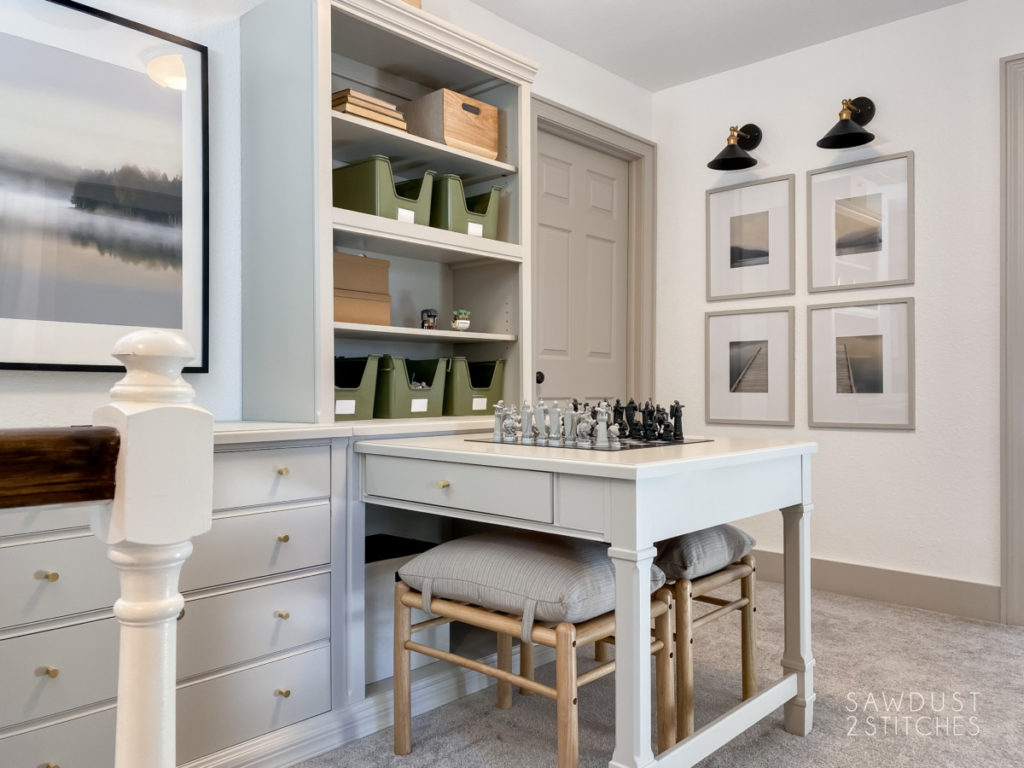
Small area for a built-in workspace.
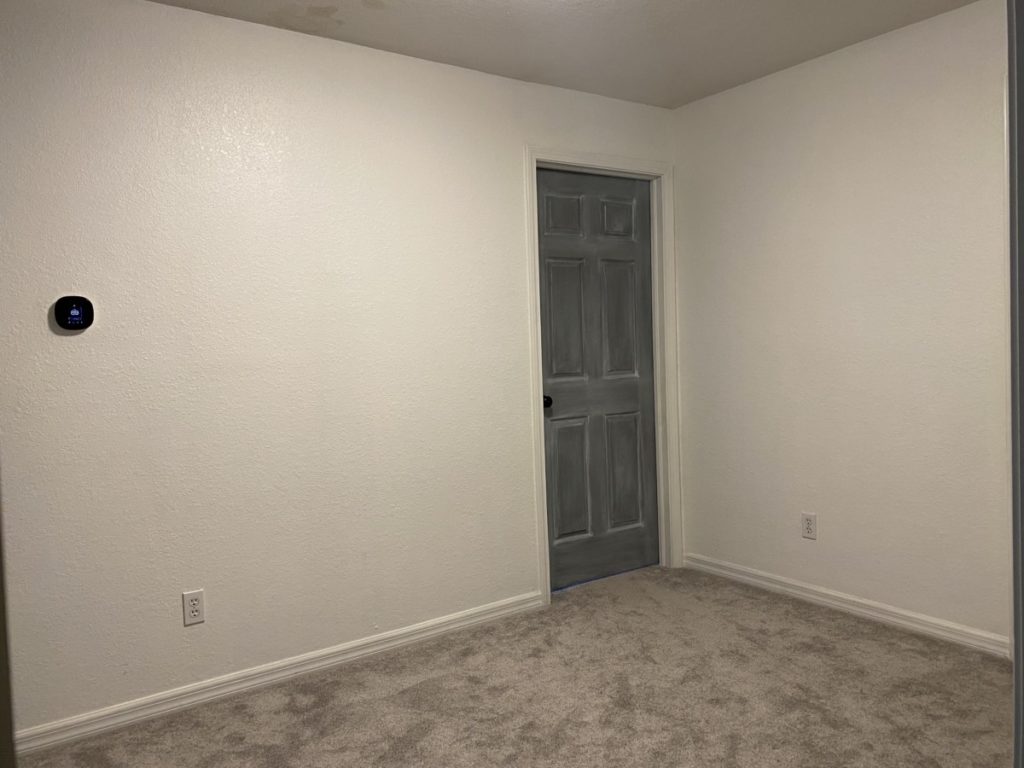
Hallwall/Landing Before

Problem: Unused Space

When we first moved into our current home I quickly went through each room and slapped a coat of paint on the walls/doors and called it “good”. (When I say “good” I mean my eye didn’t twitch due to it’s horrid original color, but I still had big plans… someday.) My upstairs landing area/hallway was one such area. It got a fresh coat of paint and it has sat in this state for 5 years.

Time For a Change

For 5 years I have had a perfectly usable 9’x10′ space that has not been utilized. If I am being honest with myself this 90 sq. ft. sat mostly unused because I had no idea what to do with it! Well, as my kids have gotten older their “play” looks a little different. When they were younger they needed plenty of floor space and large toy storage. Their “playing” has evolved and now requires workspace. My kids are big into Legos, board games, drawing/writing/creating etc. What my kiddos needed was a dedicated workspace to their hobbies.

Tools Suggested Materials Used
Eye Protection Second Hand Executive Office Set (FB MarketPlace)
Hearing Protection DAP Plastic Wood All Purpose Wood Filler
Sander 180-220 grit DAP Premium Wood Filler
Drill WeldWood Wood Glue
Sponge Sanding Block Alex Ultra Advanced Latex Sealant
Paint Supplies (Graco TC Pro) RapidFuse Ultra Clear Adhesive
Utility Knife Primer
Pry Bar  Paint
Hammer  
   

Solution: Kids Workspace

The kids needed a workspace… Before I dive right in there were some things I need to consider. This is still an open space at the top of the stairs. I need to make sure that the design won’t be too intrusive, that the aesthetics would work nicely and timelessly , and it also need to be a functional space for BOTH my boys to hang out. (Also…$$$, lumber is not cheap right now so I want to make this space efficiently as possible.)
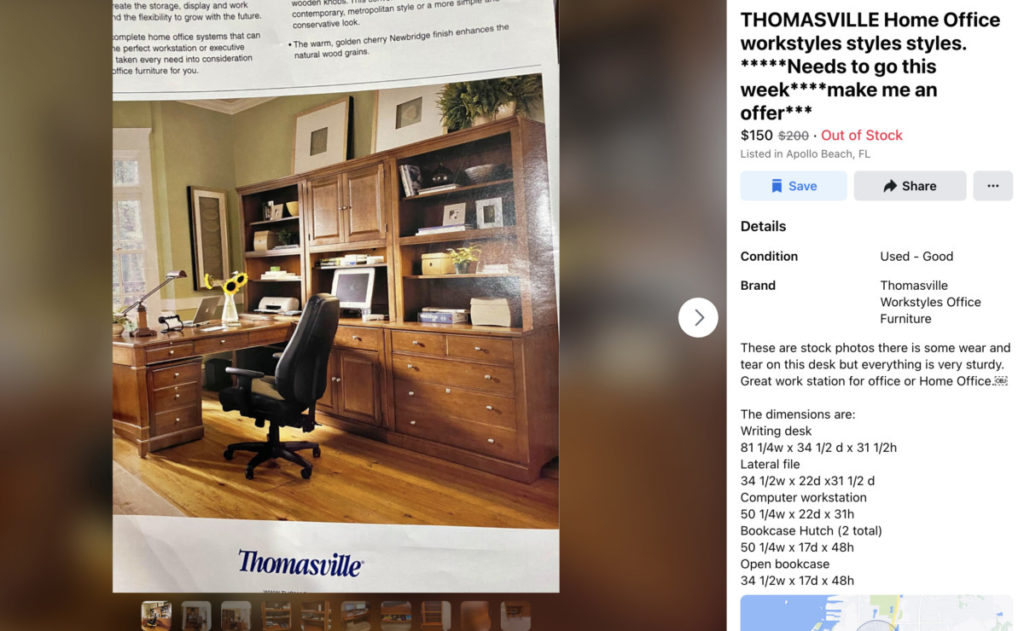
One day I was perusing Facebook Marketplace and I found a KILLER deal on some old executive office furniture. It was a huge set, WAY TOO BIG for my space! However, the great thing about “executive Office Desks” is that they are traditionally modular units. Modular; meaning I could use a few pieces that I need and maybe even save the rest for another project. (Foreshadowing much?)
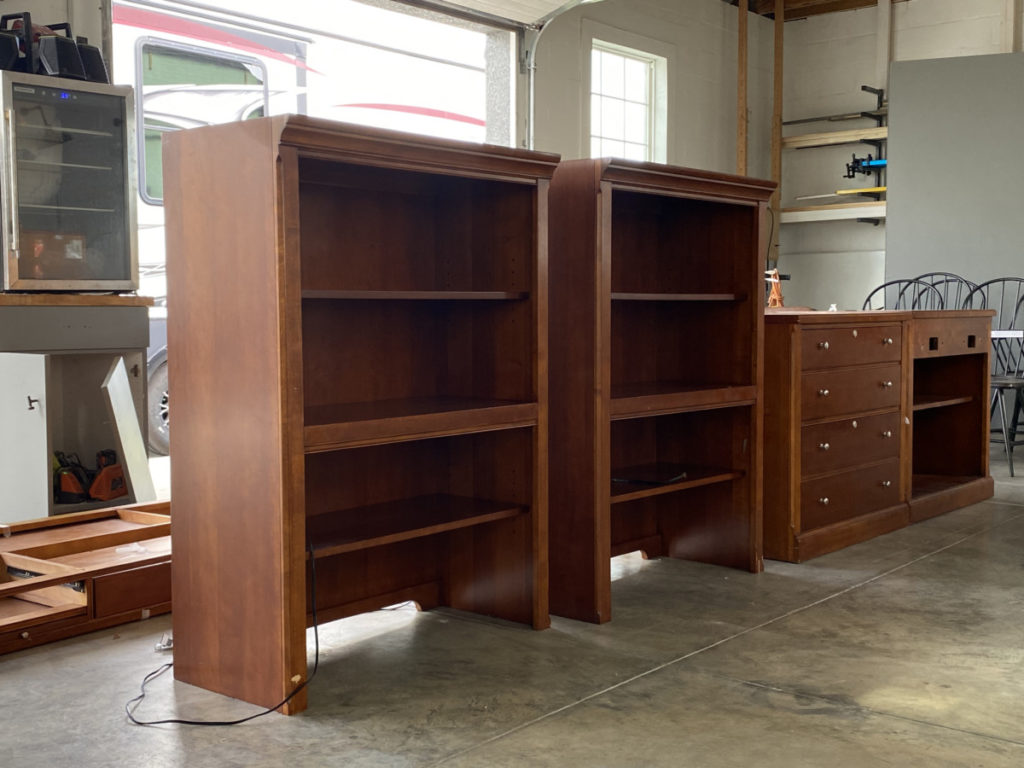
So, I snatched up and ENTIRE heavy-duty, high-quality desk set for $150. There is no way I could EVER make anything of this scale on that type of budget. Honestly, just the $$ alone had me sold.

ALSO, I realize that not everyone has a large workshop and are comfortable building furniture. Giving this furniture a makeover would be a great way to show that you don’t need a developed skill set, a huge budget, or an arsenal of tools to create a beautiful space. So, let’s get started.

Prep For Paint

Disassemble/Edit

When refinishing a large piece of furniture, I highly recommend disassembling as much of the piece(s) as possible. For instance, in preparation to paint these executive office units I removed all the shelving, doors and drawers. Removing all these components for preparing and painting individually will streamline and perfect the process. I feel like it is always worth the extra time in preparing furniture for paint.
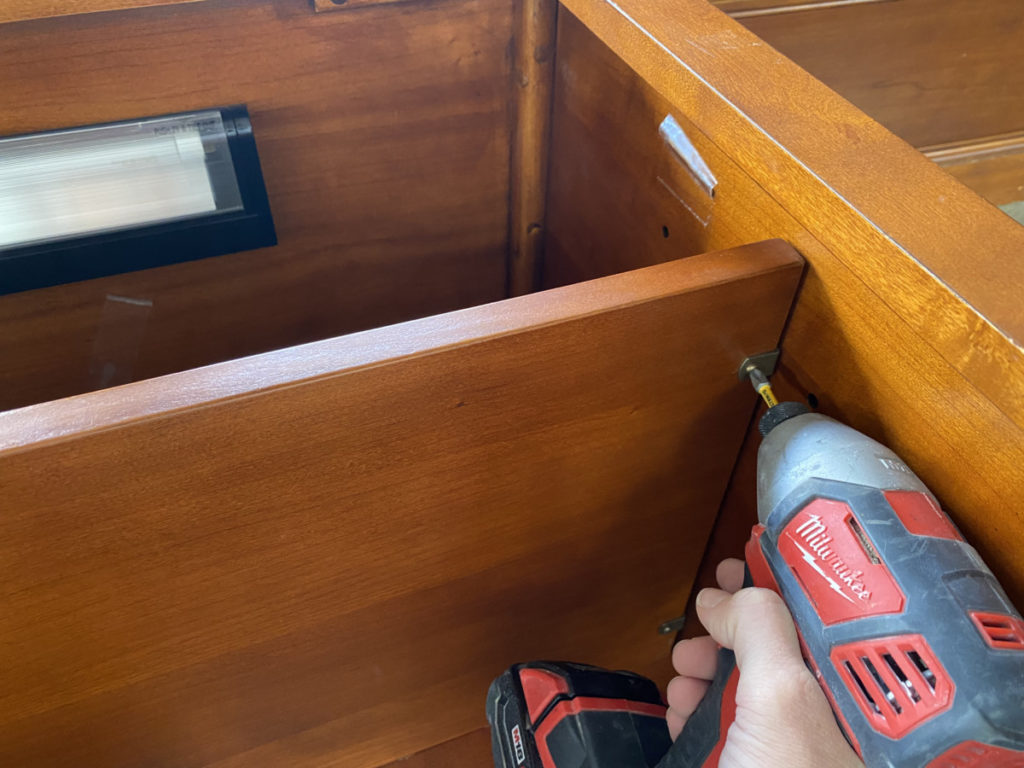
While the executive desk set was modular and allowed me to customize the set for my space, the peninsula desk was entirely too long for the space. What’s a girl to do? Nothing a circular saw couldn’t fix! Again, this was probably not a necessary step, but I really wanted to make this office desk set look like it was custom made for our small space.
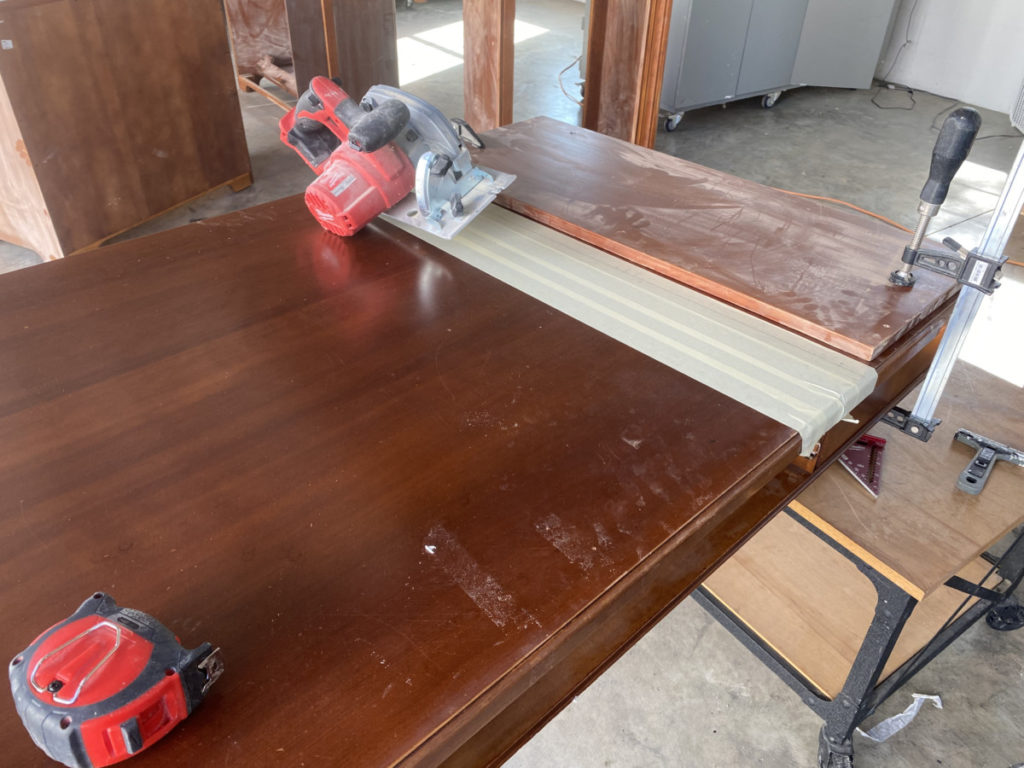
To modify the desk, I first measure the desired length and transferred that measurement to my desk. Using a straight board and clamped it to my desk. I used this straight edge as a fence for my circular saw. If you would like more details, you can see the process on my Instagram Stories.

Sand/Scuff

Before we start painting, we are going to take one very important step to ensure our end product turns out beautiful and stays looking that way! While this is a very good quality wood laminate, it is laminate, nonetheless. Laminate/veneer surfaces are often very smooth and shiny surface, both of which are not ideal for painting… this is where a good primer will be your best friend. It is important that you prime to achieve good adhesion of your topcoat! 
Repair

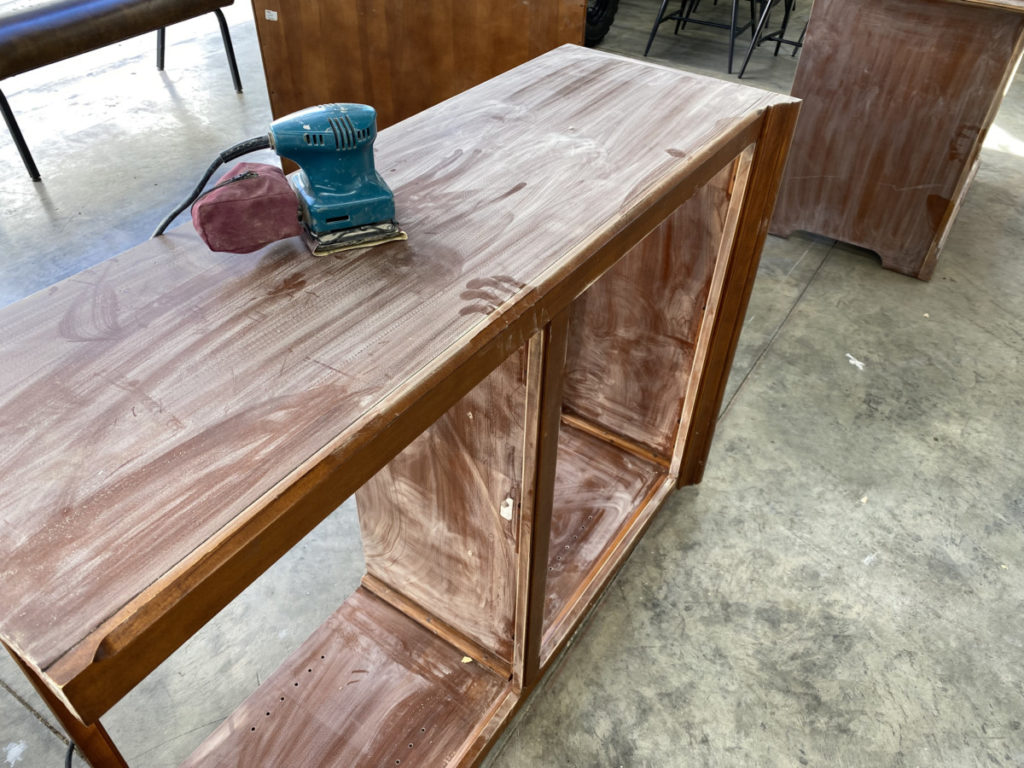
While I sanding my top hutch, I found a gouge that needed to be repaired. Repairing wood furniture is quite simple when you have the right products/tools. For the
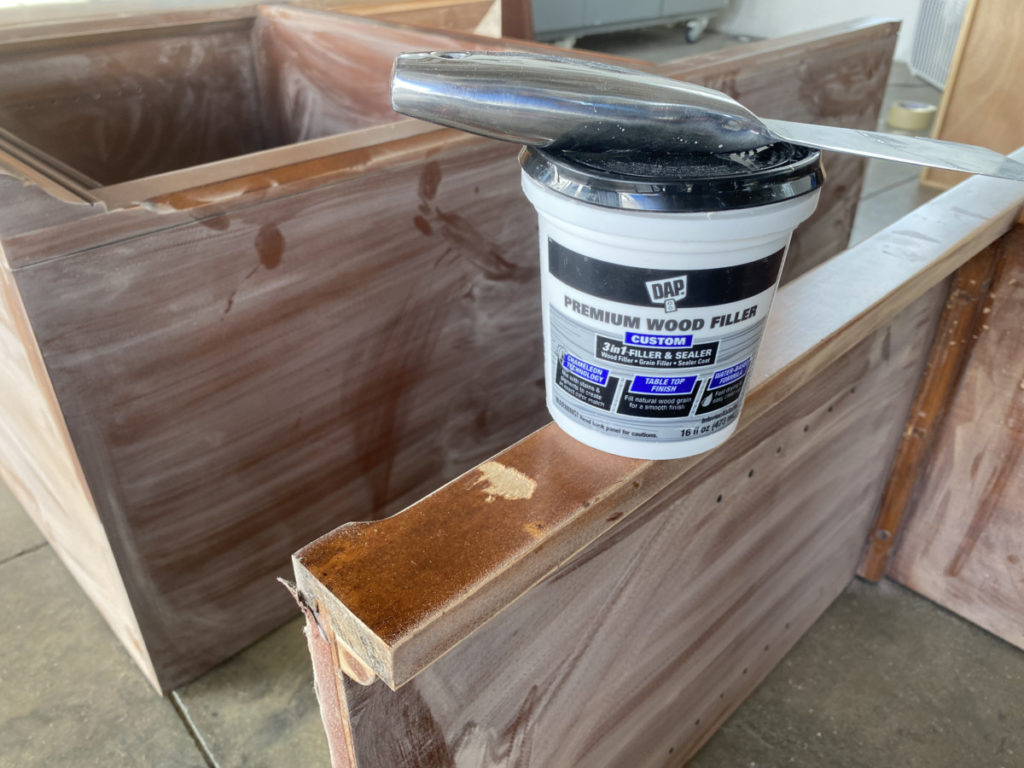
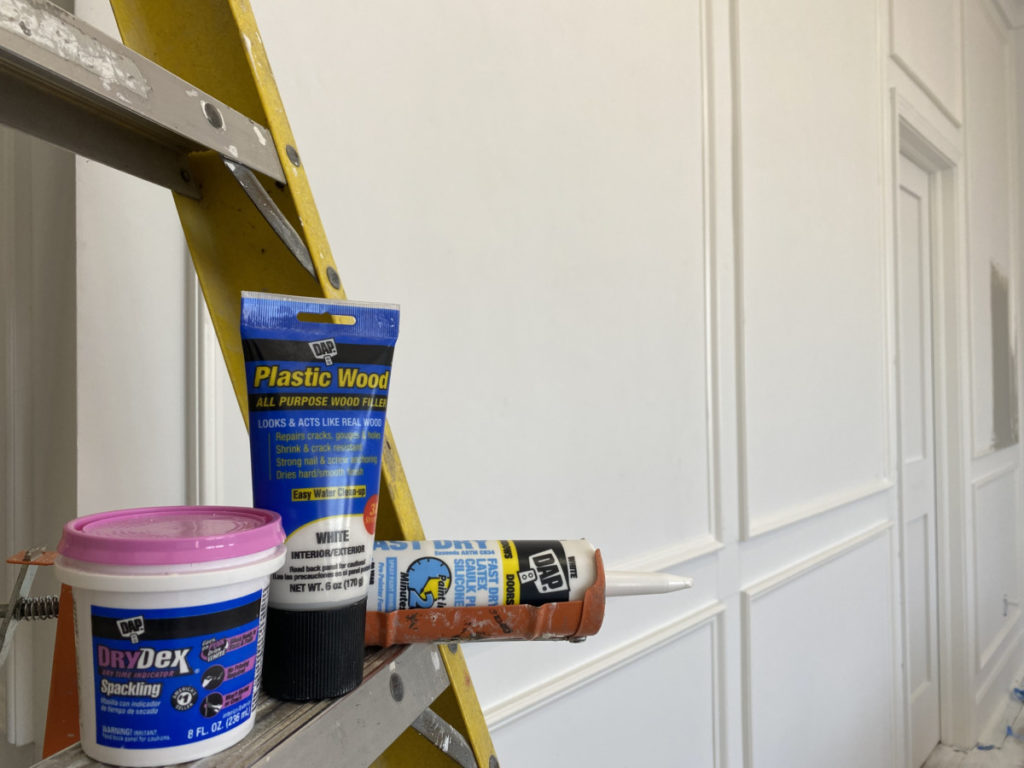
I prefer to use DAP Premium Wood Filler or DAP Plastic Wood All Purpose Wood Filler. I love that both won’t sink, shrink, crack and fall out. They both sand smooth to completely hide any imperfections. One COOL application of “Premium Wood Filler” is that you can actually tint it ! “Chameleon Color Blend Technology allows you to mix stains or pigments directly into the wet state for an exact color match.” You can get all the details here on DAP’s site.
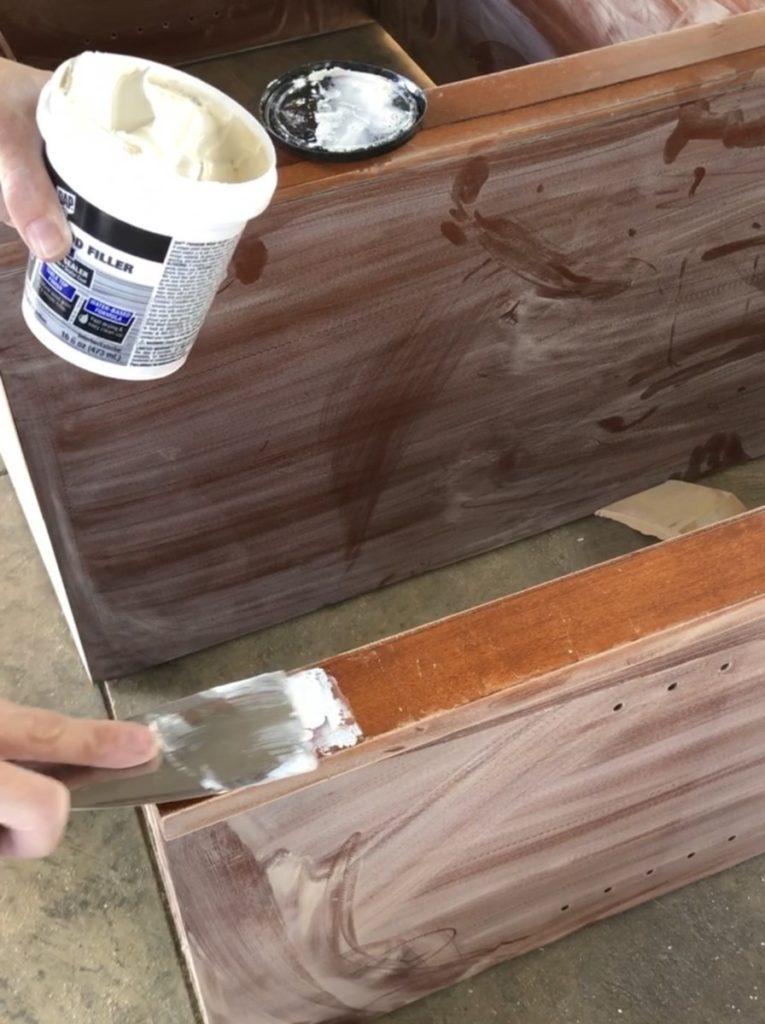
The process of filling a blemish is straight forward, using a putty knife I generously fill the hole/gouge/scratch. (I like to overfill my repairs slightly so that I can sand them smooth.) Once the wood filler is completely dry and sand smooth using a 220-grit sandpaper. after it is smoothed to perfection it is good to go! I saved this process to my Instagram Stories if you are a visual learner. 🙂

(Obviously, I am about to primer this piece of furniture… However, if I were repairing a piece of painted furniture, I would not need to prime the repair first. I love that DAP products will not flash my paint; it is topcoat ready!)

Wipe Down

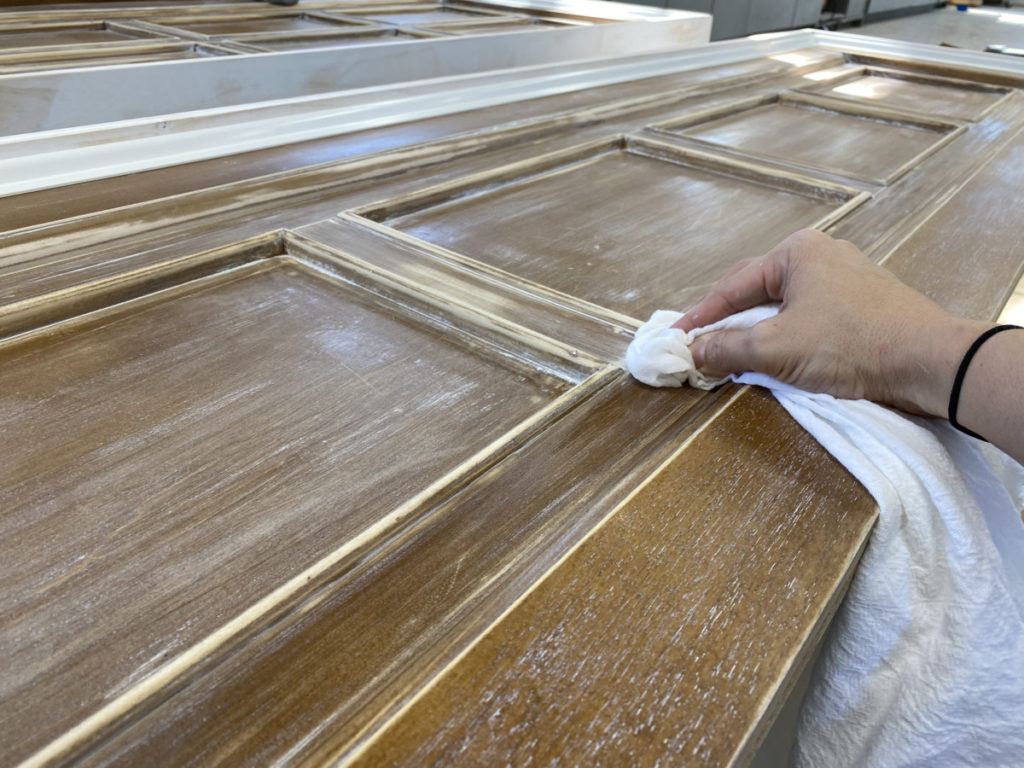
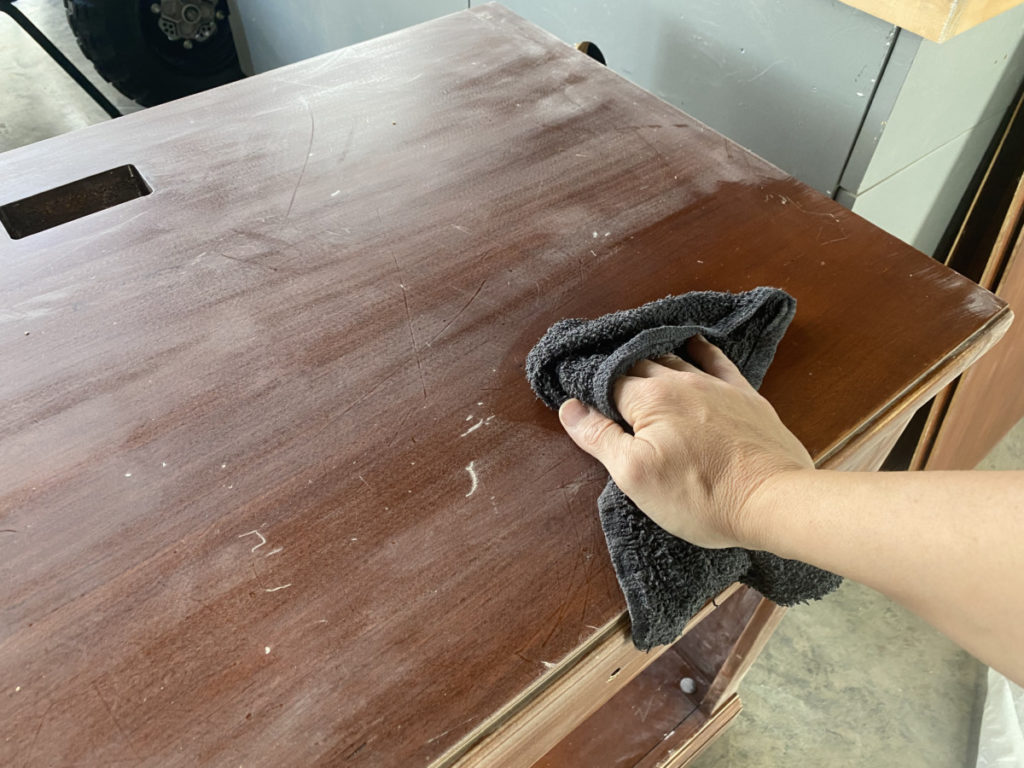
Before priming or painting, I always recommend wiping down the entire piece with a damp cloth. This will remove any loose debris or dust. Removing dust will not only allow for better paint/primer adhesion it will also help create a perfectly smooth finish.
Prime

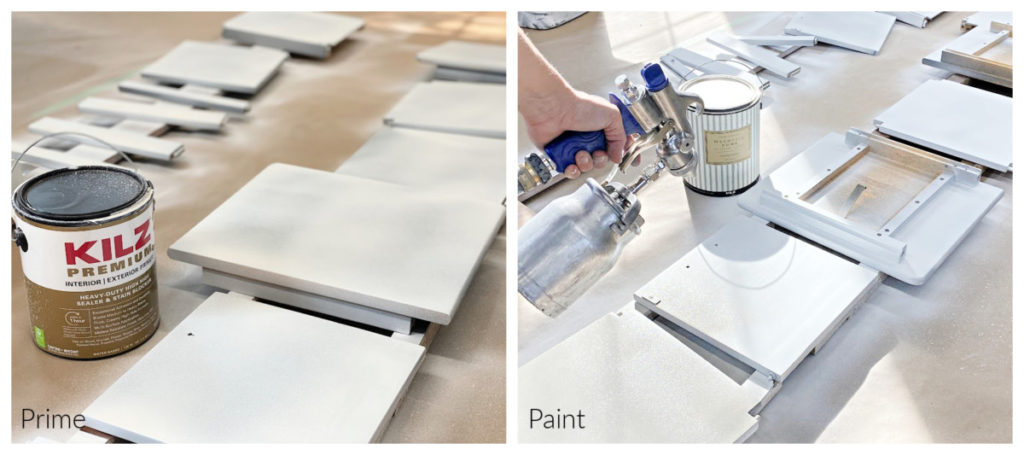
When priming make sure you always use a good primer, and one for your specific needs!

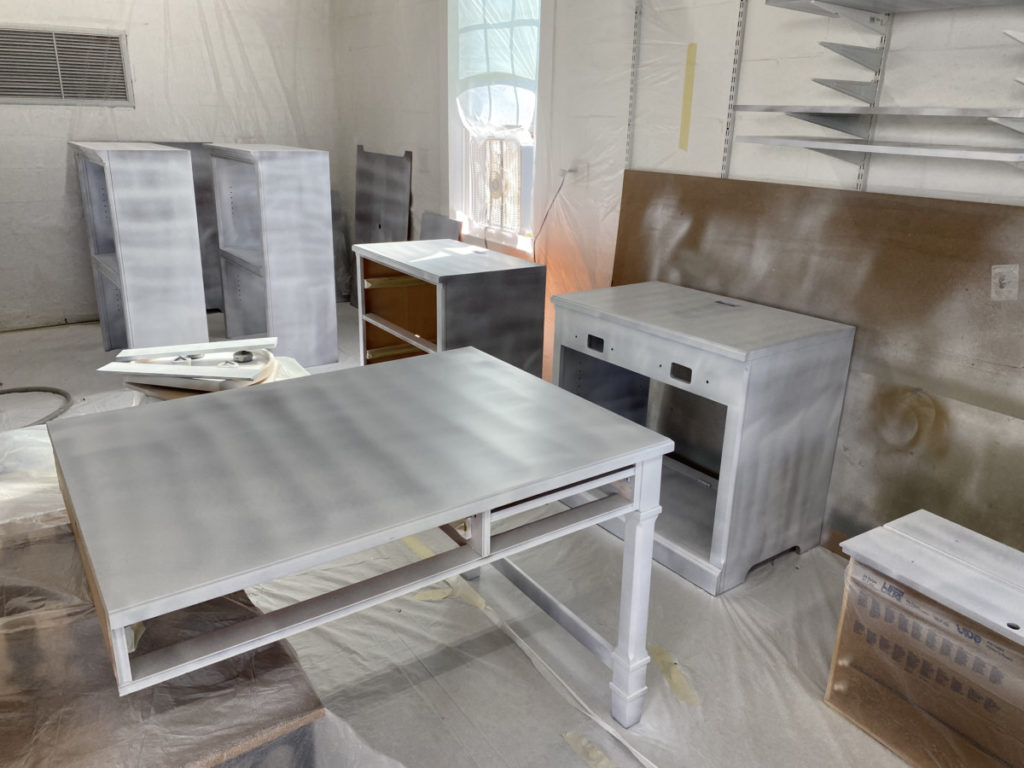
For this project I opted to use a paint sprayer to apply my primer. When applying any paint/primer make sure you reference the directions on the back of the can to ensure that your material can be used in a sprayer and use the recommend tip/point size.
Finish Sand

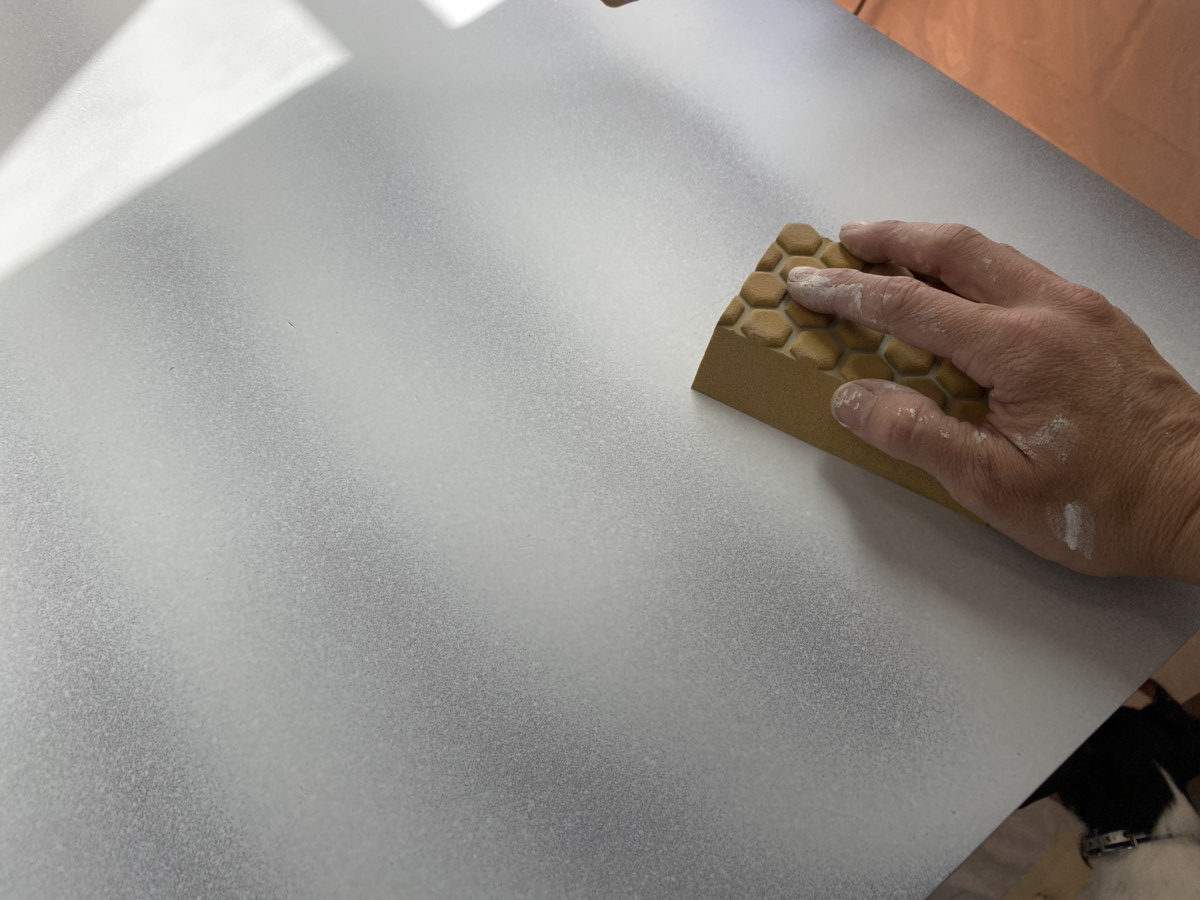
Before we dive straight into painting, there is a step I HIGHLY recommend. After the primer is dry, I suggest going over all the painted surfaces with a sanding sponge. After sponge sanding, wipe down the entire unit to remove any loose debris. I promise these simple steps helps ensure a smooth finish!
Fix Blemishes

This step is where the magic happens! I have found that when you paint/prime a piece of furniture white ALL of the flaws stand out like a sore thumb. (When a piece of furniture is lighter in color it is easier to see the shadows created by flaws and cracks.) Directly after priming furniture is the BEST time to fix those flaws!
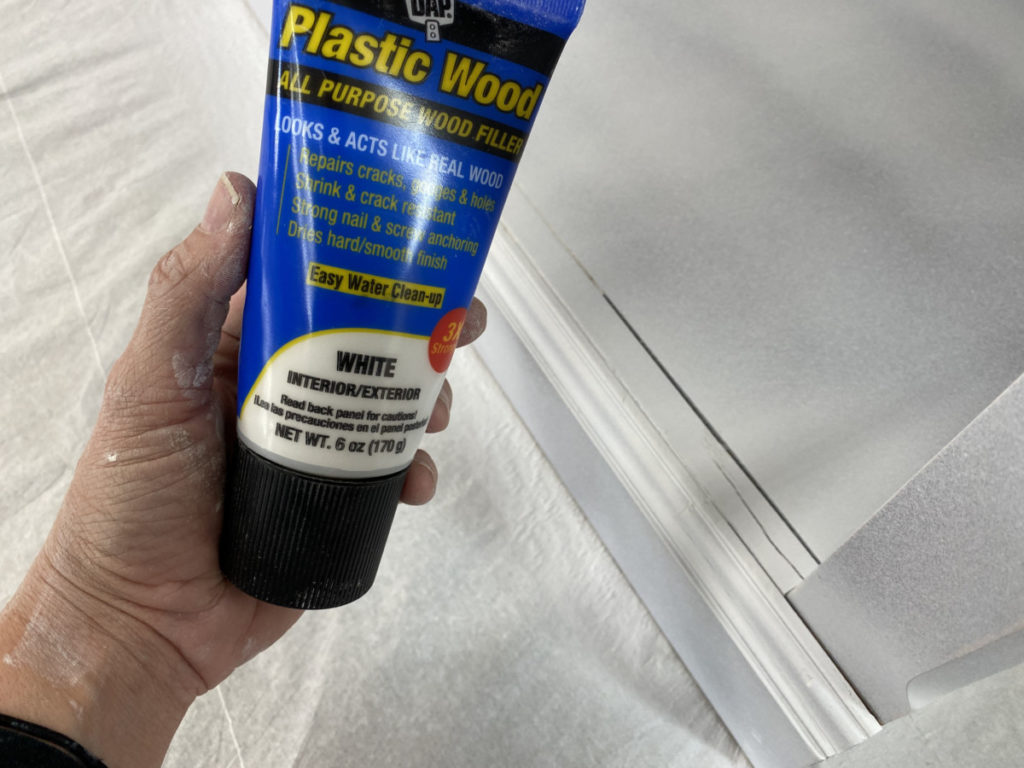
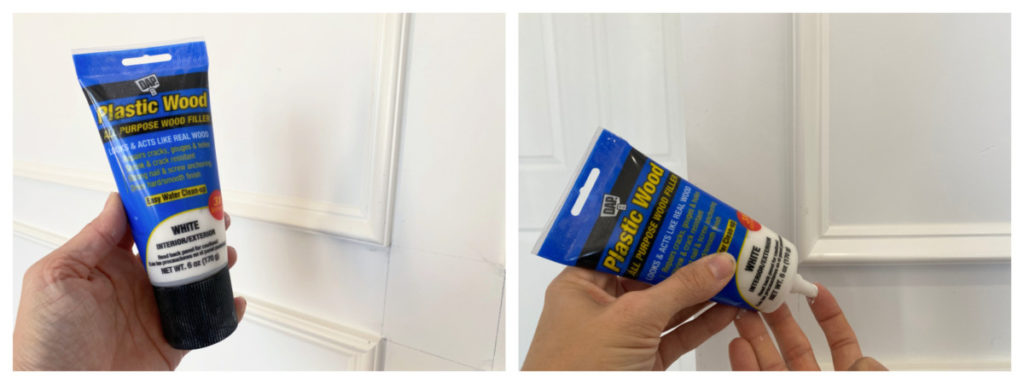
As you can see in the image above there are some gnarly cracks that need to be fixed. When I am working with painted wood with small repairs, I like to use DAP Plastic Wood All Purpose Wood Filler in the squeeze bottle.
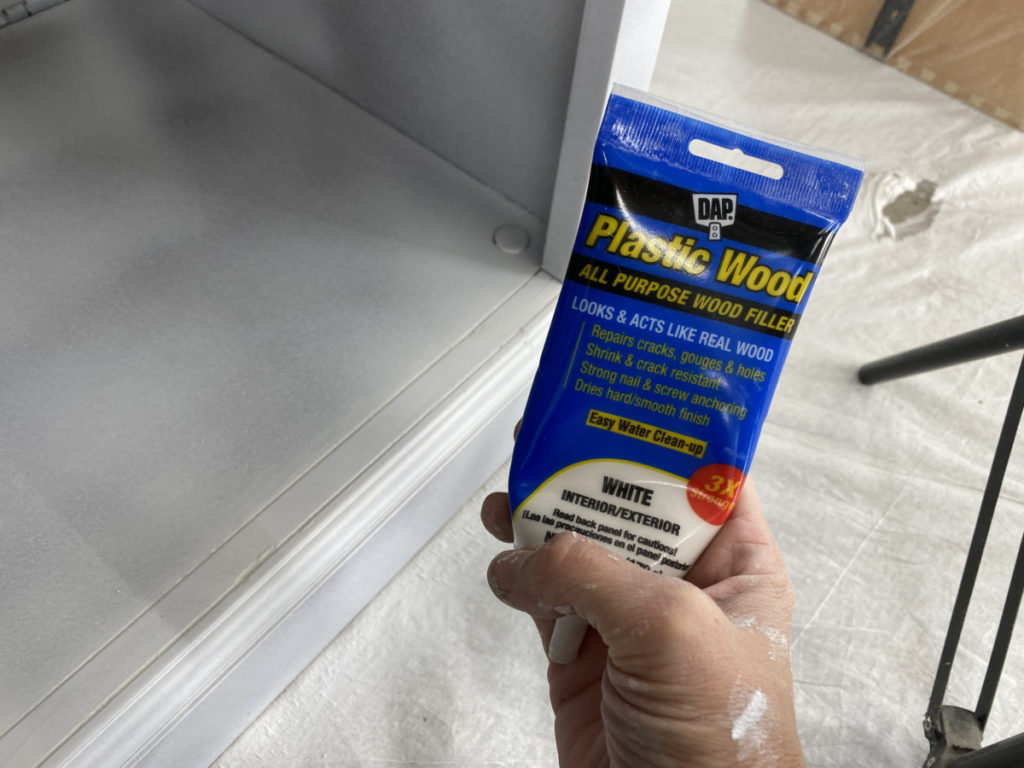
The repair process for both large and small projects is similar. (Large projects I like to use the tub/jar with a putty knife. Small projects I like the handy squeeze bottle and can use either my finger or a putty knife to press the filler into the cracks.)

Once the filler is dry, sand smooth. Again, DAP Plastic Wood All Purpose Wood Filler will NOT flash your paint, so no need to prime again. We are ready to topcoat!

Paint

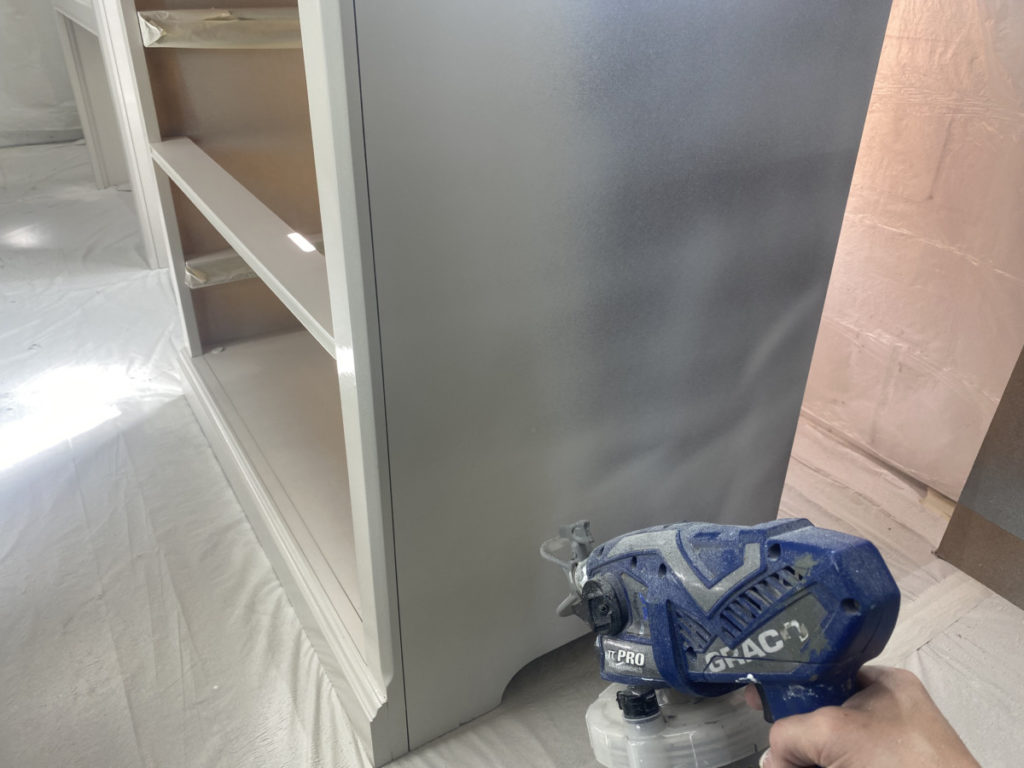
Following the same steps for priming, I applied my topcoat. I closely followed the back of the can recommendations for applying paint using a sprayer. I have repurposed MANY pieces of furniture and have achieved great results using a good brush and a foam roller. In fact, I painted one of my kitchen cabinets using that method.
Remove Trim

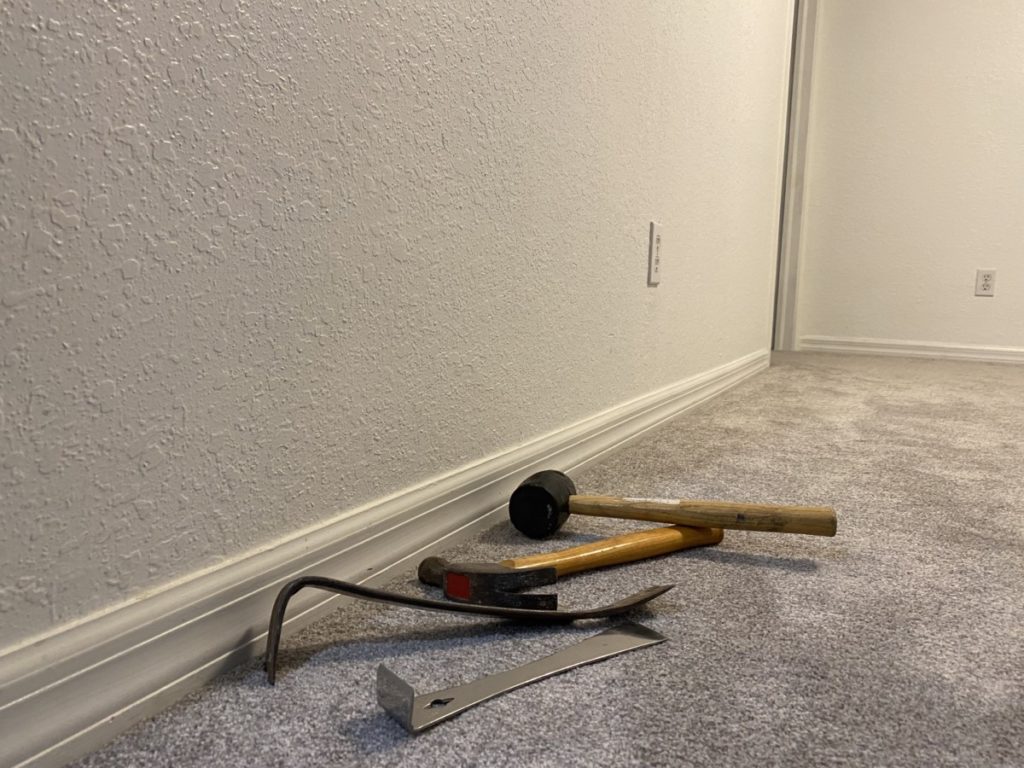
Now that the furniture is painted, we need to prep its new home! If you are trying to achieve a “built-in” feel, then HANDS DOWN you will want to integrate your baseboards into the new pieces of furniture. The first step in this process is removing the existing baseboards. I have a full tutorial on baseboards removal and installation that you can access here.

Consider This:

For your consideration: For this project I was upgrading my baseboards and replacing the builder grade boards with a wider baseboard. If you do not want to do this, it is NOT necessary. Instead of installing new baseboards you can simply cut your existing boards in place using a multi-tool.
Bring In Furniture for Kids Workspace

Once everything is painted and dried it’s time to reap the rewards! I could hardly contain my excitement and started bringing in my furniture the second it was no longer tacky. (I don’t recommend doing, that. Giving paint a little extra time to cure is always a good idea.)

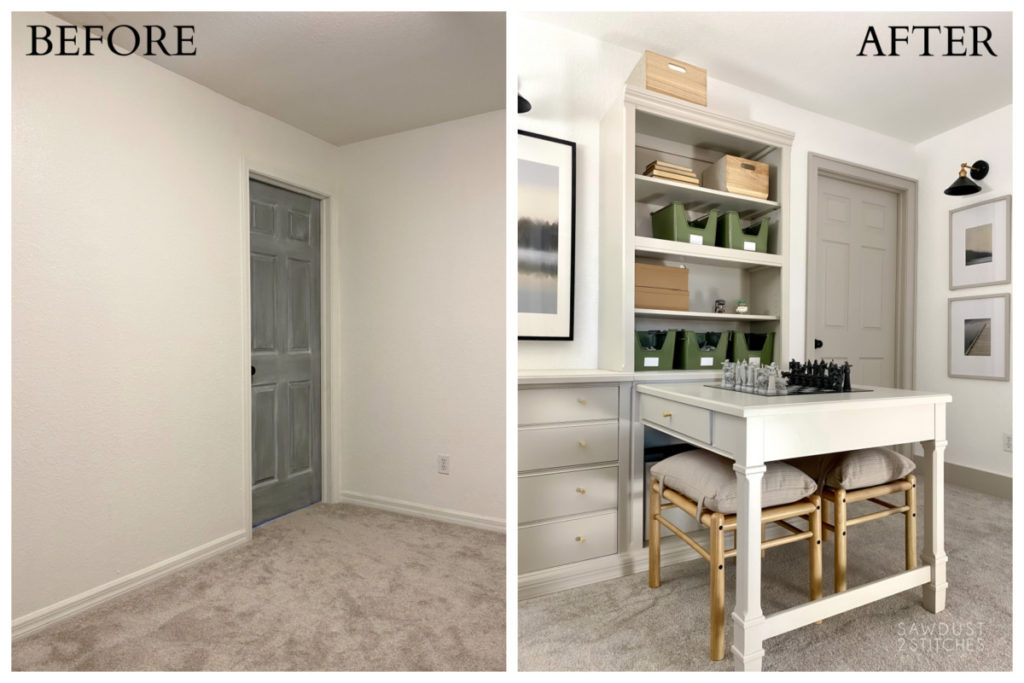
I still cannot believe that this is all the same furniture! The paint changed the entire aesthetic of this old executive desk set.
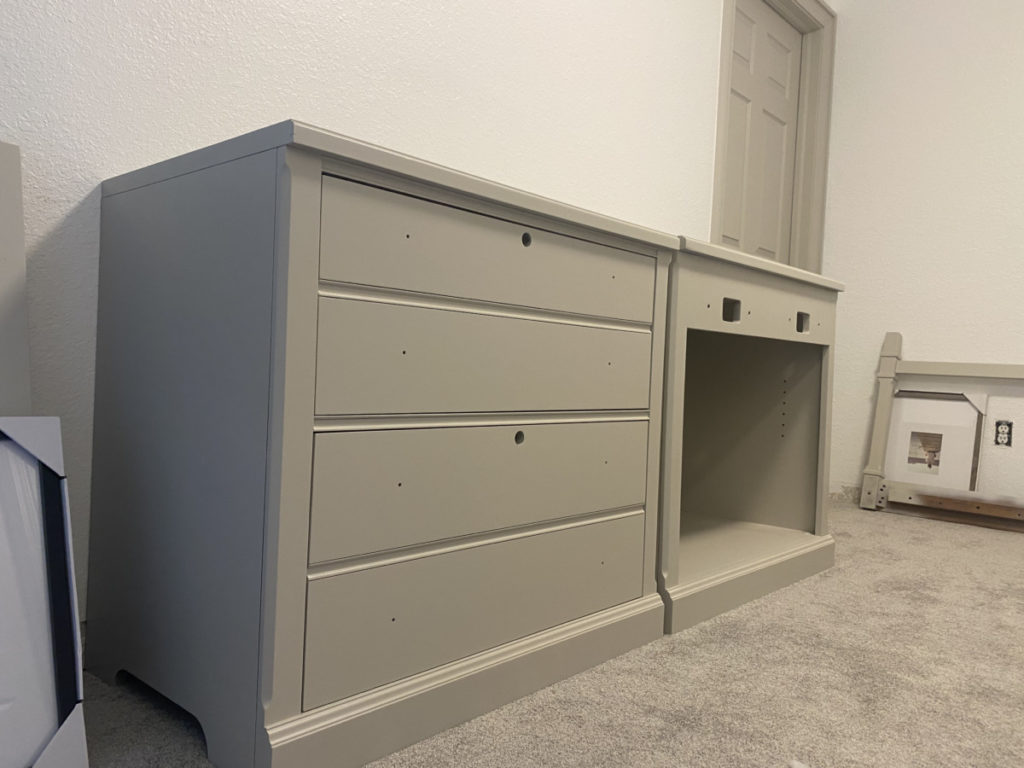
Secure It!

The cabinets will need to be secured together so that they are essentially one unit.   In order two align them properly, I used clamps to hold the two cabinets together while fastening them together.
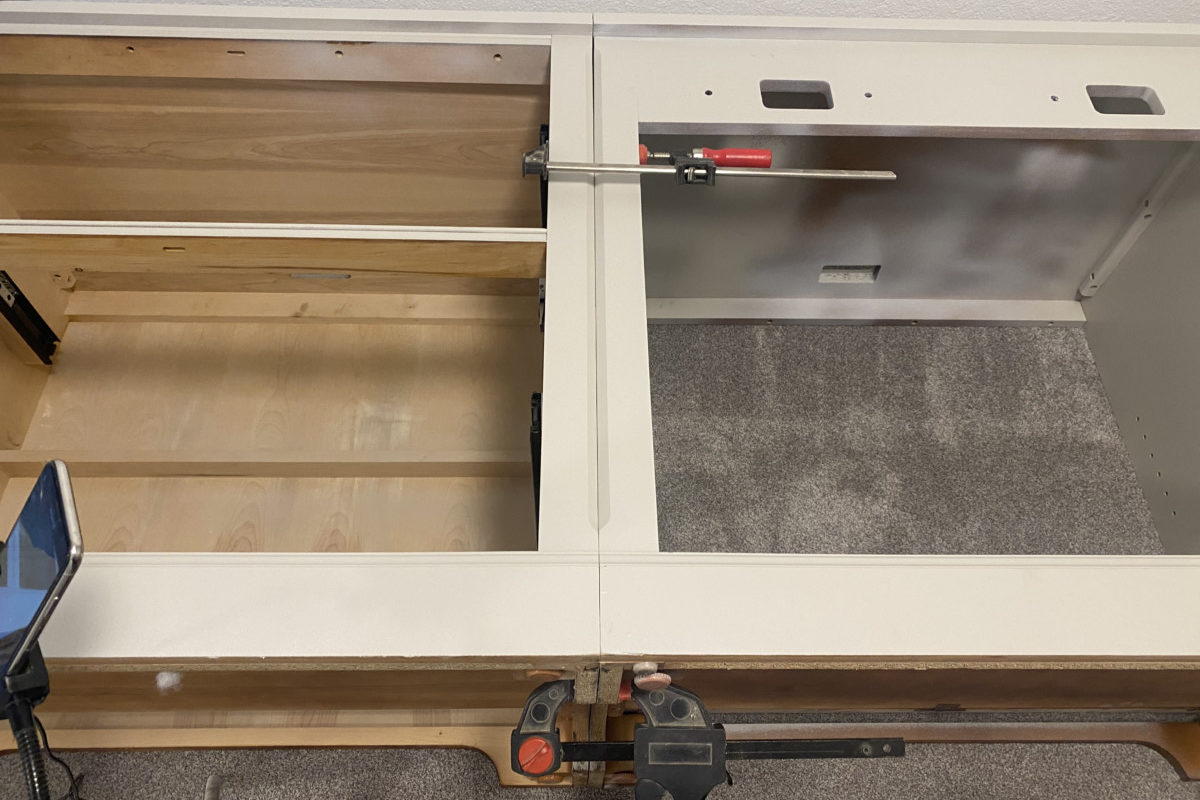
 In order to ensure these suckers were not coming apart I fastened them together at  8 different points,  using a 1 1/4″  wood screw. 
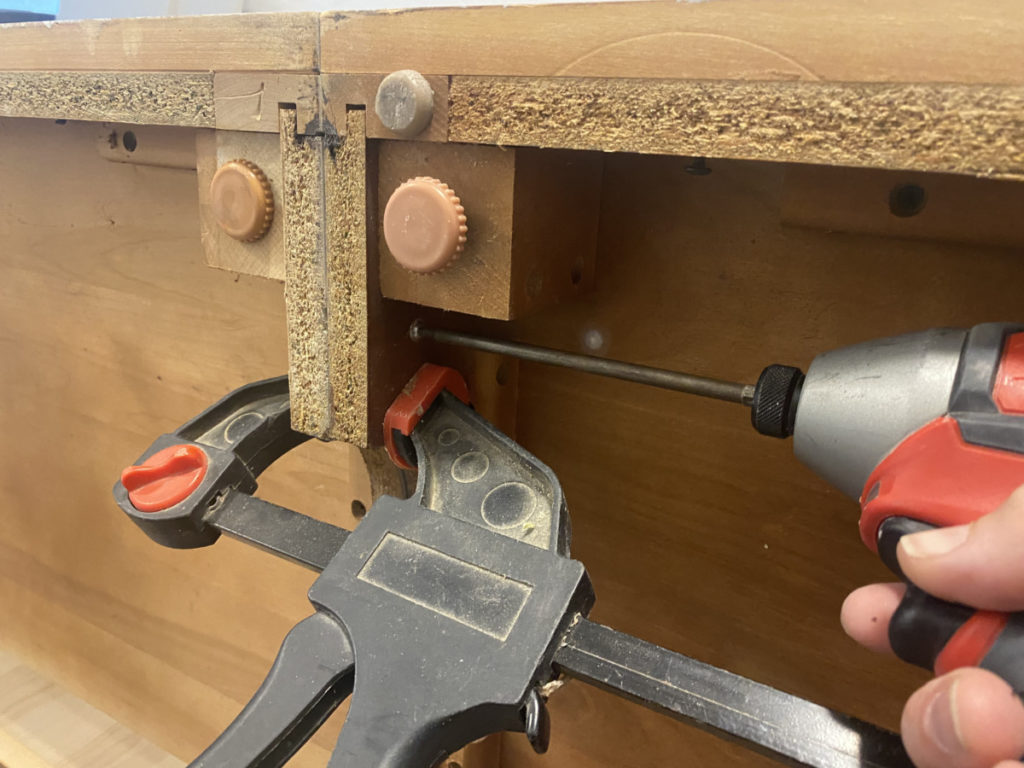
Not only did I secure them along the base, I also made sure to drive several screws through the interior sides of the cabinets as well.
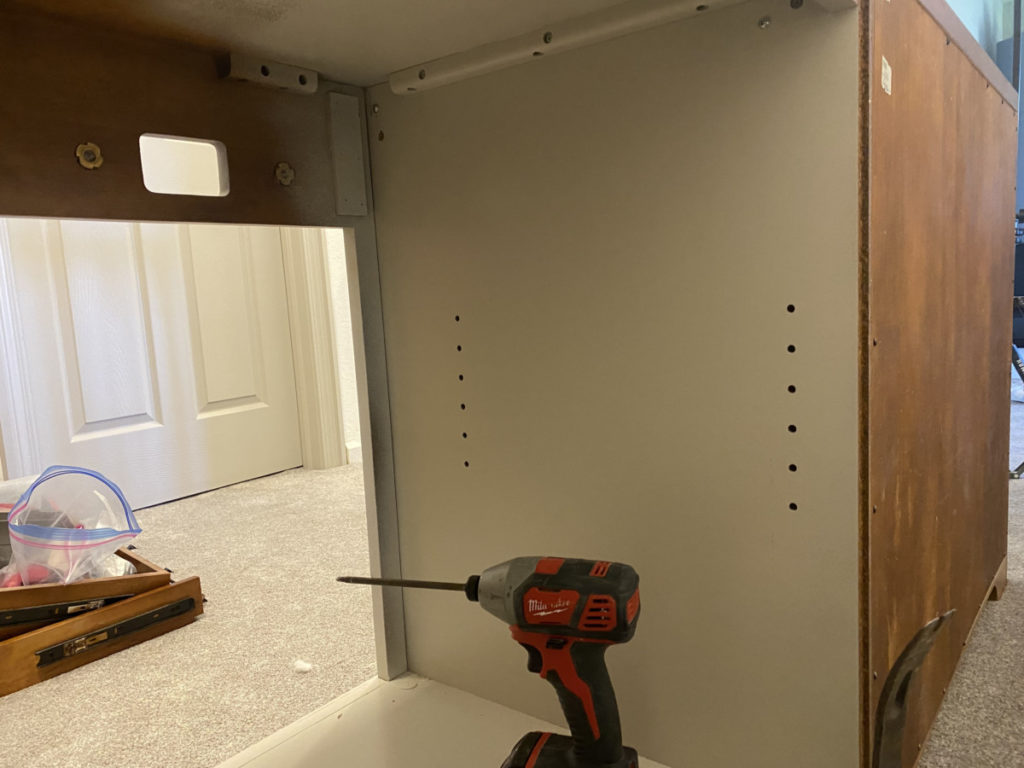
After the two units are essentially one proceeded to secure the unit to the wall.
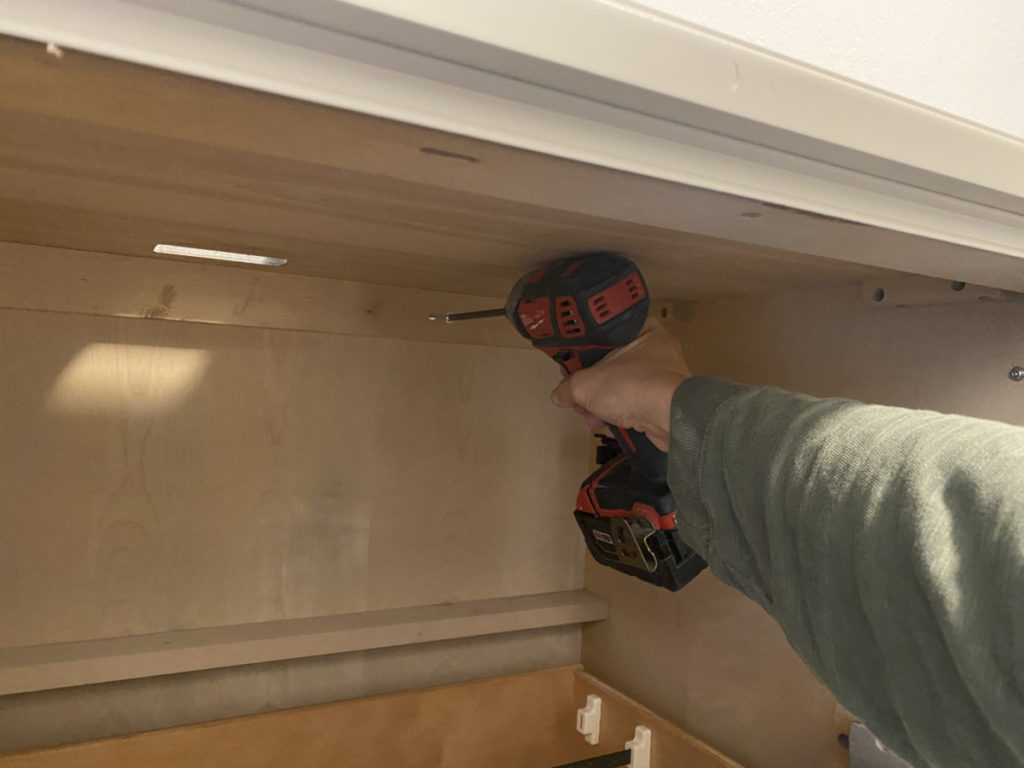
In order to do this I marked stud placement and drive a 3″ screw through the interior back of the cabinet and into the stud behind it. Repeat this step a minimum of 2 times per unit.

Add Trim

Door Casing *optional*

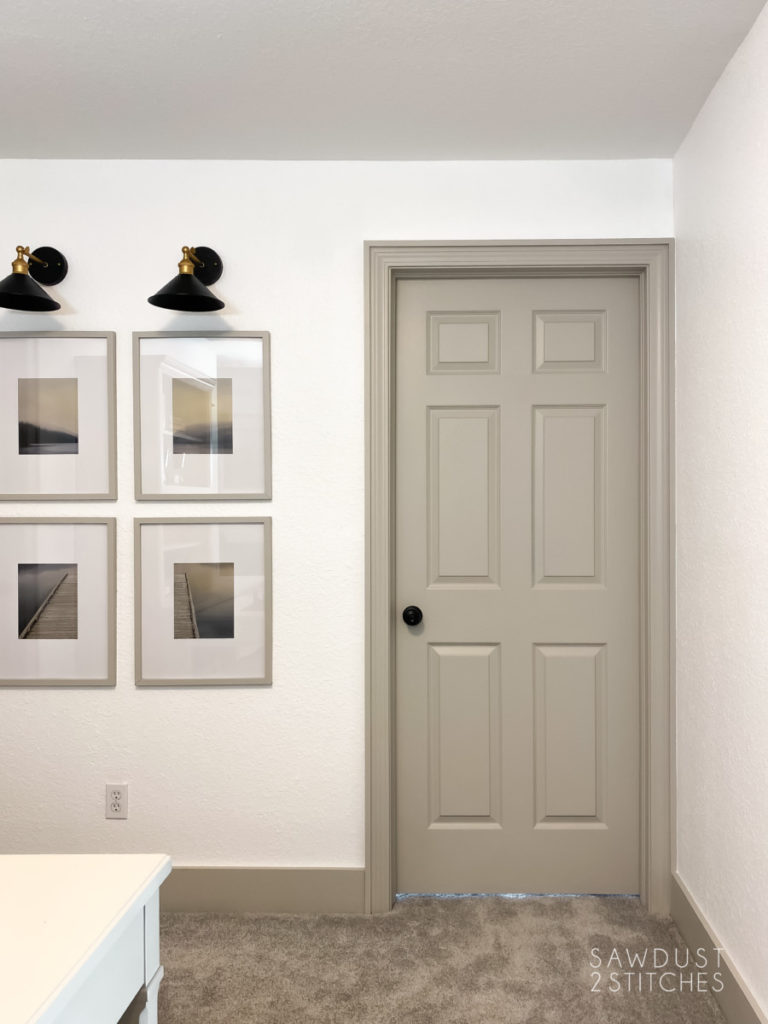
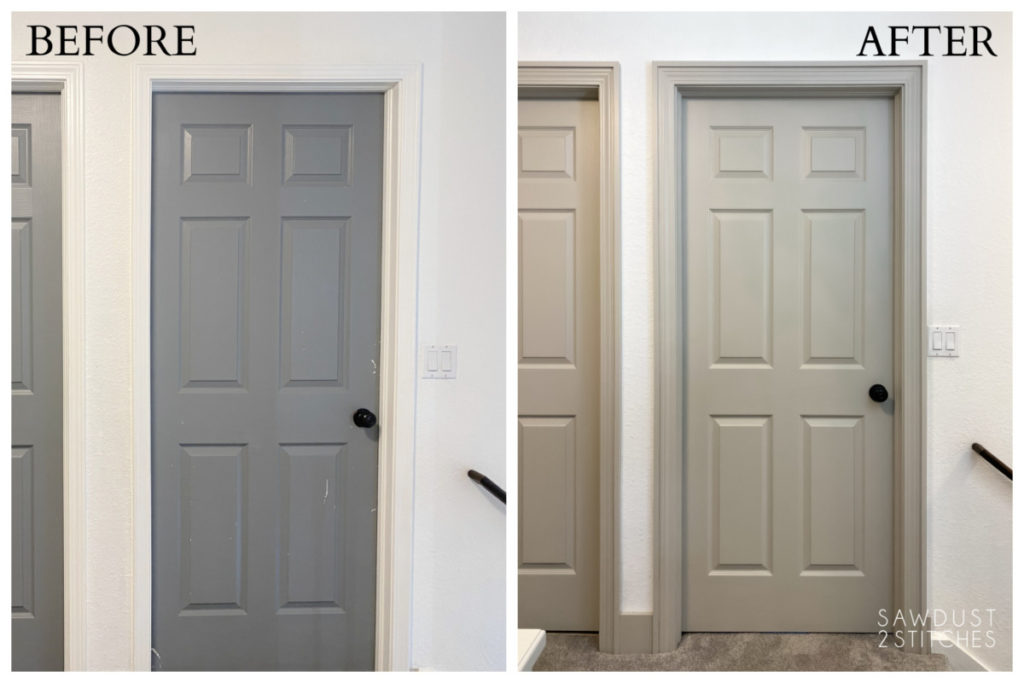
FINE, I admit it, I may have gone a little EXTRA when trimming out this space. While I was removing the baseboards, I got an idea… I decided I wanted to upgrade my door casings. However, I didn’t want to start from scratch, instead I just gave my existing ones a makeover. If you want to upgrade your door casings you can get the full tutorial here.
Baseboards

After the door casings were complete, I was ready to make this unit look like a built-in unit. My absolute favorite way to integrate a built-in is with baseboards/molding.
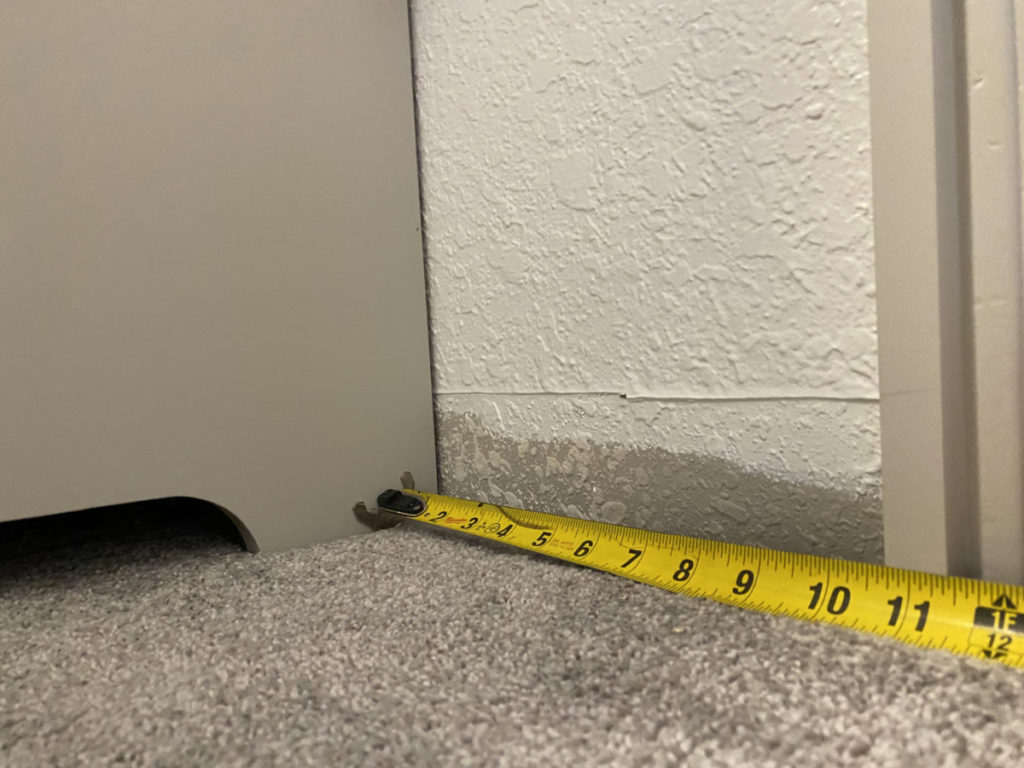
Not only does additional trim work create a built-in appearance it also gives it a sophisticated feel that I AM HERE FOR! Installing baseboards it’s a straightforward process, however if you want more information, I have a full tutorial here. 

Cabinet Trim *Optional*

Now that the baseboards are built-in it’s time to really unify these two modular units. In order to do that I wanted to hide the seam where the two units meet, and also hide the cutouts on the side of the unit. The height of the trim would need to be customized. I used my table saw to rip cut a standard baseboard.
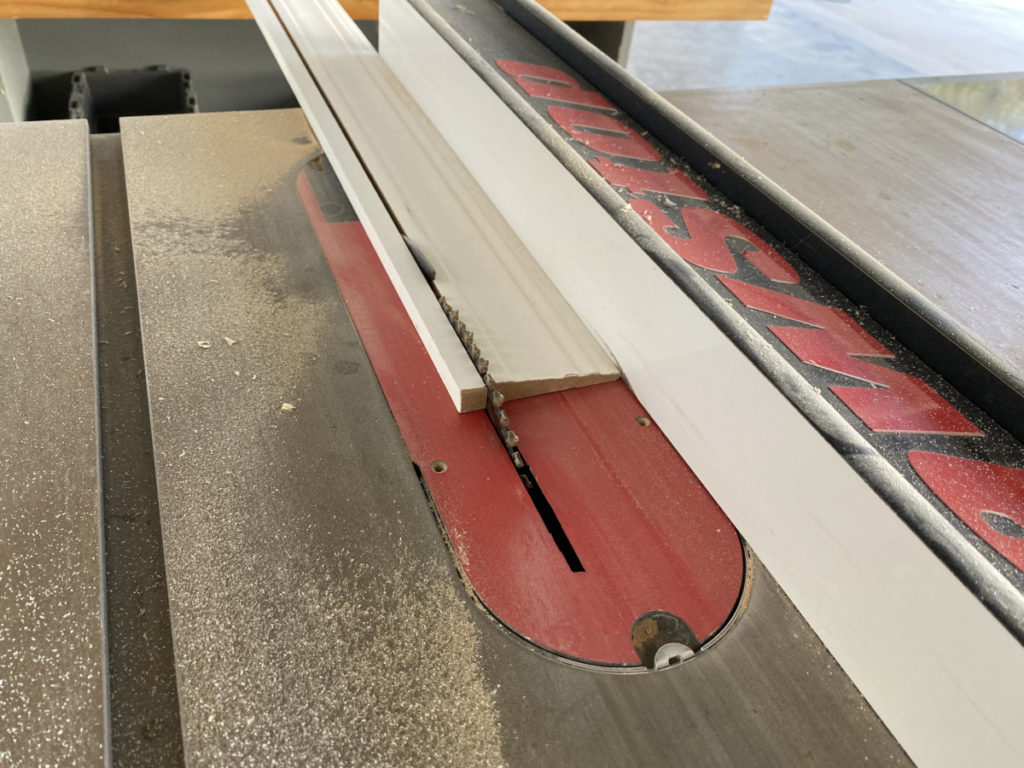
Once the trim was ripped to the correct height, I proceeded to case out the unit similarly to how I add baseboards. I like to mark my baseboards in place using a fine tipped pencil. (I swear by mechanical pencils when marking boards.)
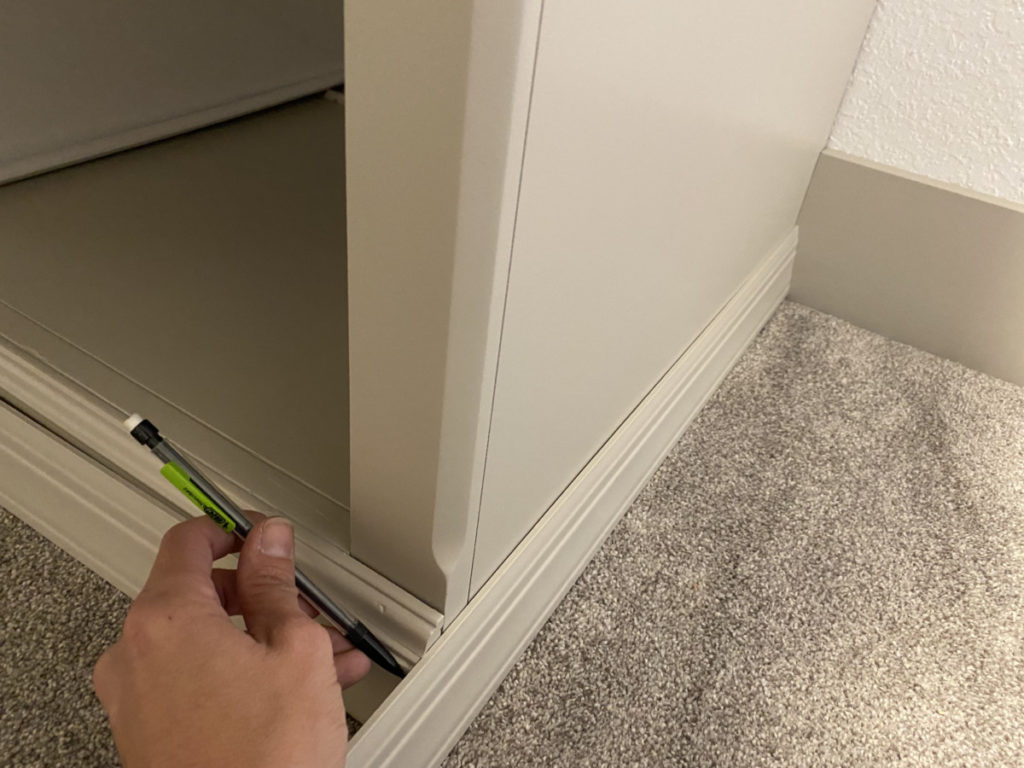
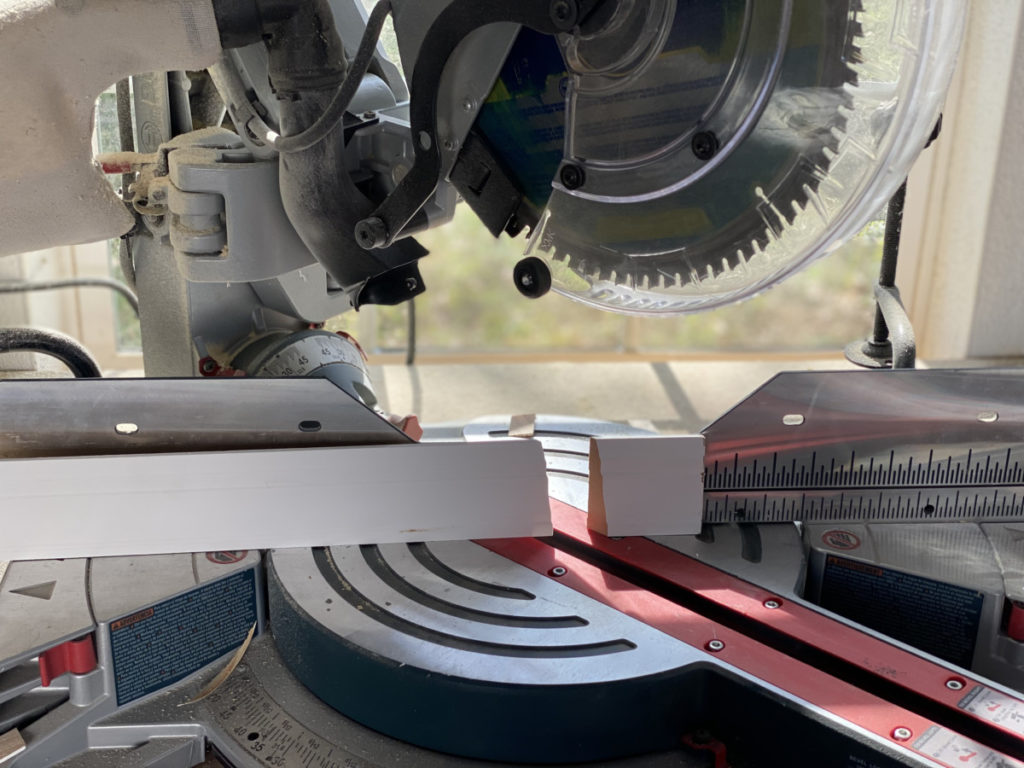
Once marked, I cut my trim pieces using my miter saw set to a 45 degree angle.
When installing trim on furniture I want a strong permanent hold. In order to achieve this, I can use either WeldWood Wood Glue or DAP DynaGrip Adhesive
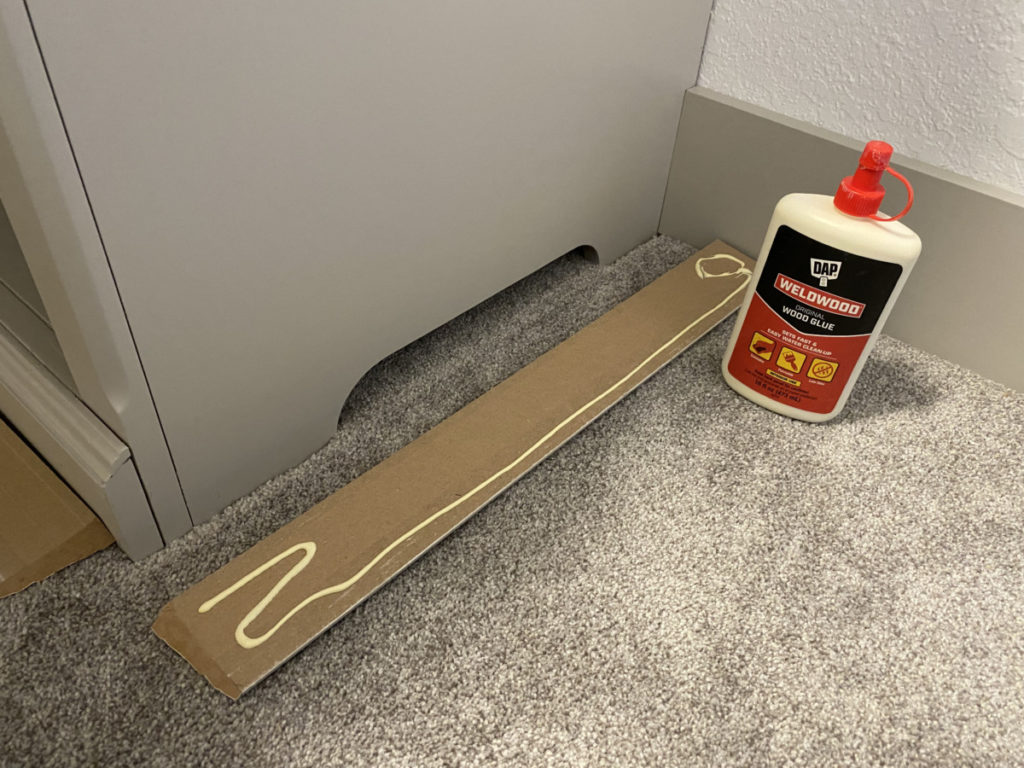
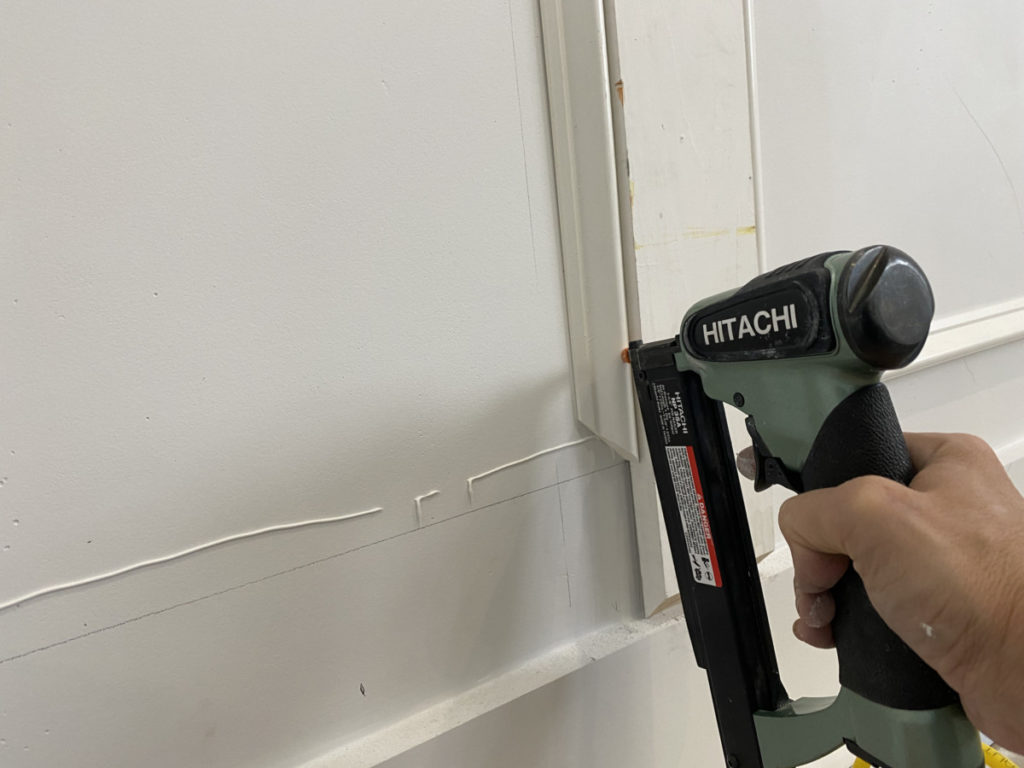
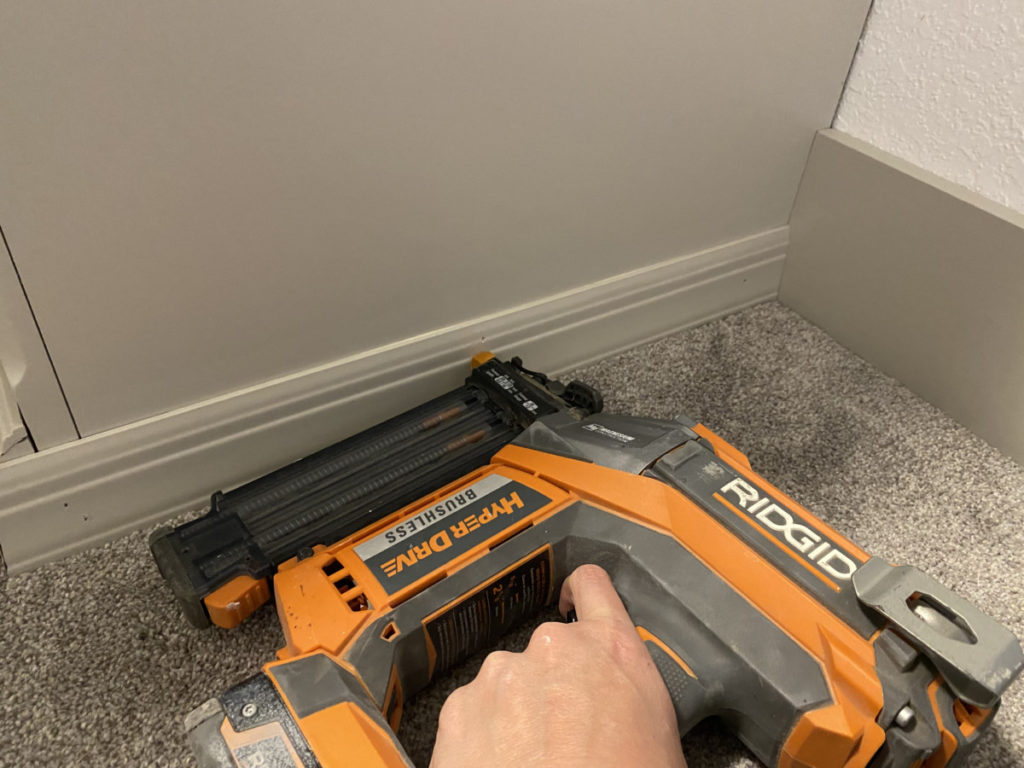
I applied the adhesive to the back of my baseboard then pressed the board into place. I then used 1.5″ 16-gauge nails to hold the trim in place.
Now that the corner is done, and the odd cutout is covered it is time to bridge the seam/gap where the two units meet. While the custom trim will cover a large portion of the seam it will not cover the entire seam. In order to make this look as seamless as possible I added a small amount of DAP Plastic Wood All Purpose Wood Filler. (Again, once the filler was dry I used a 220 grit sanding block and smoothed out/removed the excess filler.
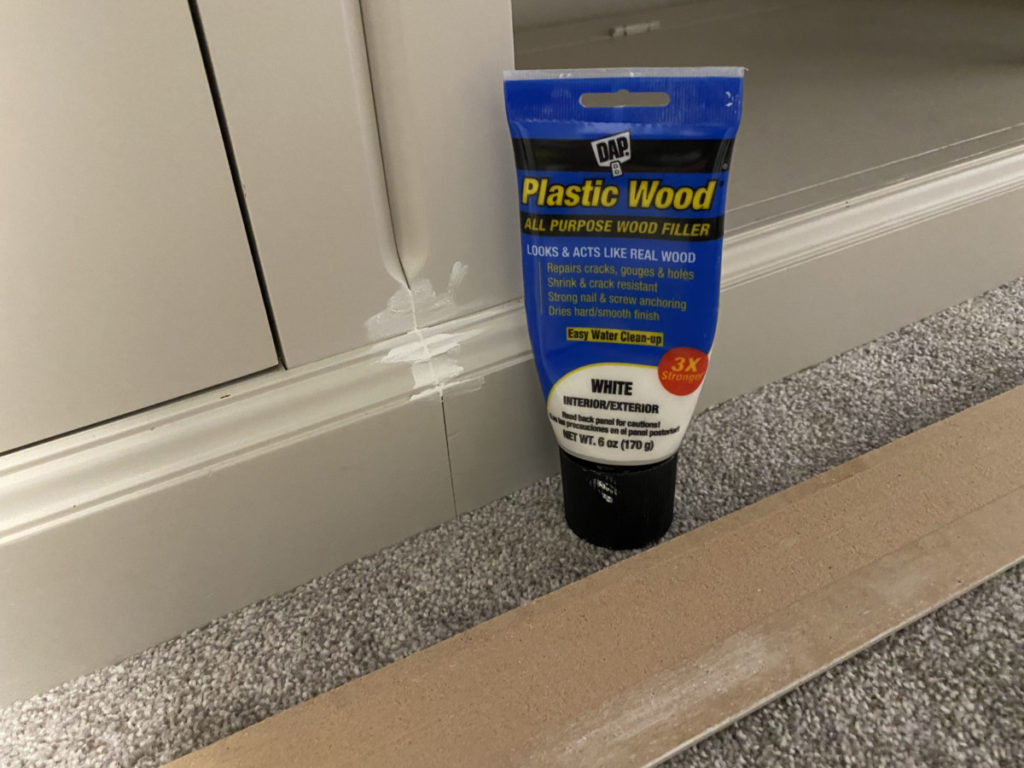
Once the gap was hidden, I proceeded to add the front trim piece and the side using the previously stated steps.
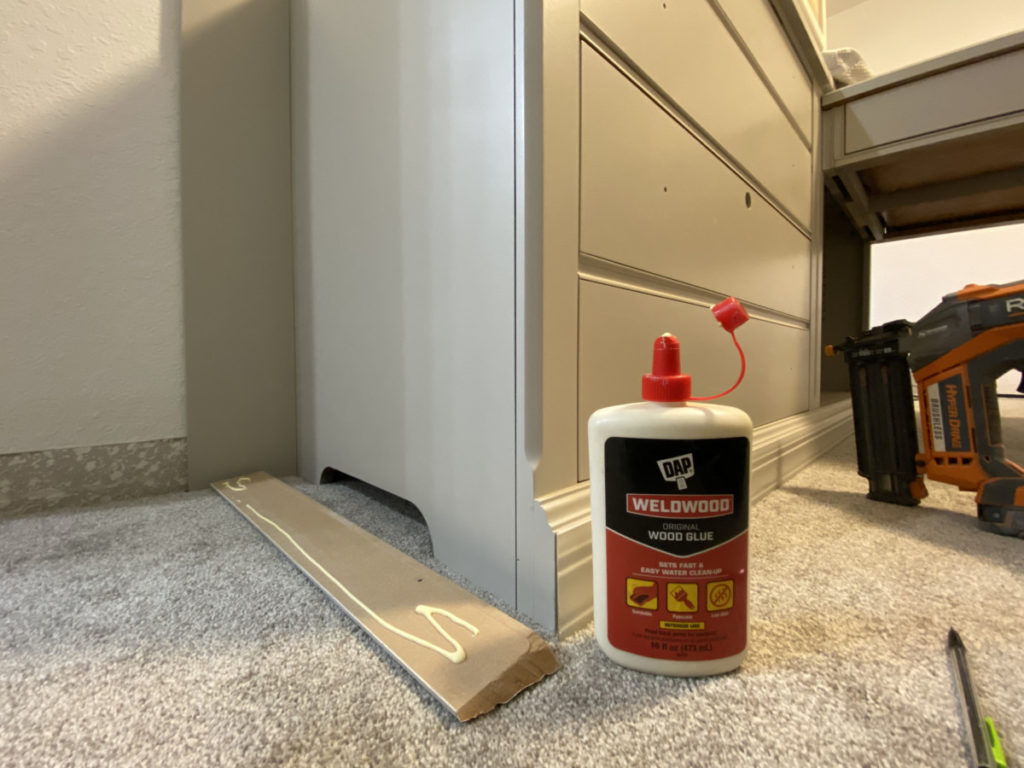
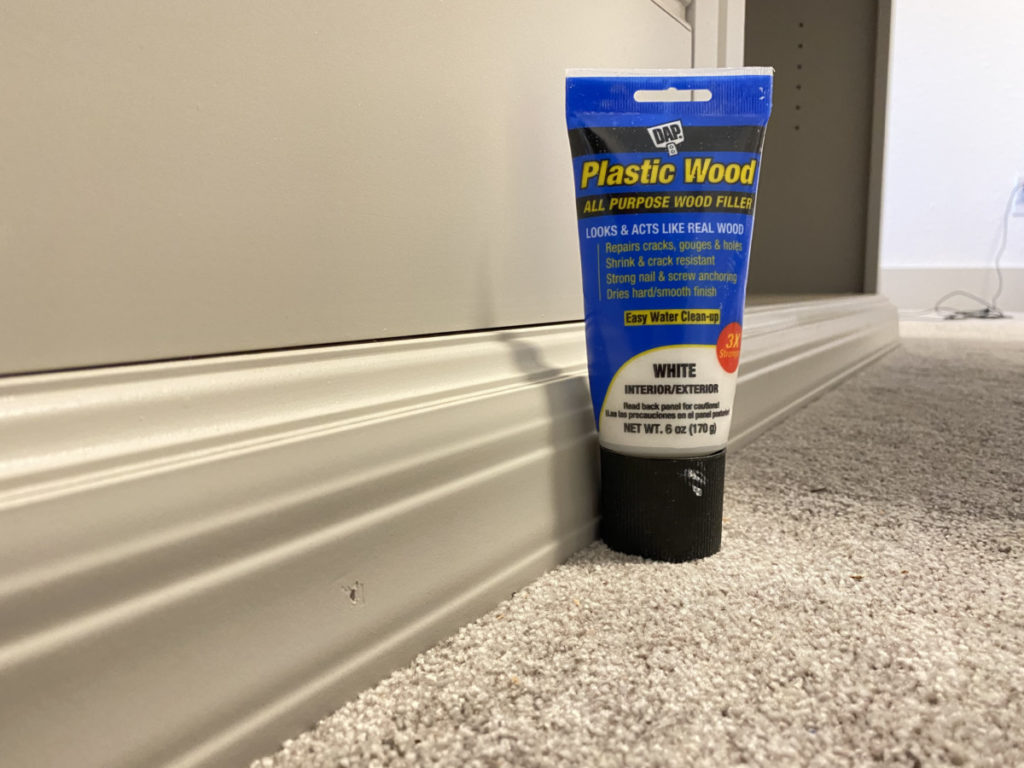
We are getting SOOO close! I highly encourage taking an extra minute to run through and fill all the nail holes to create a flawless look.
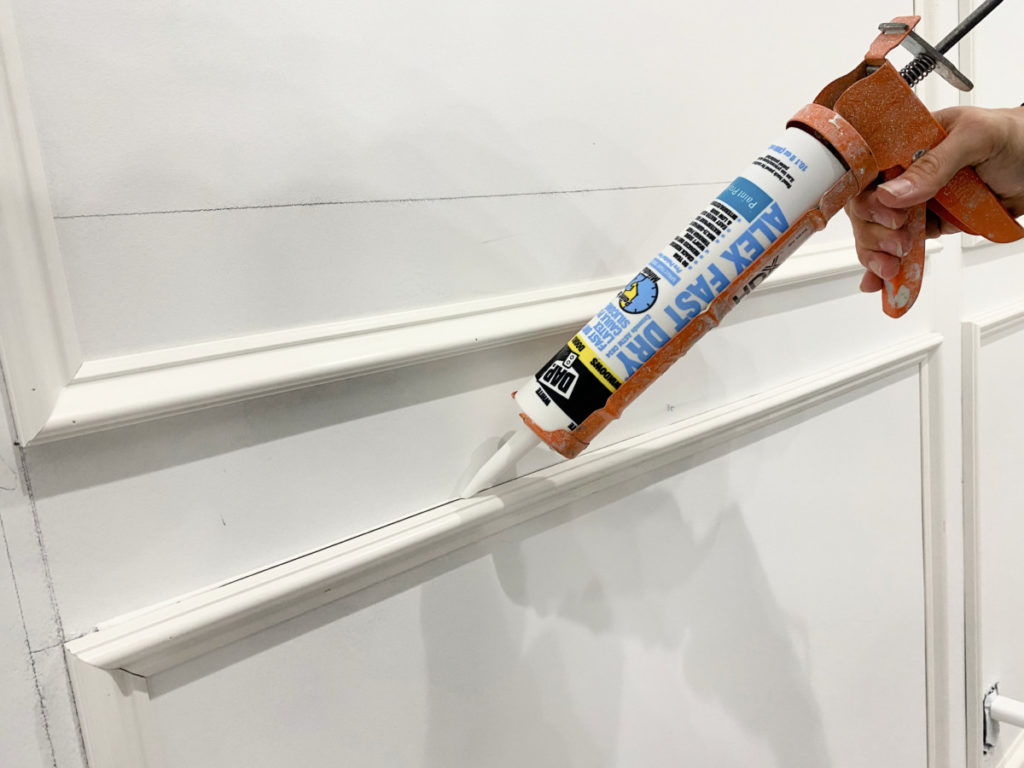
Once all the trim work is finished is the time to bring in the “magic eraser” for trim work, caulk! Even the worst of gaps can melt away when DAP caulk is utilized properly. If you are interested to see more about where and how I used it make sure you check out my Instagram Stories here, OR if you are interested in learning on how to trim out a room and use caulk,  use my tutorial here. 
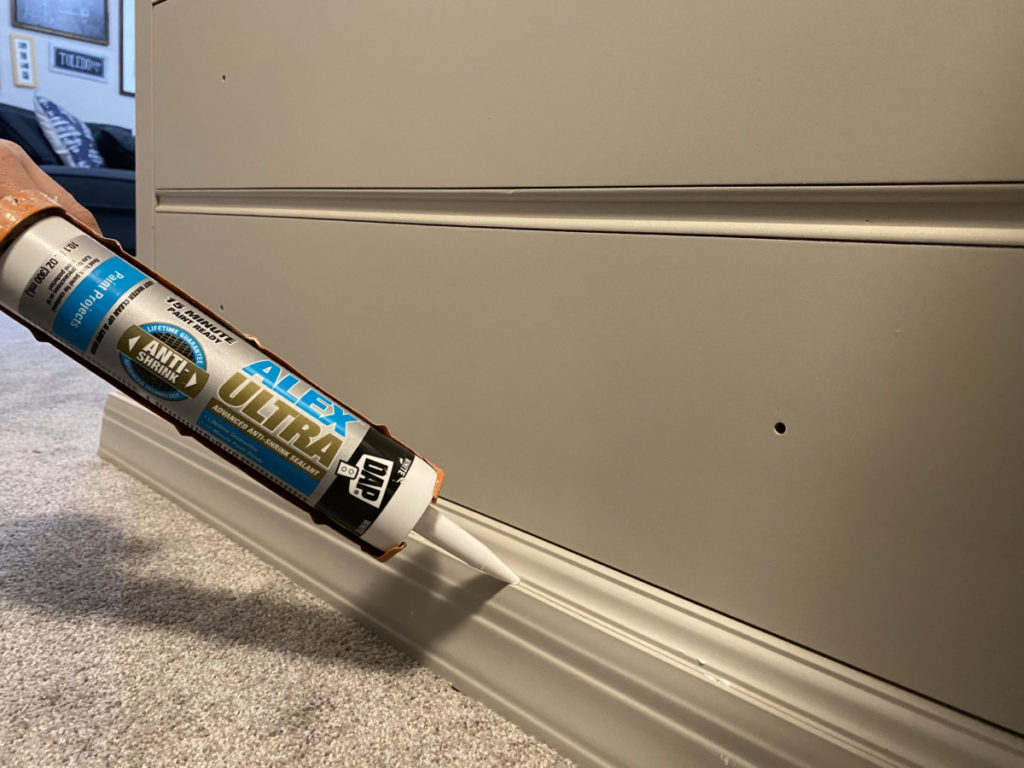
I wanted to hide the slight gap/seam that was created when I added my bottom trim piece. In order to make that seam vanish I used DAP Alex Ultra Advanced Latex Sealant. This caulk is great for paint projects and as always it has “anti-shrink” technology and is paint ready in 15 MINUTES! Perfect for the impatient DIYer like myself.
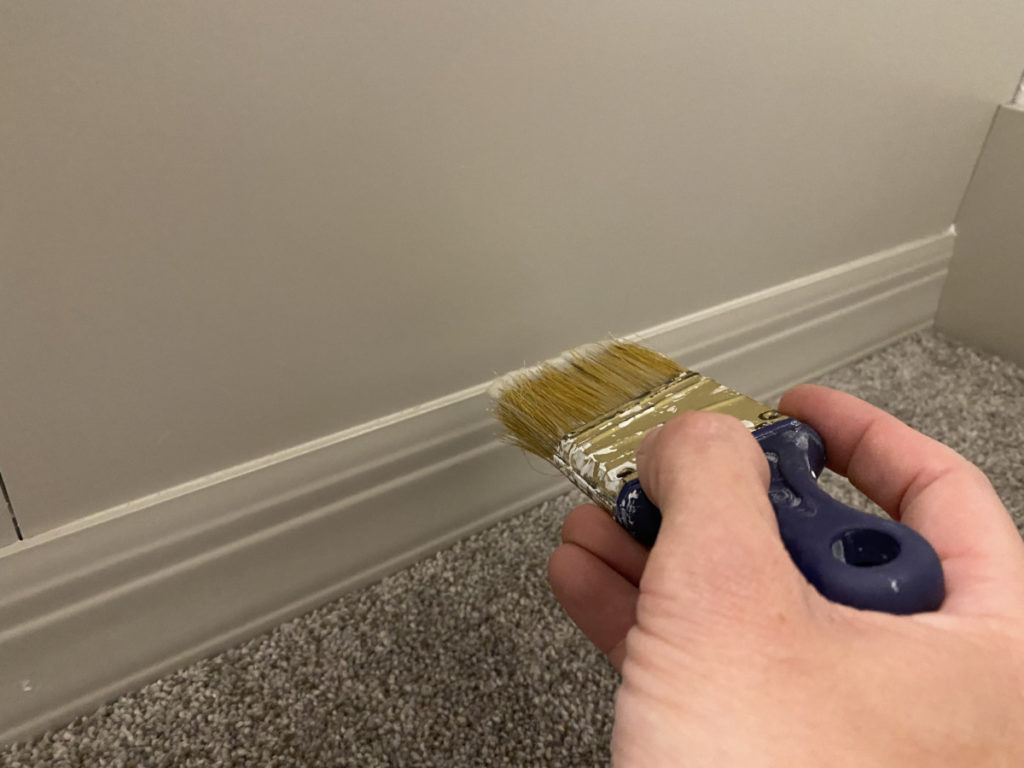
Last step in creating the perfect built-ins is painting caulk and adding touch-up paint to any previously filled holes or seams!

Finishing Touches on Kids Workspace

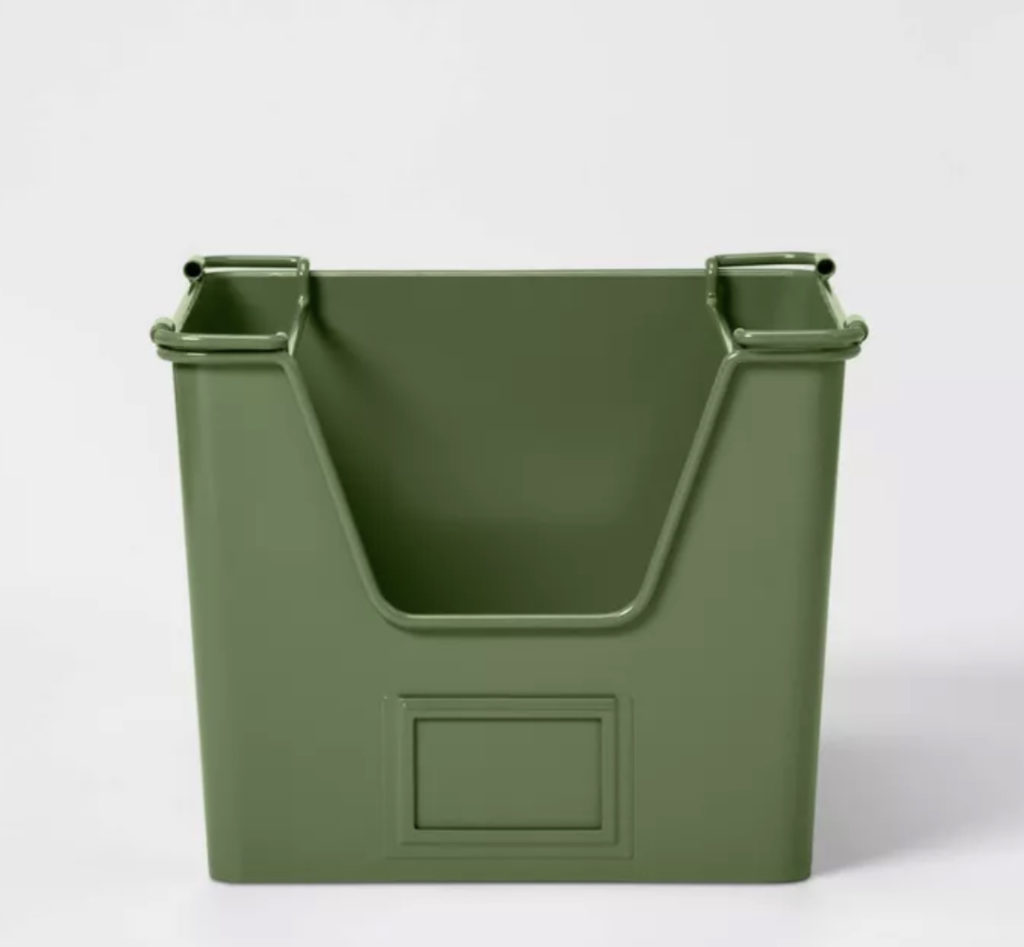
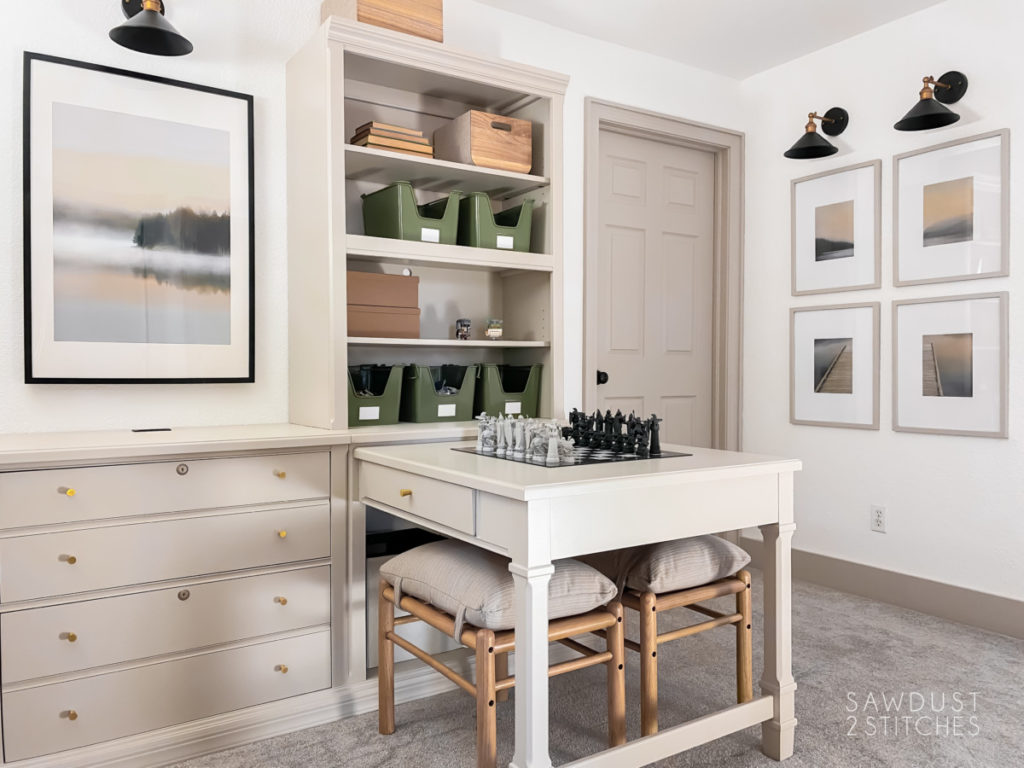
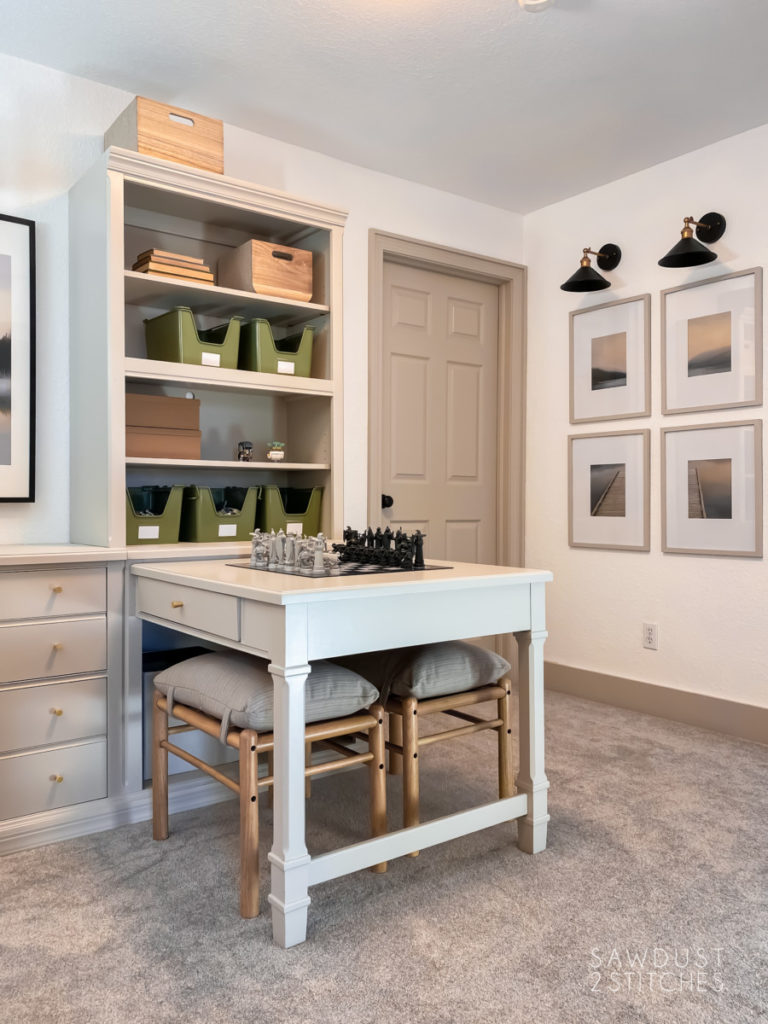
Now that the built-ins are complete, I wanted to add a few finishing pieces to really tie the whole space together. Naturally I needed to add some practical storage. I opted for these cute colorful bins from Target.
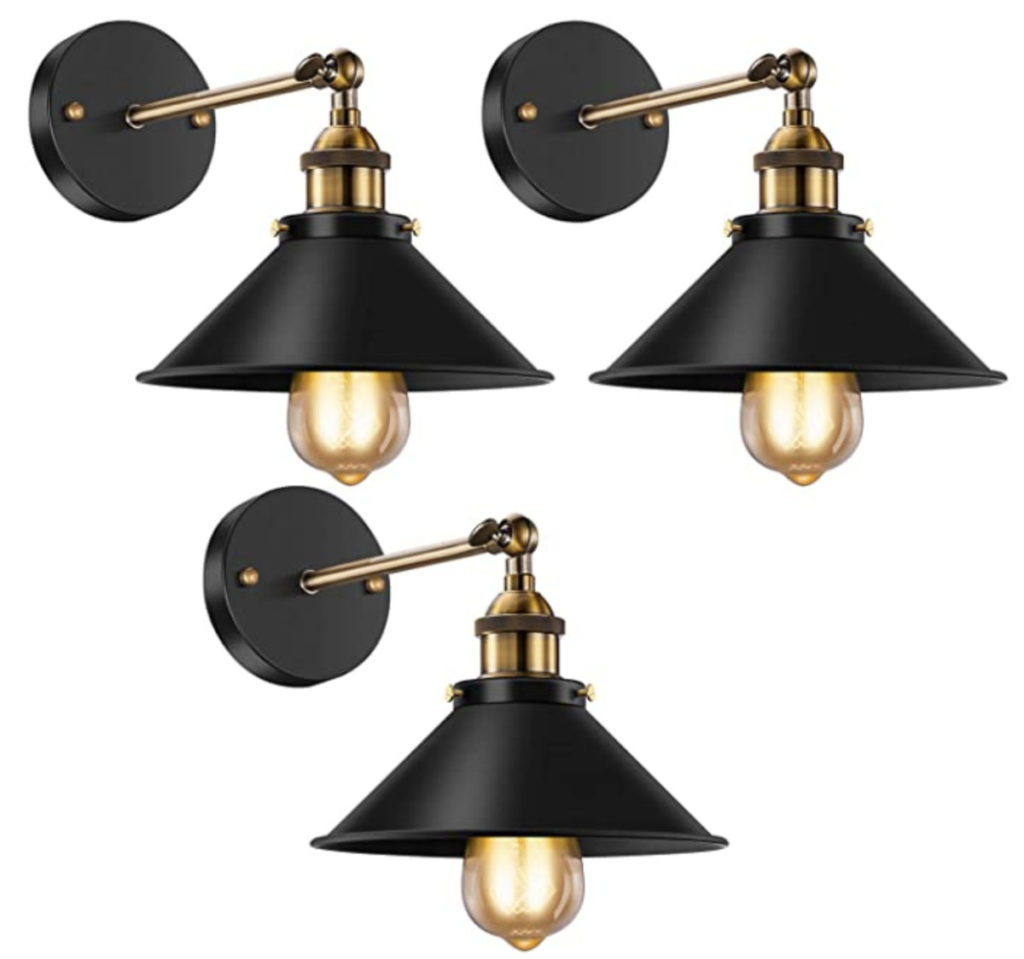
I added a few pieces of framed art from IKEA and really wanted to showcase them and add some pops of sophisticated black to the space. To do that I used these SUPER INEXPENSIVE Light Sconces to give the space ambiance.
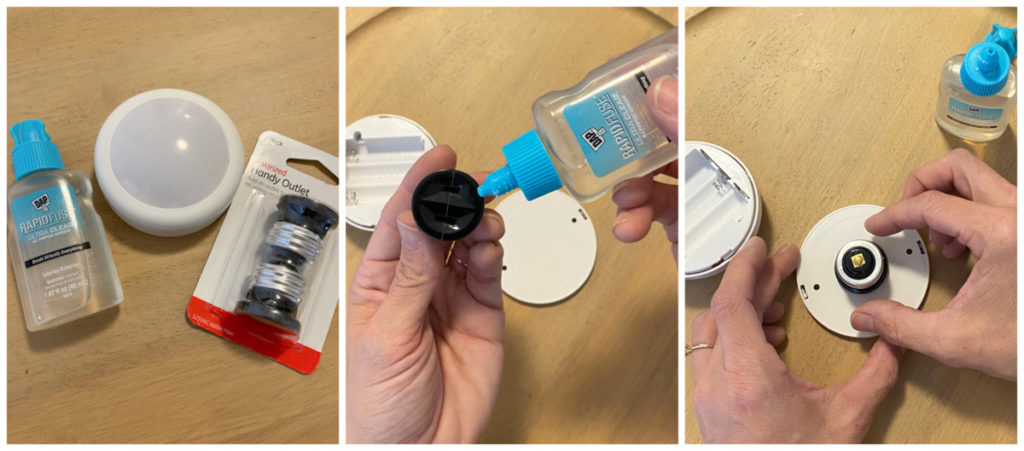
I wanted to add some cute accent lighting, but I did NOT want to put in the work to hard wire the lighting. Instead, I opted for the old “puck light trick”. It is a simple hack using puck lights, and these socket adapters and RapidFuse Ultra Clear Adhesive. Simply adhere the socket adapter to the back of the puck lights, add batteries, screw into the socket and control using a battery operated remote. Boom, done.
Kids Workspace Reveal

One last reminder what this space looked like BEFORE we maximized the crap out of this upstairs landing/hallway. It was a basic 9×10′ space with nothing but doors in it…. drum-roll please…
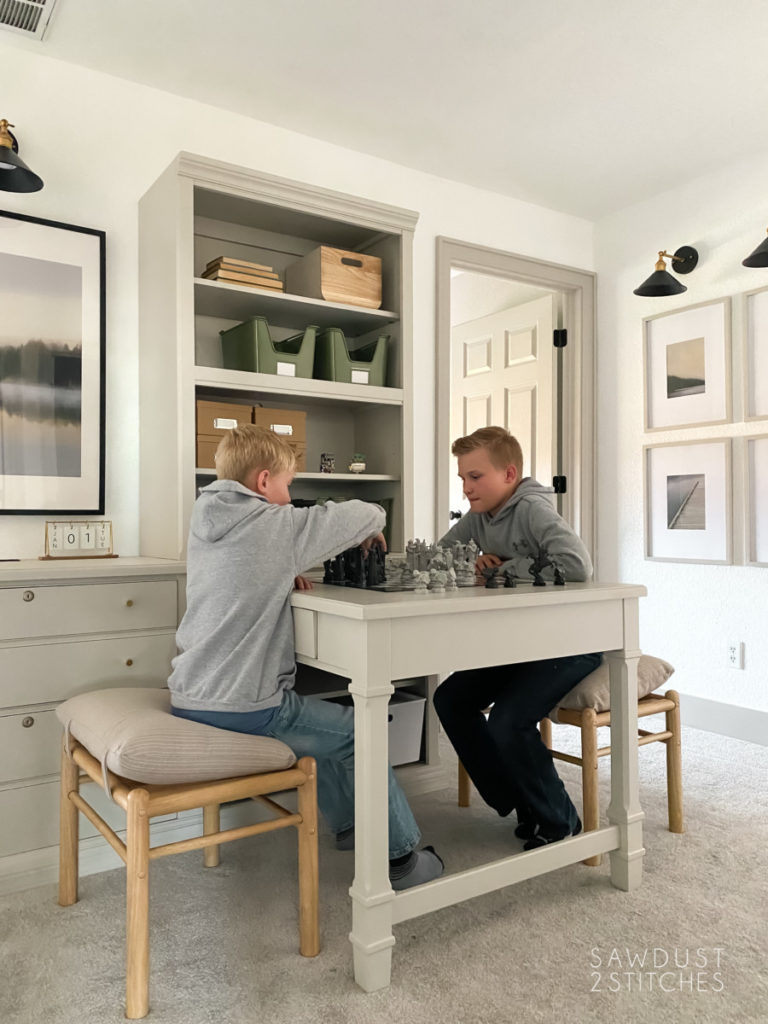
Turns out that the odd hallway just needed some repurposed office furniture and some elbow grease! Seriously though, how much better does this little space look? It is so functional now, and it adds so much character to the second floor.
Now all you need to do is start scoping out your local garage sales, thrift stores, or online market places and turn someone else’s discards into your designer focal pieces!
Thank YOU for reading along!

Take Luck,

Corey

Sources

  • Desk Set – Facebook Marketplace
  • Wall Paint Color- “Ultra Pure White” Eggshell by Behr
  • Desk/Trim/Door Paint Color- “Agreeable Gray” Satin by Sherwin Williams
  • Sconces (3 pack)- Amazon
  • Puck Lights- Amazon
  • Green Storage Bins- Target
  • Stools- Target
  • Light Socket Adapters- Amazon
  • Art – IKEA
  • Large Black Frame- IKEA
  • Small Frames- T.J.Maxx
  • Wizard Chess- Amazon

Door Casing Makeover

February 22, 2022

Prep Boards for Door Casing Makeover

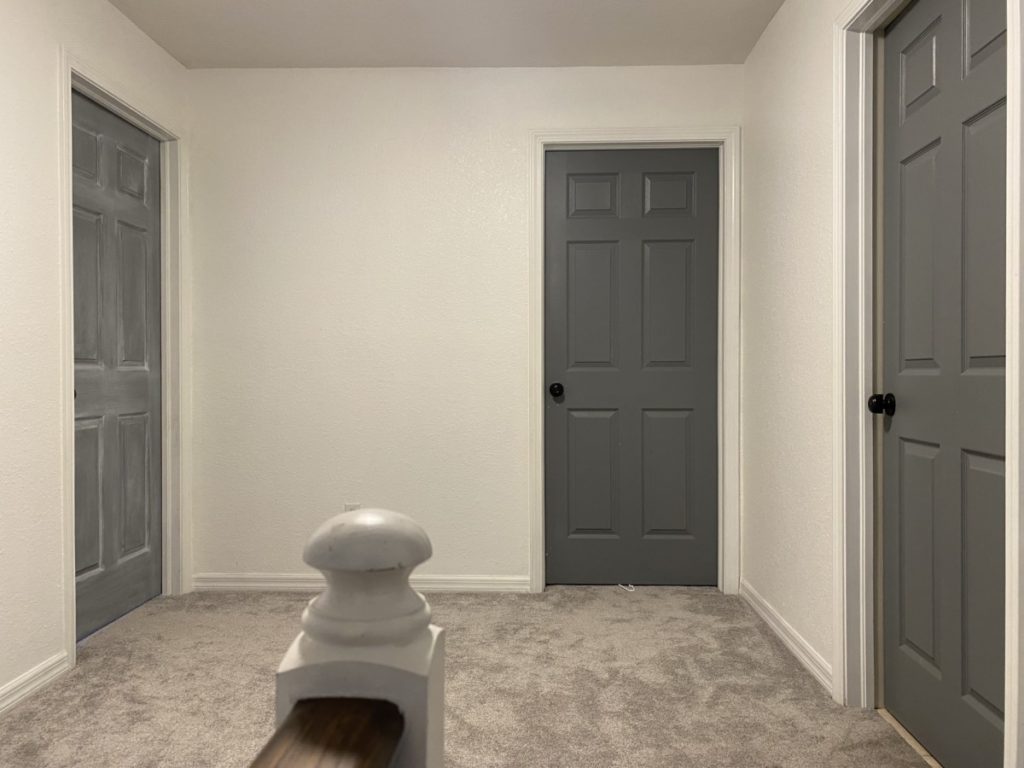
 I recently decided to give my upstairs landing a makeover.  There will be a cute desk area for my kids, but I wanted to take this makeover one step further. I wanted to give all the doors and the trim a glow up.  I really didn’t want to replace all the door casings, that sounded like a lot of work and more money than I wanted to spend. So instead I decided to work with what I had and give the door casings a makeover and I did it for CHEAP!  

As you can see in this BEAUTIFUL image below,  the door casings were very  basic, builder grade casings.  Nothing wrong with them. I actually had given  the casings and the doors a  quick coat of paint a few years back.   Again, nothing wrong with them, but I  had an idea that would only cost a few dollars a door and would totally elevate the look of them.  Let’s get started with a door casing makeover. 

Remove BaseBoards

   This idea only works if you are comfortable removing your existing baseboards and then reinstalling them after  the door casing trim is done.  (We are making the door casing wider and we need to make space for the  new trim.) If you are new to installing baseboards, make sure that you check out my baseboards tutorial here. 

Rip Boards Down for Door Casing Makeover

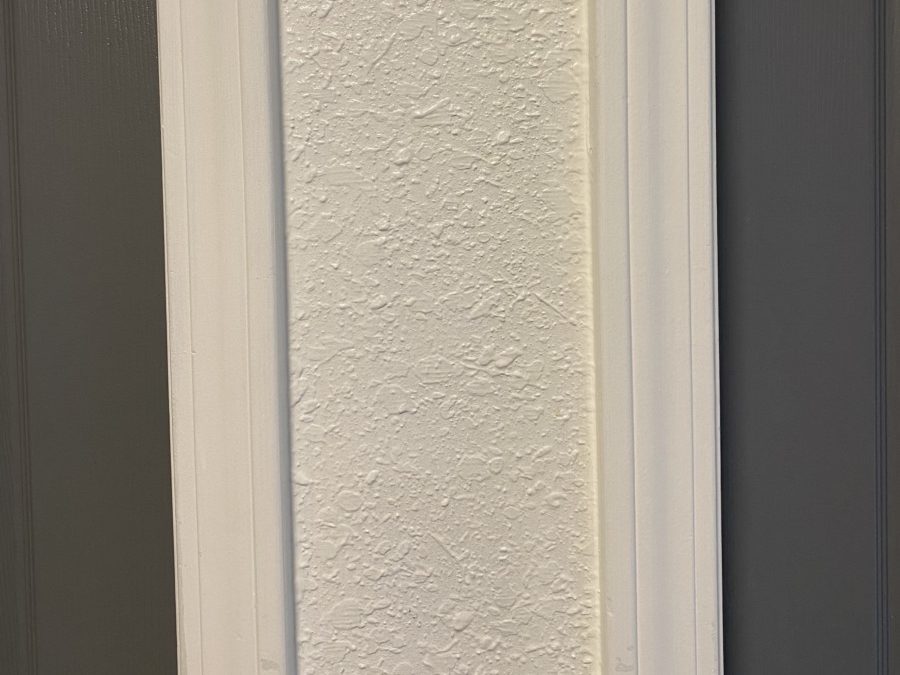
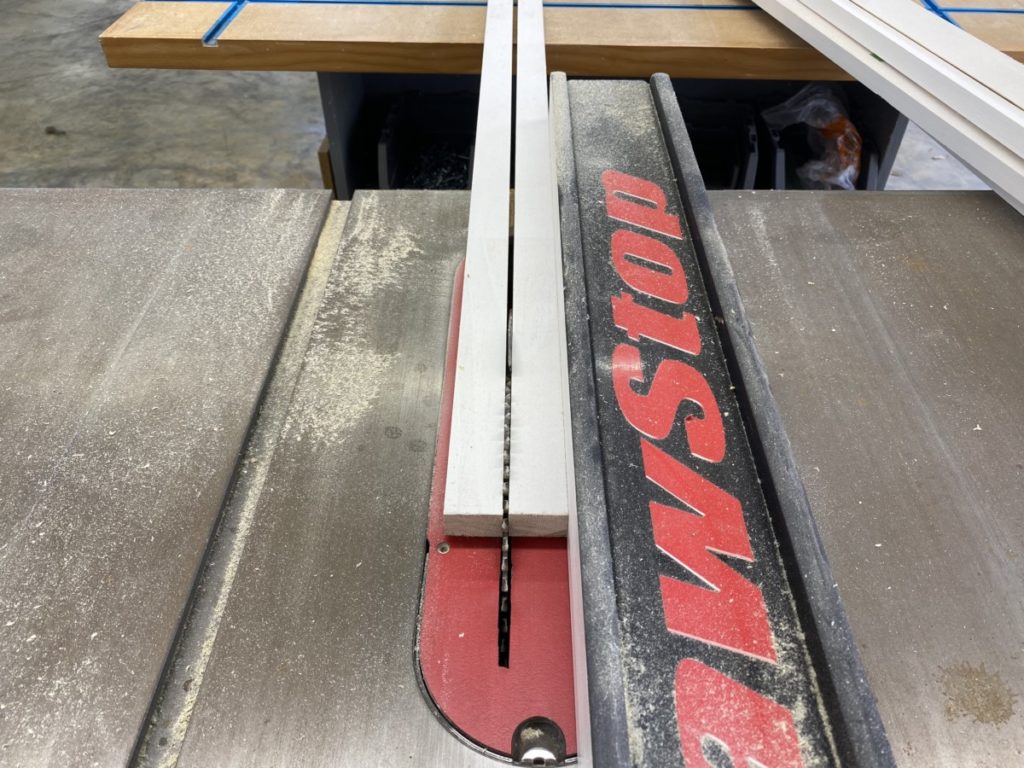
Here is the basic premise. I planned to ADD trim to the existing casing. I wouldn’t need to remove the existing trim, and it would save money win/win! After playing around with a few options I ultimately decided that I wanted the new trim to be 3/4″ thick and 1 1/4″ wide. the best way I found to do this was to split a 1×3 primed finger board right down the middle! ( You could also split a 1×4 in thirds and have them be a little narrower, which would still look great.)

I used my table saw to rip all my boards in half. (If you do not have access to a table saw I think that using a 1×2 would also produce the same results, it would just be a bulkier profile.)

Sand Boards

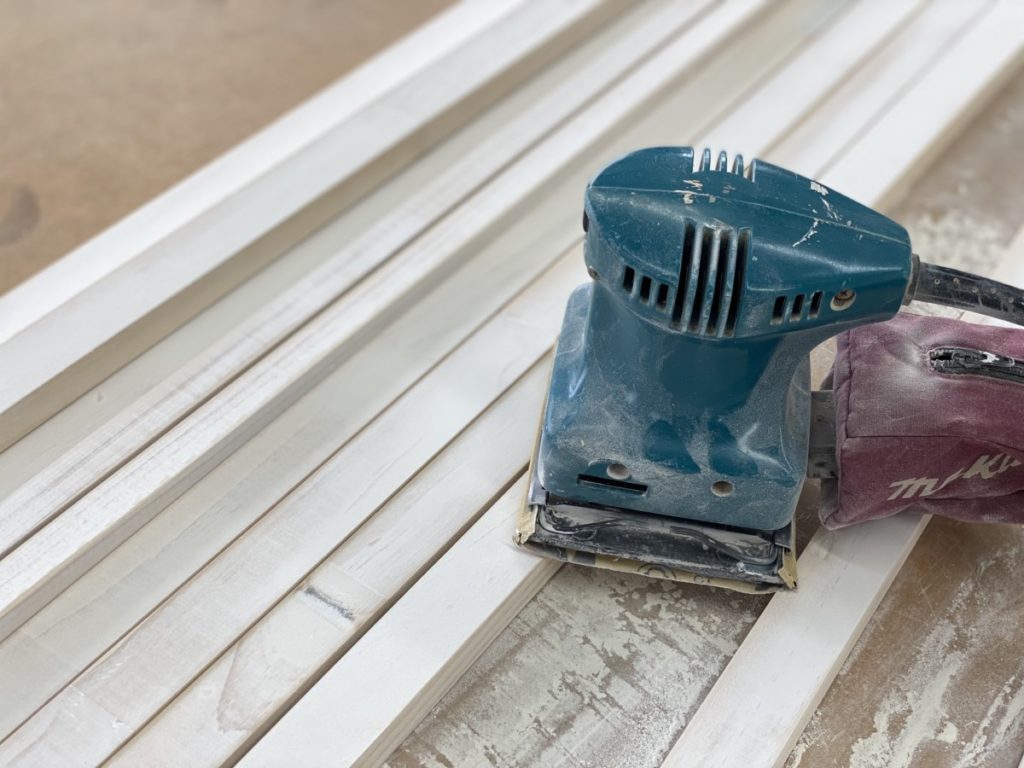
Once the boards were ripped in half, I sanded them.  Yes,  I could wait until they are installed and sand them in place, but I prefer to sand before.  In my opinion it is so much easier! 

Primed finger board is typically in decent shape and dent not require much prep work. I used a 220 grit sandpaper, and it only took a few minutes. 

Custom Fit Trim

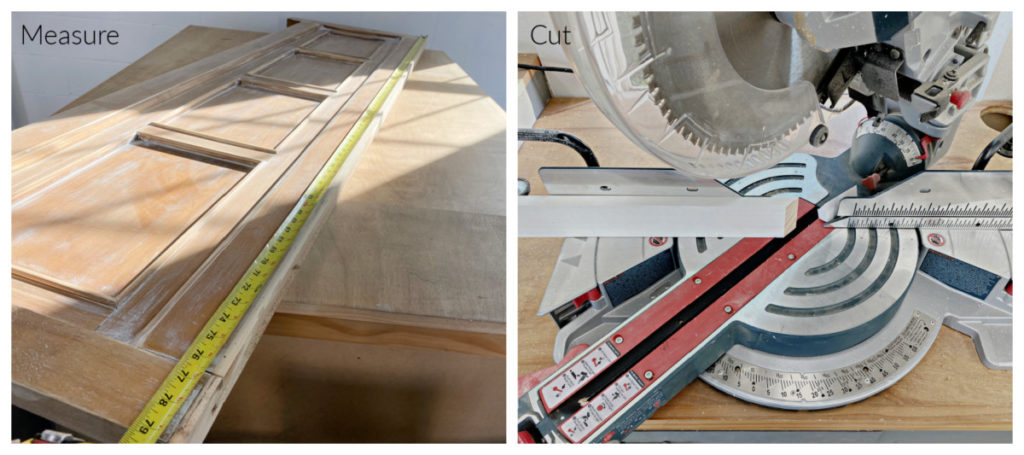
I’ve learned the hard way that  not all doors, windows, and walls are square.  Just because one side of the door is  84″ doesn’t mean the other side is.  Always take the time to measure all sides of EACH door. 

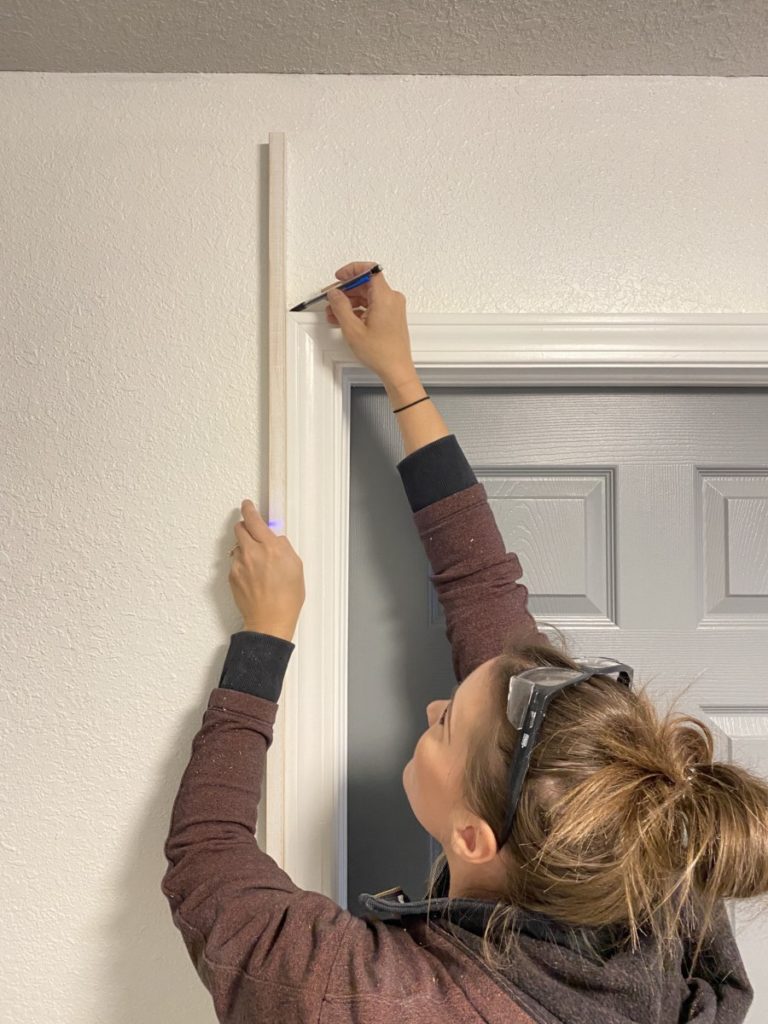
Mark / Measure

 You can either carefully measure each side or you can mark in place. I prefer the latter.  I simply place my board and mark the inside of the  trim. (As seen pictured below.) 

Of course, if you prefer use a tape measure and measure from the bottom of the door casing to the inner top of the existing door casing. 

Cut to Fit

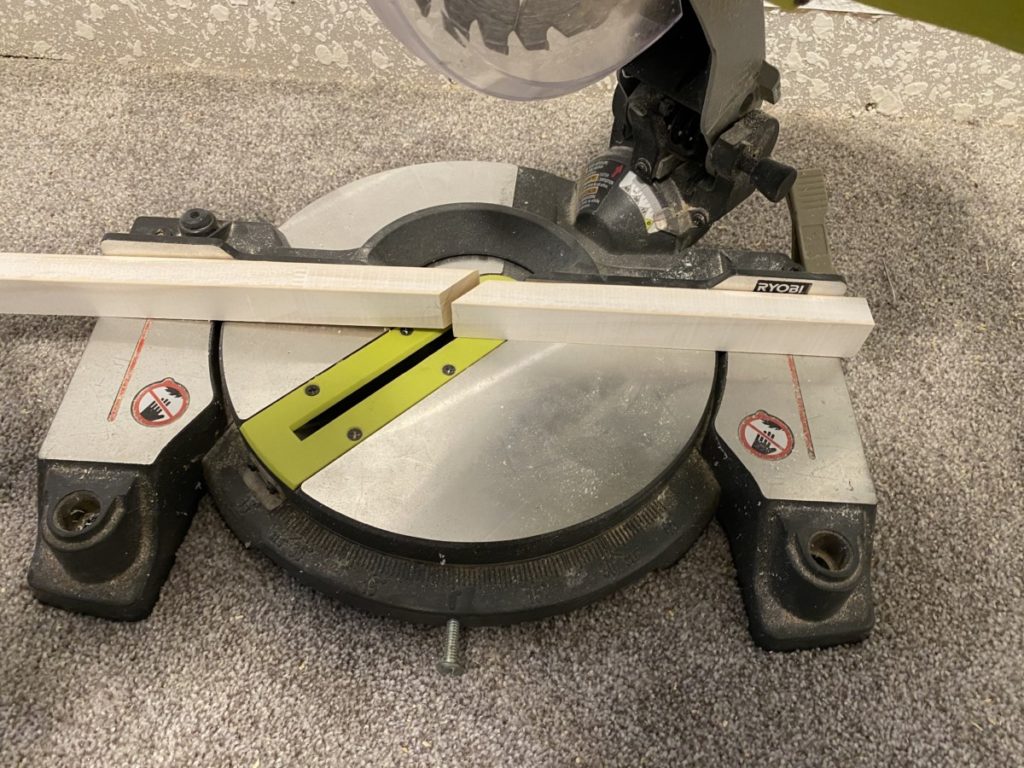
When cutting the trim, the bottom edge will be a straight 90Âş  with a 45Âş on the top.  The goal is to create mitered corner. 45Âş+ 45Âş= 90Âş. 

Set your miter saw to 45Âş and cut to your marked measurement. 

Installing Trim

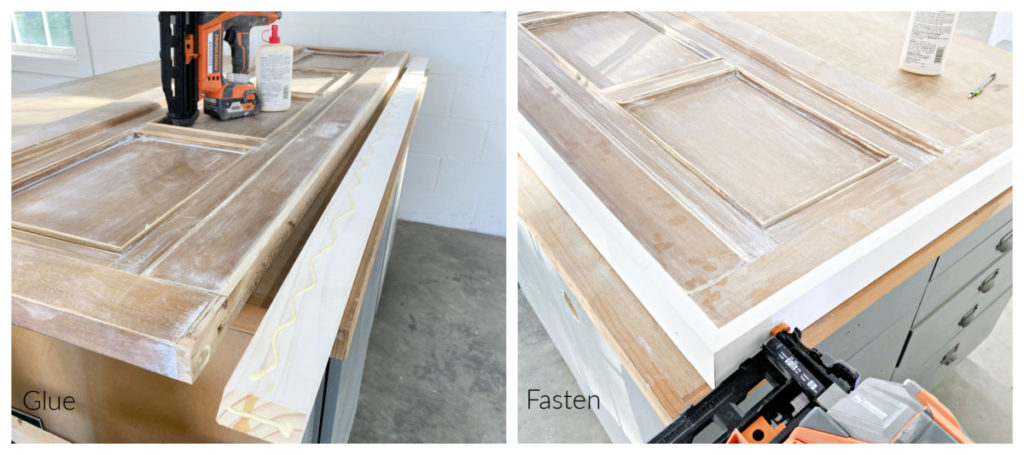
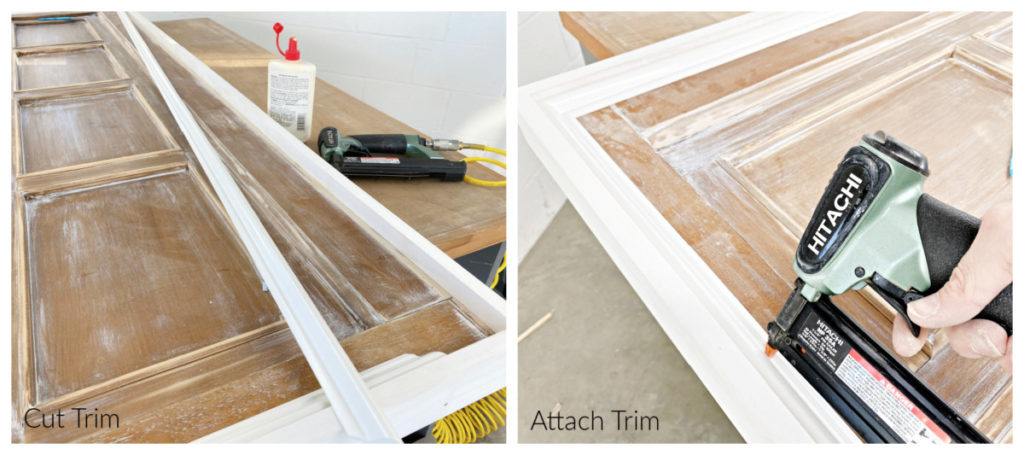
Nail In Place

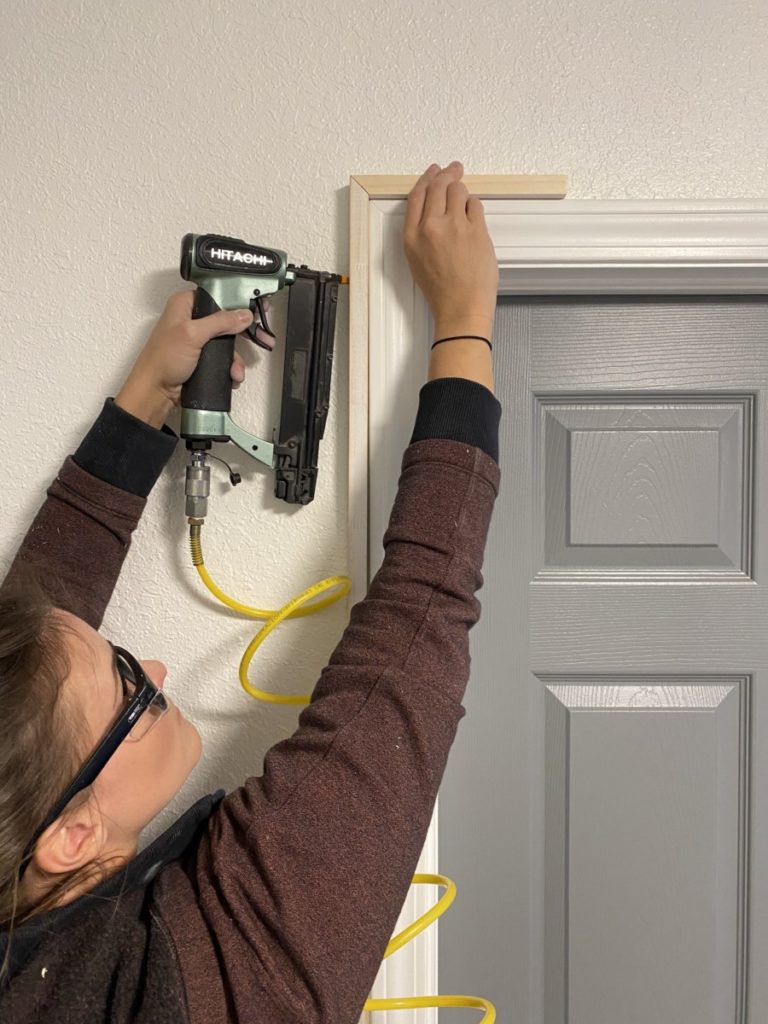
 This may be an unpopular option, but I am using a pin nailer for this project.   You can  use a 16 or 18 gauge nailer for this project. However, I have  found that for small trim pieces  the pin nailer is an excellent choice! (If you recall my picture frame molding, I used a pin nailer exclusively.)  I used a 1.5″  nail,  AND  I knew I would be using caulk which would also help secure the trim. 

As seen below I use a small scrap board cut on a 45Âş angle so that I can ensure that  I am installing the trim in the correct spot. 

I proceeded to do the same on both sides of the door.  ( If you are still worried about the trim being secured,  feel free to apply caulk to the back of the trim when installing. It will serve as an adhesive.) 

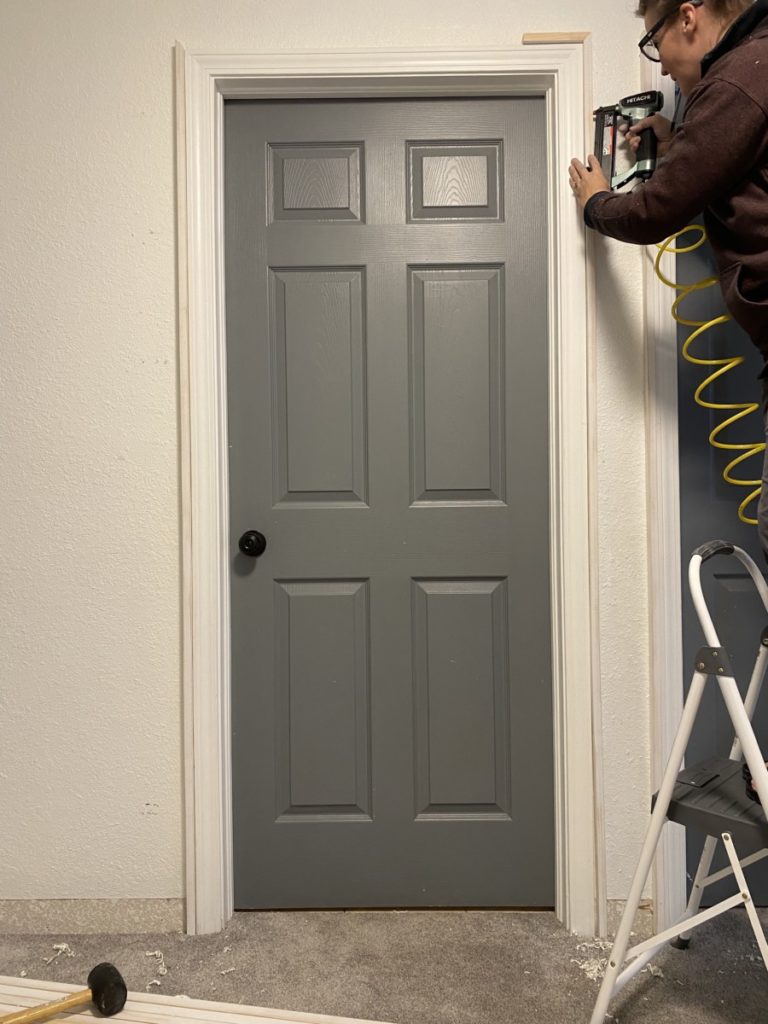
I saved my top piece for last. When marking my top pice I like to measure it from long point to long point and then mark in place.  (See the below image.)

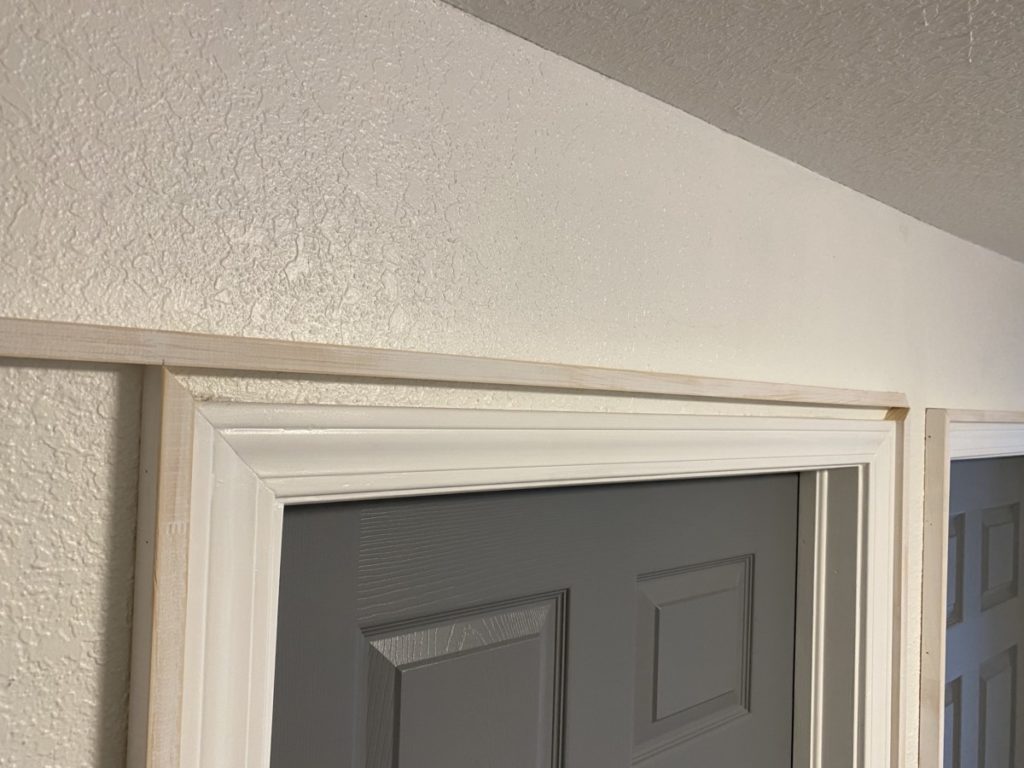
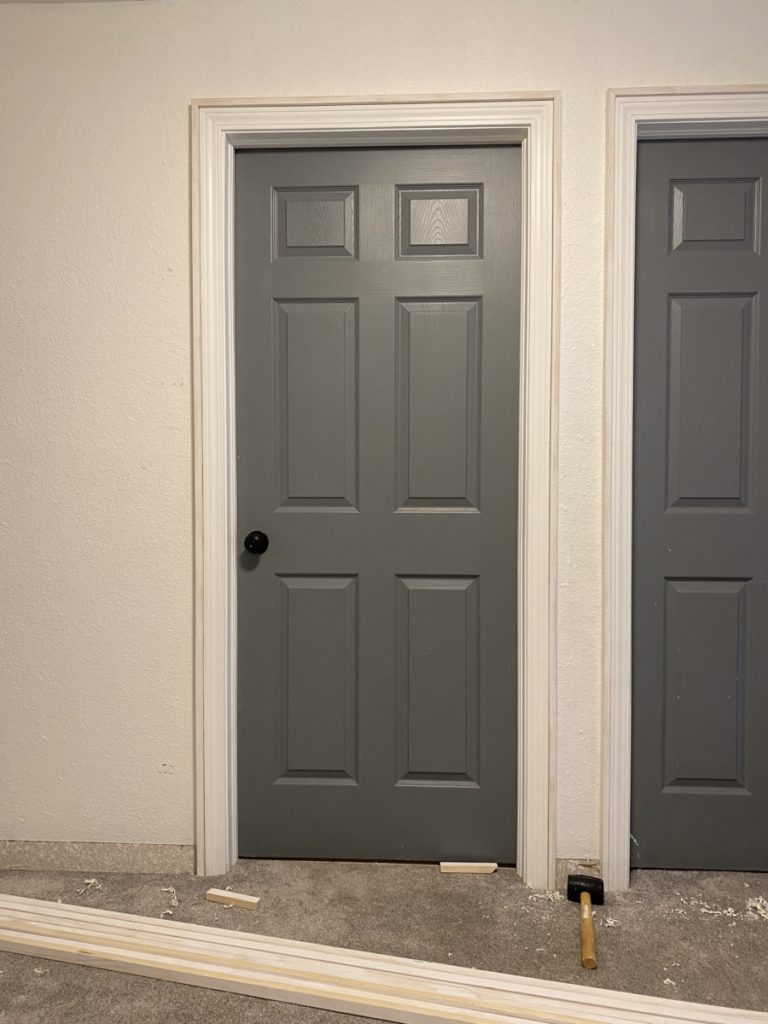
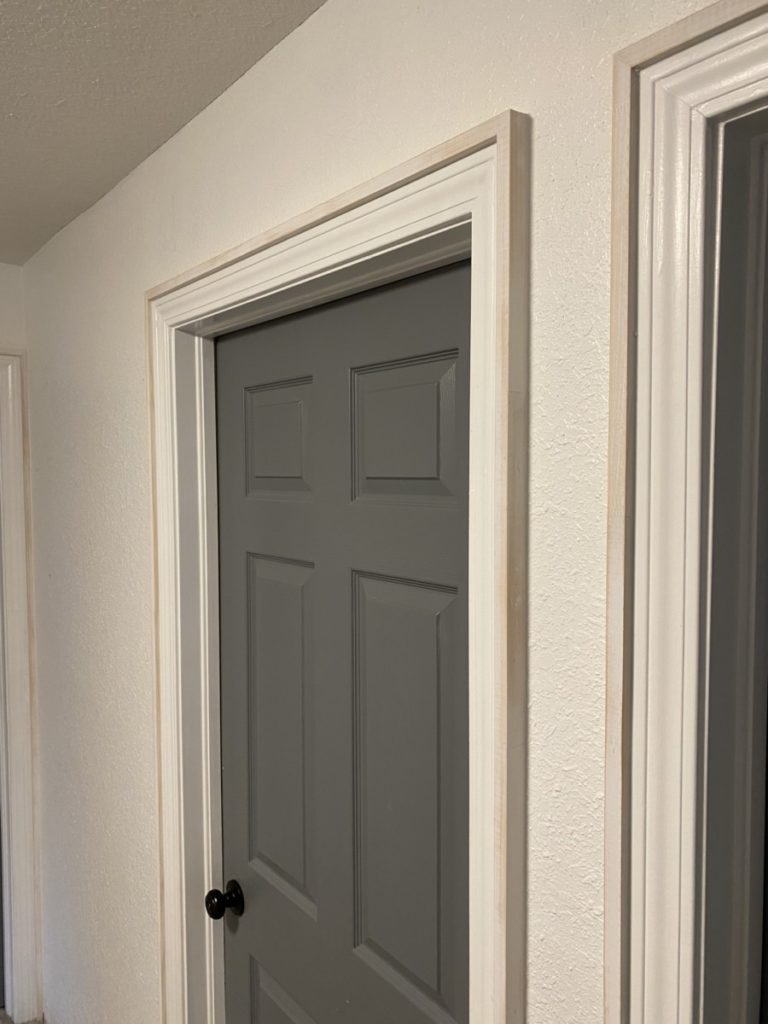
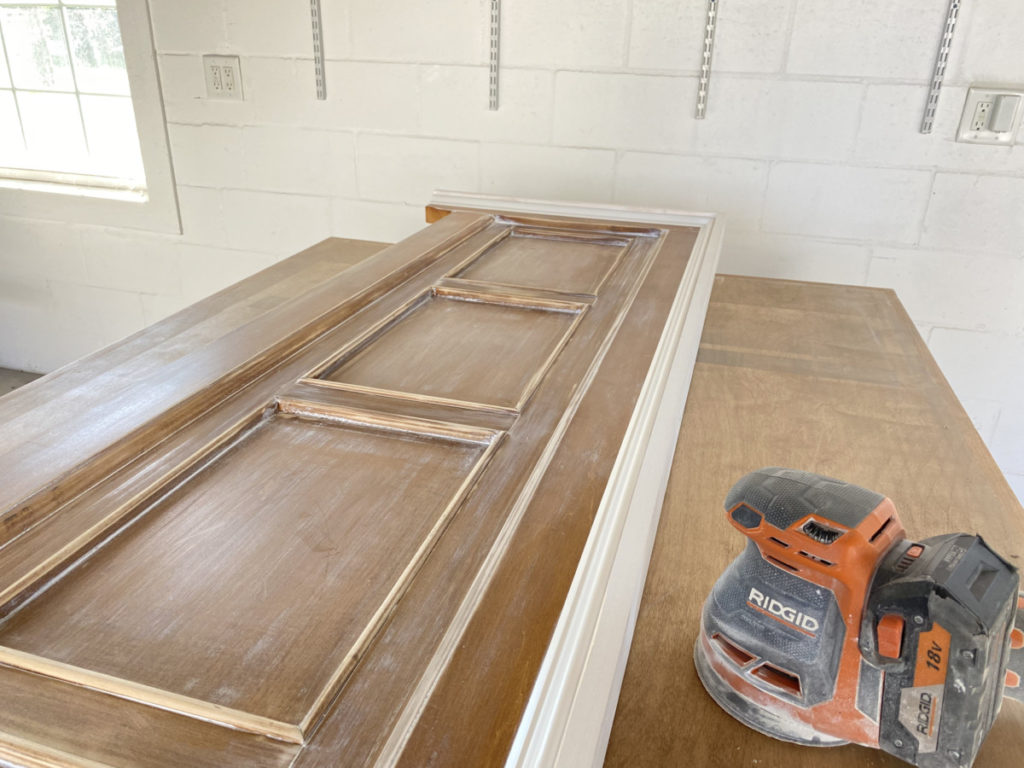
 For the top trim piece it will require 45Âş cuts on both ends.  Once the top pice is installed it should look a little something like this. ( See below image.)   I know this may seem subtle, but this small change really does make a big impact! 

 door casing makeover add  trim

Prep Door Casing for Paint Makeover

Fill Holes

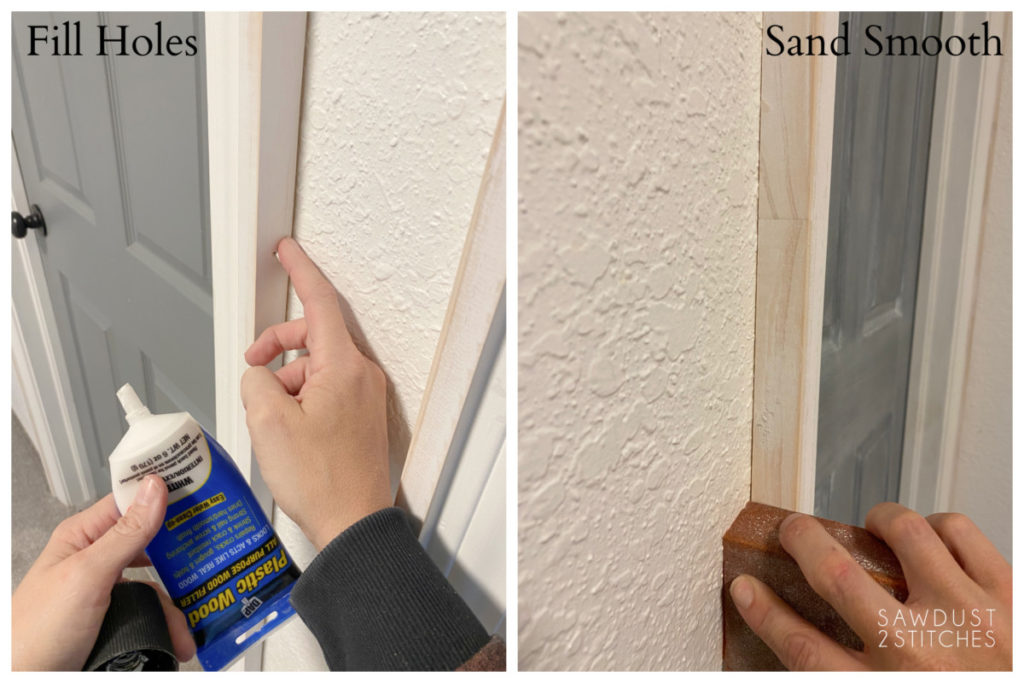
 Ok,  before we start painting there are a few more steps.  Seeing as I used a pin nailer the holes that I need to fill are very small. Regardless of the nail size, the holes do  need to be filled.  To do this, I used Plastic Wood by Dap.  Once it is completely dried, I go over it with a sponge sander and smooth it out. 

door casing makeover fill holes

Caulk Seams

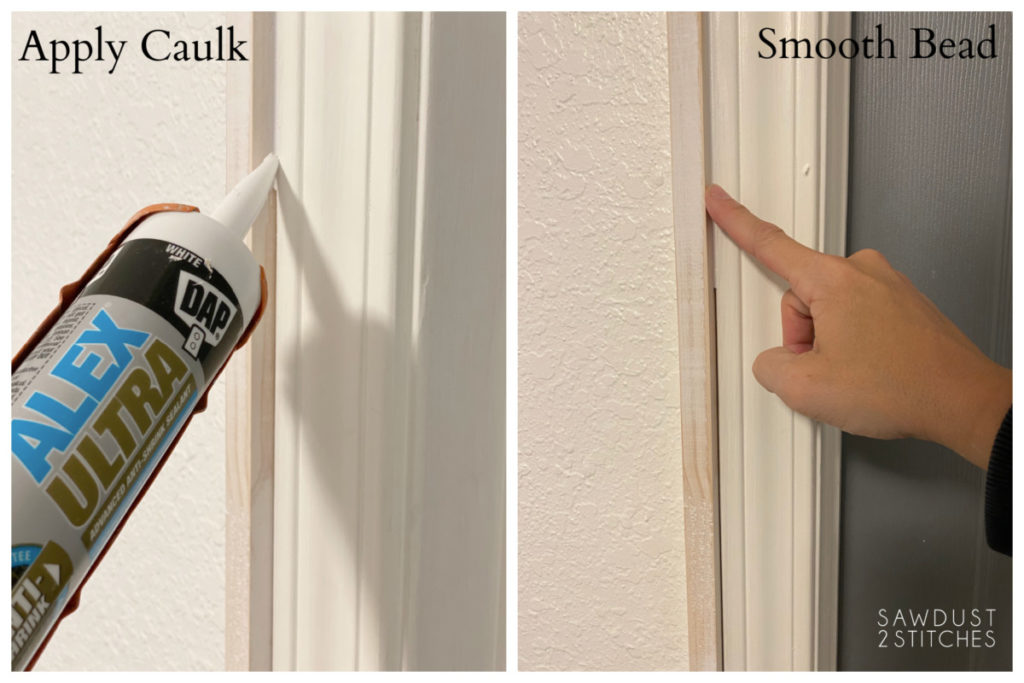
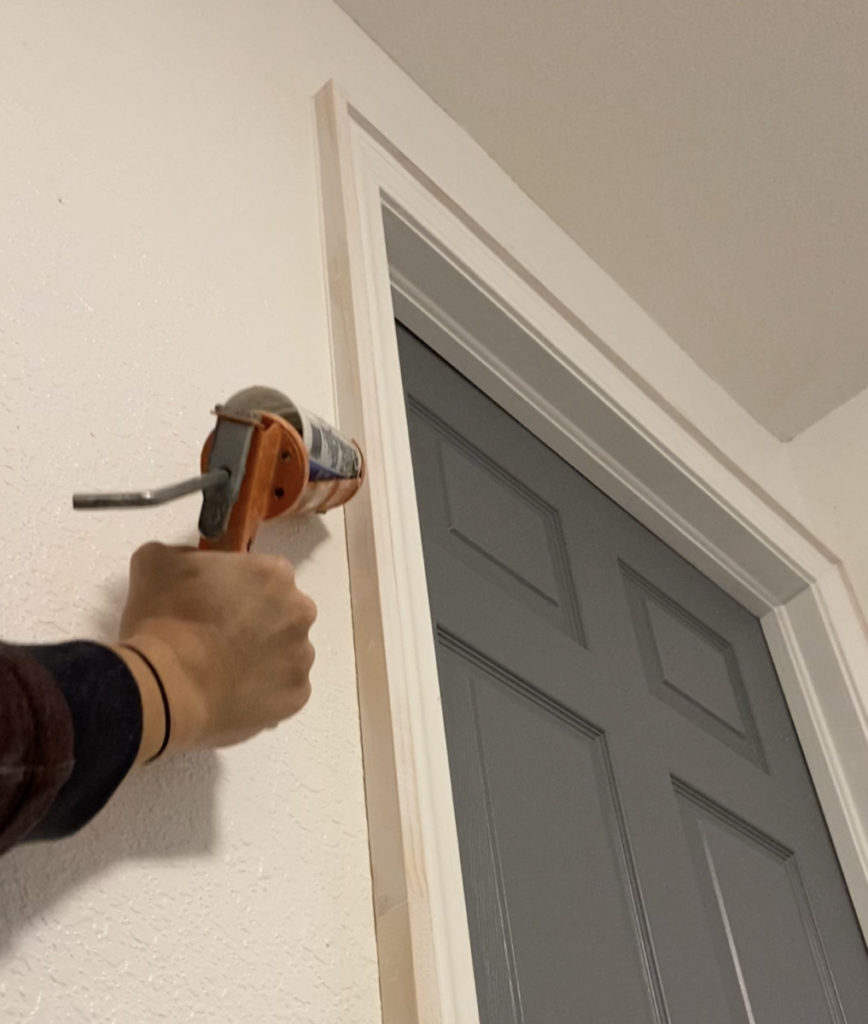
 Here is where the magic happens. Caulking the seems.   Apply a small bead of caulk  where the new trim meets the old casing.  Smooth out the bead of caulk using a damp finger, or baby wipes also work great.   By caulking this seem it create a very unified look, and also helps secure the trim in place. 

 I suggest using DAP Alex Ultra.  It has advanced anti-shrink technology,  PLUS it’s paintable in 15 minutes.  Perfect for the impatient DIYer like myself. 

door casing makeover add caulk

Caulk Perimeter of Door Casings

Repeat the same process around the perimeter.  Again, this will not only create a flawless look, it will also help secure the trim in place. 

door casing makeover,  caulk seams

Repeat this process on any desired door frames. 

door casing makeover

Paint New Door Casings

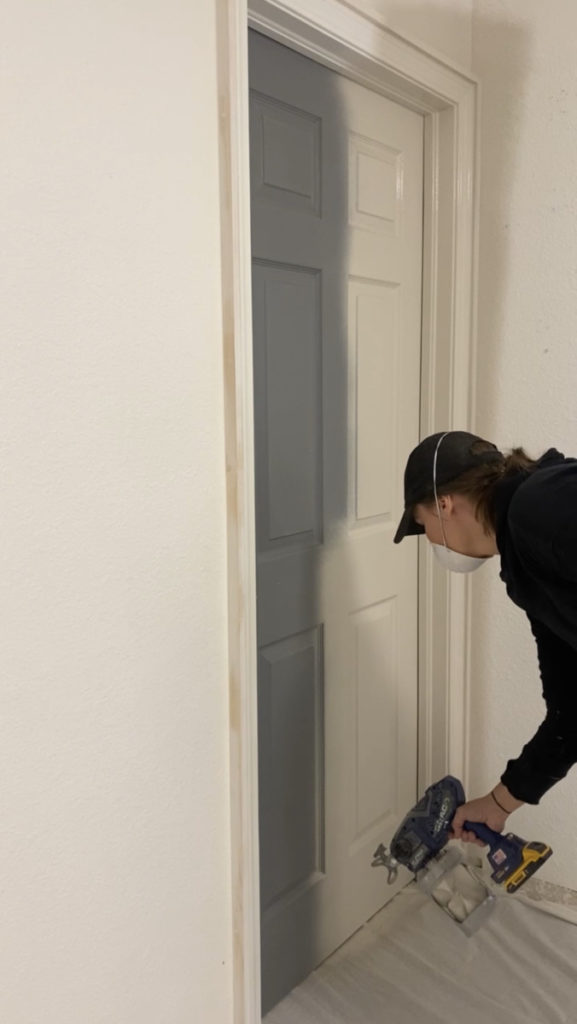
Once the caulk and nail filler is completely dry it is time to paint.   Before I started priming I did quickly go over the entire door with a sanding sponge to remove any sheen from the existing topcoat.  

 I suggest removing the door hardware when painting.  In my opinion it actually saves time  to remove the hardware then try to tape, and cut in around it . Plus it ALWAYS looks better to  just paint the entire slab without cutting it.  It just does. 

 I  used a paint and primer enamel in  satin sheen. It worked great for this application. I  could have rolled but I love the look and efficiency of a sprayer, so I  draped and taped the entire area and used a Graco TC cordless sprayer. 

Door Casing upgrade makeover

Install New Hardware for Door Casing Makeover

If you did remove the existing door hardware it is time to reinstall it, or maybe add something new!  I added some really fun doorknobs to my primary bathroom and I love them.  However, I was trying to do this space on a budget and used the existing ones. 

 Door Casing Makeover upgrade

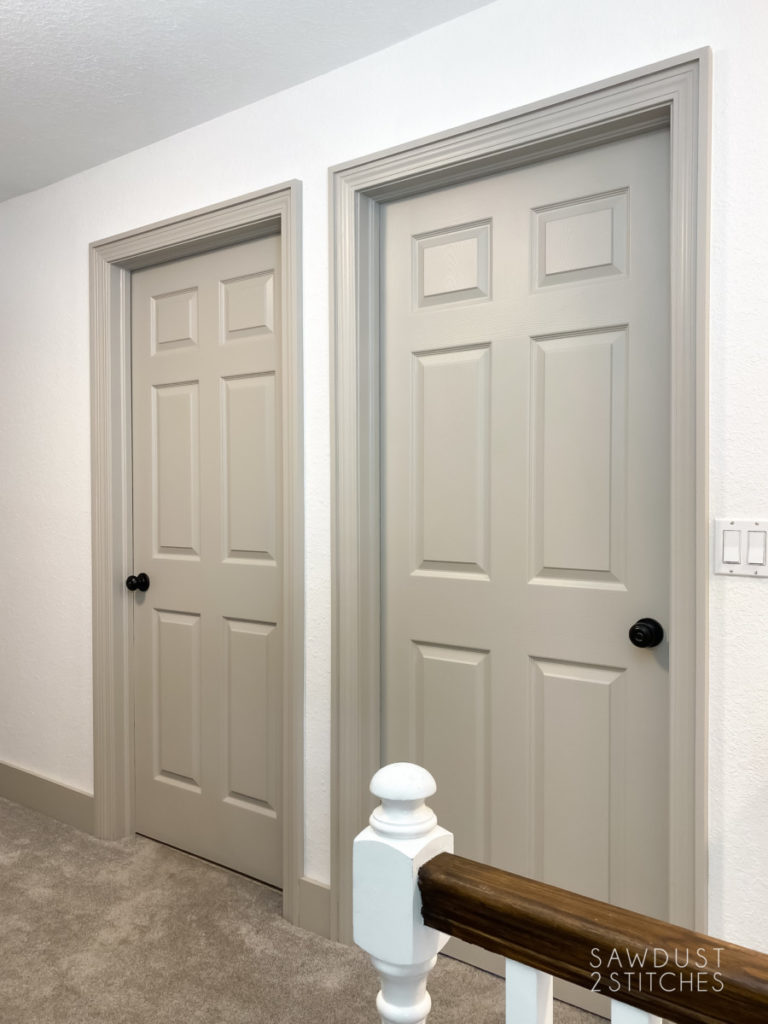
 Let’s break this down. I had four doors in the upstairs landing.  I needed a total of (5) 1×3’s =$48.   That comes out to approximately $12 to upgrade each door. I feel like $12 for a  door casing upgrade is well worth the money and effort. 

 Thanks for following along and take luck, 

Corey 

Sources: 

  • Wall Color: Ultra Pure White by: Behr in Eggshell Sheen
  • Door/Trim Color: Agreeable Gray by:  Sherwin Williams in Satin

Moody Bedroom Furniture Makeover

December 22, 2021

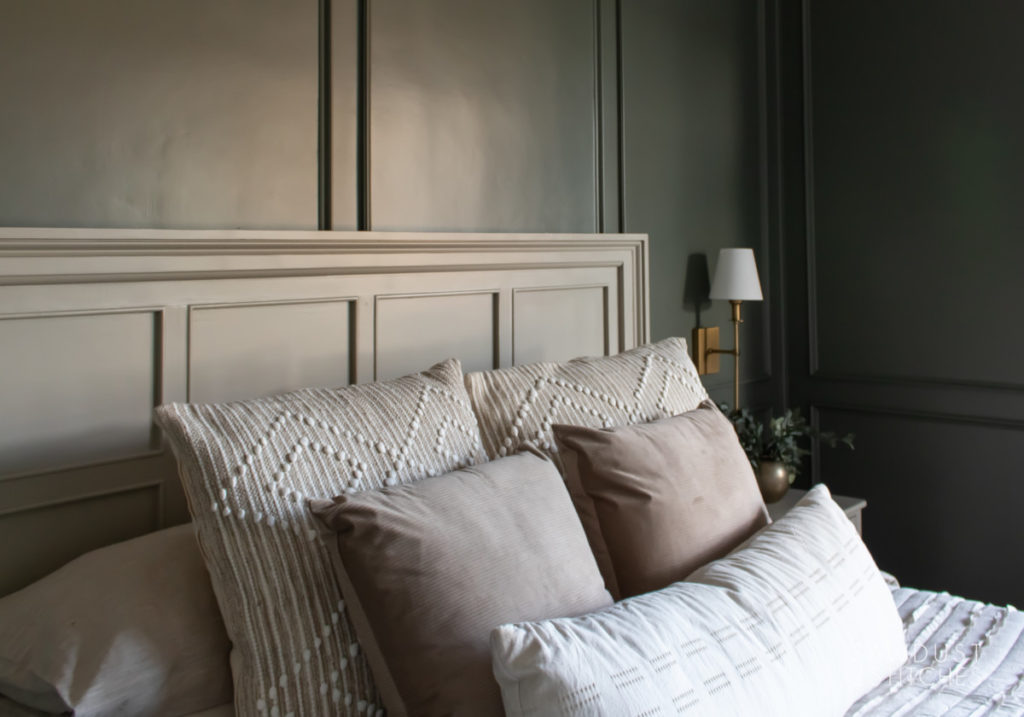
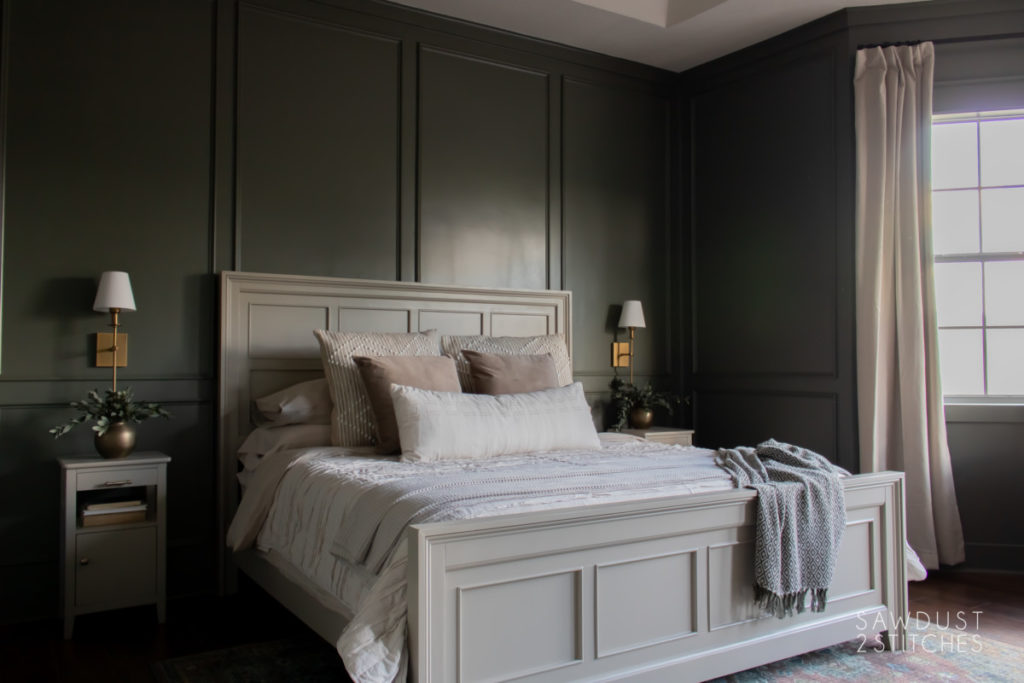
 Dark Green Bedroom

This post contains affiliate links.

Over the past few months I have been daydreaming about giving my primary bedroom a sophisticated, moody makeover. (If you have been following along you know that I recently added picture frame molding and painted my room. You can get all the DIY details here.) However, the wall treatment and color are only the beginning of this room makeover. With the help of KILZ® Primers and Magnolia Home Paint by Joanna Gaines, I have dreamed up some fun plans to recycle my second hand furniture and give them a moody sophisticated makeover to suit.

Magnolia Home by Joanna Gaines Paint was made to transform your vision into reality. Check out https://www.kilz.com/magnolia!

Tools Suggested: 

  • Pry Bar/Flat Bar
  • Hammer 
  • Tape Measure 
  • Table Saw / Circular Saw 
  • 18g or 16g nailer
  • Pin Nailer

Supplies Used:

  • KILZ 3® Premium Primer
  • Magnolia Home by Joanna Gaines® Paint in “Quaint Cottage”
  • 1×3″  Primed Finger Boards 
  • PVC Base Cap Molding 
  • Wood Filler 
  • Paint Sprayer, or Paint Rollers/Brushes

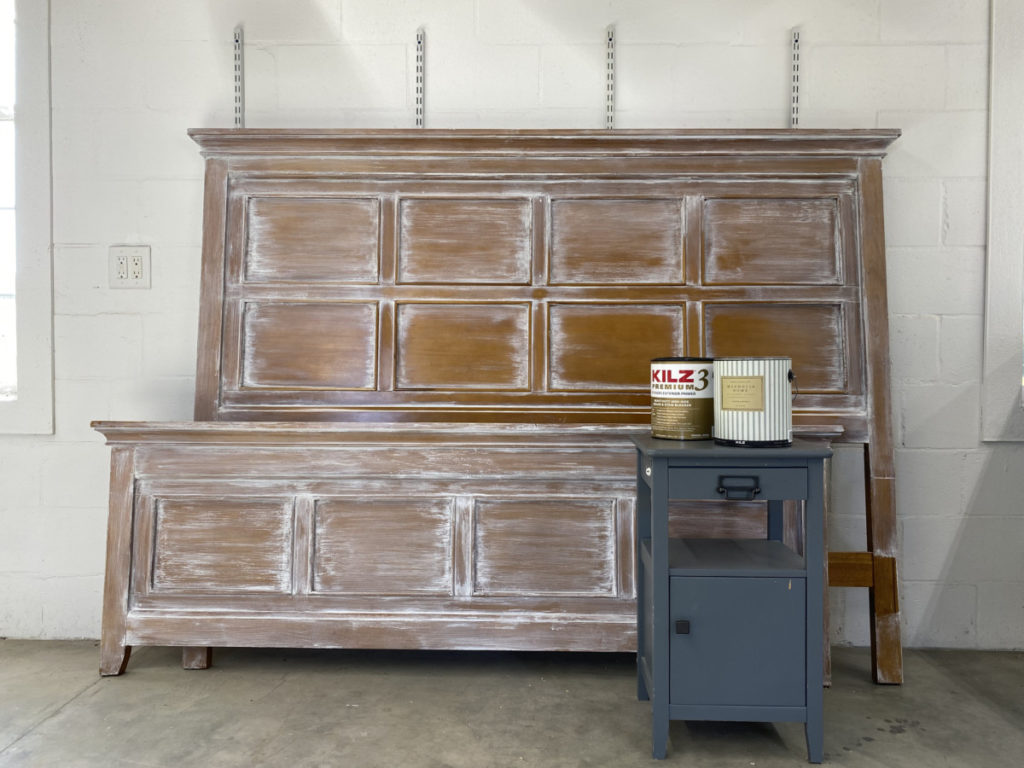
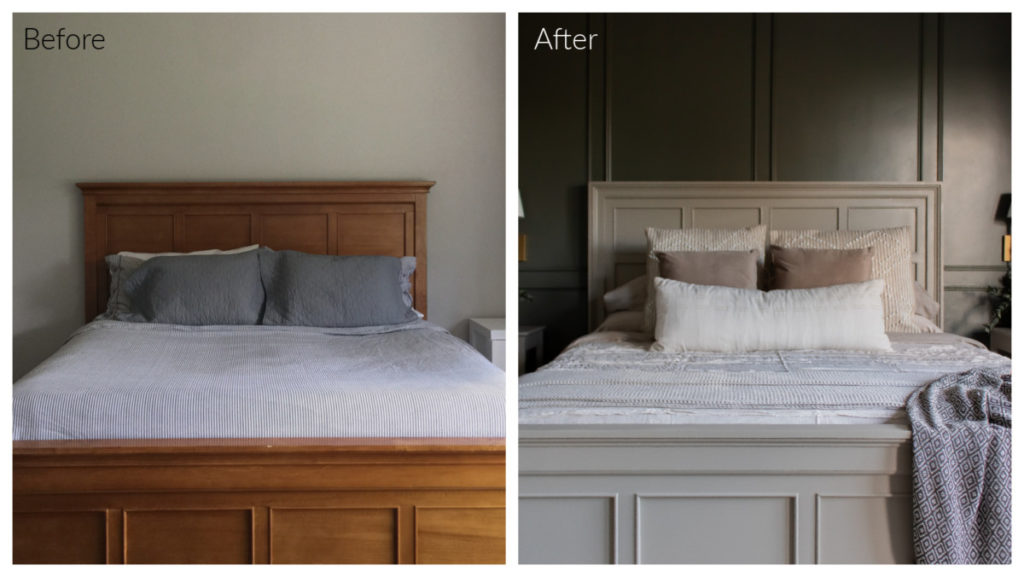
 I purchased this  bed approximately 5 years ago,  when Craigslist was still alive and well.  When I picked it up,  it was an orang-y oak color that I didn’t love,  so I white washed it to fit my light and bright farmhouse theme. Well… this room has definitely taken a turn towards a more moody sophisticated feel and I need the furniture to match..

Bedroom Furniture Makeover

Deconstruct Bed

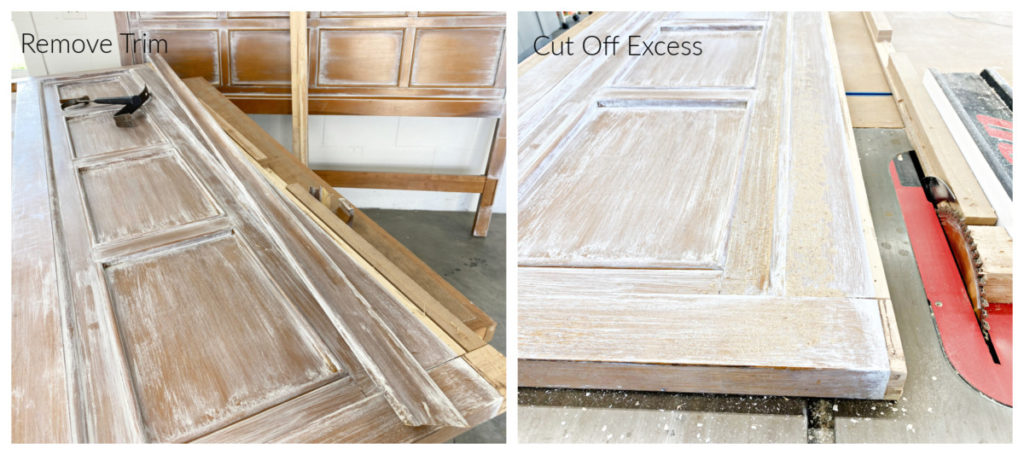
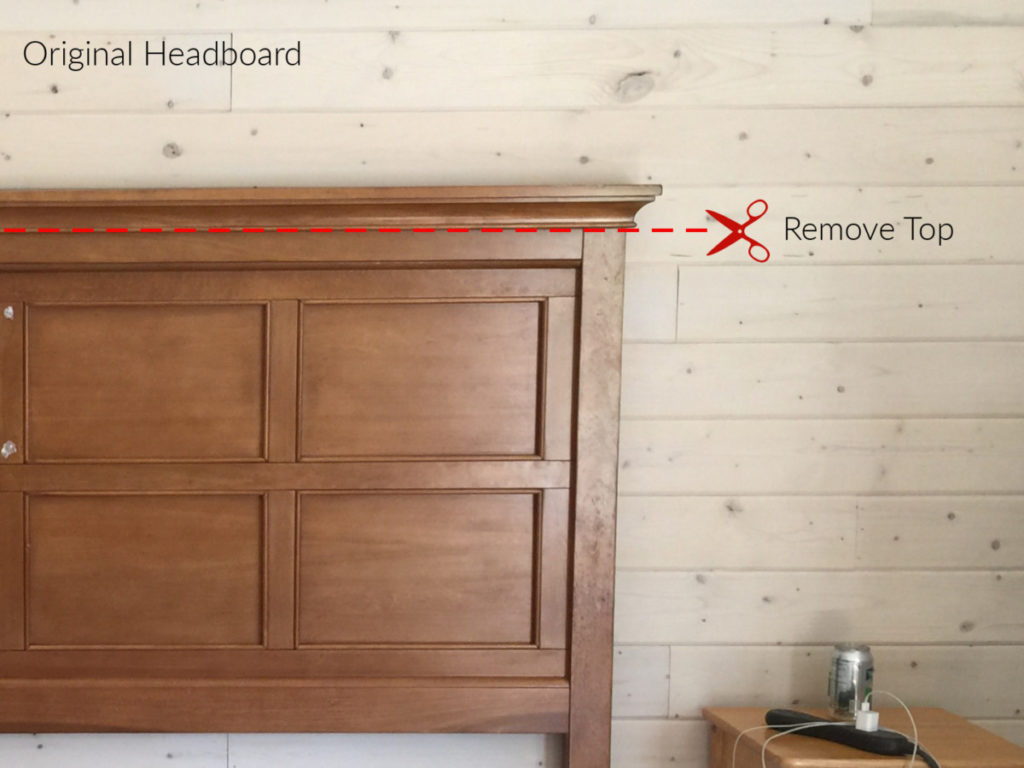
Let me just preface by saying, if I had simply primed and painted this headboard it would totally have transformed this piece. However, I had a fun idea to update the look and wanted to share the process. In order to update the line of the bed I had to dismantle PART of the headboard and foot-board. I began by removing the top apron, and extra trim on both the headboard and the foot-board.

 DIY Bed Makeover

Proportionally I wanted to have similar spacing around the perimeter of my headboard. In order to accomplish this I ran both my headboard and my foot board through my table saw and lopped the top 1.5 inches off.

Add Decorative Trim

This next step may seem counterproductive, but just roll with it. I have a vision. I wanted to case the entire headboard/foot-board using 1×3″ primed finger boards. This would create a lip that would frame out the headboard/foot-board.

To to do this I measured the total distance and height and transferred those dimensions to a 1×3″ board.

Headboard Makeover

Using a miter saw I cut the marked 1×3″ boards on a 45 degree angle. By cutting on a 45 degree angle it will create a polished mitered corner.

After cutting (and I always recommend a dry test fit) I was ready to attach my trim. To do this I used wood glue and a 16 gauge brad nailer. I first secured the top piece and followed suit on the sides.

Bedroom Furniture Makeover

Alright, keep the previous steps fresh in your mind, because if you want to recreate my headboard you will need to essentially repeat them. However, instead of using a 1×3″ primed board around the perimeter, I am adding some decorative trim to the interior of the 1×3″ boards .

Bedroom Furniture Makeover

Again, measure the interior dimensions, transfer the measurement to the trim pieces ( I used PVC Base Cap) and cut the pieces on a 45 degree angle using a miter saw. Once all the pieces are cut and dry fit, I added a bead of glue and tacked them in place using a pin nailer. (PVC is very light weight and does not require a bigger gauge fastener.)

Prep for Prime

Scuff Surface

Are you guys excited? I am excited! Before we start painting we are going to take one very important step to ensure our end product turns out beautiful and stays looking that way!  This headboard/footboard is not all real wood, some parts are laminate. Laminate/veneer surfaces are often very smooth and shiny surface, both of which are not ideal for painting… this is where a good primer will be your best friend. It is important that you prime in order to achieve good adhesion of your top coat! 

In general it is always a good idea to lightly scuff any smooth surface before priming. In this case I wanted to smooth out all the new pieces of trim I had recently added. Not always necessary but it does help create a super-smooth finish.

Moody Bedroom Furniture Makeover

Wipe Down

Before priming or painting, I always recommend wiping down the entire piece with a damp cloth. This will remove any loose debris or dust. Removing dust will not only allow for better paint/primer adhesion it will also help create a perfectly smooth finish.

Prime

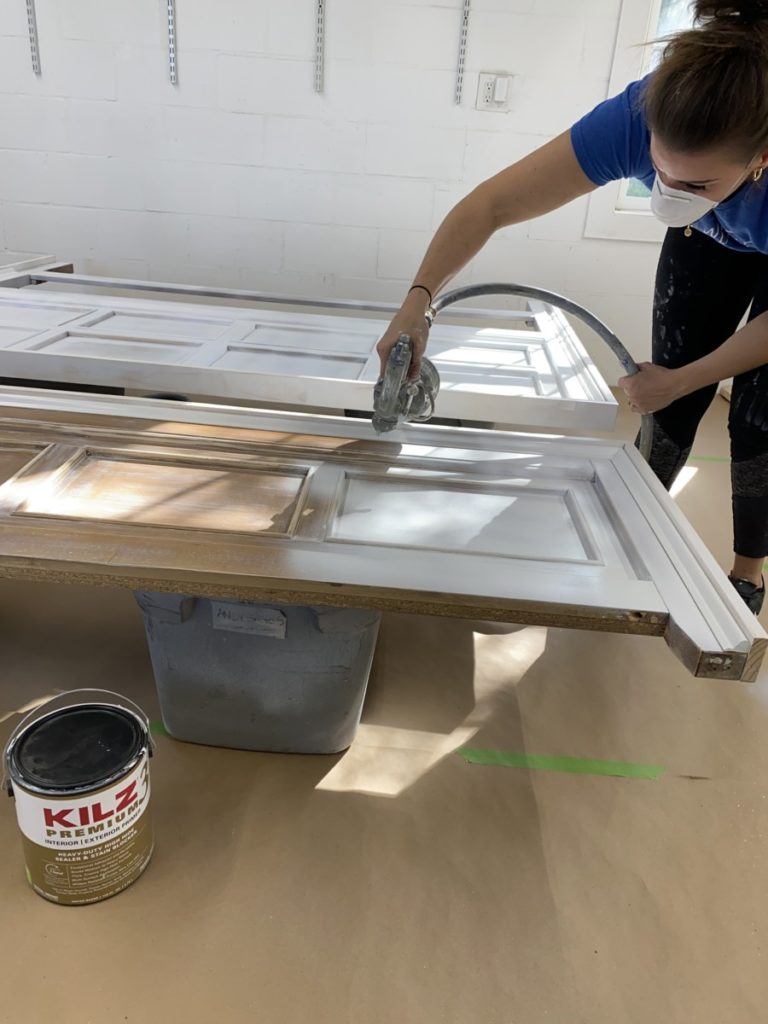
When priming make sure you always use a good primer, and one for your specific needs! Primer like KILZ 3 Premium primer can help with many different DIY woes.  If you have been around for a while you know that  KILZ® Primers saved me when renovating my camper.  It adhered to my cabinets like a charm, covered water damage, mystery stains, and even got rid of some funky odors. So yes, I am a big advocate for priming!

For this project I opted to use a paint sprayer to apply my primer. When applying any paint/primer makes sure you reference the directions on the back of the can to ensure that your material is able to be used in a sprayer and use the recommend tip/point size.

Painting Furniture

Now we wait… just kidding. KILZ 3 Premium primer is ready to paint in one hour! I cannot even begin to tell you how happy that makes this stir-crazy, impatient DIYer. By the time I had all my paint supplies gathered my primer was dry and ready to top coat

Paint

Select Color and Sheen

Spray , Brush or Roll Paint

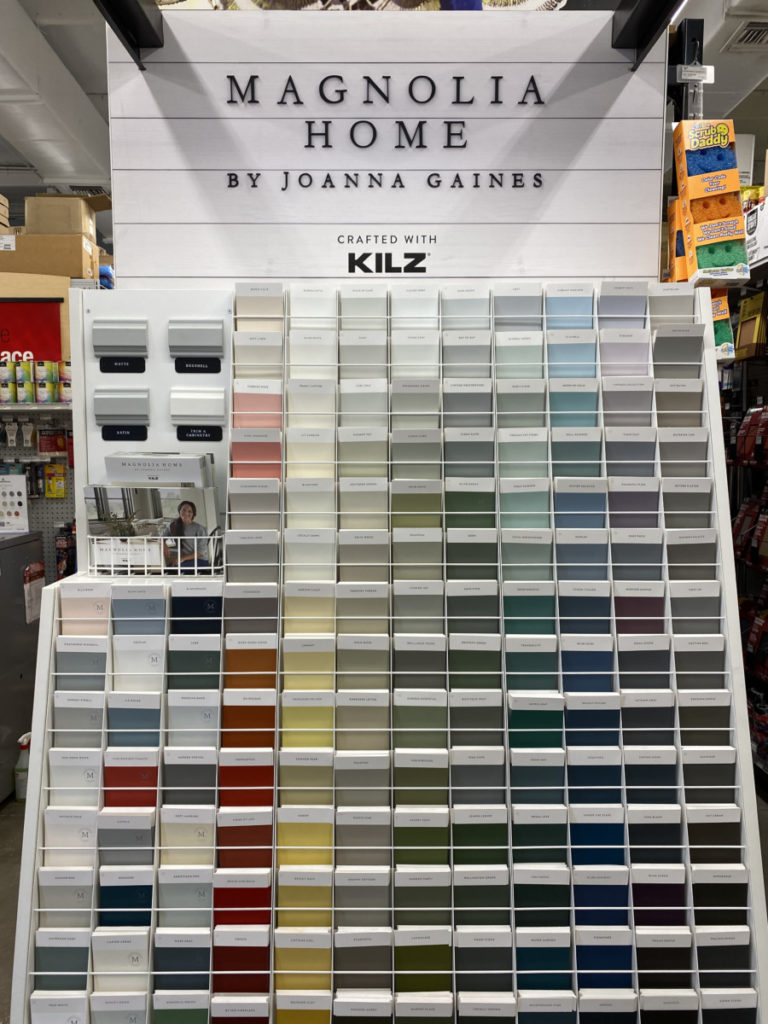
As I mentioned at the very beginning of this project I wanted something a little dark and moody. I didn’t want it to feel like a cave,  but I wanted a moody feel. After scouring the internet for inspiration I found my muse. Magnolia Home by Joanna Gaines paint to the rescue! 

Browse All Magnolia Home colors Here

I mean how can you go wrong  when you combine KILZ quality with Joanna Gaines color selection!?  I have used Magnolia Home Paint by Joanna Gaines in my guest bedroom makeover and I was impressed! It has excellent durability, smooth application, great for touch-ups, and low VOC. Seriously you can’t go wrong! The only thing that I was torn on was deciding between several colors, ultimately I decided on the color “Quaint Cottage” in a satin finish from the Magnolia Home by Joanna Gaines paint line.

Painting Furniture

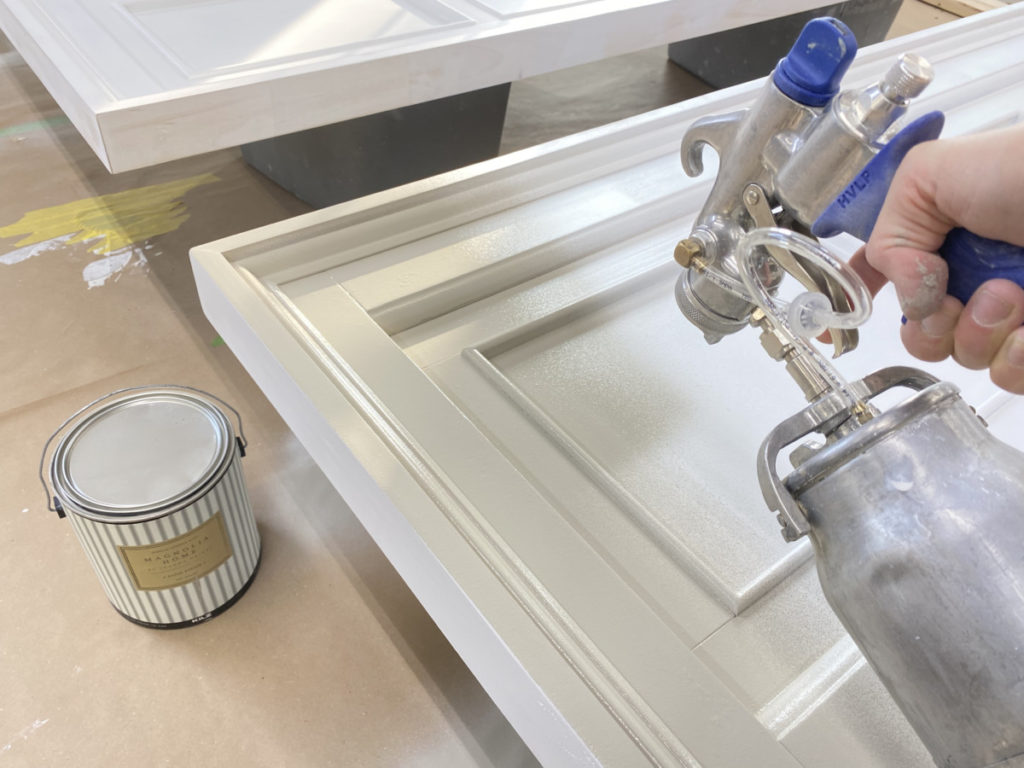
Following the same steps for priming, I applied my topcoat. I closely followed the back of the can recommendations for applying my Magnolia Home Paint using a sprayer. (In the past I have used a brush and roller and was impressed with the results! I just wanted to try the sprayer approach this go around.)

Repeat on Addition Furniture

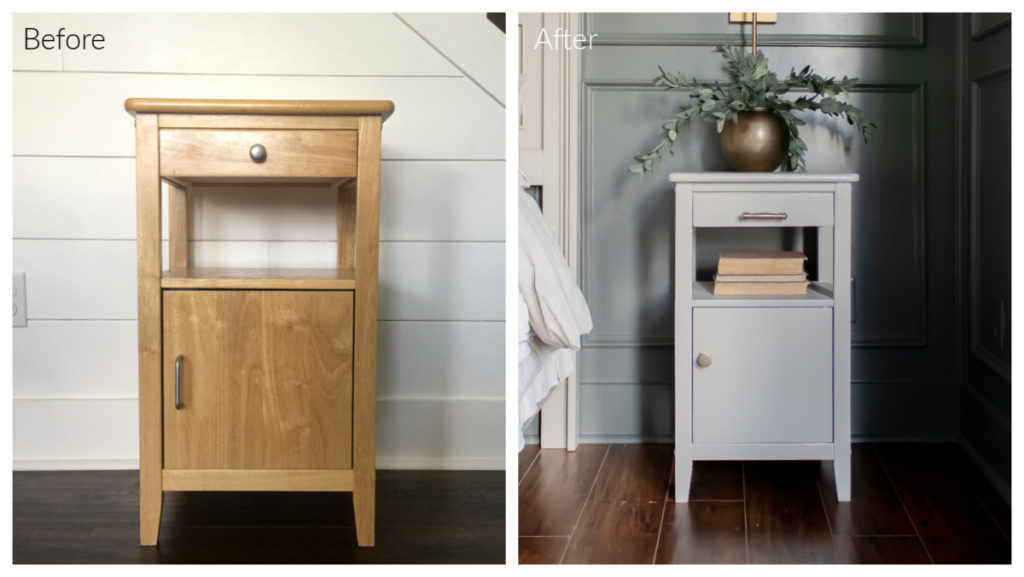
Let’s not forget the rest of the bedroom furniture! I knew that I wanted to update the profile of my bed, but I was fairly happy with the shape of my little second-hand night stands. However, I did want to make them match my bed, so I also primed and painted my nightstands to achieve a sophisticated, designer look.

Painting Furniture

Reassemble

Once everything is painted and dried it’s time to reap the rewards! I could hardly contain my excitement and started bringing in my furniture the second it was no longer tacky. ( I don’t recommend doing, that. Giving paint a little extra time to cure is always a good idea.)

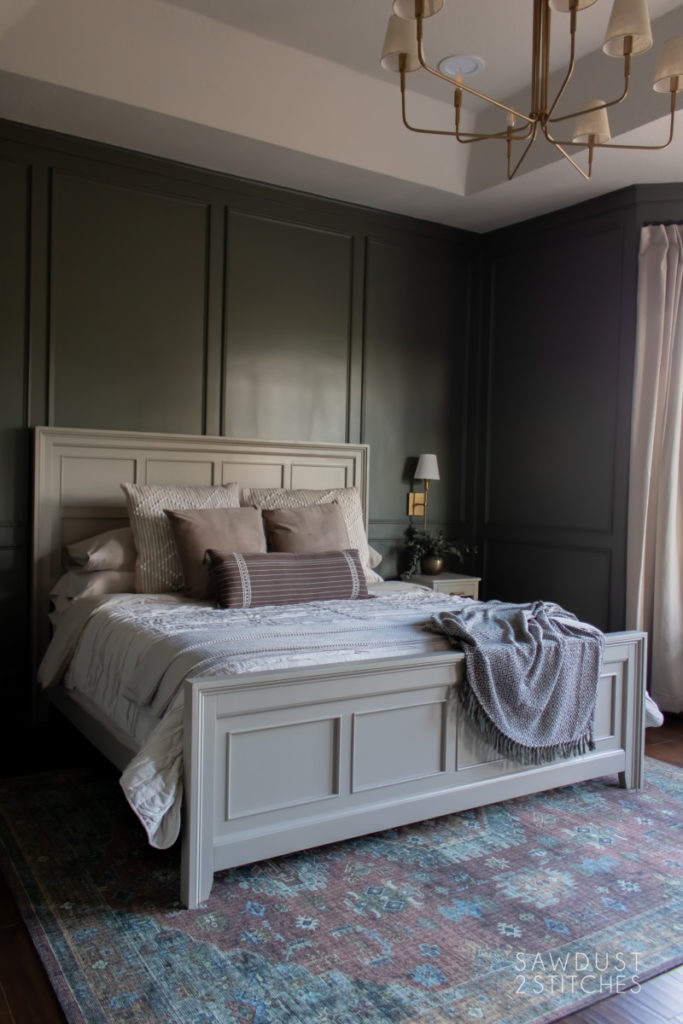
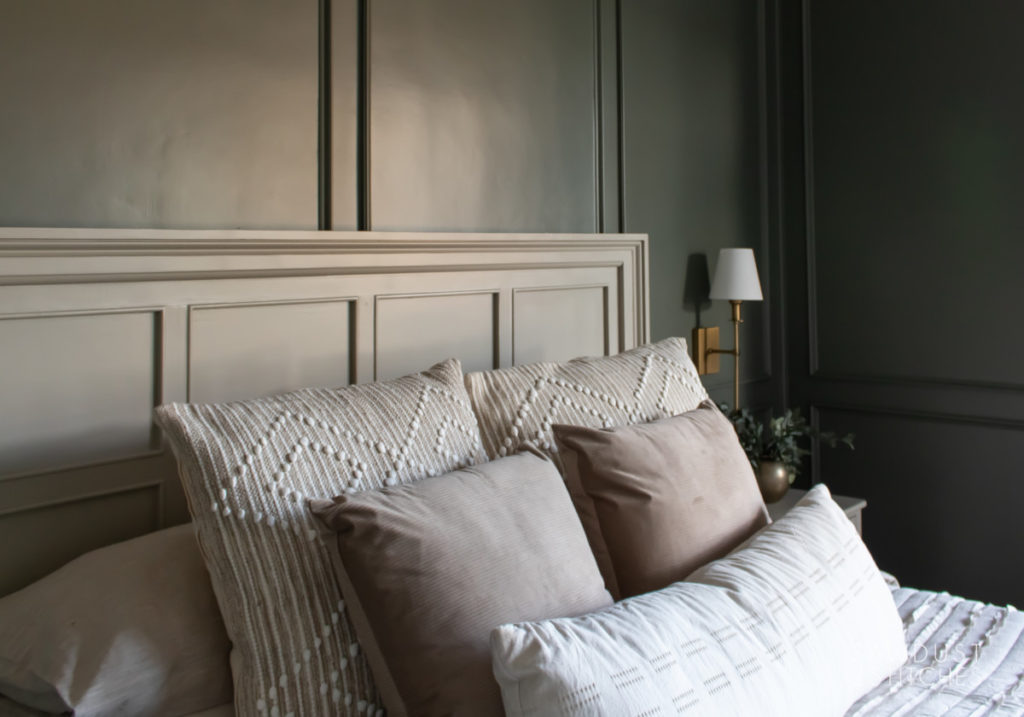
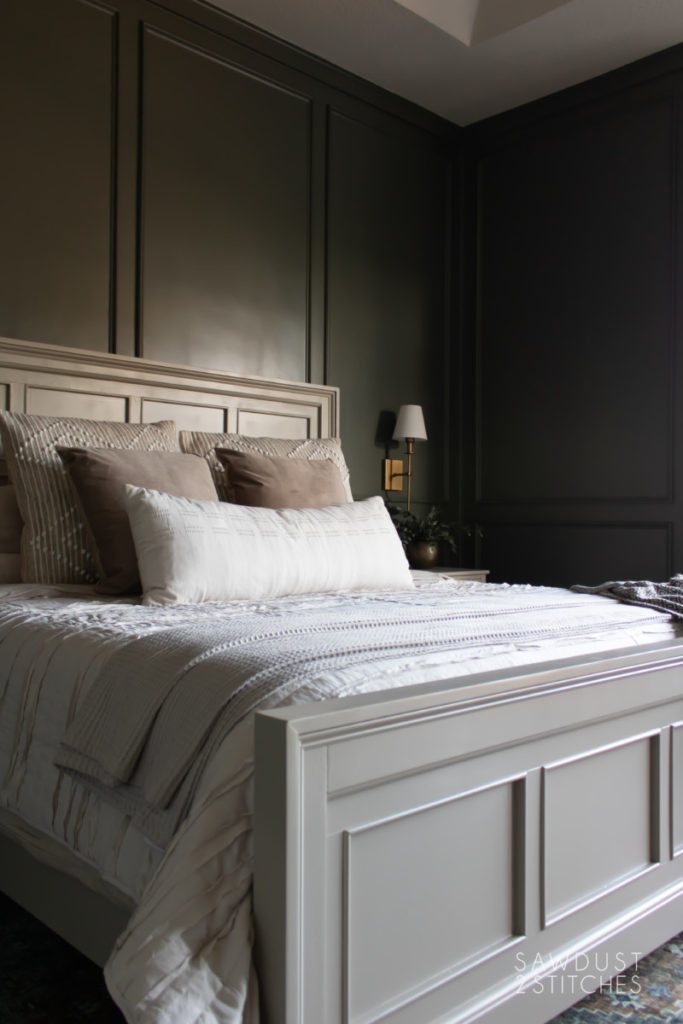
I still cannot believe that this is all the same furniture, and this is the same room!? It is AH-MAZING what a little bit of paint can do. If you are looking to update a space in your home make sure you check out Magnolia Home by Joanna Gaines Paint! It was made to transform your vision into reality. Check out https://www.kilz.com/magnolia!

Furniture Makeover  Before and After
Bed Makeover Before and after
Moody Bedroom Makeover
Moody bedroom makeover

Sources:

  • Bed: Craigslist
  • Nightstands: Facebook Marketplace
  • Nightstand Pulls:  The Home Depot
  • Nightstand Sconces: Amazon
  • Large European Pillows: Marshalls
  • Taupe Velvet Square Pillows: TJ Maxx
  • Lumbar Pillow: Hearth & Hand @ Target
  • Brass Vases: Target
  • Large Brass Chandelier: Amazon
  • Chandelier Shades: Amazon
  • Curtains: Amazon

  • Linen Duvet Cover: Amazon

  • Ruffle Coverlet: Marshalls
  • Rug:  Loloi
  • Wall Color: “1905 Green” by Magnolia Home
  • Bed Color:  “Quaint Cottage” by Magnolia Home

If you are looking for some more moody bedroom inspiration I have just what you are looking for! Last year I updated my guest bedroom using Magnolia Home Paint by Joanna Gaines and it looks stunning! You can get all the details here.
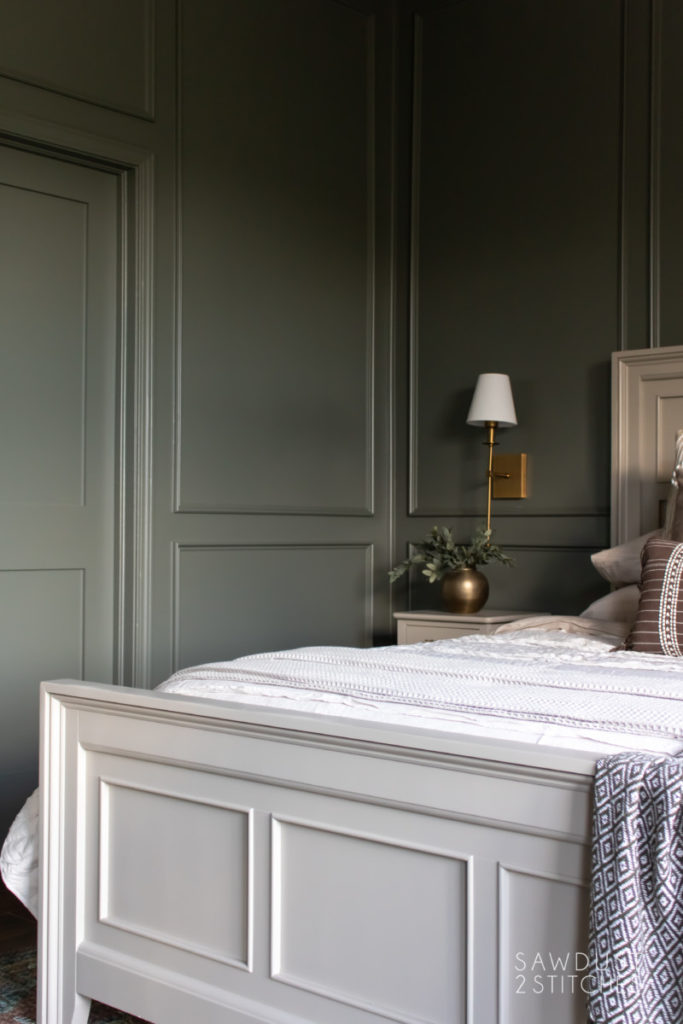
Moody Bedroom Makeover

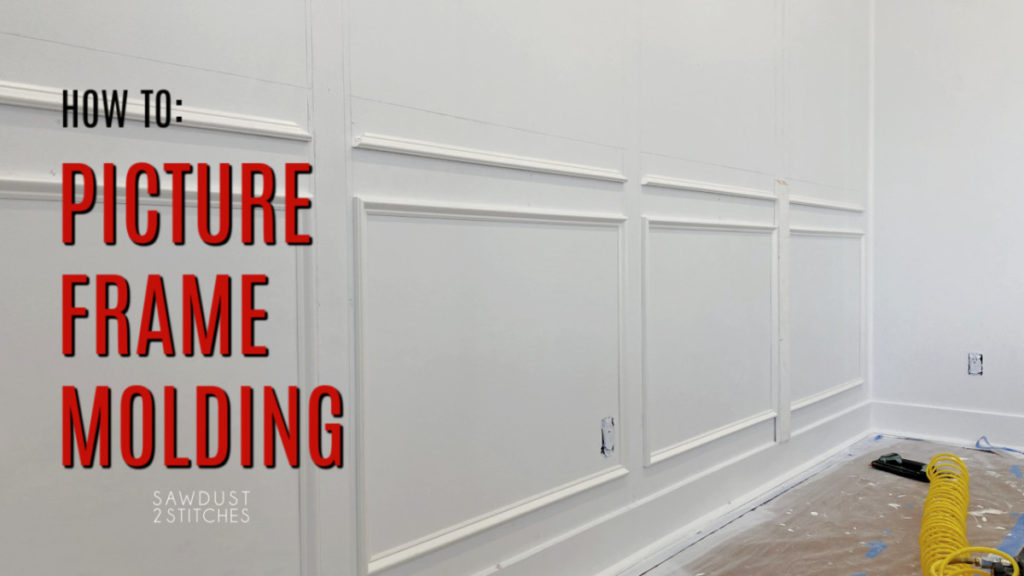
How to: Sophisticated Picture Frame Molding

December 17, 2021

I have recently become obsessed with picture frame molding. There is something about the subtle sophistication that I simply cannot get enough of!  Naturally, as I was designing my primary bedroom makeover, picture frame molding was at the top of my list.  I have never done picture frame molding but I was amazed at how easy this transformation was!  I have to give a  big shoutout to DAP for sponsoring this post and putting out great products to make this project so easy to execute.

How to add picture frame molding.
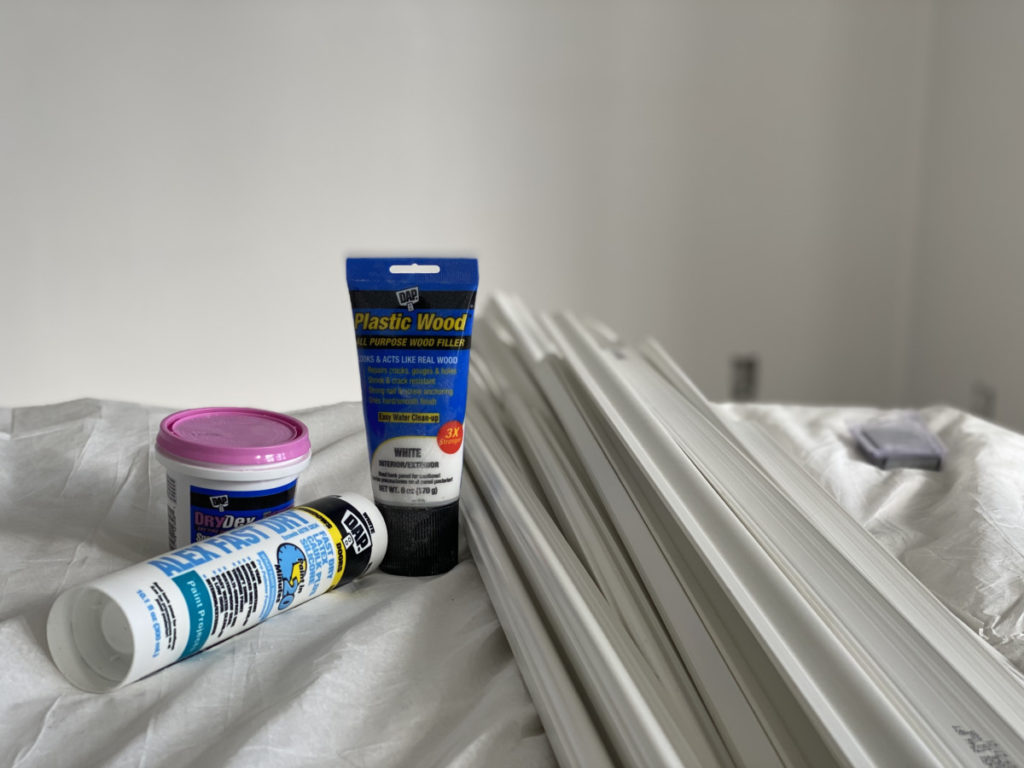
Tools SuggestedMaterials Used
Eye ProtectionDryDex Spackling
Hearing ProtectionDAP Plastic Wood All Purpose Wood Filler
Pin NailerAlex Flex Caulk
Miter SawPVC Base Cap Molding
Tape MeasureAlex Fast Dry Caulk
Paint Supplies
Long Level

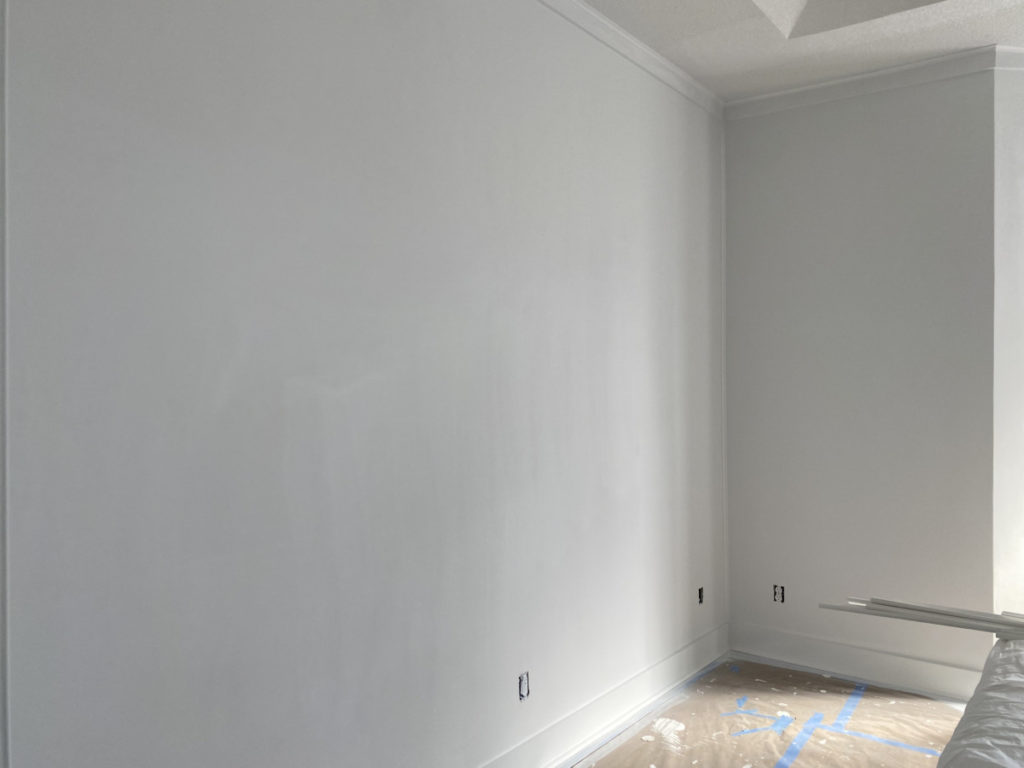
My bedroom has gone through several changes over the past few years. I have done the “light and bright” look. I have embraced the “farmhouse” style and adorned the walls with shiplap, but this time I wanted to take bold, sophisticated approach. The first step in this transition required a blank slate! I removed the shiplap from my room and skim coated my walls. ( This is not a necessary step and after doing it myself I don’t know that I would recommend this step. It was A LOT of work. I am convinced this look would still look stellar on a textured wall.)

Spacing

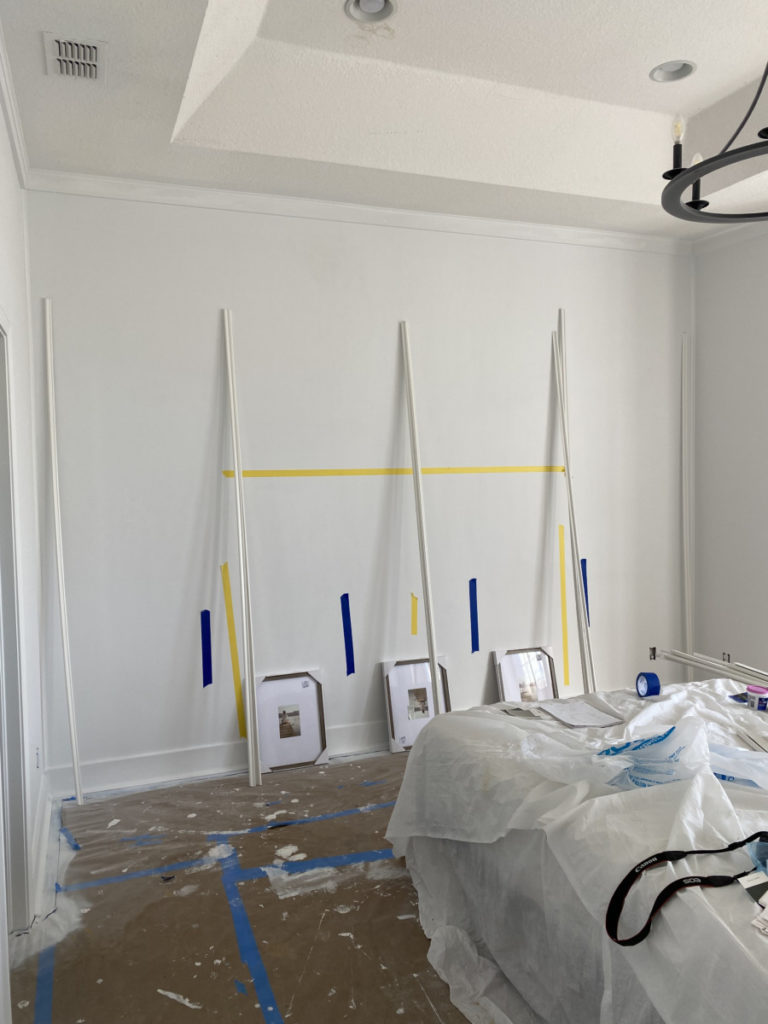
  I honestly think that deciding on spacing was the hardest part of this project. (Seriously, this is such a great beginner DIY project.)  When deciding on a layout I would suggest using tape or  objects to visualize the space.  As seen below I used yellow to plow out the general size of my headboard. I would heavily suggest taking  any furniture in the space into consideration.    

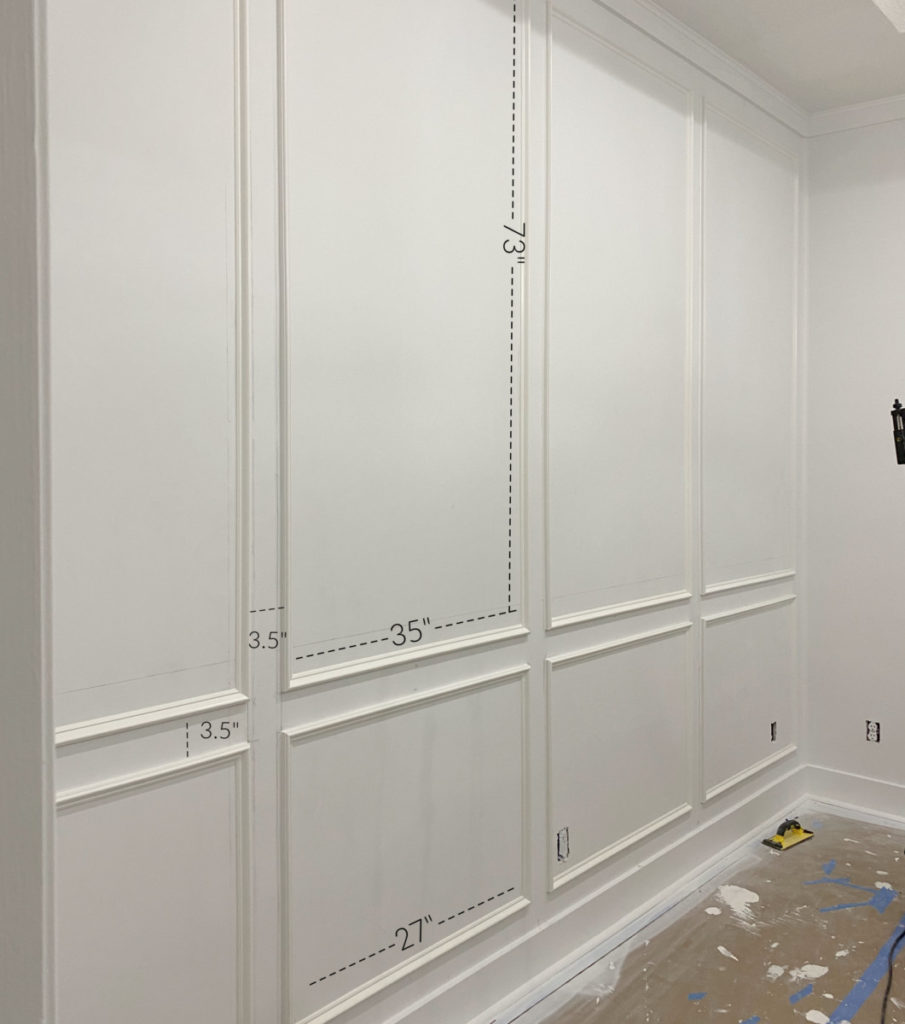
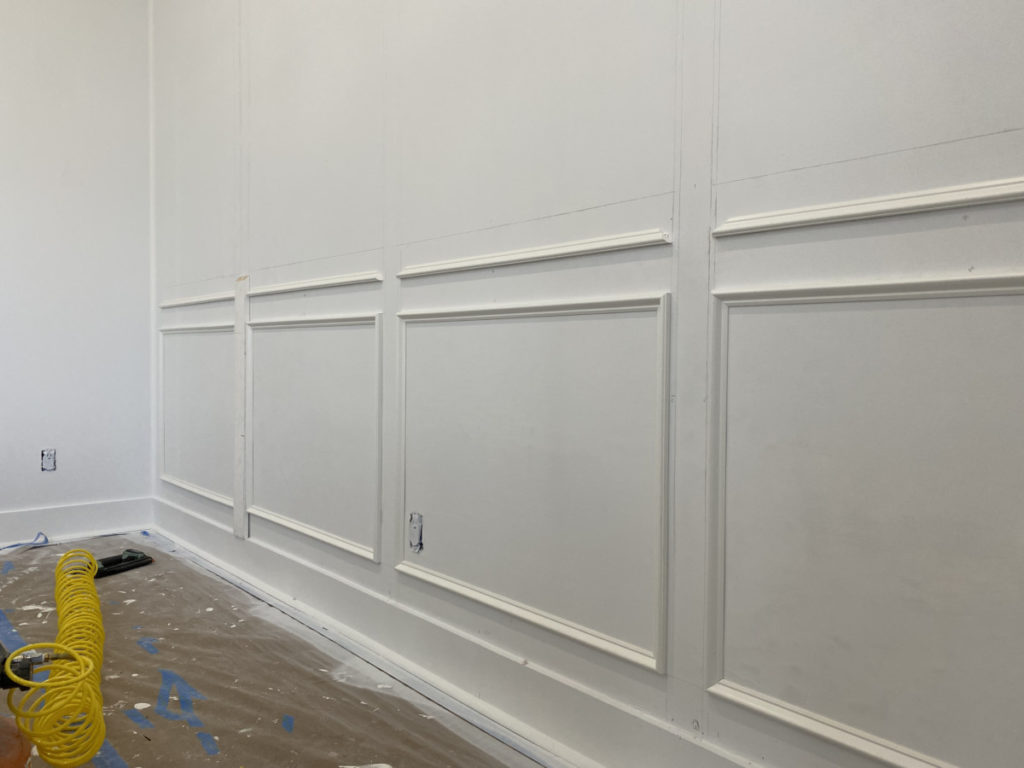
 After  plotting out the general spacing,  I needed to decide on how many “boxes”  I wanted on my  wall, I also needed to decide how much spacing  I wanted in-between my molding boxes.  For example,  if your reference the image below you will see that I have 3.5″ in-between my picture frame molding boxes. I also used this same spacing at both the top and bottom of my picture frame boxes.  * So I have 3.5″ in-between the bottom of my boxes and the baseboard, and the top of my boxes and my crown molding.

Draw in spacing

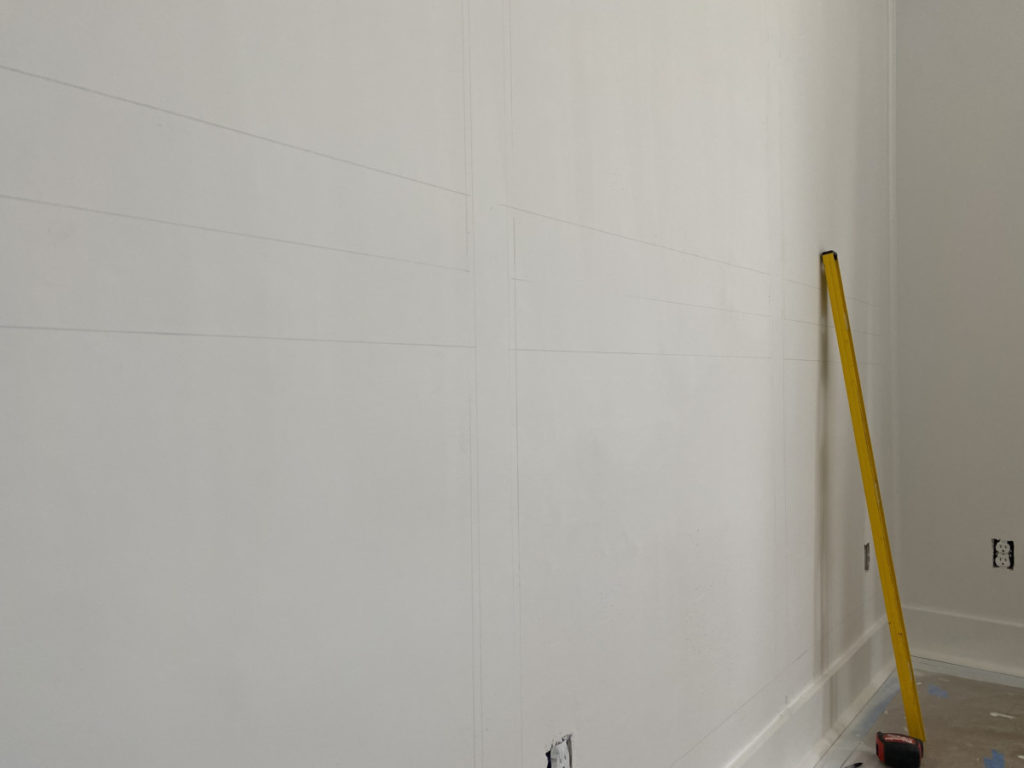
Once I had determined the layout for my wall I proceeded to transfer my design on to my wall. While there are many  ways to add molding  have found this method to work best.  It takes a little more planning but it makes the application process a breeze!  I simply used a pencil,  tape measure, and a straight edge (or a level). 

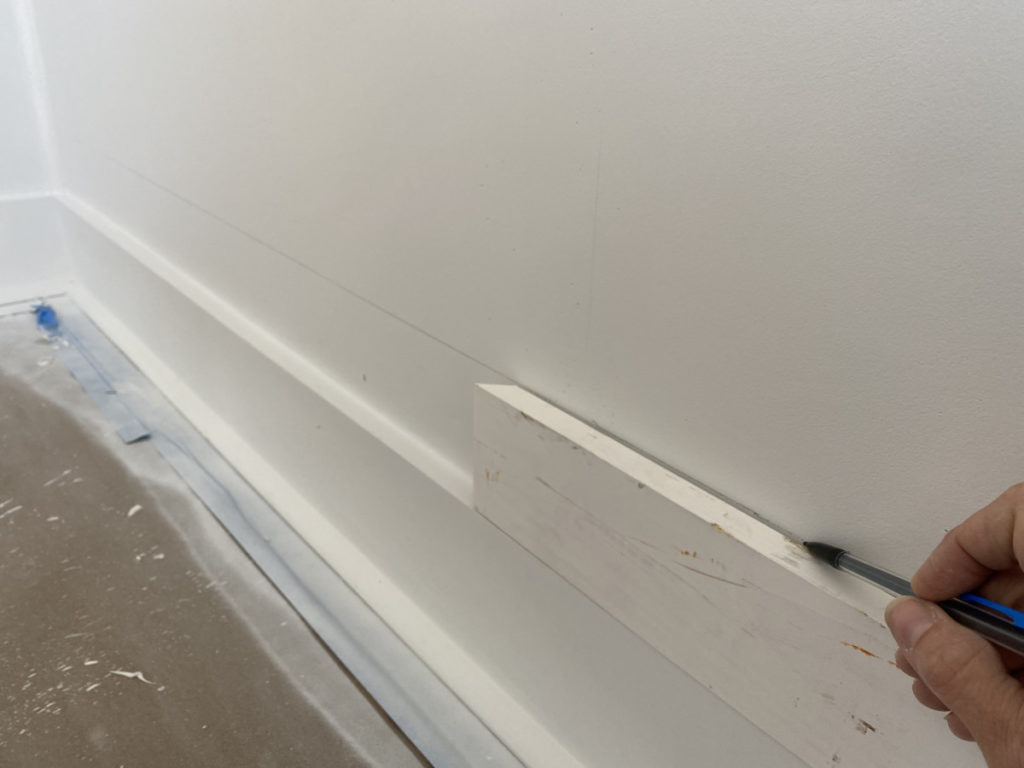
 As  pictured above, I used 3.5″ spacing in between my picture frame boxes.  I found the best way to create even spacing is to utilize a spacer block.  ( I simply used a 1×4″ board as a spacer while drawing in my lines.)

 How to: Block out picture frame molding.

Fill Holes

Honestly, this next step should have been my first, but live and learn. I found that I had a handful of holes and divots in my walls that I wanted to fill. It is much easier to do this BEFORE you have a hole bunch of trim on the wall!

How to: Repair your wall for picture frame molding.

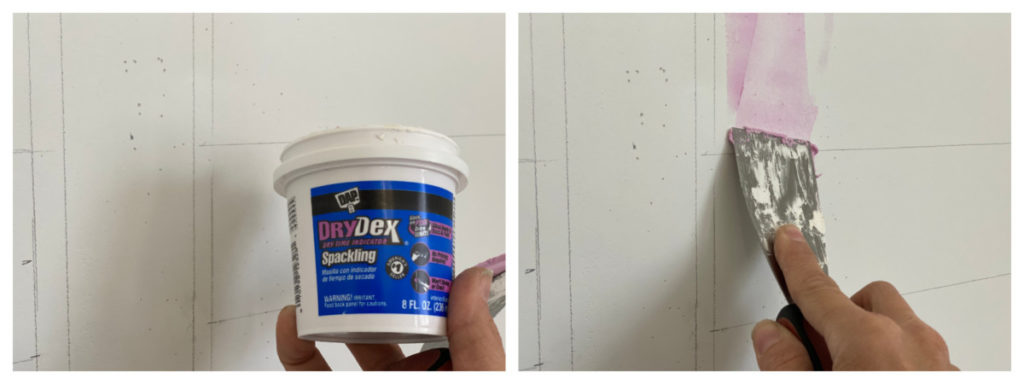
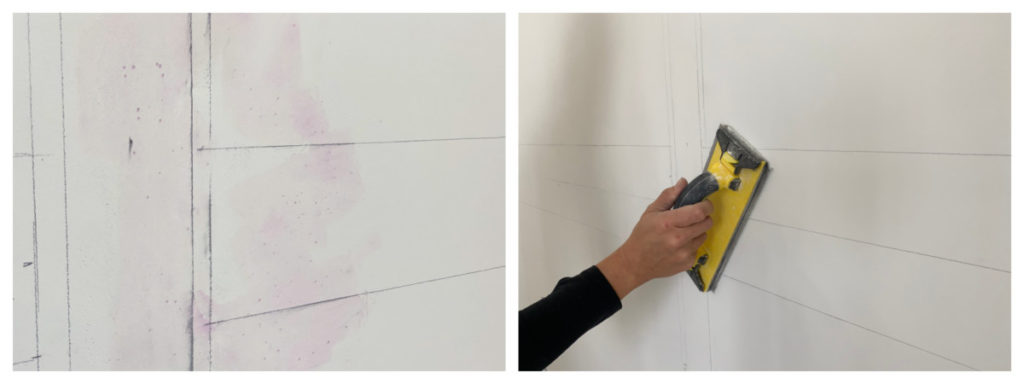
 I like to use DryDex Spackling by DAP when repairing drywall.  I love DryDex especially for this application,  it doesn’t require priming after use, meaning it won’t flash your paint!  It also won’t shrink or crack and it even has a built in “ready”  indicator. It goes on pink, and when it is dry it turns to white! Nifty, huh? Once the DryDex had turned white I lightly sanded it using a drywall sandpaper.

How to: Repair your wall for picture frame molding.

Measure and Cut

 It is time for picture frame boxes!  In order to create the picture frame boxes I used  PVC Base Cap Molding. It is available in most big box stores,  I purchased mine at The Home Depot.  

Lucky for us, most of the think work is already done! After drawing the boxes on the wall with a pencil I went through and measured all my perimeter lines and wrote in the needed trim length for each section. (Not pictured) In THEORY all of the boxes should be the same length and height. This was the case in 95% of mine. (I have a few wonky walls and wanted to keep the spacing between the boxes and the wall even as opposed to straight.)

Cutting trim for picture frame molding.

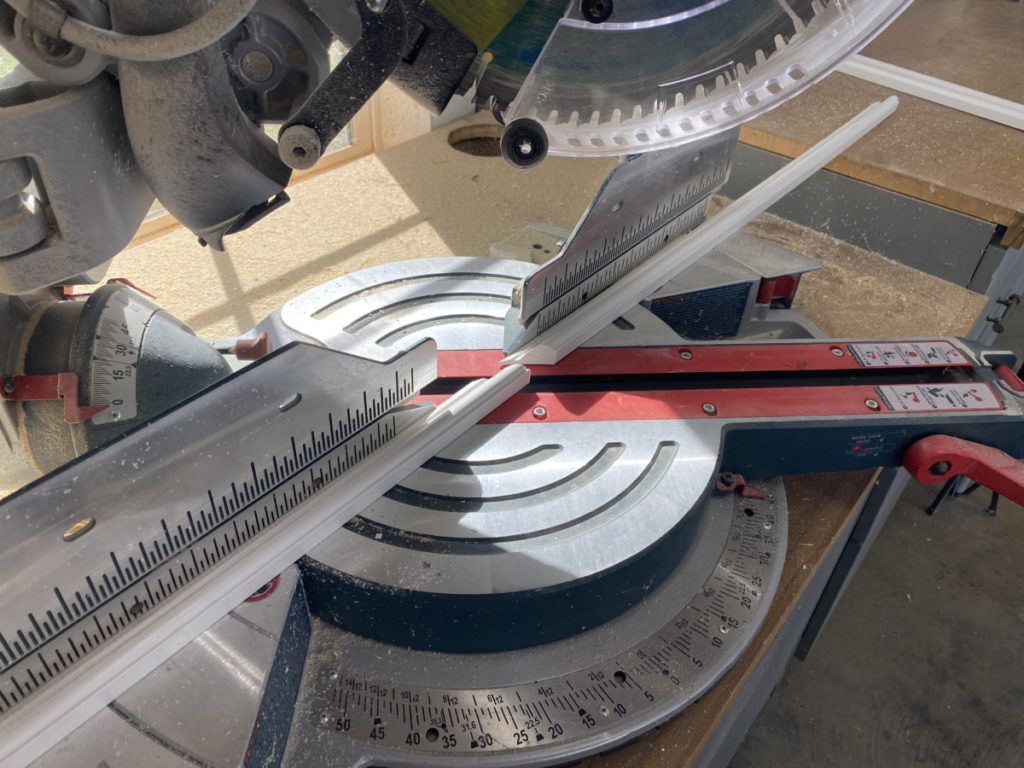
So the next step, is transferring the measurement of the boxes to the base cap trim and  then cut.  When cutting the trim I use a miter saw set to a 45 degree angle.  Remember when cutting you measure from the longest point  to longest point.  

Add Caulk

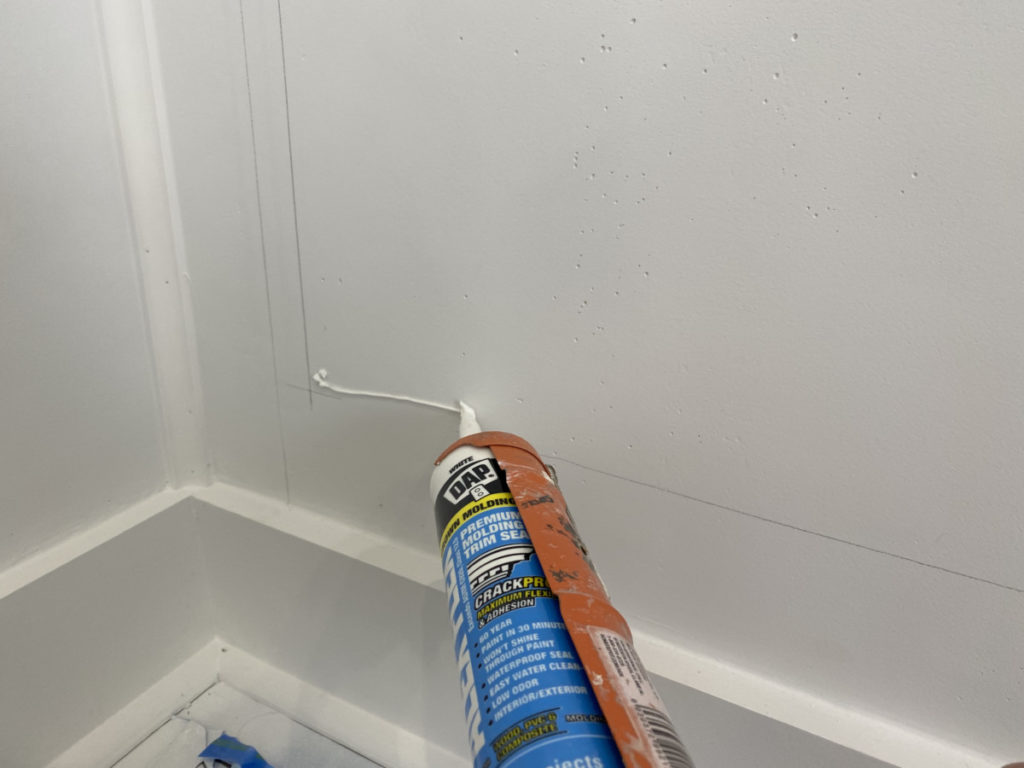
Now that I have my trim pieces cut and ready, it is time to install. Typically when installing trim work an adhesive or caulk is used. I have found that a good flexible caulk is just the ticket! I like to use DAP Alex Flex Caulk and DAP Alex Fast Dry when working with PVC trim.

How to:  Attach picture frame molding.

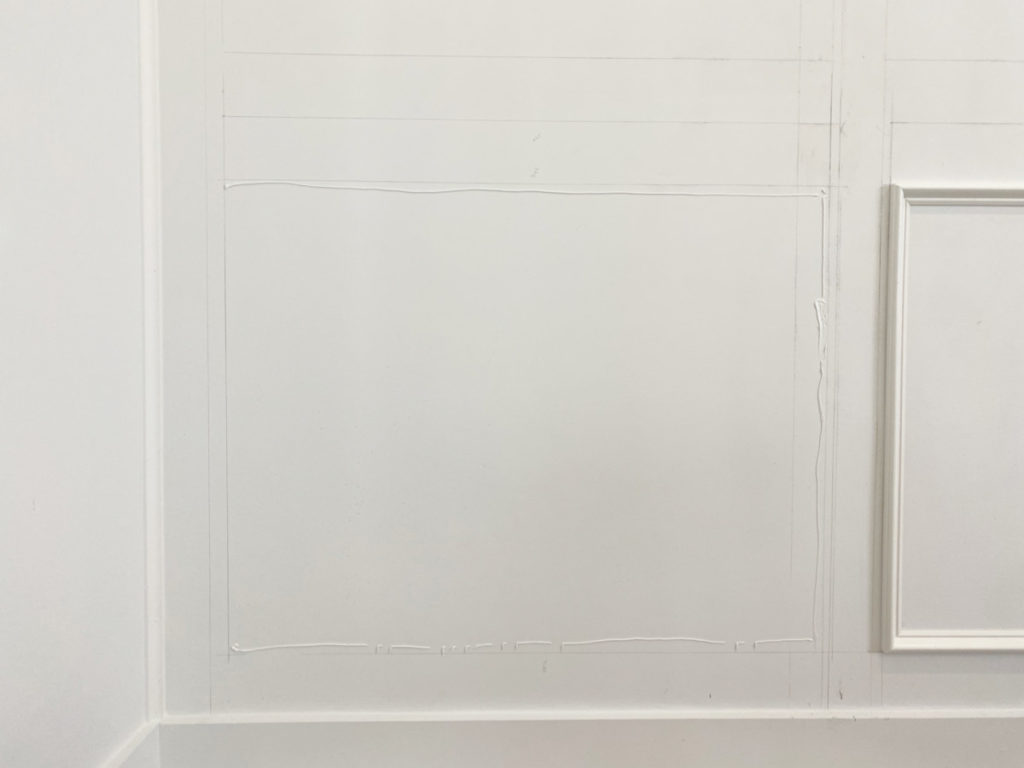
After installing a lot of trim, I have deemed this the easiest way when working with flimsy base cap… apply the caulk directly to the wall! I already have my lines drawn in and so I know exactly where it needs to go. This is especially handy technique when handling long pieces of trim! (Imagine trying to put a 73″ piece of flimsy trim on the wall (well over your head) with caulk on the back. As you can imagine the caulk often times gets smeared on the wall in places it should not be.) By putting the caulk on the wall I simply press the trim on to the wall, and it is a little more forgiving as I push it into place with less mess and smearing.

How to : Add picture frame molding.

Something to Consider: There are differing opinions when it comes to adhesive vs. caulk when applying trim. I like using DAP Caulk on PVC trim because it does an excellent job of holding the trim but it is a little more forgiving than an adhesive and less damaging to drywall should I ever choose to remove the trim. For heavier trim and paneling I ALWAYS opt for DAP DynaGrip.

Attach Base Cap

Seeing as the boxes are already drawn on the wall, it takes a lot of the think work out of the install process. When securing the base cap to the wall I like to use a spacer block and a pin nailer. (Remember before how I said that I used a 1×4″ board when drawing in my lines. I also used the same 1×4 when installing the base cap.) It works as a great spacer and makes for perfect lines! As far as securing it to the wall, PVC base cap is very light and does not need heavy duty fasteners. In all reality just DAP Plus Caulk is all I would need to hold it securely, but I am impatient and a pin nailer is the perfect clamp to hold the trim to the wall while it dries.

When securing the trim I like to nail directly at the to top go the ridge. While many DIYers try to hide their fasteners in the grooves, I prefer have the fastener hole top and center it makes for a quick fill and repair!

Repeat the application process on all four side of your boxes. Again, if you outline your boxes on the wall with pencil this is a nearly painless process!

Fill Holes

Again, I’m a HUGE advocate for using a pin nailer on light weight trim. It is the perfect gauge for the job and creates a very small hole. It makes for a very quick repair using DAP Plastic Wood. It only takes a very little bit of DAP Plastic Wood to fill all the holes.

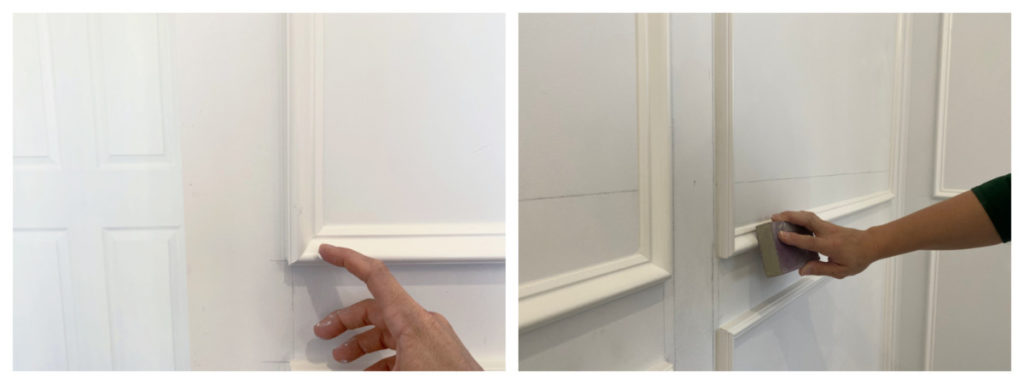
Remember how I said that I like to drive the pin/nail directly through the top ridge?   By doing so it makes it incredibly easy to fill, and subsequently sand!  After the Plastic Wood is dry I follow up using a sanding sponge.  The nail hole completely disappears! 

Caulk Seams

Last step for creating beautiful picture frame molding, is hiding all the flaws. When it comes to hiding flaws DAP Alex Fast Dry Caulk is your best friend. It can take a mediocre trim job to a seemingly flawless execution!

I run a small bead of caulk around the perimeter, as well as the interior of each trim box. If you want to see more about this step make sure you check out my saved highlight reel on Instagram along with my video.

Paint

It’s time to paint! (Great news, Alex Plus Caulk has a dry time of 20 minutes! As soon as you get all your paint supplies assembled you are pretty much good to go!)

(If you so choose you can add a primer. In the past I have found that if you use a good paint with primer you can forgo this step when painting drywall.)

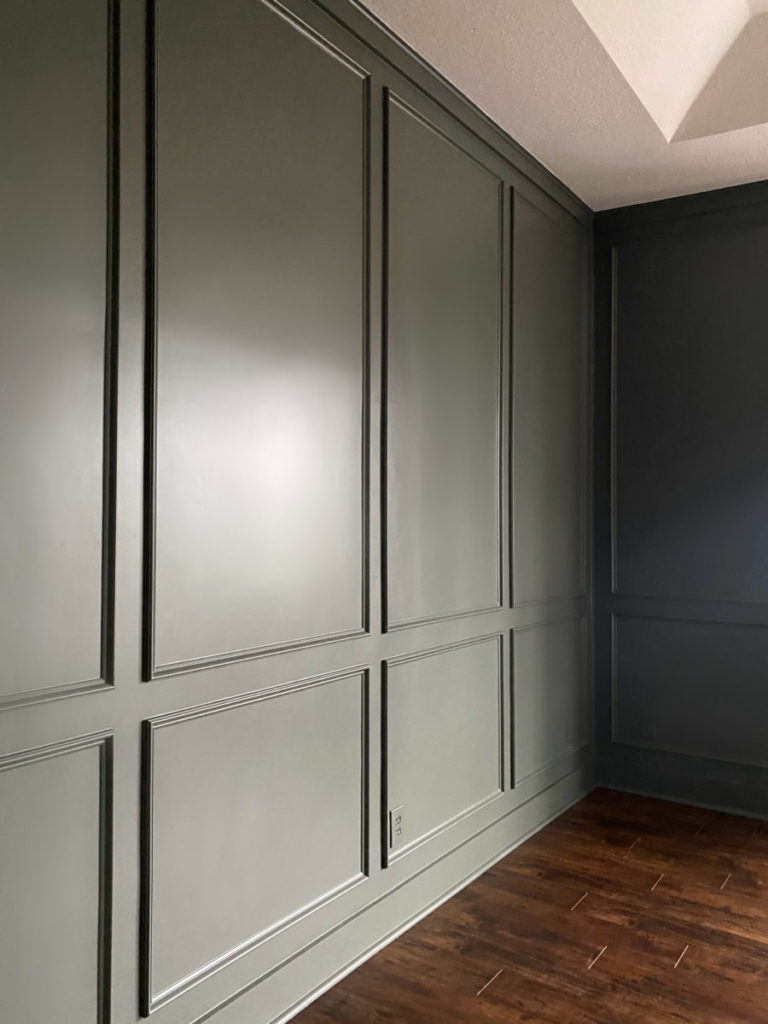
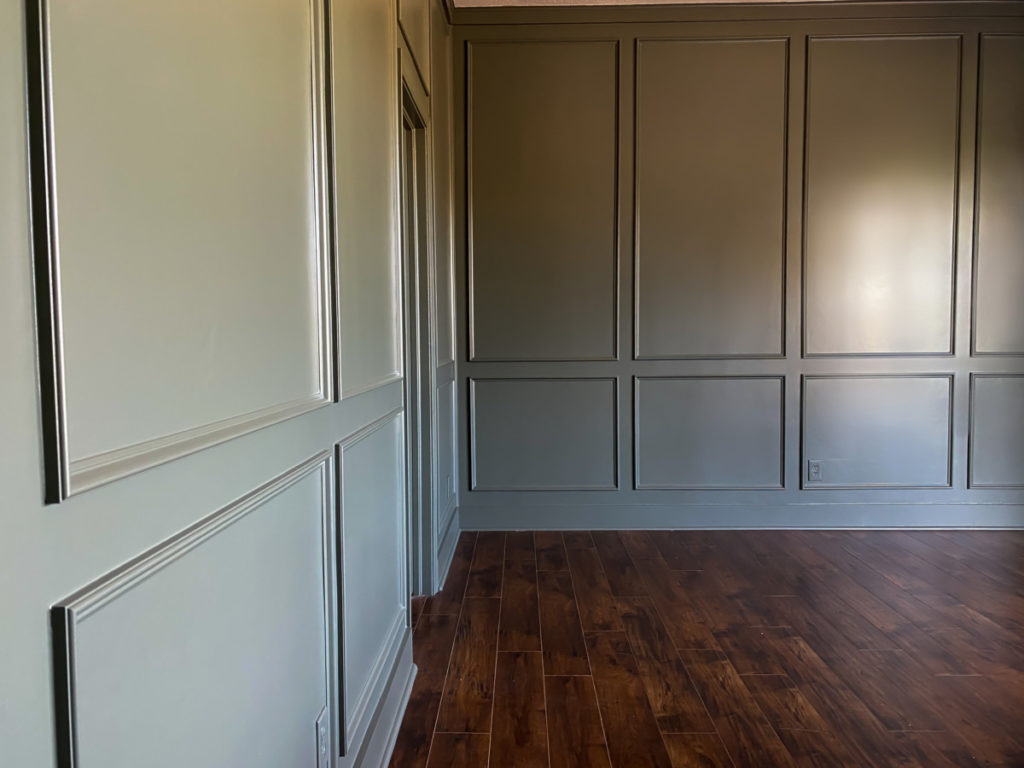
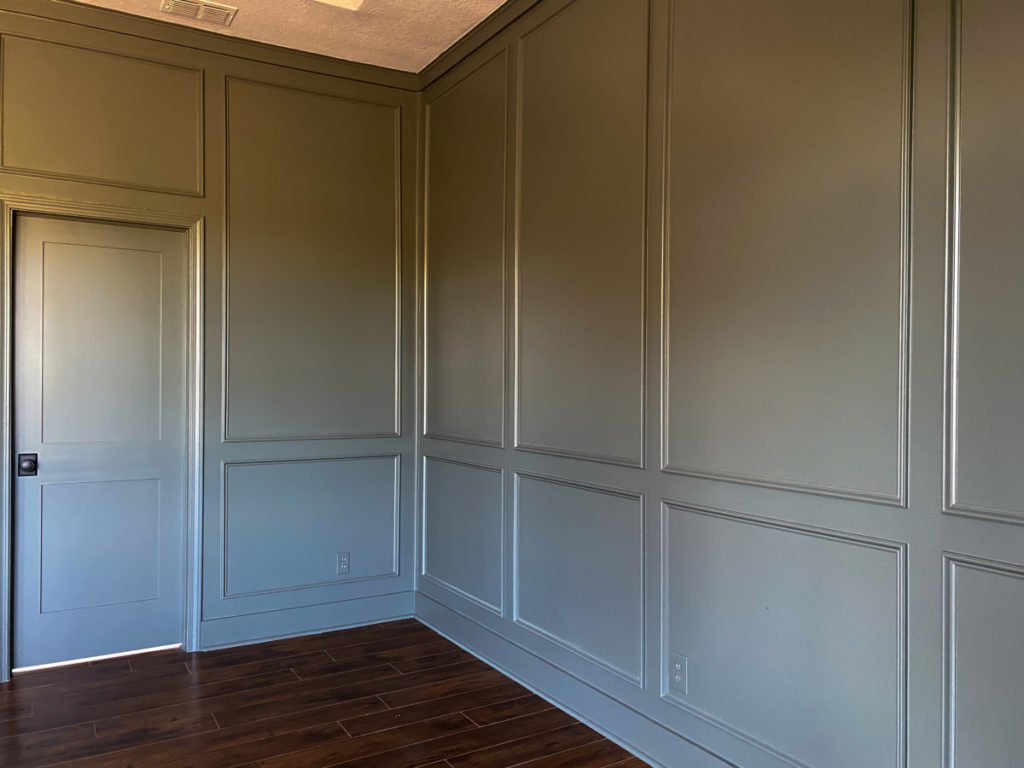
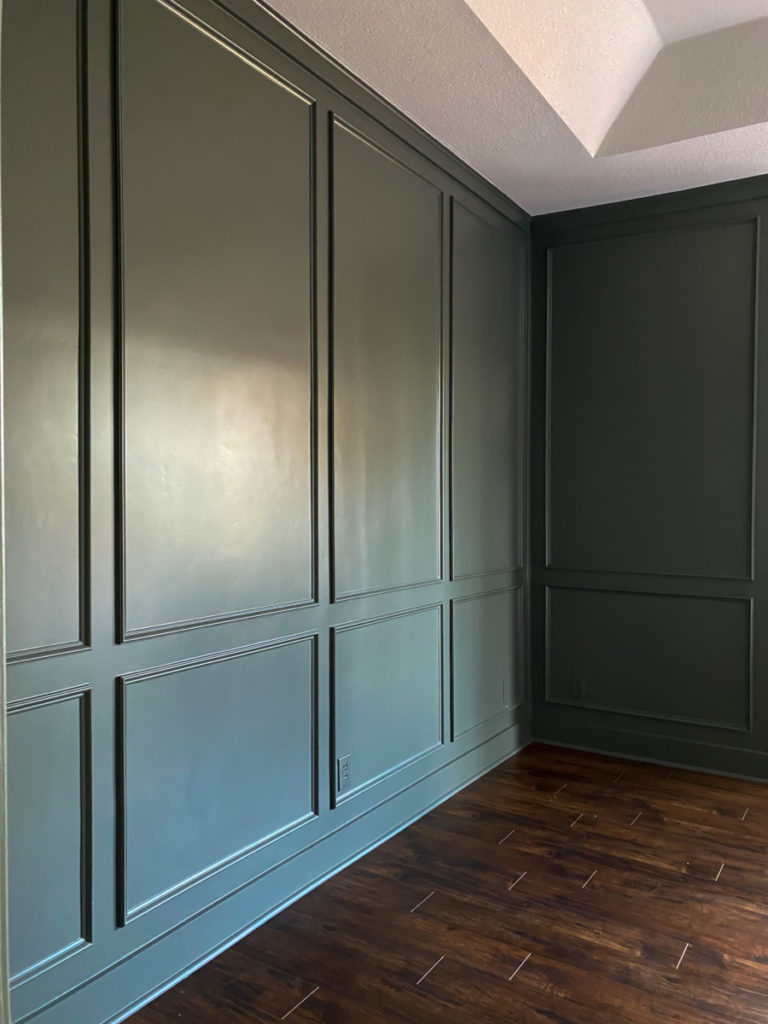
Well, there you have it folks… what do you think? I used about 20 pieces of trim on my main wall, which comes out to a little over $100. I think the money and the little bit of elbow grease was definitely worth it! Picture frame molding took this blank boring wall and transformed this room into a moody, sophisticated space.

Thanks for following along and make sure you check out the full room reveal coming soon!

Take Luck,

Corey

Sources:

  • Paint Color- “1905 Green” by Magnolia Home Paints 
  • Floor- Select Surfaces “Cocoa Walnut”

Fall Table Setting

September 29, 2021

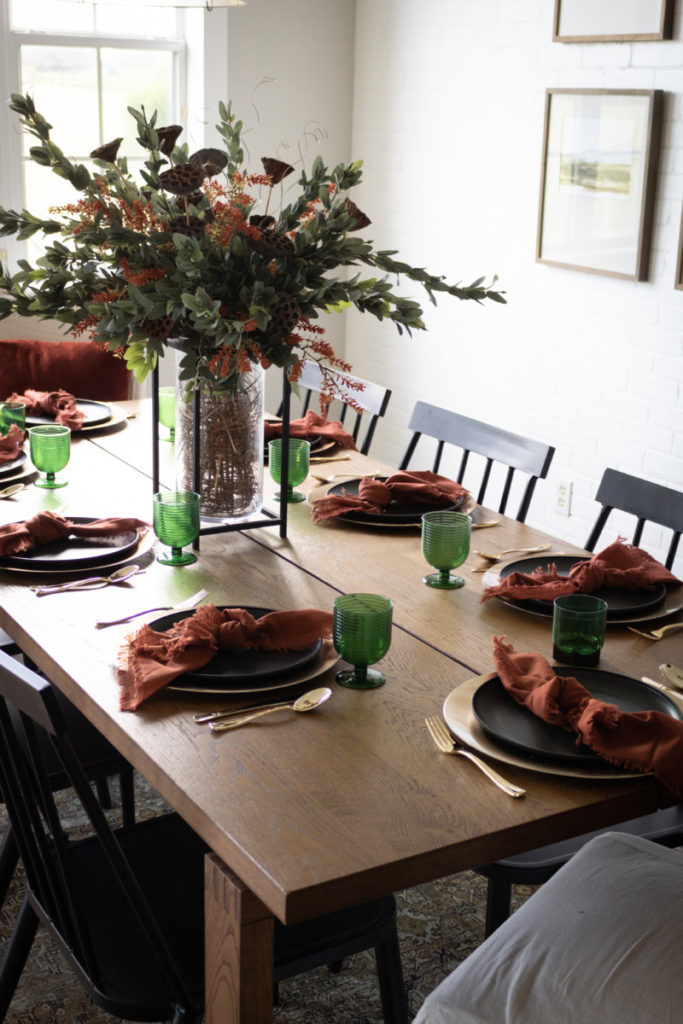
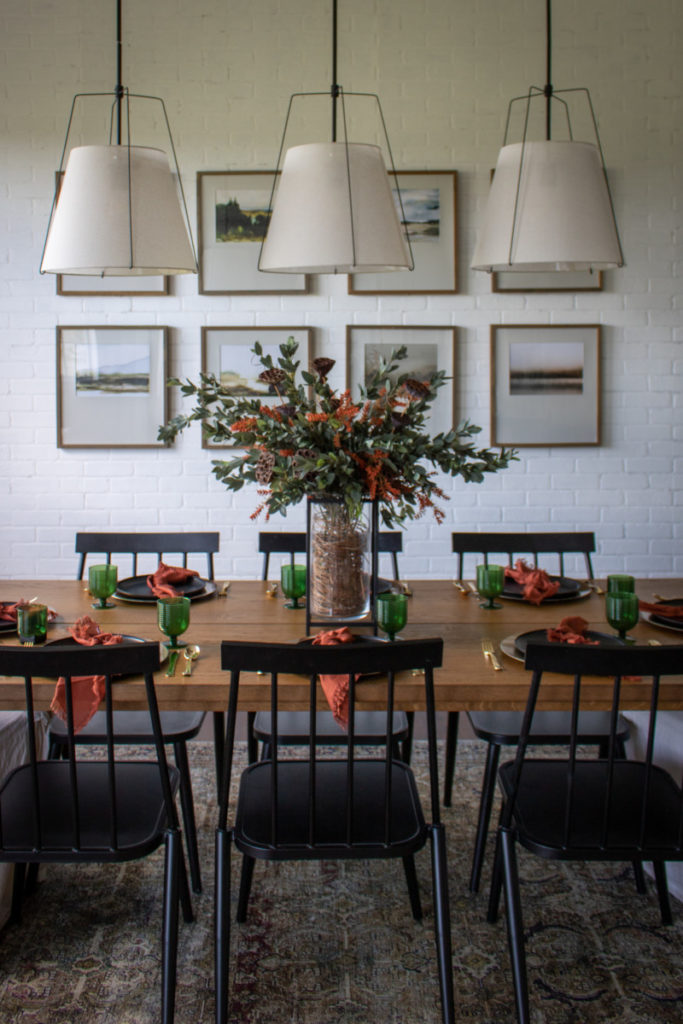
It has been a few years since I have shared my Fall Table Setting. Every year I assemble something simple, and feel it unworthy of documenting. However that feeling changed today! As I was chatting with a friend about the few tips, and tricks I used to make this table setting possible I realized that it really is too good not to share. I have a few tips to help create a beautiful cheap Fall Table Setting!

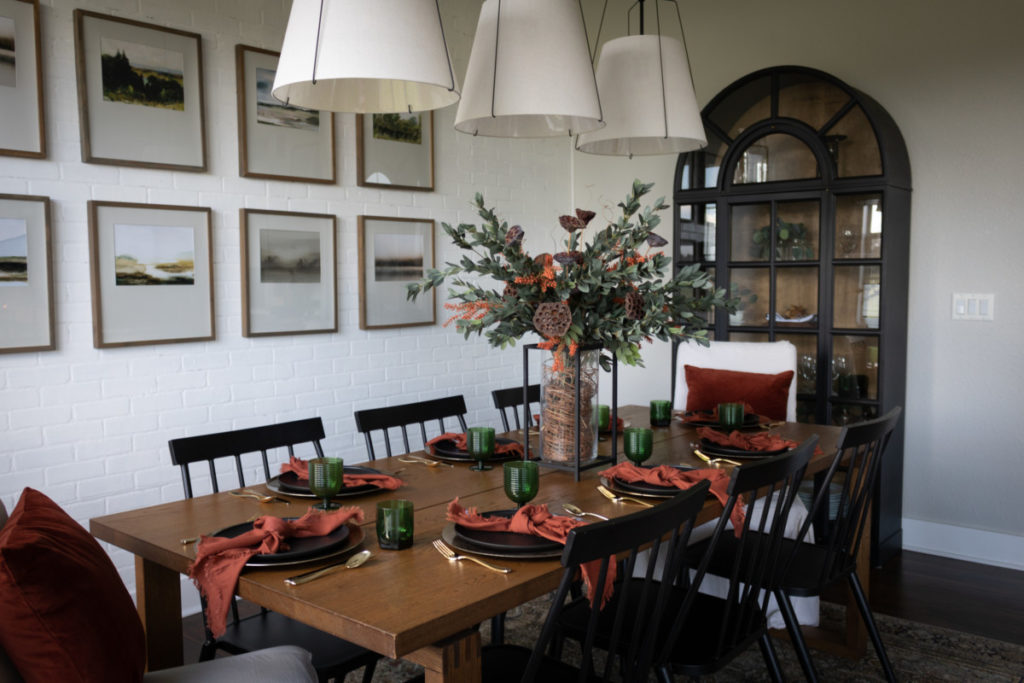
Fall Table Decor

Cost Effective

I feel as though I am about to give you a peak behind the curtain. I may take away some of the magic, but really these little tricks are too good not to share! While this fall table setting may look glamorous, would you believe that each setting costs LESS than $6.00!? That’s right $6.00 and that includes flatware, plate, stemware, napkins, chargers etc..

Cutlery

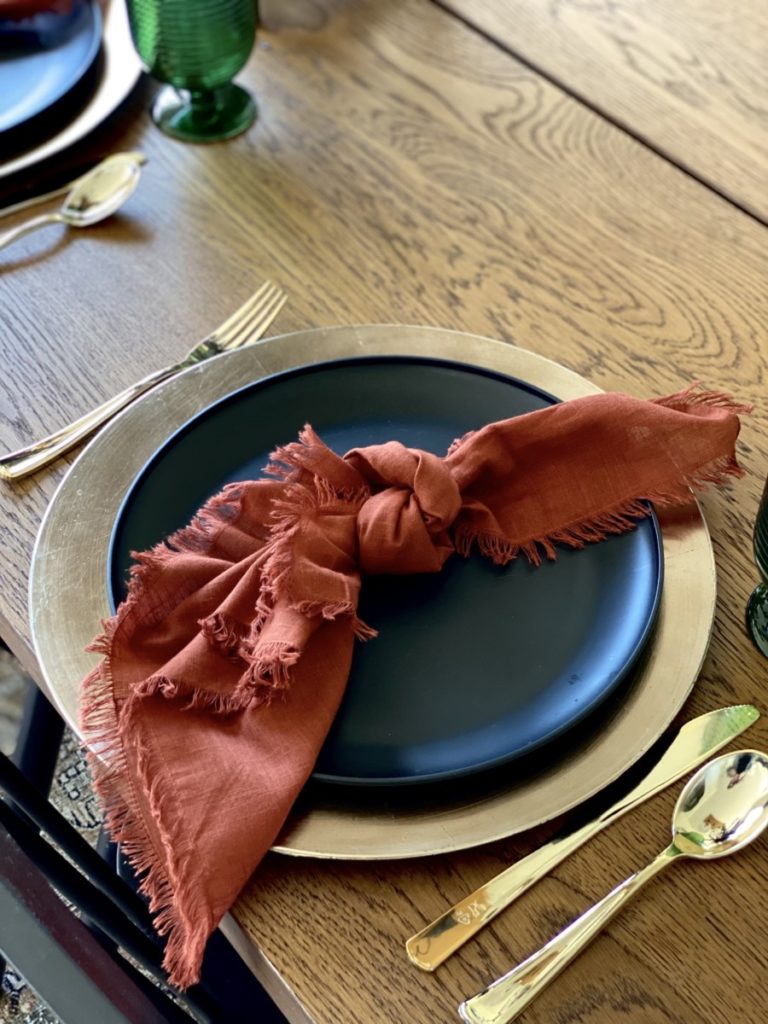
How did I do it? It’s simple. It’s all plastic my friend. It all started a few years ago when I was working on my 2018 Fall Table setting. It was at that time that gold flatware was just coming in and it was all the rage. All the social media designers were using them, and I loved them… but I was not about to spend $$$ just to take a handful of pictures. So I started to look at other options. I honestly considered spray painting old utensils just so I could take some pictures. Then I found gold plastic utensils! I figured it was worth a shot, brought them home, took some photos and no one was the wiser. (Obviously if you look closely and handle them it is clearly plastic but that doesn’t bother me one bit.) Honestly, when I am entertaining for the Holiday’s I love being able to toss my utensils.

Stemware

After I had discovered plastic flatware, I started to wonder where else I could trim the budget when creating table settings.

Over the years I have found that I can find glassware moderately priced. The green glasses featured in this years setting were found in the Dollar Spot at Target (Sorry, I don’t have a link for you.) However, in years past I have found awesome glasses at the Dollar Tree! In the image above (Fall 2018) the glasses pictured are from the Dollar Tree!

Plates

Last year I hosted our Family Reunion/Thanksgiving and I didn’t want everyone to have to use paper plates… It was then that I found $.50 Matte Plastic Plates at Target!

Chargers

Chargers are another inexpensive item I love to incorporate into table settings. For a small price they make a big impact. Every year Micahels’ runs sales on their chargers that come in assorted colors. I can usually pick them up for about $1.00 when they are on sale.

Napkins

Lastly, napkins. I strongly believe that using cloth napkins makes a table setting look sophisticated. Sure we might be using plastic forks, but once you pick up a cloth napkin and place it in your lap, you forget all about the plastic cutlery. 🙂

If you break down the pricing, it comes to roughly $6.00 for each setting!

I still use my black plates on a daily basis and the cups are still used for everyday use. The chargers I typically reuse for Christmas and the napkins are cloth and will be cleaned and stored for another time. All in all, I don’t feel like any $$ is wasted on this Fall Table Setting that might otherwise appear unpractical. That my friend is what we call “Form Meeting Function” and I am HERE for it!

Sources

 Table Setting

  • Plastic Black Plates
  • Clay Cloth Napkins
  • Rust Red Throw Pillows
  • Gold Chargers
  • Gold Plastic Utensils
  • Green Goblets (Target Dollar Spot Fall 2021)
  • Ashland Huckleberry Greenery
  • Seed Pods

Furniture Sources

  • Black Outdoor Chairs (Target 2019) Here is something similar.
  • Dining Table
  • Chair Slip Covers
  • Curio Cabinet (Craigslist Makeover)

Room Sources

  • Loloi Olive and Charcoal Rug
  • Brick Wall Tutorial
  • Light Fixture Tutorial
  • Wall Color “Agreeable Gray”  Sherwin Williams
  • Artwork (Frames: Hobby Lobby,  ArtWork: Etsy)


 If you are looking for even more Fall Table Setting ideas,   here are a few throwbacks to years past.

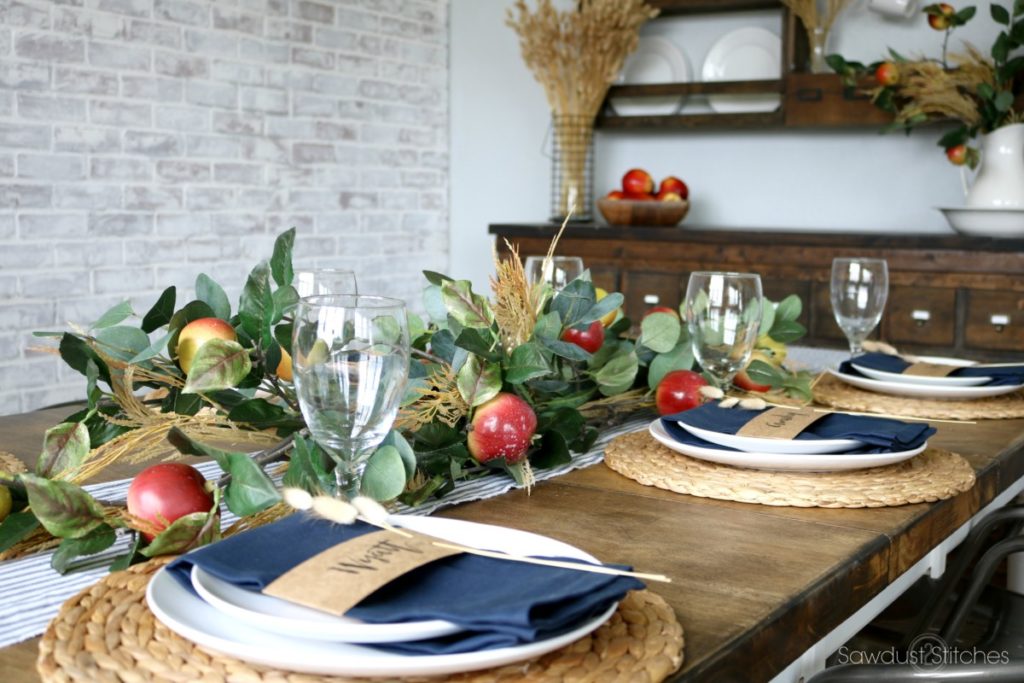
In 2017  I was heavy into the apple orchard vibe. You can read more about my “2017 Fall  Home Tour” here.


 Thanks so much for reading along  and learning more about how you can create a Cheap Fall Table Setting.

 Take Luck ,
Corey

Kids Closet Makeover (Using IKEA Furniture)

September 20, 2021

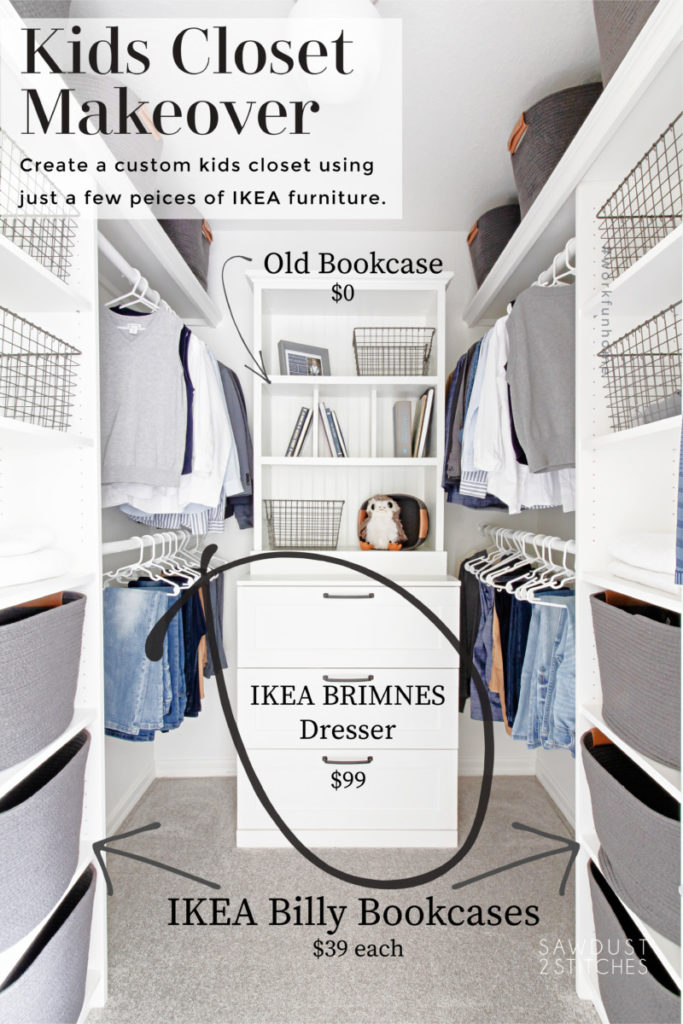
Kids closet makeover using Ikea bookcases

The beginning of the school year is always a personal wake up call to me in regard to our household organization.  Nothing like 6 a.m. alarms and missing shoes to make you realize the disorder of your kid’s closet. There’s really nothing quite like a frantic hunt for matching socks and clean underwear to kick my butt in gear. I am happy to report this year I put an end to the morning madness and I am thrilled to be teaming up with DAP to bring  you my “Kids Closet Makeover”. 

*This post is sponsored by DAP and does contain affiliate links.

What I used:

Tools Suggested Materials Used
Drill DryDex Spackling
Assorted Drill BitsWeldWood Wood Glue
Table SawRapidFuse All Purpose Adhesive
Miter SawDAP Premium Wood Filler
Tape Measure Alex Flex Premium Molding &
Trim Acrylic Latex Siliconized Sealant
Paint SuppliesAlex Plus All Purpose Caulk
Hearing Protection IKEA Brimnes Dresser
Eye Protection IKEA Billy Bookcase (x2)
3/4″ Plywood
1×3″ Primed Finger Board
Edge Banding
Black Dresser Pulls

Kids Closet Makeover

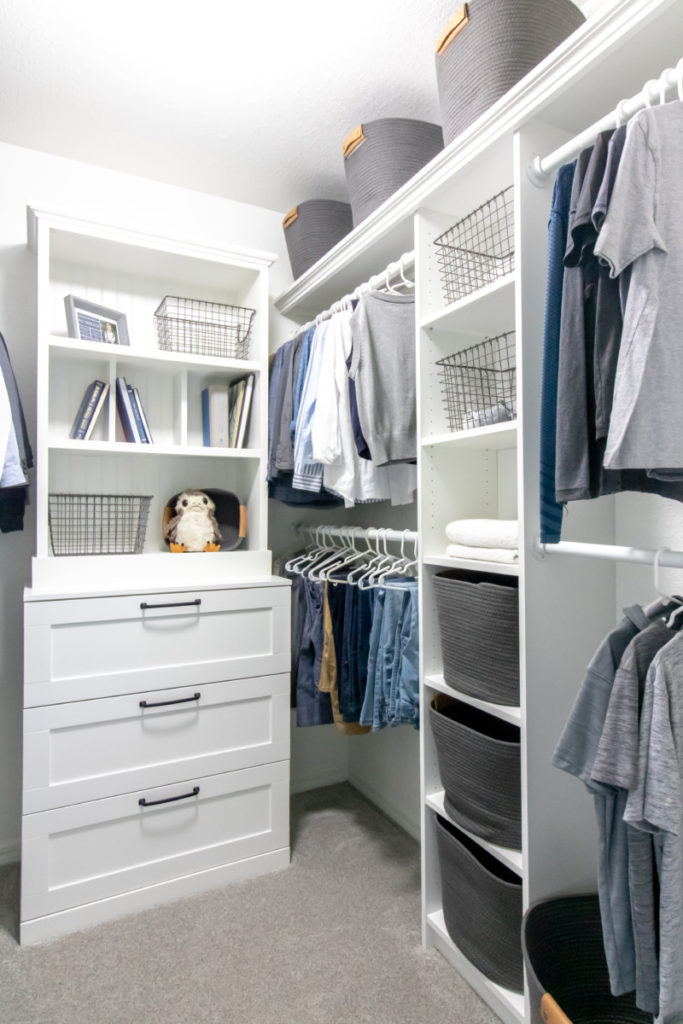
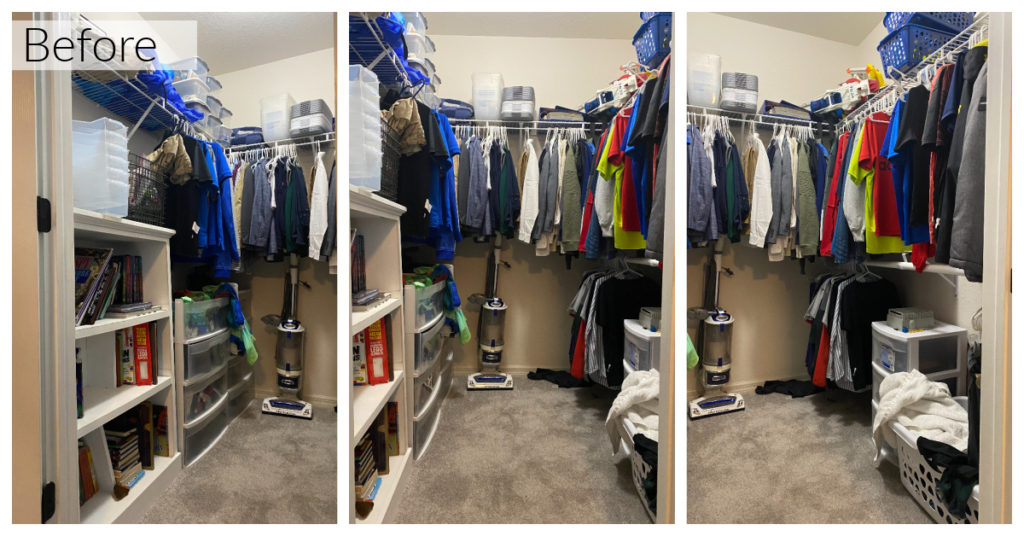
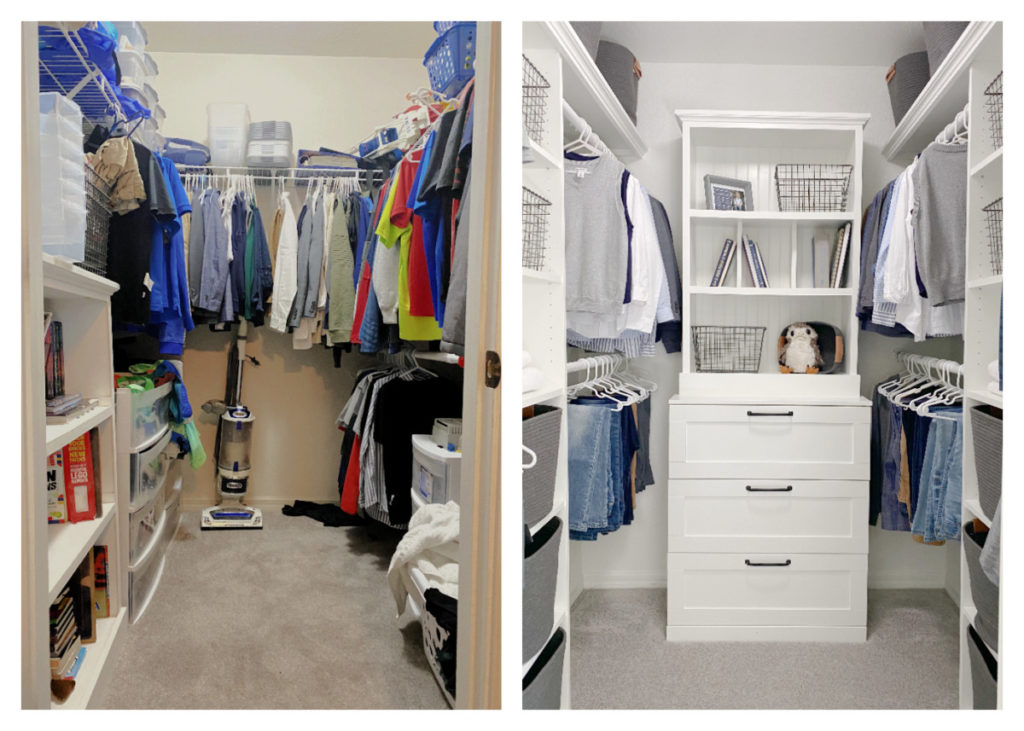
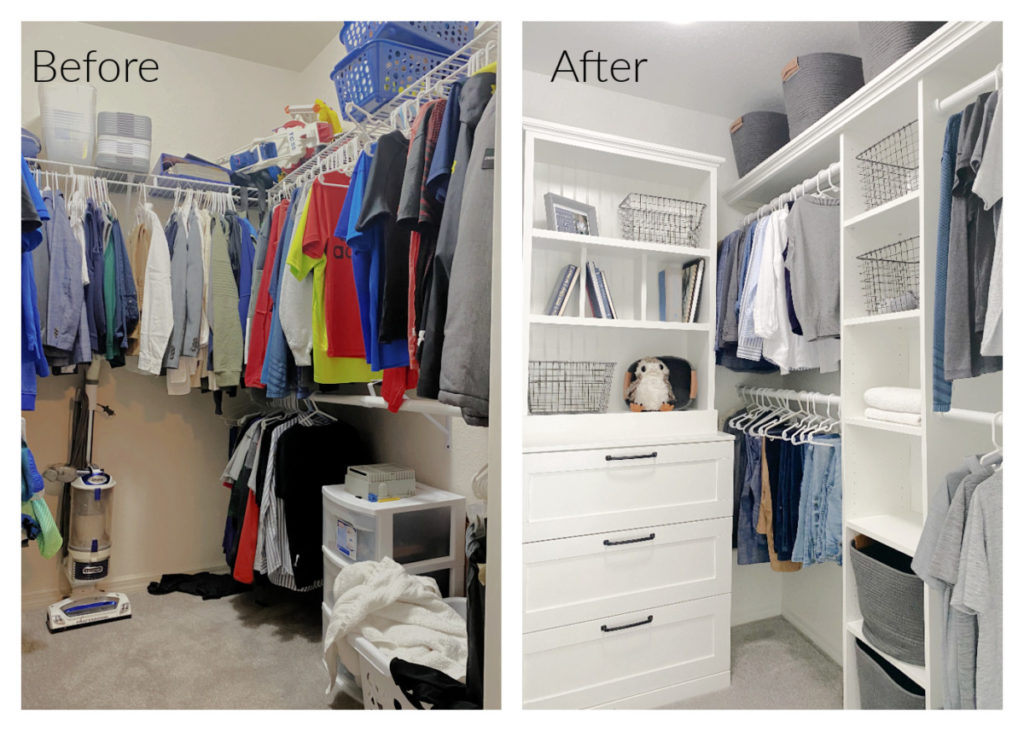
Alright, let’s dive in and see what we are working with. Here it is, my kids closet. As you can see it came complete with the trademark builder grade wire shelving. I utilized as much hanging space as possible, but slowly random pieces of furniture slowly migrated into the closet giving false hopes of order…

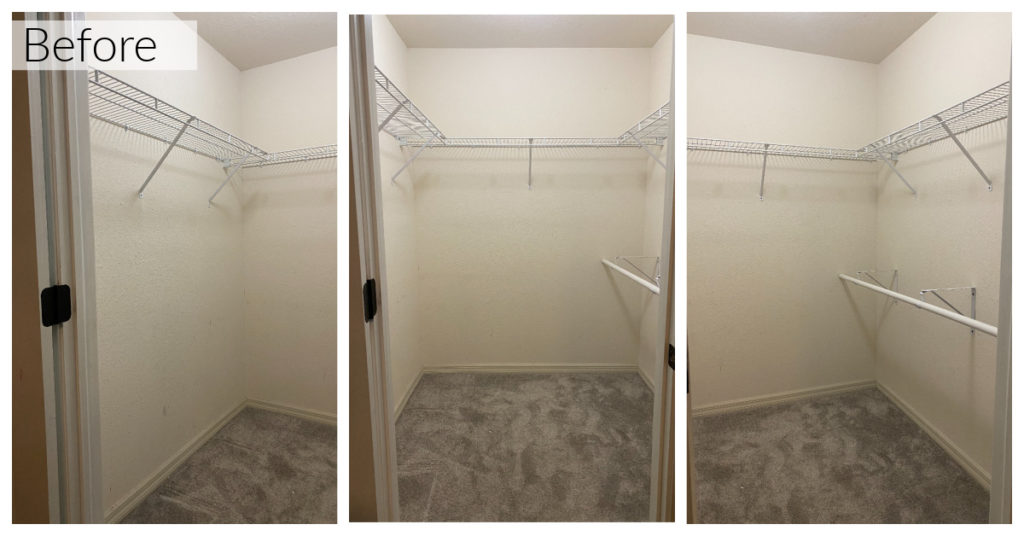
Where to begin? Time to clear everything out and really see what we are working with. After emptying the contents of the closet I was amazed how much bigger it felt when the floor was clear. *Note to self, do not line the bottom of the closet with bins and totes after this Kids Closet Makeover.*

Remove Existing Closet Shelving

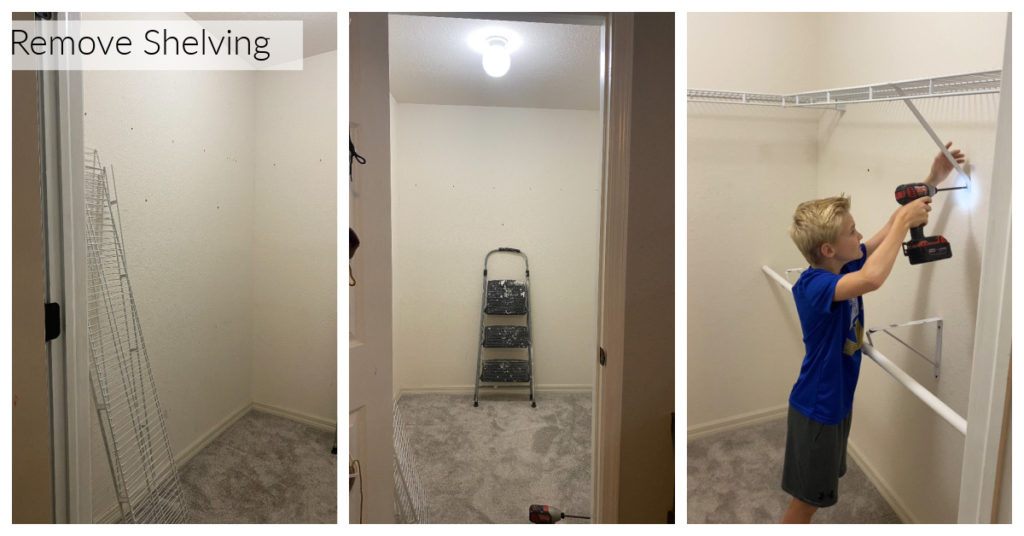
Now that the closet is empty it’s time to take it one step further. I needed a blank canvas; which means the wire shelving has got to go! Removing wire shelving is a fairly straight forward process. Actually, I simply handed my 10 year old son a drill and he figured it out all on his own.

If he can do it, so can you! Contractors use all sorts of securing methods, odds are they probably use mollies. No worries, when you remove the brackets and mollies they will leave sizable holes, but no worries that is an easy fix!

Repair and Fill Holes

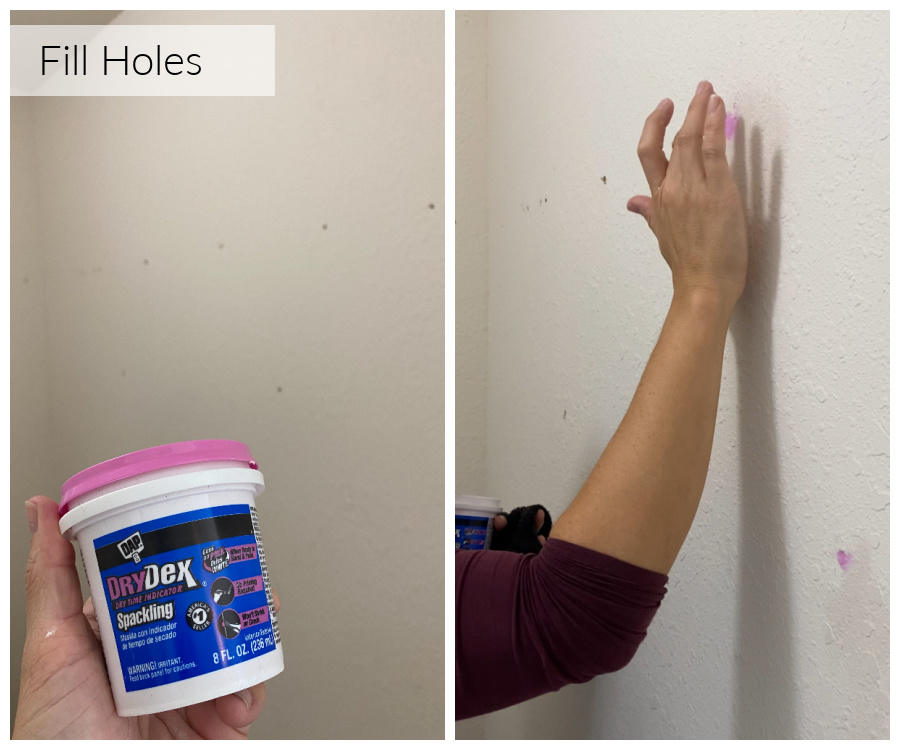
After all the shelves are removed it is time to repair the damages. I promised it was an easy fix and I make good on my promises. All that is needed to repair the many holes left behind is some DAP DryDex Spackling.

Rough Surfaces

I have several methods I use when filling holes. In this case I am filling holes on a very textured surface. When I have a textured surface I try to apply the spackling directly into the hole using my finger. After applying the spackling I use my finger tip to smooth out the spackling while trying to mimic the wall texture. This particular spackling is perfect for this application because it won’t shrink or crack! Added Bonus: It has a built in timer, it goes on pink and turns white when it is dry.

Smooth Surfaces

When repairing smooth surfaces I apply DryDex Sparkling more liberally, knowing that I will sand the surface to get a smooth, perfect match.

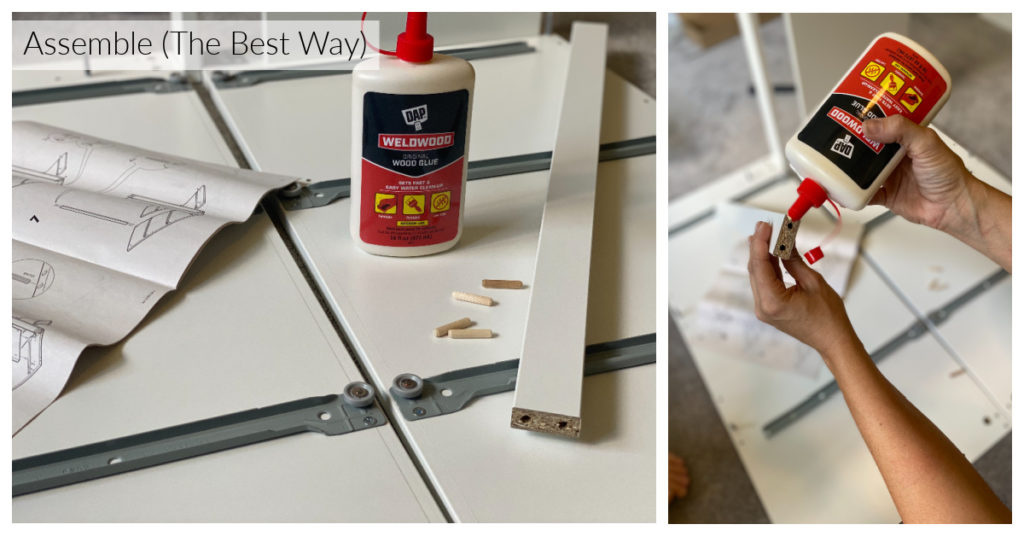
Assemble Ikea furniture (The BEST way.)

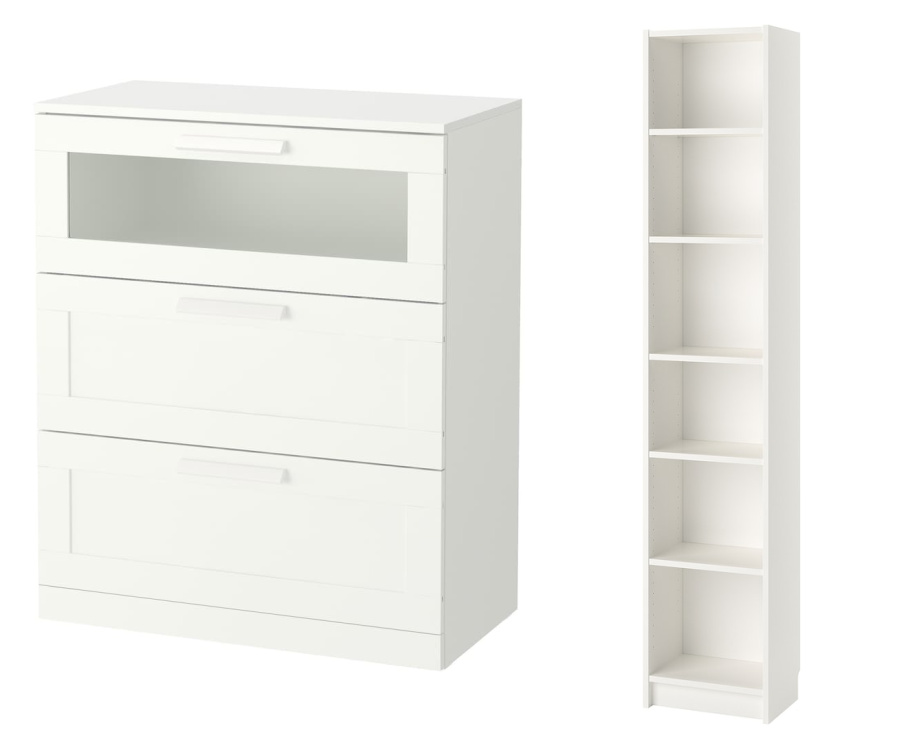
Now that everything has been removed, it is time to add more function and hopefully a little bit of aesthetic qualities. If you have been following my DIY journey then you KNOW I normally build everything. Well, today I am going to switch things up and keep you on your toes! For the kids closet makeover I opted to utilize some IKEA options. I selected the “Brimnes 3-Drawer Dresser” along with (x2) “Billy Bookcase“.

Don’t get me wrong, I I don’t have anything against IKEA. They create affordable furniture options that can fit nearly any budget, however when it comes to stability they simply aren’t as rugged as homemade. However, I have a little trick that will give these inexpensive Ikea pieces some added strength.

IKEA furniture utilizes locking bolts and wooden dowels to joint their furniture. Well, in the shop I always glue up my furniture, it only makes sense that I would give the same advantage to pre made furniture. I suggest using DAP Weldwood on all of the dowel rods and along any of the exposed MDF joints. Apart from this one added step, follow the IKEA assembly manuals as directed.

Custom Shelves

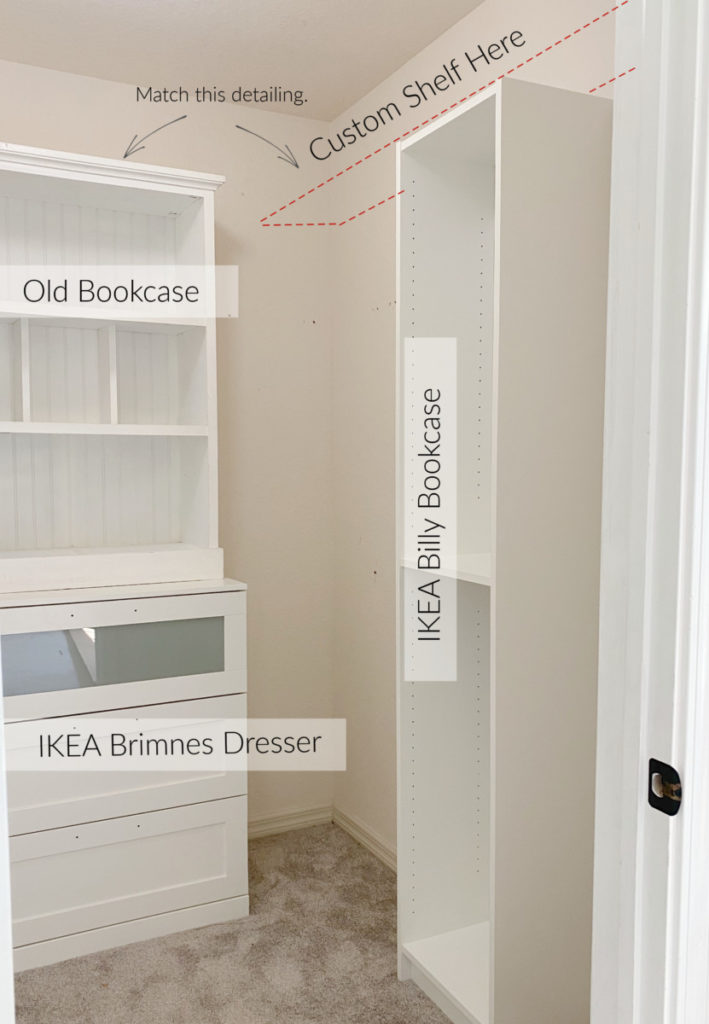
At this point we have two tall thin IKEA bookcases, a dresser and an old bookcase. All of these components by themselves are fine, but it felt a little disconnected. However, what if we were to create some simple custom shelving that would make the bookcases look like built-ins while also matching the old bookcase?! Sounds like a winning idea, right?

Kids IKEA closet

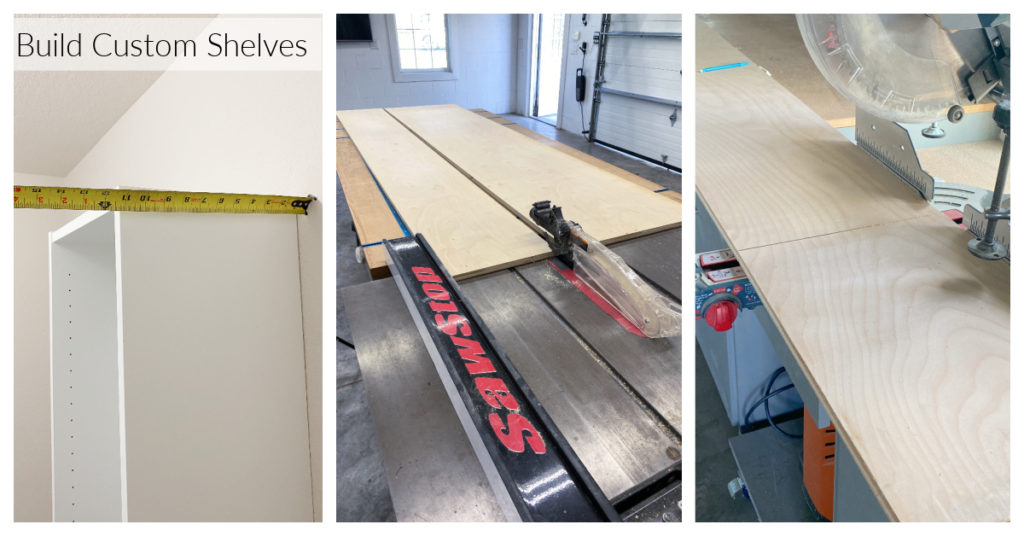
Cut Shelving

Let’s get started. First, I measured the depth and the length of my desired shelves. I opted to make my shelf hang about an inch past my book cases. ( I cut my shelves 13′ wide, and measured from wall-to-wall for my length dimension.)

I wanted my shelving to have a nice finished edge. In order to accomplish this I banded the front edge of my plywood. If you are interested in learning more about applying edge banding you can check out my tutorial here.

After banding the front edge I was ready for the fun part! Adding character to the space. A great way to make any furniture piece look custom is by adding some decorative molding. In this case I wanted to mimic the trim work on my existing bookcase so that it would look cohesive.

Support Closet Shelving

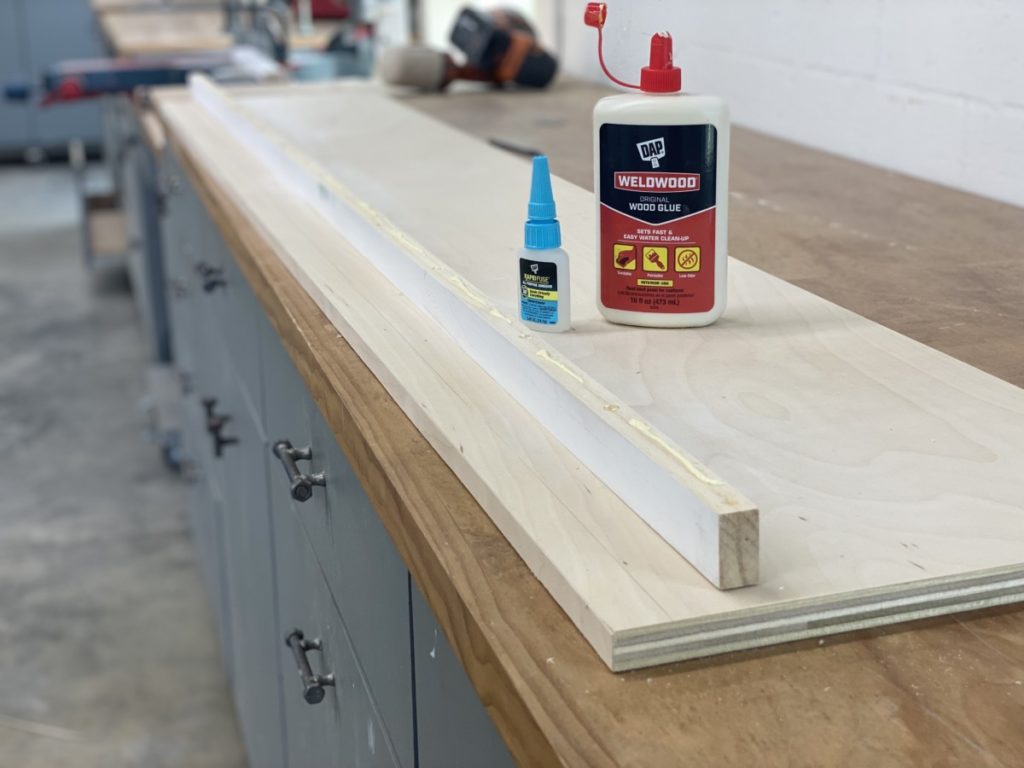
The first thing I needed to add was a primed 1×2″. The 1×2 would not only duplicate the trim on the bookcase it would also add support to the shelf edge. One of my favorite shop hacks is using DAP Weldwood and Dap RapidFuse in a morse code style application. The combination is remarkable. The RapidFuse holds instantly (within 30 SECONDS) and the Weldwood Wood Glue will cure and create a permanent continuous point of contact.

Add Decorative Trim

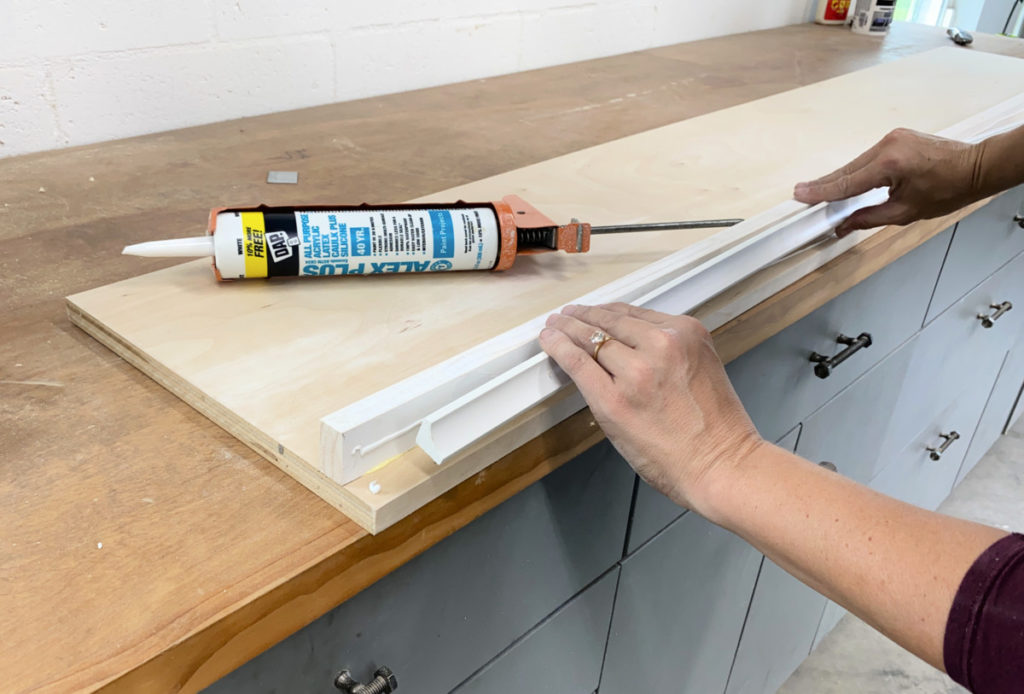
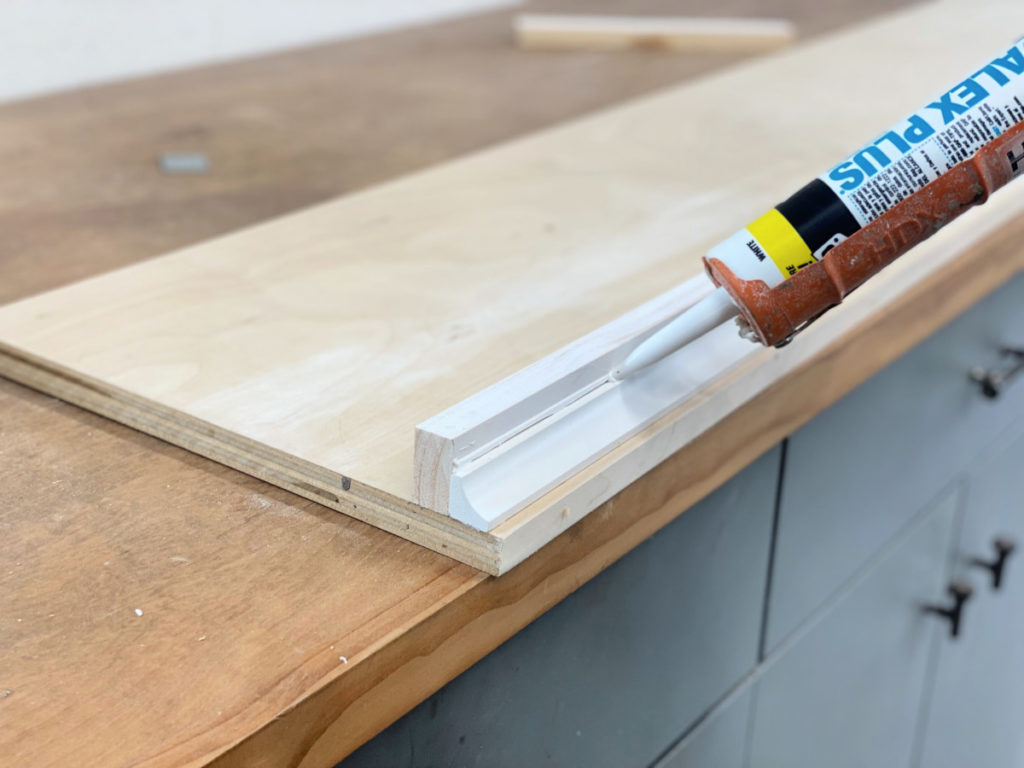
Next up? Decorative trim. I love using PVC “inside corner molding” to add a little bit interest. It is easy to work with, reasonably priced, and paint-able. Winning! Another great thing about PVC is how easy it is to install. It is flexible and in my experience doesn’t require fasteners. I have used it for many applications, and my method of choice is Alex Plus caulk. Yup, it works great as an adhesive and I seals the edges for a perfect finish!

Paint

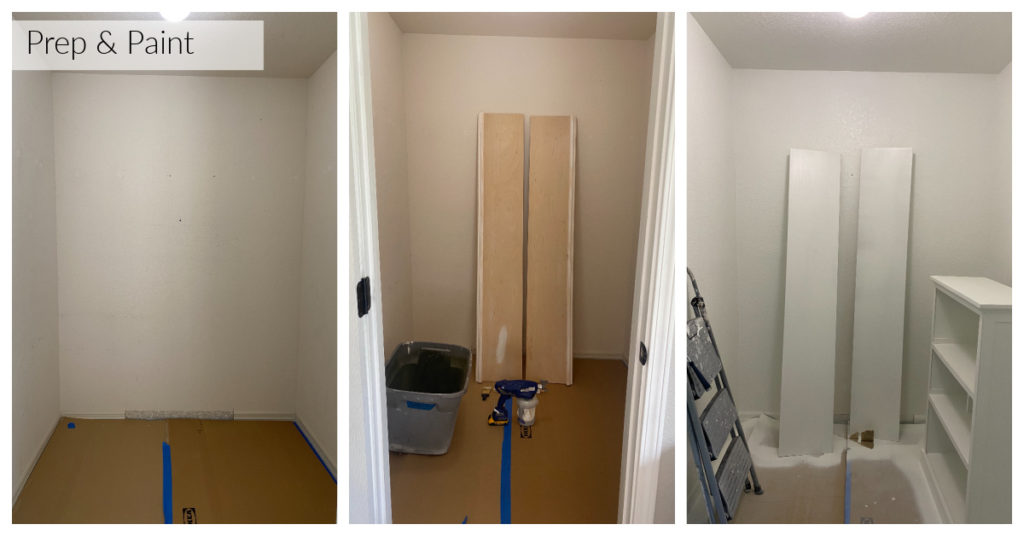
All the walls are repaired and ready for a fresh start . All the bookcases are assembled and ready to be installed. The custom shelves are built and ready for their finish… it’s time to paint! I could have easily painted the room first, but opted to wait until all my pieces were ready so I could paint them all at the same time.

I essentially used the closet as a spray shelter to paint not only the room itself, but also my shelves, and give my old bookcase a fresh coat of paint.

Now, you may be wondering if my old book case will match my new IKEA dressers and bookcases? Valid question. I definitely wanted everything to match seamlessly and give the appearance of custom built-ins. In order to accomplish this I simply had Sherwin Williams color match my Ikea furniture. Easy peasy.

Bring In the Units

This is my favorite part, when you start to put things back together instead of tearing things apart! After the paint was dry I brought my bookcases and dresser back in and started installing. All of the IKEA furniture I purchased comes with brackets to secure the pieces to the wall.

Combine Dresser and Book Case

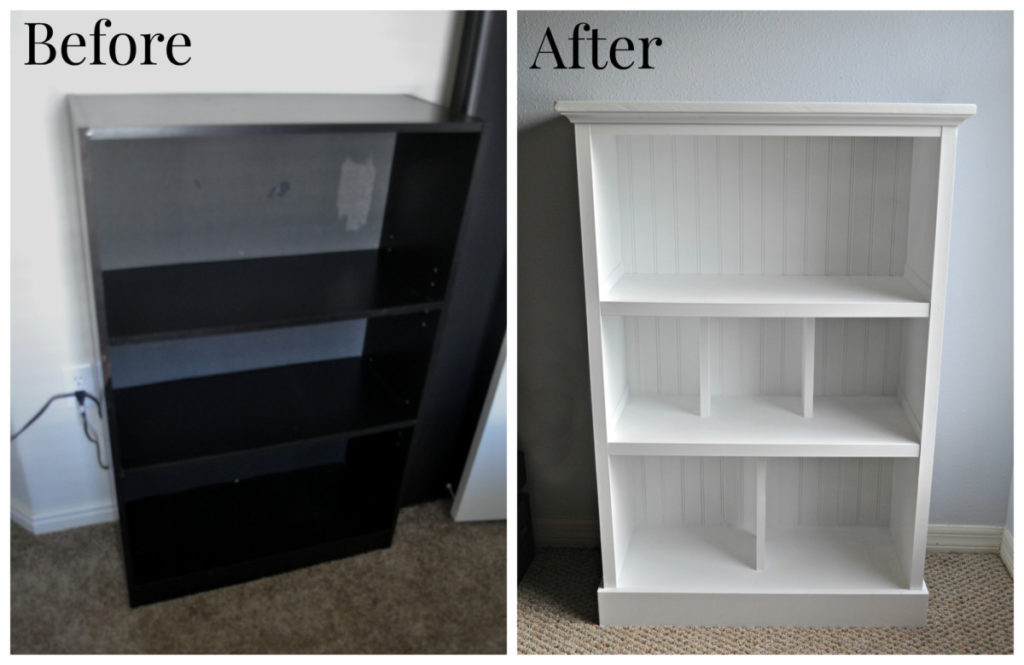
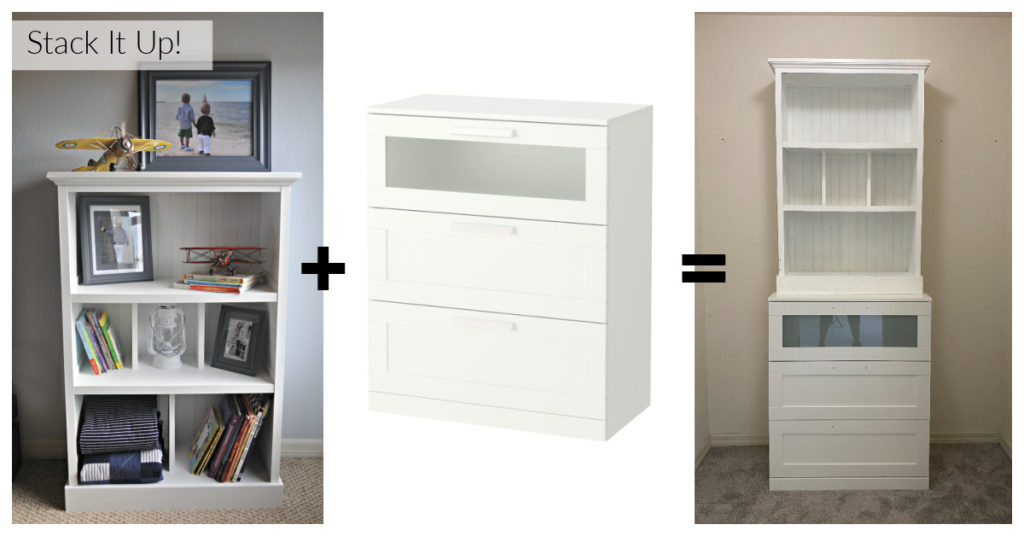
Do you ever have one of those ideas that makes you feel super smart. This idea just so happens to be one of mine. As I previously mentioned, I had an existing bookcase that received a makeover nearly 9 years ago. Well, that bookcase has moved all over the country and ended up in the back of my kids closet. Instead of kicking it to the curb I decided to reuse it in the kids closet makeover.

The bookcase was in good condition and a really great size. After looking around IKEA I ultimately found the Bimnes dresser that had the perfect dimensions to be a suitable base for my bookcase. When you combine the two it becomes a super functional show stopper!

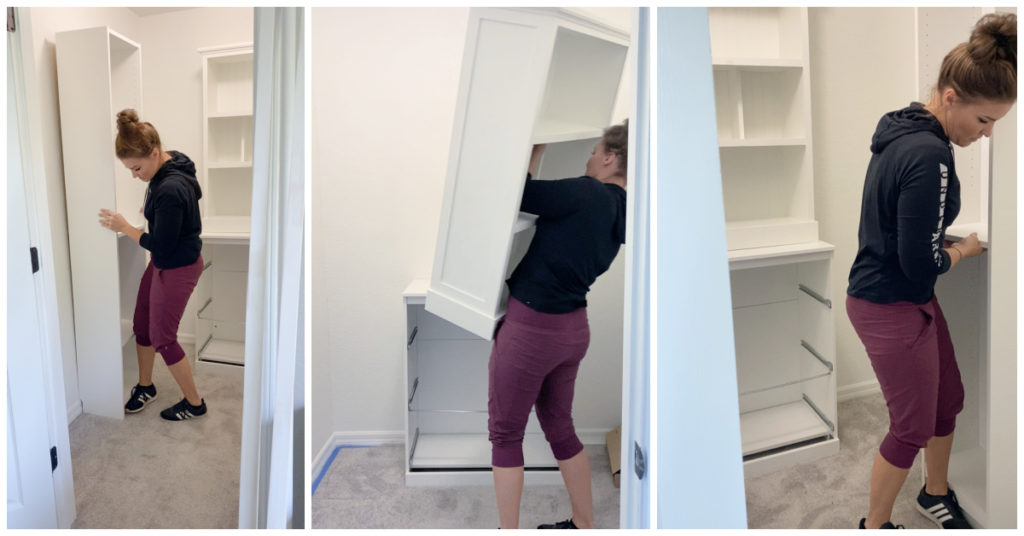
After properly securing the dresser to the wall I stacked my bookcase atop the dresser. Using screws I drilled through the interior top of the dresser into the base of the bookcase. The goal is to have the bookcase permanently affixed to the top of the dresser. After screwing the two pieces together, I then practiced additional caution and secured the upper bookcase to the wall as well.

Install Shelves

Time to install those gorgeous shelves we made! I used a very basic support to hold up the shelves. If you want more details on how to install this type of shelf you can read my full tutorial here.

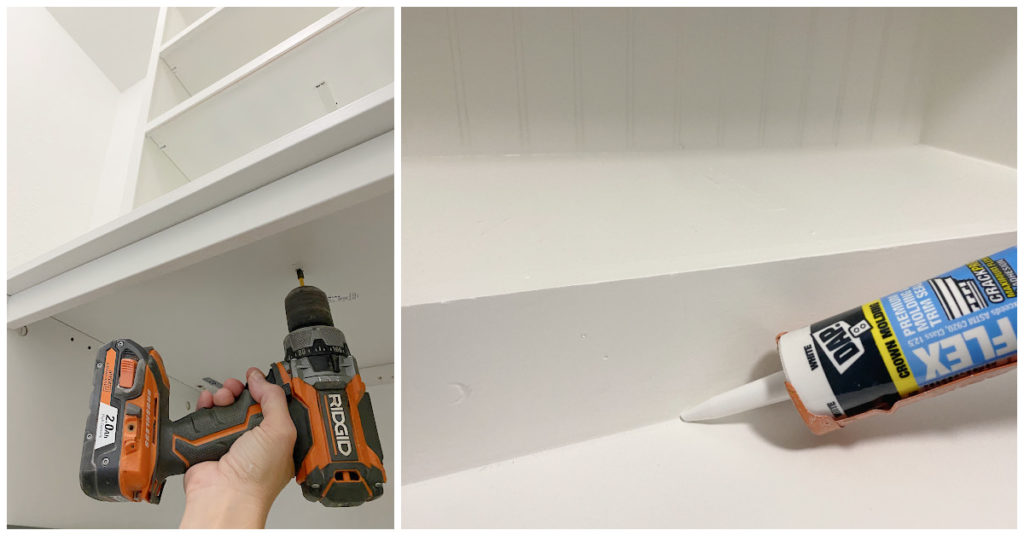
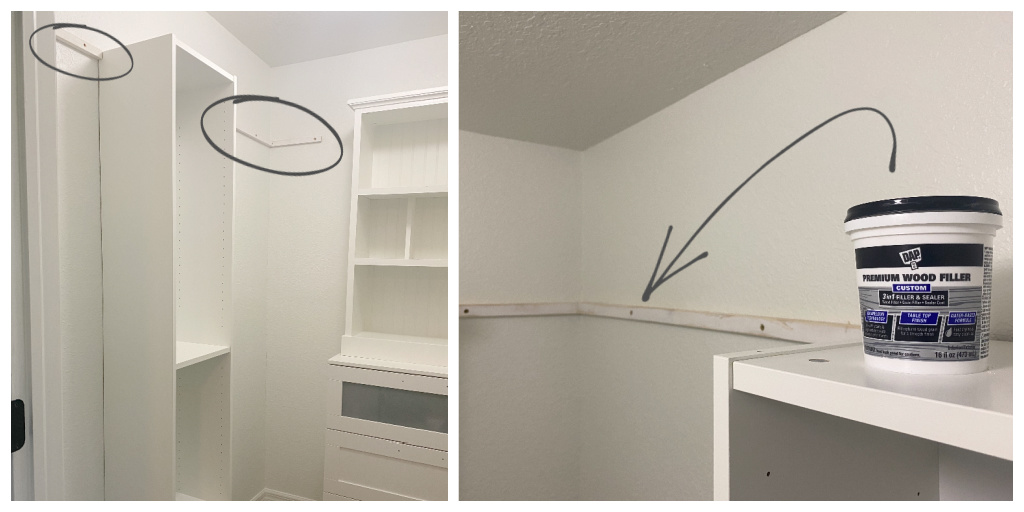
My biggest recommendation for this step is to hide the eyesores. In this case the screws stood out like a sore thumb(s). This is a simple fix, I used “DAP Premium Wood Filler” to quickly fill the holes. Thankfully it dries fast and doesn’t shrink allowing for sanding and painting shortly thereafter.

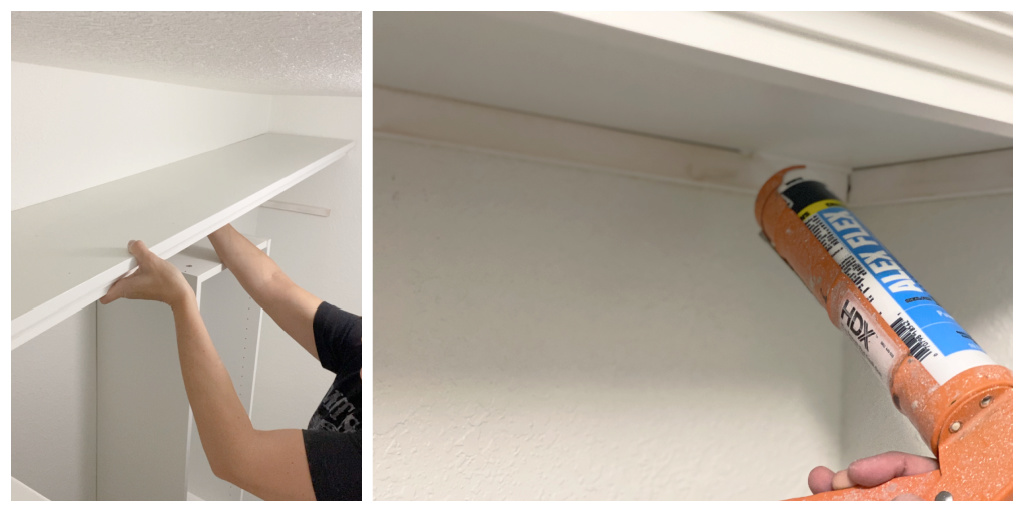
Unify with Caulk

After the supports are installed, and holes are filled and sanded it is time to add the shelf! The supports will create a sturdy base for the shelf, but as an added measure of precaution I also used 1 1/2″ screws to drive through the top of the shelves and into the supports below.

I truly and deeply feel that this shelf takes the random IKEA pieces and unifies them into a custom kids closet. The last thing needed to really create a custom built-in feel is CAULK. Yes, I have said it before and I will say it again, caulk is a stinking miracle worker! It is the magic eraser of the DIY world. Just a small bead of caulk will hide the most unseemly gaps.

As you may know I like to work fast pace so I always opt for “DAP’s AlexFlex”, it’s flexible with a quick dry time allowing for paint in just 30 minutes. Yes please!

Add Clothing Rods

Now that we have the framework for a beautiful closet it is time to add rods. One would think that the rods would be the most simple of tasks. In reality I spent quite a bit of time brainstorming possibilities. Clothing racks hold a lot of clothing weight not to mention the occasional weight of children competing in their own personal Olympics .

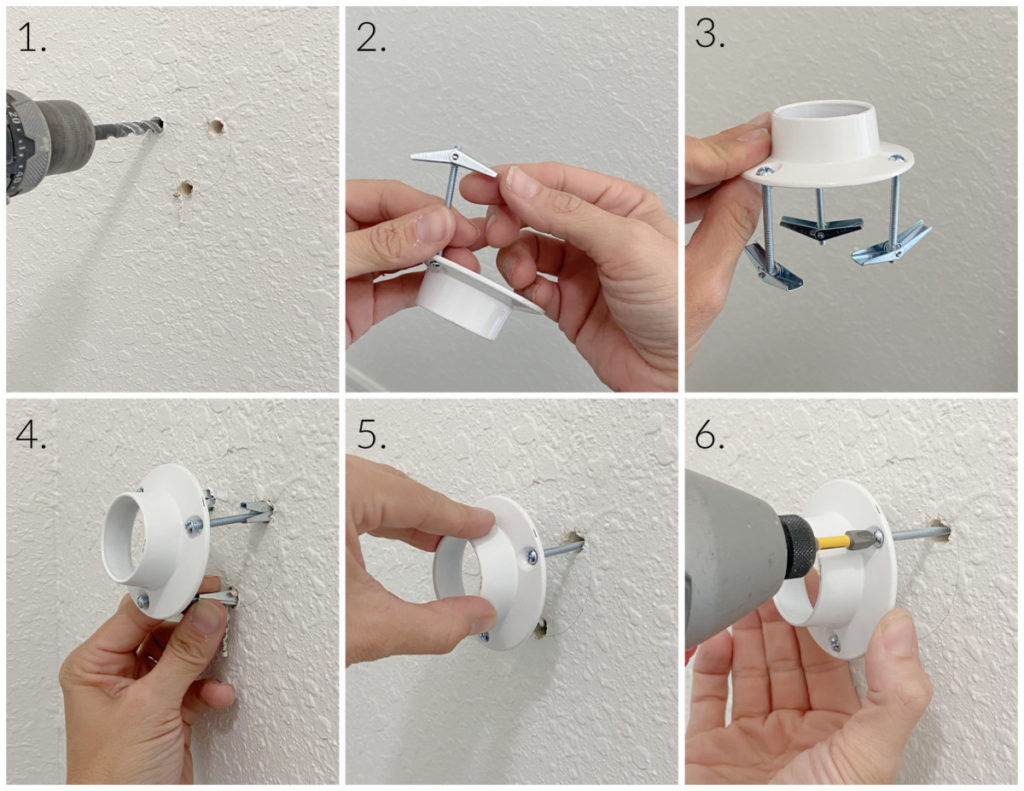
While it is ideal to secure anything that will hold significant weight into studs, sometimes that is not an option. After considering a lot of options I ultimately chose to use toggle bolts and I do NOT regret it! They were perfect for this application.

I used toggle bolts on the drywall and on the inside brackets I secured the rods directly into the “Billy Bookcases” with zero problems.

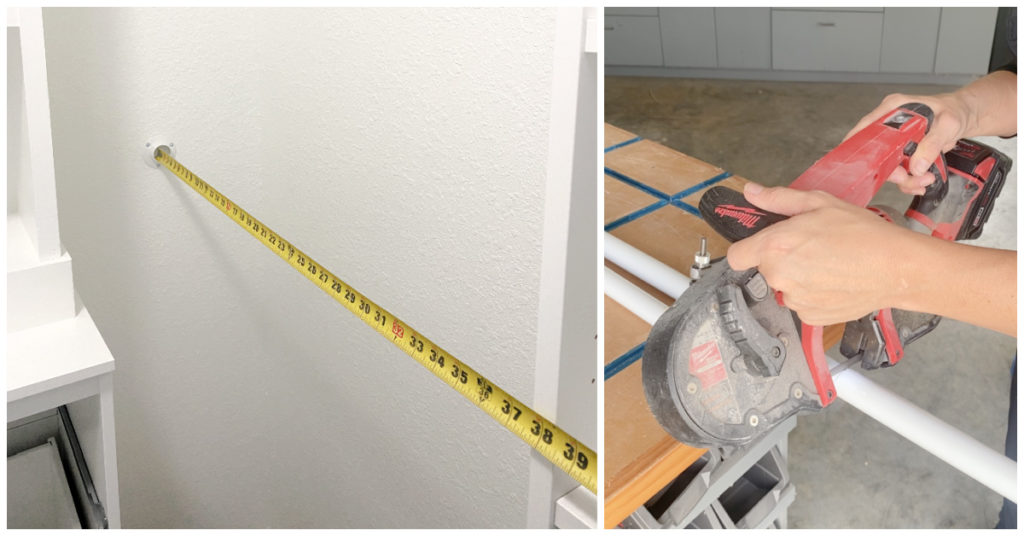
As far as rods… they come in many sizes and materials. However, if you have the option I would suggest using wood simply because they are easier to cut to size. I used metal ones which are easy to cut, but you do need to have a blade that is intended for cutting metal. (Or so it is suggested.)

Add Decorative Baskets

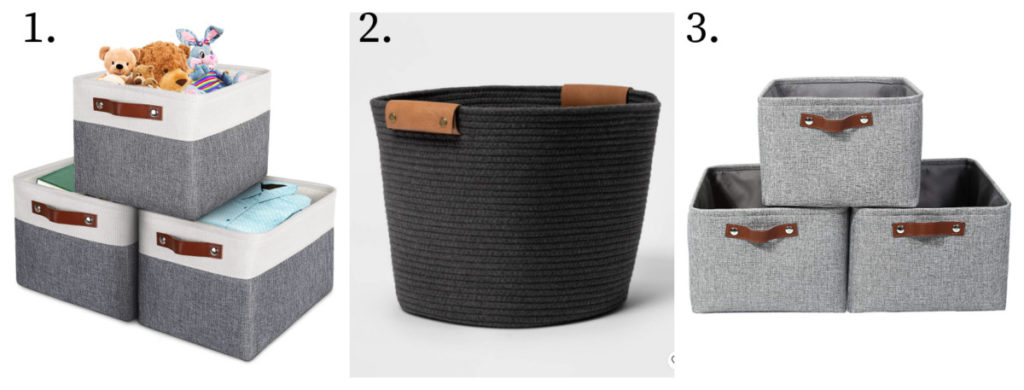
My last suggestion would be adding decorative baskets.  Not only will this bring in aesthetically pleasing uniformity, it will also help with organization! In the design world we lovingly  refer to this as “form meeting function”.   While the “Billy Bookcases” do provide plenty of  sectioned storage, I needed place for hats, socks, underwear etc…  Adding baskets was the perfect solution and added a ton of character to the space. 

 I found that finding baskets to fit the bookcase was a little trickier than I had hoped.  So I did a little research and tried out a few options.   Here are a few that worked well. 

  •  Two-Tone Basket with Leather Detailing
  • “Threshold Could Rope Basket” Target Baskets (No longer available.)
  • Gray Baskets w/ Leather Detailing

Optional Additions*

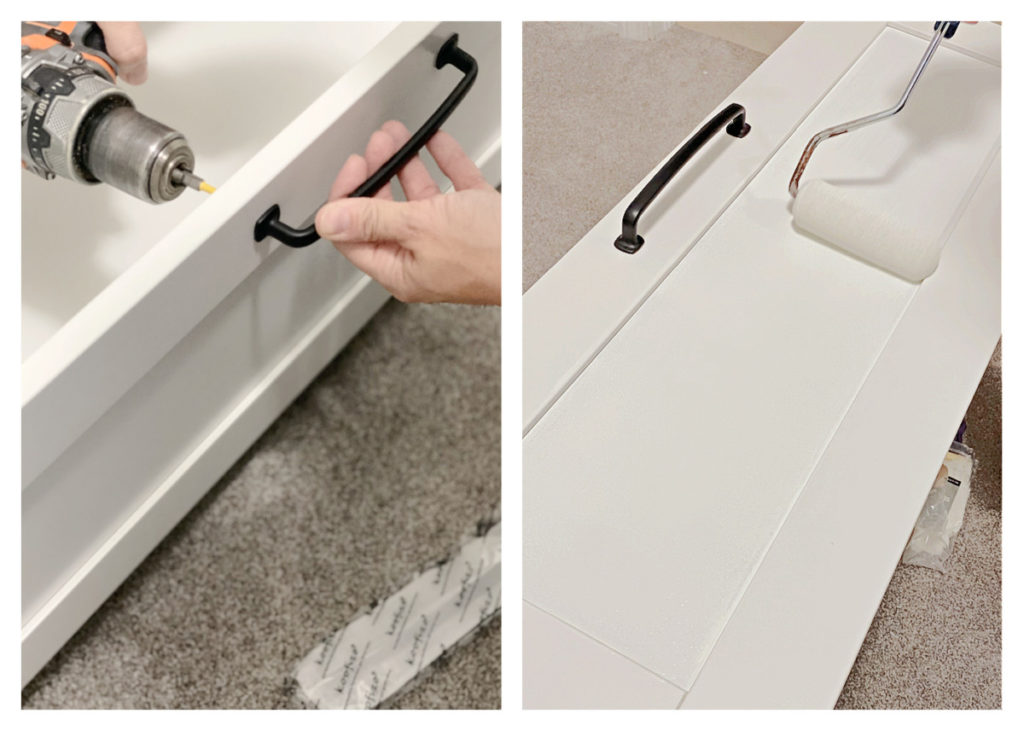
Okay, okay, I promise I am almost done. I made two last minute tweaks and I’m sharing them only because I highly recommend them. if you noticed earlier the “Brimnes Dresser” has an odd-man-out glass panel on the top drawer. I didn’t love it, so I scuffed it up, primed and painted it. No big deal. The last adjustment I made was the dresser pulls. They originally came with some less than appealing white pulls. We can do better! I swapped out the white for these fun new black drawer pulls.

Enjoy Form Meeting Function

Okay, NOW it’s time. It’s time to take back the closet and HOPEFULLY regain as much peace as you possibly can during your early morning run for the bus. 🙂

Who would have ever thought that just a few pieces of IKEA furniture and a hand-me-down dresser had so much potential!

Hopefully this helps you on your DIY journey. However,  if you aren’t ready to tackle your closet just yet, make sure you pin the image below to your Pinterest boards for safe keeping!  đꙂ  Thanks so much for following along.

Take Luck,

Corey 

  • previous
  • Page 1
  • Page 2
  • Page 3
  • Page 4
  • Page 5
  • Interim pages omitted …
  • Page 47
  • next

Primary Sidebar

  • Facebook
  • Instagram
  • Pinterest
  • Twitter
  • YouTube
IMG_9167 (1).jpg fd
DIY & Design

Meet Corey

Hi everyone, my name is Corey, and I have a problem. I can’t leave well enough alone… The best therapy usually involves a variety of power tools. So, in the few “spare” moments I am not entertaining my two beautiful, rambunctious, boys, I can typically be found hunched over a sewing machine and/or covered in sawdust. All in the efforts to create a perfect balance of aesthetics and practicality in our home.
read more

Join our mailing list!

DIY & design ideas - right in your inbox!

Featured

Stair Tread Makeover

Categories

  • 70's Ranch Home
  • Around the House
  • Build Plans
  • Crafts
  • Current Home
  • Decor Makeovers
  • Dresser
  • Exterior
  • Fall
  • First Home
  • Furniture Makeover
  • Hidden Compartment
  • Kitchen
  • Lighting
  • Makovers
  • Master Closet
  • Organization
  • R.V.
  • Room Makeovers
  • Seasonal
  • Seating
  • Sewing
  • Shelving
  • Small Builds
  • Smart Home
  • Spring
  • Summer
  • Tables
  • Tablescape
  • Tutorials
  • Uncategorized
  • Wall Art
  • Wall Decor
  • Winter
  • Workshop

Footer

Contact Me: Corey@Sawdust2Stitches.com

Latest ‘Grams

Follow on Instagram
2020 © Your Blog Name
theme by soleilflare
Enter your name and email and get the weekly newsletter... it's FREE!
Your information will *never* be shared or sold to a 3rd party.