• Blog
  • About
  • Press
  • Privacy

Let’s be social!

  • Skip to primary navigation
  • Skip to main content
  • Skip to primary sidebar
  • Skip to footer
Sawdust 2 Stitches

Sawdust 2 Stitches

  • Tutorials
    • Around the House
    • Organization
    • Wall Decor
    • Sewing
  • Makeovers
    • R.V.
    • Room Makeover
    • Furniture Makeover
    • Decor Makeover
  • Build Plans
    • Small Builds
    • Wall Decor
    • Dresser
    • Tables
    • Seating
    • Shelving
    • Hidden Compartment
  • Seasonal
    • Summer
    • Spring
    • Fall
    • Winter
  • Home Tours
    • First Home
    • Current Home
    • 70’s Ranch Home
  • Workshop

Blog

Back of Door Spice Rack

December 10, 2022

*This post is sponsored by Dap and contains affiliate links. *

The back of our pantry door was empty, and I needed a spice rack. This DIY back of the door spice rack was just the ticket.

Tools SuggestedMaterials Used
Eye Protection1×4″ & 1×3″ Primed Boards
Hearing ProtectionNickel Gap Paneling
Sander 180-220 gritRapidFuse All Purpose Adhesive
DrillWeldWood Wood Glue
Sponge Sanding BlockAlex Plus All Purpose Caulk
Pin Nailer (Optional)DAP Plastic Wood All Purpose Wood Filler
Pocket Hole Jig Paint
TablesawSpray Paint (I used Rustoleum Metallic Gold)
Miter Saw 
  

Prep Materials

Mark, measure and cut all materials to specified measurements.
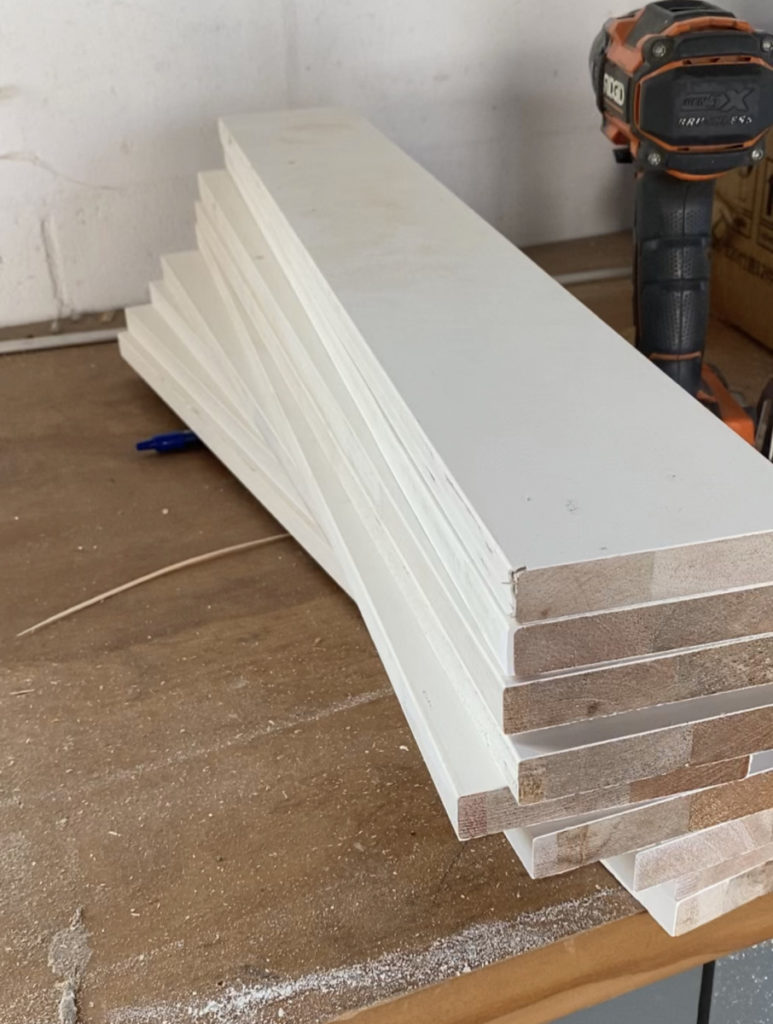
This spice rack includes 1/8″ steel rods. These will serve as holders to keep the spices from falling off the rack. While this rack does require something to hold the cards in place, it does NOT need to be rods. A simple 1×2 primed board would work beautifully too.
Drill Holes

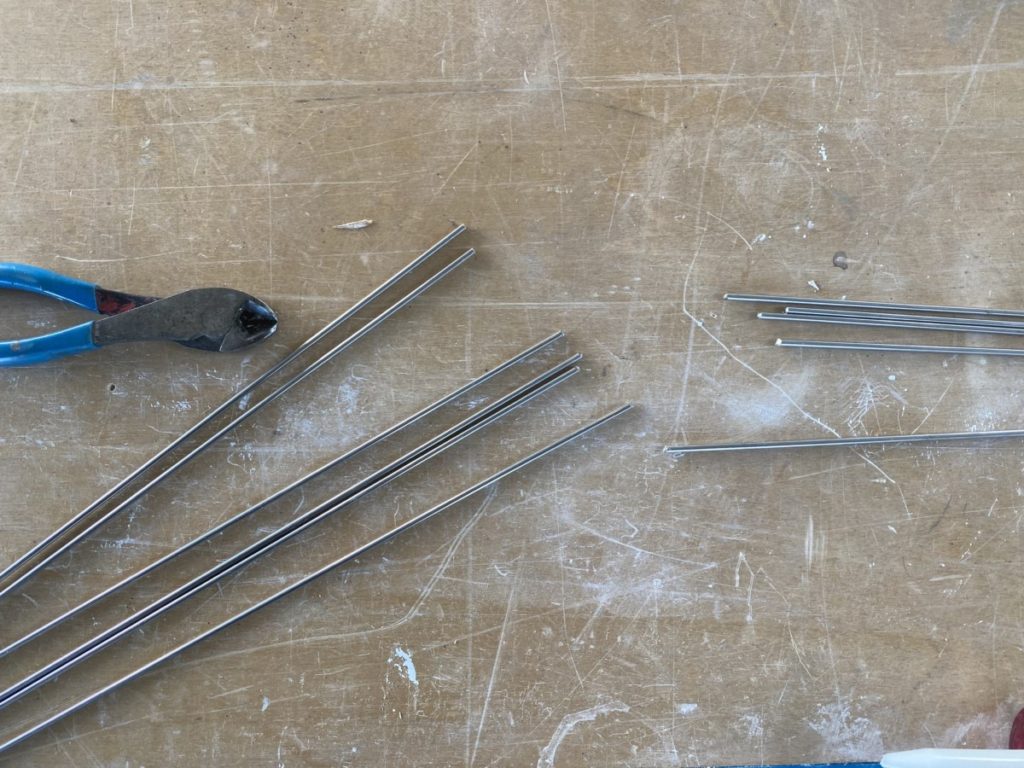
If you are planning to use steel rods, mark and drill holes prior to assembly. Gauge of rod is based on desired aesthetics. I used 1/8″ rod and it made for easy assembly because it had a little bit of flexibility. If you desire a thicker look I would recommend installing rod before assembly.
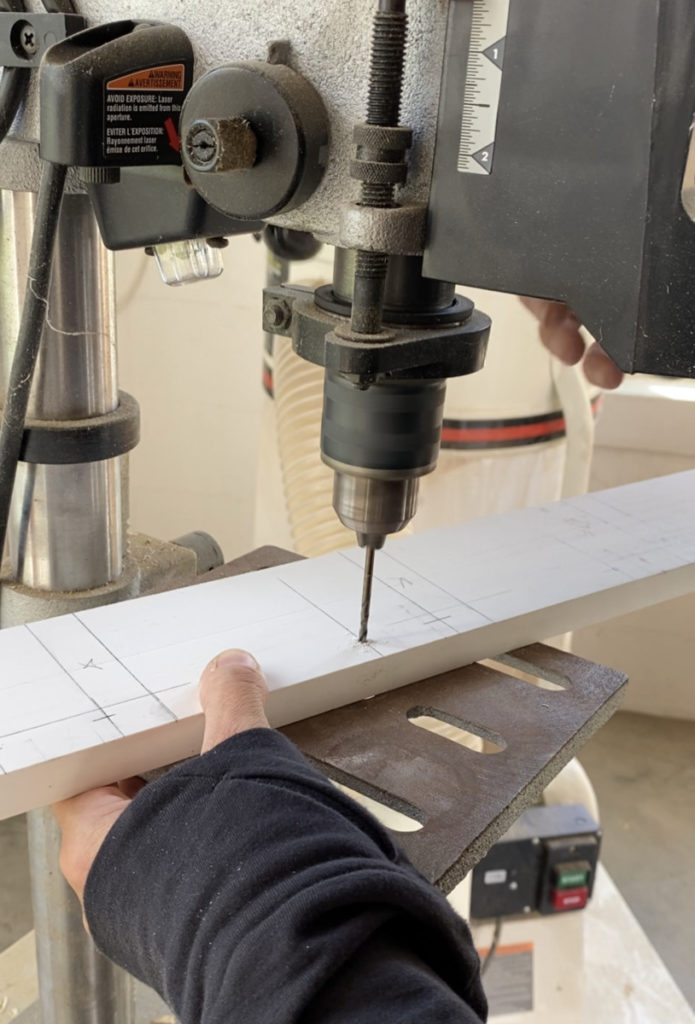
Assemble Back of Door Spice Rack

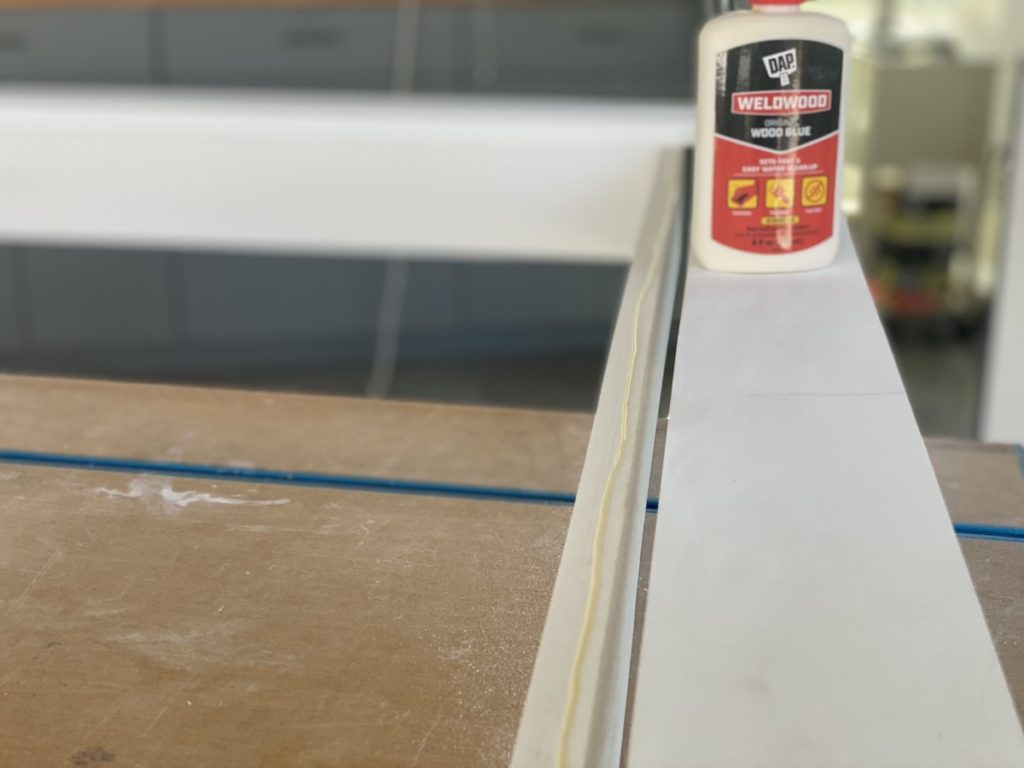
When assembling I always use DAP Weldwood Wood Glue. This rack will be holding a decent amount of weight and I want to ensure it has Weldwood Wood Glue to give it the strength it needs.
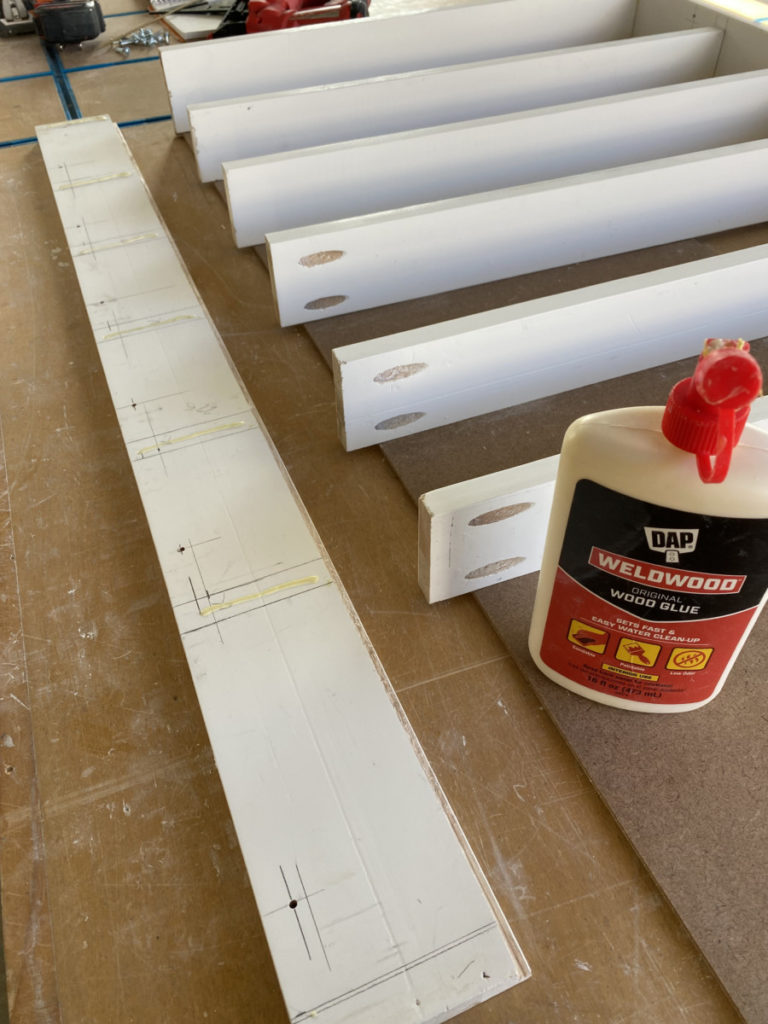
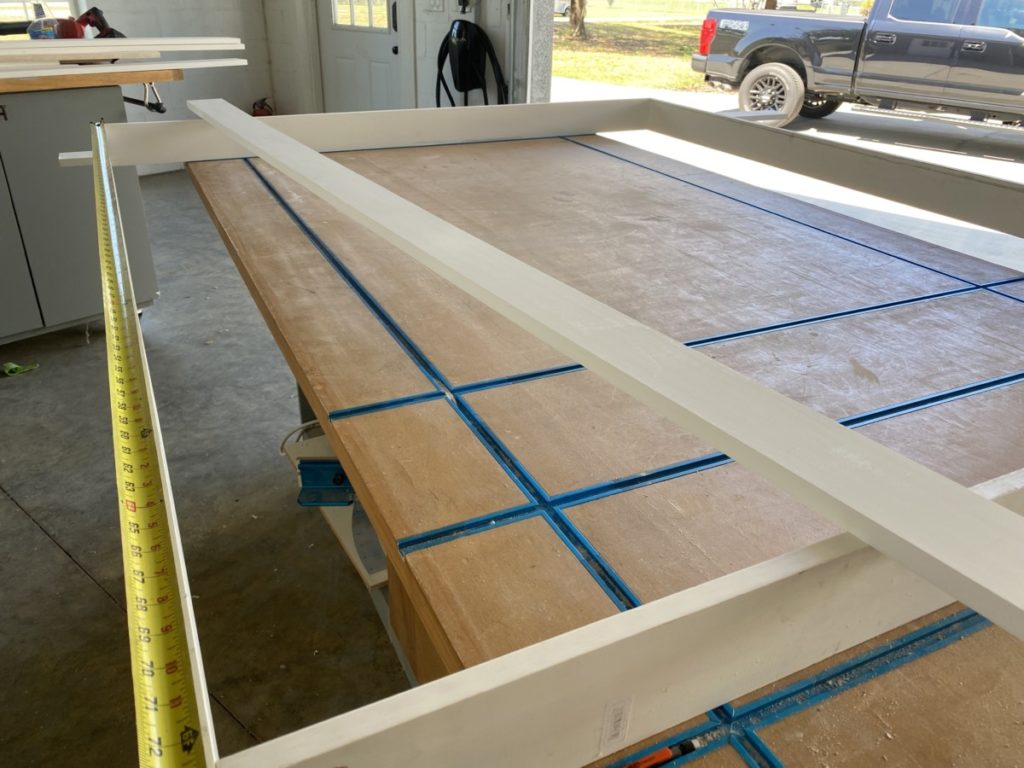
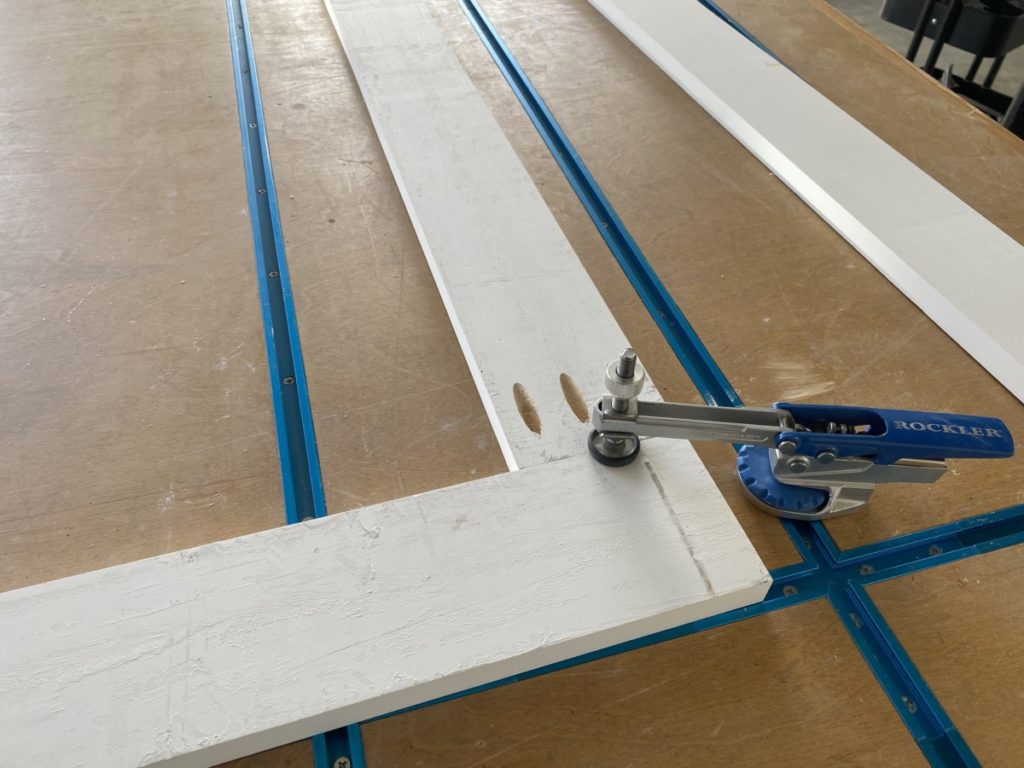
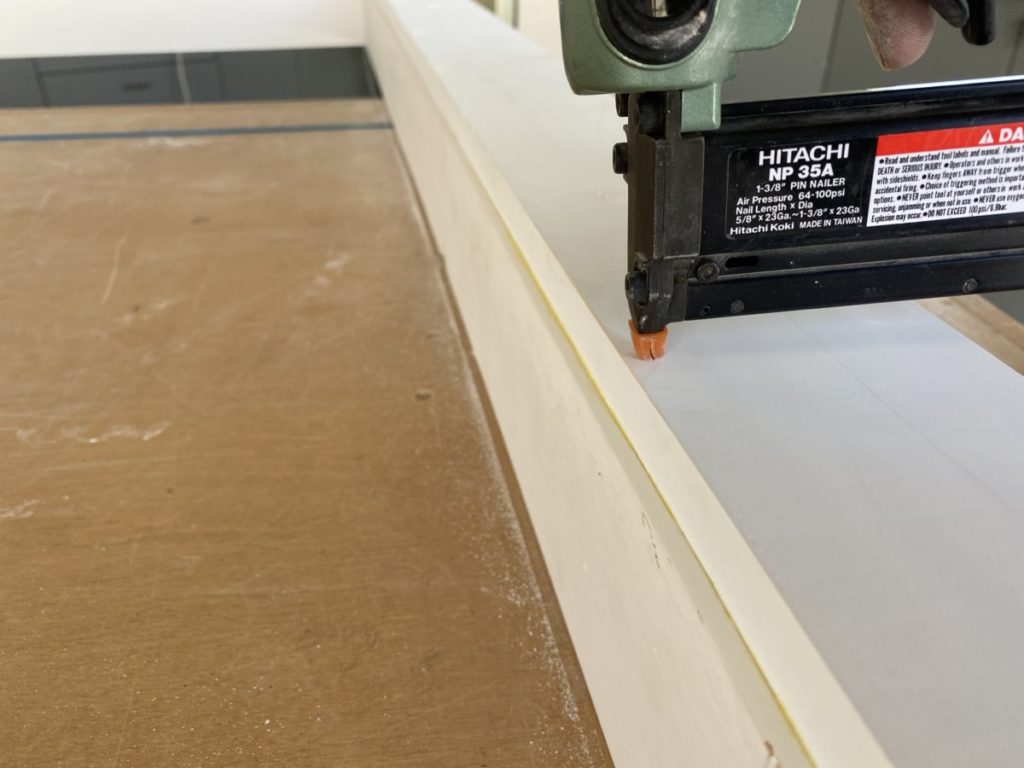
My secret weapon when assembling is Weldwood Wood Glue and a pin nailer. (Even if I am using other forms of fasteners.) I first apply WeldWood Wood Glue and then use a pin nailer to tack in place. The pin acts as a clamp while the wood glue cures , giving me a perfect joint every time.
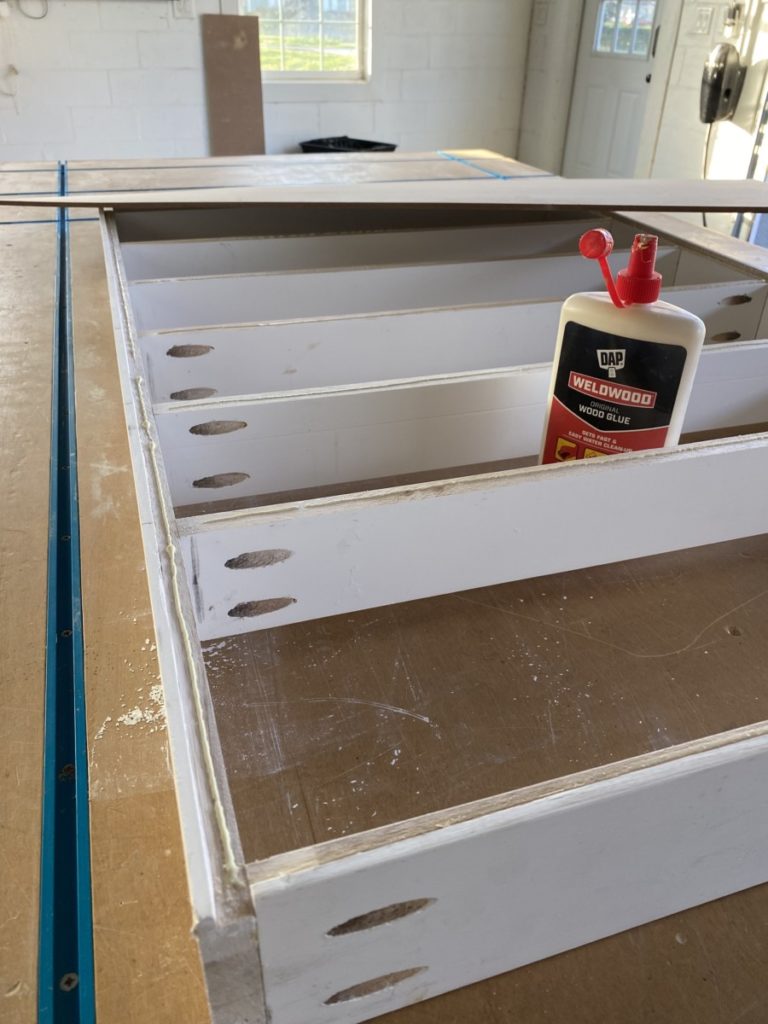
I use the same method when applying the panel backing. I apply a small bead of Weldwood Wood Glue on the back slats and frame, then drop the paneling in place and tack with a pin nailer.

( I routed out the back of my spice rack so that the paneling would not be visible from the side. This is not necessary for functionality of spice rack.)

Prep for Paint

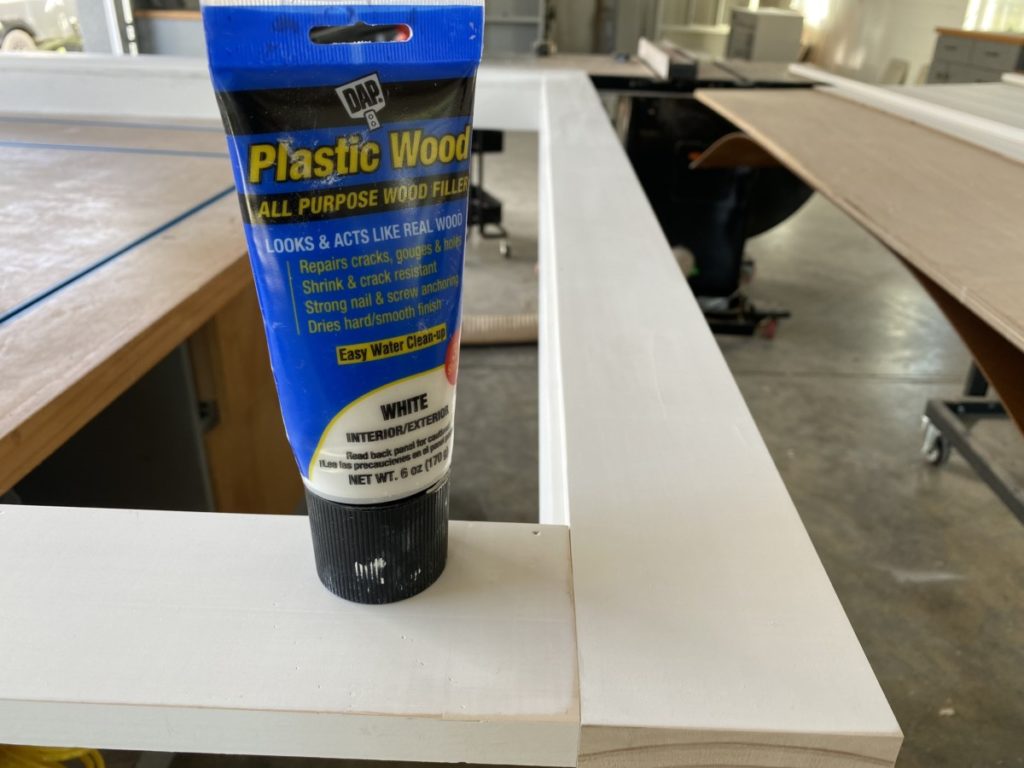
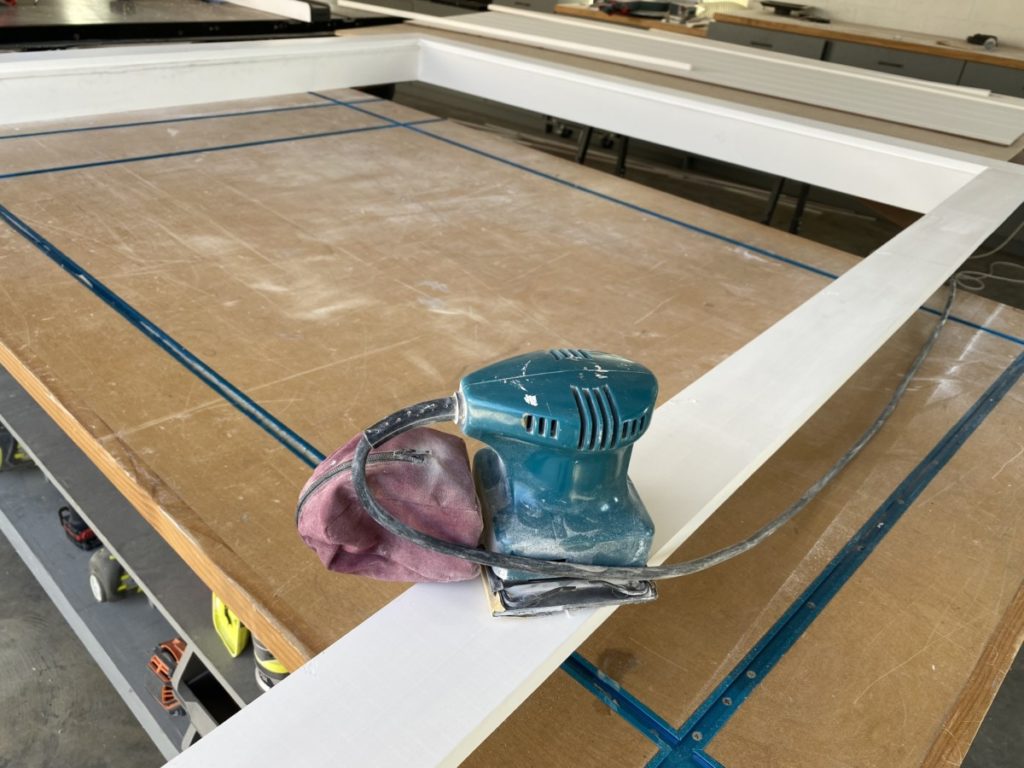
 Before painting I want to make sure this spice rack is flawless in order to do this, I use Dap Plastic Wood All Purpose Wood Filler .   I will fill all pin holes,  joints and if desired pocket holes. Once it is completely dried,  sand smooth with a high grit sand paper. 
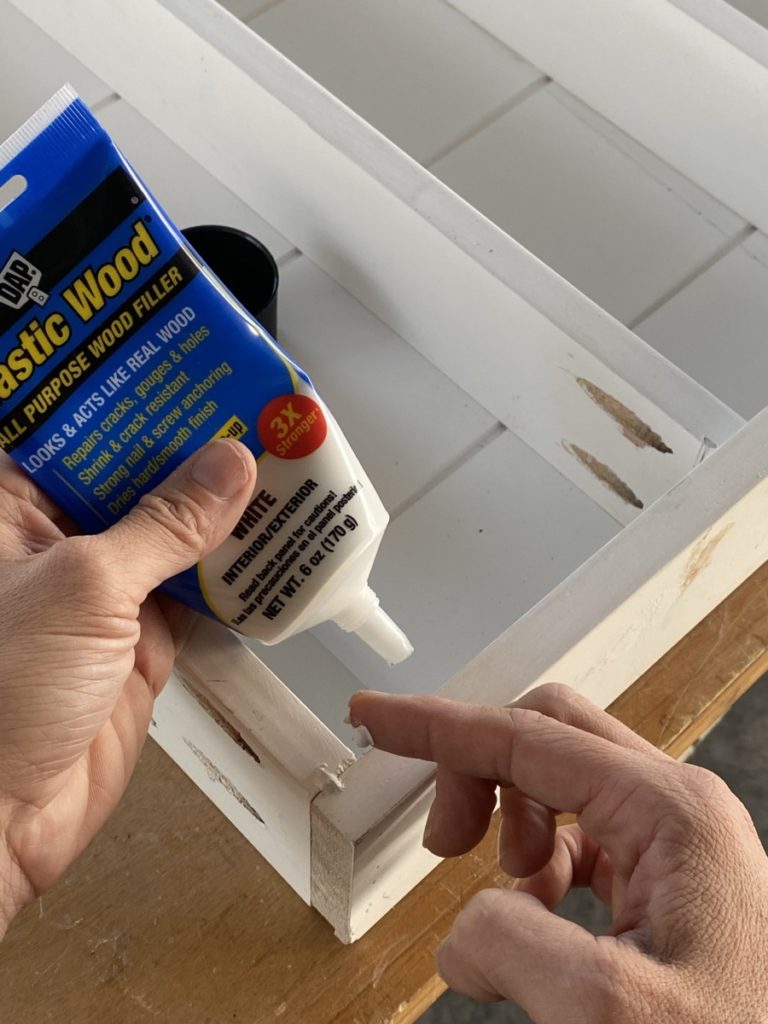
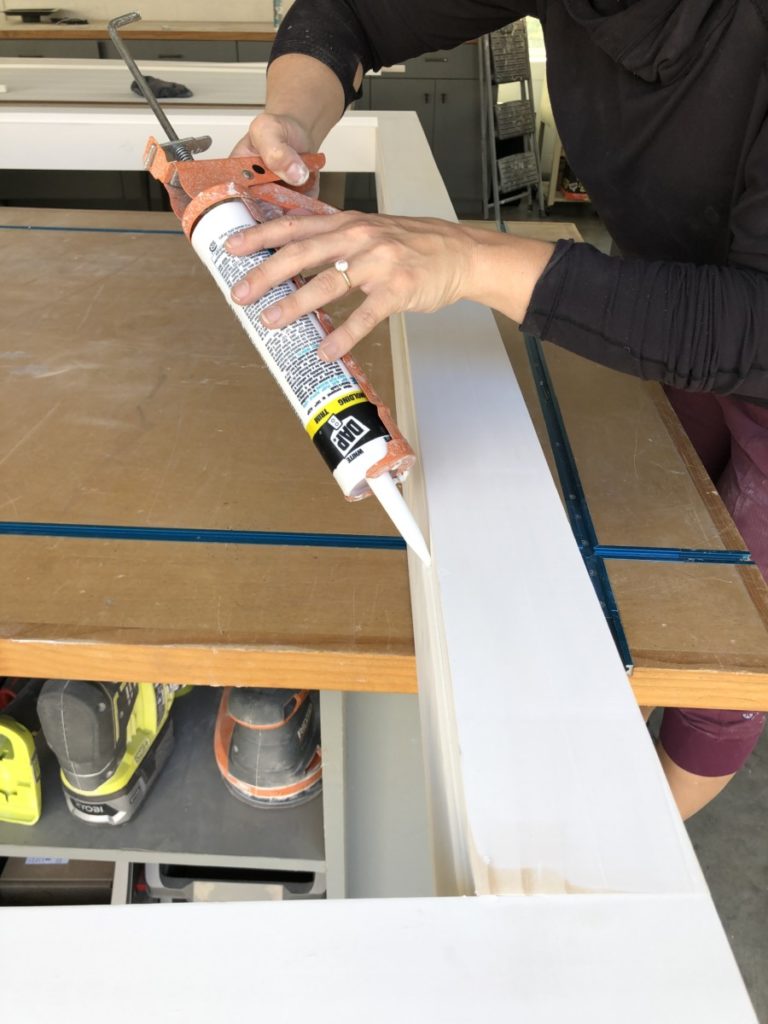
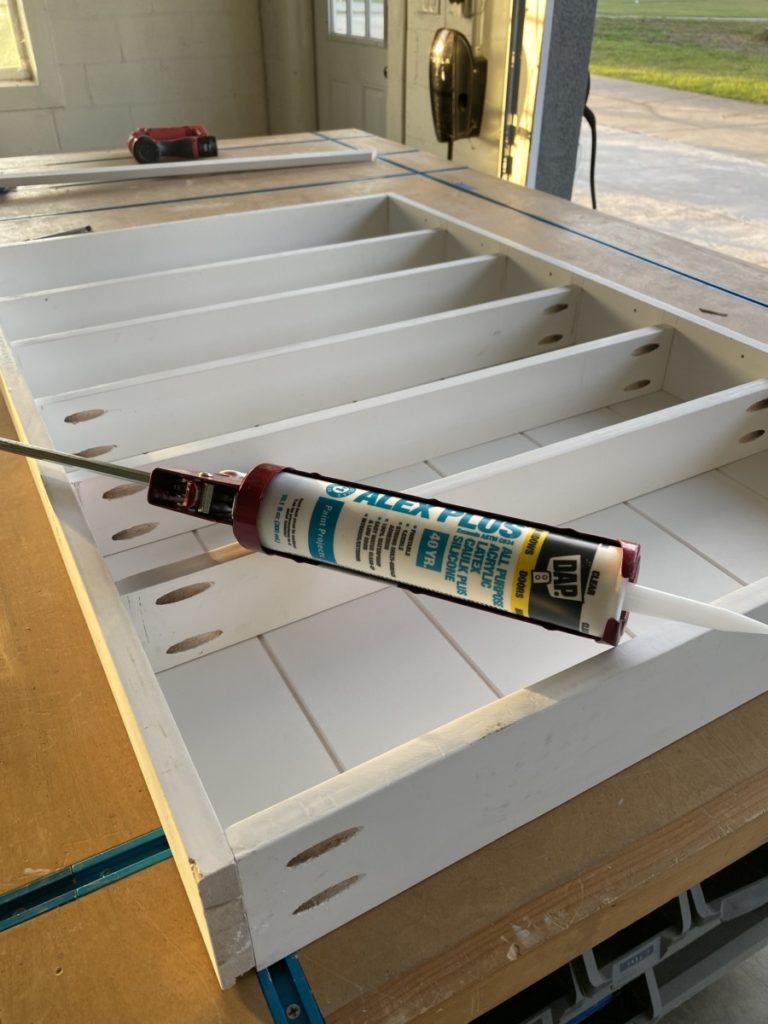
After sanding smooth the entire spice rack it’s time to perfect this build. The best way to make seams completely disappear is using a good caulk. I always opt for DAP caulk, for this project I used Alex Plus All Purpose Caulk. Simply apply a small bead to all seams, smooth, and allow to dry.
Paint Back of Door Spice Rack

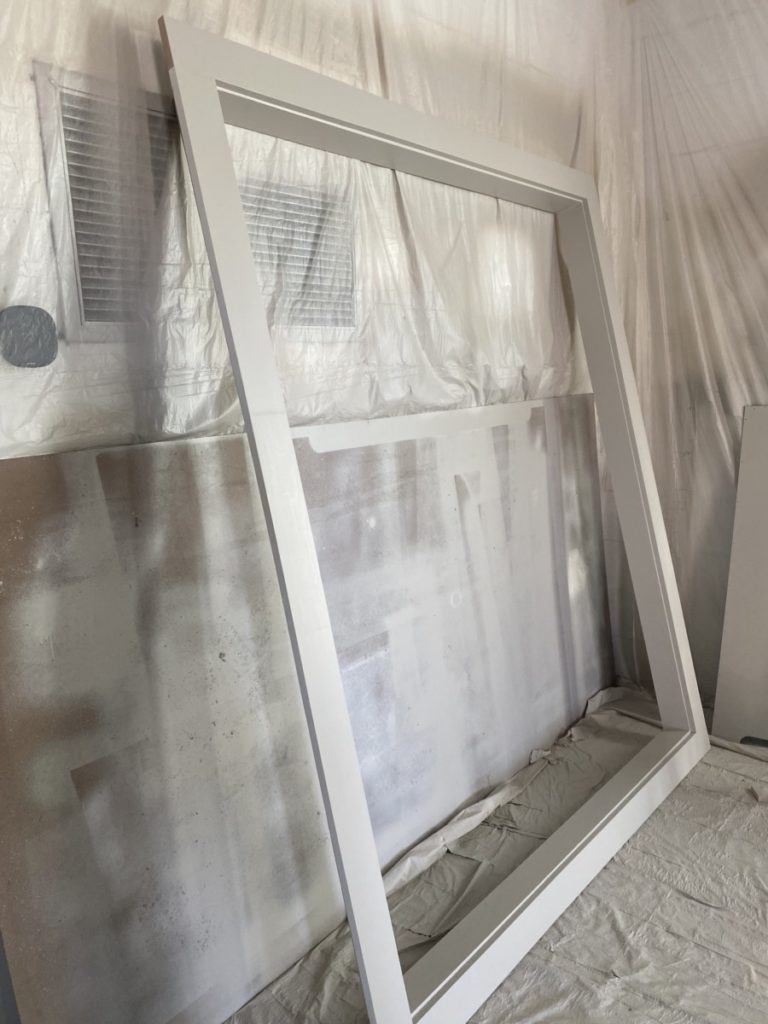
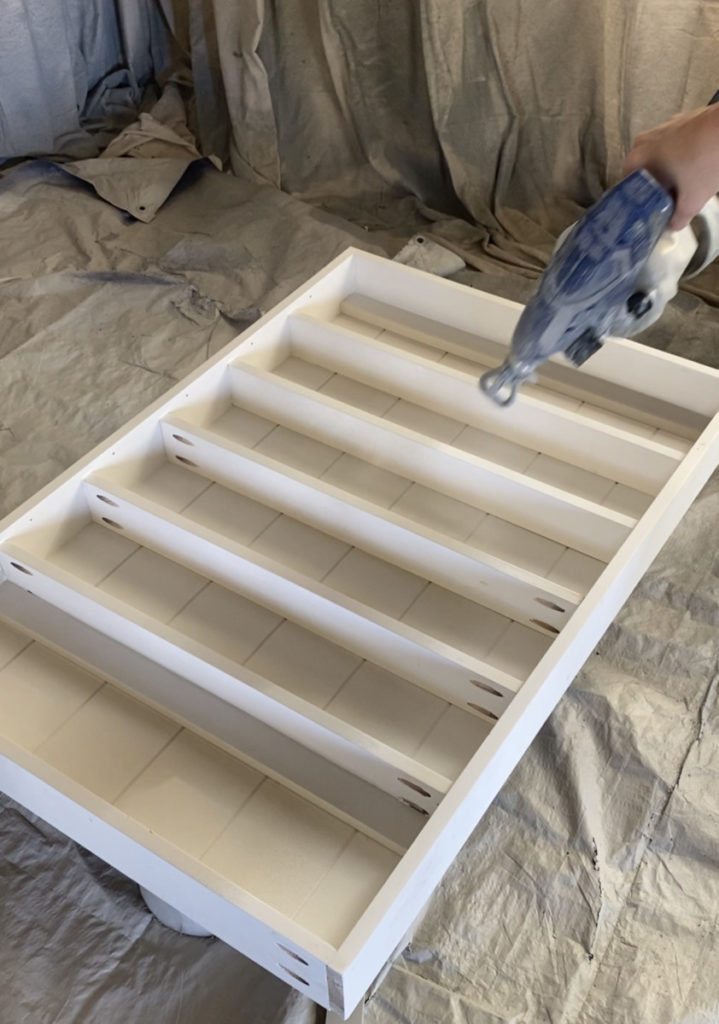
Time to make this spice rack uniquely your own; time to paint! I painted the base of my spice rack “Agreeable Gray” by Sherwin Williams. I prefer to use my Graco TC Sprayer when painting detailed pieces.
I wanted to “spice up” the rods as well. I first primed them using a spray primer and then applied multiple light coats of Rustleoum Metallic Gold Spray paint.
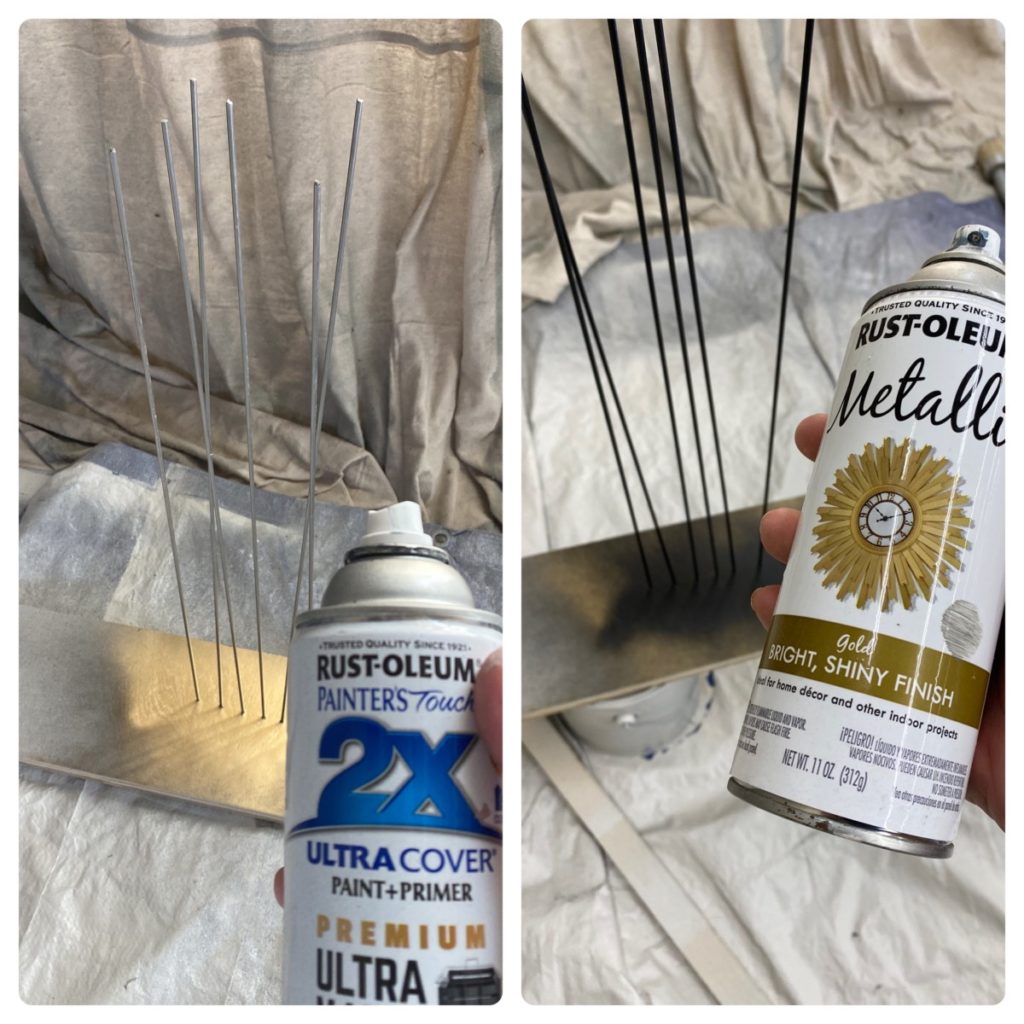
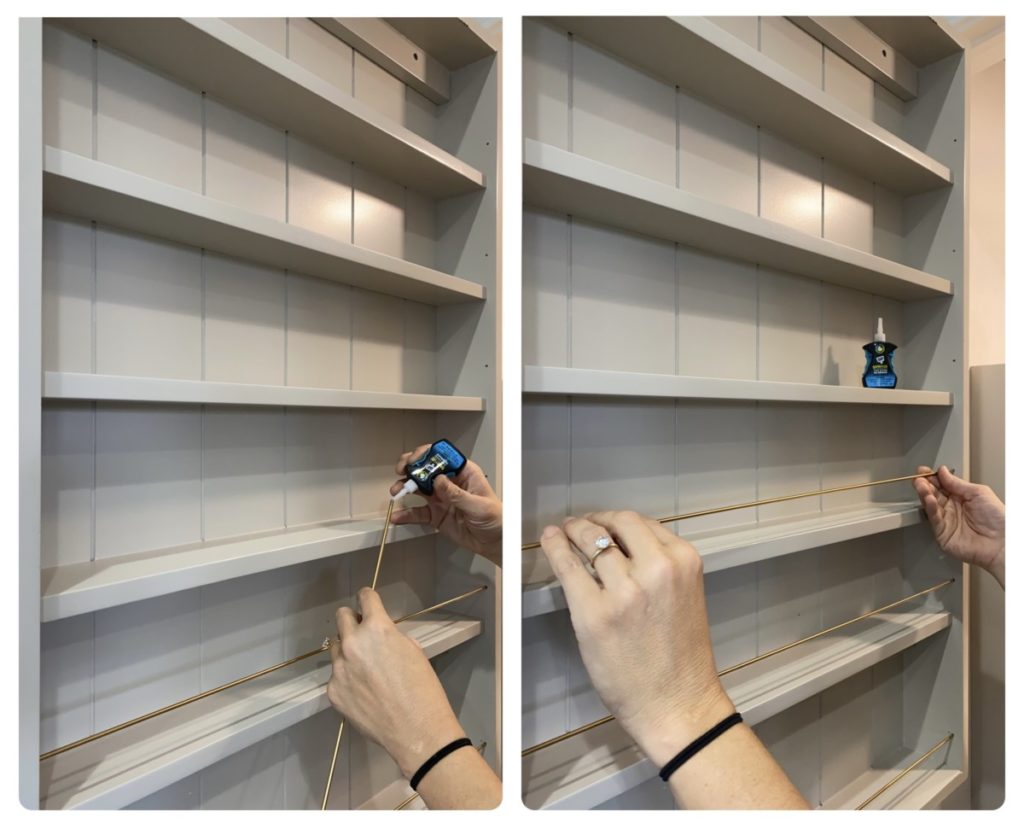
Once bars are completely dry before adding to the body of the spice rack. First I applied a small amount of RapidFuse All Purpose Adhesive, then gently flex and pop the rods into place.

Prep Door

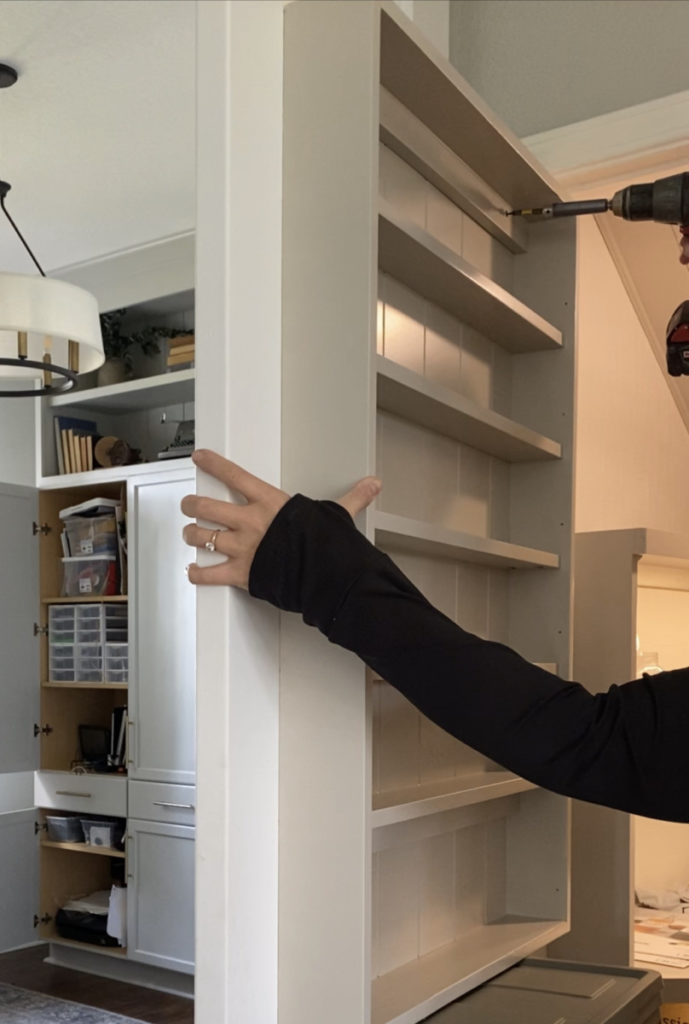
The biggest concern when creating this spice rack was making sure that my door would be able to handle the weight. I love my door, but it’s drop panel design is not ideal for this spice rack. So I made a few modifications!
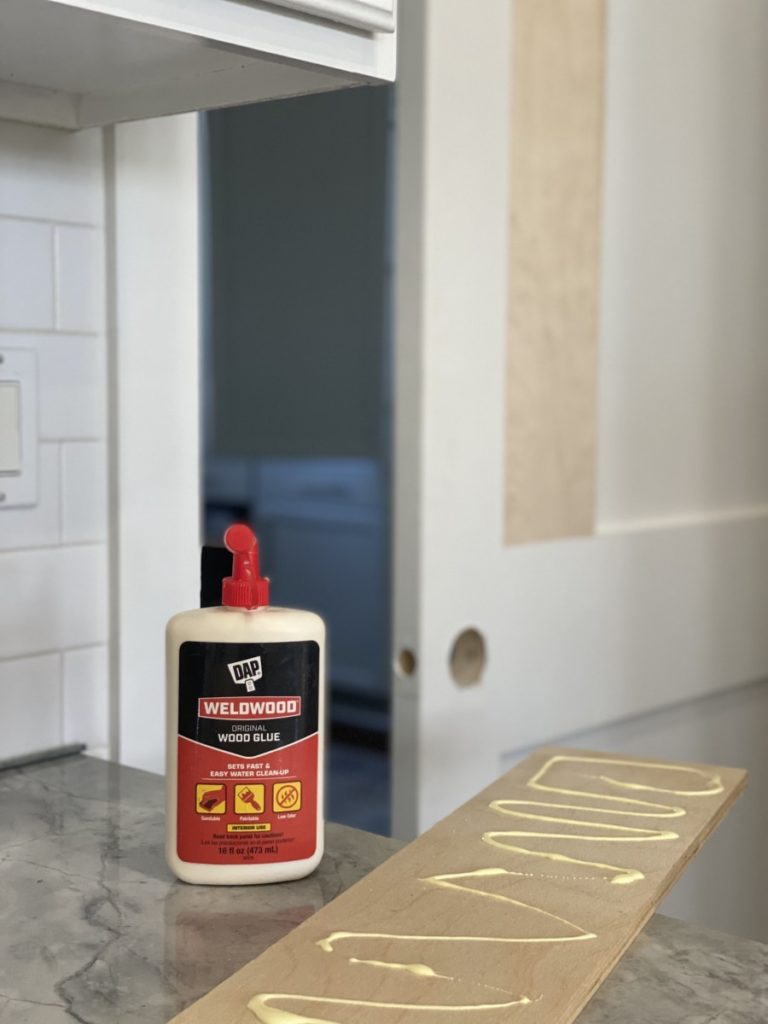
I used Weldwood Wood Glue to attach two 1/2″ boards in the inset space. By beefing up this area and using a GOOD wood glue it would create the perfect support for my spice rack! (Make sure you allow the glue to fully cure before securing spice rack.

Install Back of Door Spice Rack

In order to secure the spice rack to the door I used 1 1/4″ screws along the top and bottom support rails.
the last thing this spice rack needed was a rail to hold the jars in place. In order to place the welding rods in place, I added a small dab of RapidFuse All Purpose Adhesive to the both ends of the rod. Then place one end into the allocated drilled hole, slightly bend the rod so that the other end of the rod can go into the opposing pre-drilled hole. Gently finesse into place. The RapidFuse All Purpose Adhesive will hold the rods snug.
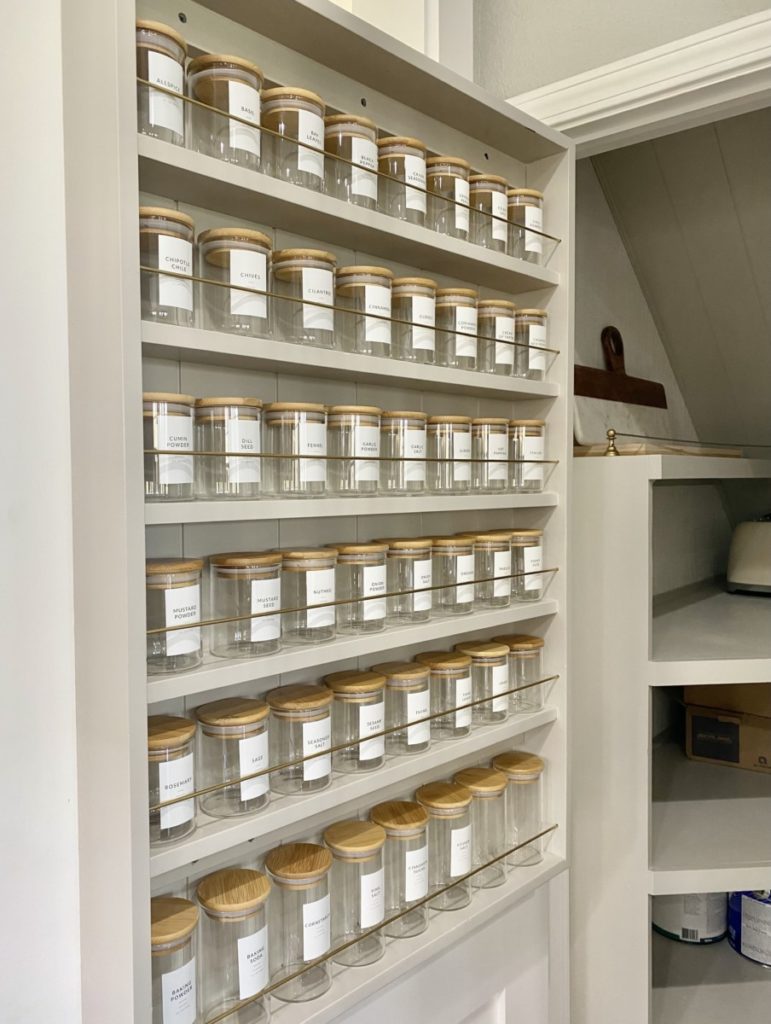
To finish off this custom shelf I added very simple style jars and labels.

Source List:

  • Paint Color-  “Agreeable Gray”  Sherwin Williams
  • Spray Paint- “Metallic Gold”  Rustoleum
  • Welding Rods- Amazon
  • Spice Jar Labels- Amazon
  • Spice Jars- Amazon
  • Rubber Bumpers for Jars- Amazon
 

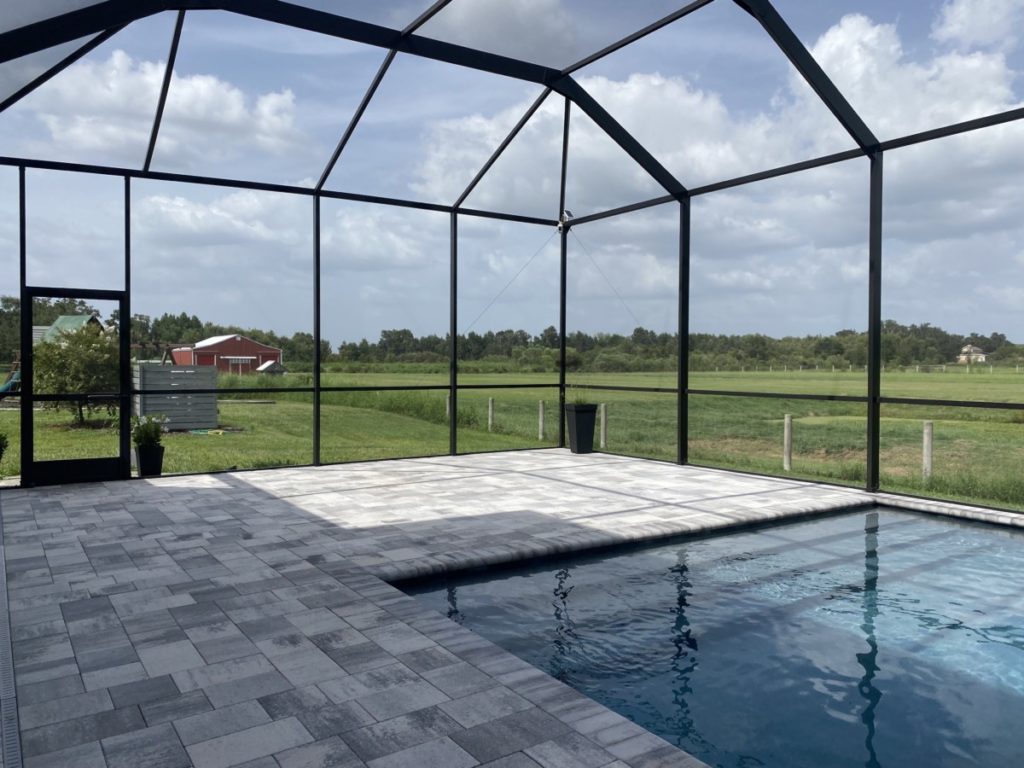
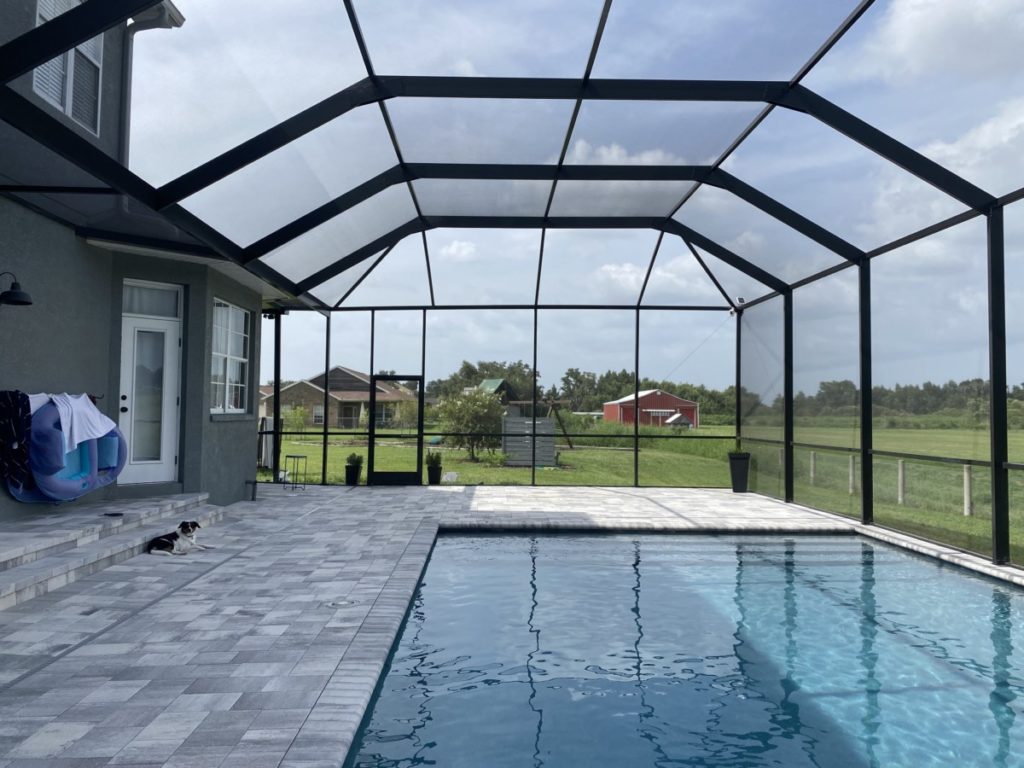
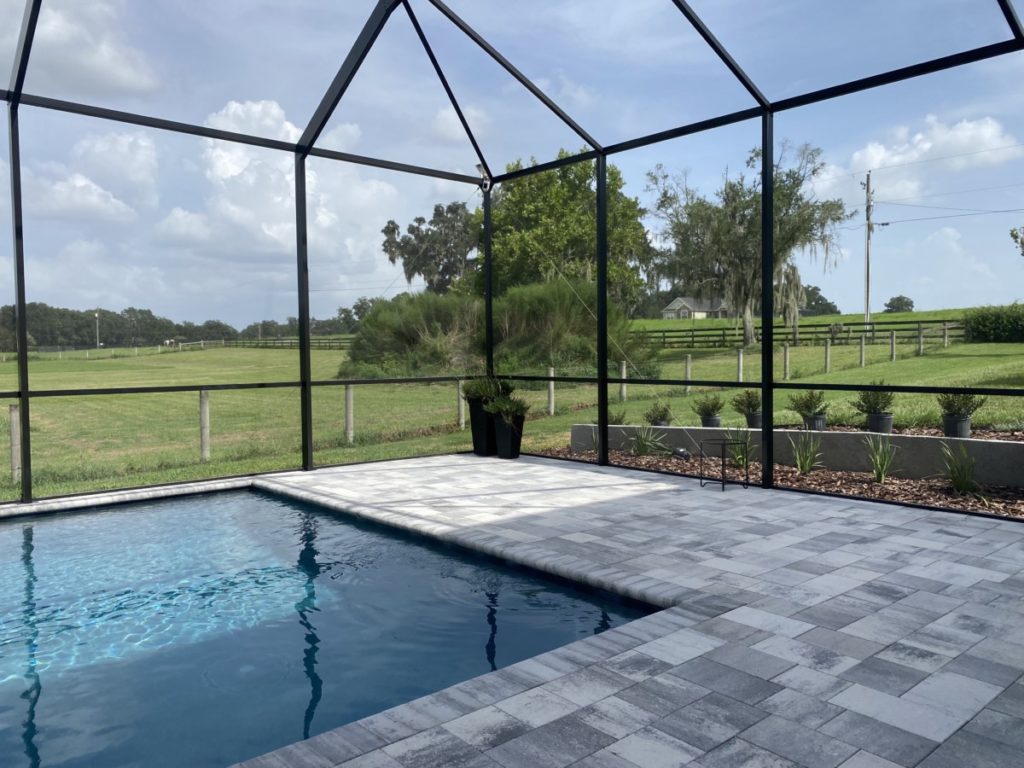
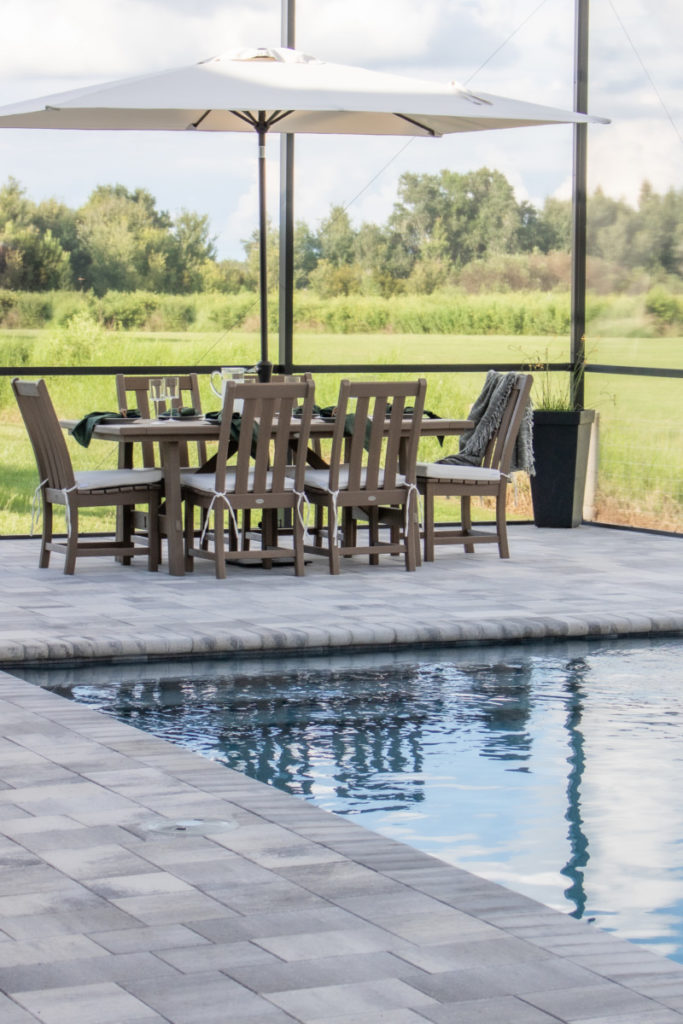
Pool Patio Design

September 23, 2022

Before

I have dreamed about having a pool ever since we moved to Florida…(10 years ago). Well, I am happy to report, that after years of saving up and waiting for the right timing we finally have a pool!

There were many reasons I wanted a pool: Obviously, I love swimming and wanted to be able to swim with my family. Another reason: I wanted our home to be a place that my boys’ and their friends would want to be. Last but certainly not least, I love to have a place to entertain mine, and my husbands’ large families.

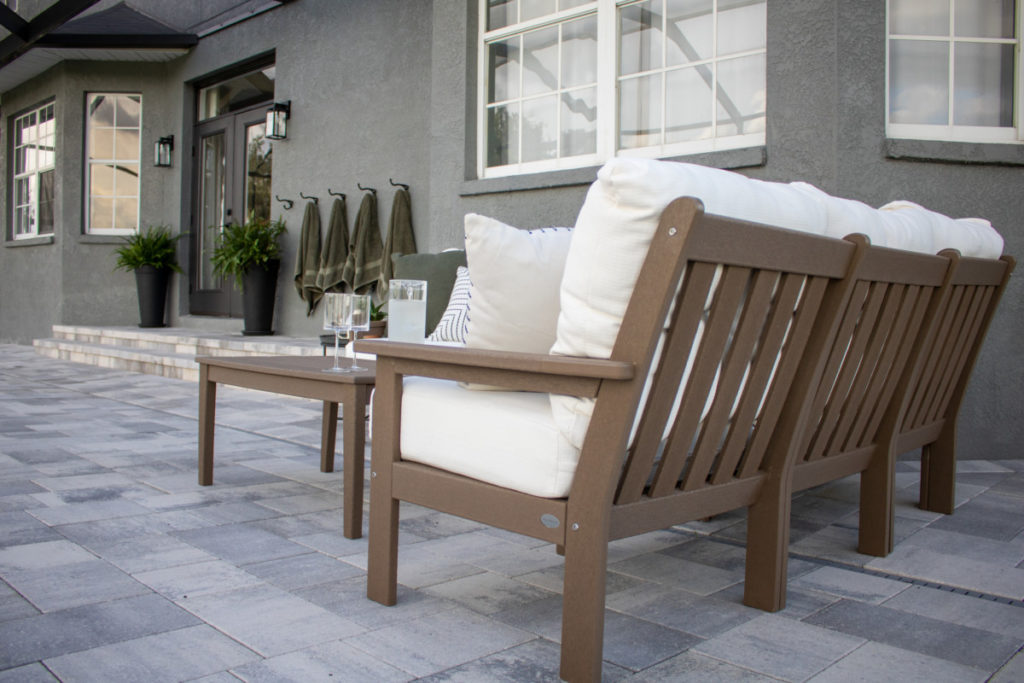
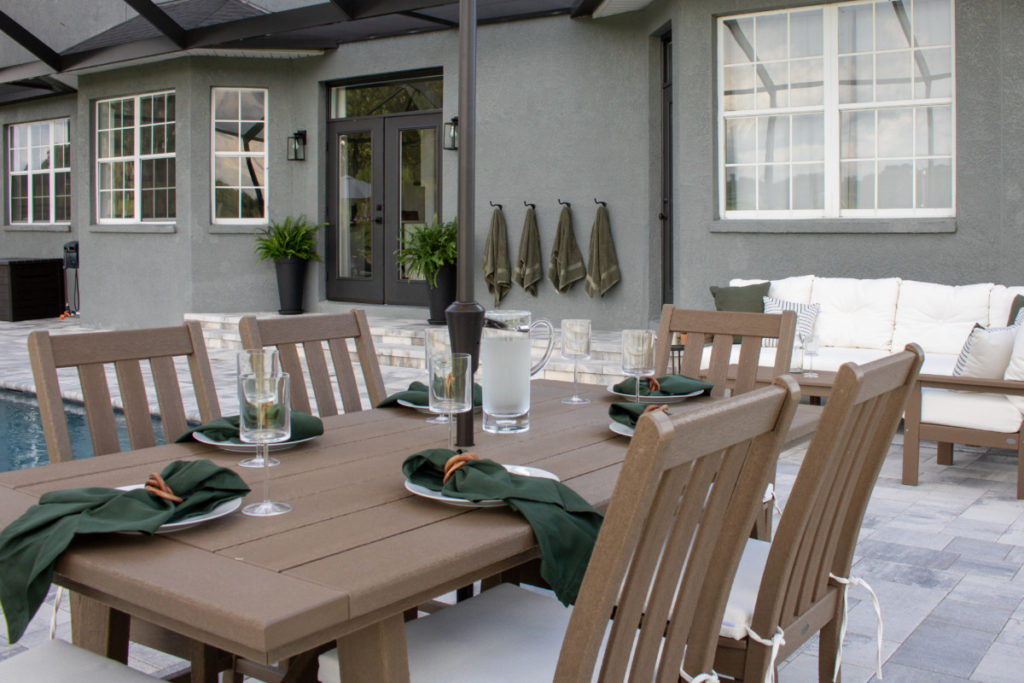
As you can see I planned the pool area to have a large patio space. The goal was to create several separate spaces for seating. A lot of thought went into the deck layout and it was ultimately decided to create 3 different seating areas.

Patio Seating

Vineyard 6-Piece Sectional
Vineyard 6- Piece Sectional

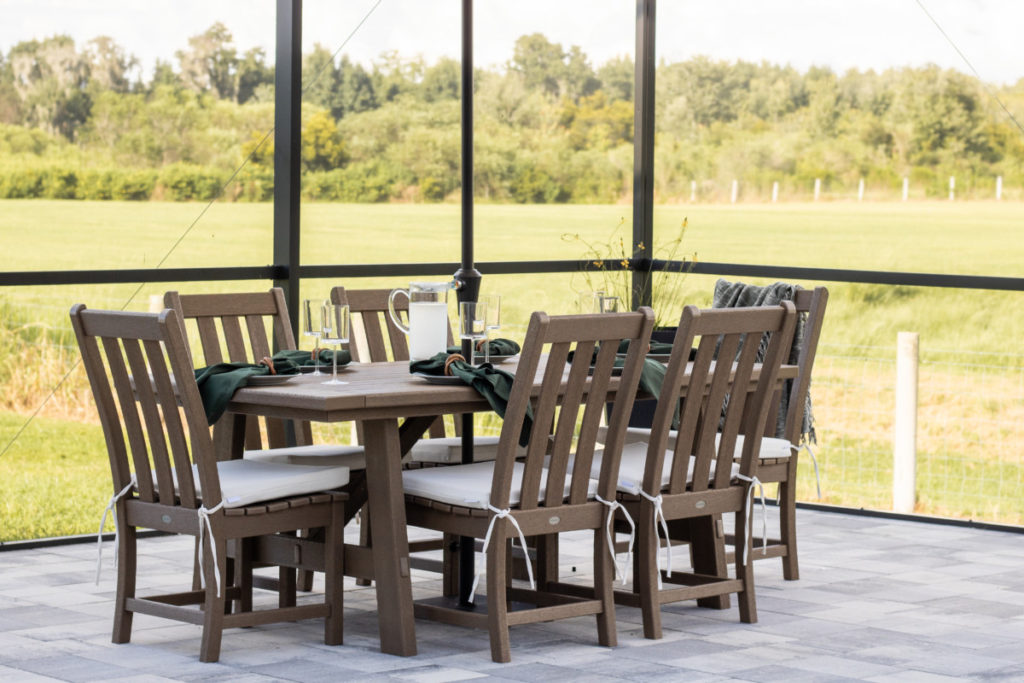
Patio Dining Area

Rustic Farmhouse Dining Set by POLYWOOD
Rustic Farmhouse Dining Set
Rustic Farmhouse Dining Set by POLYWOOD

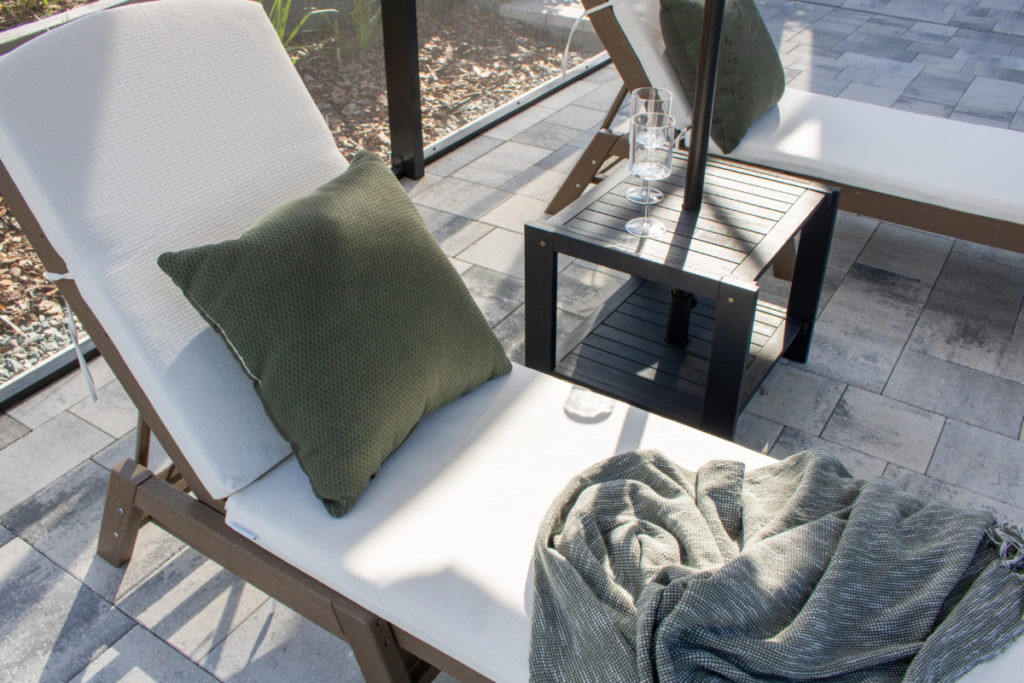
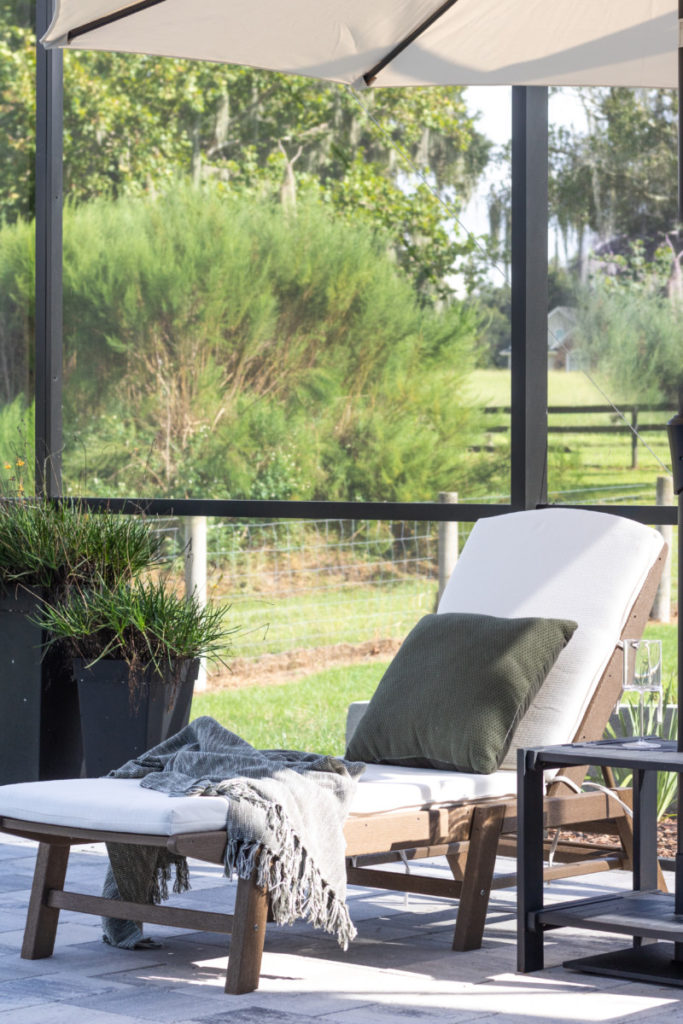
Patio Lounging

Nautical Chaise by POLYWOOD

Patio Essentials

Sources: 

7-Piece Rustic Farmhouse Dining Set : “Vintage Sahara” finish w/ “Natural Linen” cushions 

6-Piece Vineyard  Sectional: “Vintage Sahara” finish w/ “Natural Linen” cushions 

Nautical Chaise: “Vintage Sahara” finish w/ “Natural Linen” cushions 

Coffee Table: “Vintage Sahara” finish w/ “Natural Linen” cushions 

Rectangle Umbrella: Amazon 
10″ Circle Umbrella: Amazon

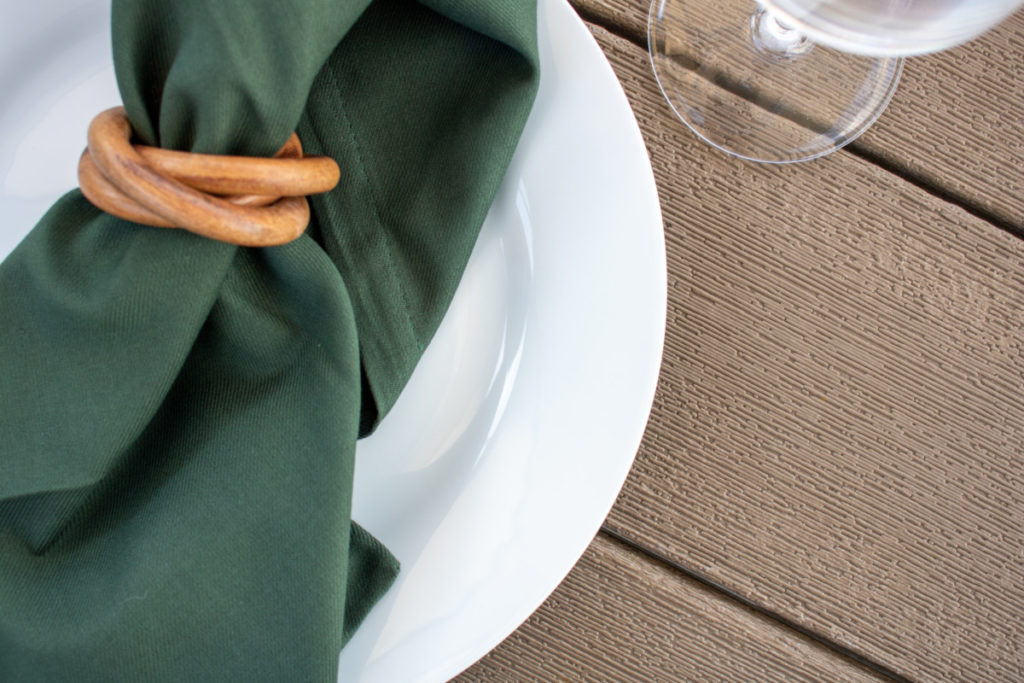
Napkins: World Market 

Napkin Rings:  Hobby Lobby Fall 2022

Porch Sconce Lights: Amazon 
Clear Pool Floats: Amazon 
How To: Exterior Door Makeover

September 21, 2022

*This “How to : Exterior Door Makeover/Repair ”  is sponsored by DAP and includes affiliate links. *

Exterior Door Makeover Painting and Repair

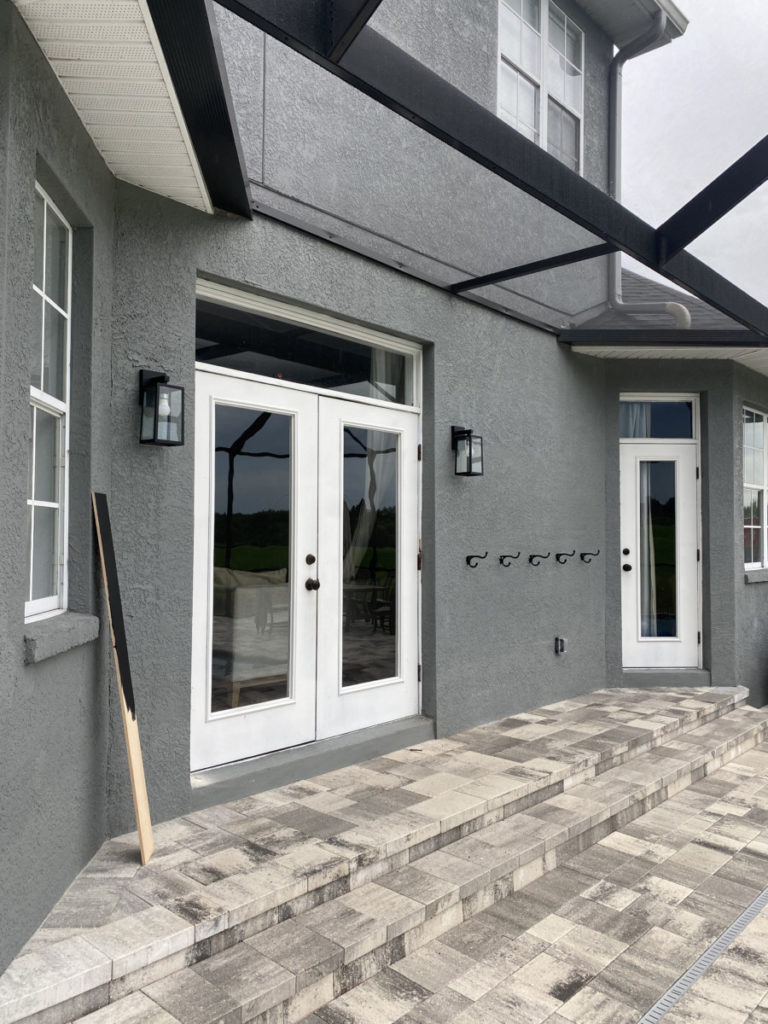
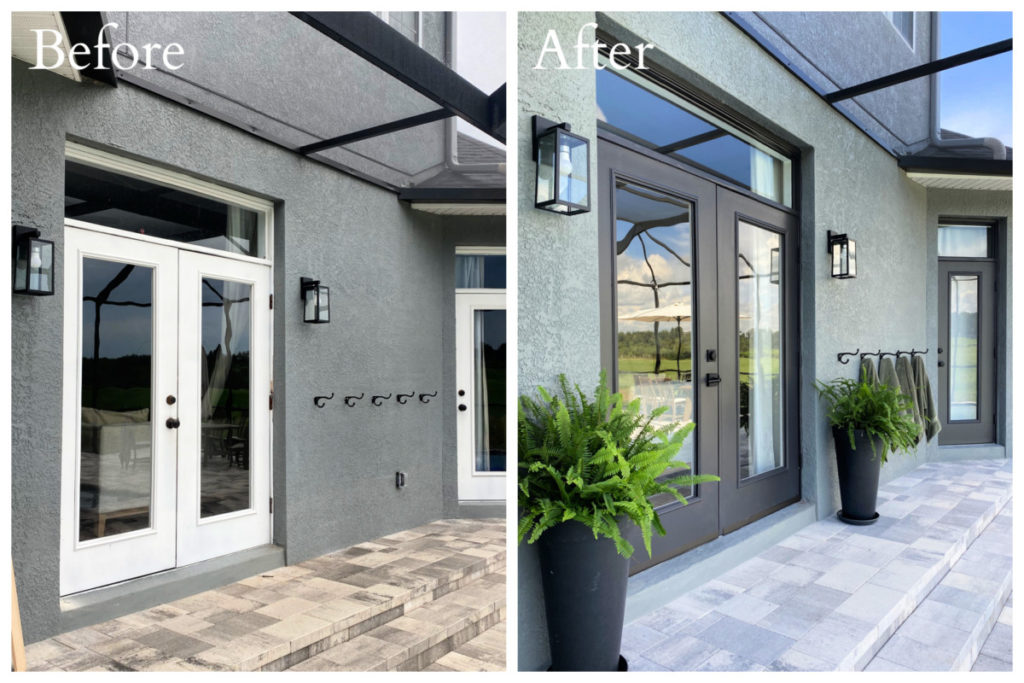
While working on my back patio makeover I made the executive decision that our poor back door needed some lovin’. Time has not been kind to these double doors. They take a brunt of the sun and rain without any protection from our crazy Florida weather. As a result there is a considerable amount of water damage due to poor weather proofing. Let’s fix that! In order to do that I teamed up with the great folks at DAP and I used the following tools and materials:

 Tools Suggested:Materials Used:
Caulk Removal Tool DAP Plastic Wood All Purpose Wood Filler
Nailer ( If Necessary) DAP Dynaflex Ultra in Clear
Sand Paper DAP Dynaflex Ultra in Black
 Caulk Gun DAP RapidFuse All Purpose
 Utility Blade ScraperExterior Paint /New Door Hardware

Repair Door

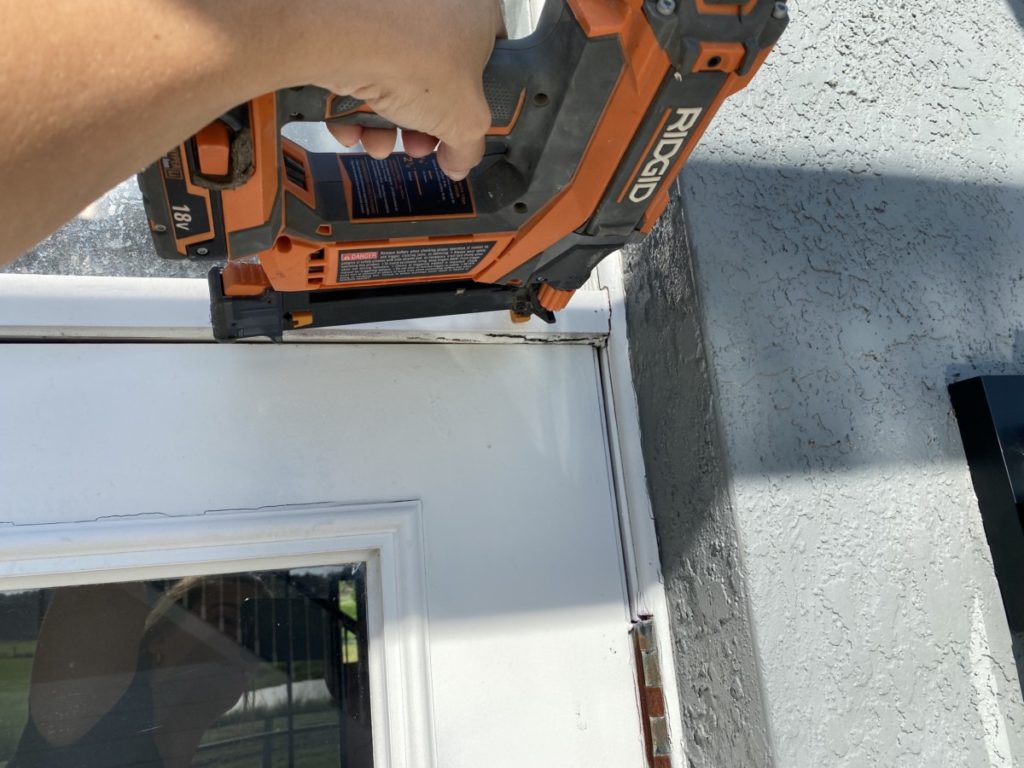
Before I can even think about painting, there are some repairs that need to be made. In my case I had some trim boards that were loose and that were creating unsightly and damaging cracks. I used an 18 gauge nailer to secure them.

Exterior Door Makeover Painting and Repair

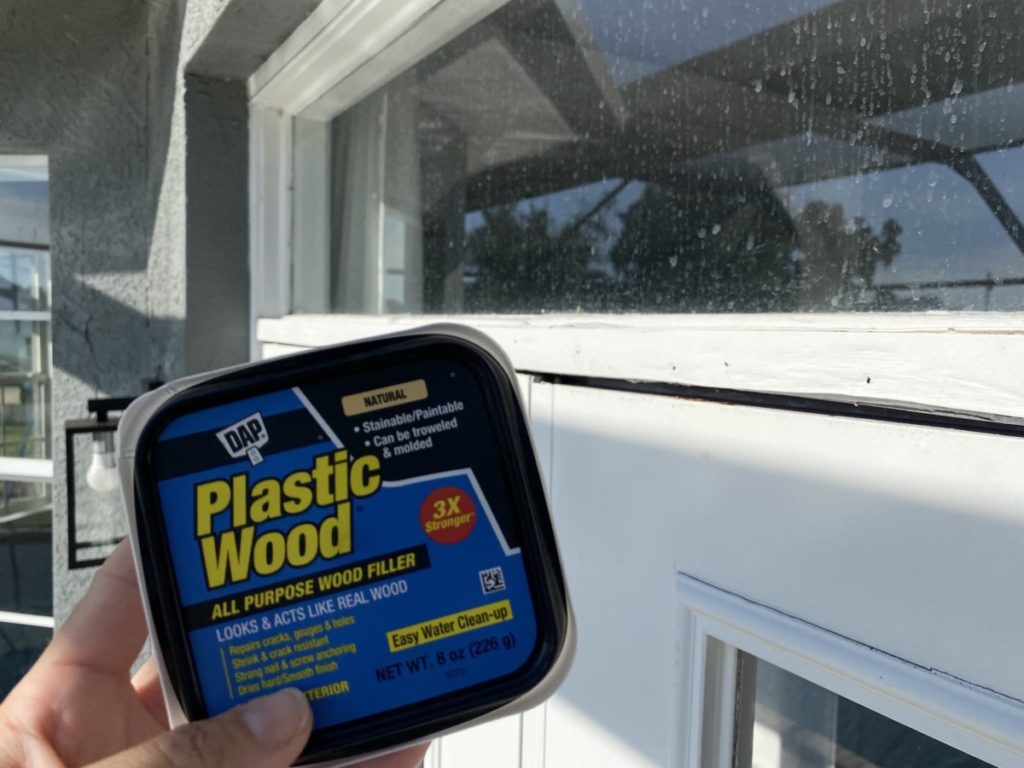
After nailing the loose trim, I needed to fill the holes caused by the nails. To do this I used.  DAP Plastic Wood All Purpose Wood Filler. This is very important step. If nail holes are not properly filled and then painted with and exterior paint they will allow water in and cause more water damage.

Exterior Door Makeover Painting  and repair

Filling holes is a simple and straightforward process. I use my finger and dab a very small amount and suppress it into the void. Then let it dry! Later in the process I will be sanding the door in preparation for paint, at that point I will sand the excess filler down.

Remove Old Caulk

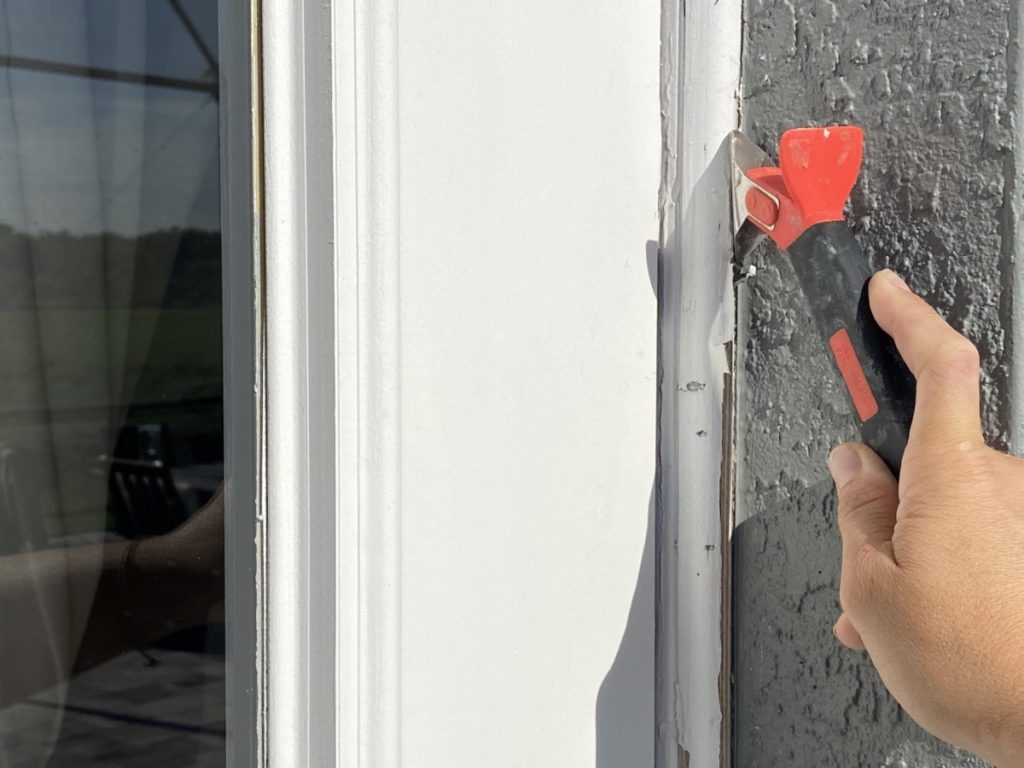
 We are getting close to prepping for paint,  however…  because we are repairing weather damage we need to add a few extra steps.  We will need to re-seal and caulk the door frame and seams,  before we can do that we need to remove  the old stuff! 

Exterior Door Makeover Painting

When removing old caulk, I prefer to use a Caulk Removal Tool. It has a hollowed-out tip that allows for fast and easy calk removal.

Prep for Paint

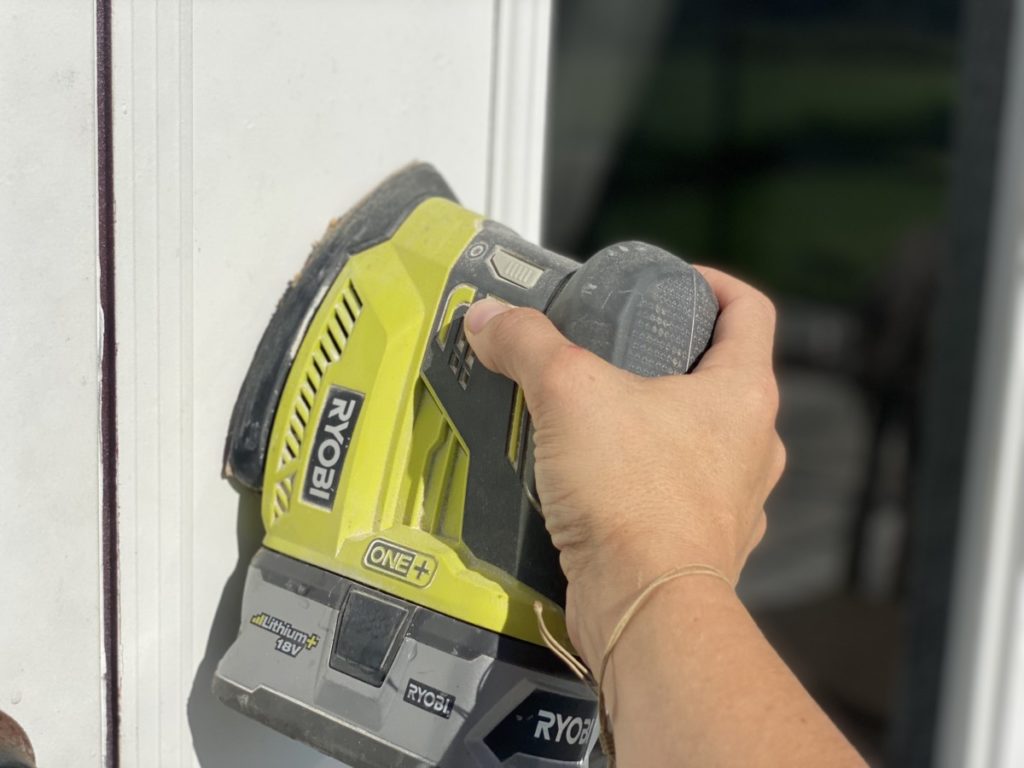
After all the caulk is removed, it is time to move on to paint prep. While many paints claim stick without prep, I ALWAYS recommend taking 5 extra minutes to scuff up surfaces before painting. The goal is NOT to remove paint, but to simply scuff up and glossy surfaces. This will give your paint/ primer something to stick to and prevent future peeling.

Exterior Door Makeover Painting

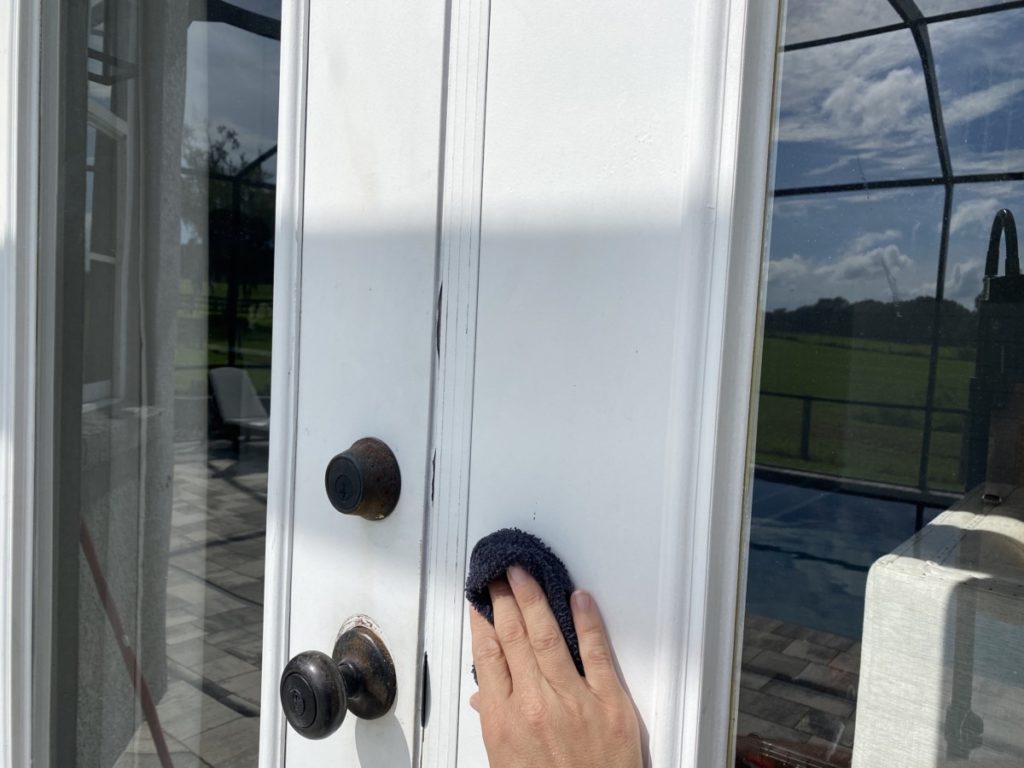
I used a palm sander for the large flat sections and a Sponge Sander for the trim work. The entire process took less than 5 minutes! After sanding I used a damp cloth to remove any debris and clean the surface in preparation for paint.

Exterior Door Makeover Painting

Caulk and Seal Exterior Door

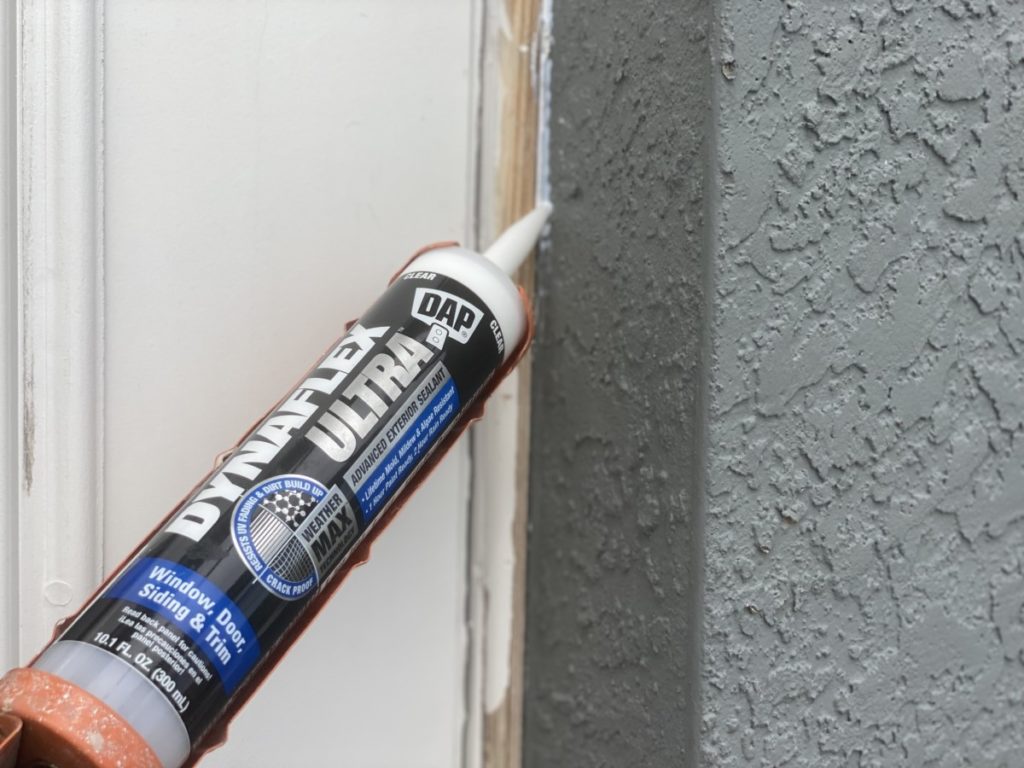
This next step is CRUCIAL, because this is an exterior door that is exposed to the elements it needs extra protection. All of the seams and joints need to be sealed with a GOOD caulk. My go-to for outdoor projects is DAP Dynaflex Ultra in Clear. This caulk is perfect for all window, door, siding, and trim projects. It is 100% waterproof, and of course paintable! Which is perfect for this project!

Exterior Door Makeover Caulk

I took extra care to caulk ALL the joints and seams on this project, I want to prevent any future water damage. DAP Dynaflex Ultra in Clear will do just that.

Paint Exterior Door

DAP Dynaflex Ultra in Clear is paint ready in just one hour! About the time I finished caulking and gathered all my paint supplies I was good to go. When painting an exterior project, always select an outdoor paint. Not all paints are created equal. You will need something that is fade resistant and will stand up to the elements.

Exterior Door Makeover Painting

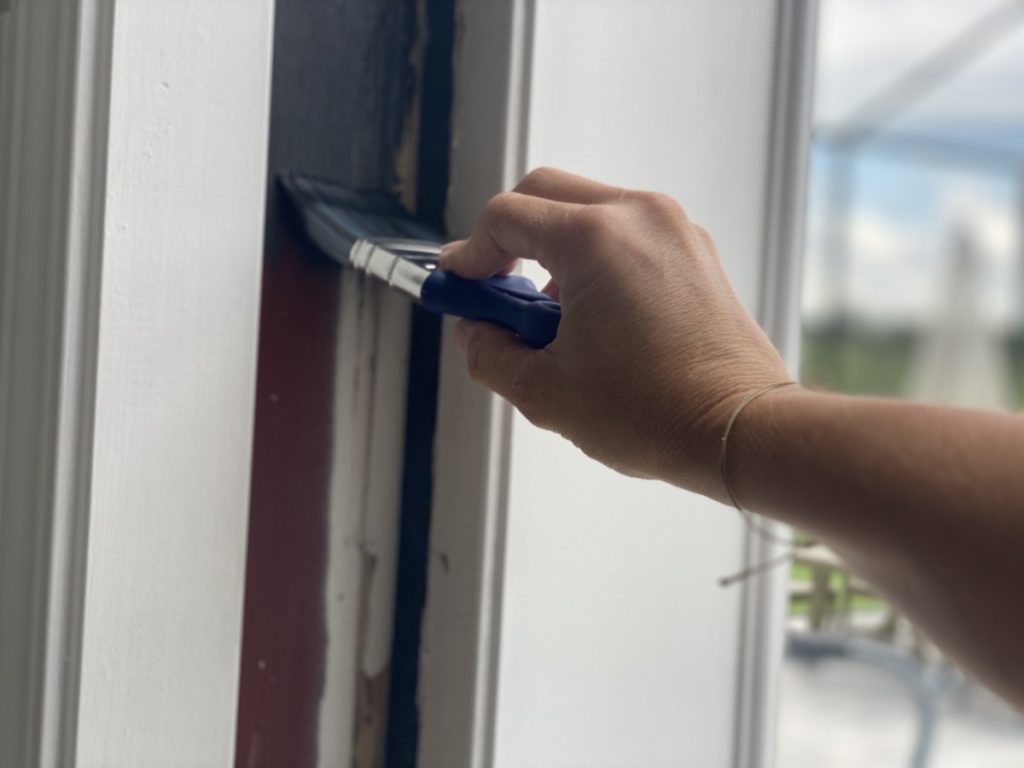
When painting doors, I tend to start by painting the interior door jamb. Reason being? I have come to realize that it is my least favorite part and therefor sometimes just skip it…. haha, this is a toxic trait of mine. Notice that mine is red? Ha-ha, that is from the original owners! I painted the noticeable outside and lost patience to paint the interior; for that reason, I paint the jamb first, it keeps me committed to being thorough! 🙂

*Jamb= The technical term for the interior frame of the door.

Exterior Door Makeover Painting

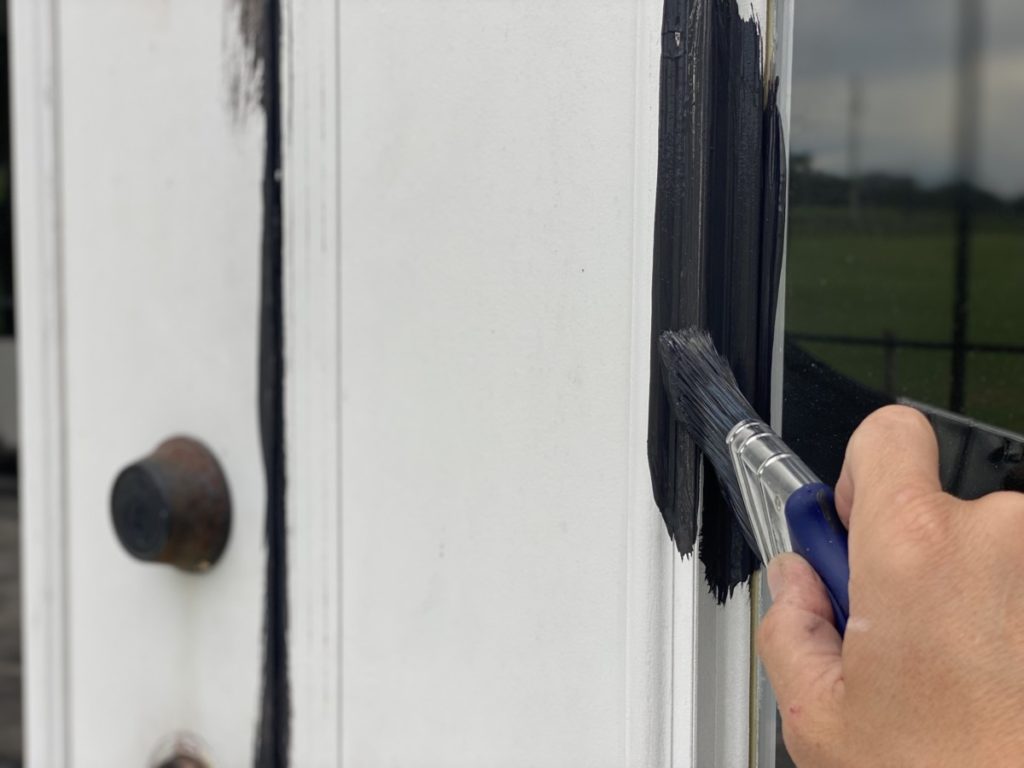
After the jamb is painted I then paint the exterior. In MOST cases I tape off my lines, however in this case I decided not to. Reason being? I live in Florida and the humidity is crazy right now and tape was not wanting to stay put… also, I like using the paint scraping method!

Exterior Door Makeover Painting

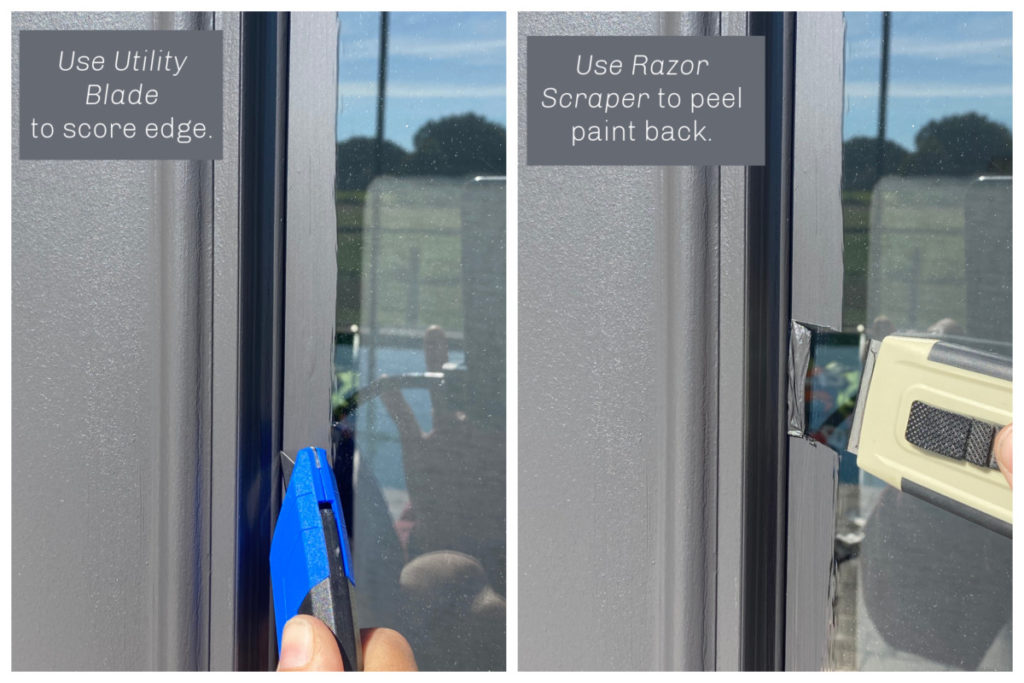
What is the “paint scraping method”? Glad you asked. When painting a piece of trim that is against glass I simply paint the entire seam and allow the paint to go onto the glass. Once the paint has completely dried I score the joint with a Utility Blade and then use a Scraper Razor to clean up the excess paint. It works great!

Caulk Glass on Exterior Door

My doors have glass panels, sometimes these are called “Lites”. Over the years of baking in the sun the caulk/adhesive that sealed the trim to the panel was non-existent. I wanted to create a nice crisp caulk line and protect this joint as well.

Yes, I could have used the DAP Dynaflex Ultra in Clear and then painted the seam… BUT I can get a very narrow crisp line using the following method.

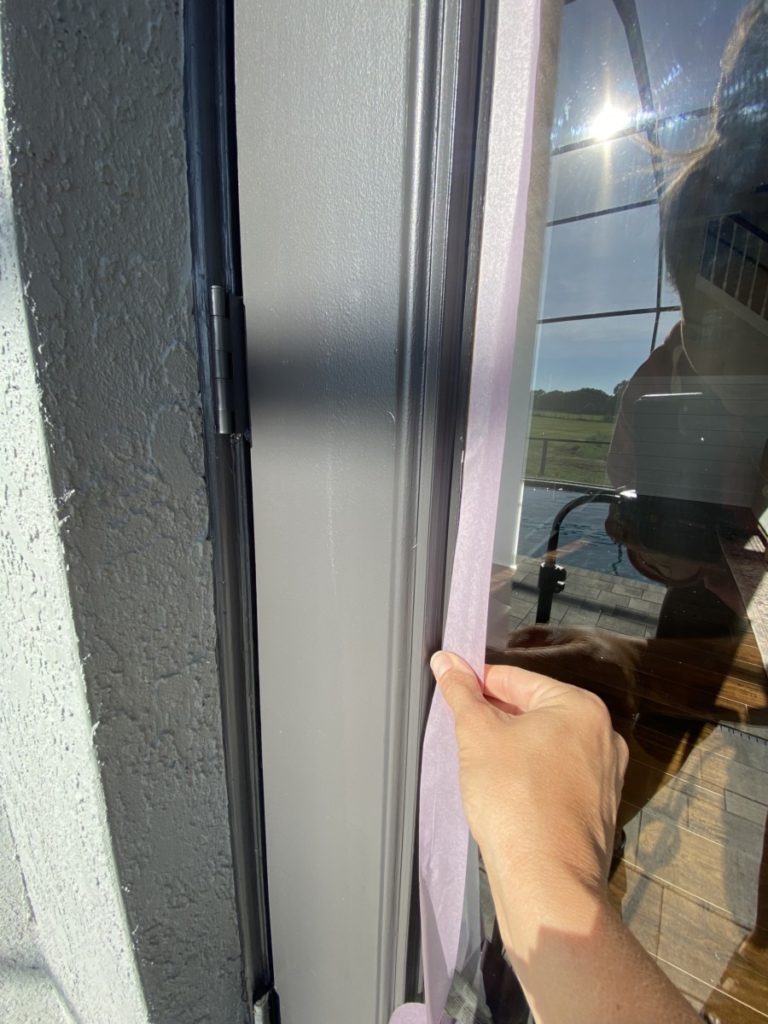
I first taped off the window using a painters tape.  I place the tape  very close to the trim. (Remember that everything that you do on the outside of the window, will be visible on the inside.  Thus the desire for tight crisp lines.) 

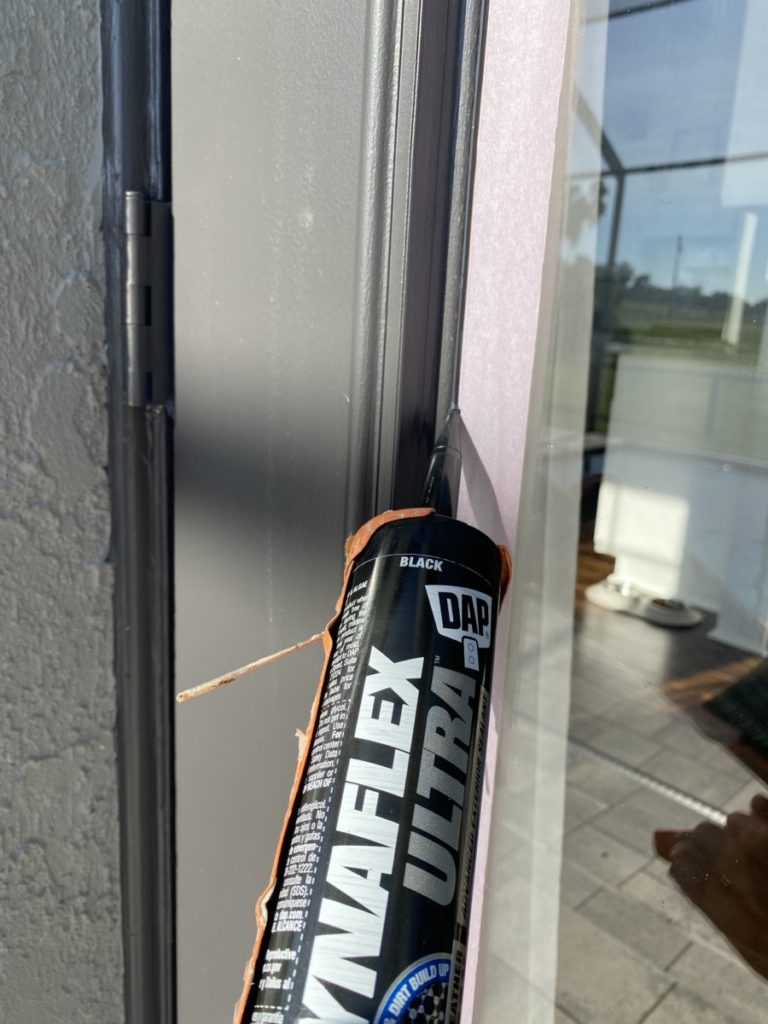
After taping I ran a small bead of DAP Dynaflex Ultra in Black along the joint. Using a baby wipe or a wet finger smooth out the bead of caulk. IMMEDIATELY after soothing, remove the tape. If you wait, you risk the caulk drying to the tape and tearing up the caulk.

Because my doors are nearly black the DAP Dynaflex Ultra in Black works perfectly and creates crisp line that protects the joint and blends flawlessly with my door without needing paint!

Replace Weather Stripping on Exterior Door

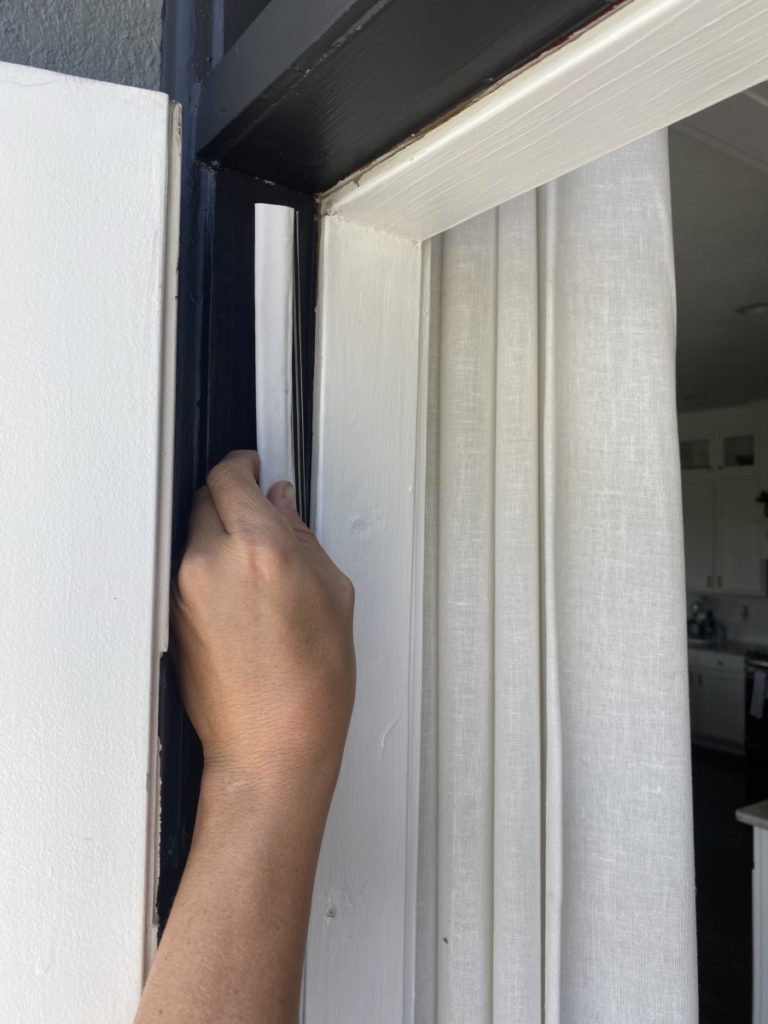
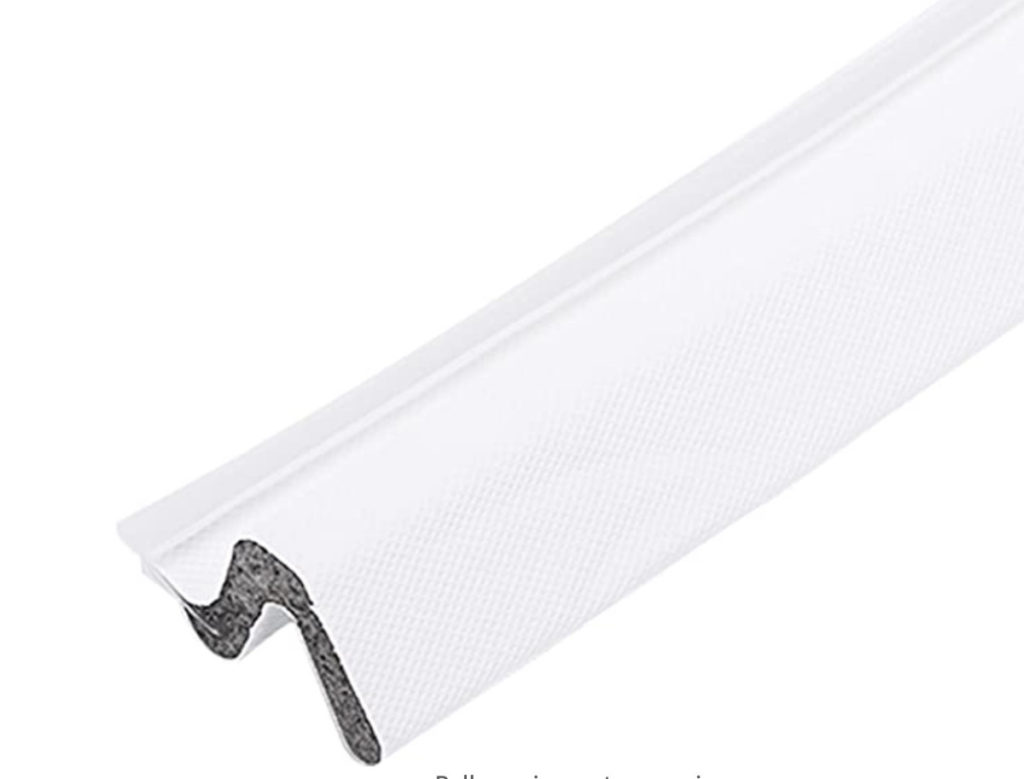
One of the primary reasons I was repairing this door is due to water damage. At this point I had already removed all the existing caulk and replaced with a high quality DAP Dynaflex Ultra. This will mitigate future water damage. However, caulk is not intended to seal the gap between the door and the door jamb. To seal the gap I used Door Kerf Weather Strips.

Exterior Door Makeover Weather Stripping

The best way to help prevent water issues is to replace the kerf weather strip. This particular type of weather stripping is easy to replace. Simply pull firmly on the existing strip and the tongue will pop out of the groove. Replacing the strip, is just as simple. Simply push the tongue into place, and cut to fit. This style can be cut with common scissors.

*Please note, not all doors have the same style pf weather stripping, a quick way to check is just give your existing strips a quick tug and see if the strip pulls loose.

Exterior Door Makeover Weather Stripping

Replace Door Hardware

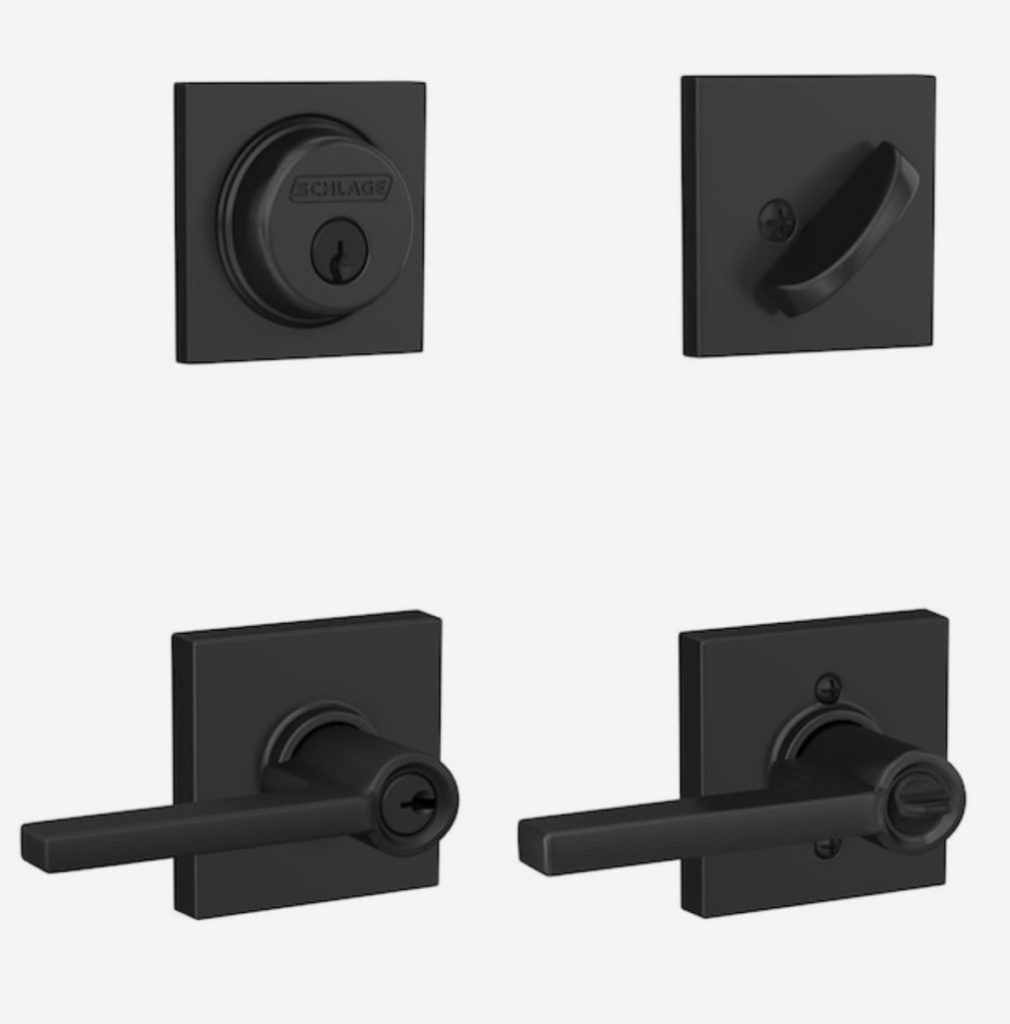
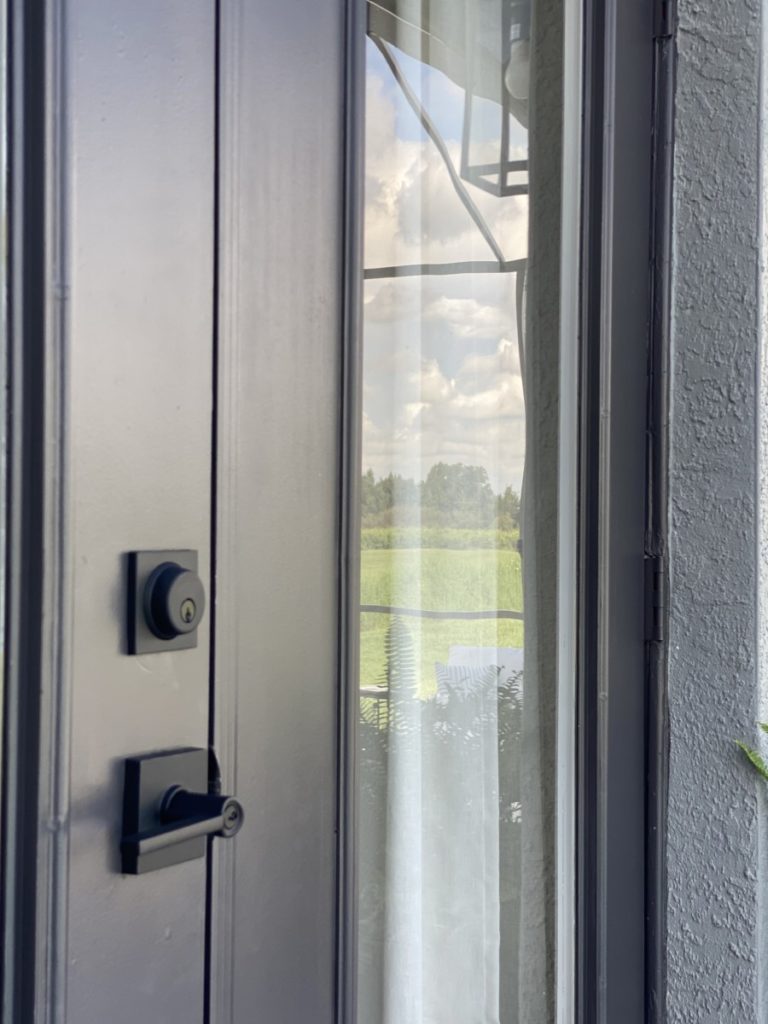
 My door hardware had definitely seen better days, and actually the source of a water leak!   I am telling you, these poor doors were a complete and utter mess!  I purchased the Schlage Latitude Matte Black Deadbolt Set.   Follow the included instructions for a quick and easy install. 

exterior door makeover
exterior Door Makeover
Exterior Door Makeover

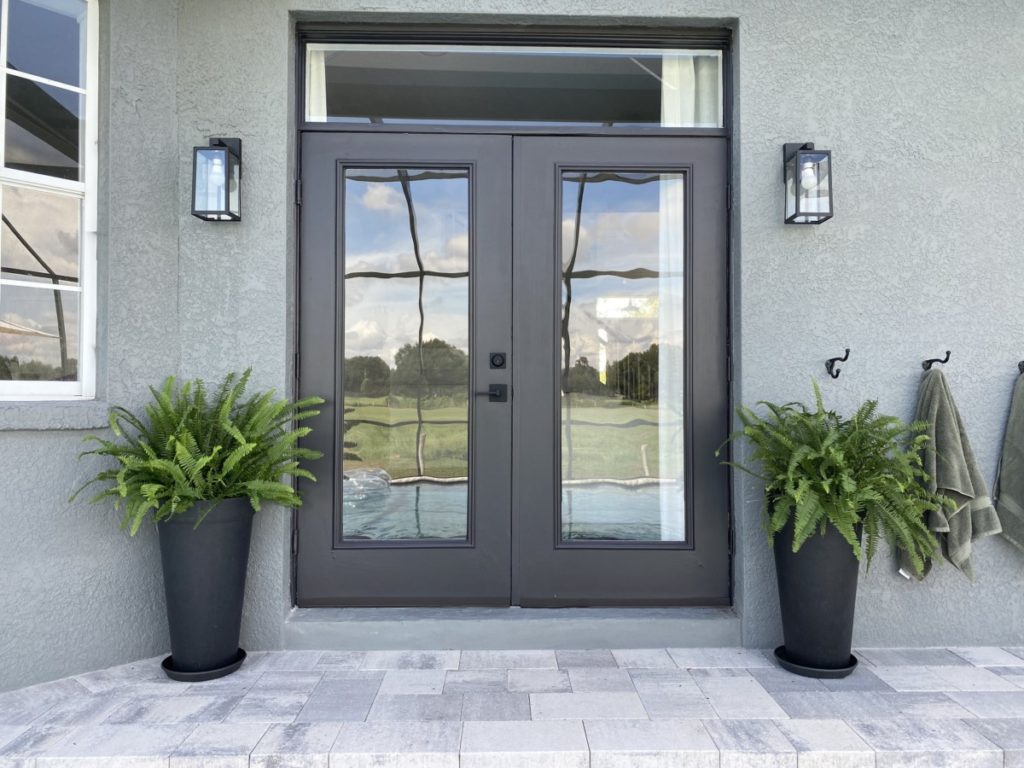
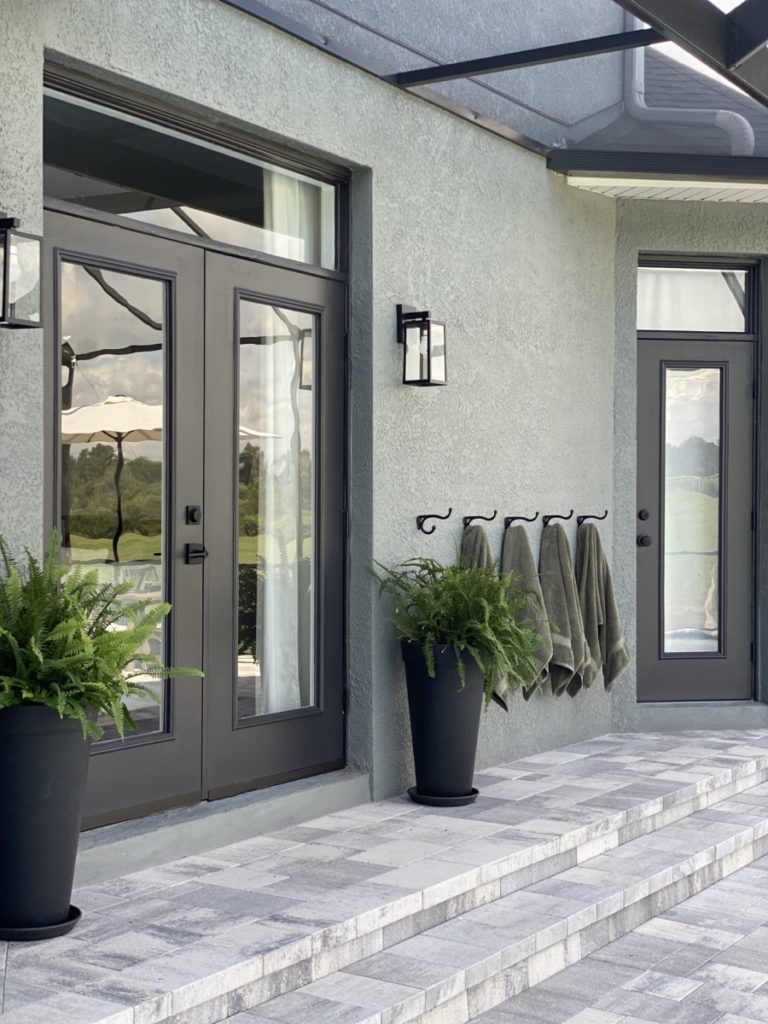
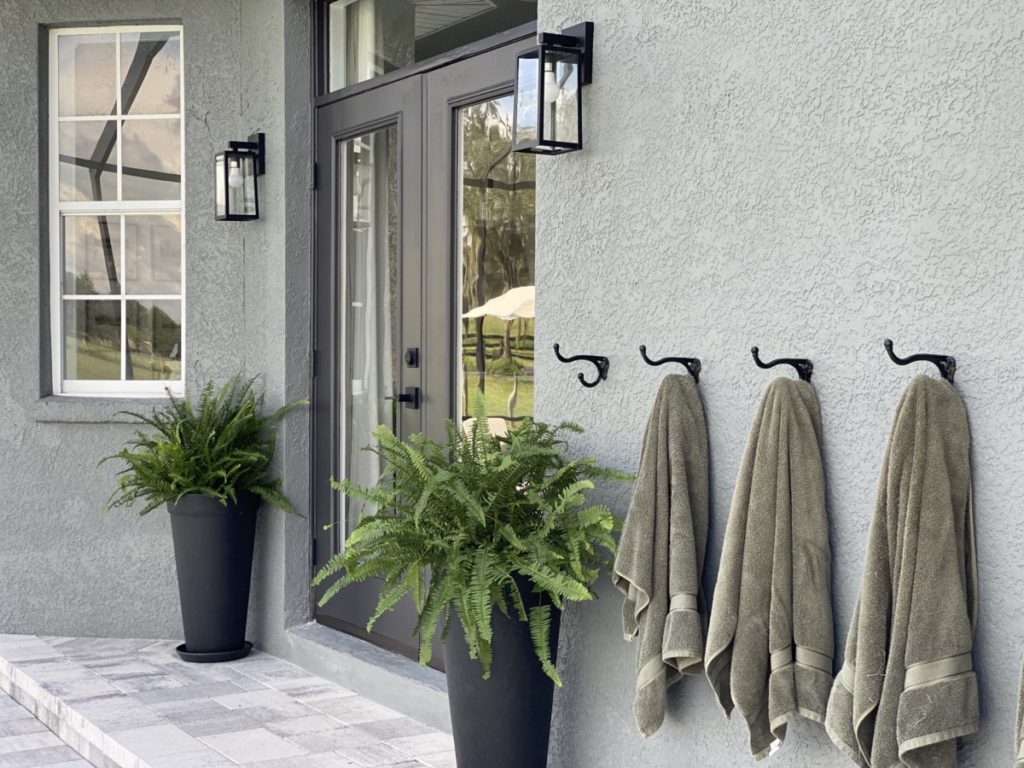
Phew, these doors have been on my list for years and unfortunately putting them on the back burner was a huge mistake. Even if you don’t have time to repaint and swap hardware, caulk and sealing doors is a great way to prevent damage and protect your home! Obviously, I took it a few steps in this Exterior Door Makeover and I am IN LOVE with the end result. Make sure you check out the rest of my patio to see how it completes the space.

Thanks for following along.

Take Luck,

Corey

Sources: 

Exterior Sconce Lights: Amazon

Deadbolt Door Hardware: Lowes

Paint: Sherwin Williams “Porpoise”/”Caviar” 40/60 mix 

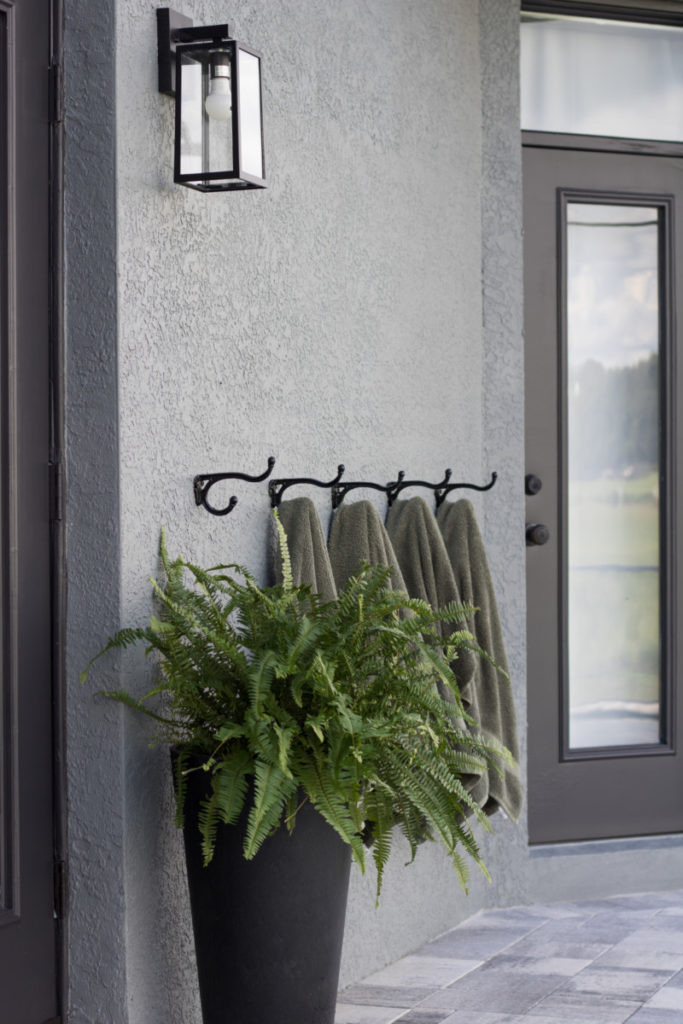
Towels: Amazon

Hooks:  Hobby Lobby 2022 

Out-feed Assembly Workshop Table

August 9, 2022

I have had several work shop assembly tables, and all of them have served me well. I currently have a HUGE assembly table that I love. However, while working with my friend Lindsay from @FrillsandDrills we decided she needed something space efficient, while still being “EXTRA”!

work shop assembly table

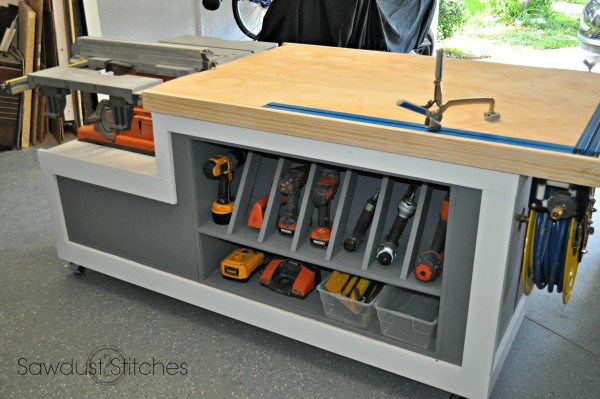
Current Out-Feed Table

As I said, my current assembly table was too big, but there were some great aspects that we both loved and wanted to keep.

Original Assembly Table

The more I thought on it, the more I realized that my first assembly table might be just the ticket. I never took the time to create build build plans. Which is ok, looking back there were many things I would have changed. (You can see a little more about my original assembly table here.)

The Perfect Fit

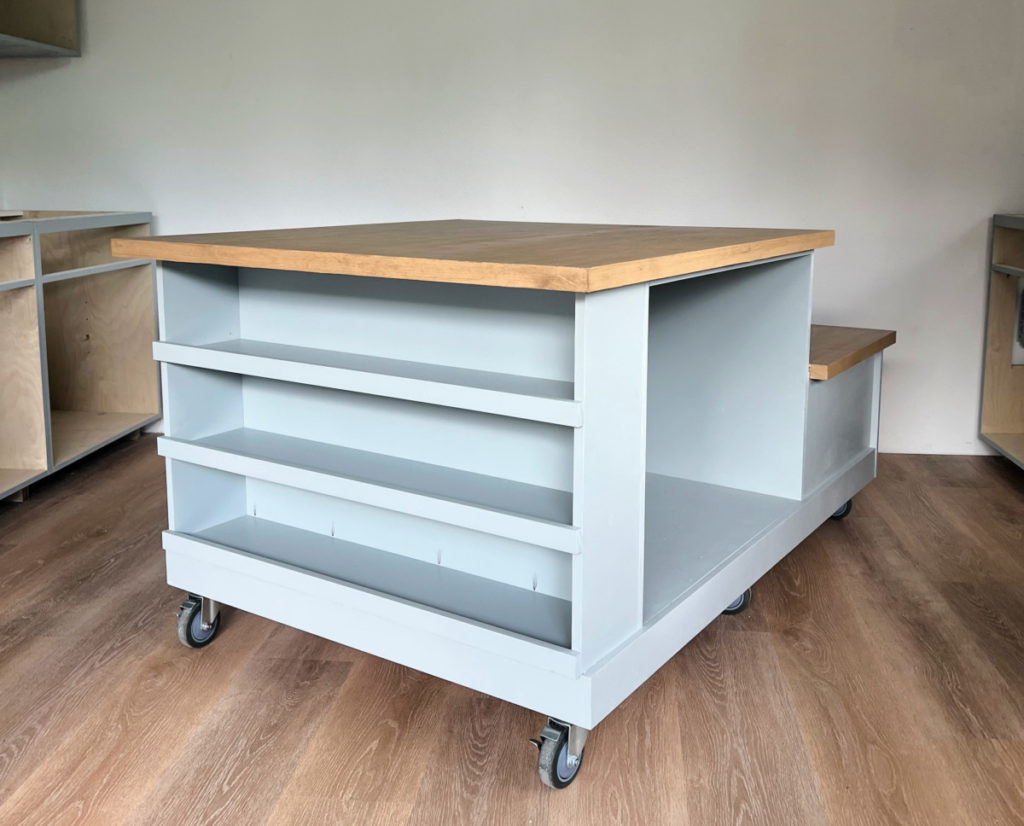
Lindsay and I put our heads together and combined our ideas and my previous assembly tables to create this beauty.

Frills and Drills Workshop assembly Table

If you are interested in building your own, you are in luck! I have a full set of build plans complete with cut lists and diagrams.

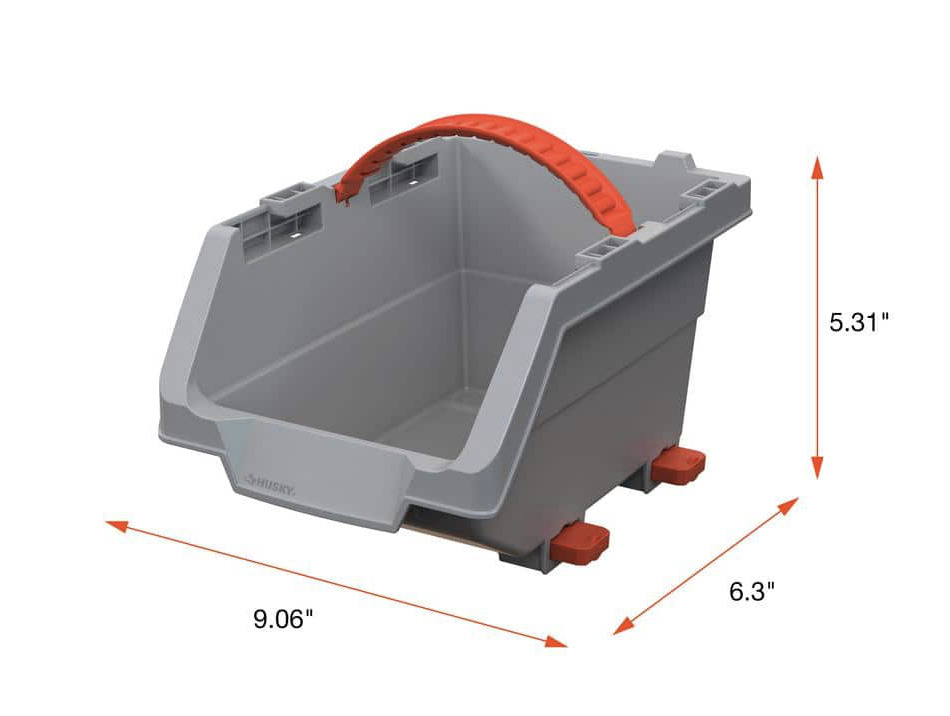
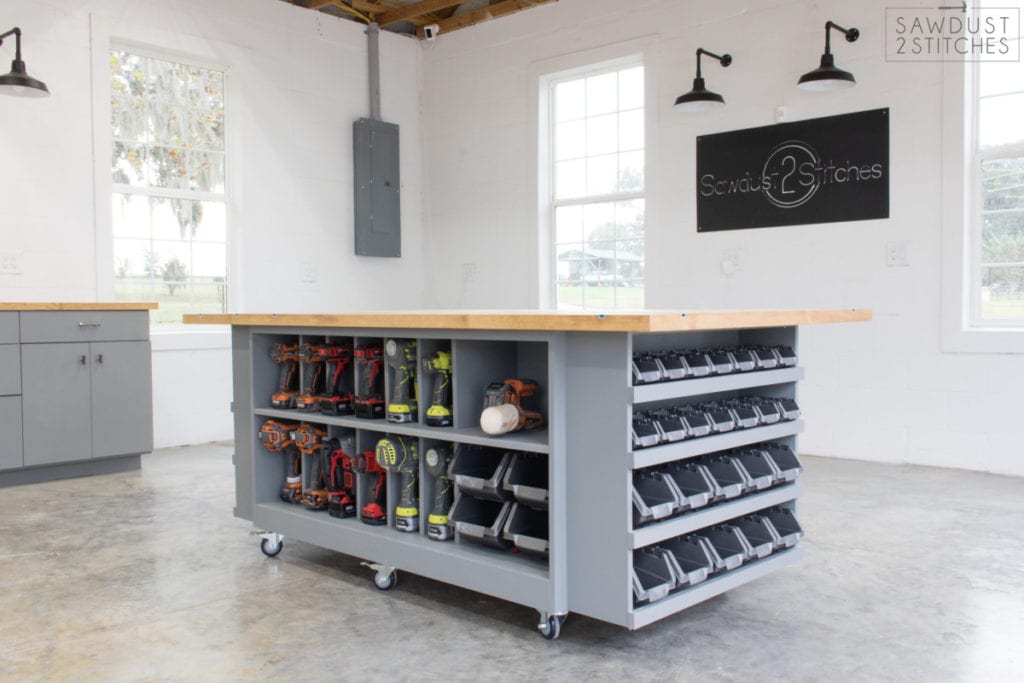
This assembly table has a smaller footprint, but still has plenty of drill and nail gun storage. The shelving unit on the endocarp was designed to hold Husky Bins that work excellent for fasteners.

Frills and Drills Workshop assembly Table

This table was designed with a table saw that sat 25″ deep and 12 3/4″ tall. This table provides a great workspace and also serves as an outfield table. A simple hole cut into the table will allow access from the dust port to the shop vac stored below.

Workshop Assembly  Table

On the far side one the assembly table is plenty of open storage. This table was designed to store a shop vac. The shop vac will serve as dust collection when the table saw is in use. There is still plenty of additional space for shop storage as well.

Frills and Drills Workshop assembly Table

There you have it folks, an assembly table that has all the storage while still catering to a modest size shop!

Thanks for following along.

Take Luck,

Corey

DIY Paint Booth

June 13, 2022

The Problem:

The one thing I feel like my shop is missing is a paint booth. In the past I have used some pop-up tents, and I did find a nifty little attachment for sports canopies… but I still wanted something was a little more user friendly.

The Solution: DIY Paint Booth

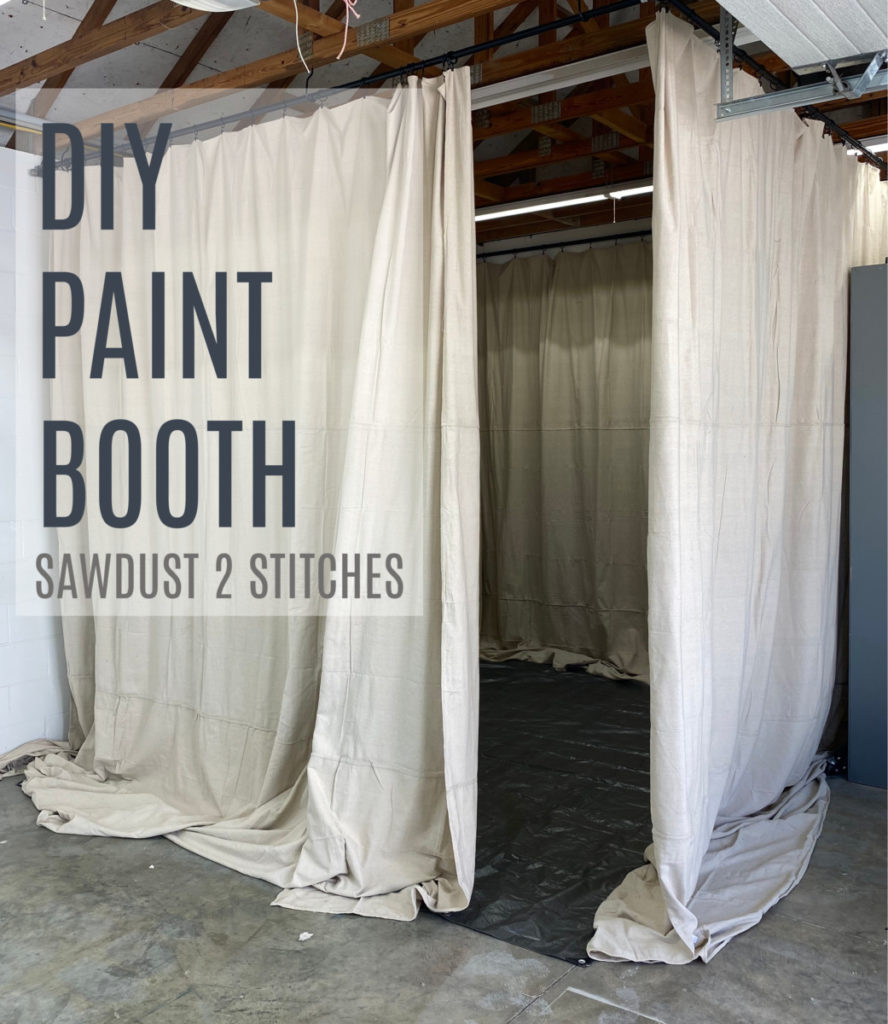
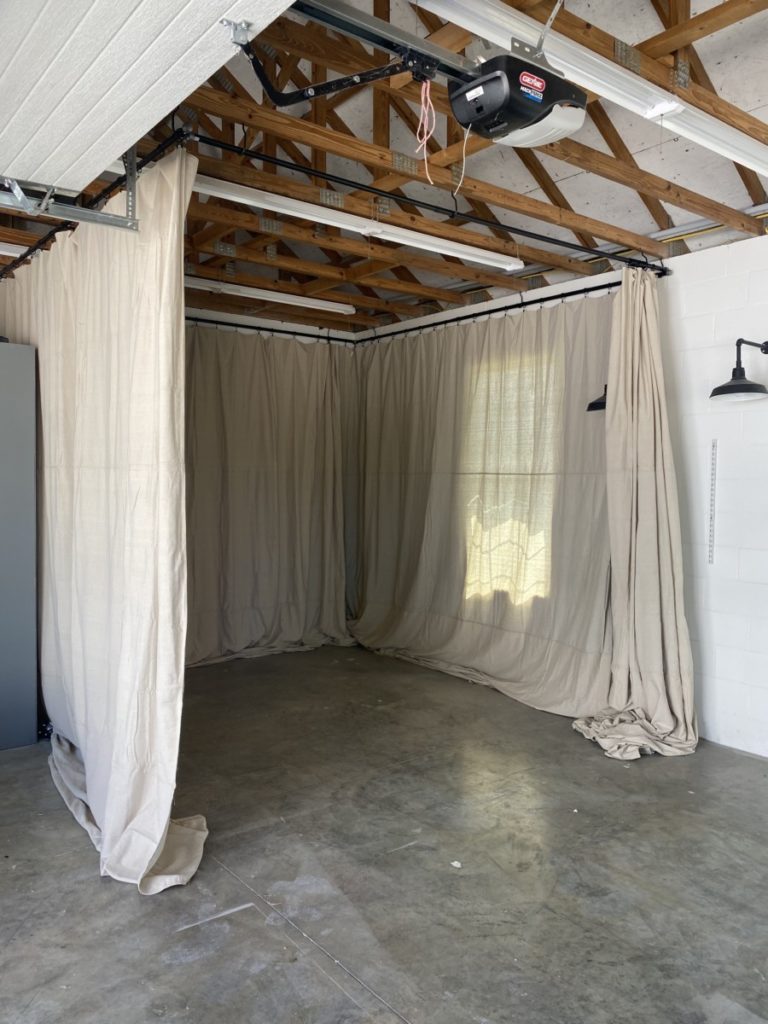
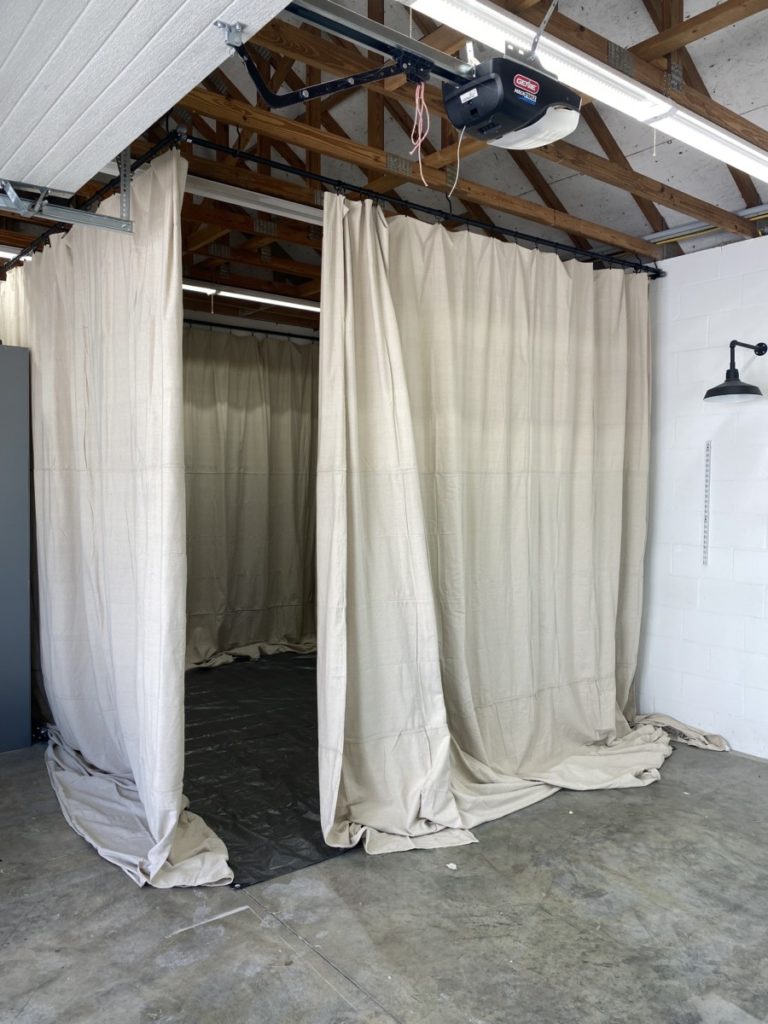
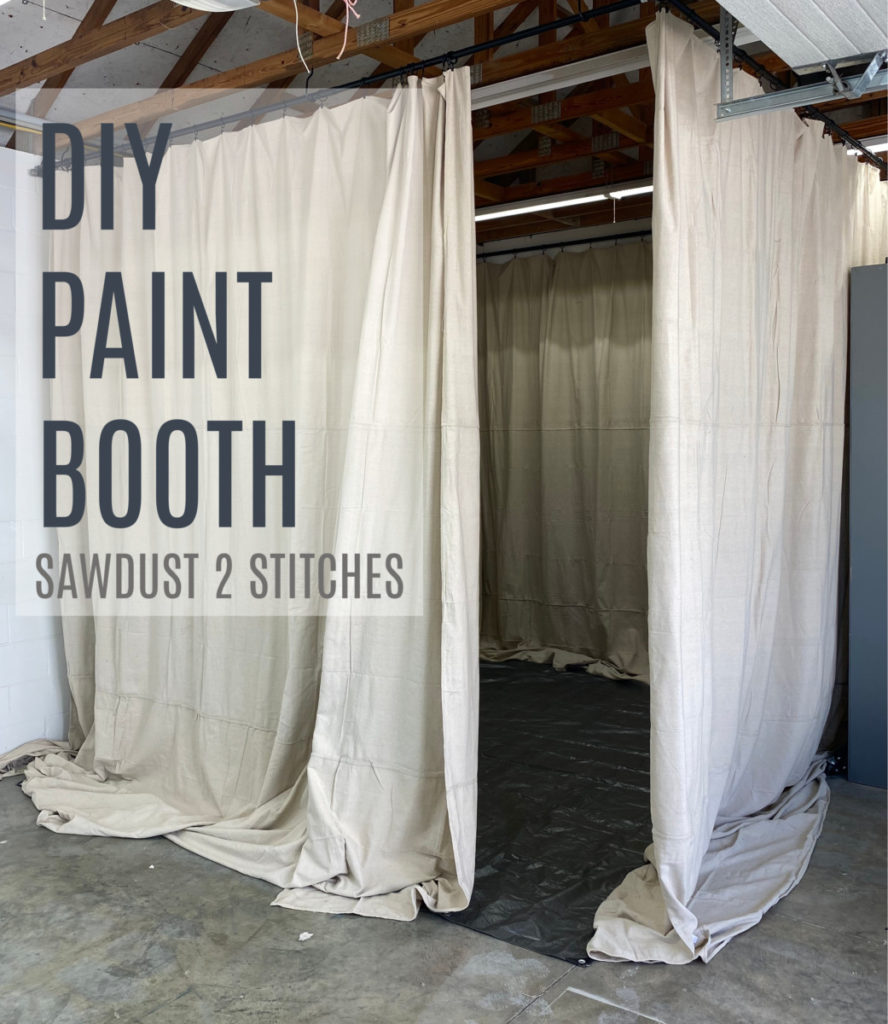
My big requirement when designing a spray area was that it was easily accessible but did not take up much space. I decided to create heavy duty divider to help provide some protection to the rest of my shop from over spray. Here is what I cam up with:

I decided the best approach would be long heavy duty curtains that could be pulled open when in use and drawn shut when not in use. After a fair bit of research I decided that using IKEA curtain rods and drop cloths were the best approach.

 Tools Suggested: Materials Used:
Tape Measure  IKEA Curtain Rods
Drill Utility Hooks
Ladder Curtain Clips
  Drop Cloths
  Tarp

* This is one of those projects that I will just show you in broad strokes what I did. Every space will be different and require different dimensions. For the sake of this tutorial, my ceilings are 10′ and the “paint booth” is approximately 13′ by 13′.

Installing Hooks for Paint Booth

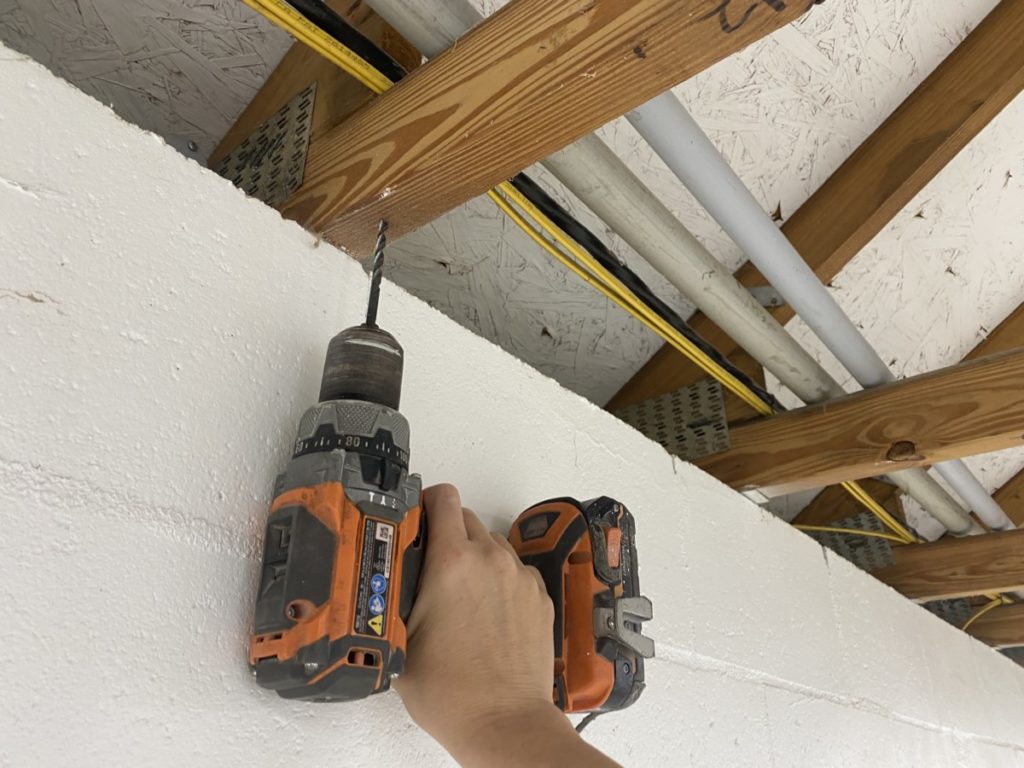
I first mapped out how large I wanted my DIY paint booth to be. I then marked those dimesnions on my ceiling. My ceiling has exposed trusses which made this process very simple! I used my trusses to anchor my utility hooks. I understand that this is probably not the case in most garages/shops. It will take a little bit of work to map out where you have available trusses and/or ceiling joists.

Once anchor points are located, use a 1/4″ drill bit to pre-drill the location for the utility hooks.

 installing DIY Paint Booth

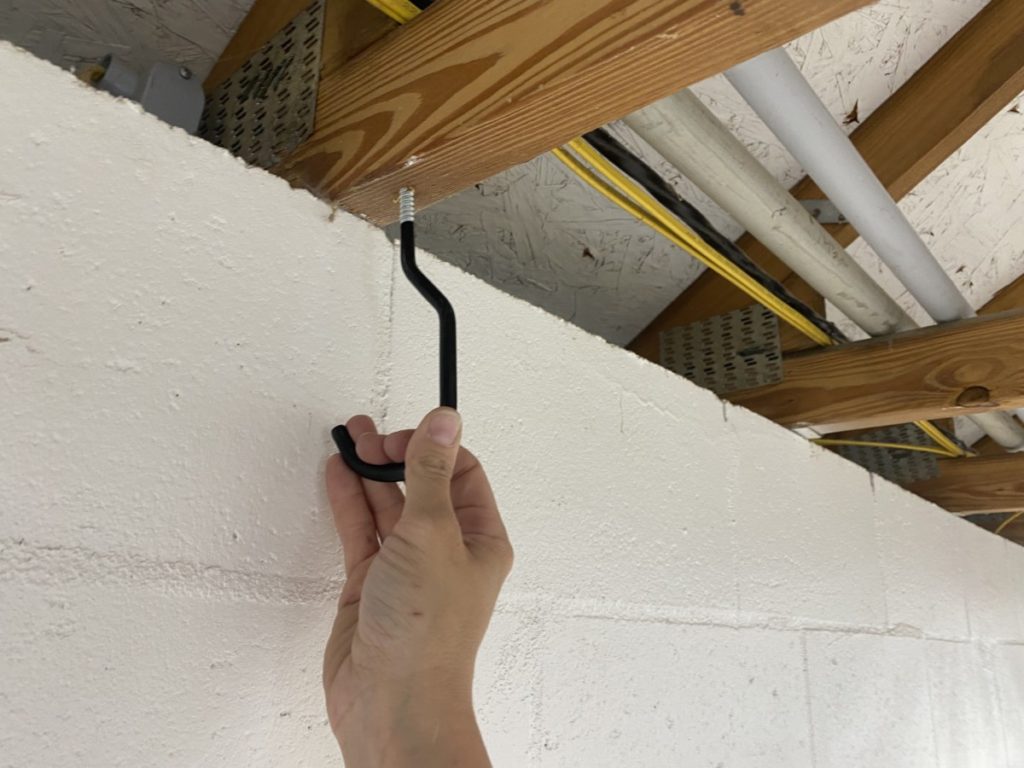
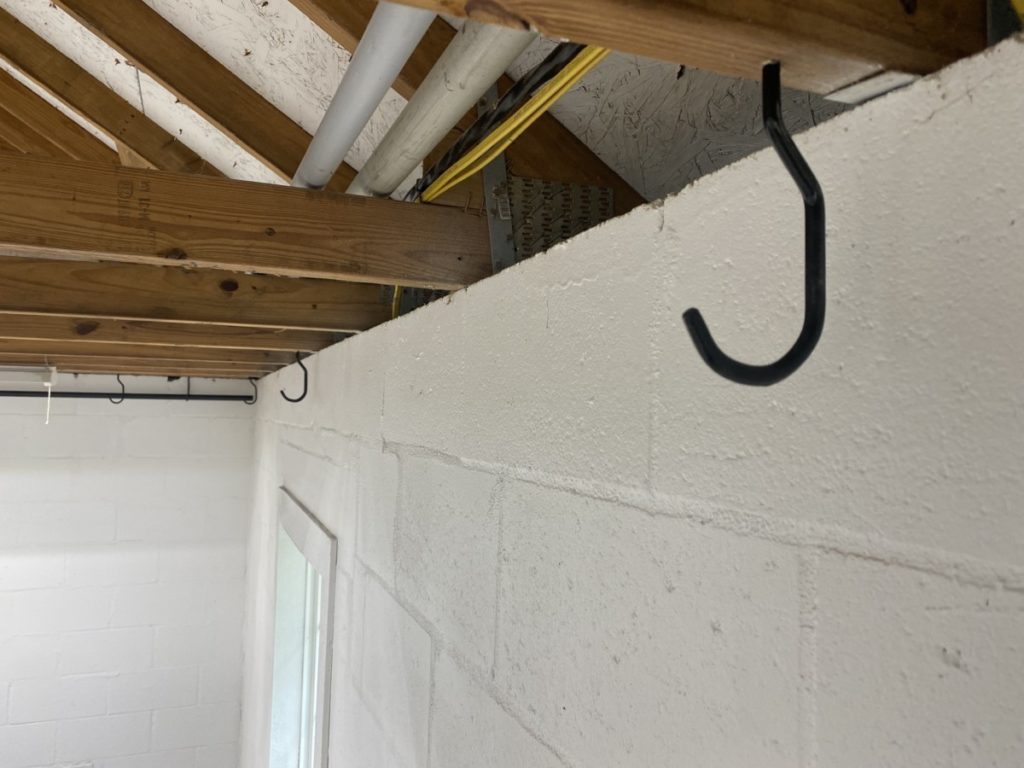
After the holes are drilled hand screw in the utility hooks. ( I used rubber coated hooks so that it would prevent the curtain rod from slipping.)

I used the 1″ curtain rods from IKEA so they had some rigidity to them. After playing around with their strength I decided that one hook every 5′ was more than adequate.

Prep Curtains for Paint Booth

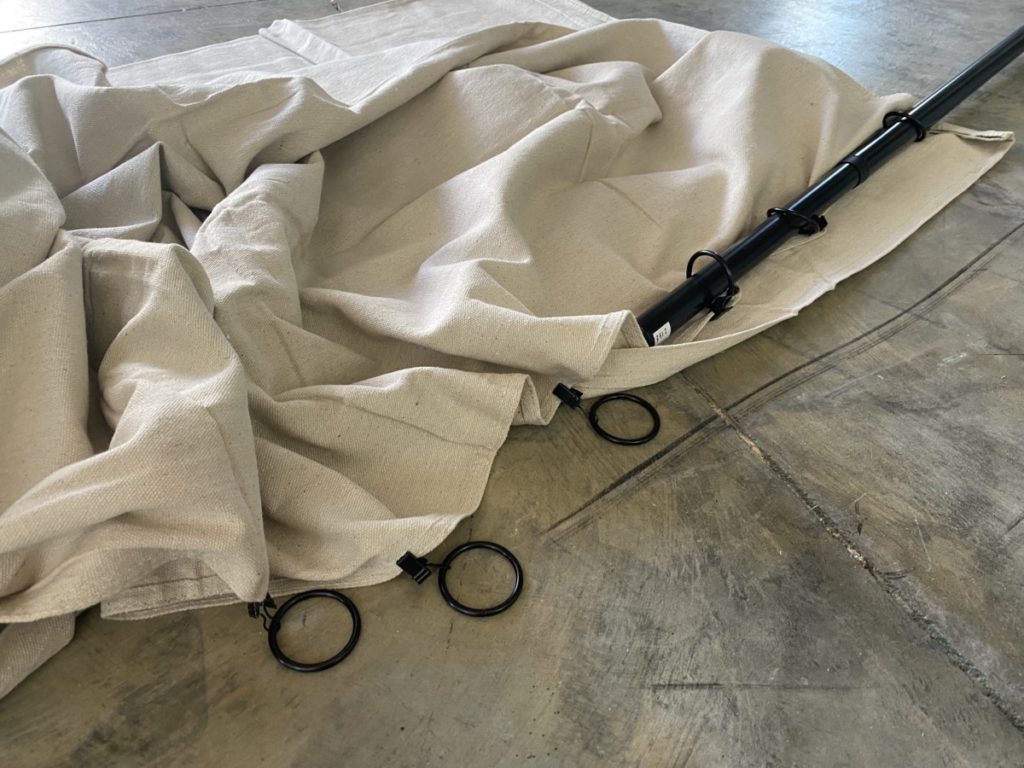
When preparing for this project I did experiment with several options. The front runners were tarps and drop cloths. Tarps where cheaper, but they were very light weight and blew all over the place. I tried adding some weights to the bottom of the tars using several different methods but ultimately decided the hassle wasn’t worth saving a few dollars. I went with the drop cloths.

DIY  Paint Booth

the great thing about drop cloths is that they have a hefty weight to them, they are fairly affordable and come in many different sizes! I ended up using (x4) 12’x15′. ( I didn’t hem mine but if you wanted to make these more custom to your space, hemming is always an option.) If you want to know more about how to hem, check out this tutorial here: Hemming Curtains.

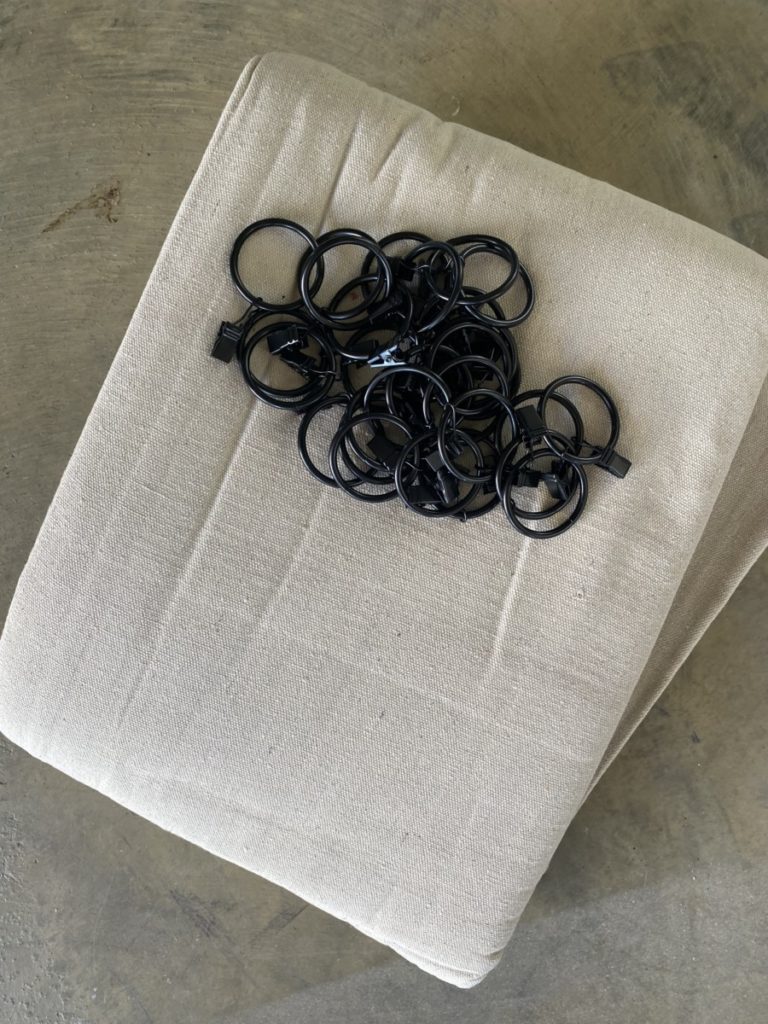
To make things simple I used curtain rings. There are pros and cons to using them; yes, it is cheaper to sew a pocket for the rod… however using the rings will make the curtains slide effortlessly. I ordered bulk packs of clips from Amazon and placed a ring approximately every 8″. ( Like I said these drop cloths are heavy and they will need the support.)

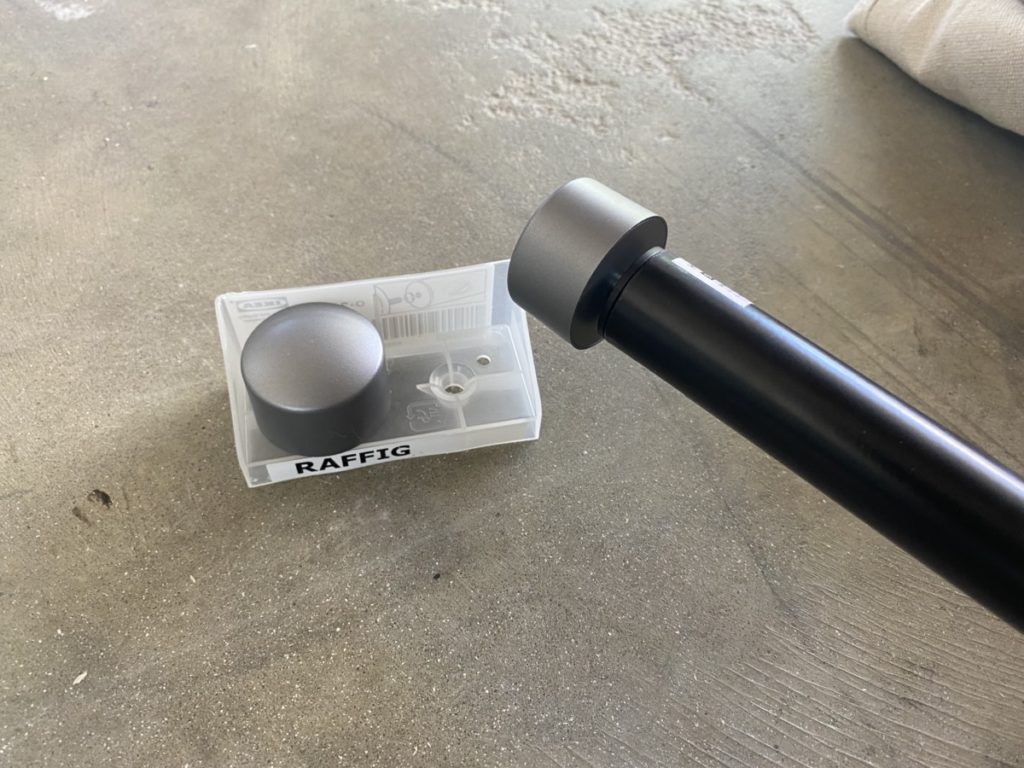
In order to prevent the rings from sliding off the end I used IKEA rod ends, also known as finials. (They were all out of the matching black, so gray will have to do.)

Hang Them Up!

I simply hung up the rods and can easily pull them out when in use, and tuck them away when not needed.

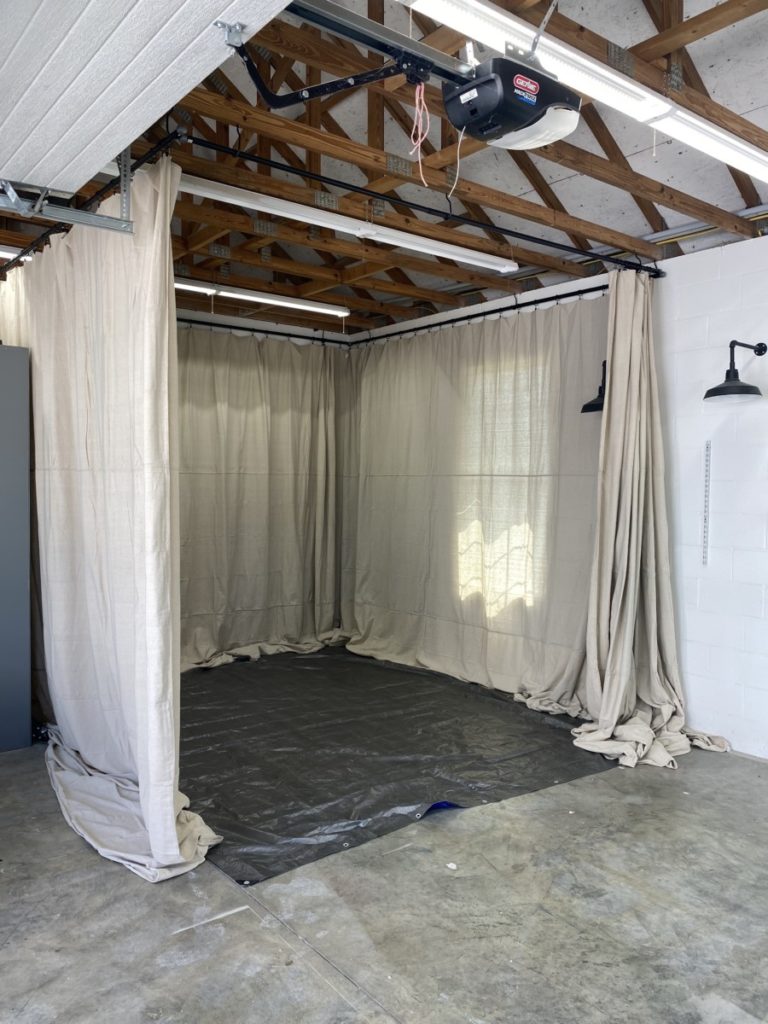
When in use, I have a tarp that I lay down on the floor. It is nothing fancy, but it is cheap and it does the trick.

Ventilation

As I states before, this is just a broad stroke tutorial on a concept that could easily be adapted to any space. My shop has and industrial fan that is directly above my paint booth. I simply turn it on and it sucks the paint fumes up and out. (Yes, my ceiling is exposed and there will be some paint that will accumulate over time.) This is not a sterile environment, but it will mitigate the amount of over spray that ends up all over my shop during a paint project.

Another suggestion would be to strategically situate your paint booth in front of a window and cut a hole in the drop cloth to accommodate the window and place a box fan with a air filter in the window. ( Again, not a professional setup but it definitely DIY level boujie spray booth.)

Sources:

  • Utility Hooks: Amazon 
  • Curtain Rods:  IKEA
  • Curtain Ring Clips :  Amazon
  • Drop Cloths (x4):  Amazon
  • Tarp:   The Home Depot

How to: Window Casing

May 17, 2022

*This “How to: Window Casing”  is sponsored by DAP and includes affiliate links. *

REAL Window Casings

 Tools Suggested: Materials Used:
Tape Measure  Primed Finger Boards
Miter Saw DAP Weldwood Wood Glue
Table Saw DAP Plastic Wood All Purpose Wood Filler
Drill Alex Fast Dry Caulk
Pocket Hole Jig Paint
Pin Nailer/ 16g or 18g Nailer  
Caulk Gun  
   

  A few years back I was working on  window casings in my Primary Bedroom. ( It has undergone two makeovers in the past few years.  You can see the original makeover here, and the new moody design here.)   My Dad  happened to be visiting me when I was in the process of working on casing my windows.   He walked in and watched as I proceeded to add a thin piece of MDF to the interior of the window frame in preparation to add  actually trim to the front of the window… to which he  says… “Punkin,  (He calls me Punkin) what are you doing?”

The Solution:

I then  proceeded to  explain to him  that I didn’t like seeing the wall texture on  the interior of the casing so I cover it…  he  patiently   listened to  me explain my  reasoning…   he nodded  as I explained… and then  he  said “thats a good way  to do it…  but tell me why you  don’t just case the interior?”   My Dad has been in the home building construction industry since he was 12…  I learned how to use tools and worked rough construction along his side all  through high school and college.  He knows  a thing or two  about a thing or  two…  but I never did mill work with him. I never learned how to actually  case a window! 

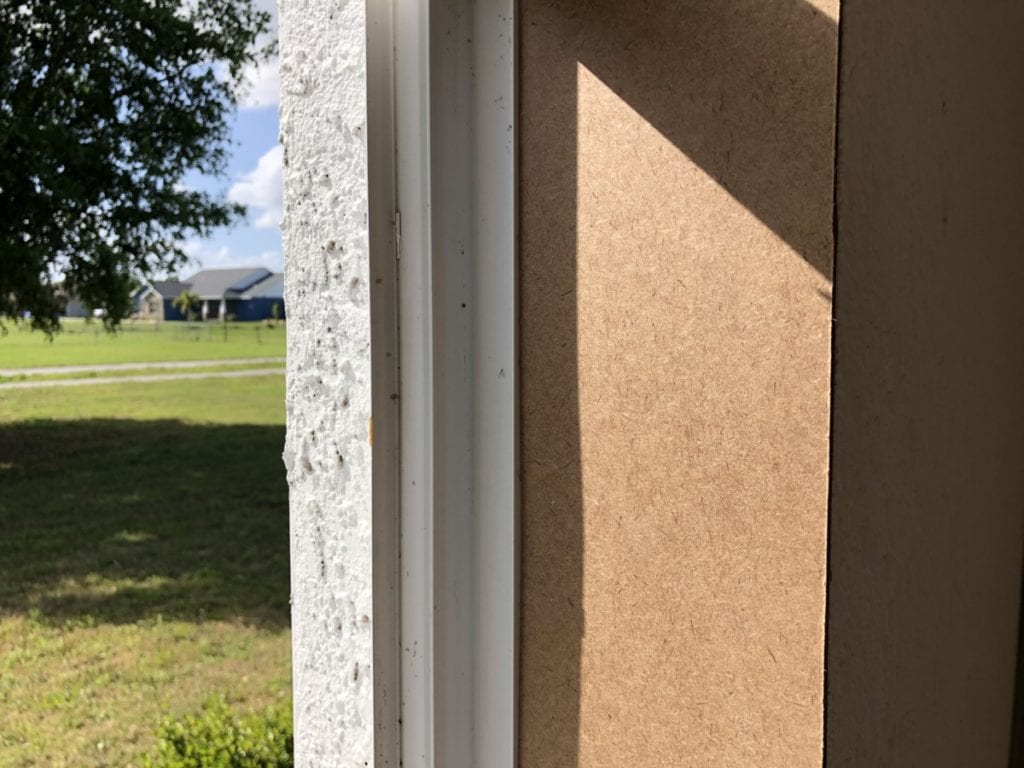
This is what the MDF alternative looks like.

 I had given all my windows the MDF  makeover version because  I was  scared too! (It is still is a great option,  but it’s more of a “window hack”.) Looking back “being scared” seems like a really dumb reason.  I put it off for years… and now I  wish I had leaned in sooner!  Let me show you how I now add window casings  using interior trim. 


The “Scary Part”- Drywall Removal

  The scariest  part of this project is  removing the drywall.  It isn’t a hard job it’s just a little scary!  I have never been  great  at drywall and I don’t love working with it.  The idea of tearing it apart  terrified me… “what if I have to fix it?”!   Honestly,  you guys, not scary… the reason removing the interior drywall is necessary is because you need to make room for the new board.  

 Average drywall is about 1/2″ thick.  Once the drywall  is removed from the interior of the window jamb in creates space for an actual board… not just flimsy MDF paneling.   

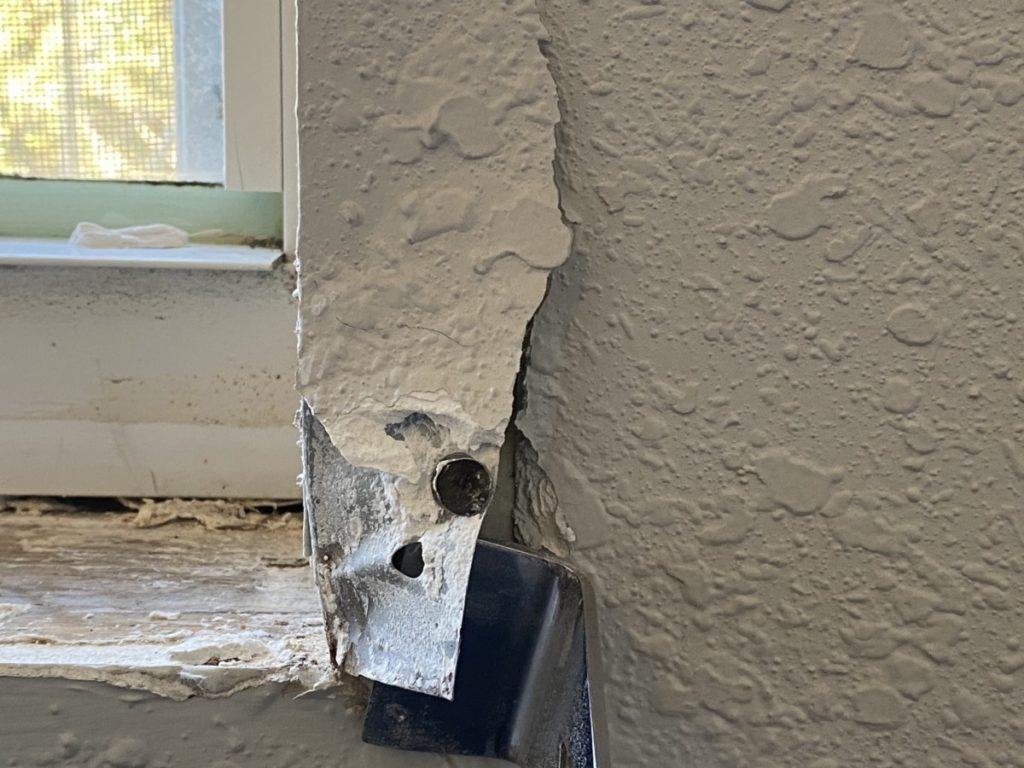
Let’s  get started most  outside corners are going to have a piece of  thing metal (sometimes plastic) under the drywall where the joint  meets,   this is called “corner  bead”.   I  just  hit the corner with  a hammer until I found where the “corner bead” started. 

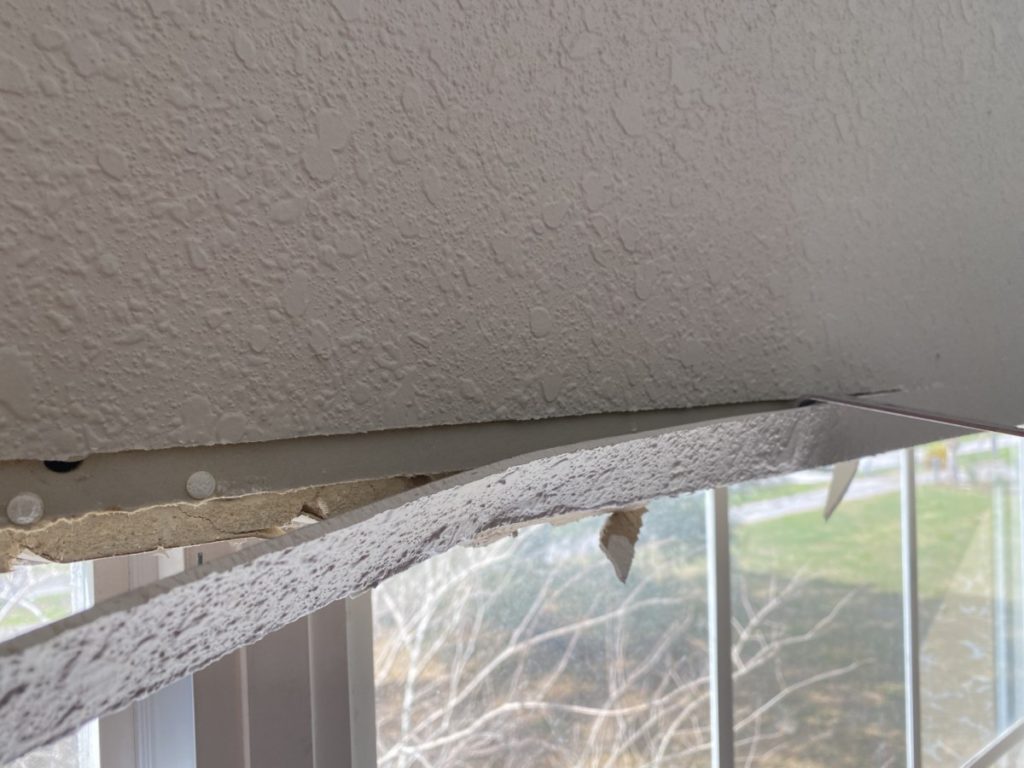
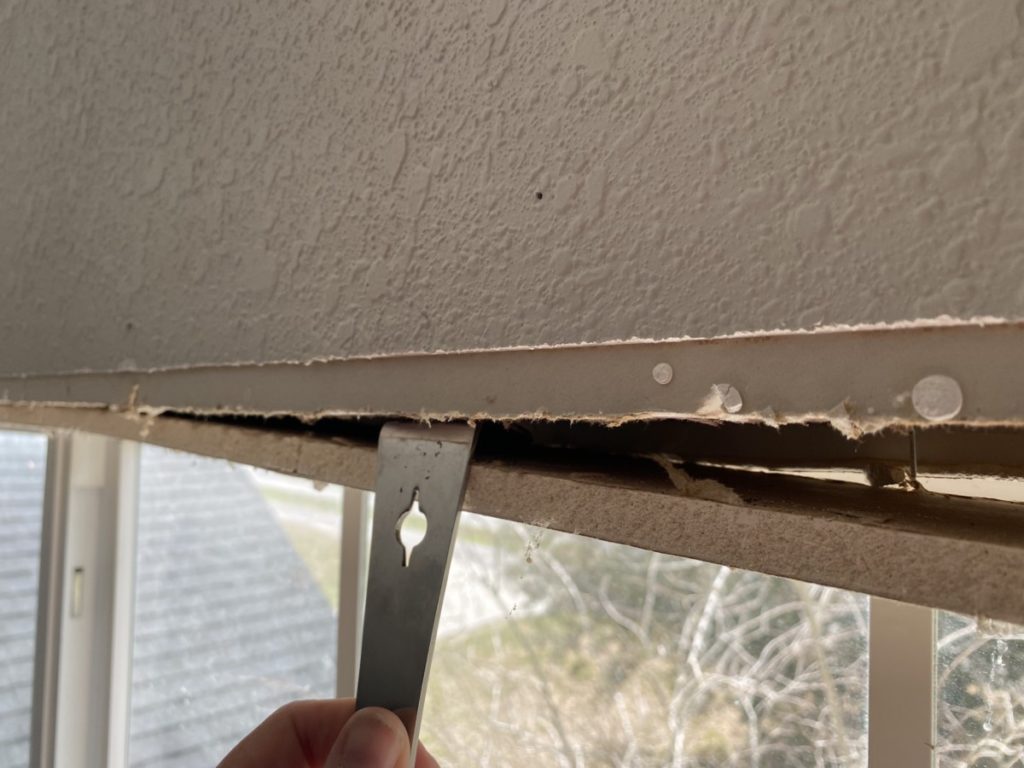
Once the corner is located,  just  start prying!  Use a small pry-bar to slowly lift the corner bead,  and it will  bring the drywall with it.  be aware that there will be quite a few nails that will need to be backed out  as the corner bead is  removed.   It is not a hard process,  just take s little patience. 

 After there corner bead is removed the side of the drywall should be exposed.  (It may have some adhesive  helping hold it in place. Use the prybar  to slowly pull the drywall off of  the door jamb.

 Once the drywall is removed from the sides 2×4’s  (Construction differs  base on location,  my first floor  is  comprised of cinderblock and the window were cased in the PT fir stripping.)

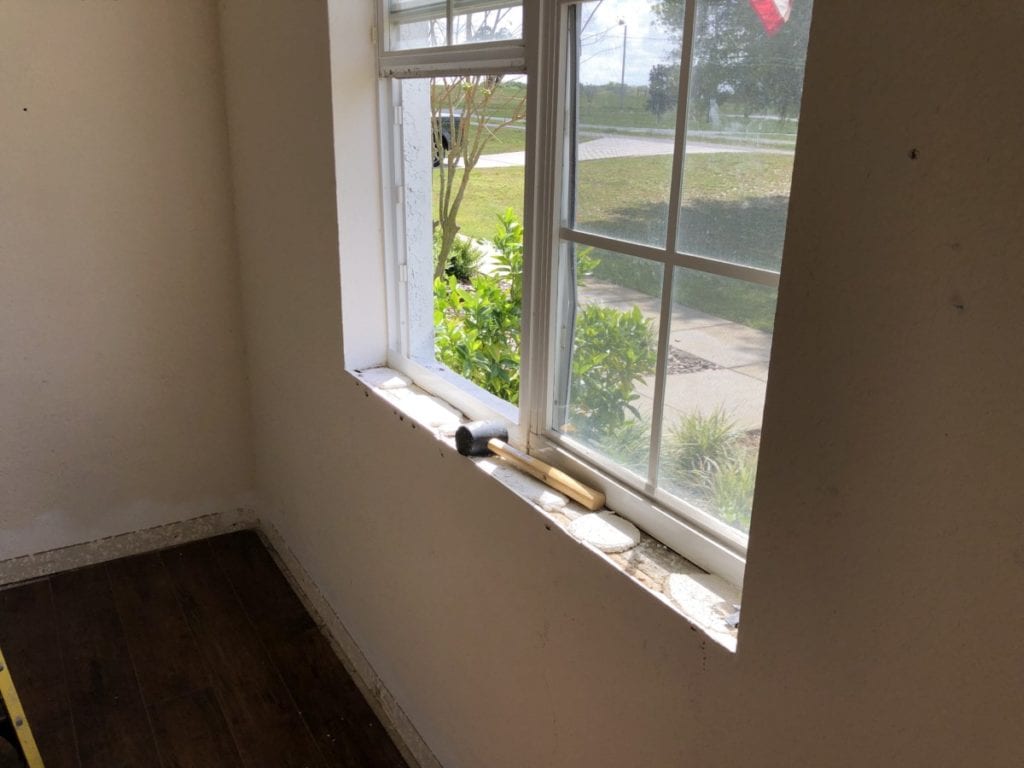
  The last  piece that needs to be removed  is the “sill”.  In our home they builder added a marble sill.  These are easy to remove… they may break in the process but that is not a big deal.  I  use a rubber mallet to loosen the sill and then use a pry bar to lift and remove. 

This image is from when I removed the sill in my downstairs window.

Mark and Measure Window Casing

  One of the things that I LOVE most about this way of window casing, is that it allows me to correct errors the builder made.   In the past when I was doing the MDF version of a window casing I was always surprised that the dimensions from one side of the window to another were always so different!  I figured… the window is a square/rectangle. Why aren’t the opposing sides the same dimensions… the answer? Most generally the discrepancy is in the drywall and builder error.  I have found that drywall mud is the magic eraser for a builder.  If they mess up or need to make something flush, they  just add more  mud.  Once the texture is added it is hard to see  the original problem.  SO…  when you removed the drywall  you can access the windows TRUE dimensions, which SHOULD be perfectly  square.  When  building my casings I base them off of the window dimensions, not the opening.  This will ensure that the casing will be square, and the way that I construct these actually  HIDES  builder errors.  Win/Win. 

Construct Window Casing

  The goal when taking dimensions is  to   cover the  tiniest bit of the window frame, and still  have enough to have the board  AND  still  be able to open and lose the window.  The great thing about this form of construction is you can hide a lot of discrepancies.  The interior depth of my window  varied  based on where you  took the measurement.   Instead of scribing and custom cutting the interior board I  used the deepest measurement and call all of my interior casing boards to the depth.  (For example,  my sill depth  was 3 3/4″ at one point but then  4 1/8″ at another. So I used the 4 1/8″ as the width for my  interior boards.) 

 I cut  my  sill  (bottom board) and my top  board first.   I  quickly did  a dry fit to make they  would fit. Next  measure the side dimensions,  including the depth of the bottom and top casing pieces.  Again, there is a good chance that the dimensions will not be exactly  the same.  In this  case cut both the side casing pieces to the the shorter dimension.   The goal is to create a “square” window…(Meaning that the corners are square 90 degree… not an actual  4 equal sides geometry square.)  I would suggest dry fitting all four boards  into the window opening before beginning the install process. 

Assembling Interior Window Casing

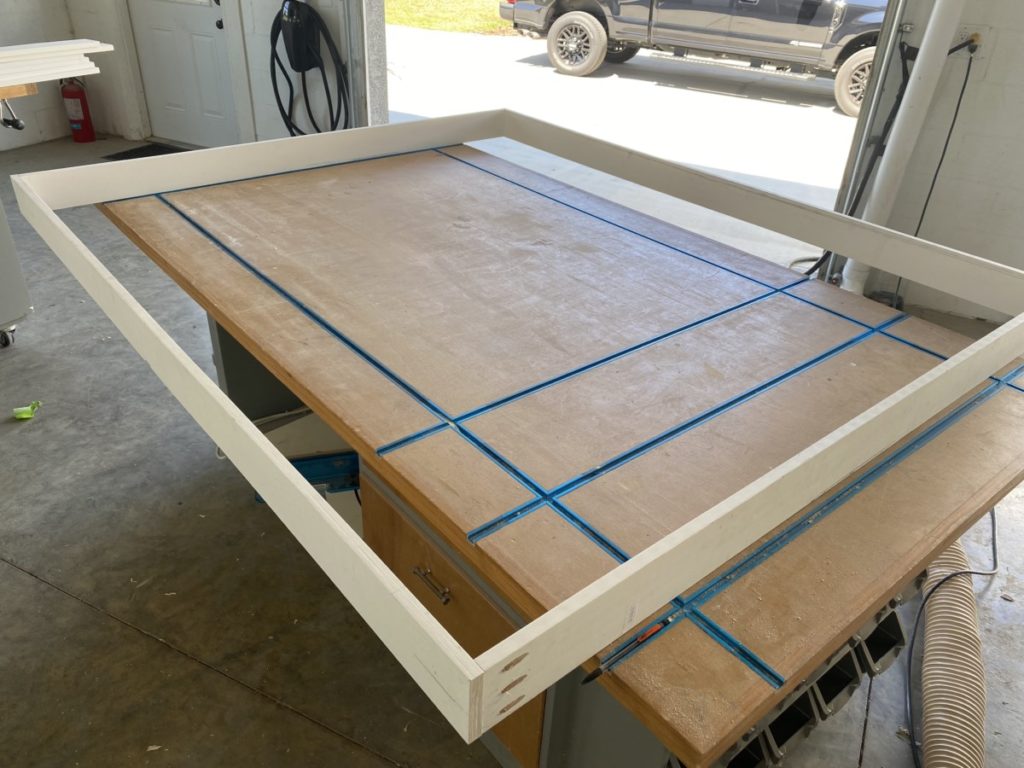
Time to start assembling… using a pocket hole jig  drill  holes on the  back side/ ends off the  side casing boards. 

 Using 1 1/4″  pocket hole screws  secure the side casings to the top and bottom boards.  ( The pocket holes should be on  the outside of the casing,  so they will not be visible once  installed.)  Once assembled  I suggest  doing another dry fit  in the window opening to ensure that it fits properly  and that the window can open and close.  ( There are bound to be uneven gaps around the perimeter.  DO NOT WORRY!  This will be a non issue in the next step.) 

Front Window Casing

  Next it is time to add the front window casing.  This will be the board that sits on wall, and will hid any weird gaps around the perimeter of the window.  I used 1×4″ primed finger board for this step.  When calculating dimensions I used the following formulas: 

 Top /Bottom Casing:  Take the dimension of the  top/bottom INTERIOR of the newly constructed window casing and ADD .5″  This will  create a .25″ reveal on both sides. 

 Side Casing:   Take the dimension of the sides INTERIOR  of the newly constructed window casing and ADD 7.5″.   (3.5″primed board width+ 3.5″ primed board width + .25″ reveal+ 2.5″ reveal= 7.5″)

The assembly process of the front window casing is similar to that of the interior casing. Using a pocket hole jig drill pocket holes on the back sides boards. Using pocket hole screws secure the sides to the top and bottom pieces. This will again create another he rectangle/square, only this one will be flat.

Attach Front Window Casing to Interior Window Casing

BEFORE starting the assembly process I would suggest another quick fit test. Lay the front window casing ON TOP of the interior casing. The goal is to have an even 1/4″ reveal about the perimeter of the interior casing.

After double checking the reveal dimensions it’s time tom assemble! To do that I will rely heavily on my go-to wood glue. I always use Weldwood Wood Glue by DAP. The hold is always strong and does not require an excessive amount. Run a small bead of wood glue along the top edge of the interior window casing. (Keep in mind there will be an 1/4″ reveal and try to avoid adding excessive amounts of glue to the 1/4″ that will be exposed.)

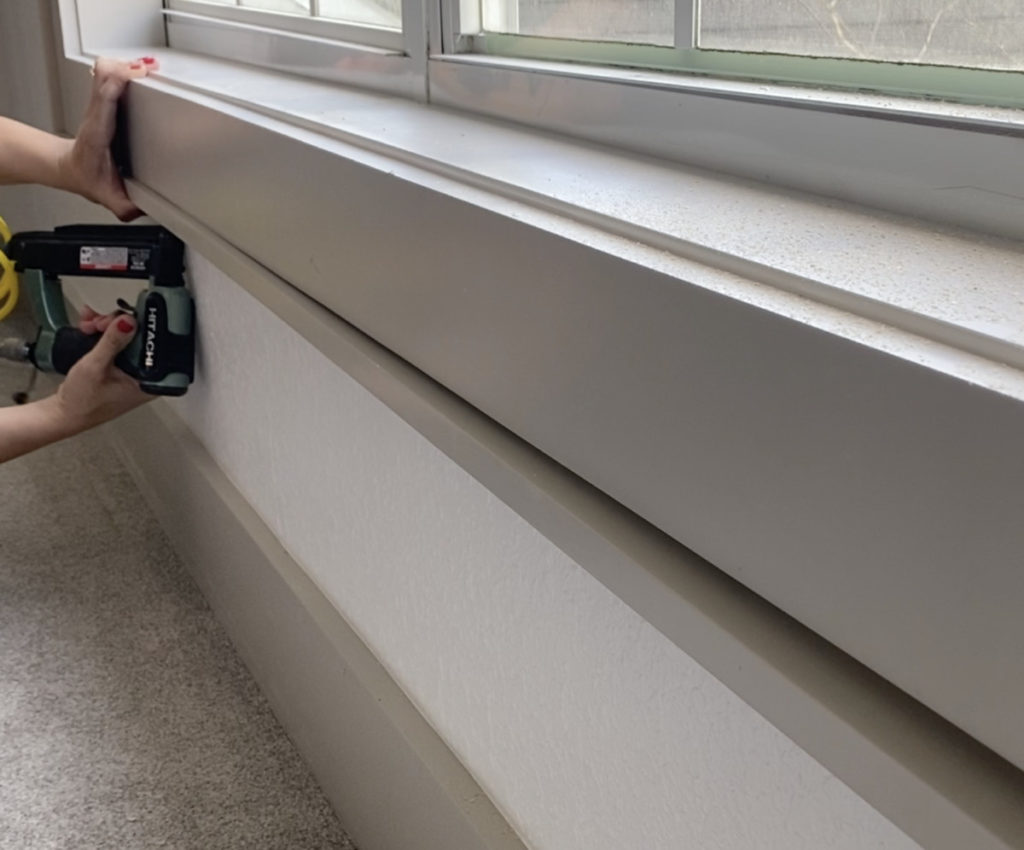
When you use a GOOD wood glue like Weldwood by DAP you really don’t NEED to use fasteners. However, if you are impatient like me and want to hurry the process along you can add a few pin nails. Like I said, this doesn’t really need fasteners, but a pin nail is strong enough to hold it in place as the glue cures and acts like a clamp while making minimal holes to fill later.

While the holes are minimal, there are holes nonetheless that will need filled. Which is not a big deal, I like to fill all of my butt joints with DAP Plastic Wood All Purpose Filler anyways. This stuff is amazing. It dries quick, doesn’t shrink and can easily be sanded for a a PERFECT smooth finish.

After the Plastic Wood has completely dried, sand the entire frame with a finish sander and a fine grit sand paper.

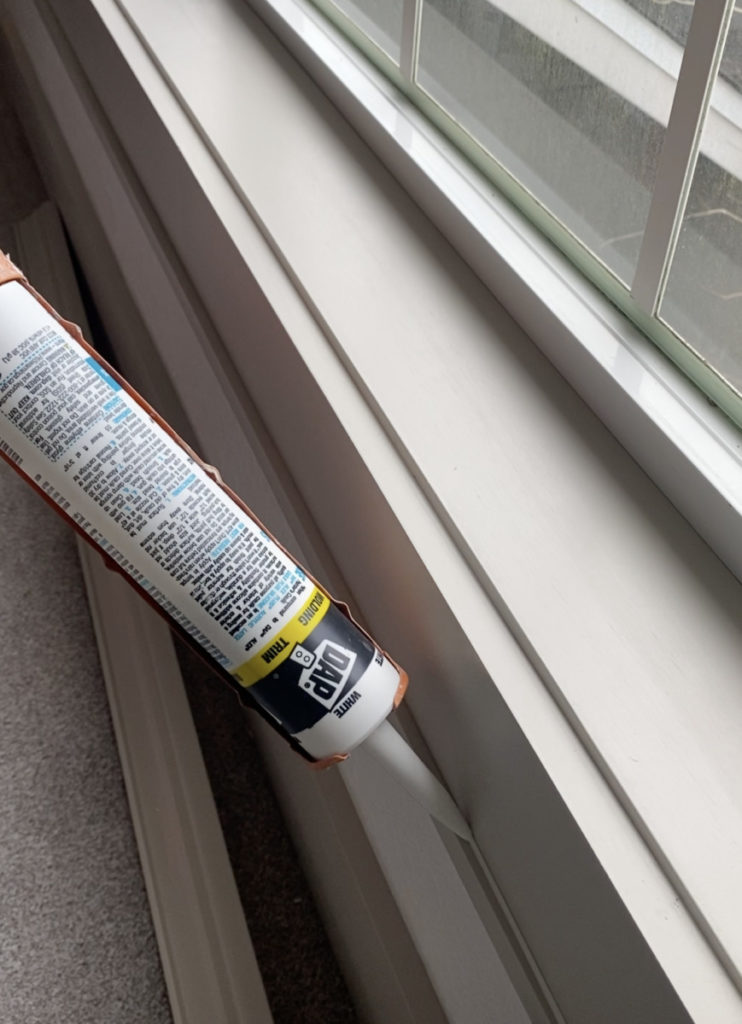
Finish sanding, wipe the window casing down with a damp cloth. Once the casing is dry, make this casing look like a solid unit by adding a small bead of DAP Alex Trim Caulk to the interior seam. Caulk can magically make your trim projects look 100%!

At this point the window interior and front casing are complete. (There is still layer of trim that will be added, but that will not be added until the casing is in place.) Instead of waiting and painting the entire unit in place, I opted to spray it before installing.

Install Window Casing

After the casing was completely dry it was time to install! This is when all of those dry test fits pay off. Instead of installing the window casing piece-by-piece I simply sliced the entire unite into place! If the window casing is sitting wonky use wood shims level out any in discrepancies. (. You can also use a construction adhesive like DAP Dynagrip on the interior of the window rough casing before inserting the finished casing.

At this point the window casing should have a nice snug fit ( As mentioned earlier, use shims if the casing is not snugly fit.) Once you are happy with the fit, fasteners to secure. My casing had a very snug fit and did not require excessive amounts of fasteners. I was able to use 2″ 16g nails to finish the job.

Add Window Casing Perimeter Trim

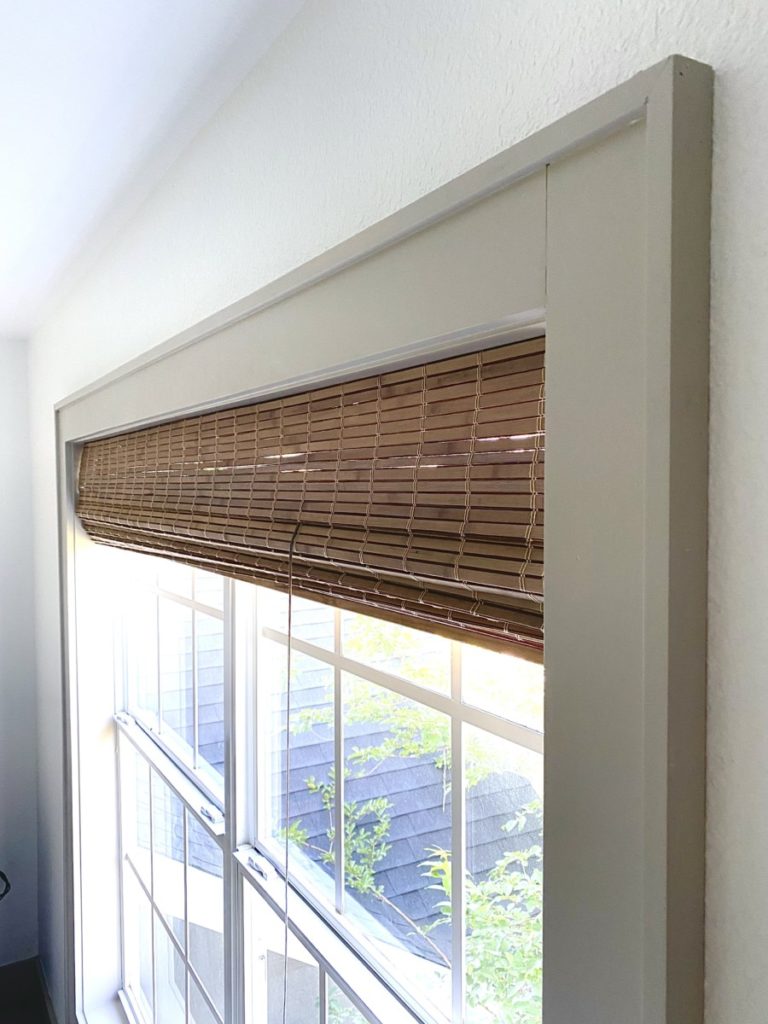
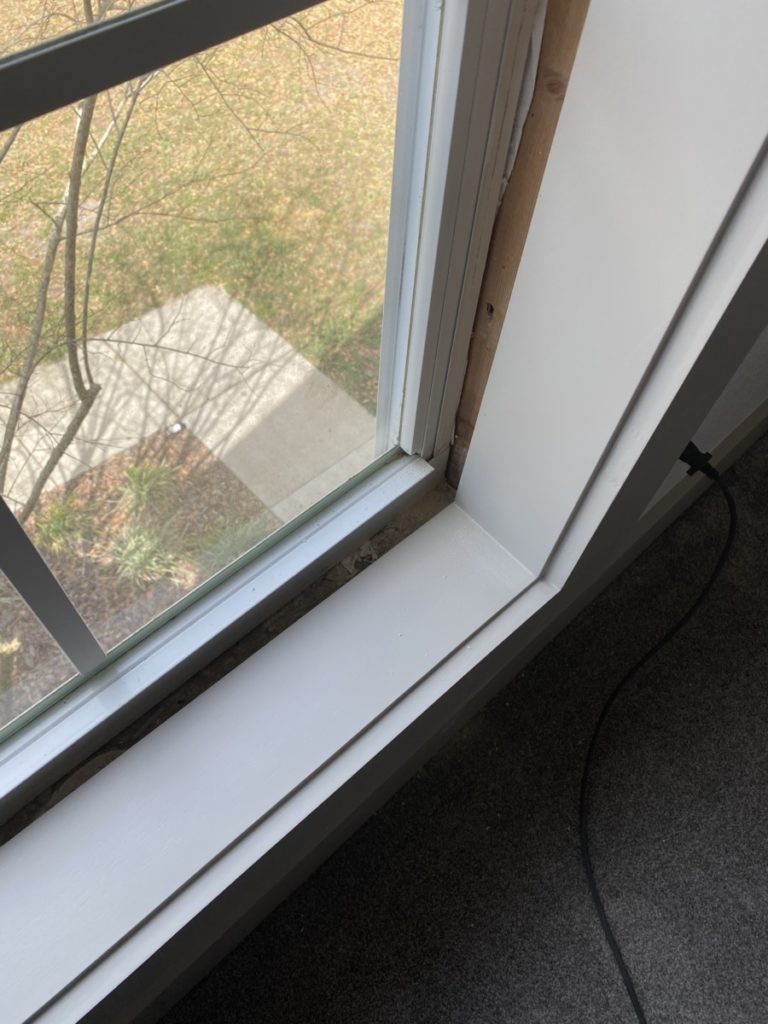
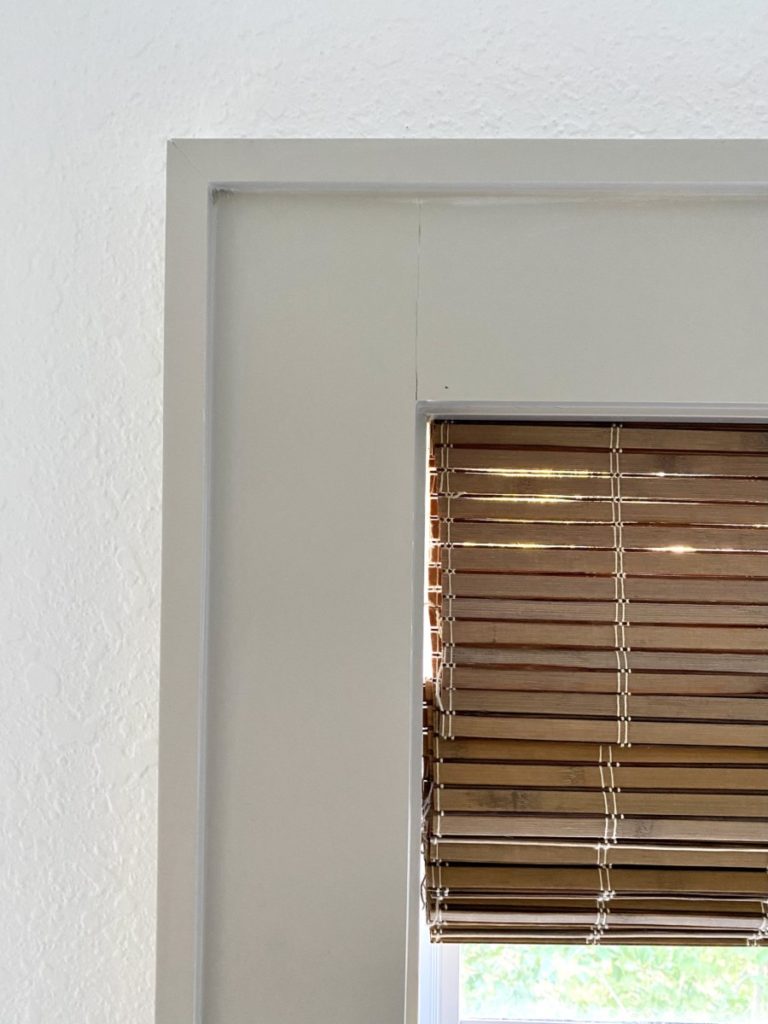
Now that the window casing is set in place, there is one last piece of trim to add. This final piece will go around the perimeter of the new casing. The point of this trim is two-fold. First, it will add a bulkier look to the casing. Secondly, and more importantly it will hide any noticeable gaps where the new trim meets the drywall. Drywall is notoriously inconsistent, especially around windows. ( Drywall installers will add additional mud and texture to hide variances, while creates an uneven surface.)

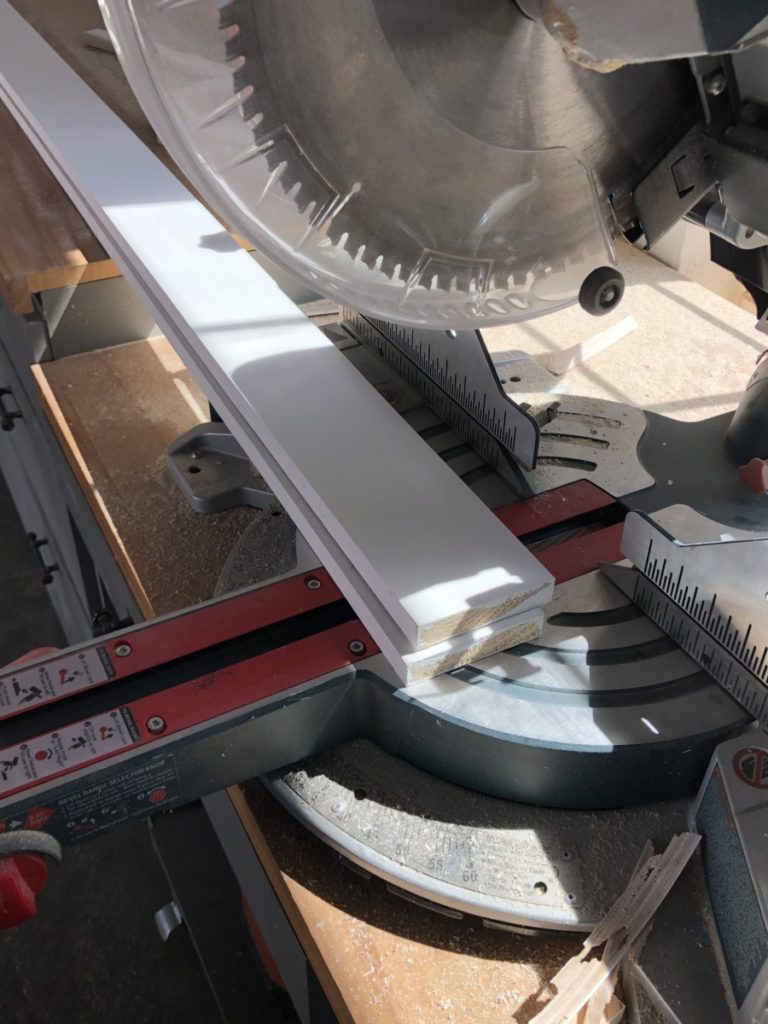
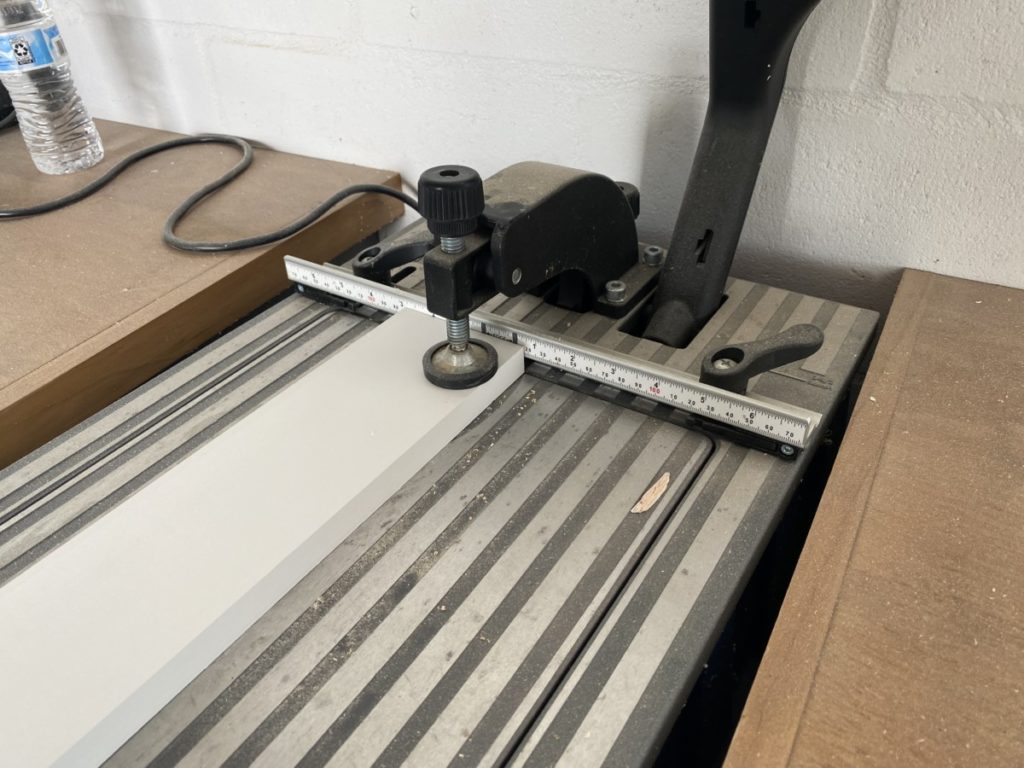
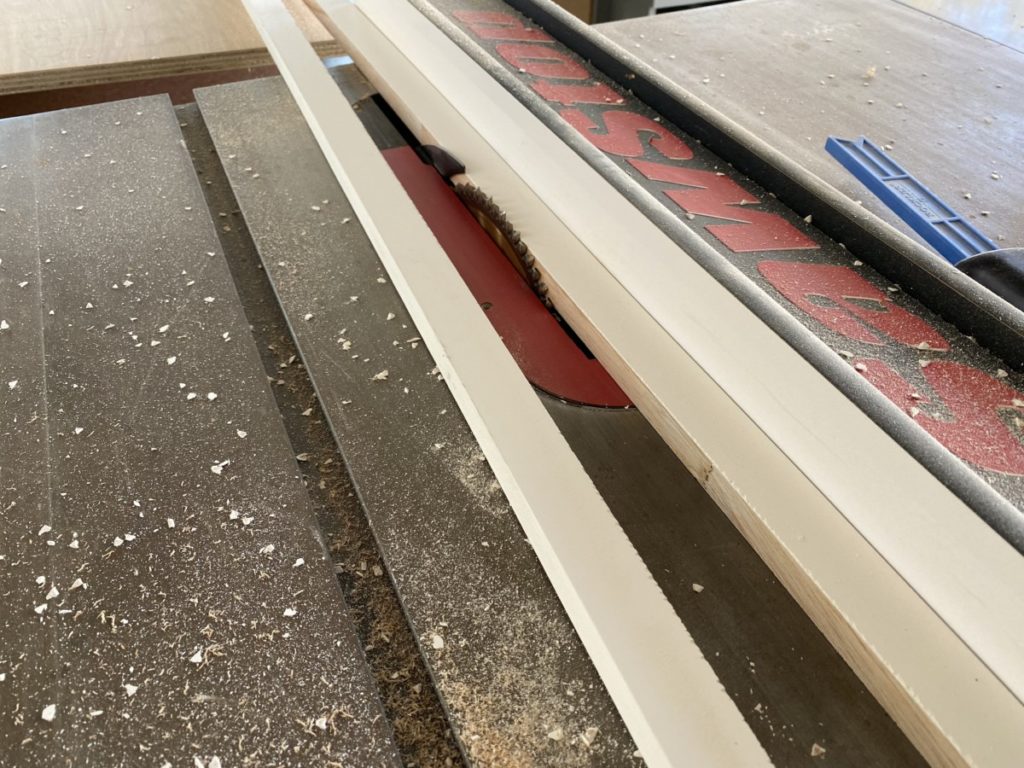
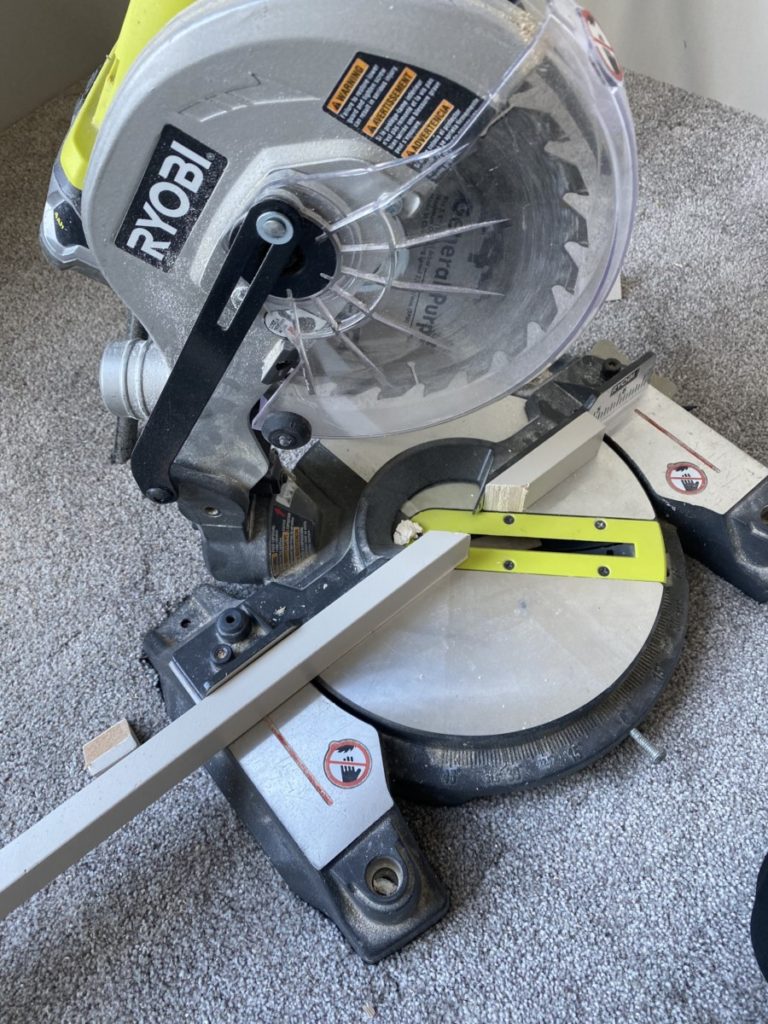
To create this trim I ripped several pieces of primed 1×3″ boards in half. Making them approximately 3/4″ x 1 1/4″ strips. I then cut them to fit using 45degree cuts to create mitered corners.

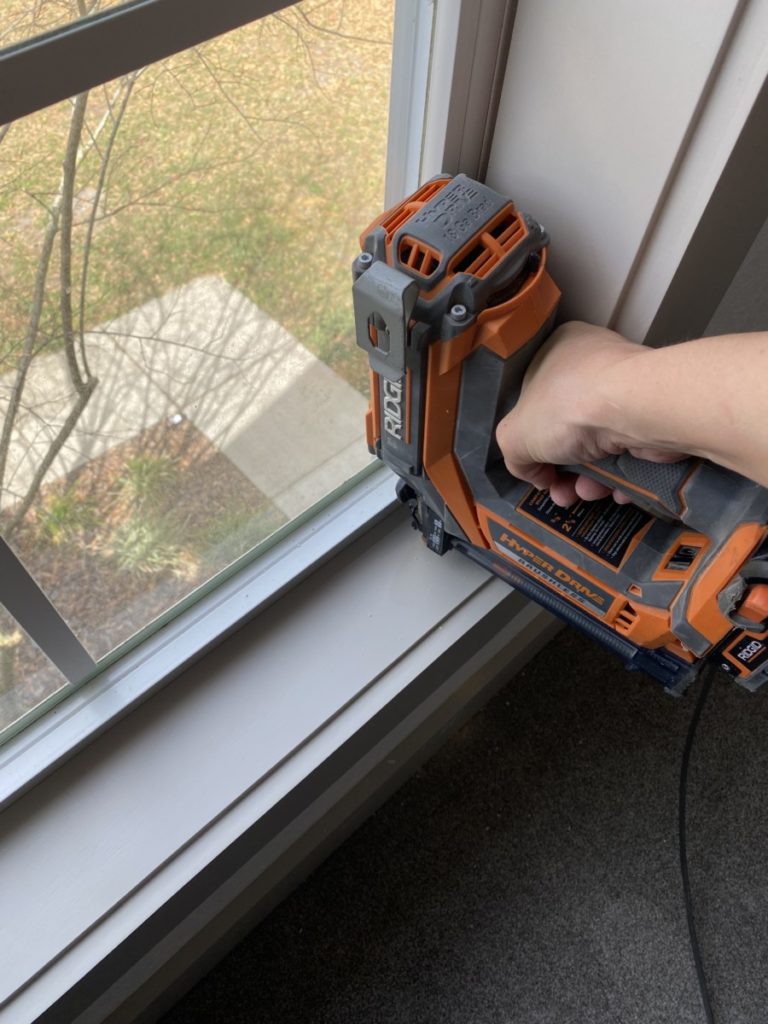
These boards are very lightweight and can easily be installed using a bead of DAP Weldwood and reinforced with pin nails. ( I am newly converted to using pin nails when working with small trim. Does the job perfectly with minimal holes!)

Caulk Window Casing Seams

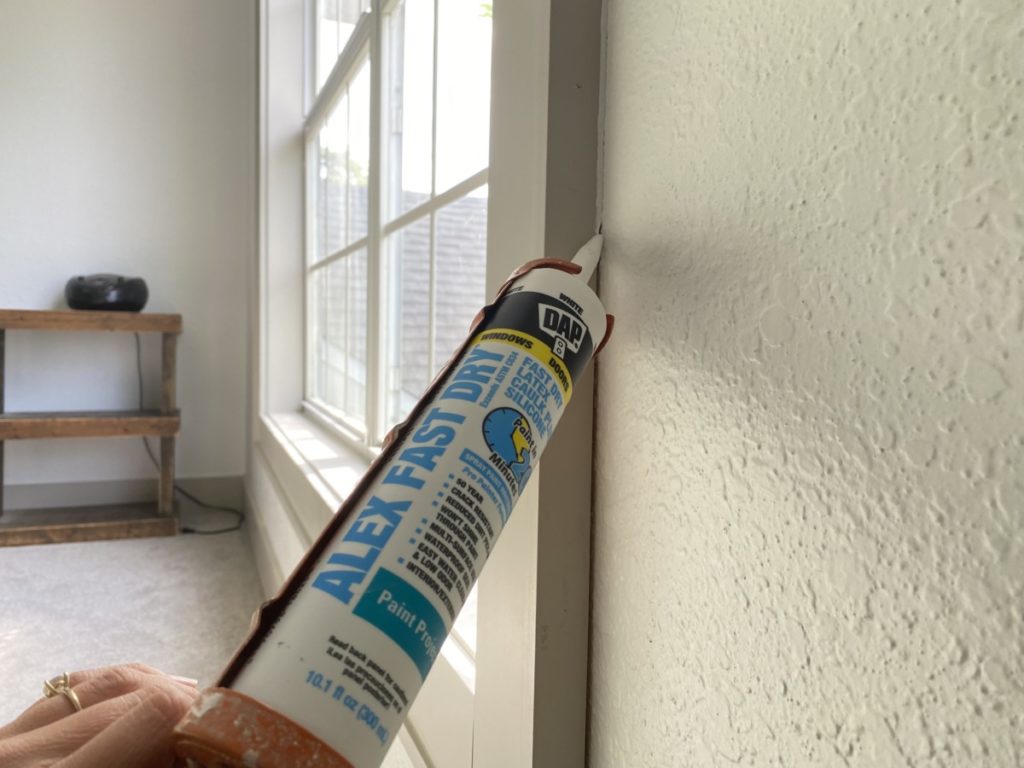
After the perimeter trim is installed it is time to add the final touches. The last thing we need to do is melt away any visible seams! To do that I use my trusty DAP Alex Fast Dry caulk!

I add/ smooth out a small bead of DAP Alex Fast Dry caulk along the seam where the new trim meets the window casing, where casing meets the wall.

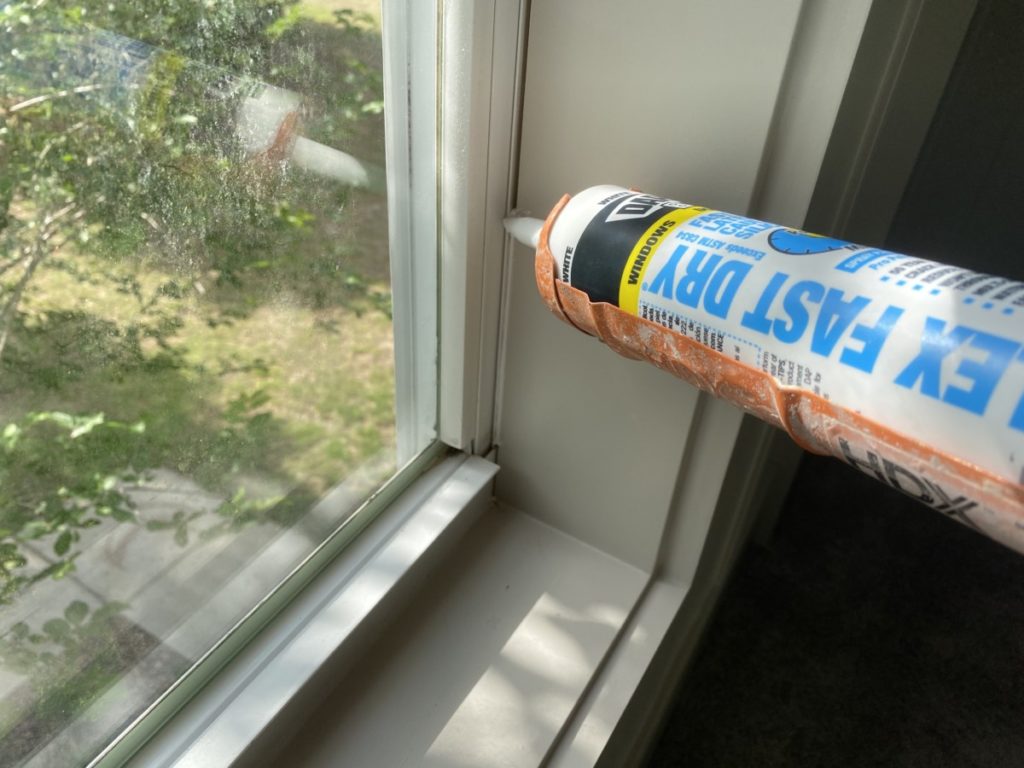
Lastly, I fill any visible gaps where my trim meets my window.

DAP Alex Fast Dry caulk is ready to paint in as little as 20 minutes! By the time I finished caulking everything and gathered my paint supplies I was ready to paint!

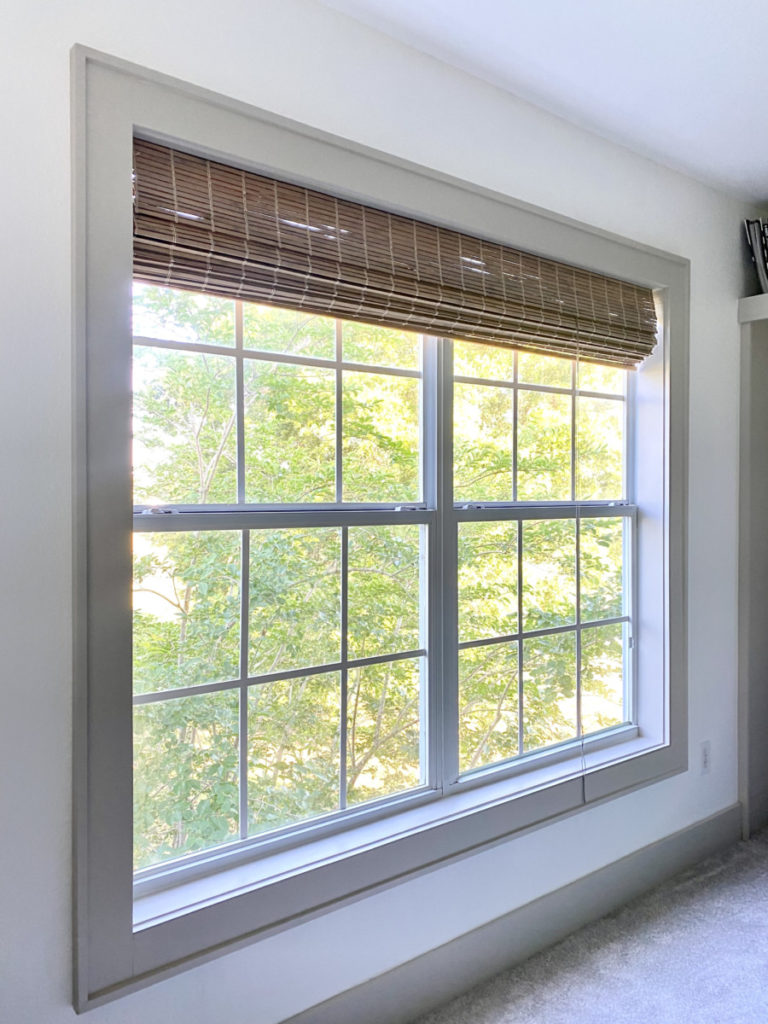
There you have it folks! This simple and plain window is not a beautiful statement in my boys room.

  • previous
  • Page 1
  • Page 2
  • Page 3
  • Page 4
  • Interim pages omitted …
  • Page 47
  • next

Primary Sidebar

  • Facebook
  • Instagram
  • Pinterest
  • Twitter
  • YouTube
IMG_9167 (1).jpg fd
DIY & Design

Meet Corey

Hi everyone, my name is Corey, and I have a problem. I can’t leave well enough alone… The best therapy usually involves a variety of power tools. So, in the few “spare” moments I am not entertaining my two beautiful, rambunctious, boys, I can typically be found hunched over a sewing machine and/or covered in sawdust. All in the efforts to create a perfect balance of aesthetics and practicality in our home.
read more

Join our mailing list!

DIY & design ideas - right in your inbox!

Featured

Stair Tread Makeover

Categories

  • 70's Ranch Home
  • Around the House
  • Build Plans
  • Crafts
  • Current Home
  • Decor Makeovers
  • Dresser
  • Exterior
  • Fall
  • First Home
  • Furniture Makeover
  • Hidden Compartment
  • Kitchen
  • Lighting
  • Makovers
  • Master Closet
  • Organization
  • R.V.
  • Room Makeovers
  • Seasonal
  • Seating
  • Sewing
  • Shelving
  • Small Builds
  • Smart Home
  • Spring
  • Summer
  • Tables
  • Tablescape
  • Tutorials
  • Uncategorized
  • Wall Art
  • Wall Decor
  • Winter
  • Workshop

Footer

Contact Me: Corey@Sawdust2Stitches.com

Latest ‘Grams

Follow on Instagram
2020 © Your Blog Name
theme by soleilflare
Enter your name and email and get the weekly newsletter... it's FREE!
Your information will *never* be shared or sold to a 3rd party.