• Blog
  • About
  • Press
  • Privacy

Let’s be social!

  • Skip to primary navigation
  • Skip to main content
  • Skip to primary sidebar
  • Skip to footer
Sawdust 2 Stitches

Sawdust 2 Stitches

  • Tutorials
    • Around the House
    • Organization
    • Wall Decor
    • Sewing
  • Makeovers
    • R.V.
    • Room Makeover
    • Furniture Makeover
    • Decor Makeover
  • Build Plans
    • Small Builds
    • Wall Decor
    • Dresser
    • Tables
    • Seating
    • Shelving
    • Hidden Compartment
  • Seasonal
    • Summer
    • Spring
    • Fall
    • Winter
  • Home Tours
    • First Home
    • Current Home
    • 70’s Ranch Home
  • Workshop

Blog

DIY Pull Out Drawer Storage

February 25, 2021

This DIY Pull-Out Drawer Storage project is sponsored by Kreg Tool*

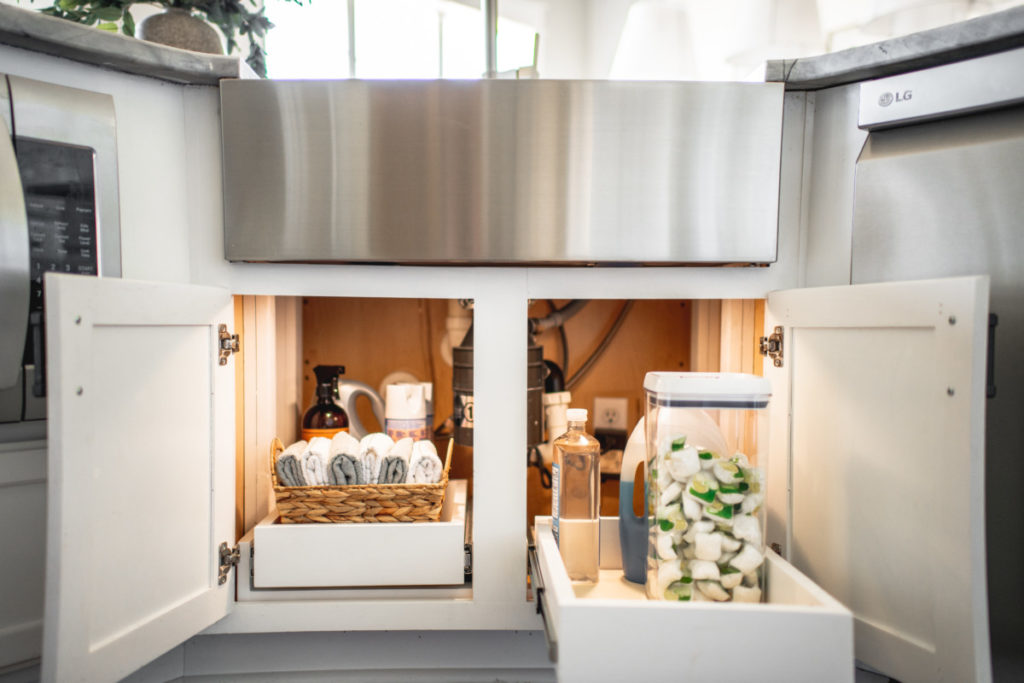
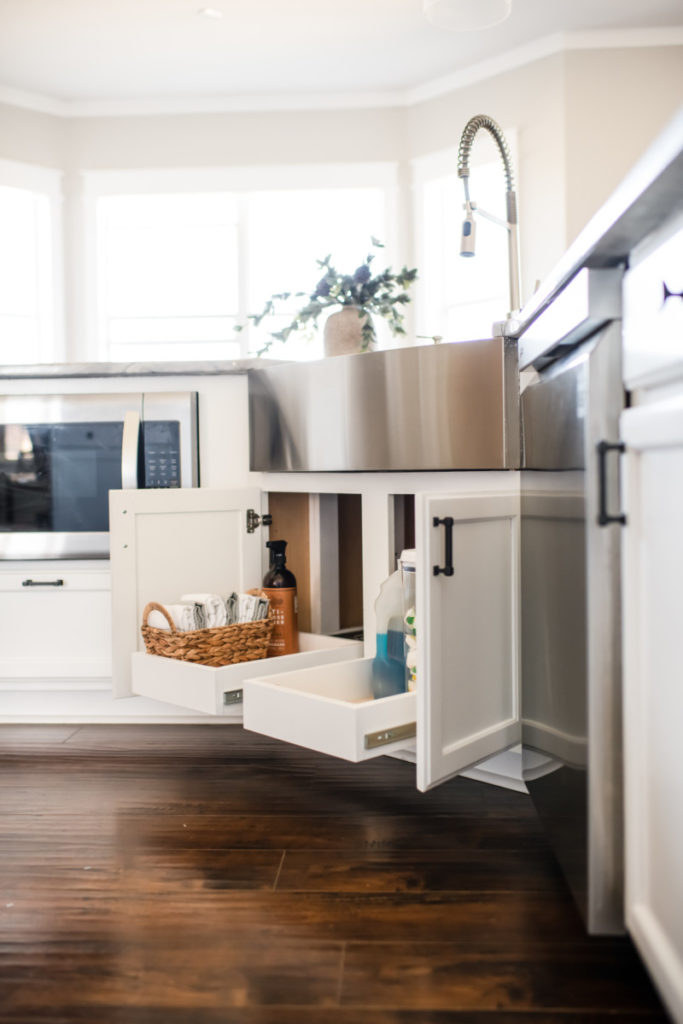
Who needs more space in their kitchen?  Well if you said yes I have the perfect project for you,  DIY pull-out drawer storage is a must!  While a huge kitchen remodel is a dream of many, this small project. can help you maximize your already existing space. 
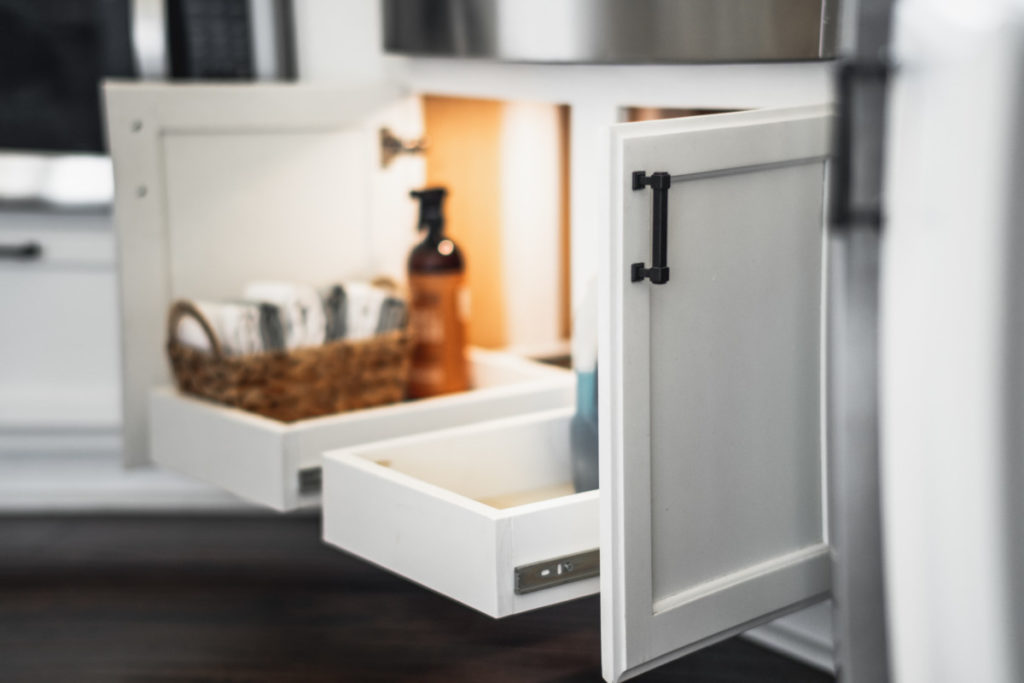
Under Cabinet Pull Out Drawer – Image: Ashley Navarro

Tools Suggested:

Materials Used:

  • Kreg Jig 720 Pro
  • Tape Measure
  • Miter Saw
  • Drill
  • Table Saw/ Circular Saw w/ Kreg Rip Cut
  • 1×4″ Primed Pine
  • 1×2″ Primed Pine Board
  • 1/2″ Plywood
  • 1″ Kreg Screws
  • 1 1/4″ Kreg Screws

In retrospect I should have selected a simpler cabinet to use as an example… however all the same principles apply. I just really, really wanted to organize under my sink. So do me a grand favor and ignore the plumbing and sink supports. :). That is the great thing about this method for DIY Pull Out Drawers, they can fit anywhere so long as you take proper measurements.

Measure Space

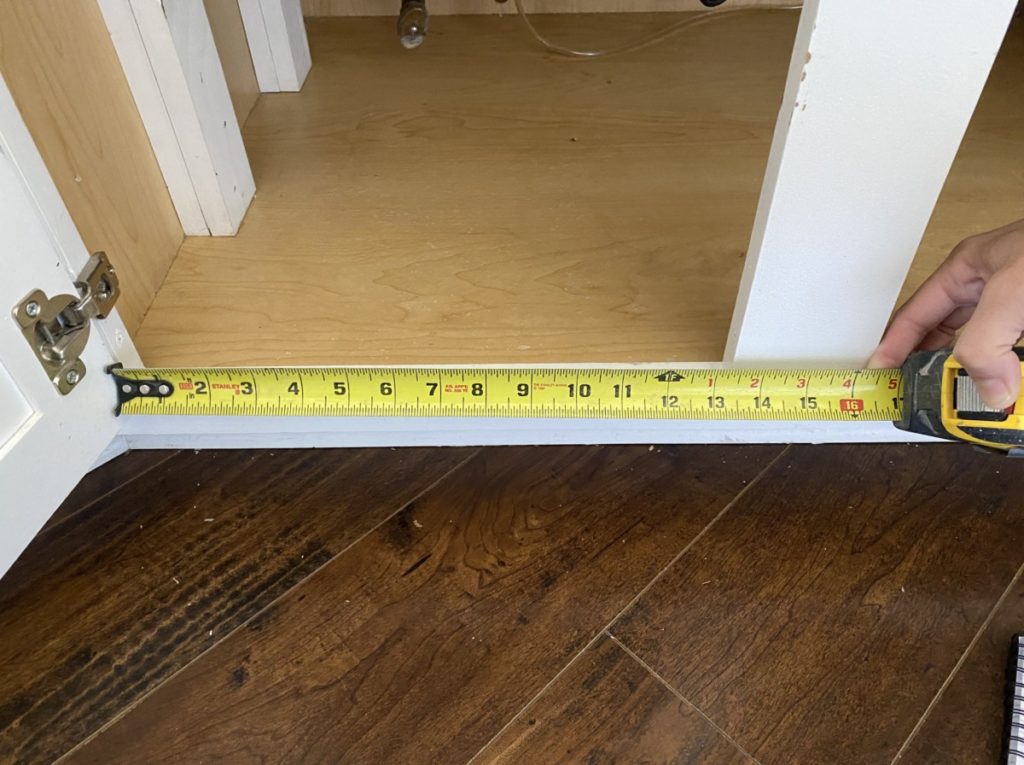
We will first need to take the measurements of the space for the intended drawer. To do this measure the interior dimensions of the face frame. For clarity we will use my dimensions as an example. My interior face frame dimension is 13 1/2″.
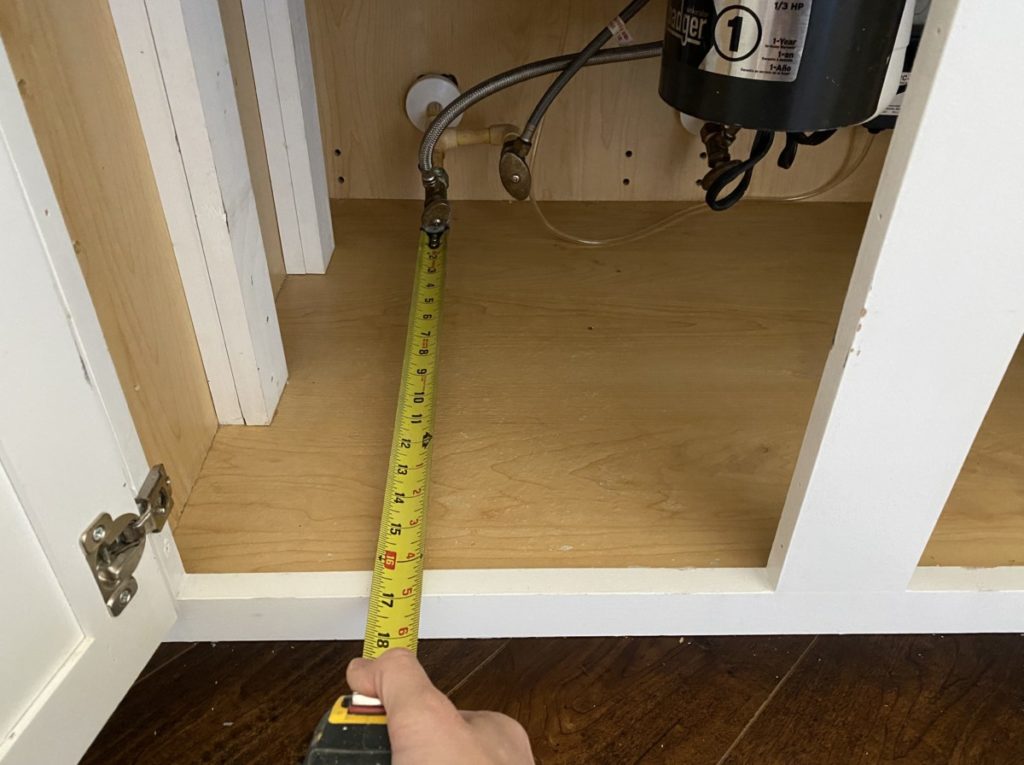
After take the width measurement, we will need to take the depth measurement. Again, I am accommodating my garbage disposal under the sink. In any other case I would maximize storage and build the drawer to nearly hit the back of the cabinet. However for the sake of this tutorial my overall shelf depth is 16″.
Build Drawer Box Support
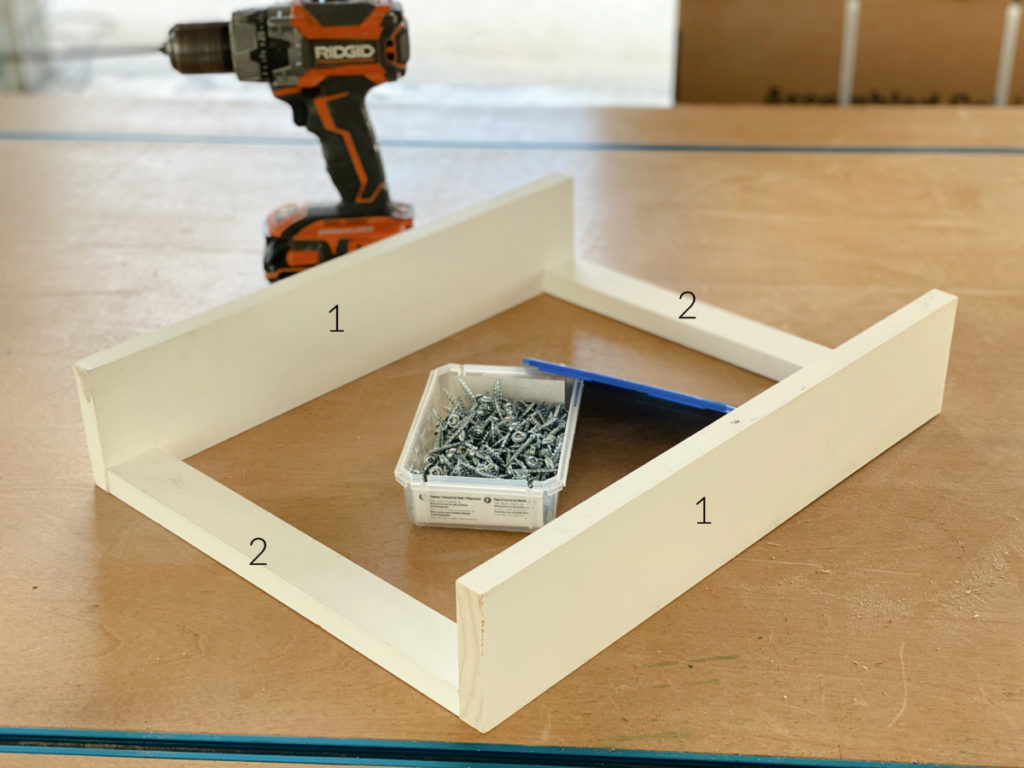
Drawer Support Diagram

Drawer Support Sides

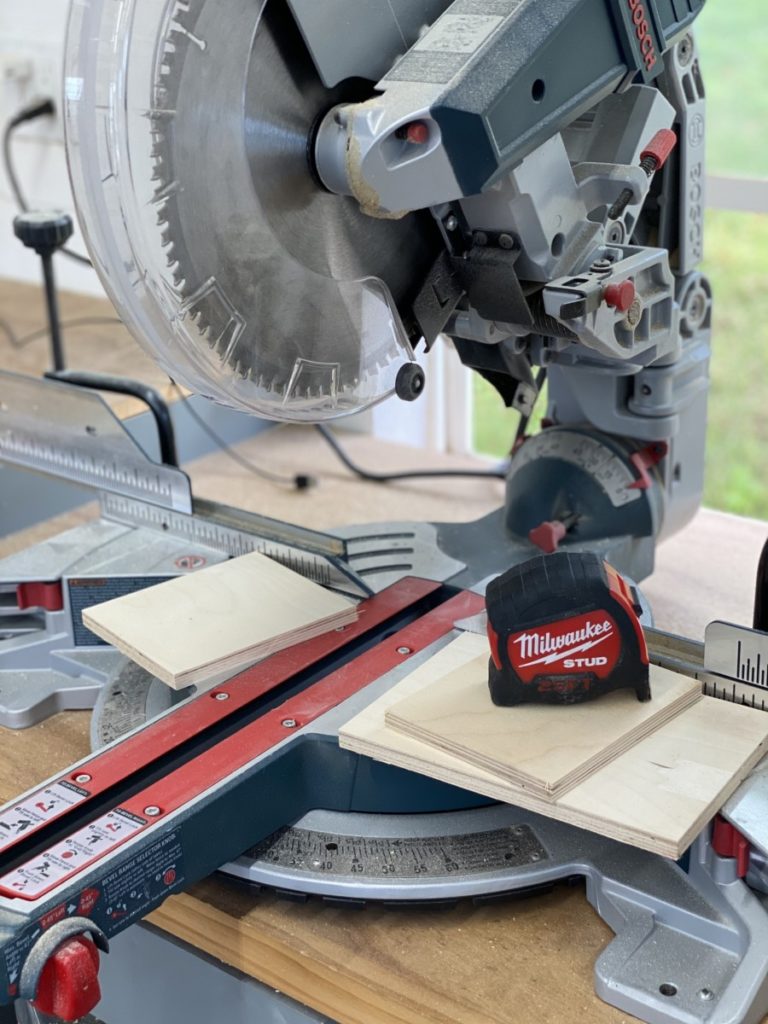
We will begin by building our side drawer box support according to the previously taken dimensions. To create the sides of this supports (#1 on the image above) I am cutting x2, 1×4″ boards based on my depth dimension. (Mine was 16″.)
Drawer Support Bottom

Next I need to cut the 1×2 boards that will span between my side supports. (Boards labeled #2 in Drawer Support Diagram. In order to find this dimension a little bit of basic math is necessary. Take your interior measurements and subtract 3/4″.

For example: My interior face frame dimension was 13 1/2″, I cut my 1×2″ bottom support board at 12 3/4″.

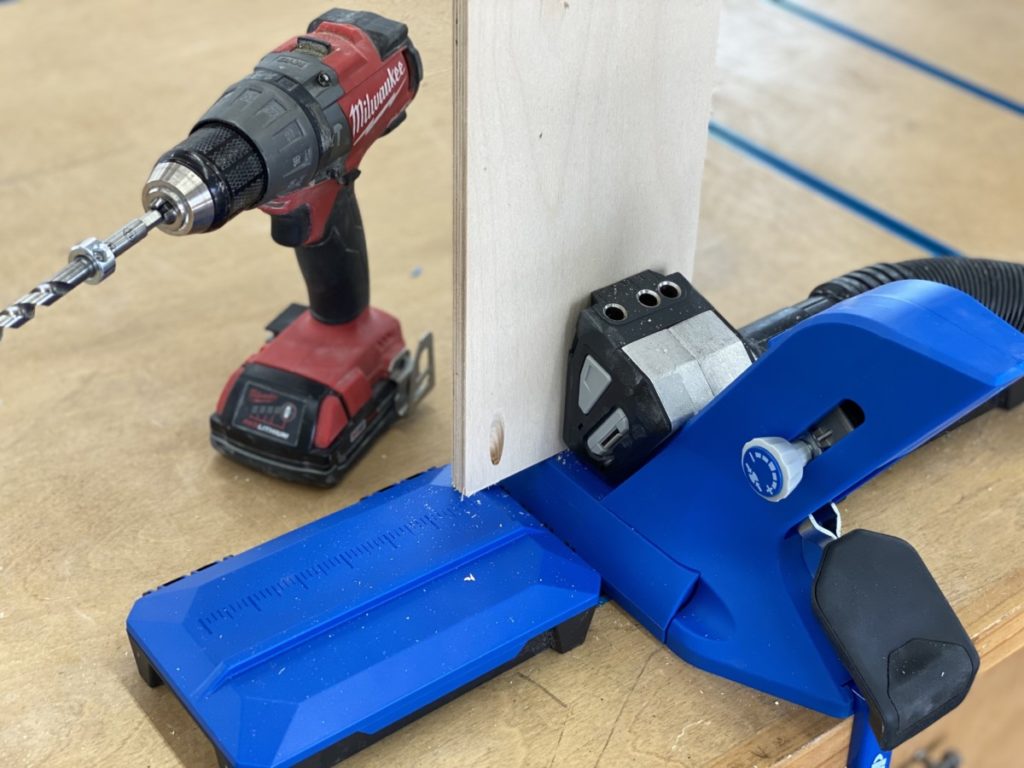
Once the bottom support is cut drill pocket holes on both short ends of BOTH bottom supports. (#2 in the Drawer Support Diagram image above.)
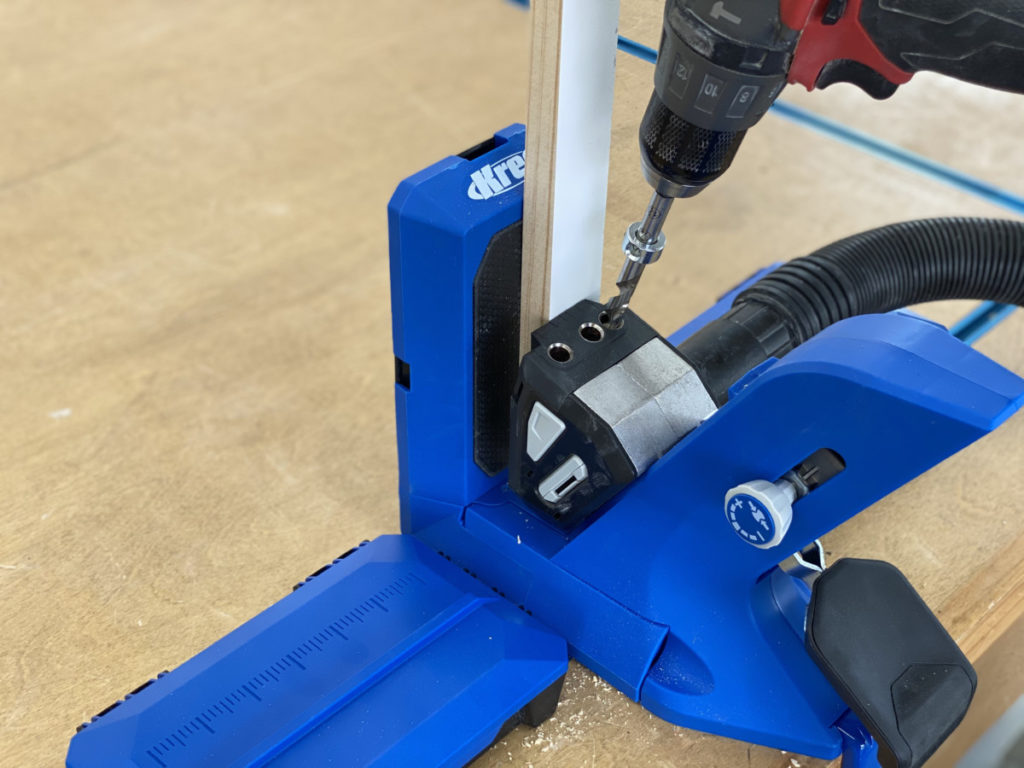
If you are new to pocket holes, then take a minute to look at the new Kreg 720 PRO. I think I have used everyone that they have rolled off the assembly line, and this one is so user friendly and intuitive! I have more details about it on my Instagram Stories, make sure you check them out here.
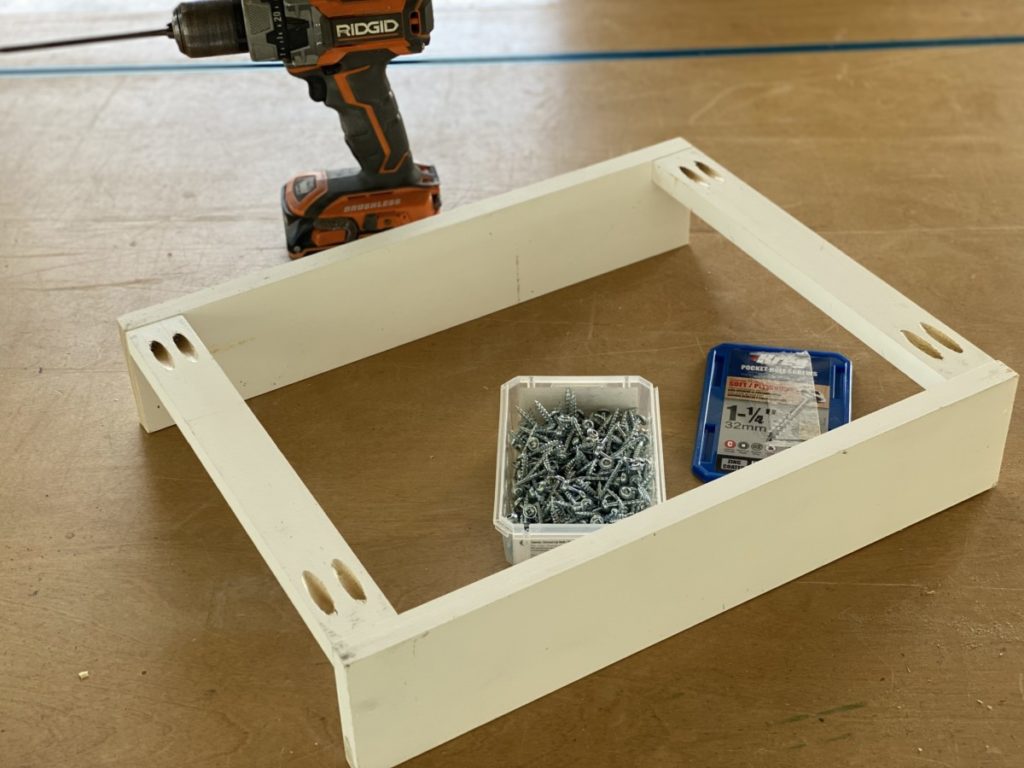
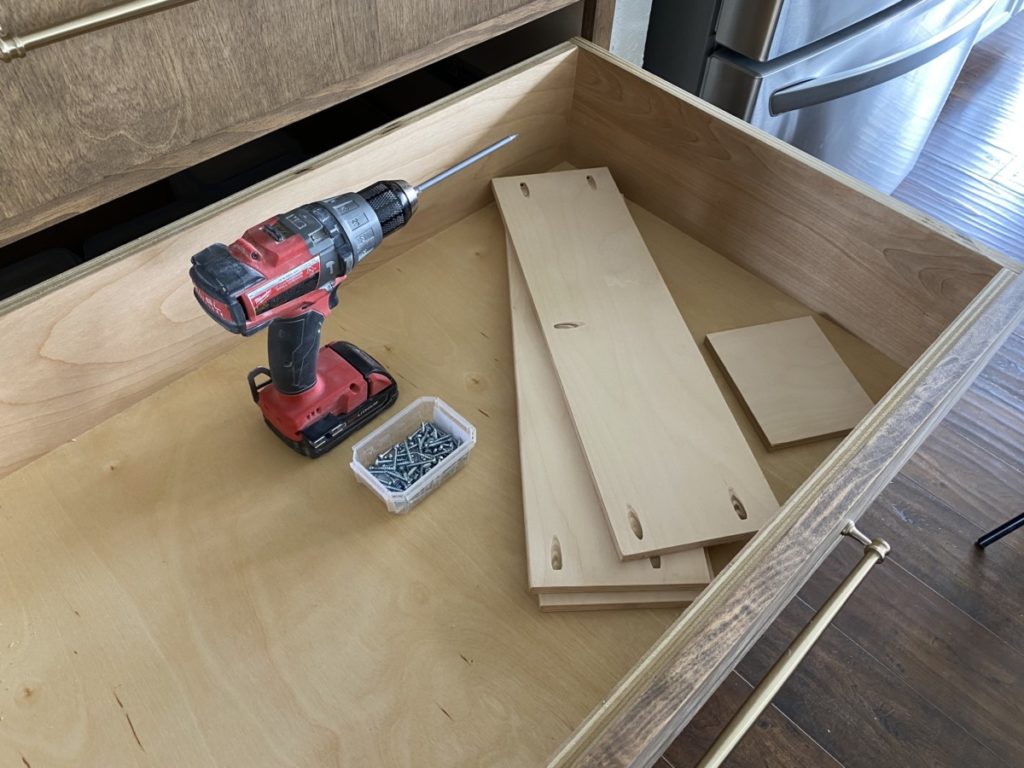
Once pocket holes are drilled proceed in screwing the bottom support boards to the side supports, as seen in the image below.
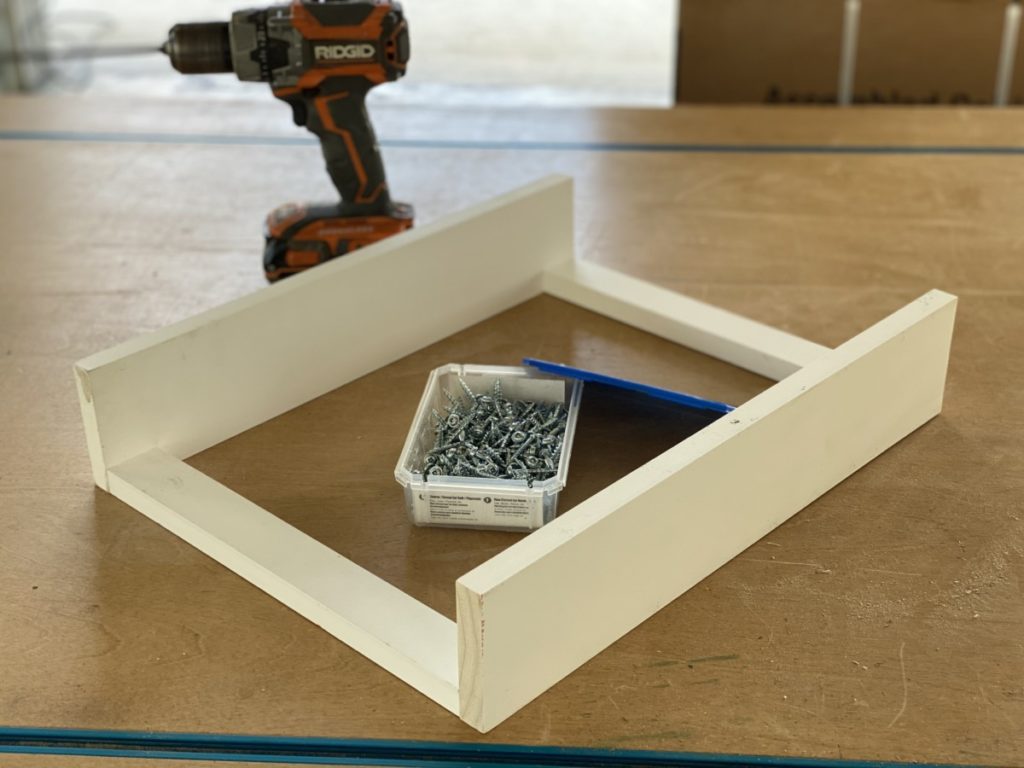
Build Drawer Box

Now that the box support is building we can proceed in making the drawer box.

Drawer Box Sides
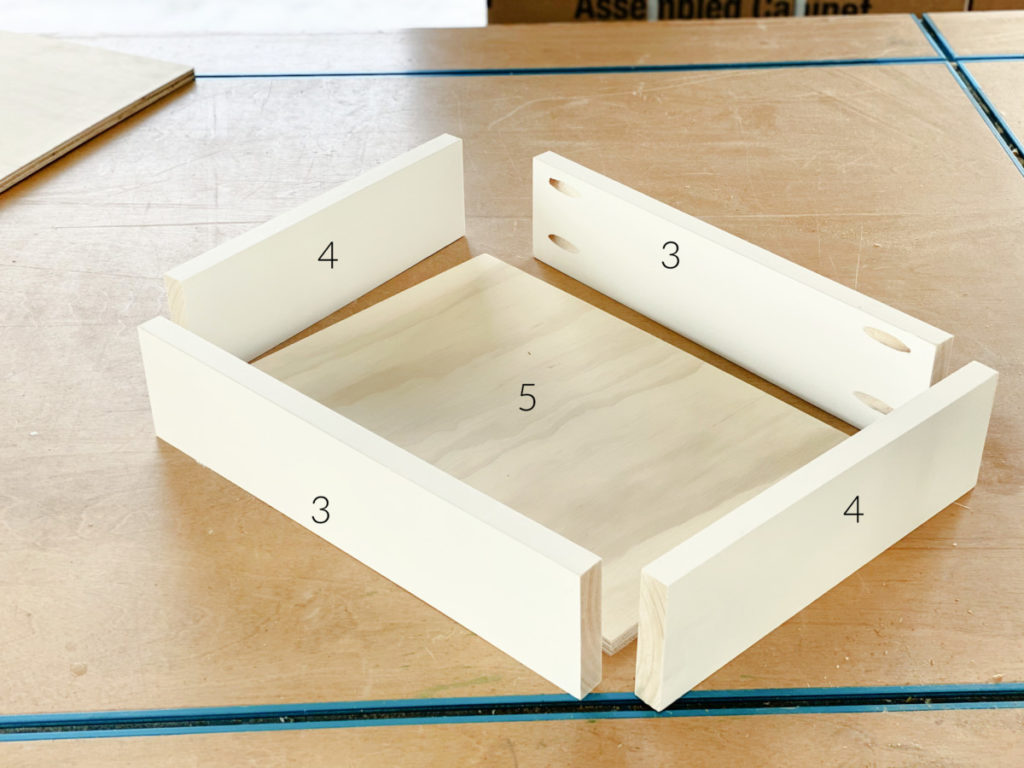
Drawer Box Diagram

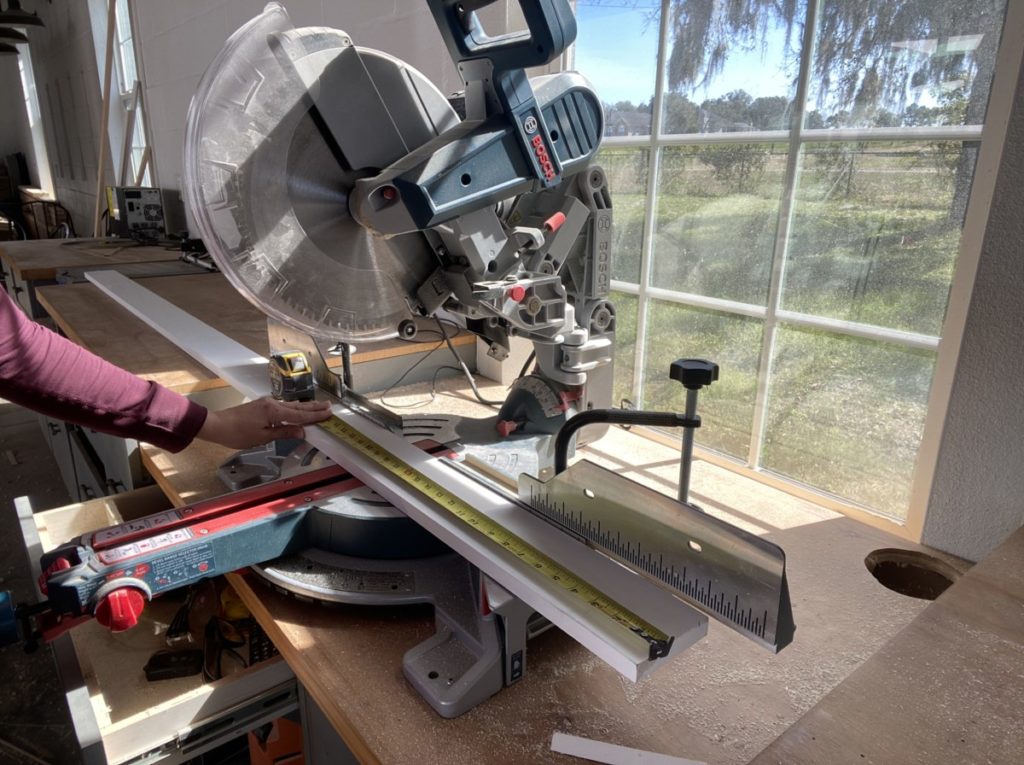
We will begin by cutting the drawer sides. In order to calculate this measurement, take the length of the “Side Support” ( Board #1 in the Drawer Support Diagram image) and subtract 1 1/2″.

For example: My Drawer Support length is 16″ – 1 1/2″= 14 1/2″
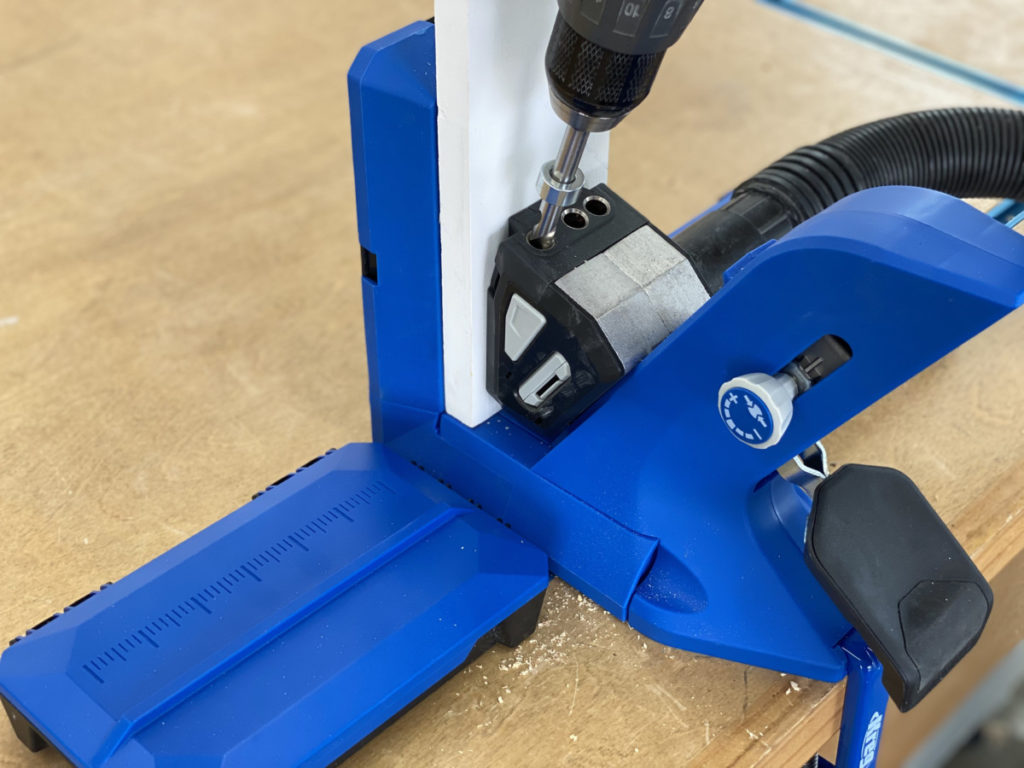
After the drawer sides are cut to your required dimension drill pocket holes on the short ends of both 1×4″ boards.

Drawer Box Front and Back
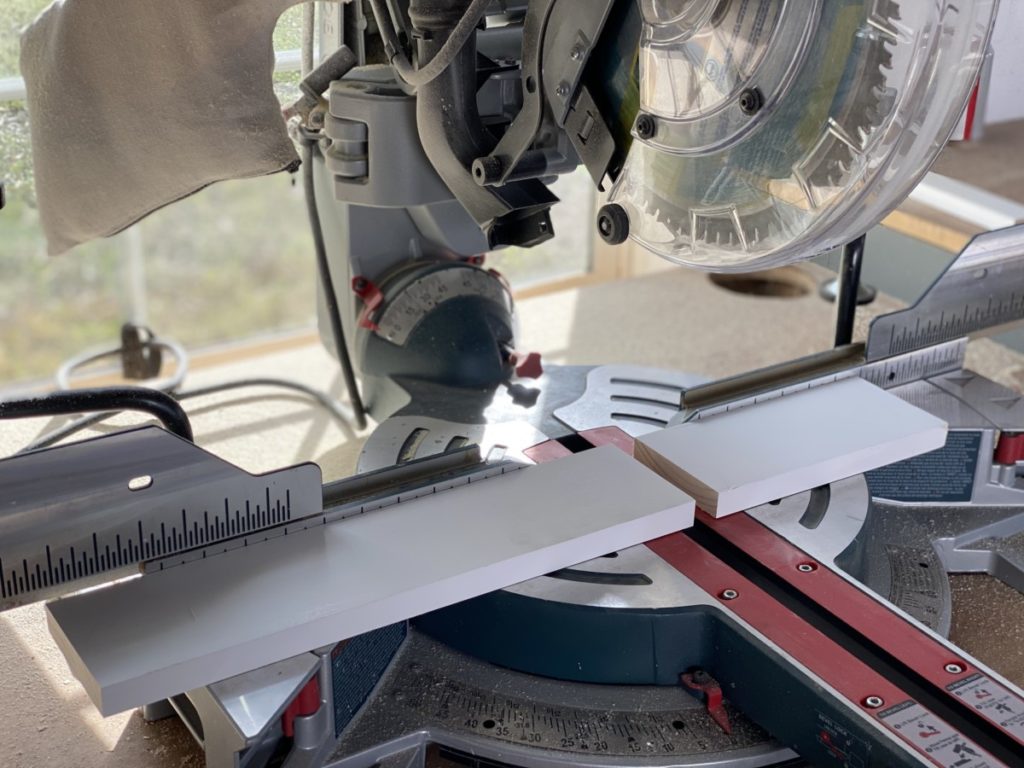
Next we will cut the front and the back of the drawer box. ( These are labeled #4 in the Drawer Box Diagram.) In order to calculate this dimension subtract 1″ from the length of your bottom drawer support. (# 2 in the Drawer Support Diagram).

For example: My bottom drawer support is 12 3/4″- 1″(allowing for side mount drawer glides) = 11 3/4″

Drawer Box Bottom Panel

The last this we need for the drawer box is a bottom! For this tutorial I am using 1/2″ plywood. The formula for getting your necessary. plywood dimensions is simple. It is the length of the box side (#3) by the front/back of the box (#4) – 1 1/2″.
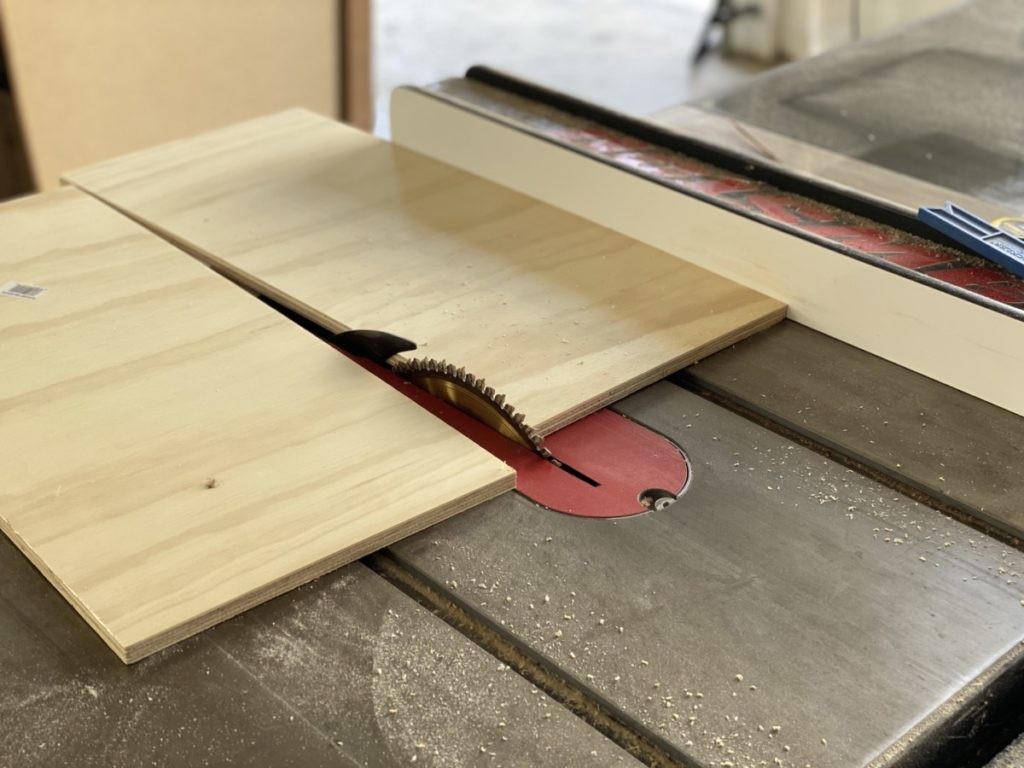
For example: My drawer box sides (#3) are 16″, and my drawer front/sides(#4) are 11 3/4″. My formula would look like this:

Length: 16″

Width: 11 3/4″- 1 1/2″= Drawer Bottom Width

For a 1/2″ piece of plywood cut 10 1/2″ x 16″.
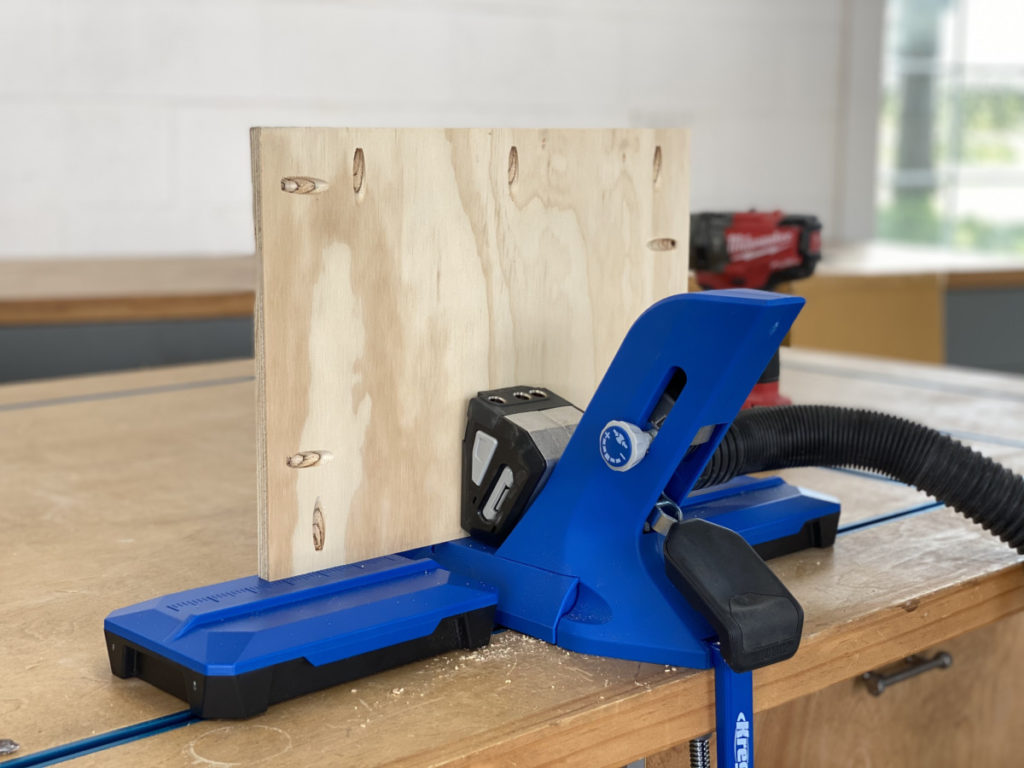
 Using the Kreg 720 PRO to build an under sink drawer.

After cutting the 1/2″ plywood to required dimension drill pocket holes (on the bottom side of the board) around the perimeter using a Kreg Pocket Hole jig.
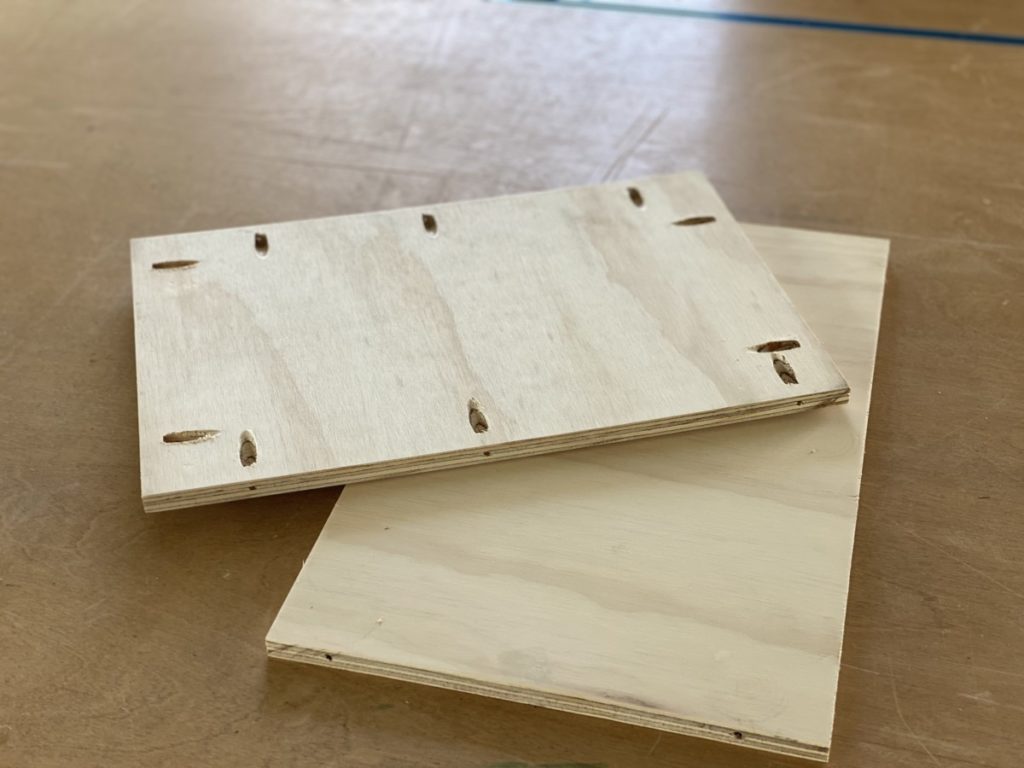
Using 1″ pocket hole screws secure the bottom panel(#5) to the drawer sides/ front/back. Then using 1 1/4″ Kreg screws secure the box sides(#3) to the box front and back boards(#4).
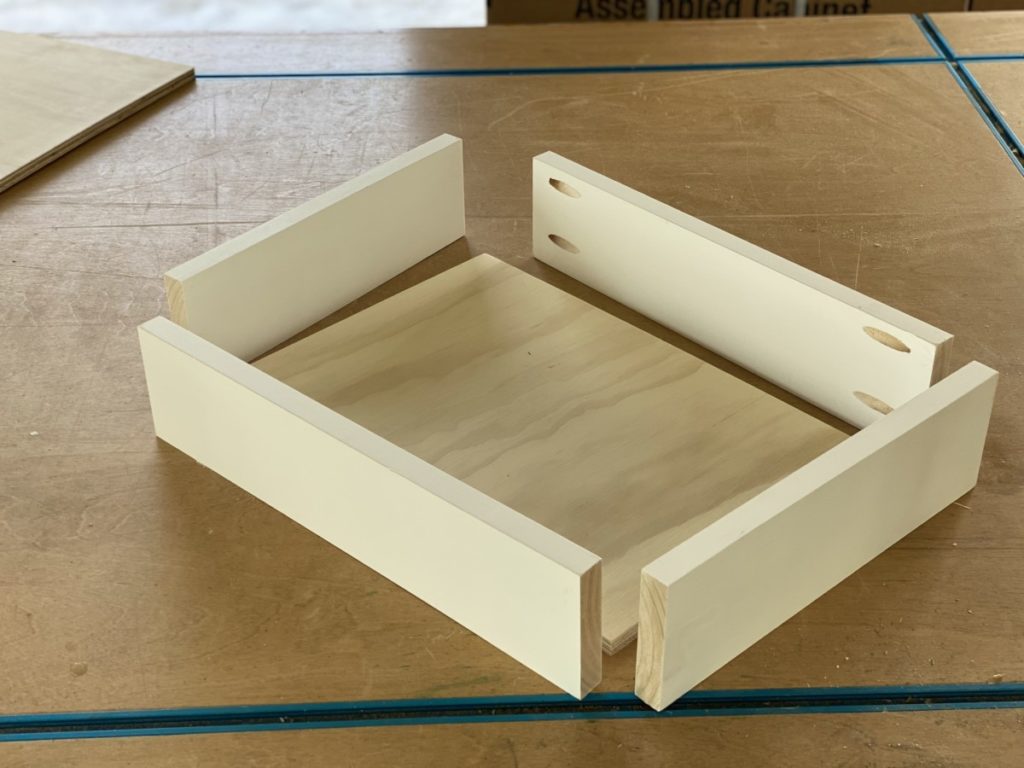
Install Drawer Slides

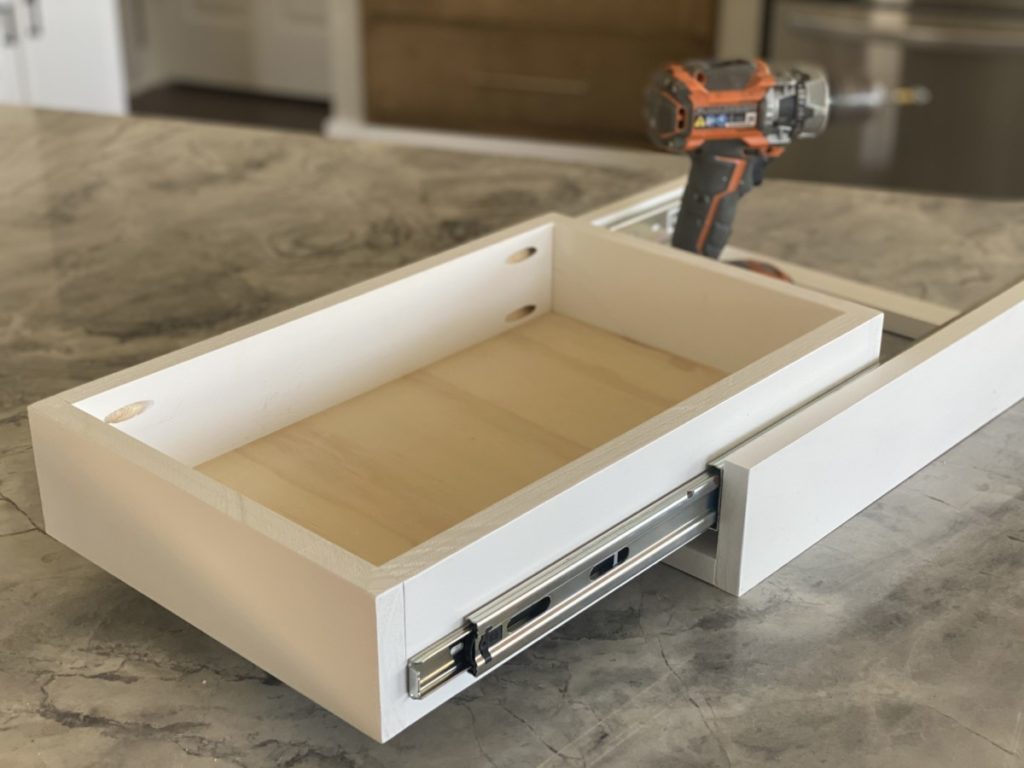
Once the box is assembled install ball-bearing side mount drawer slides. Select the length you need fro your project based on the length of your drawer box.

For example: My drawer box is 16″ long, and I selected 16″ drawer slides.

If you want to see my favorite way to install drawer glides check out my “Office 2 ” highlight in Instagram stories.
Secure Drawer Base

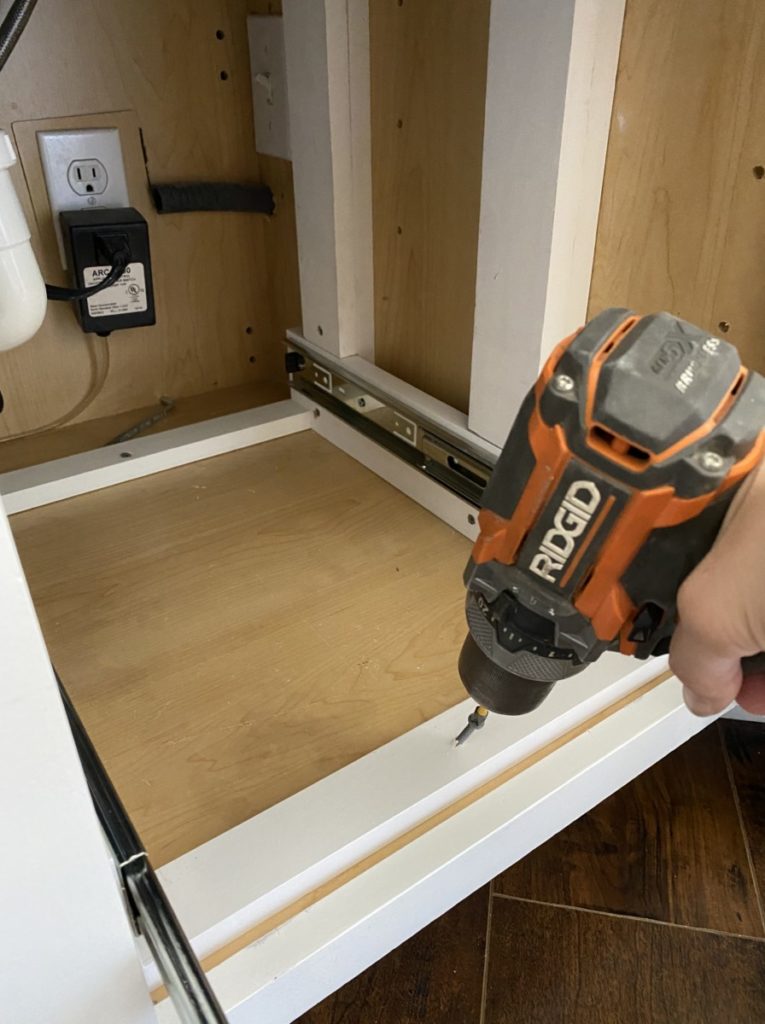
After the drawer slides have been properly installed, remove the drawer from the base. Position the base in desired location. If you don’t want your drawer tipping forward when you load it up it will need to be secured to the cabinet. Using a 1 1/4″ screw secure it to either the base of the cabinet or the sides of the cabinet.
Under sink Pull out drawer storage
Under Cabinet Pull Out Drawer Image: Ashley Navarro

Under Cabinet Pull Out Drawer Image: Ashley Navarro

Once the drawer base is secured reinsert the drawer box and load er’ up because you are good to go!  If you are looking for another easy kitchen organization project  check out these 15 min.  drawer dividers! 
DIY Drawer Dividers

DIY Drawer Dividers

February 17, 2021

This DIY Drawer Dividers post is sponsored by Kreg and does contain affiliate links *

Materials Used:  Tools Suggested:
   -1/2″ Plywood     -Tape Measure 
   -“1 Kreg Pocket Hole Screws     -Miter Saw
     –Kreg Pocket Hole 720Pro
     -Drill 


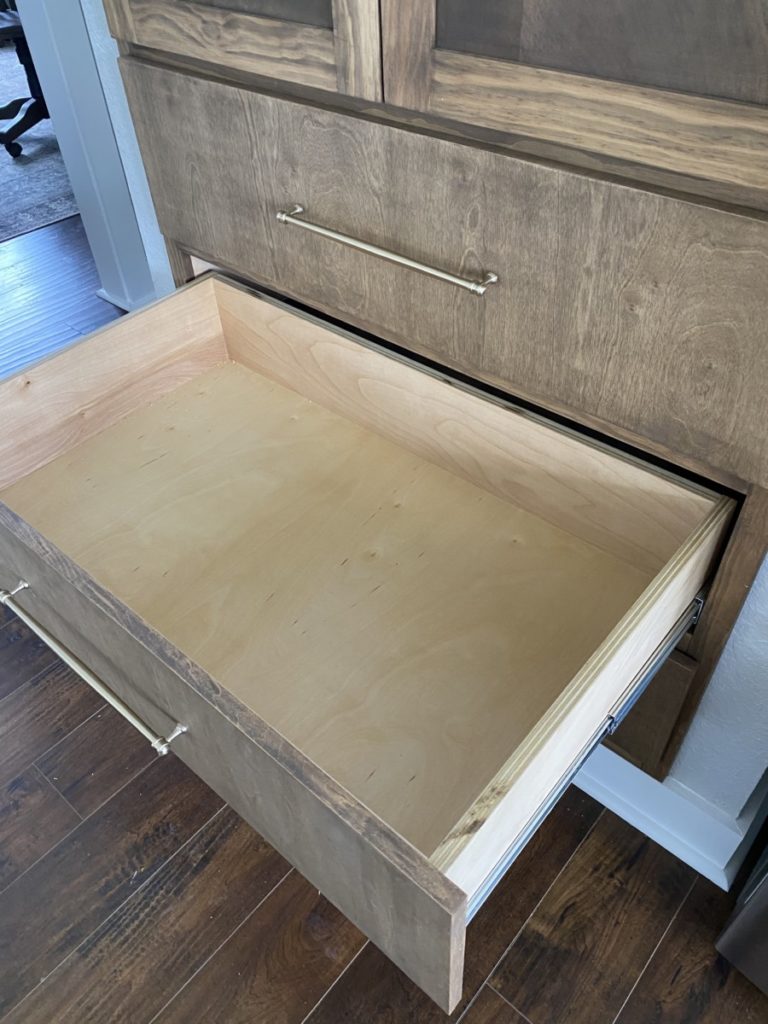
Clear Out Drawer

We all have those drawers… you know, the drawers that get neglected. I am convinced that if I let these spaces go untamed long enough they would contain everything my family would need to survive an apocalypse. Bottom line, they can get out of control. This drawer in particular had so much potential, but yet the idea of giving it effort sounds rough. Well, let’s make some quick DIY drawer dividers that can help you reclaim and customize your drawers in less than 15 minutes!

First thing we need to do is, clear out the drawer!

Measure Drawer

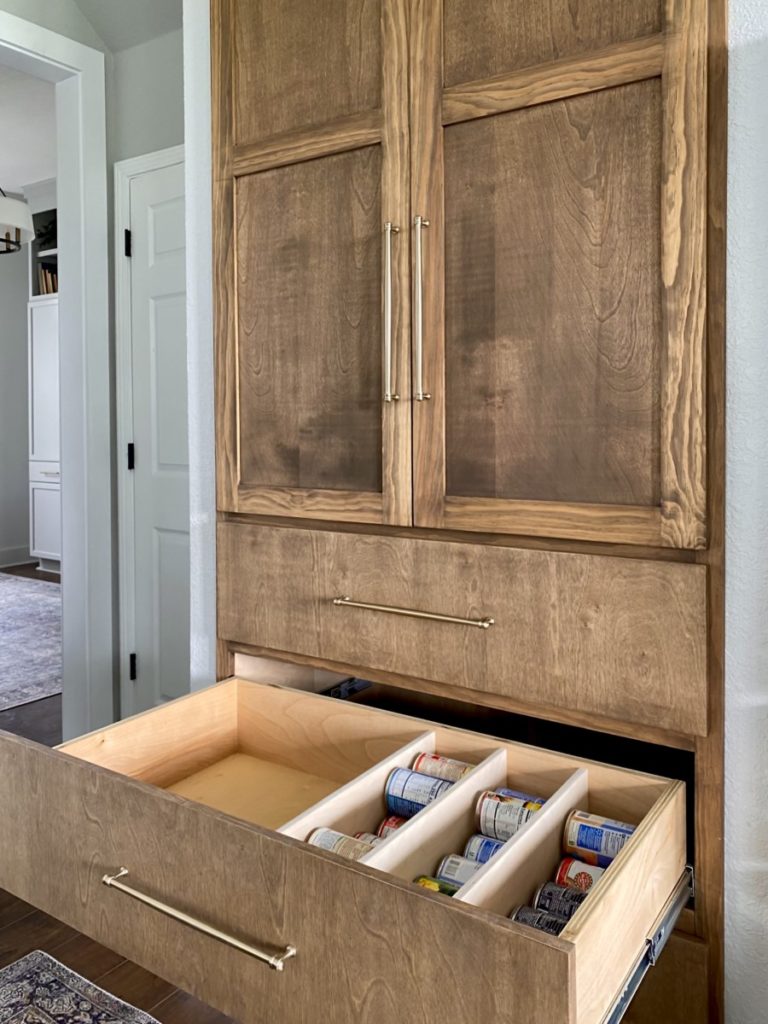
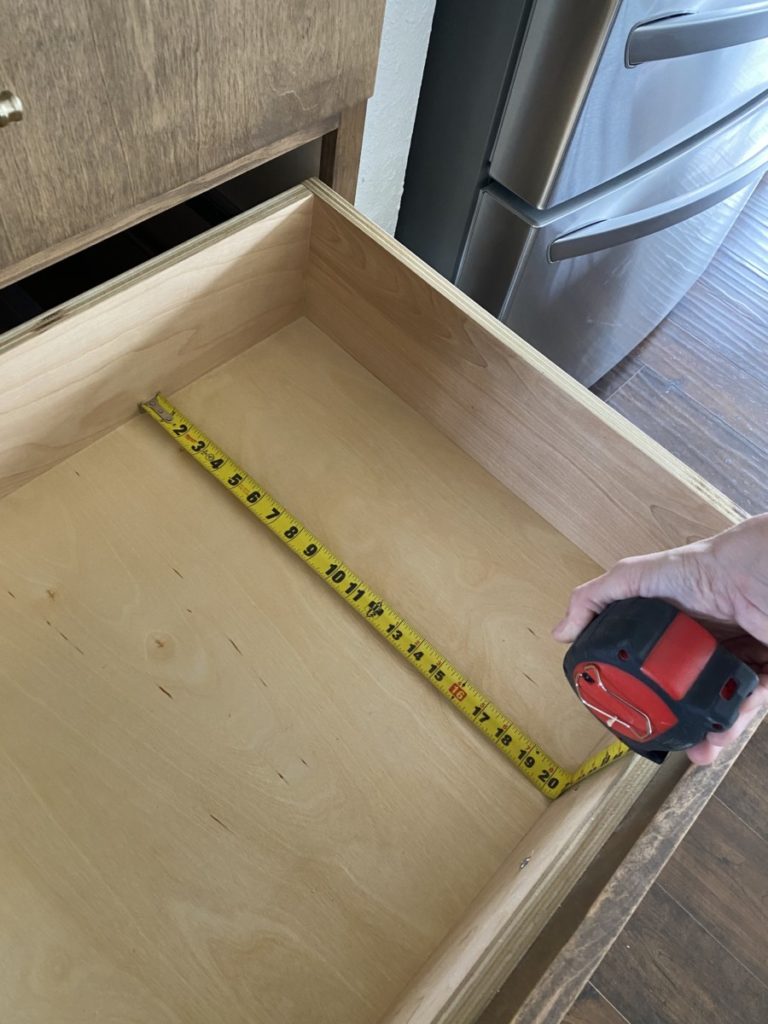
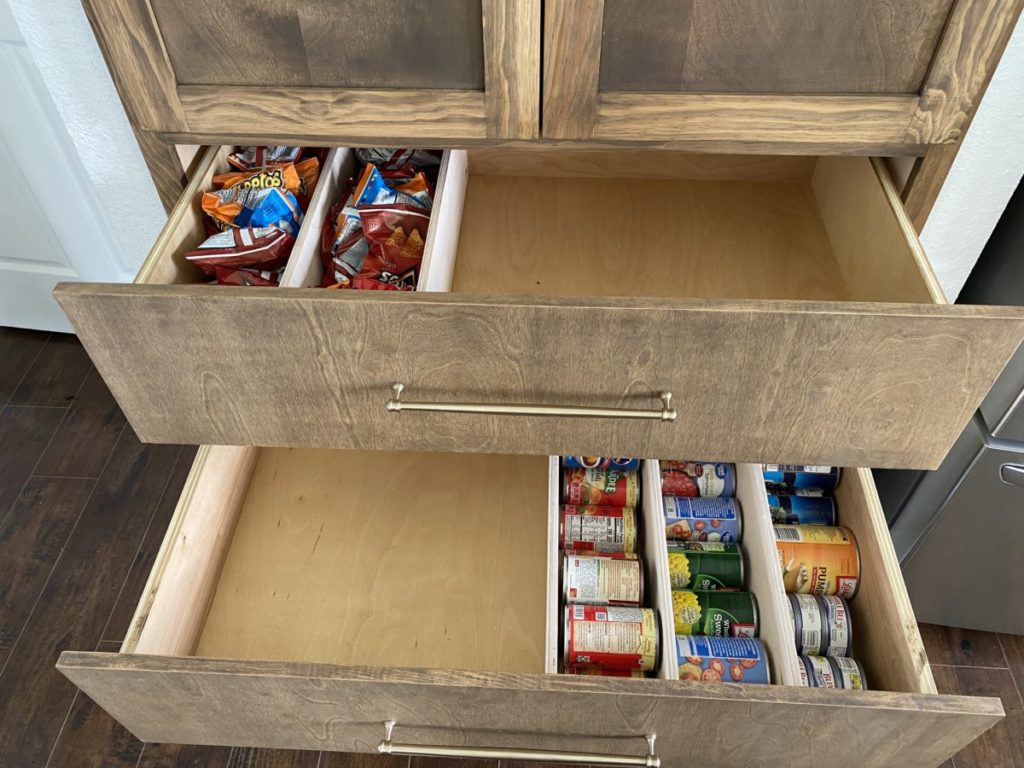
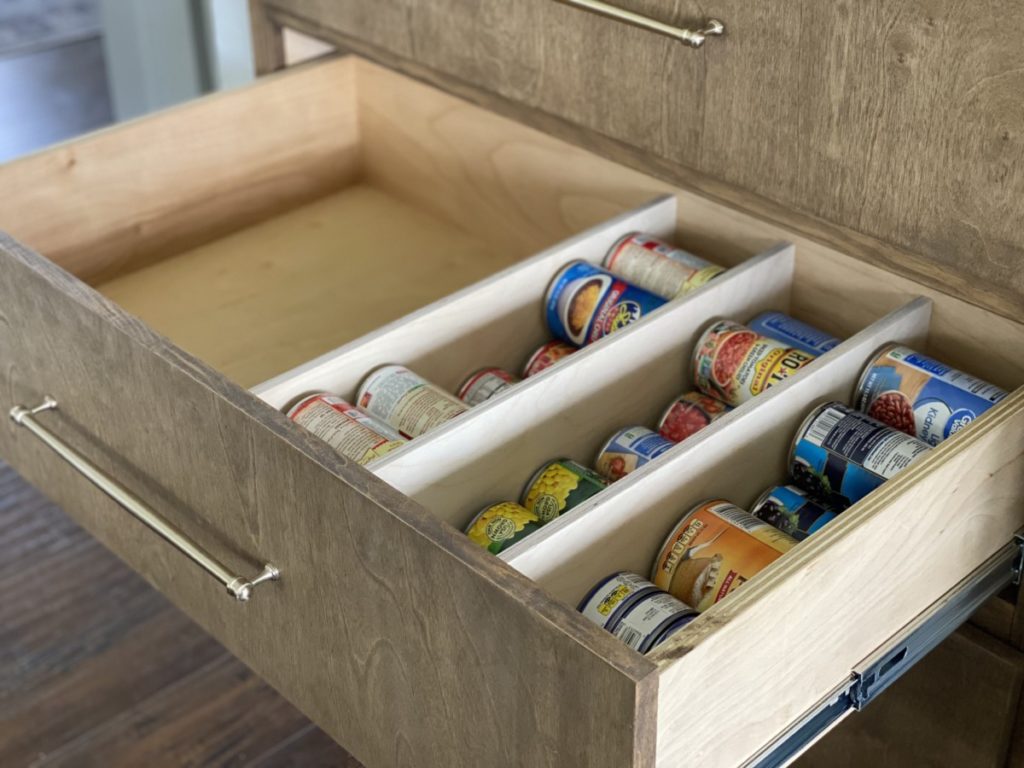
To best utilize this drawer I wanted to created long divided cubbies that would serve as rotating can storage. To begin I took my interior dimension of the drawer. (Also take into consideration the height of your drawer box. They do not need to be the exact height of your existing drawer, they do however need to be the same height or shorter. (Otherwise your drawer may not close properly.)

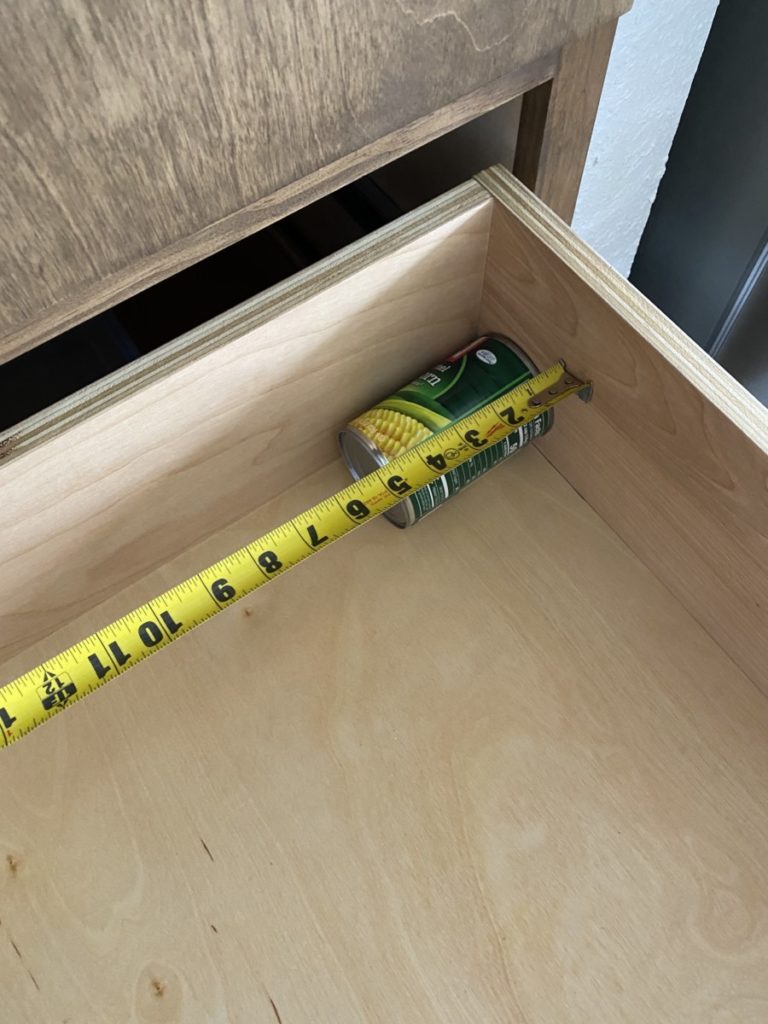
Seeing as I am creating storage for canned food items, I used a can to determine the width of these dividers.

Cut Dividers

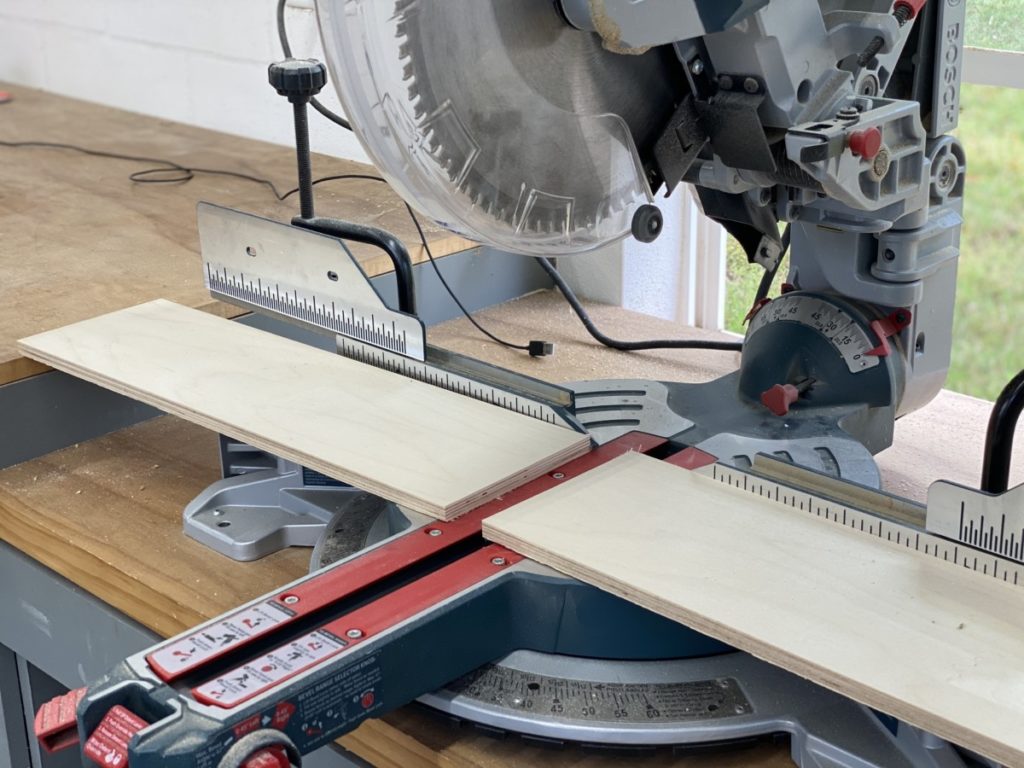
Using a miter saw I cut my divider boards to the same measurements of the interior of my drawer box. (I am using a piece of scrap 1/2″ plywood. You can use plywood or 1″ standard boards to make these dividers. )

Drill Pocket Holes

Once the board is cut to the desired dimension, drilled pocket holes on both of the short ends of the divider board. Depending on the construction of your drawer box, you can also choose to add an additional pocket hole along the bottom edge of the drawer divider as well. (If you have a thin paneling I would pass on this step.)

Something I LOVE about the new Kreg 720 Pro is AutoMaxx adjust feature. I can easily switch material thickness, and it auto adjust to my material. Drilling pocket holes for projects has never been easier. If you didn’t already see my Instagram stories make sure you follow along to see more of the 720 PRO features.

Cut Spacers for DIY Dividers

Before beginning the install process I suggest cutting spacer blocks. using scrap material. Remember the can dimension I took earlier ? I am using that dimension to cut a spacer block.

Install Dividers

Once all the dividers, spacers are cut and the pocket holes are drilled we are ready to proceed.

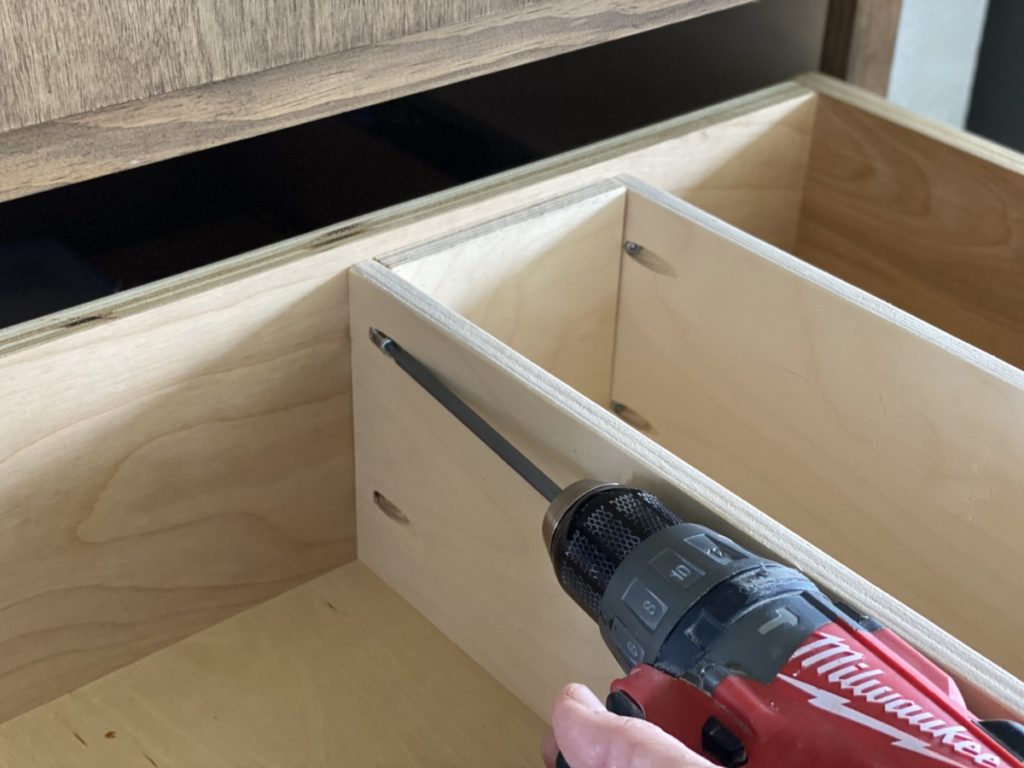
Use the spacer block to not only create perfect spacing, but to also give you a solid surface to press against when driving in your pocket hole screws.

When securing your boards using pocket hole screws always ensure you are using the correct length screw. (Or you will have a screw tip protruding from your project.)

Organizer Using DIY Drawer Dividers

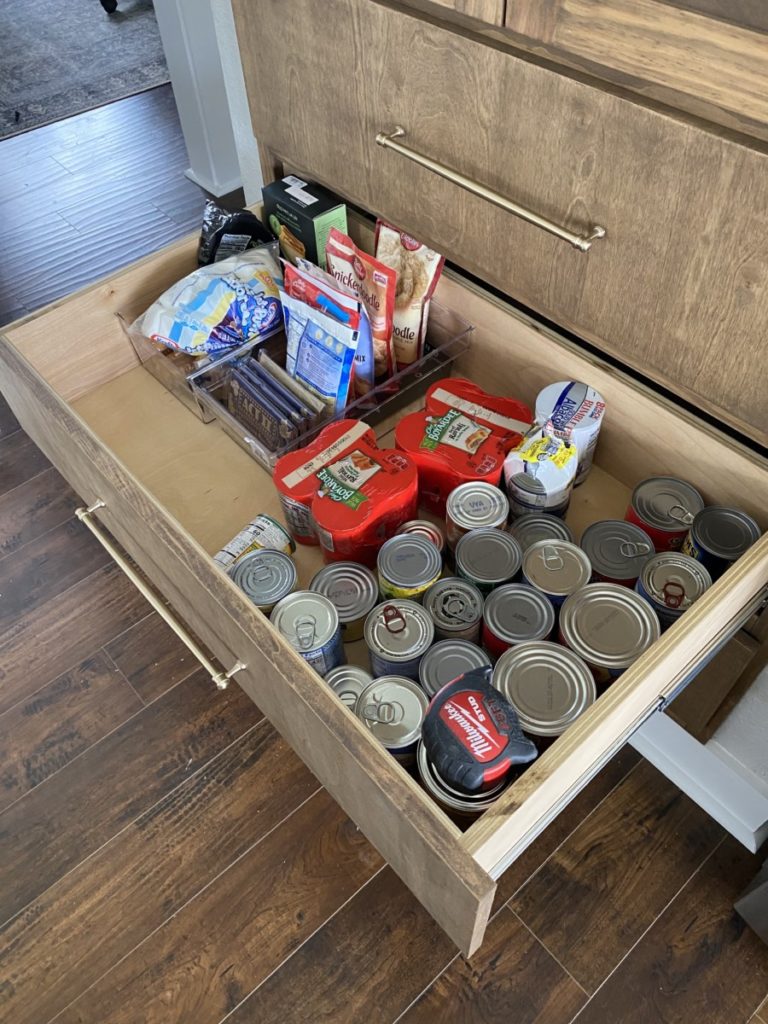
Now that you have the basic premise of this project, can you see it’s potential to transform your drawers ? You can add as many as you would like in a variety of orientations. This is truly a custom drawer organizer.

I added several long dividers to use as rotating can storage. I even added a few to my chips drawer to keep some semblance of order. Not too shabby for a 15 minute project using scrap wood. Am I right !?

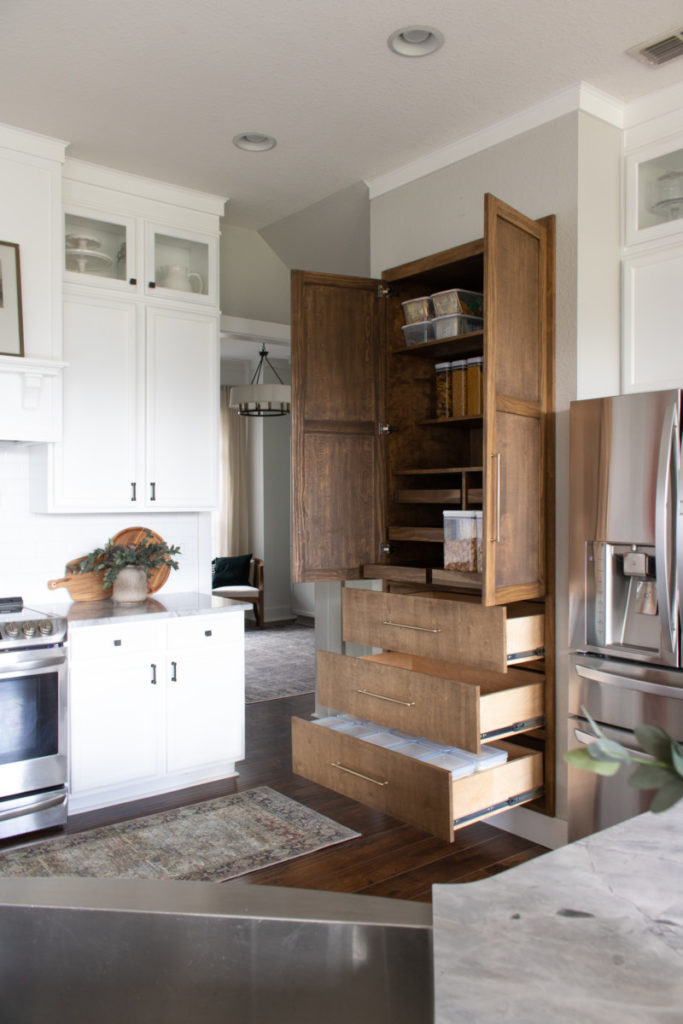
If you are looking for more kitchen organization, make sure you check out my built-in pantry I made to replace my contractor grade closet.

Built-in Pantry Makeover

January 29, 2021

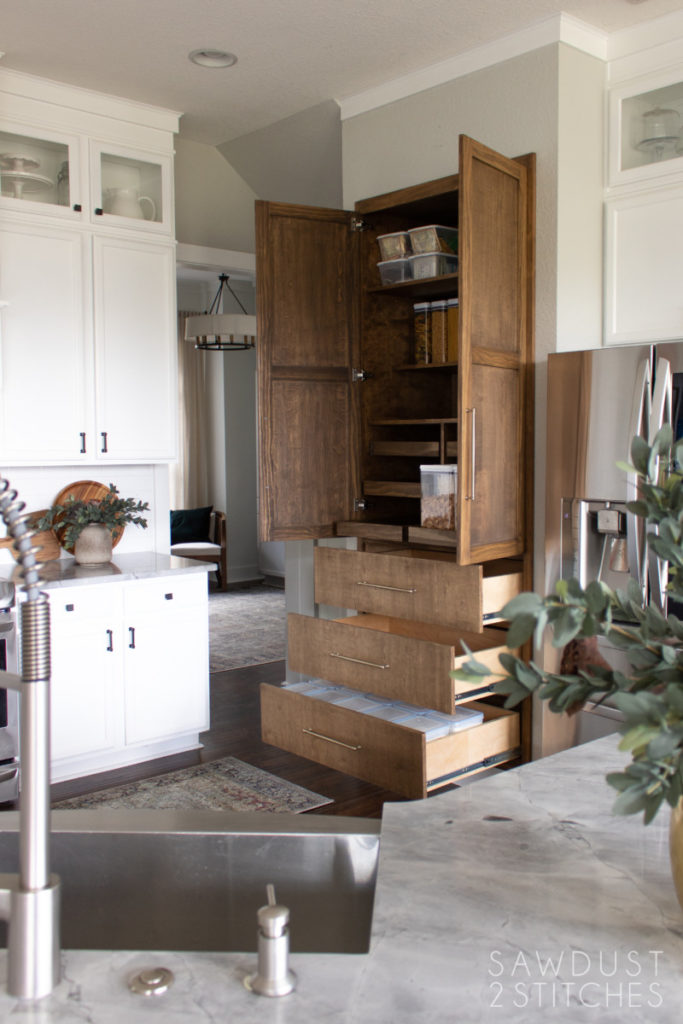
 Built in pantry in kitchen

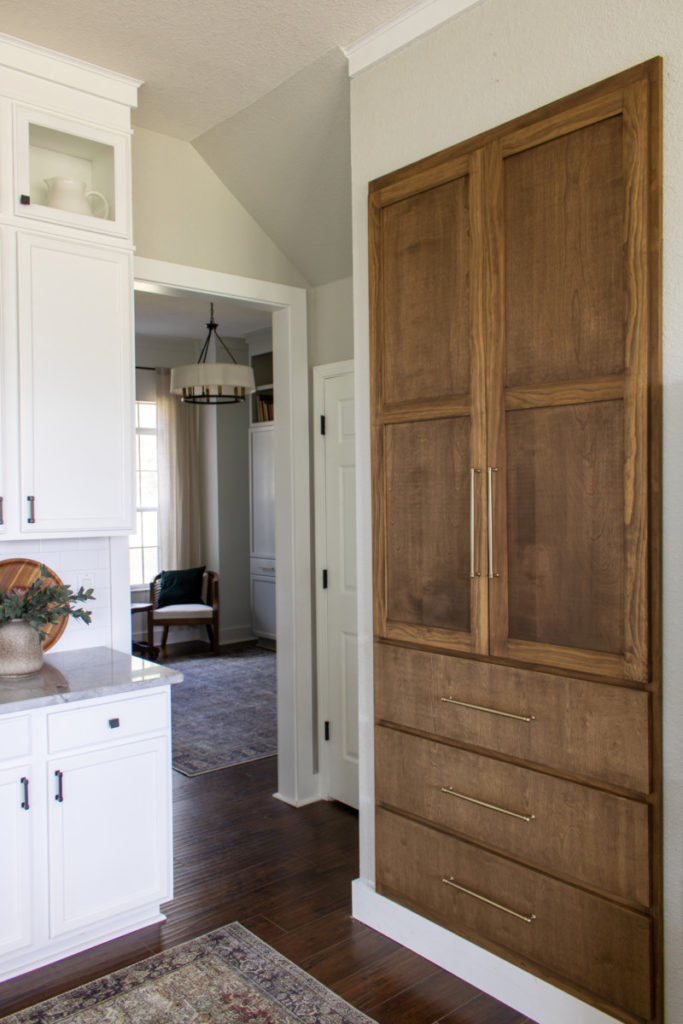
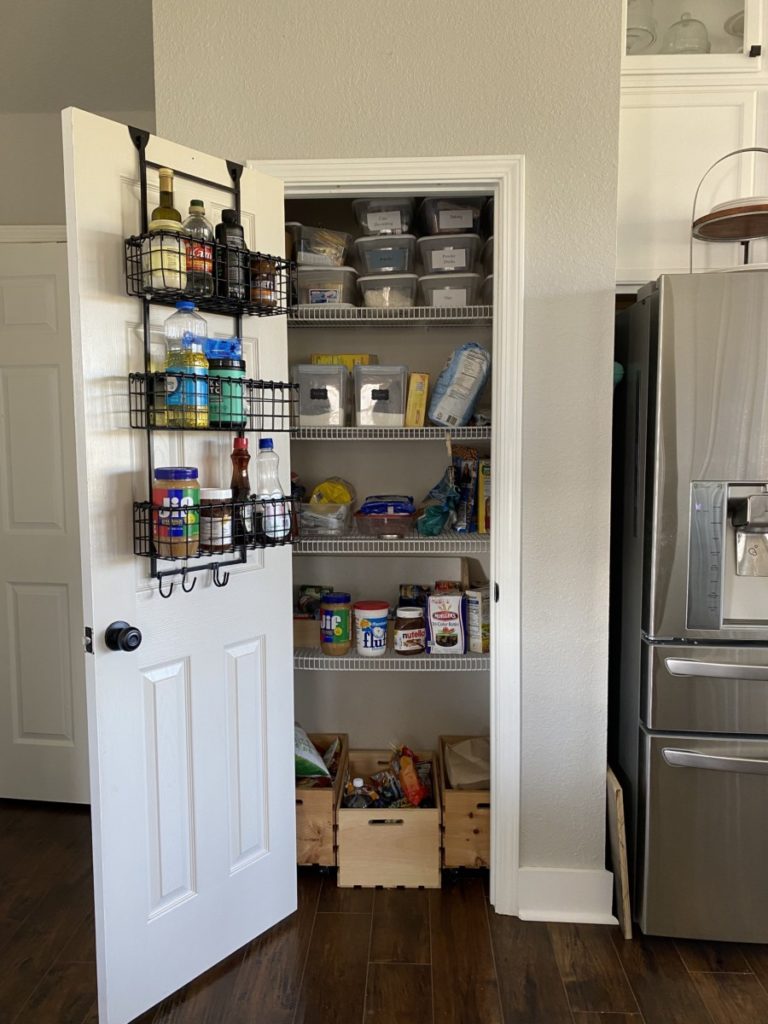
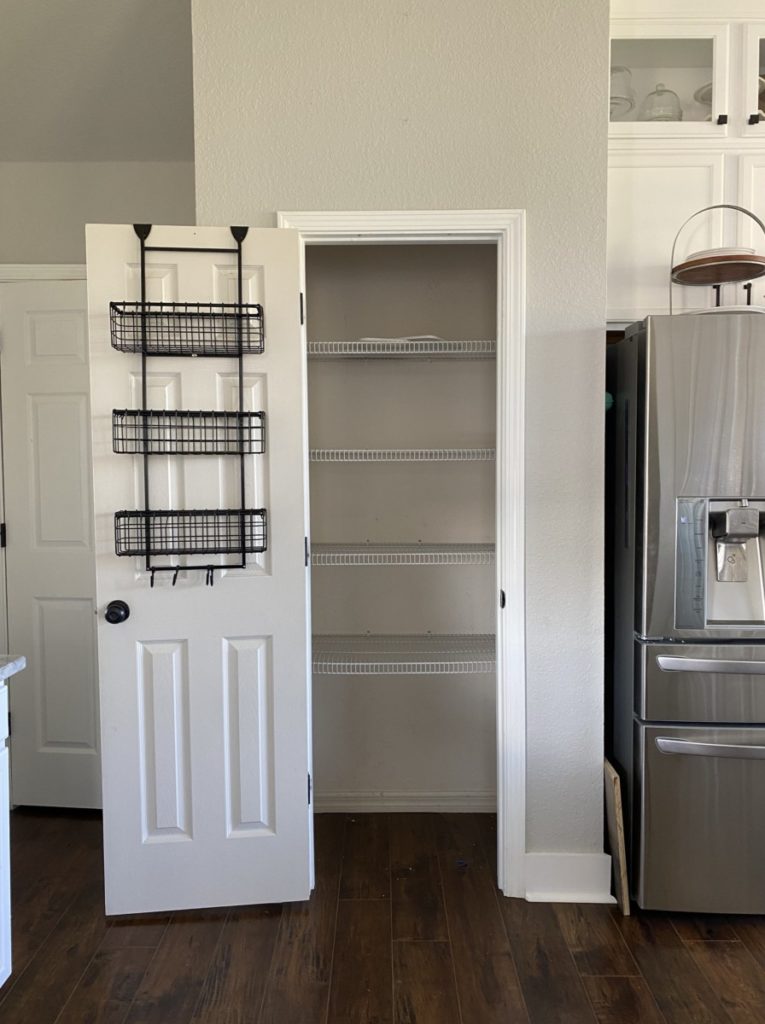
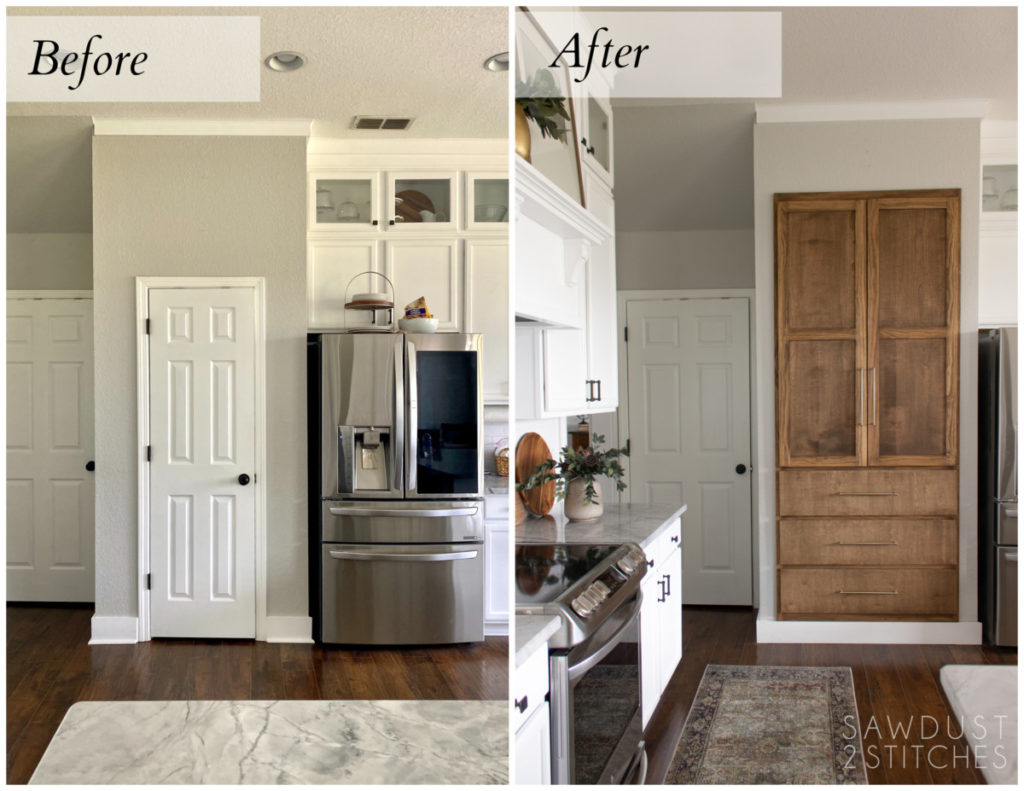
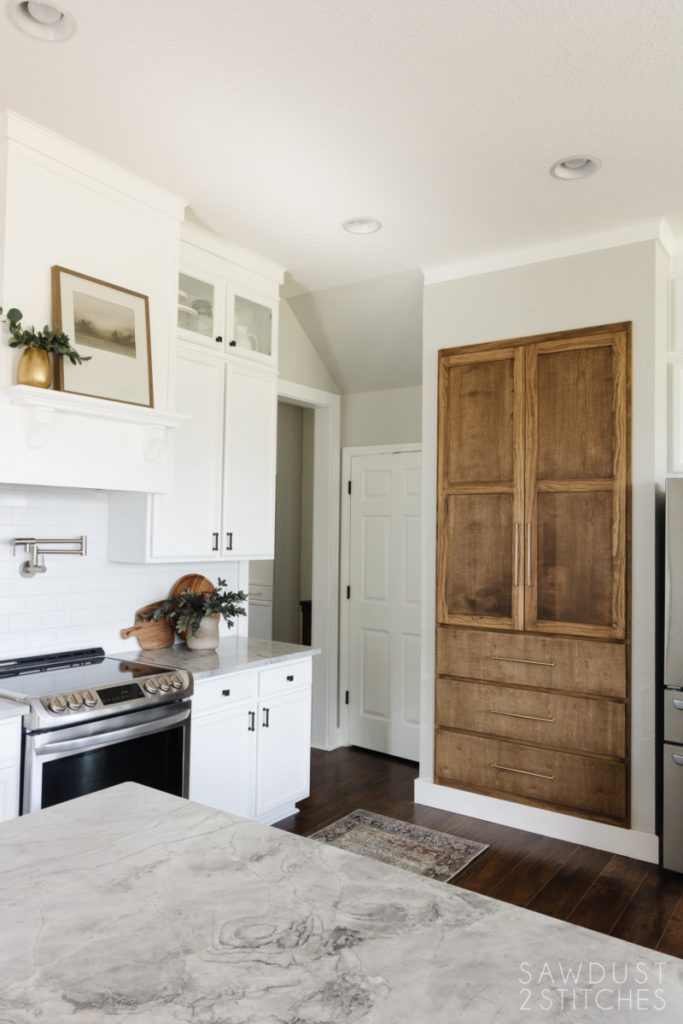
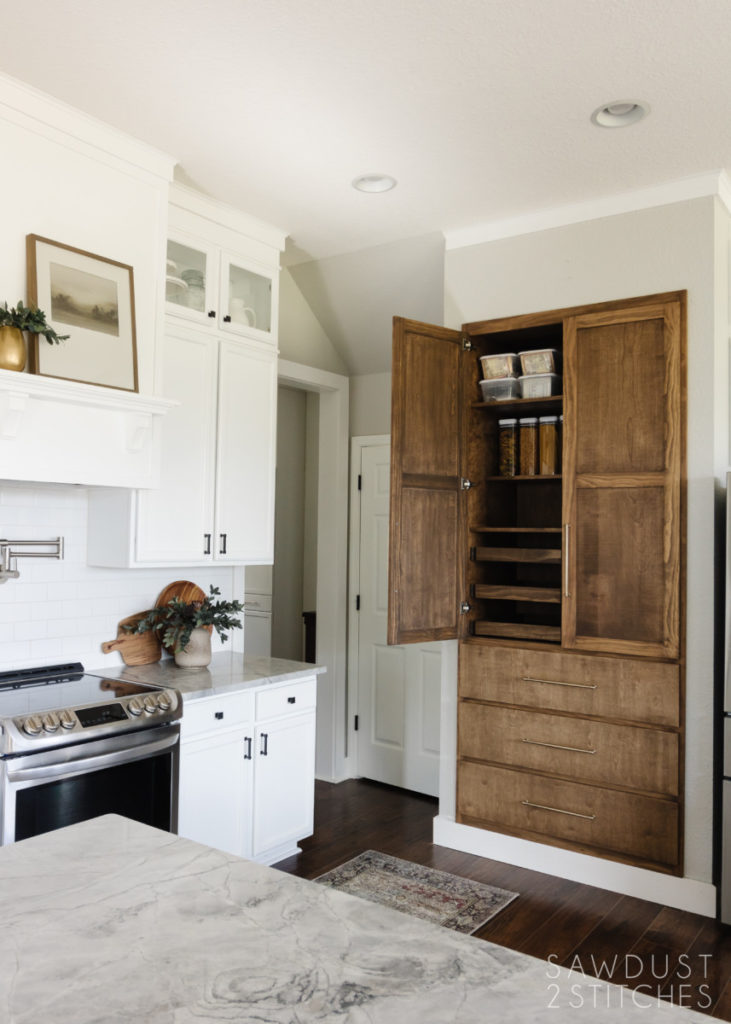
Who needs more organization and storage in their life? While all my cupboards (for the most part) are organized, the original design plan of my home sometimes baffles me. For instance, I have this teeny tiny closet in my kitchen that has so much untapped potential, there is plenty of dead space that could be utilized! What’s a girl to do? Optimize it!  Today I am teaming up with The Home Depot to show you how I replaced my builder grade pantry closet with the custom built-in pantry of my dreams!

  Tools Suggested 

  • Safety Glasses 
  • Hearing Protection
  • Tape Measure 
  • Miter Saw/Circular Saw
  • Finish Sander
  • Drill/Driver
  • Pocket Hole Jig 
  • Table Saw or Router 
  • Wood Glue 
  • Clamps 
  • Pry Bar 
  • Hammer
  • Oscillating Tool 

  Materials Used 

  • Stain, or paint of choice.
  • 1 ¼” Pocket Hole Screws  
  • (x11) 1x3x8 Board(s) 
  • (x5) ¾”  Plywood 
  • (x1) ¼” Paneling/Plywood 
  • (x4) 1x2x8 Boards 
  • (x1) ¼” Back Panel 
  • (x5) Drawer Pulls 
  • (x6) ½” overlay Concealed Hinges 
  • (x8) 22” Ball-bearing Drawer Slides
  • Edge Banding
  • 2×4
  • Baseboard

Purchase Materials

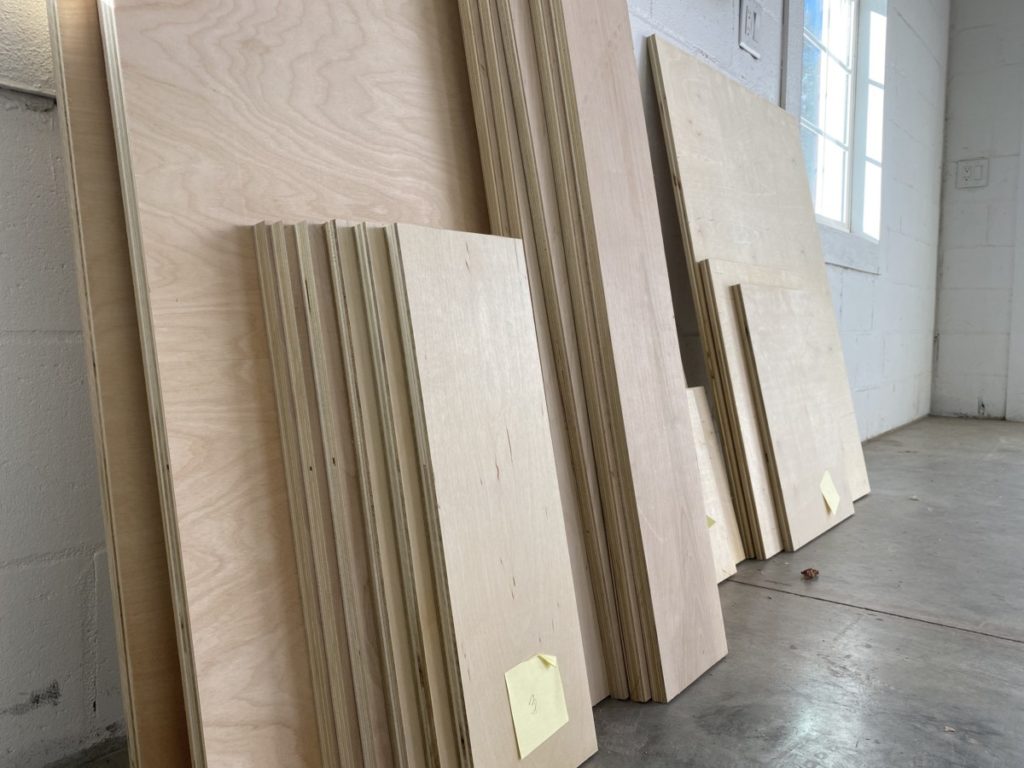
While it is not a HARD project it is a LARGE one.  I have painstakingly drafted build plans and written detailed instructions to help you through the building part, and The Home Depot can help you with all the heavy lifting!  

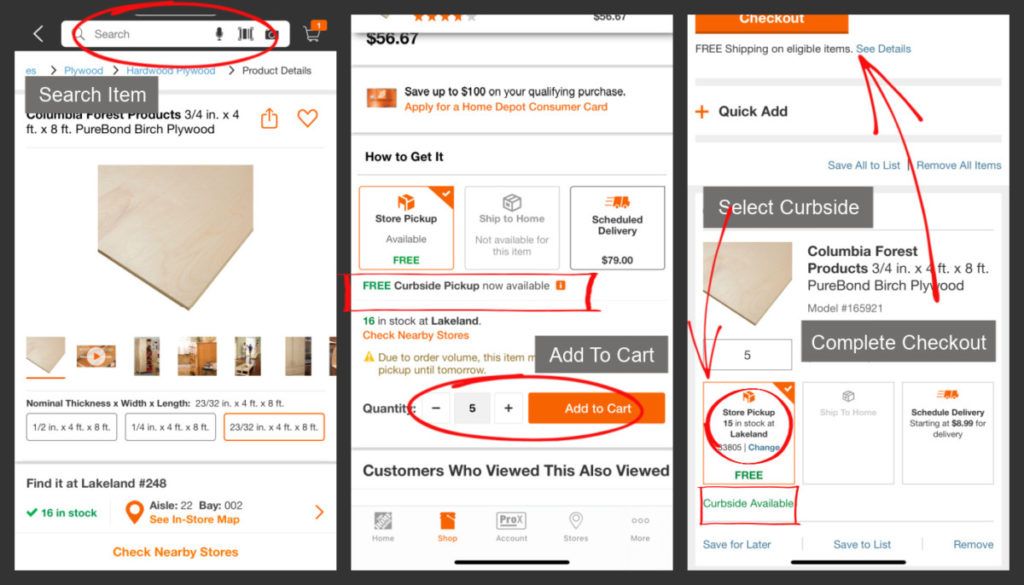
Before we can even delve into the project, we need to first tackle our first hurdle… getting all the materials home.  In the past I would wait until “date night” when my husband and I would take a trip to The Home Depot to help me load full sheets of ¾” plywood… while Andy and I still frequent The Home Depot, I no longer HAVE to wait for Friday night to start a project!  Did you know that The Home Depot offers curbside pickup?   Yes, they will pull your order and have it ready to go and will help you load up. It’s like projects to go! You can place your order online or in their mobile app. I prefer using their app. 

Just place your order and look for an email letting you know when and where you can pick up your order.  It is that simple! 

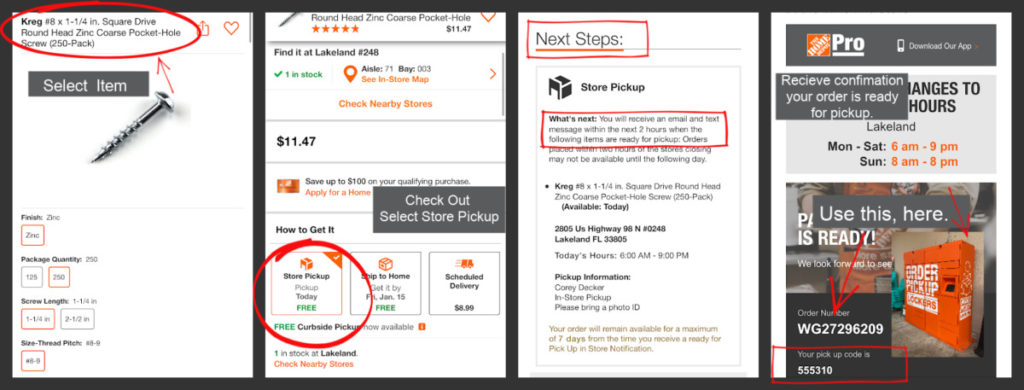
While I definitely NEEDED curbside help with my large orders, The Home Depot also helps with the small things too.  Let’s say for instance you are in the middle of a project and run out of … screws, The Home Depot is here to help!  Did you know that many Home Depot stores offer same-day pickup?  I put in an order for screws using my app and was alerted (normally in two hours or less) that my order was ready and waiting for me at The Home Depot Lockers!
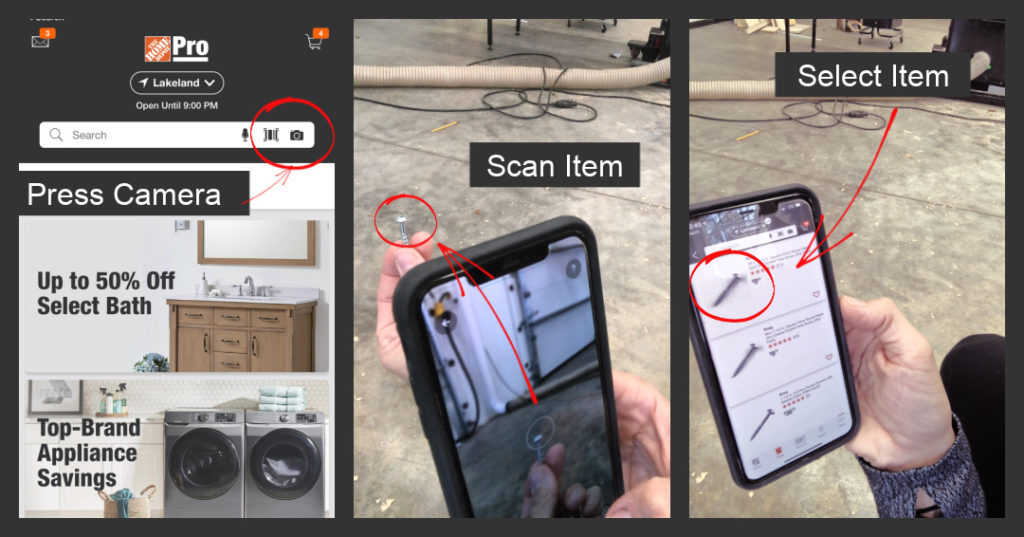
Yup, many of The Home Depot stores offer contactless pickup! It is so simple. First locate the item you need using their app or online. If you are using their app I LOVE the image product locator. Yes that’s right! Do you ever find your self in need of a part, but are not entirely positive you know what it is called? The Home Depot can help with that too!

I can safely say my locker pickup was my fastest Home Depot trip ever. I was out of my truck for about 1.5 minutes and then I was back on the road. Just another reason to love The Home Depot. 

Now that you are better equipped and ready to take on any project, big or small, let’s get started! 

If you would like complete build plans for this cabinet, they are available here:

Prep Materials-

 When working on a large project I prefer to cut and sand all of my boards before assembling. (it makes life a little easier when applying paint/stain.) 

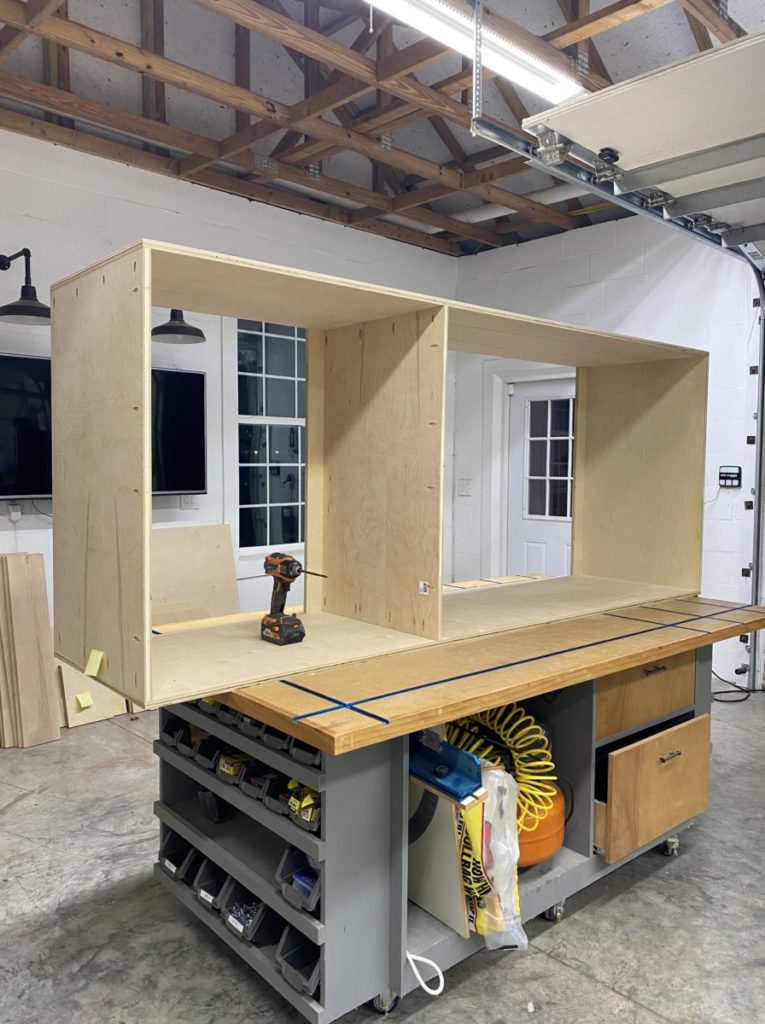
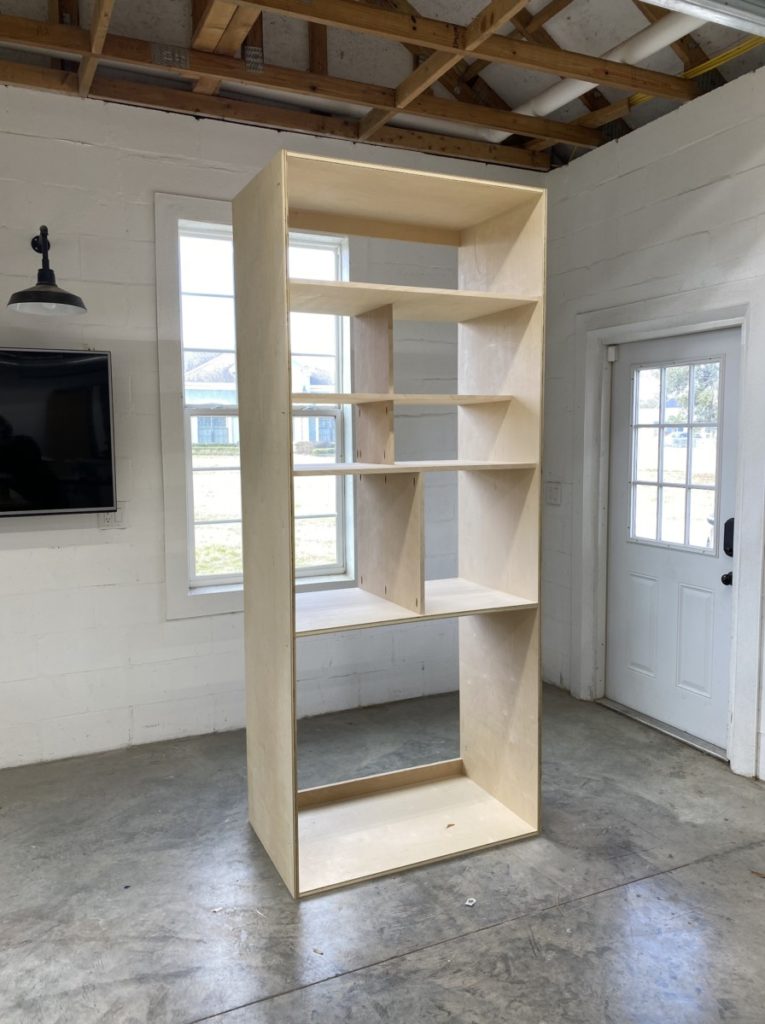
Assemble Base Unit- 

Regardless if you are using my build plans, or creating your own cabinet begin by assembling the cabinet “carcass” (a term used by builders in reference to the body of a cabinet). 

Add Desired Shelves- 

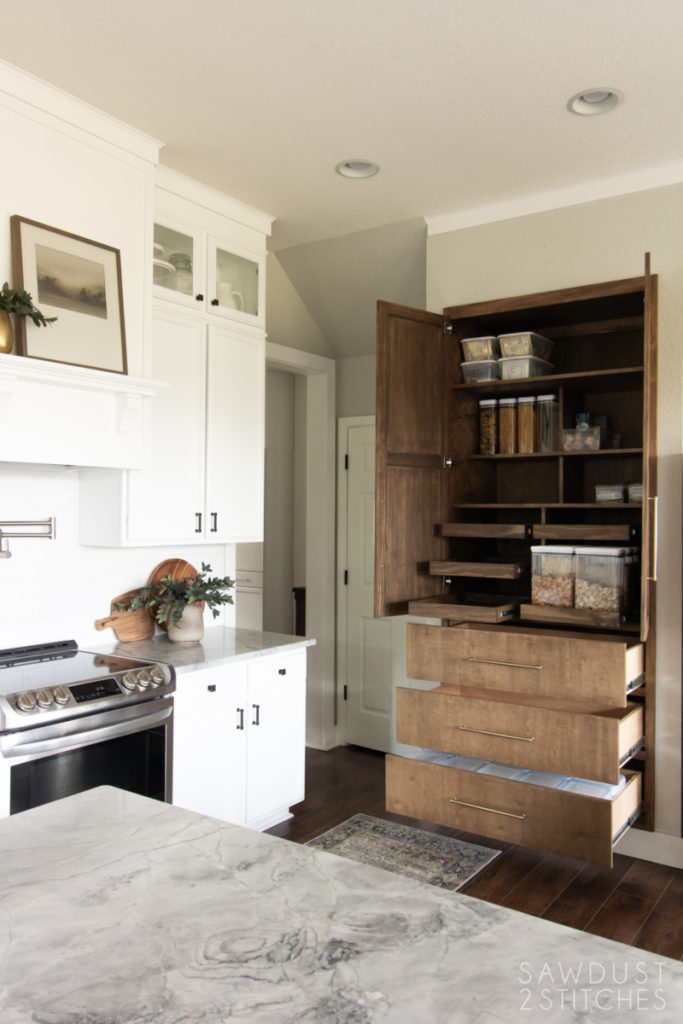
 When designing my pantry I knew that I wanted plenty of drawer storage, along with pull out shelves. One thing to keep in mind when adding the shelves, the ply on the end of the boards will be exposed unless you either, support the ledge with a 1×2” or use edge banding on the exposed edge. I prefer the latter option. 

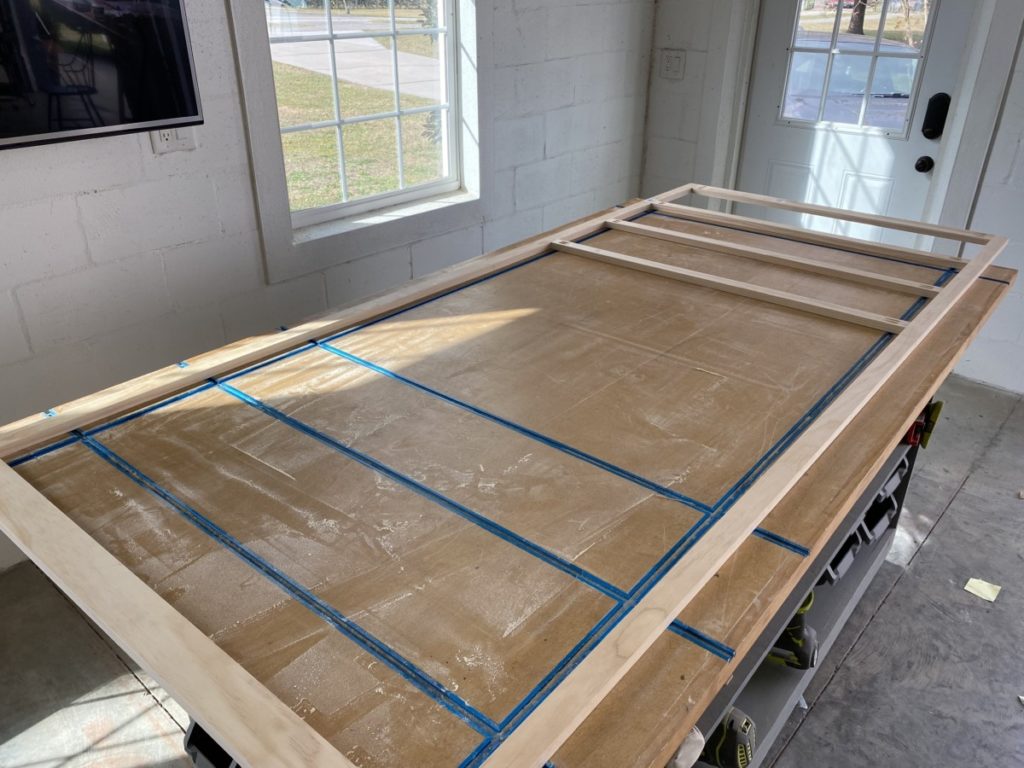
Build Face Frame- 

A face frame is not always necessary for cabinets, in fact many cabinets are frameless.  However due to the nature of this project I needed to use a face frame.  In most cases the face frame is flush with the outside of the cabinet, in this case the face frame was made to sit flush with the interior of the cabinet. The reason?  With the face frame hanging out over the side of the cabinet it will allow a little wiggle room when installing this in the wall.  This project will require me to cut into my drywall and this face frame will cover the cut drywall and create a flawless look. 

Assemble/Install Boxes

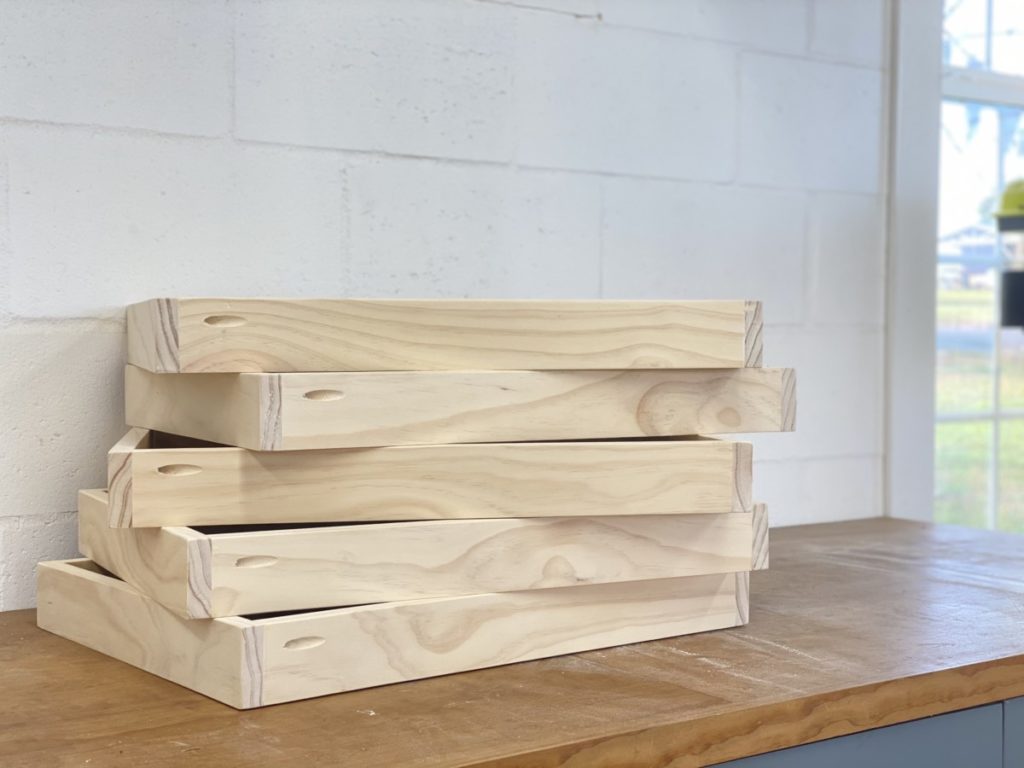
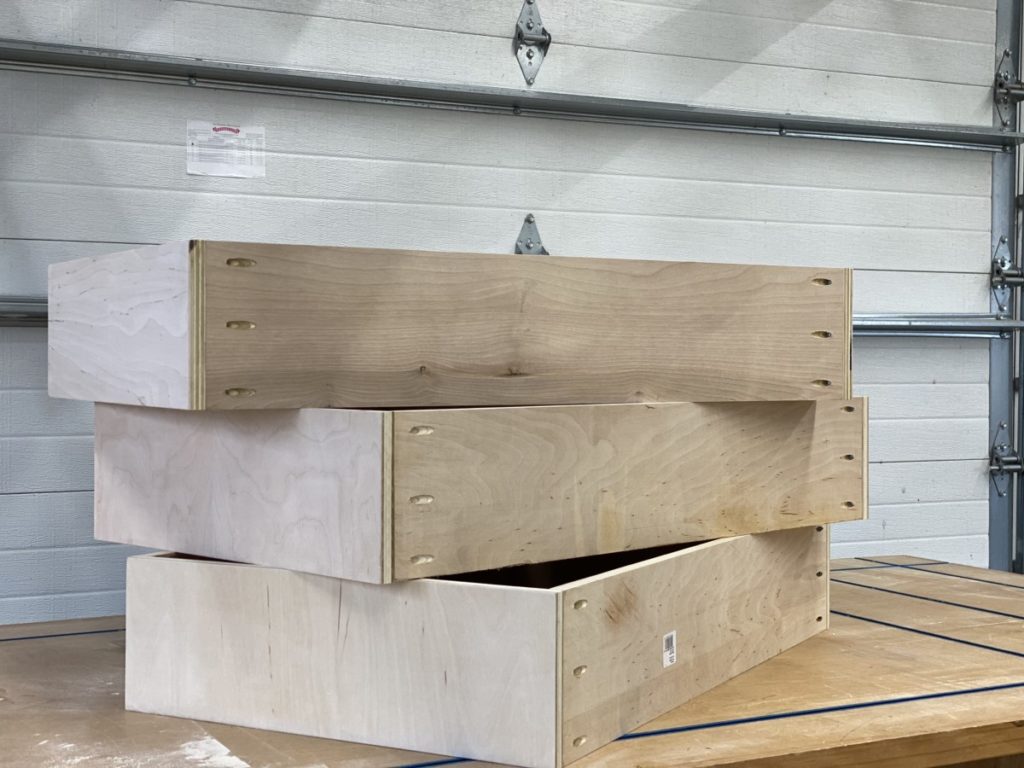
 The best part of replacing a closet with a pantry is the endless drawer possibilities!  With the limited entry space of a closet there was no way I could efficiently use drawers.  I LOVE drawers and I added a ton of them.  However, if drawers don’t speak to you, you can always opt for easy shelving instead.
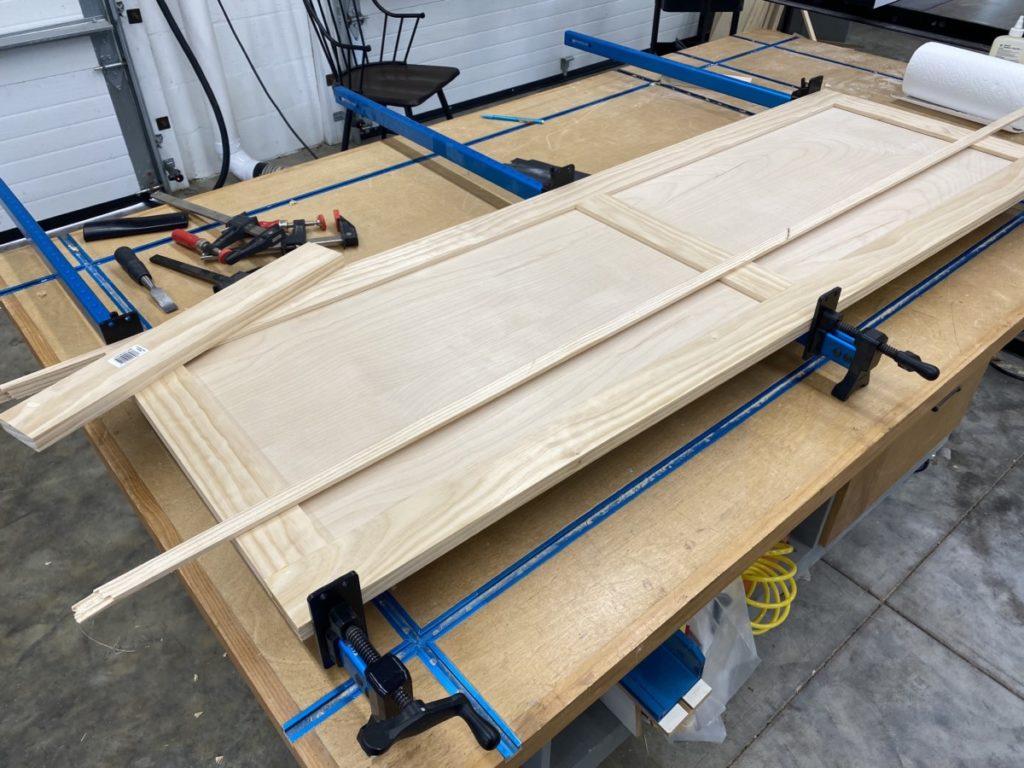
Build/Install Doors and Drawer Fronts

Again, if you are looking for specific dimensions, I have full build plans available here.    If you love my style you can follow my build plans. However, the doors and drawers are a great way to really add your own personality to the build.  I was heavily considering swapping out my wood panels in my doors for glass, or even making map style drawer fronts.  The sky is the limit and this build can be completely catered to you and your unique style. 

Clear Out Existing Closet 

Before I can bring in the new, I had to take out the old. 

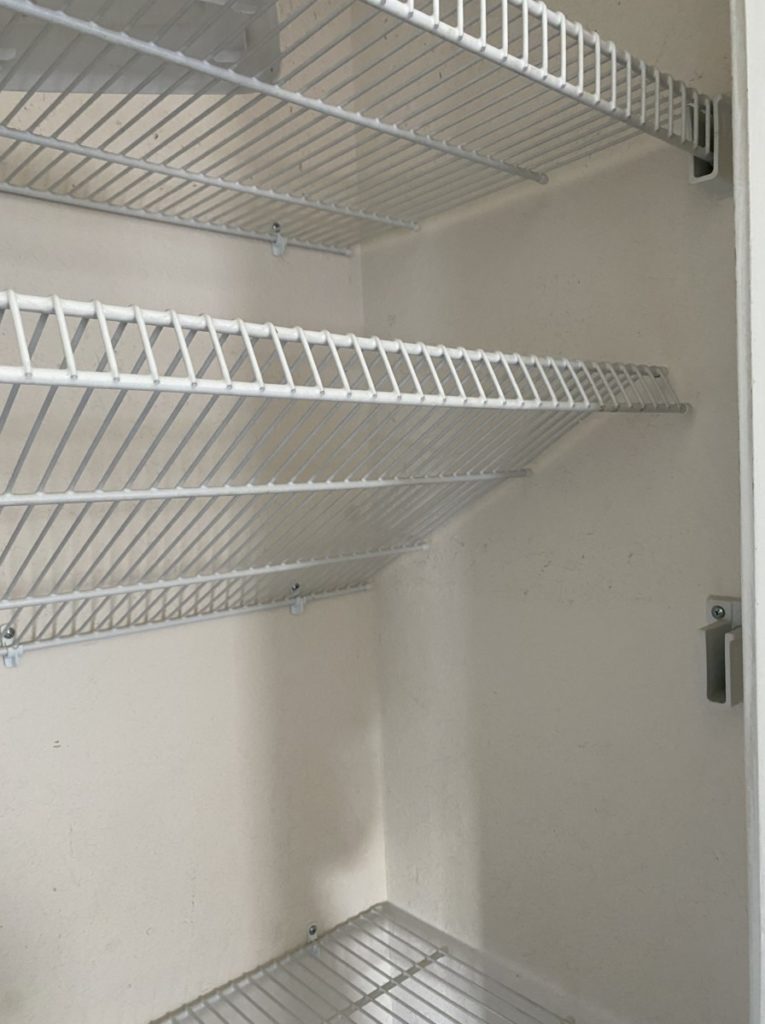
I removed all of the wire shelving and hardware.

Remove Door Frame- 

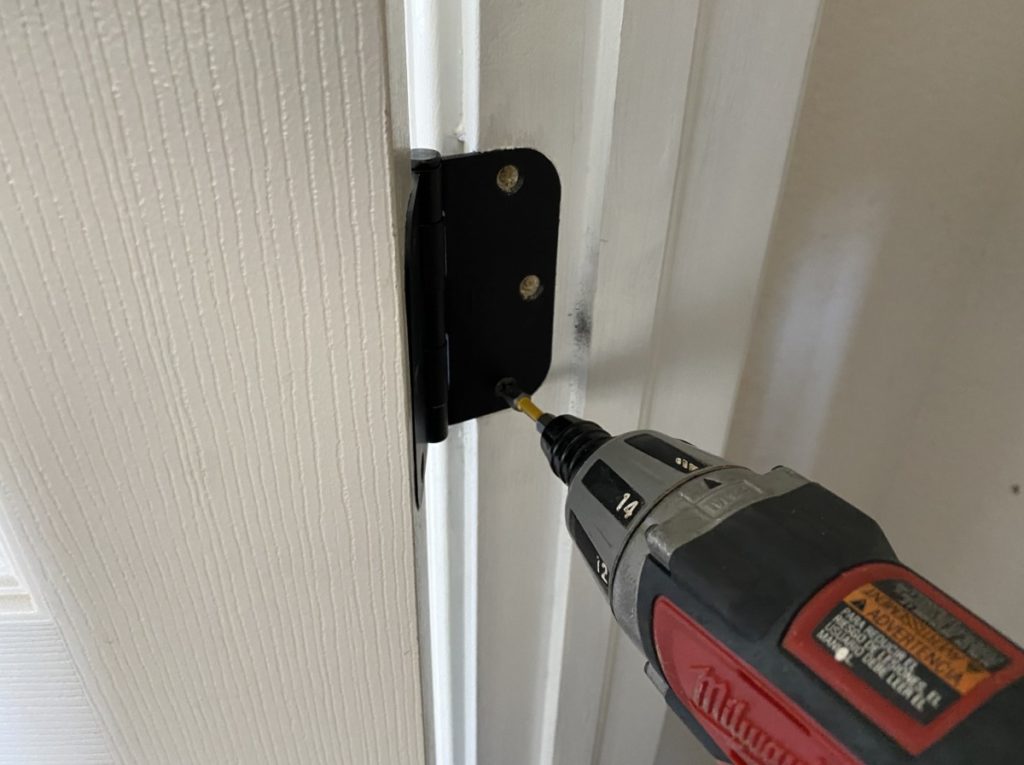
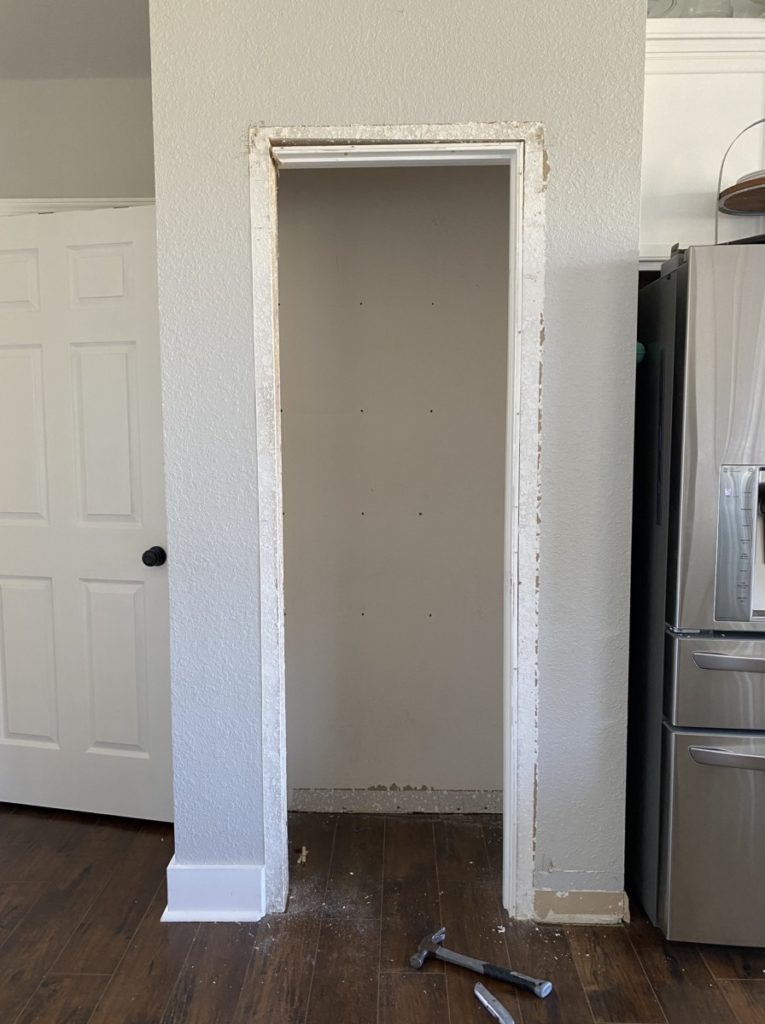
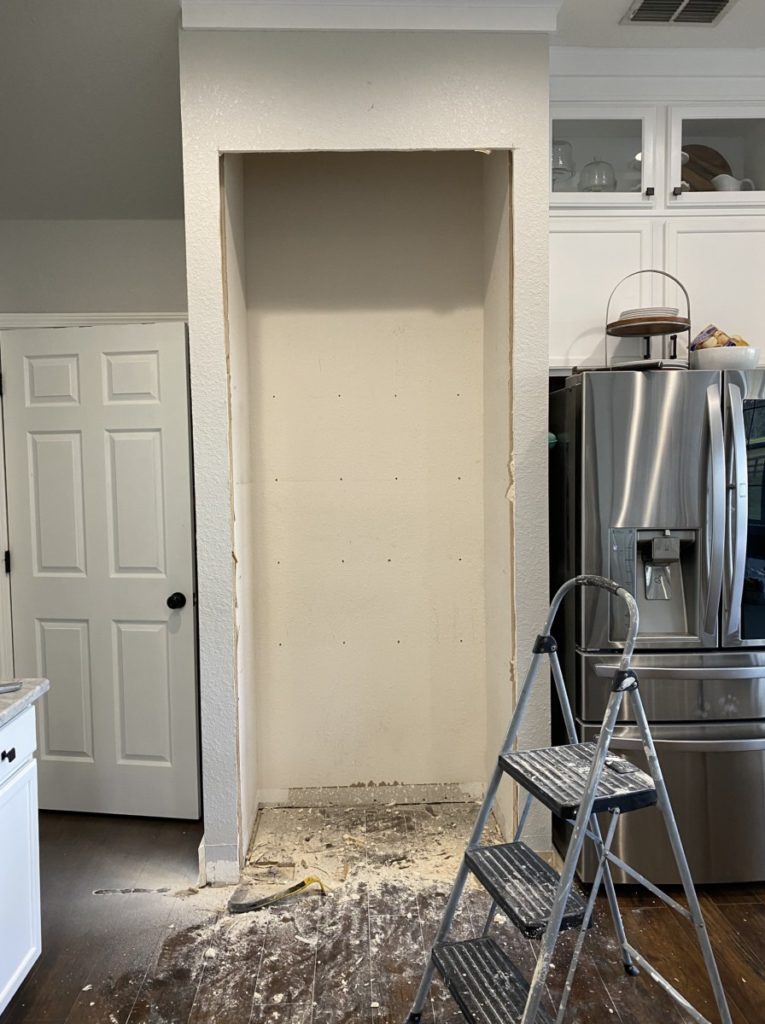
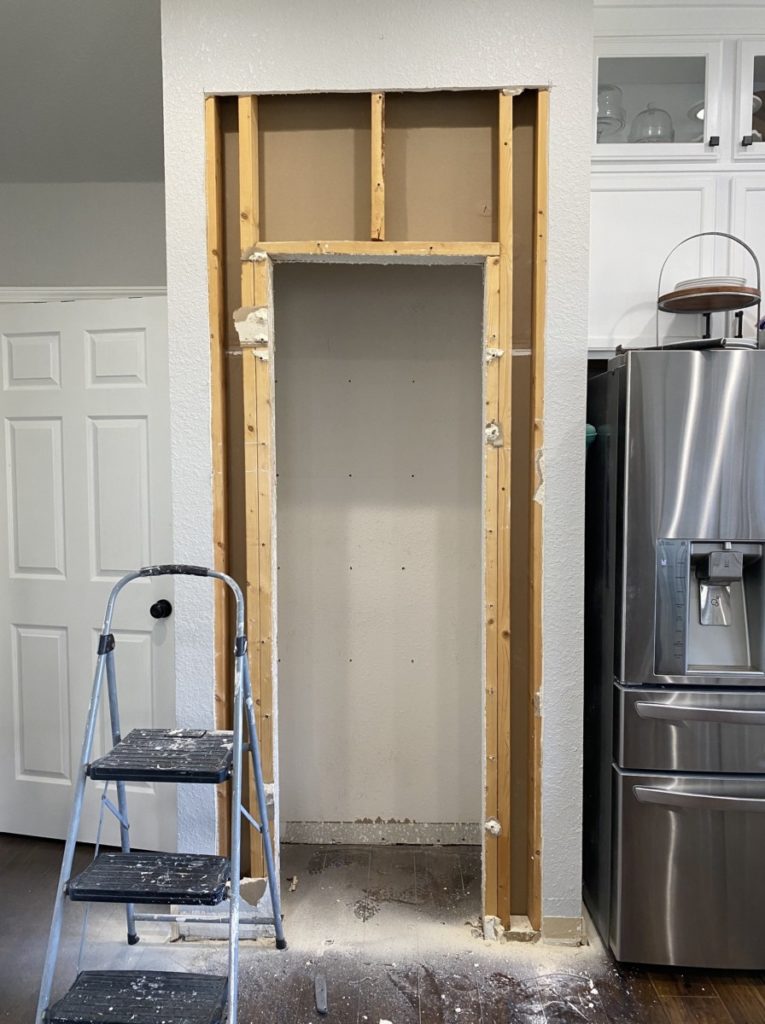
 In order to make space for the new cabinet I needed to completely remove the door, the door frame and even part of the wall.   Buckle up, this is where is gets fun!
I started by removing the door and the hinges that are secured to the door jamb.  

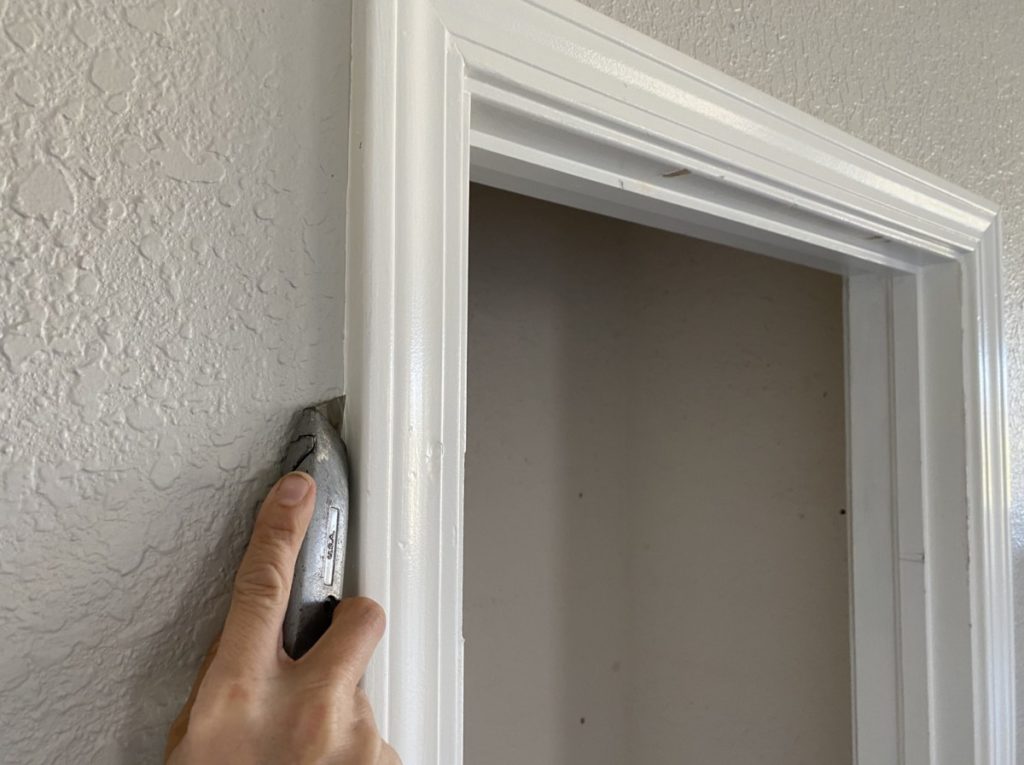
Once the door is removed it is time to move on to the door frame and jamb. Odds are there will be a substantial amount of caulk around the perimeter of your door.   First cut the caulk line with a utility knife, this will make the removal process much easier.  

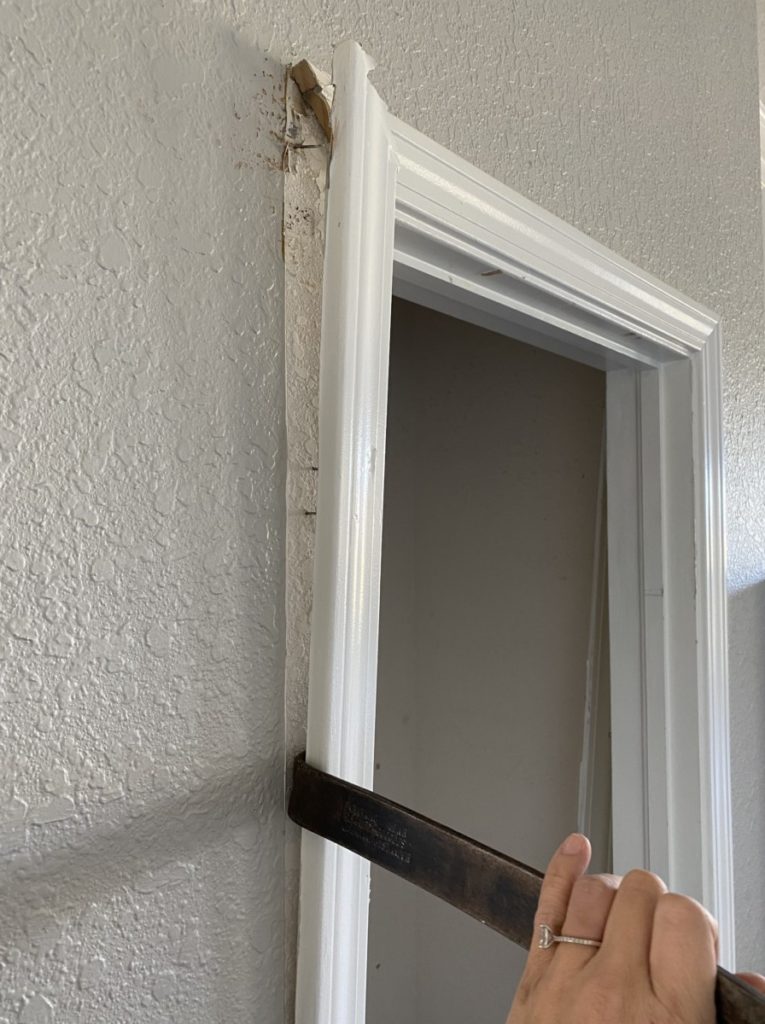
 Using a prybar and a hammer remove the door casing and jamb.

Cut Hole

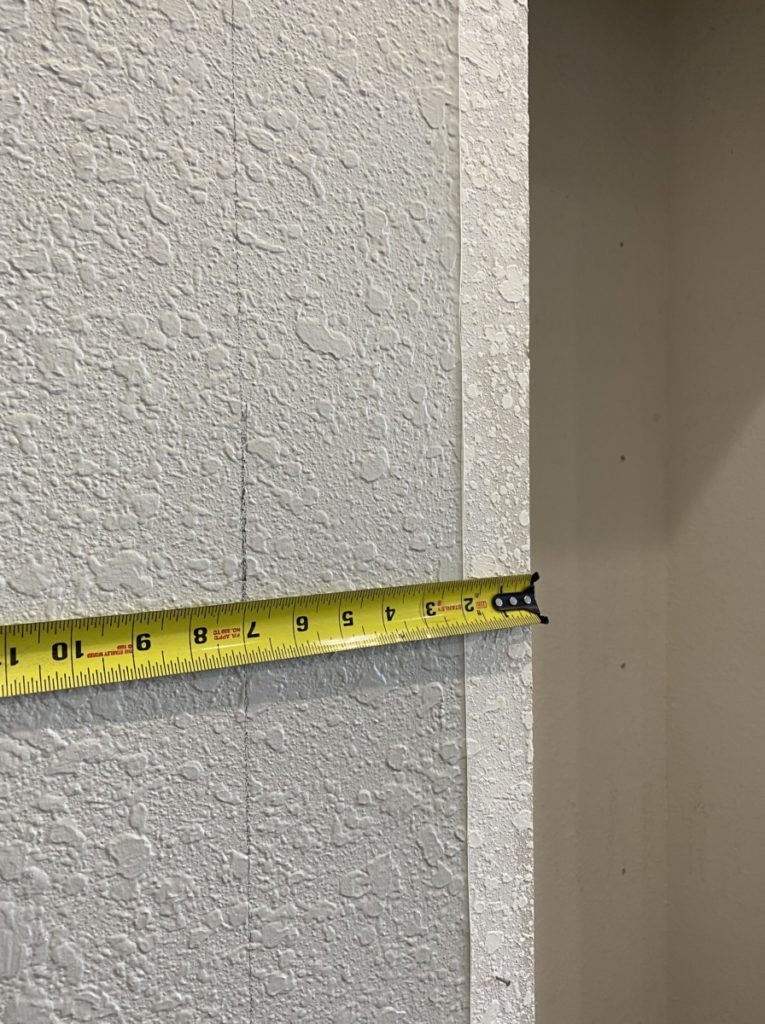
Before I started busting out walls, I needed to take careful measurements.  I obviously designed my custom pantry to fit in my allocated space, but I still needed to make sure I transferred my dimensions exactly to ensure my pantry would fit. 

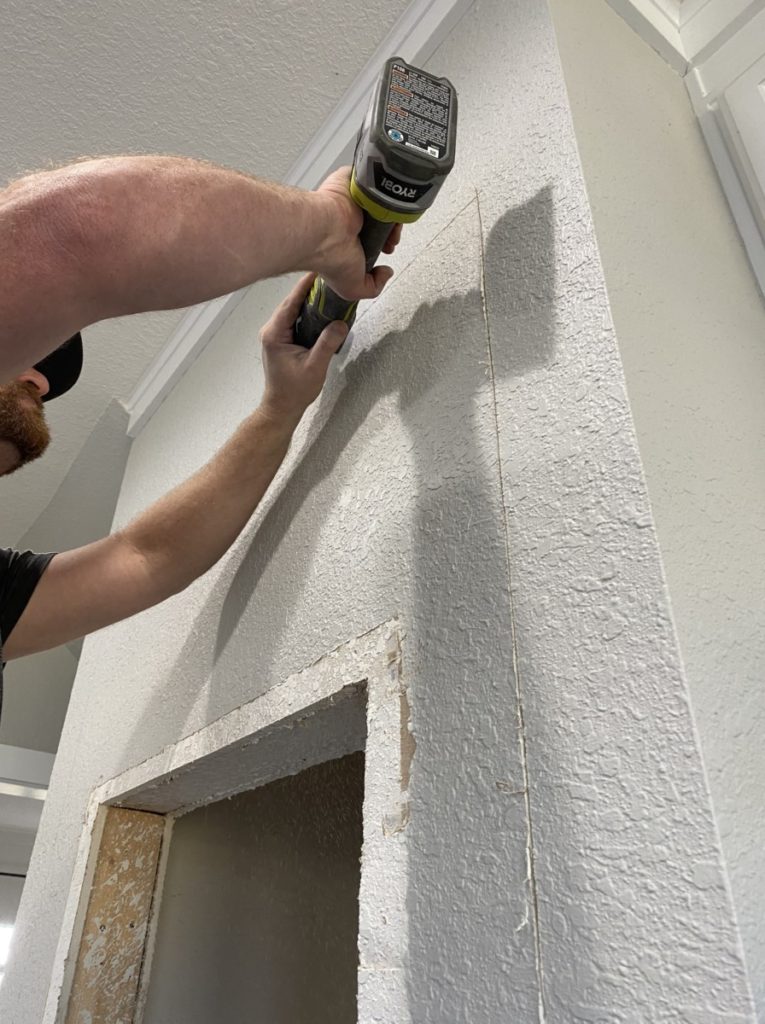
After double and triple checking my dimensions, we started cutting drywall.  When cutting drywall, I prefer to use a oscillating tool. (Or in this case I let my husband handle the tools instead of the camera… this time.)

Remove Studs

 If you are ever uncertain if a stud is loadbearing or not, do not guess. Get a professional’s opinion before ripping apart your home!   In this case the 2×4’s pictured are just framing in the door and can safely be removed.

When it comes to removing studs, a good solid hammer and a few forceful hits will usually do the trick. 

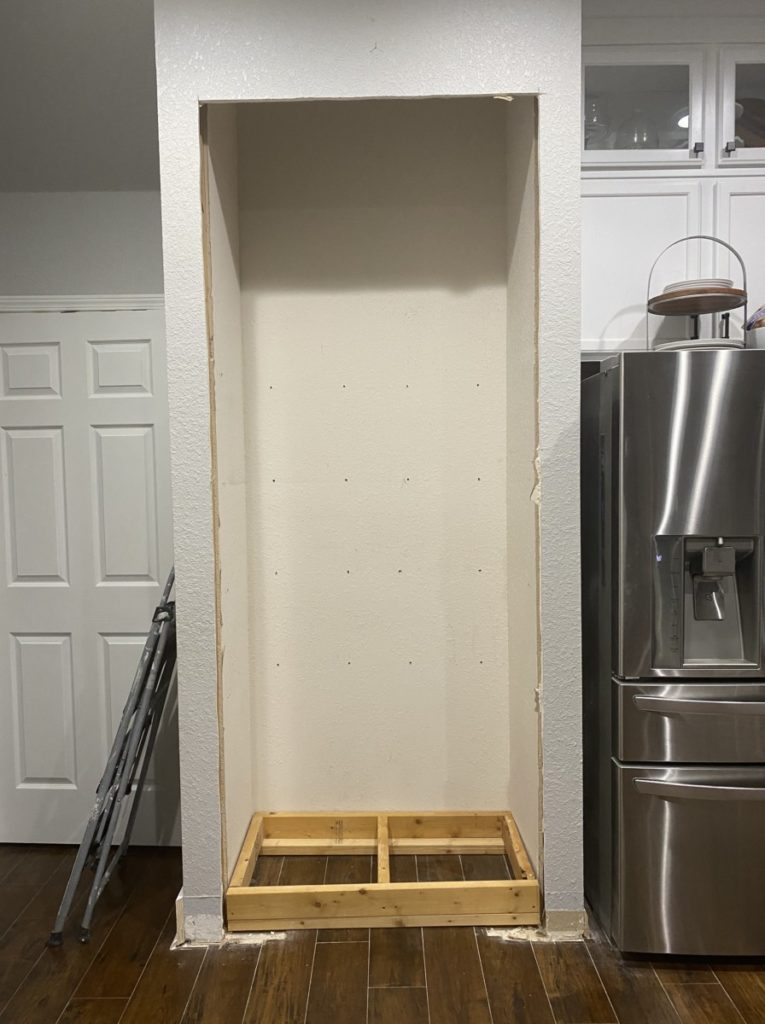
 Build a Platform

  After much consideration I decided that I wanted to run my baseboard under my new cabinet.   I had considered running the cabinet all the way to the floor and create more of an armoire appearance, but I ultimately  decided that  I wanted it to look like it was completely built in to the wall.  In order to run the baseboard under the cabinet I needed to build a small platform using 2×4” boards.

Insert Pantry 

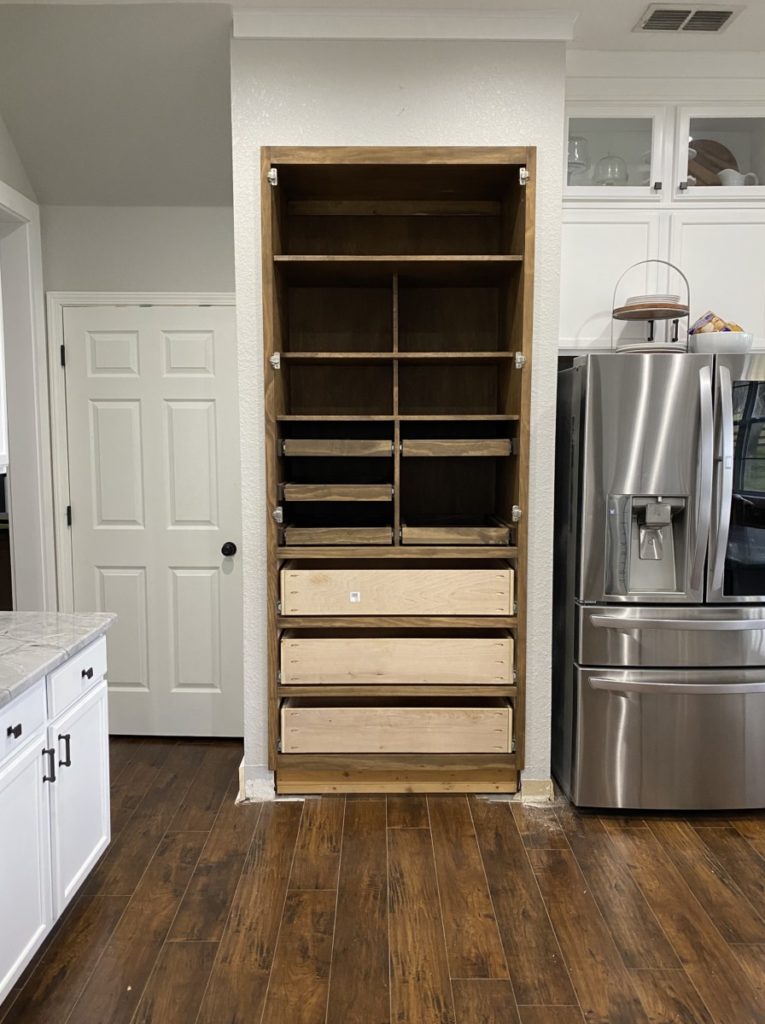
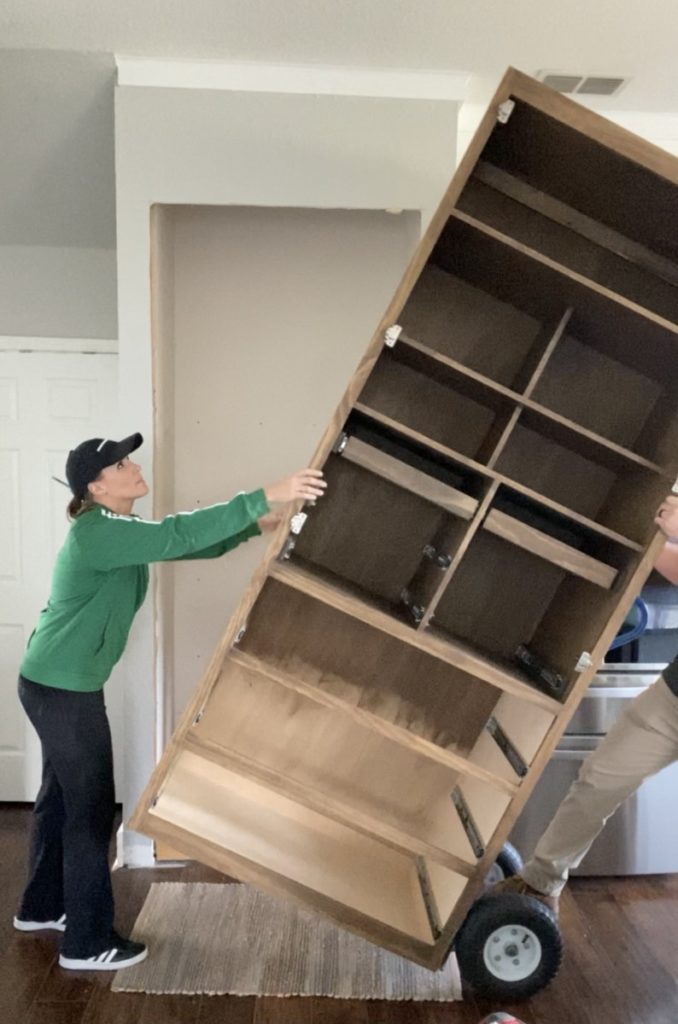
 It is now the moment of truth.  I would be lying if I said I wasn’t nervous as my husband and I brought this beast of a cabinet inside. I had already double, and triple checked my measurements, but I still held my breath as we pushed it into place.

 I cannot even begin to tell you how perfectly this thing fit.  LIKE A GLOVE. Gratefully everything went according to plan and the new custom pantry fit snuggly into its new home.

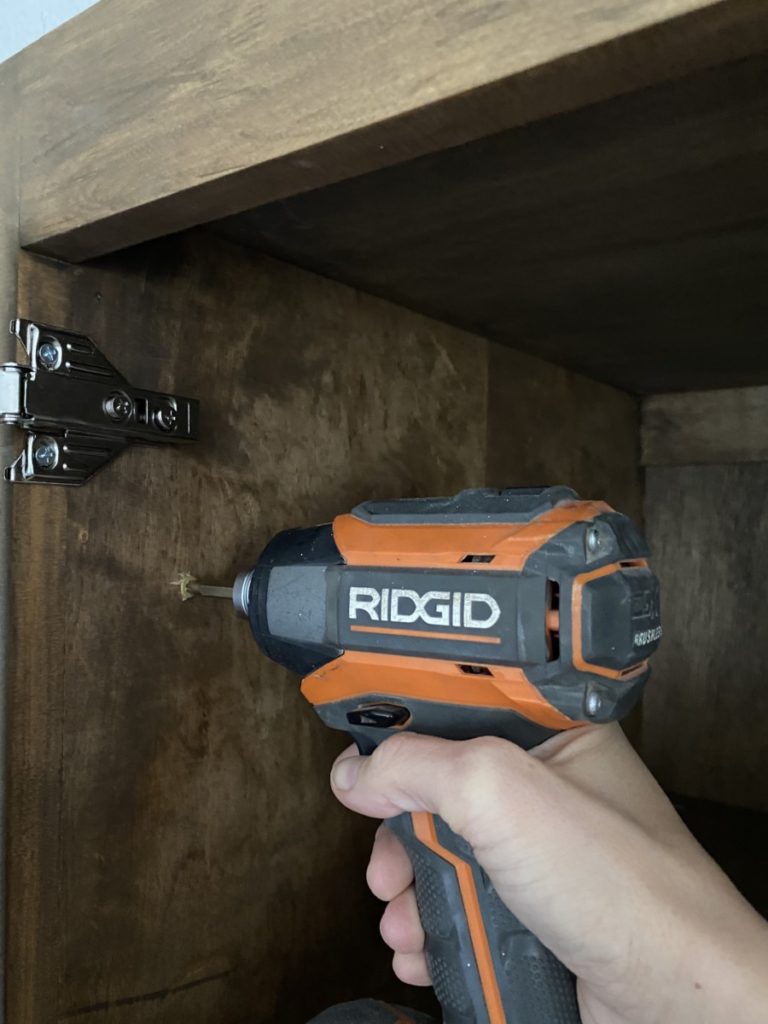
Before I started loading up the new pantry, I first ensured that it was secured in place.  Using 3½” screws I  drilled through the interior of the unit and into the stud that was directly behind it.  I repeated this step at several different anchor points. 

 Install Baseboard-

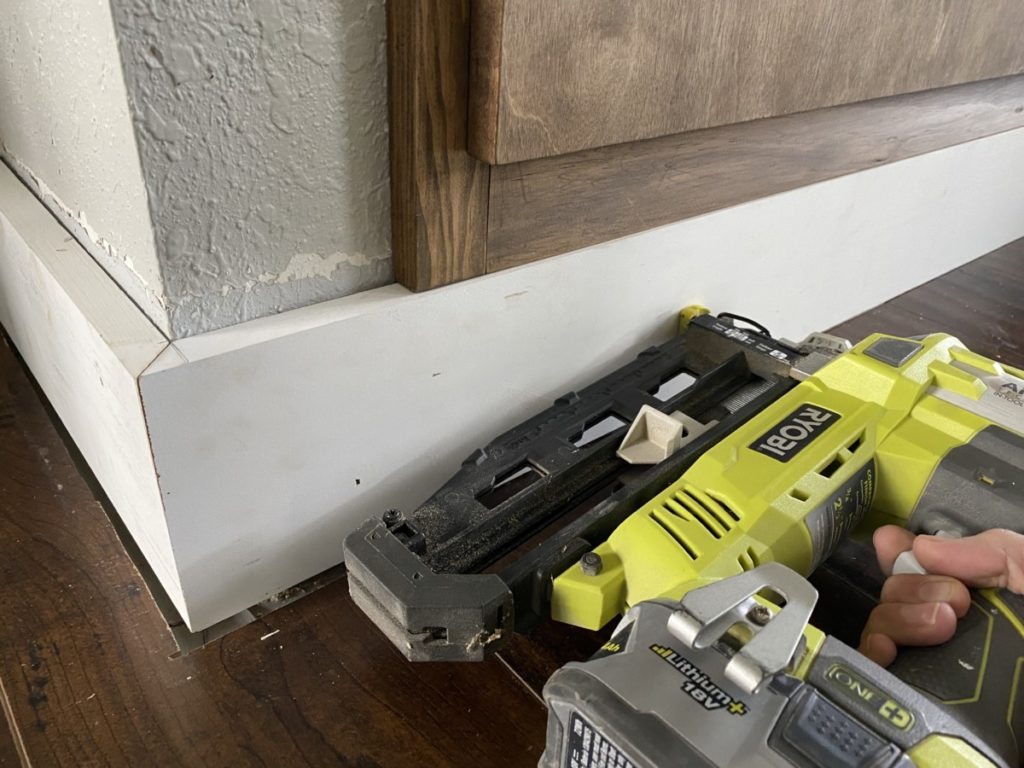
    The last thing this built-in needed was a baseboard.  As mentioned earlier, I put the pantry up on a platform  so that I could run a baseboard under the cabinet.  I simply cut a new piece of baseboard and installed in under the pantry. Eventually I will add shoe molding, caulk and paint it, but that will have to wait because I simply cannot wait to share the final reveal… 

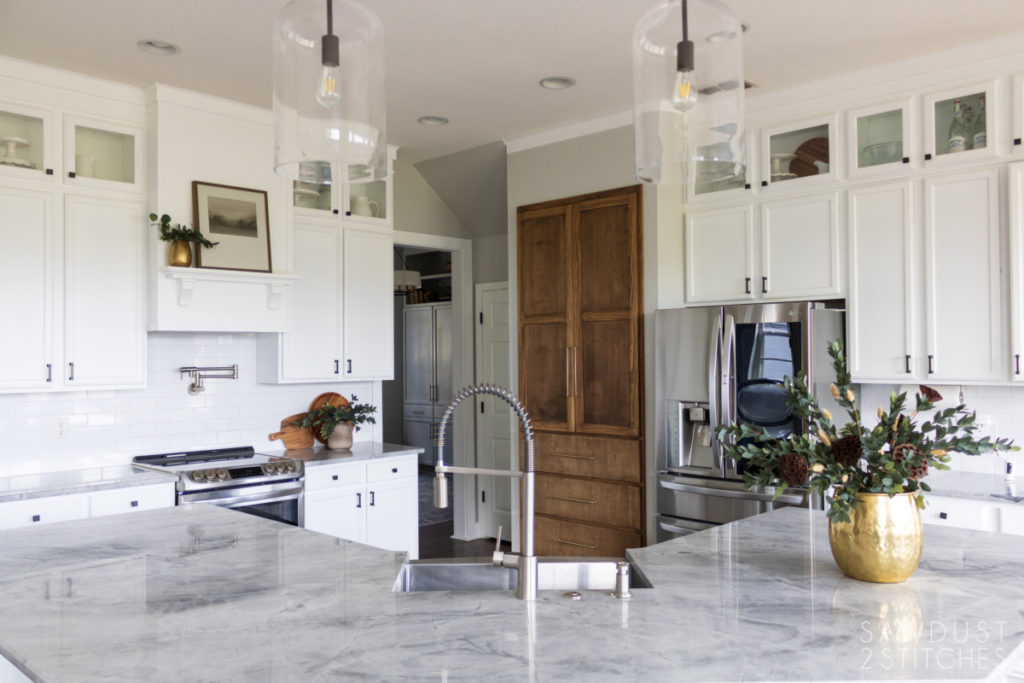
 Can you even believe that is the same kitchen? Obviously, it added a ton of storage, but oh my goodness, it transformed the entire kitchen!  Don’t you just love it when form meets function, that’s when you know it is truly a good design. 

Ready to tackle your own project? You can do this!  There are so many other great bloggers and awesome resources like The Home Depot at your disposal. So, pick a space that could use a little more functionality and dive in!
 Thanks so much for following along. 
Take Luck,

Corey 

Lazy Susan Charcuterie Board

December 20, 2020

This post is sponsored by The Home Depot*

Christmas in 2020

I think we can all agree 2020 has been an endless parade of unknowns. As a whole we have adapted, made changes, and tried to find our new norm. As a general consensus I don’t think that all these changes have been ideal. However, I will say that it has created lots of opportunities to try new things. Now more than ever is the perfect time to dive into DIY and create one-of -a kind gift for the Holidays! Today I’m going to show you how to make a Lazy Susan that doubles as a serving tray/charcuterie board, it would be the perfect gift for anyone who loves to host!

If you are looking for more great homemade gifts be sure you check out The Home Depot for more holiday gift ideas.. They have DIY gift ideas/tutorials that are a great and inexpensive ways to personalize holiday gift giving.

Tools Suggested:

  • Router (Optional)
  • Tape Measure
  • Pencil 
  • 1/8″ Drill Bit 
  • 1/4″ Drill Bit 
  • Drill and Phillips Bit 
  • Finish Sander
  • Paint Brush (or preferred stain and sealer applicant)

Materials Used: 

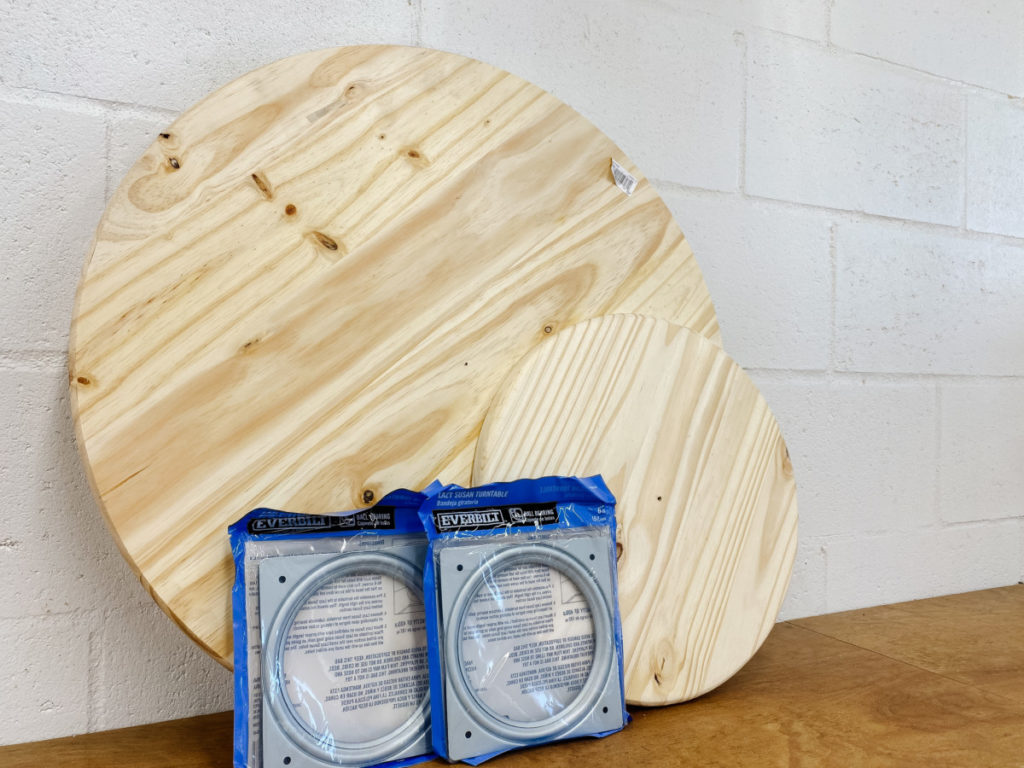
  • 12″ Laminated Wood Round 
  • 24″ Laminated Wood Round 
  • 1/4″ Dowel Rod
  • (x2) Lazy Susan Turntable
  • Wood Glue
  • Sand Paper 
  • Stain 
  • Polyurethane 

Materials

While there are many different materials one could use to create a tiered Lazy Susan, I opted to use two laminate wood rounds (12″ & 24″ ) and two “Lazy Susan Turntable(s)”.

Add Decorative Flourishes(Optional)

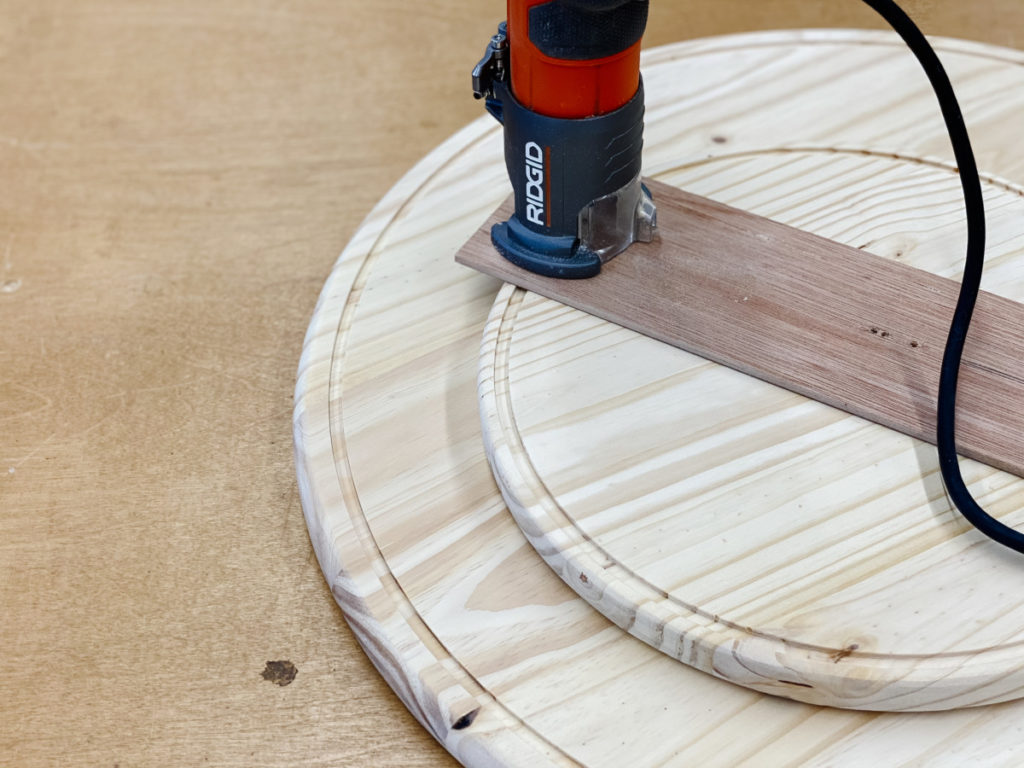
While adding decor is not a necessary part of this project, it it fun way to add your own touch to a personalized gift. There are many options such as painting, wood burning, or carving. I opted to add a small routed groove around the perimeter of each of my circle rounds. I felt like it gave it a more custom feel. ( In order to do this I created a simple jig that pivoted from a screw in the center of my wood rounds.)

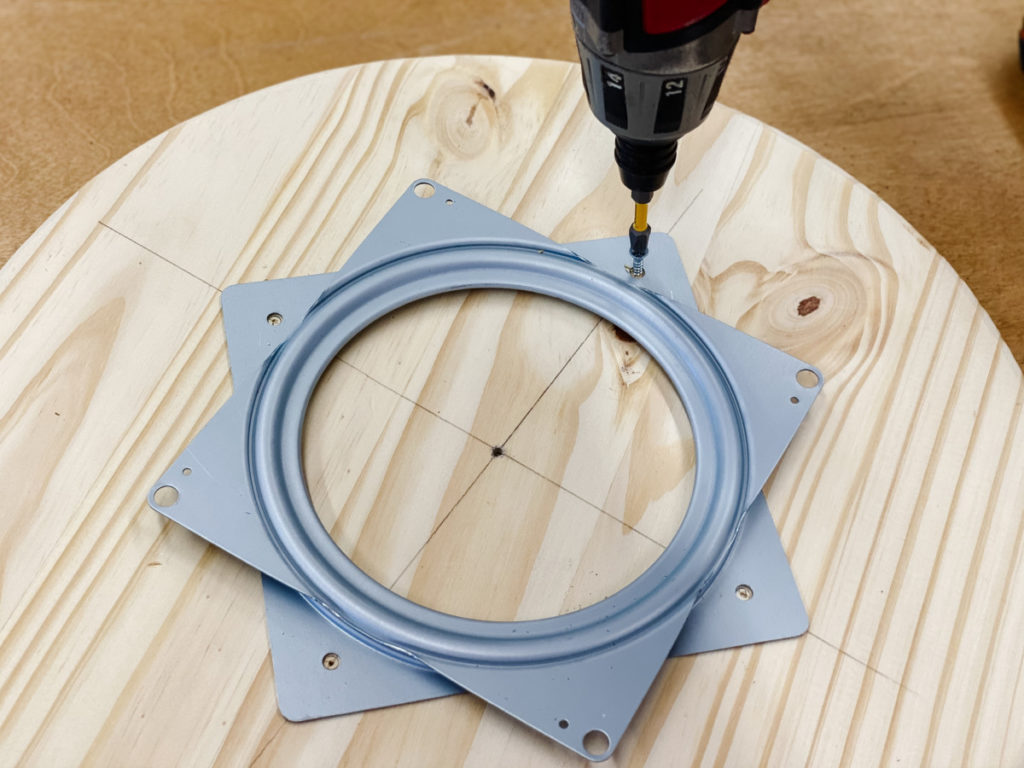
Secure Turntable to Small Circle

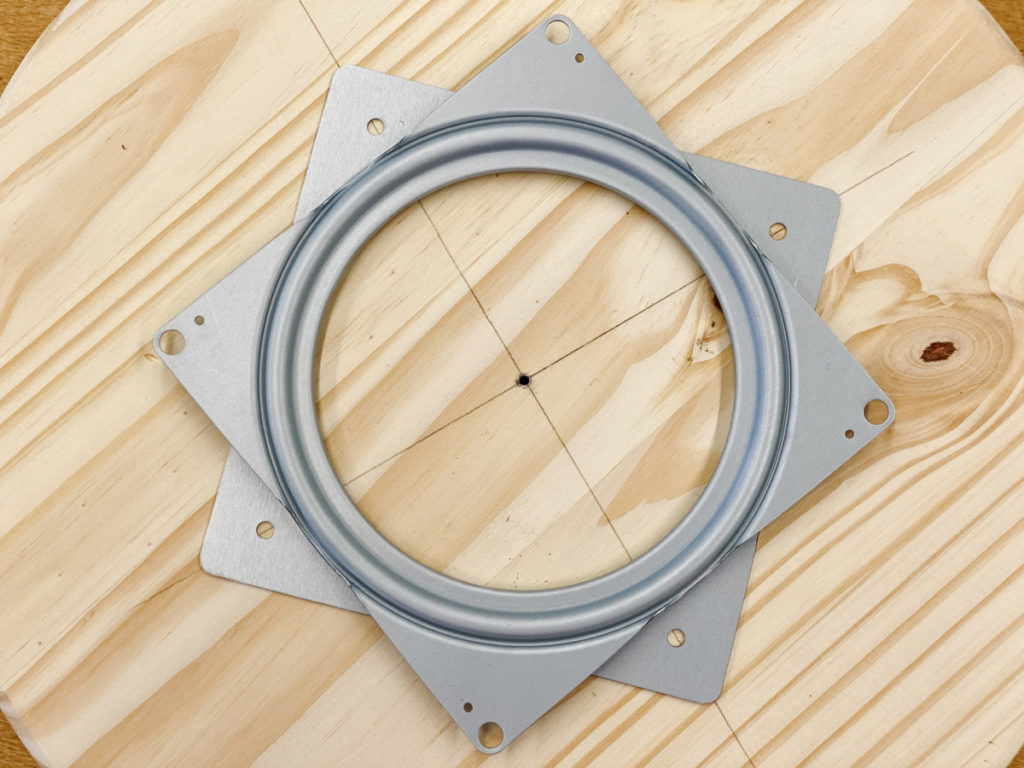
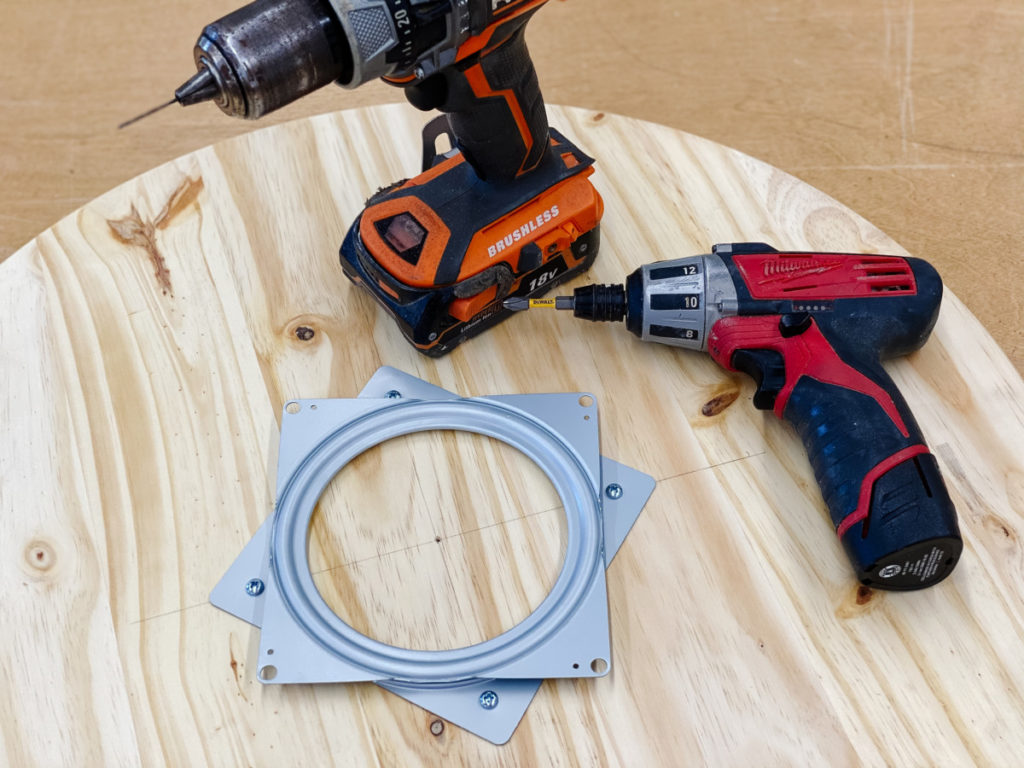
Find the center of the small round board, and mark screw placement.

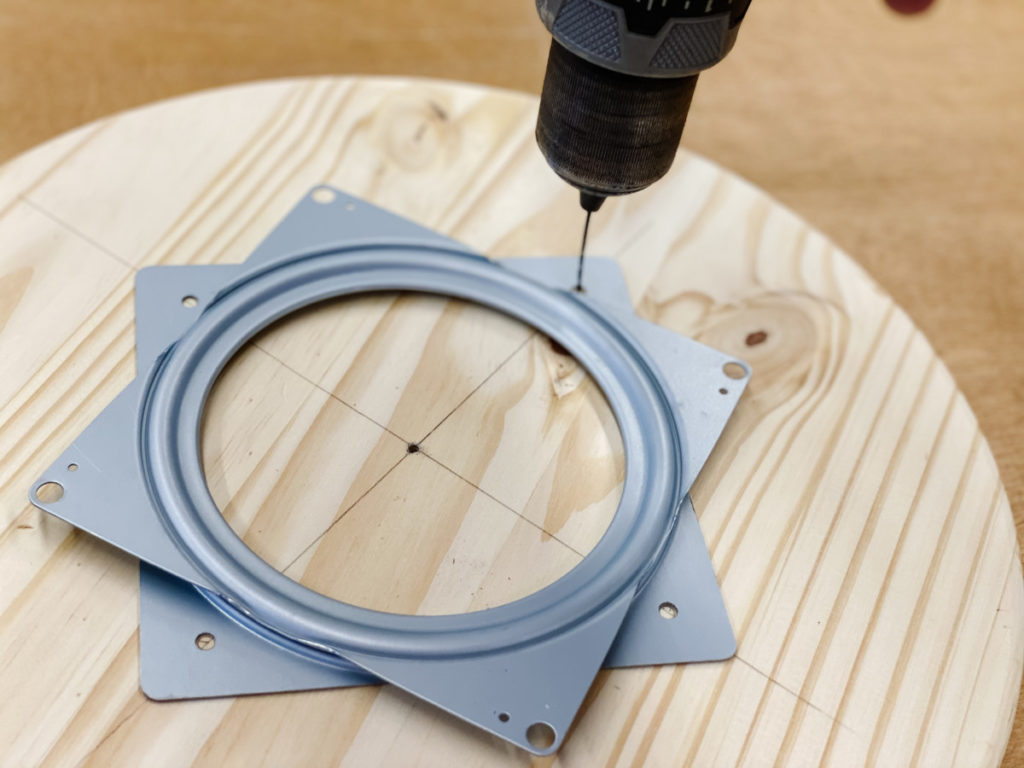
Pre-drill the previously marked screw holes with an 1/8th ” drill bit.

Secure turntable using 1/2″ screws.

Mark and Add Dowels

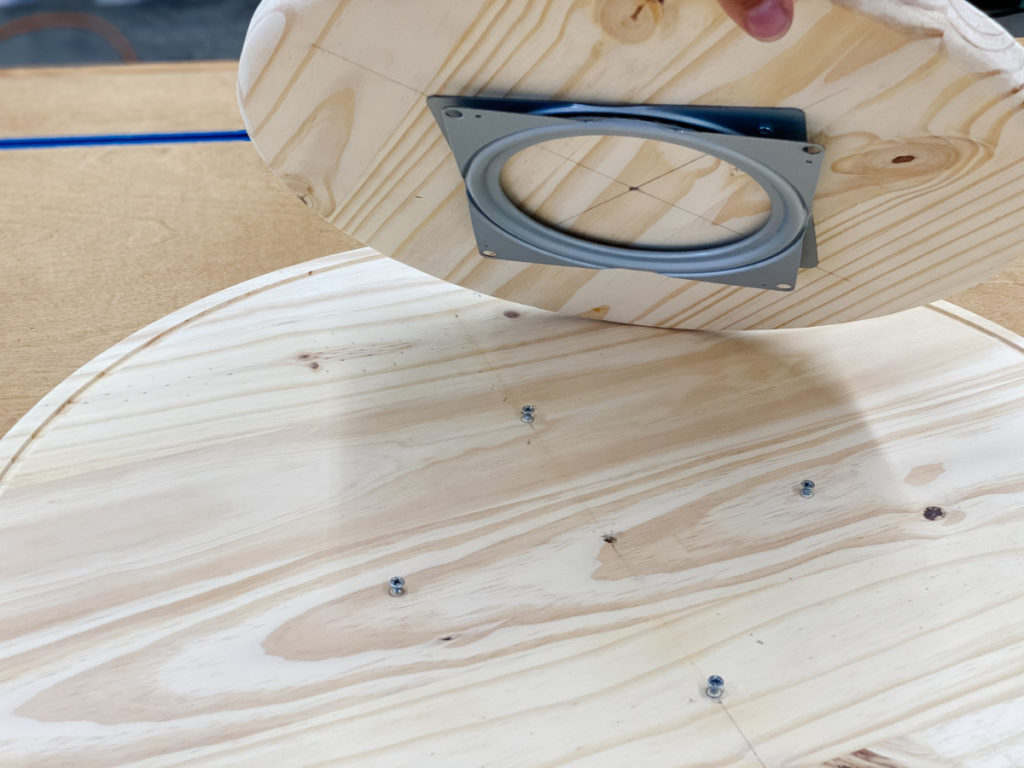
The end-goal for this project is to have two turntable trays that can be used independently or stacked for a tier effect. In order to have them stack securely I needed to add little pegs to prevent the top tier from shifting on the bottom tier.

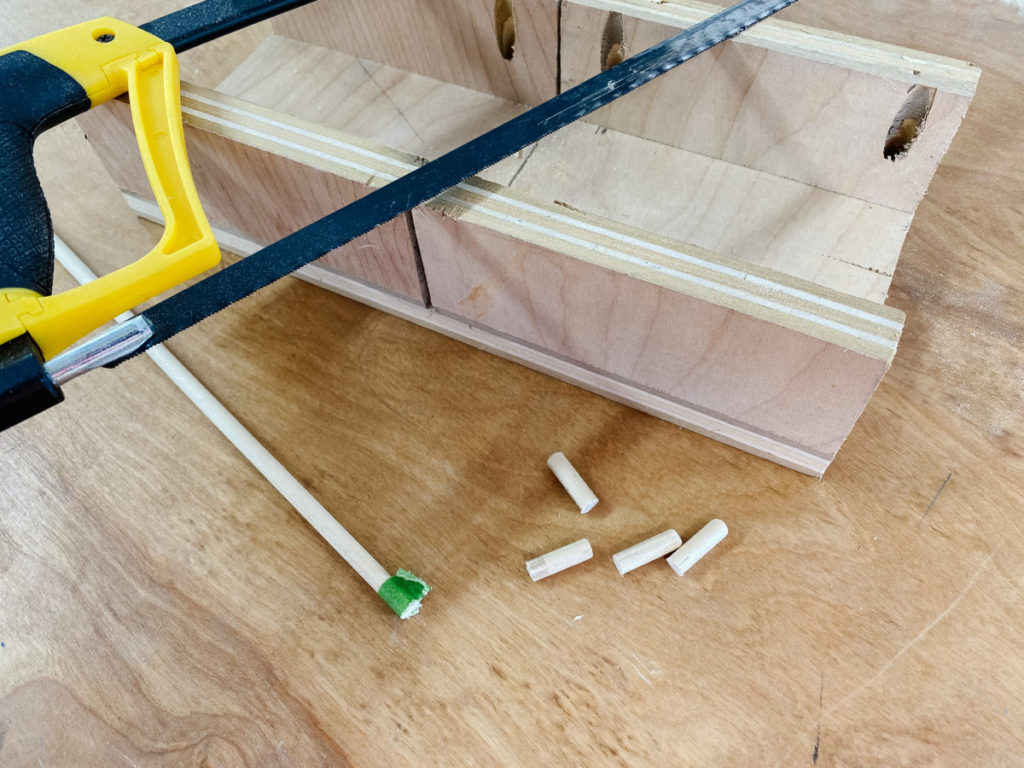
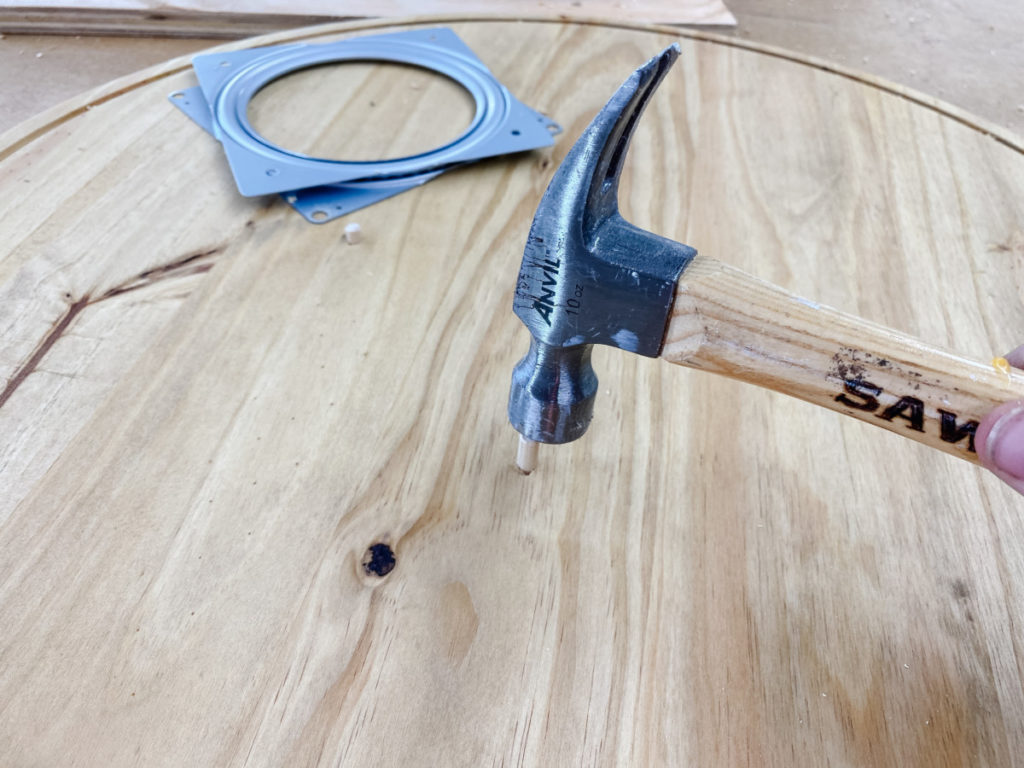
In order to create the pegs I used a 1/4″ dowel rod and cut (x4) 3/4″ pieces.

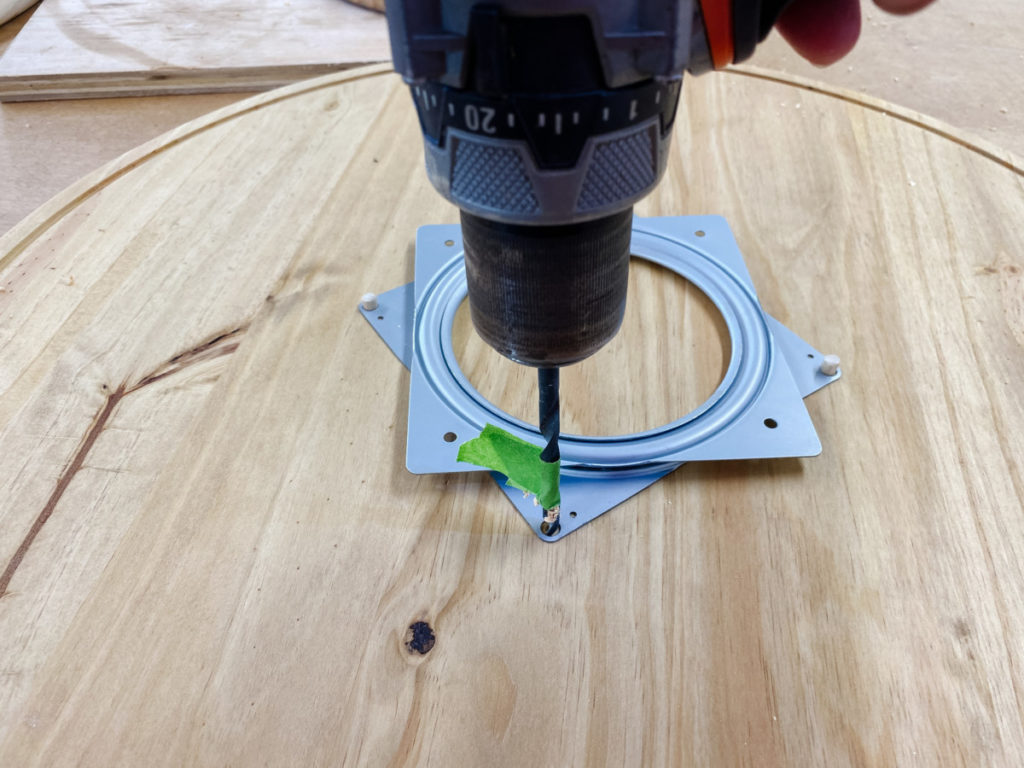
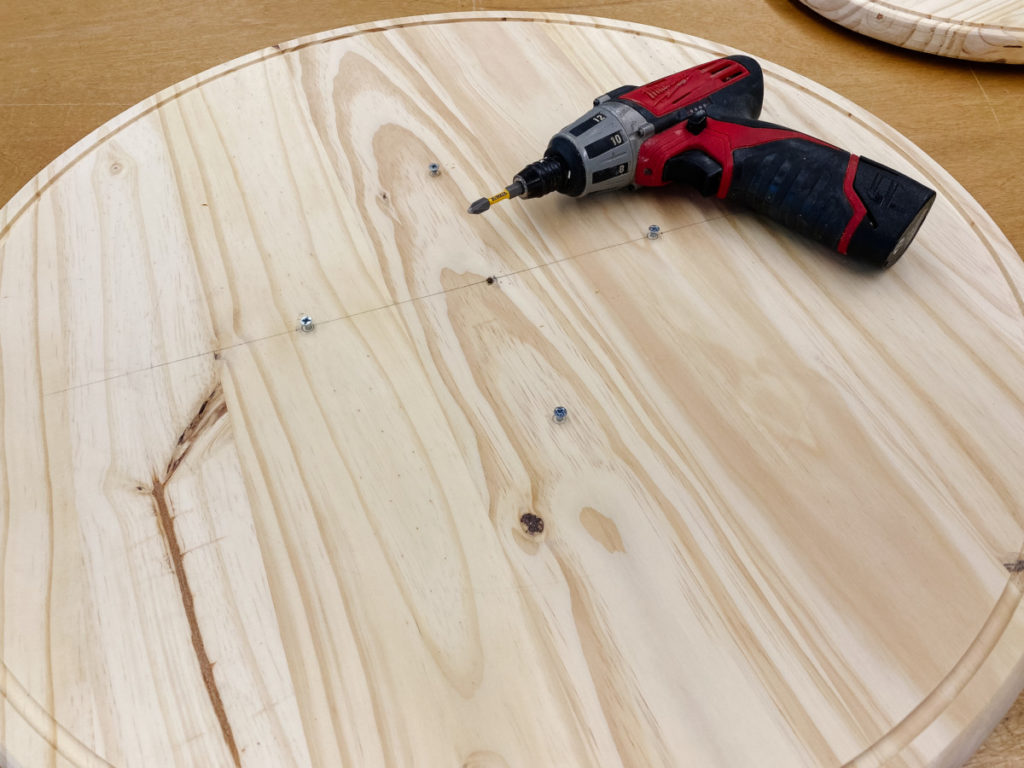
Place the second Lazy Susan Turntable centered on the top of the large wood round. Use the turntable as a template to mark the placement of the LARGER holes. Using a 1/4″ drill bit, drill 1/2″ deep holes as straight as possible.

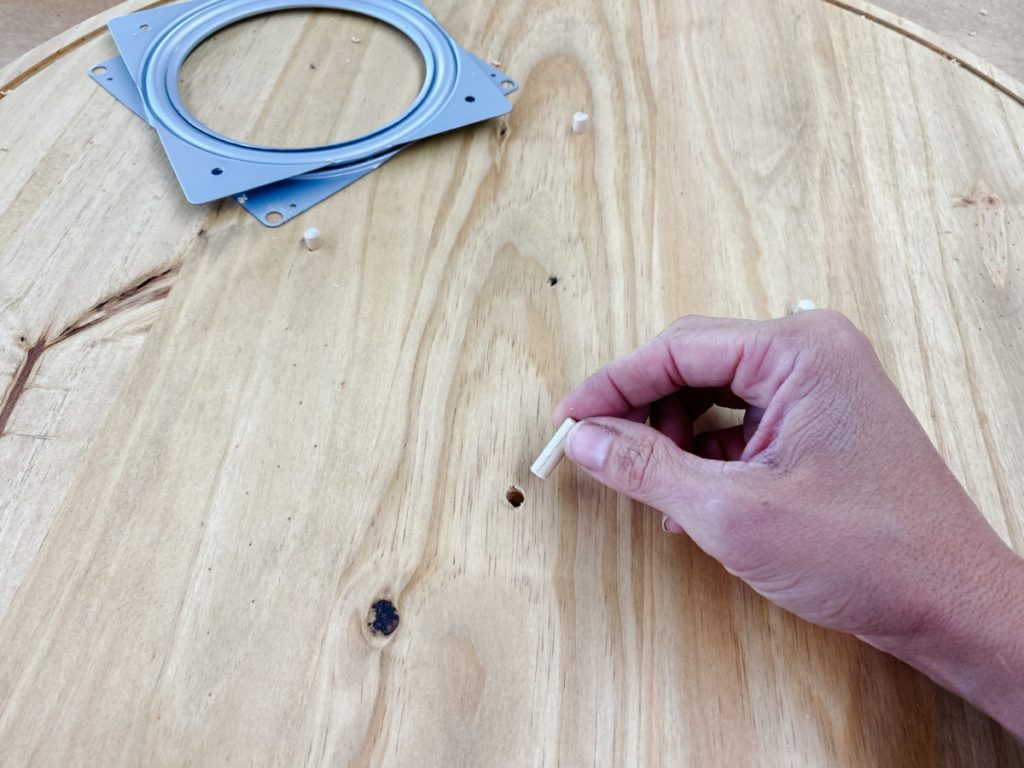
Now it’s time to place the pegs. Add a dab of wood glue to the bottom of the pegs and firmly push into place.

If necessary use a hammer to gently tap the dowels into the holes.

Alternate Option (Mark and Add Screws)

Now, if the dowel rod idea seems a little tricky, no worries I have got you covered. (You can do this!)

The point of the dowel rods is to hold the turntable in place . We can accomplish the same principle by adding a few small headed screws (placed the same way the dowels were). I opted for the dowel rods because they can be stained and are less obtrusive should someone wish to use the large one by itself.

Whether you opt to use the peg or screw method, the results are the same. These four screws/dowels will allow you to drop the small turntable tray on top without it shifting.

Secure Turntable to Large Circle

Use the same steps used to secure the first turntable to the smaller tray to the bottom of the larger wood round.

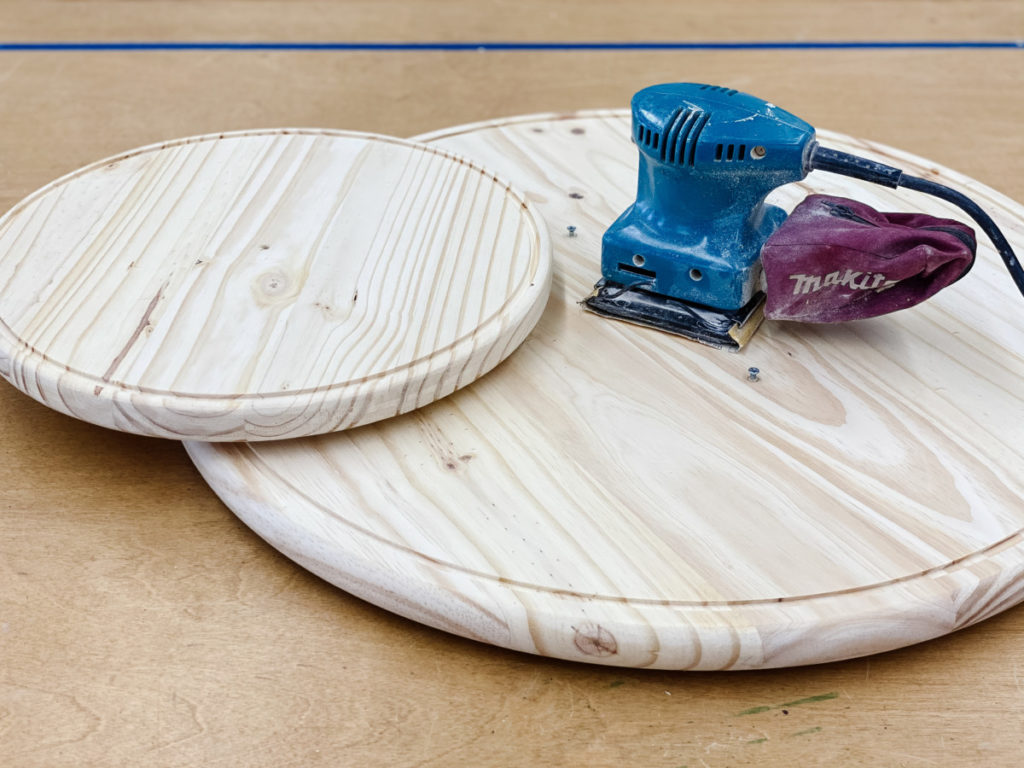
Sand

A great way to really personalize this gift is by adding some color! Before we start staining or painting I would suggest sanding both trays with some fine sandpaper.

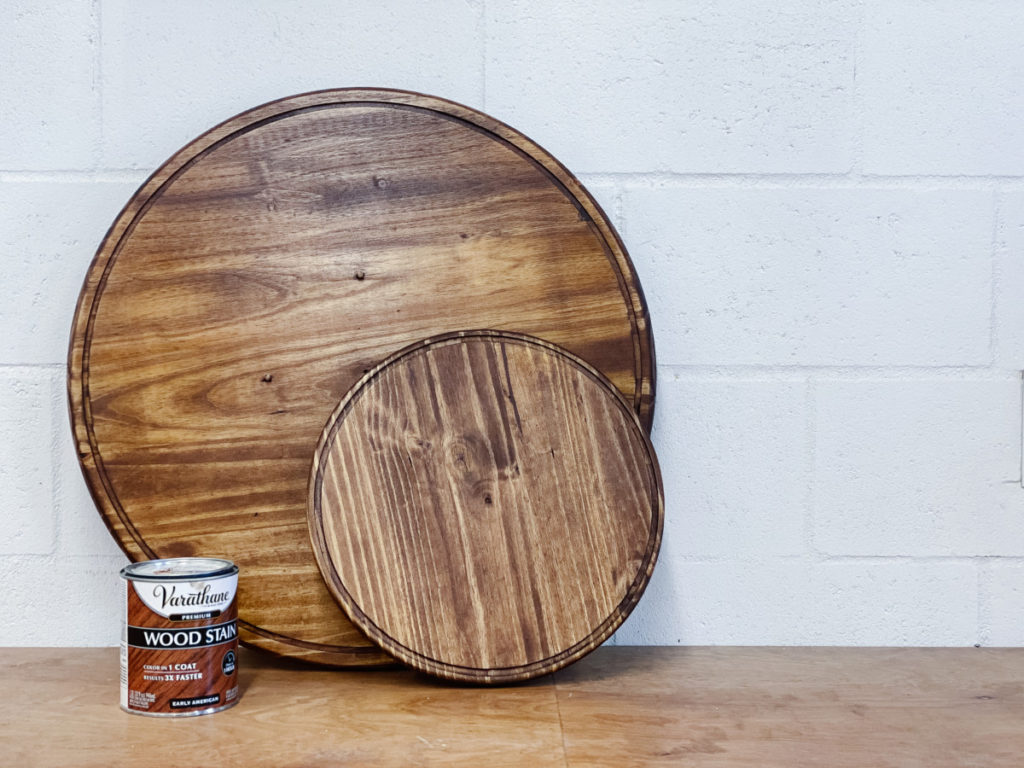
Stain

As I said before, the finish is a great way to really personalize this gift! You can use their favorite color or if you can recollect what wood tones they use in their kitchen that is probably a safe bet!

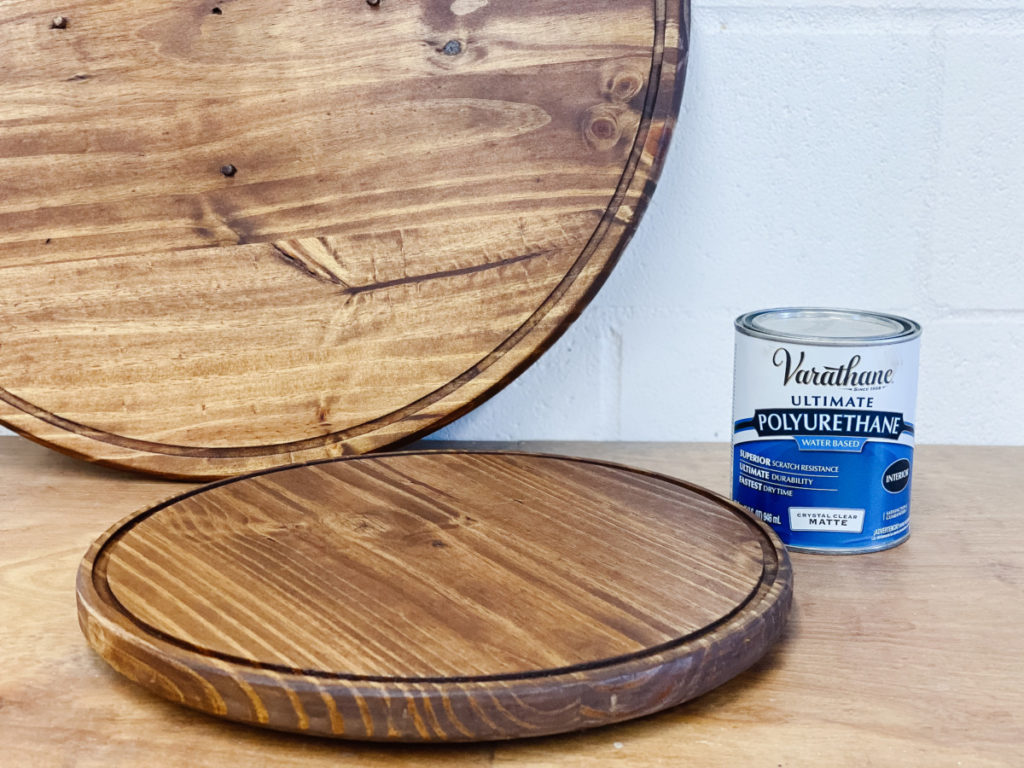
Seal

Because this item could potentially be used for food items make suer you check your sealants before applying. The Home Depot has a handy list of “Food Safe Finishes” if you are at all uncertain of which product to use. Seeing as I used a stain first my best bet was using a “film finish” meaning that it will seal a previously stained surface. I used WaterBased Polyurethane. The biggest thing to ensure it is food safe is allowing it to cure completely before use.

You did it! How simple was that? Just two boards and two turntables and you have an impressive DIY gift that anyone would love!

Thanks for following along and make sure you check out all the other great gift ideas on The Home Depot’s website.

Moody Board and Batten Guest Room

December 15, 2020

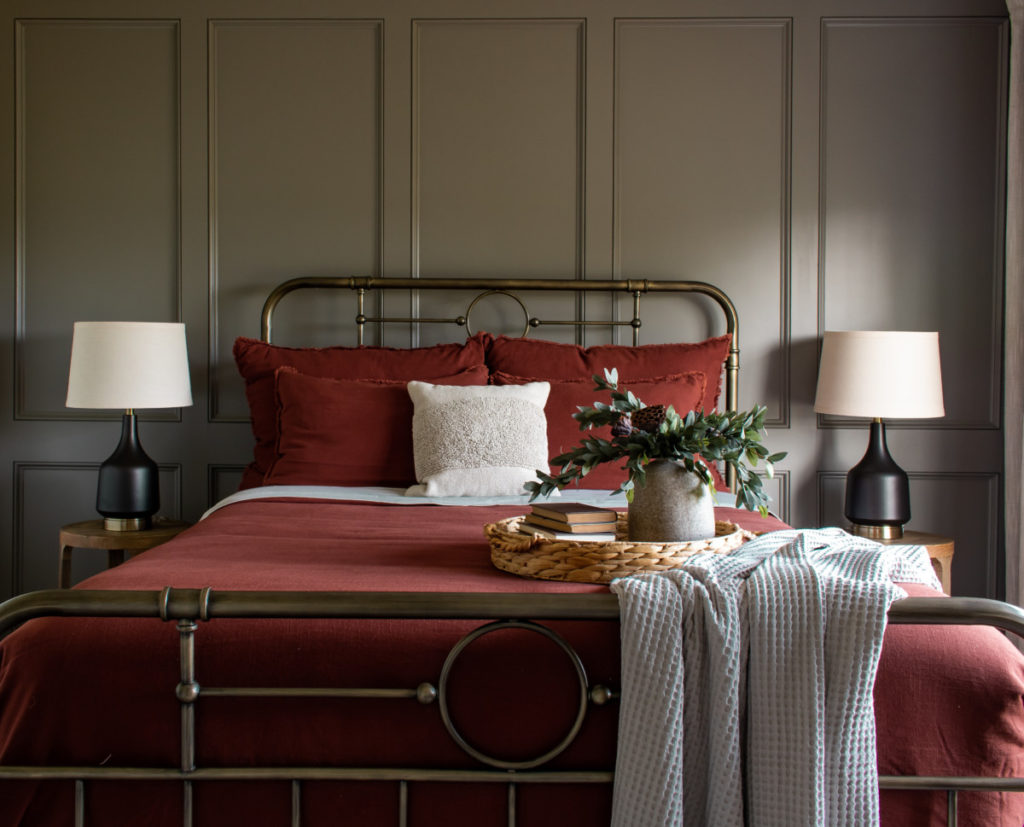
Has anyone else noticed that hosting guests creates an unnecessary desire to accomplish ALL THE THINGS? Including but certainly not limited to paint touch-ups, cleaning the baseboards, losing 5 pounds, organizing the pantry, and NATURALLY giving the guest room a gorgeous accent wall. While this may not be a healthy thought process, I had an idea for a guest room accent wall that I just could not shake!

I had a dream that consisted of a rich dark color, inset moulding and oodles of character. I was more than eager to take on the KILZ #AccentWallChallenege ! It’s through our great partner  KILZ® Brand that I can show you how you can create your own accent wall and elevate any space!

Tools Suggested: 

  • Utility Knife 
  • Pry Bar/Flat Bar
  • Hammer 
  • Tape Measure 
  • Tablesaw / Circular Saw 
  • 18g or 16g nailer
  • 1/4″  drill bit 
  • Drill 
  • Jigsaw
  • builders square
  • Miter Saw 
  • Level

Supplies Used:

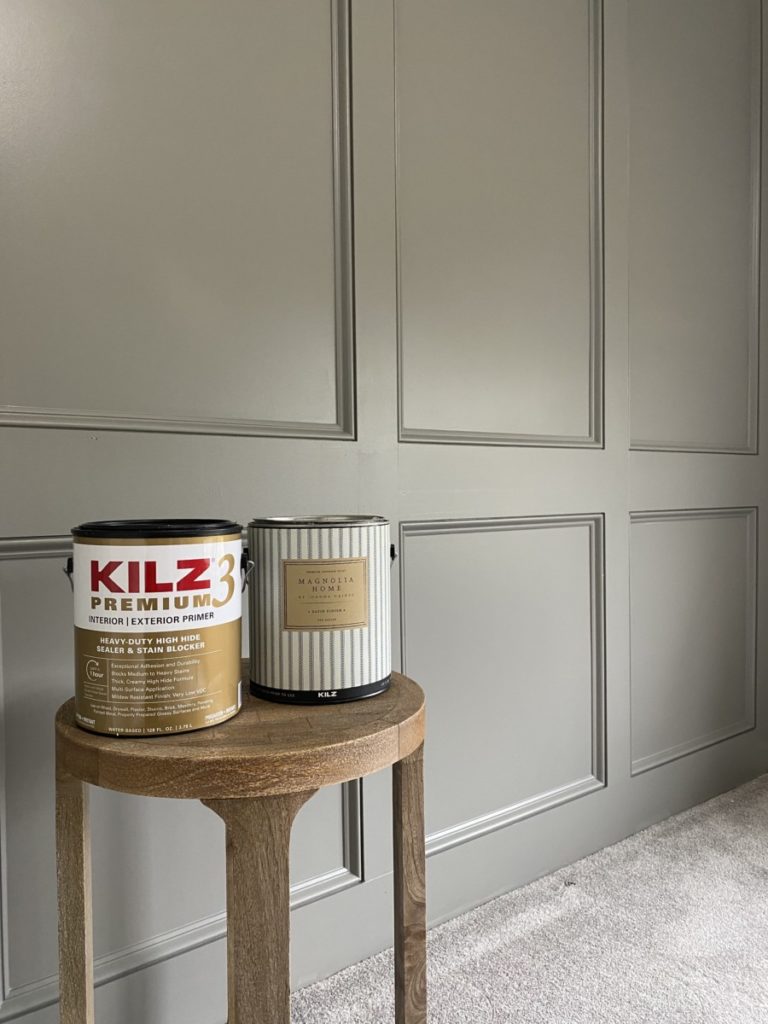
  • KILZ 3® Premium Primer
  • Magnolia Home by Joanna Gaines® Paint in “Before and After”
  •  Paneling Adhesive 
  • 1 1/2″ finish nails.
  • 1/8″ MDF Panels
  • 1×6″ Primed Finger Boards 
  • 1×4″  Primed Finger Boards 
  • PVC Base Cap Moulding 
  • Wood Filler 
  • Paintable Caulk 
  • 2 1/2″ Angled Paint Brush
  • 6″ Foam Roller(s)
  • Paint Tray(s)

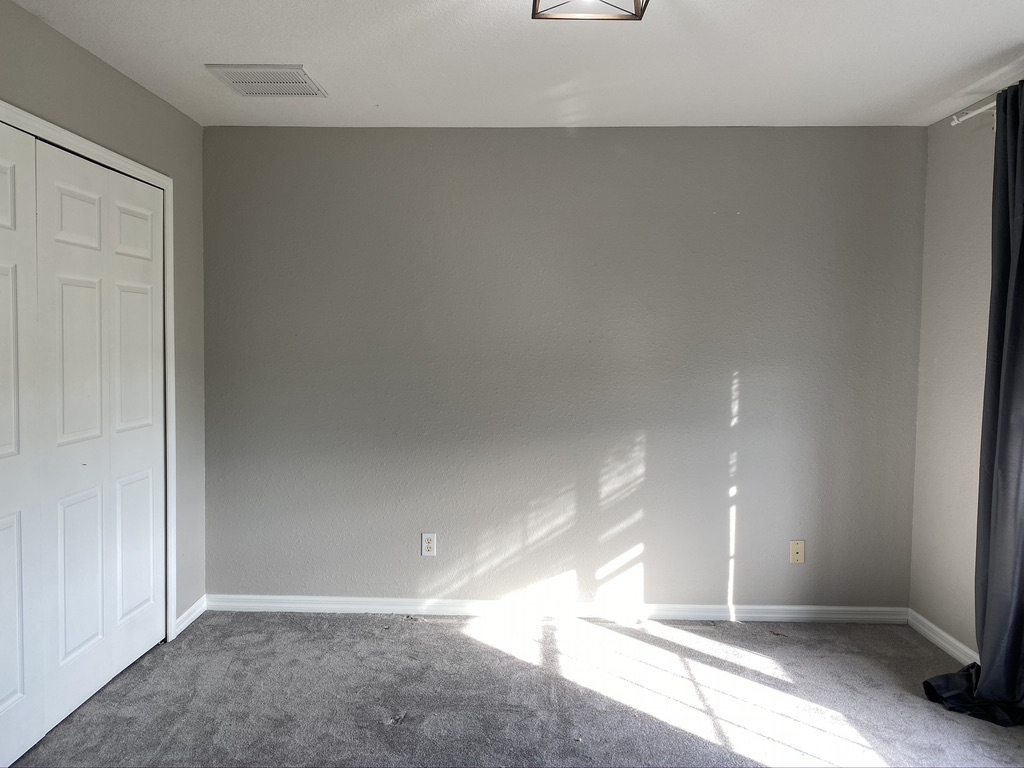
Clear the Room

Before we begin, let’s clear the room. In my experience  plenty of workspace when installing board and batten is highly advisable!

Remove Baseboards

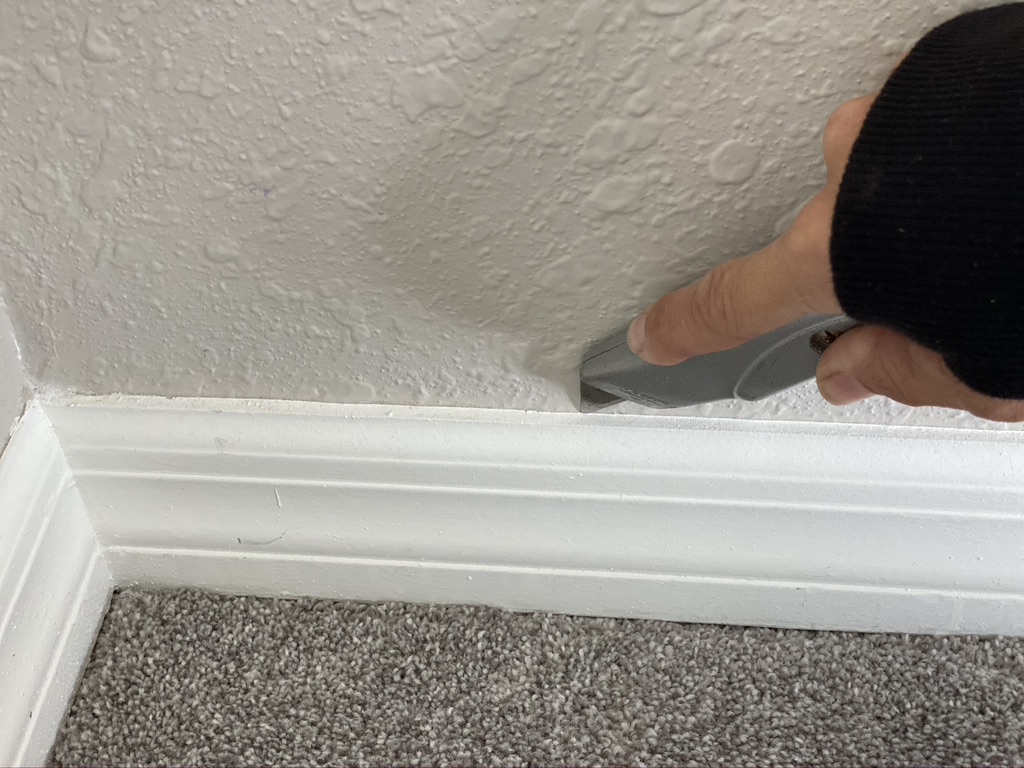
Before  I can actually begin installing the accent wall,  I need to remove pre-existing  baseboards and moulding if applicable.  In order to do this , I run a utility knife along the top ledge where the baseboard meets the wall. In doing so  I am cutting the caulk line and this will make it much easier to remove the baseboards. 


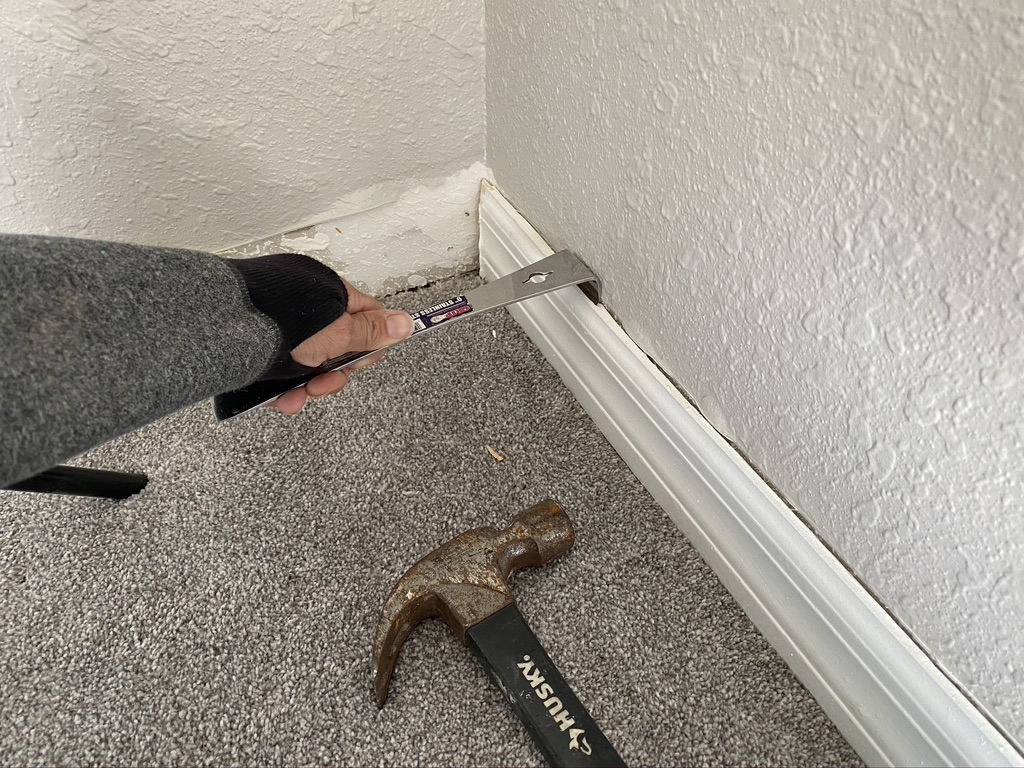
After the caulk line is cut, I use a pryer/flat bar to pull the baseboard away from the wall.

Map Out Wall

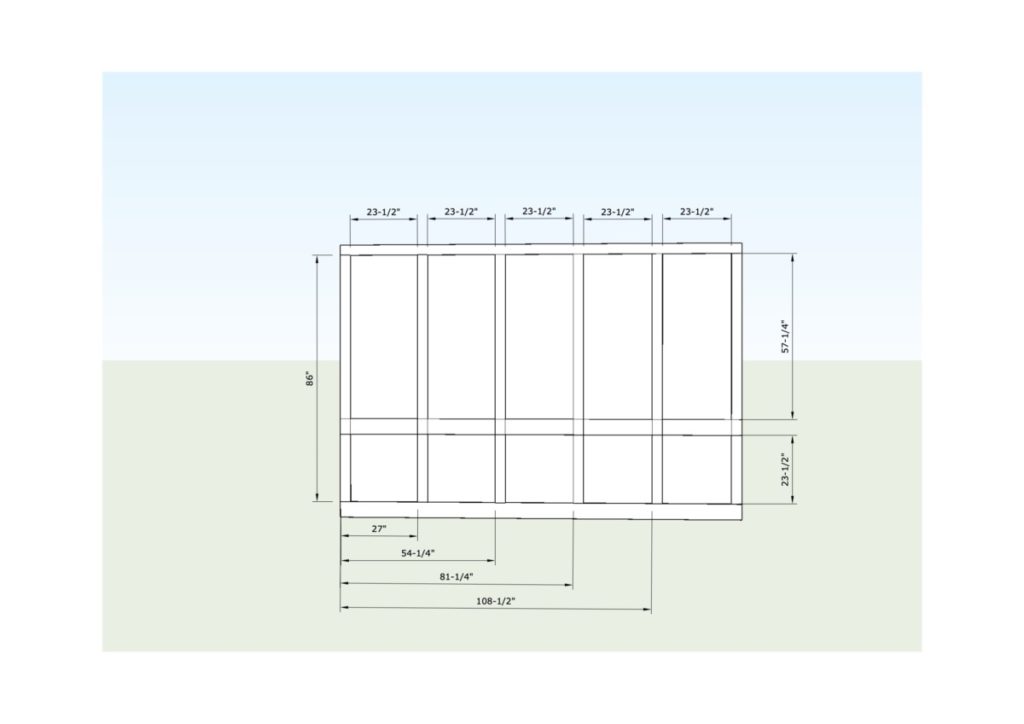
Before I can dive into the fun part, I need to map out my wall. Math is not my favorite,  but you will be so grateful that you planned out your wall in advance. When mapping a wall take into consideration any outlets or light switches you do not wish to move. When planning my wall, I made sure that none of my “battens” (1×6″, 1×4″ boards) would not land on top of an outlet.

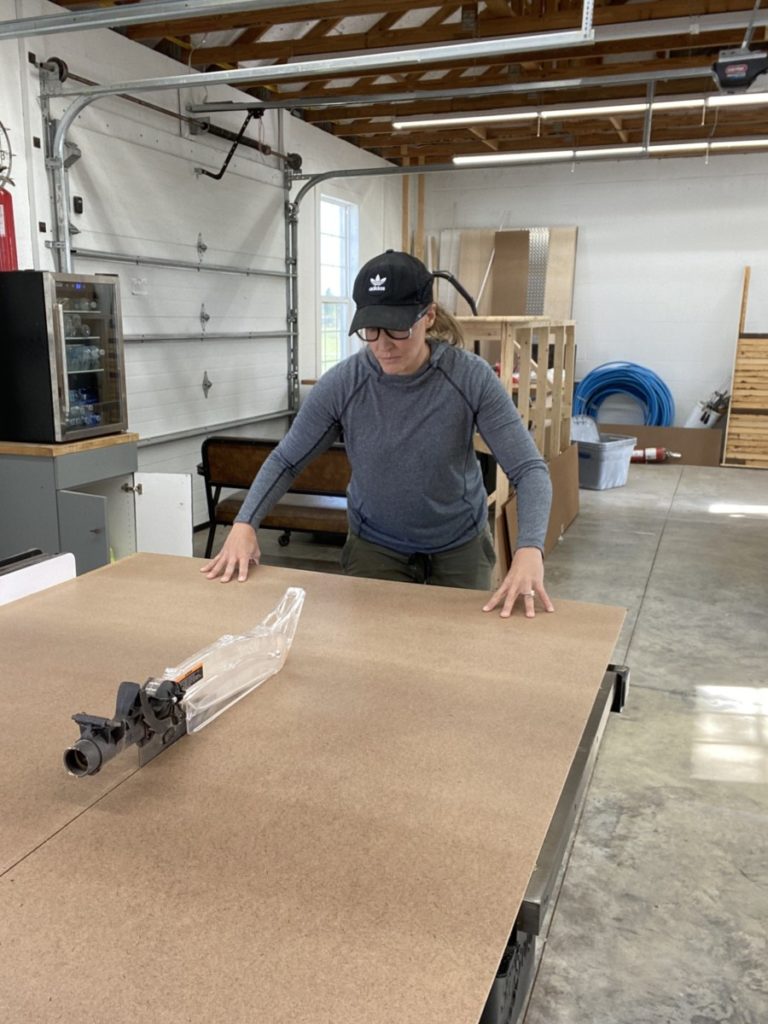
Cut Panels

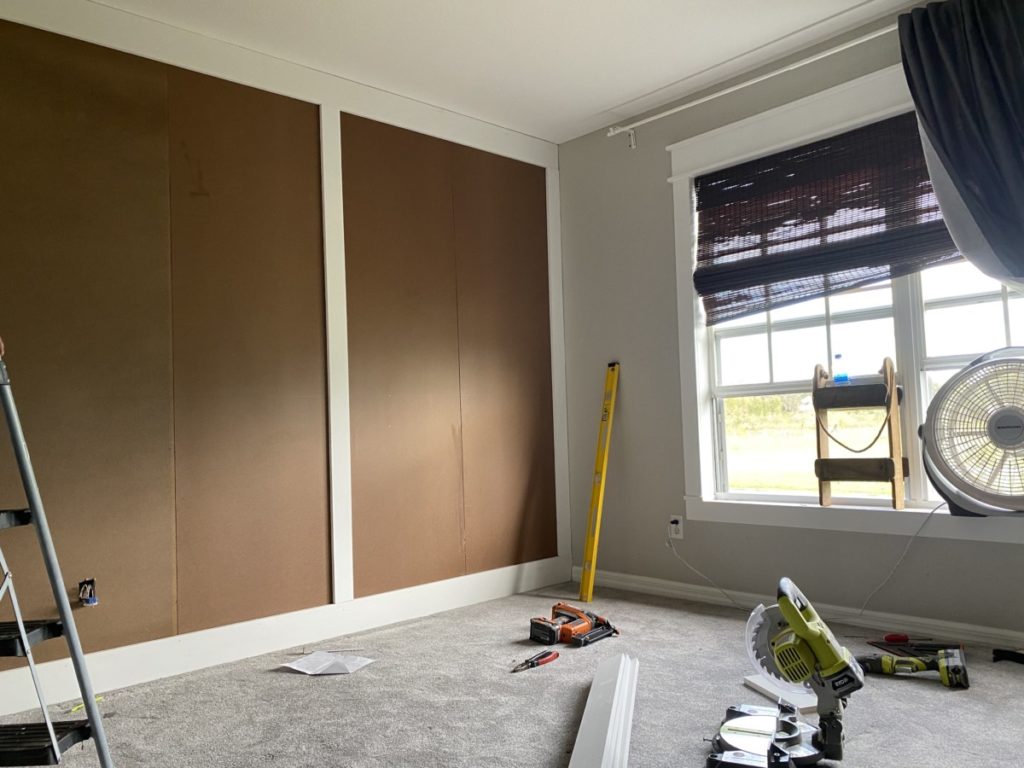
After the planning phase is complete it is time to apply the boards (1/8″ MDF panels).  In many cases you may  choose to forgo this step.  I have seen plenty of DIY bloggers attach their batten directly on top of drywall. I choose to take this extra step because of the texture of my drywall. My home has VERY HEAVY  knock-down texture.  My vision for this accent wall did not include a “HEAVY knock-down texture”.
When cutting panels I referenced my plans, and cut each panel so that the seams would be hidden behind my  vertical 1×4″ boards.

Apply Panels

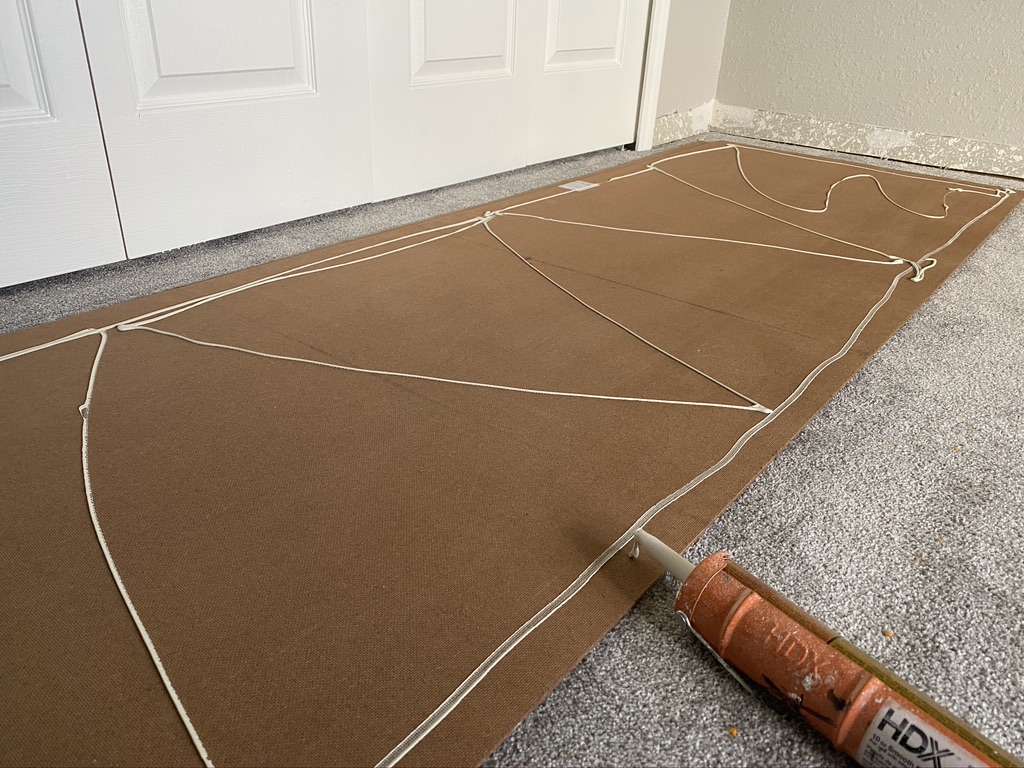
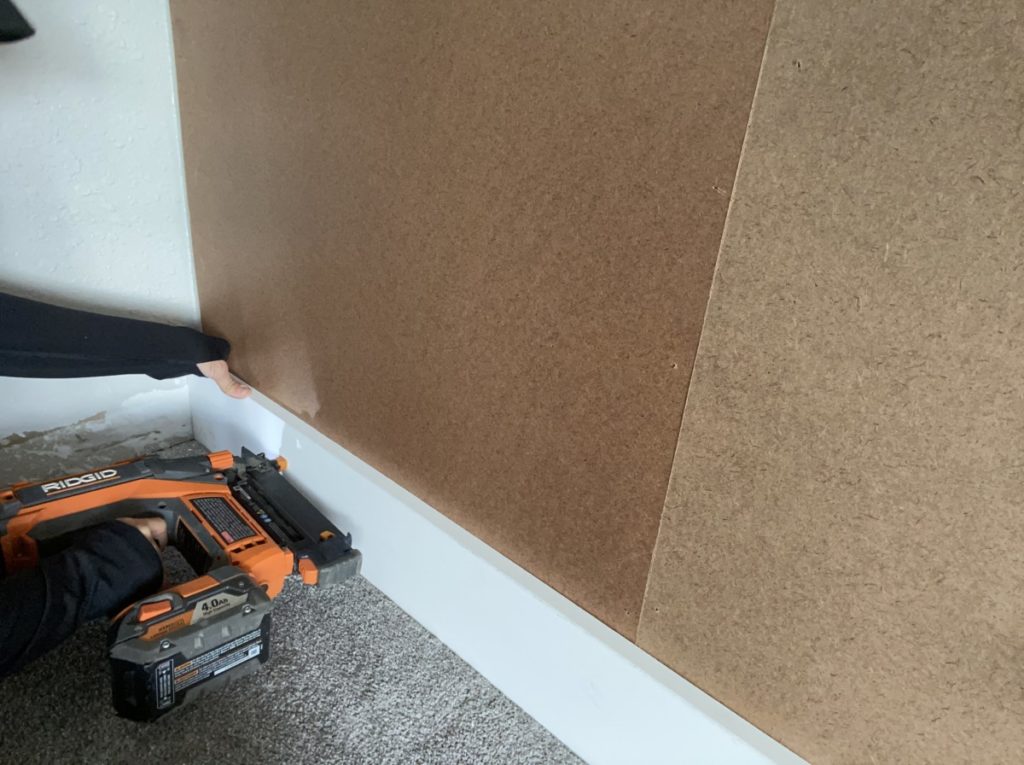
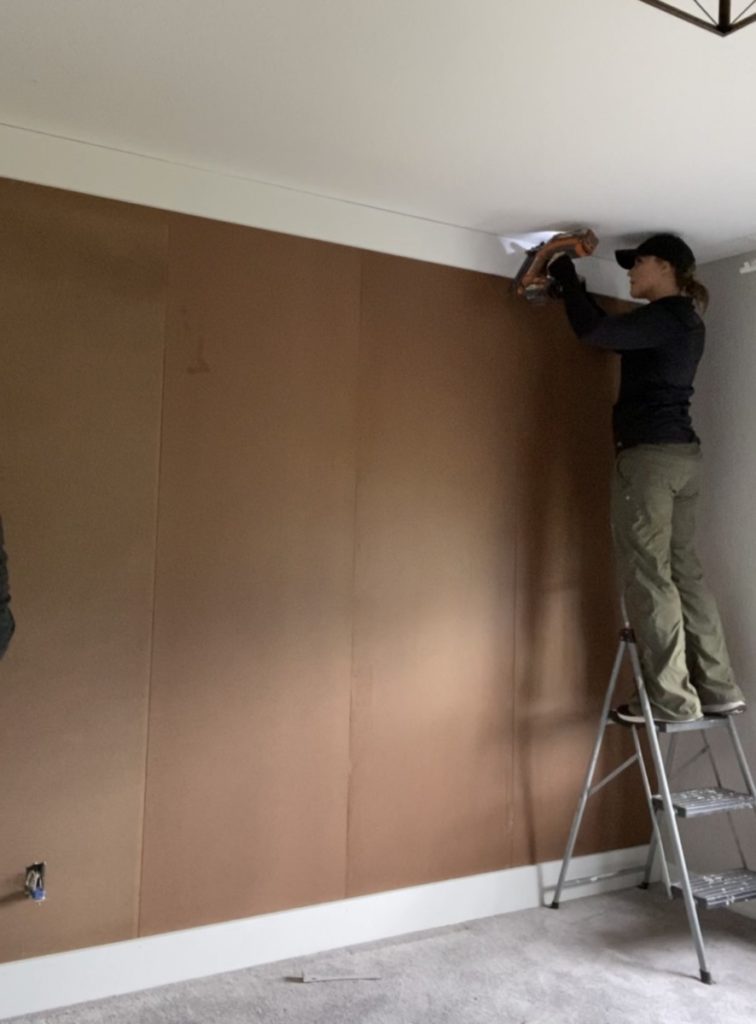
Before attaching the panels to the bare wall, I liberally apply paneling adhesive to the back of each panel before securing it to the wall using a 16g or 18g nailer.

When  securing the panel to the wall I would advise only nailing along the edges. If you nail along the edges all the nail holes will be hidden by  battens ( 1×4″ & 1×6″ boards).  The adhesive will hold down the center of the MDF paneling.

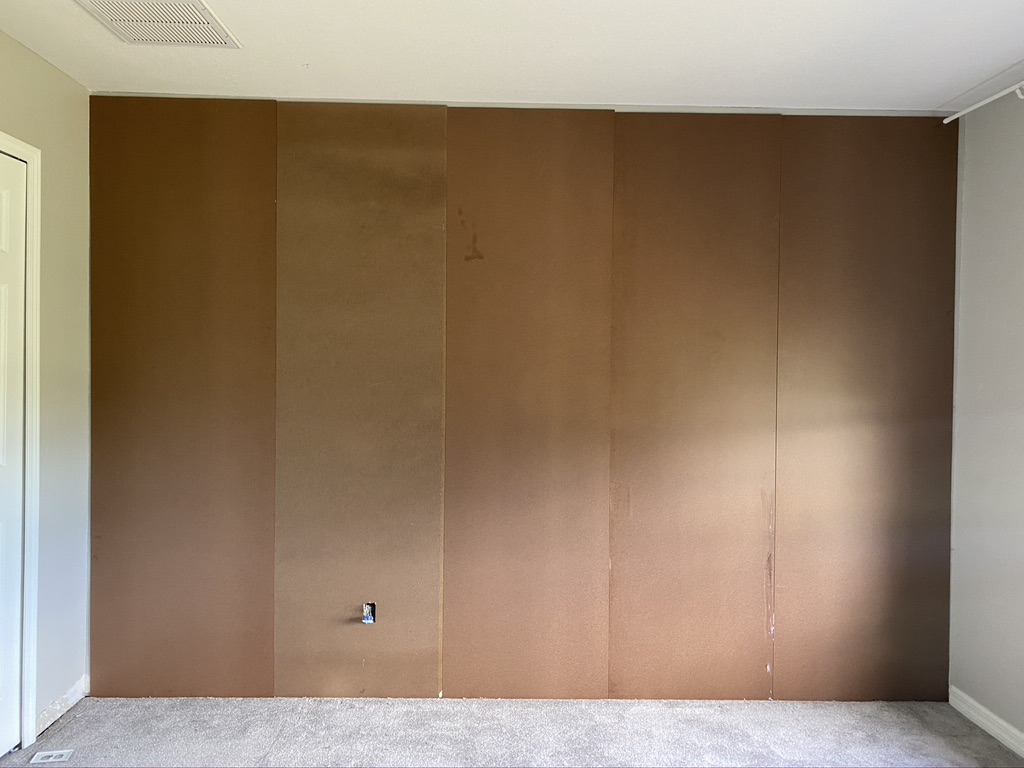
This process will be repeated as many times as necessary to cover the entire space.

Accommodate Outlets

The process of installing paneling is fairly simple. The most complicated part of this step is accommodating outlets. Before you start breathing heavily into a paper bag,  grab your tape measure,  you are going to need it!  Honestly, this is not hard at all! Simply take the measurements of where the outlet would land on your paneling, and then cut it out. Use a tape measure to transfer where the intended outlet will be. Then using a jigsaw cut a space for the outlet.

Install Moulding and Baseboards

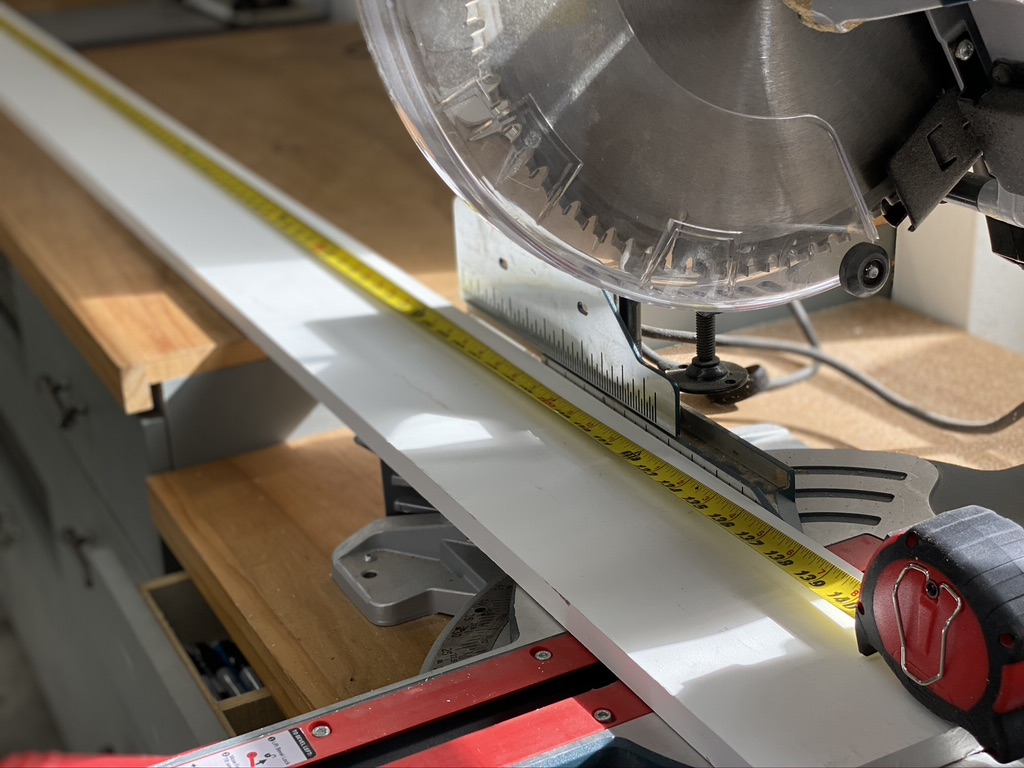
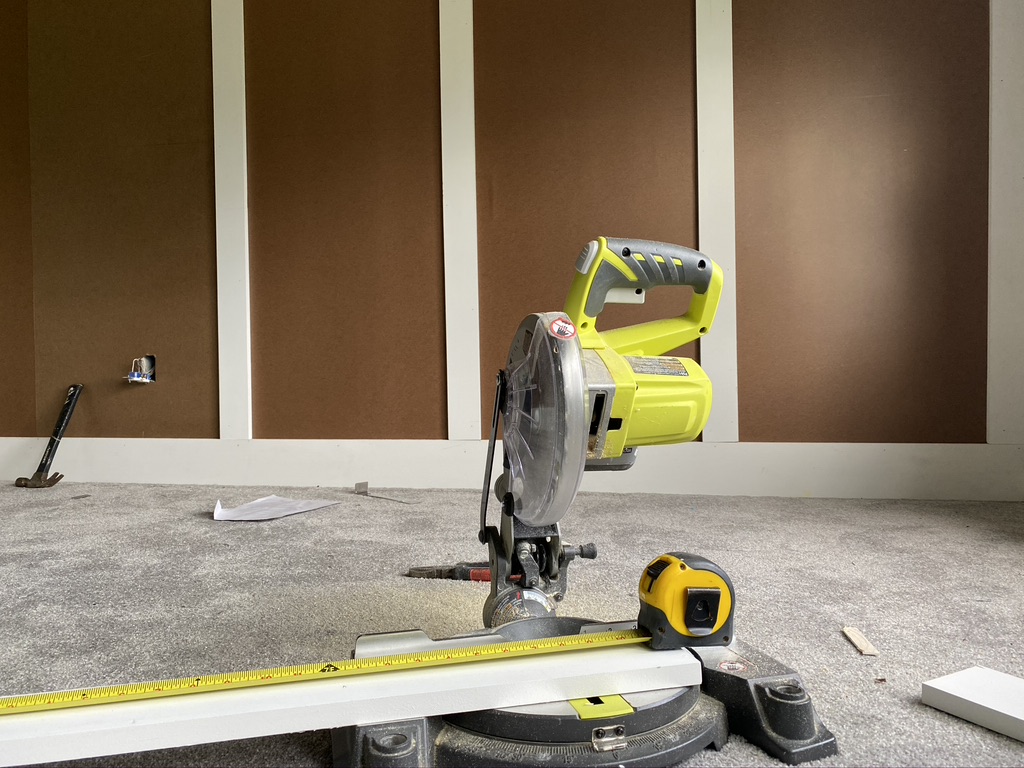
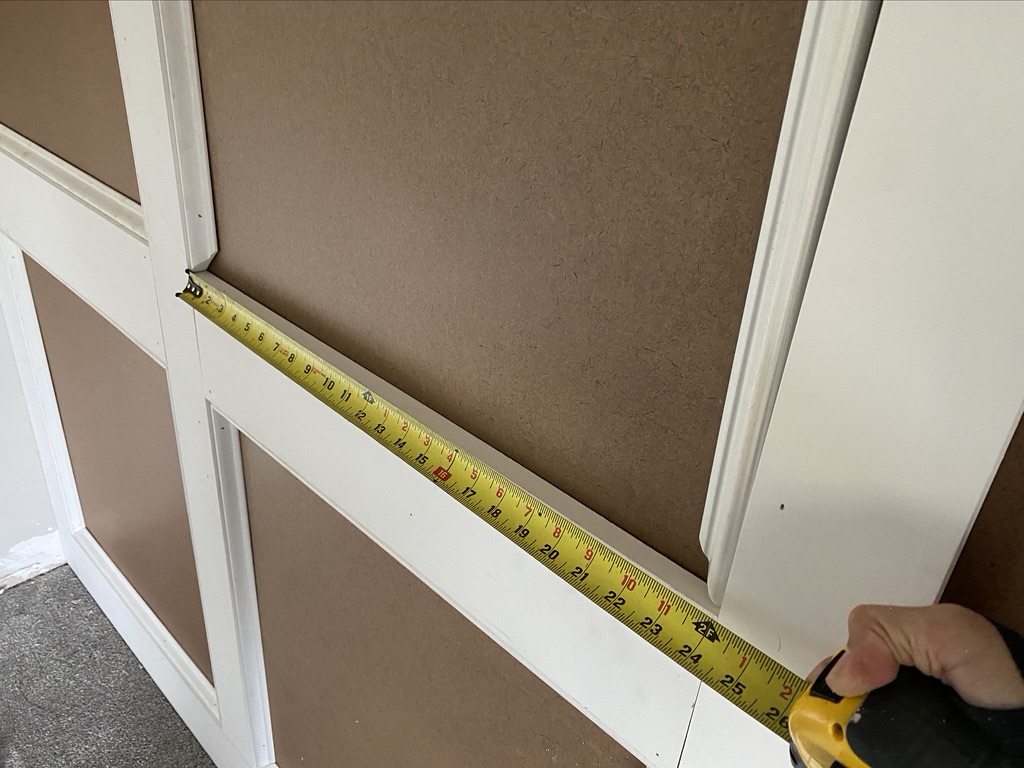
Once all of the MDF boards are installed we are ready to add the battens (1×4″ & 1×6″ boards). To begin, measure the wall length (take measurements for both ceiling  and floor measurements.) In a perfect world, where all the contractors build rooms square this would not be necessary. Alas we do not live in such a world, so take the time to measure both.

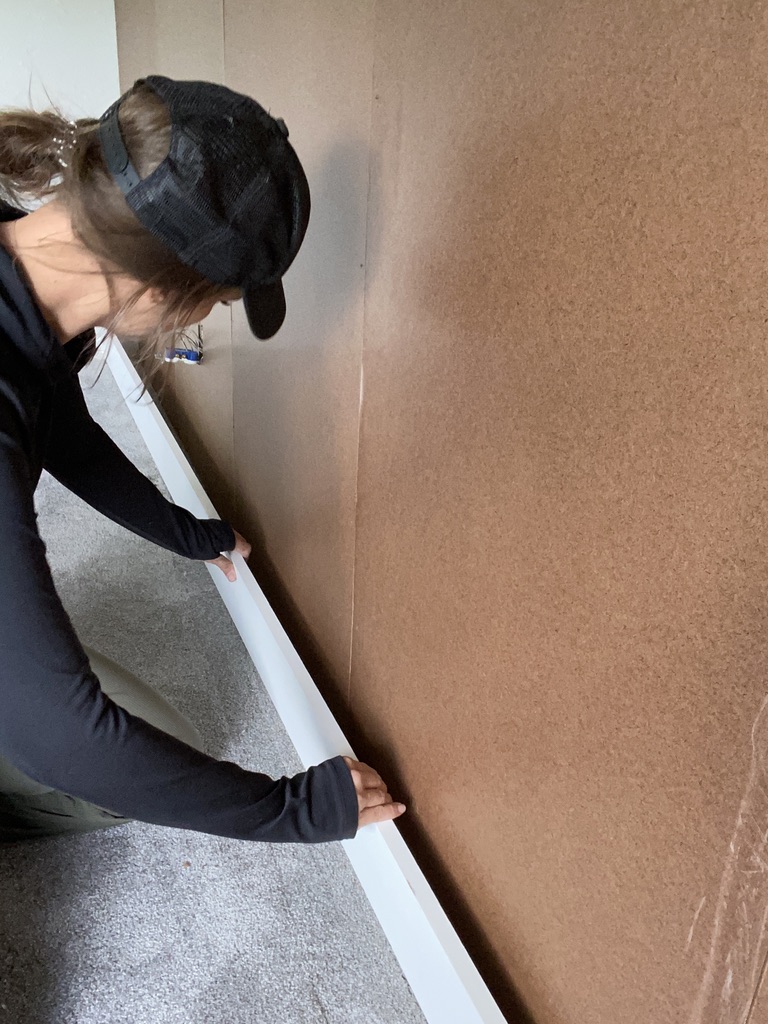
I opted to use 1×6″ boards as the baseboard and the top trim piece. Once both pieces are measured, marked and cut, install using 2″ finish nails.

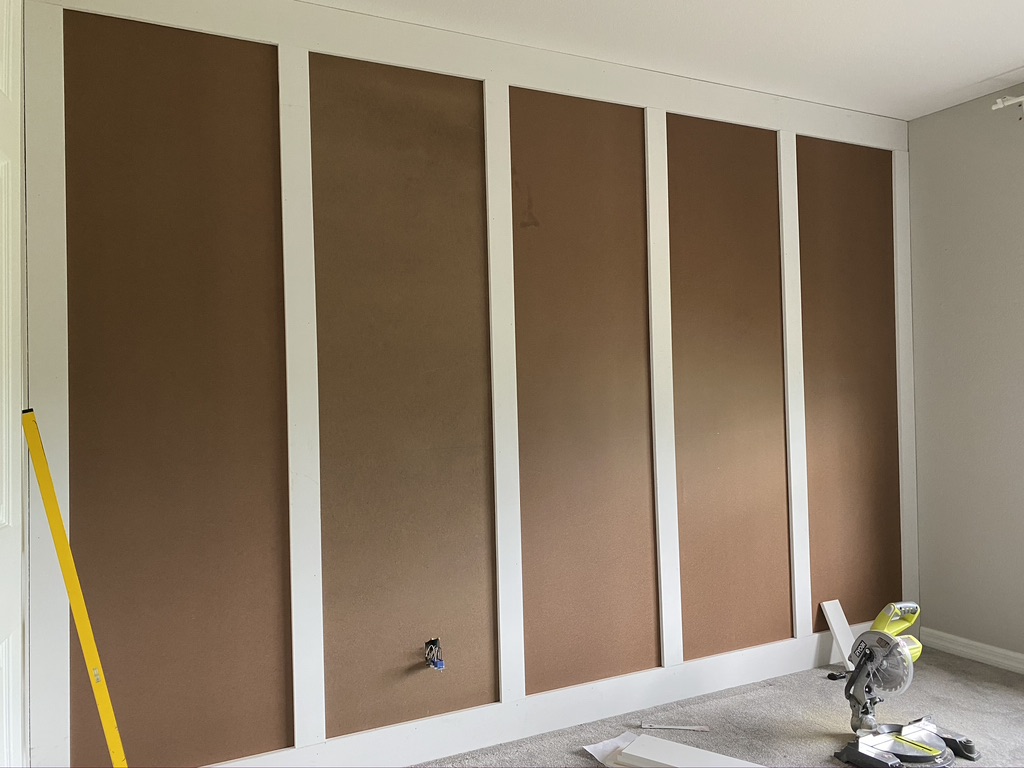
Cut and Install Vertical Battens

It’s time to hide the MDF panel seams! Again take the time to measure each board individually. (Odds are that each opening has some slight discrepancies.)

As you install each vertical batten ensure that they are straight by enlisting the use of a level. Once they are correctly positioned (using your previously drafted plan) and level, shoot them in place using 2″ finish nails.

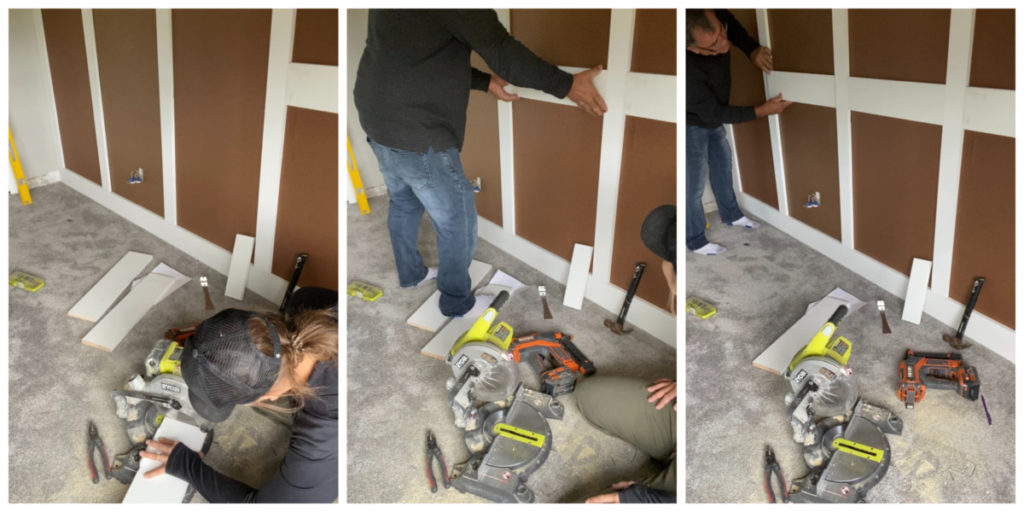
Install Horizontal Batten Boards

If desired add additional horizontal boards. Again, always measure each opening and use a level when installing.

Add Decorative Trim

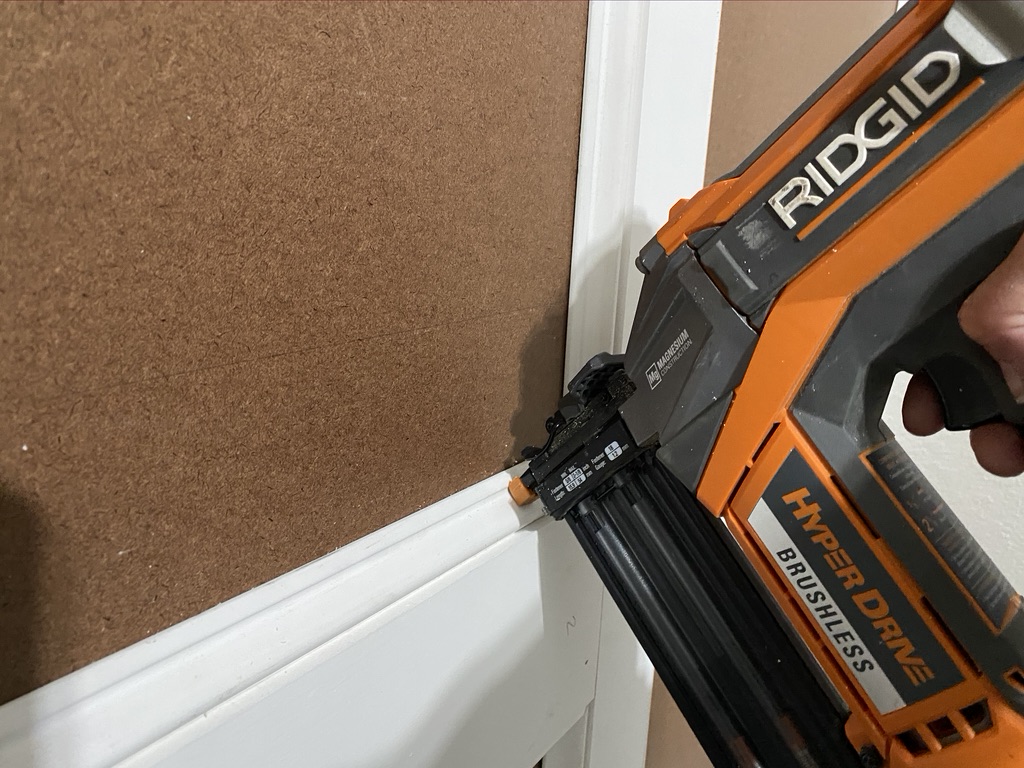
Remember when I said I wanted to “oodles of character”?  Well my DIY friends, this is what an “oodle” worth of character looks like: 40 additional pieces of trim. I decided to add base cap moulding to the interior of all of my battens.

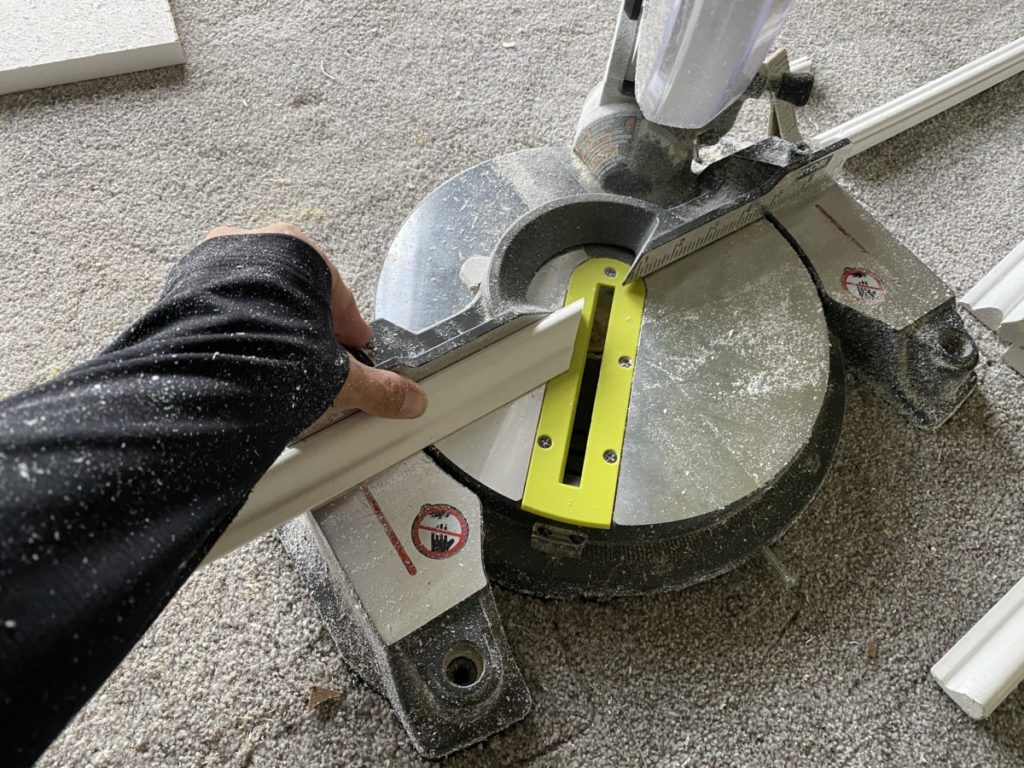
The process for installing the interior trim is very similar to the previous steps. Measure, cut install. The only major difference in this step is that we will be cutting our trim pieces on a 45 degree angle.  By doing so it will create beautiful mitered corners.

Caulk and Fill

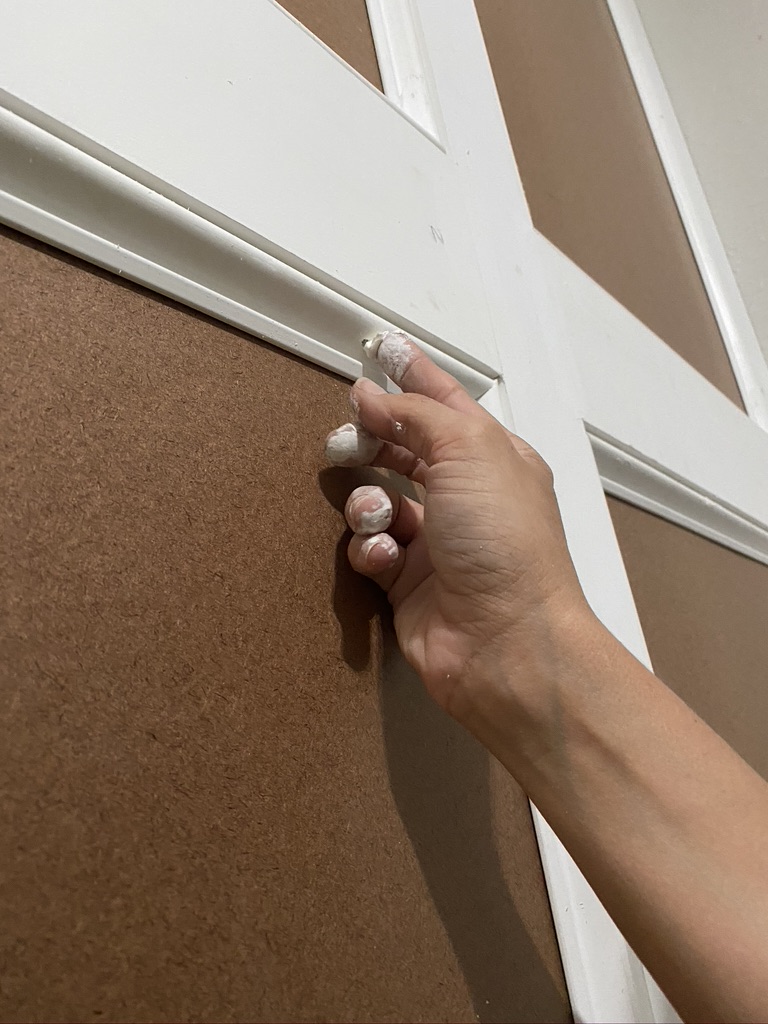
We are getting so close to the fun part, just hang with me for one more final step before we bust out the paint brushes! Take a few minutes to run through and fill any  nails holes of gaps with a wood filler.  (Before painting, you will want to  sand off the excess filler with a sanding block. The filler will need to be completely dry before attempting to sand.  So while waiting for the filler to dry we will move on to the next step.

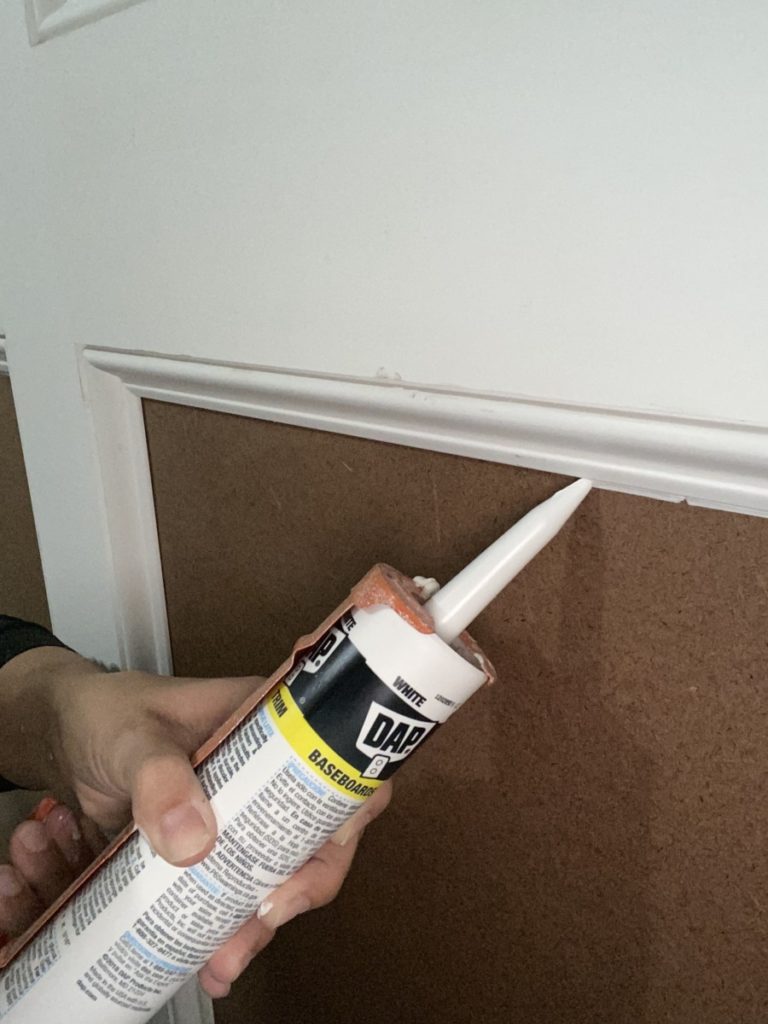
Almost there, we almost get to paint I promise!  Last thing needed is a little bit of caulk. In order to achieve a gorgeous end product we need to add a small bead of caulk to the interior of the edge cap moulding.  This will hide any unsightly gaps.

While the caulk is drying get ready for the most rewarding part of this project. Priming and painting!

Priming

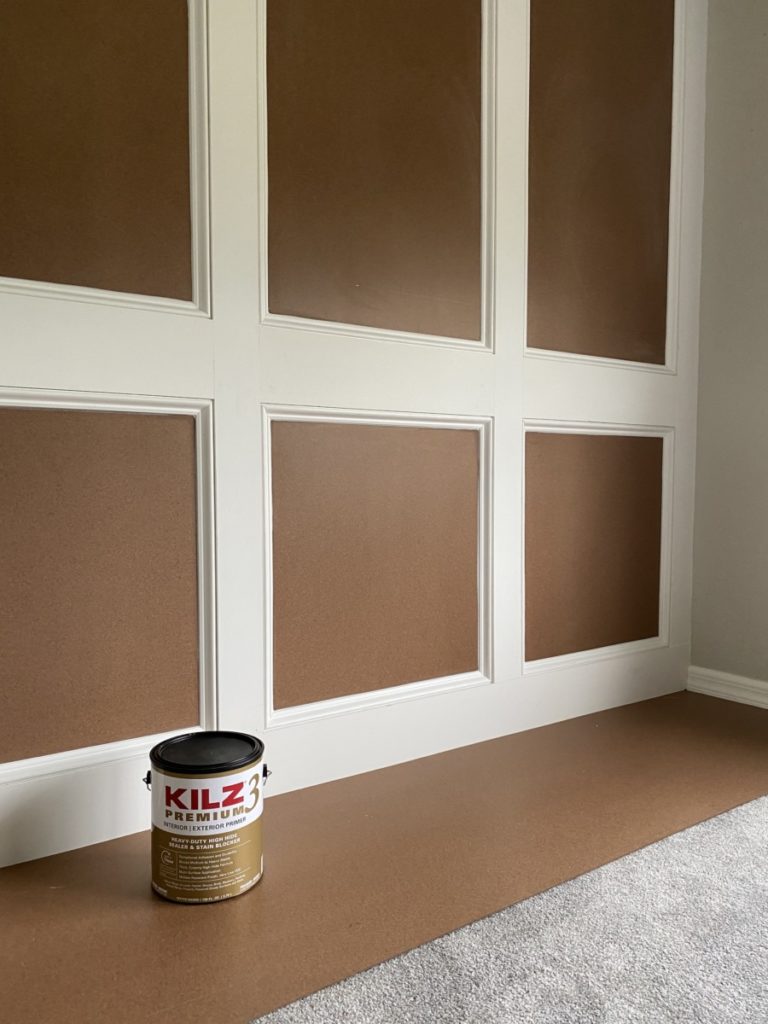
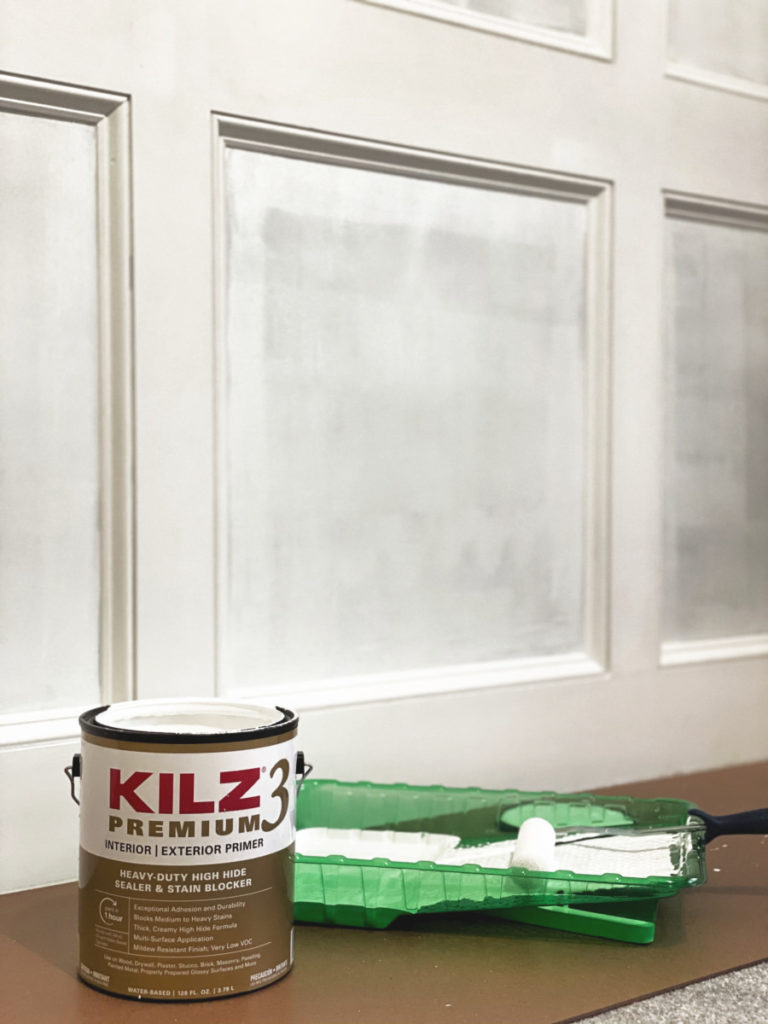
Are you guys excited? I am excited! Before we start painting we are going to take one very important step to ensure our end product turns out beautiful and stays looking that way!   While MDF board is a great cost effective product, it can be a little fickle. It has a very smooth and shiny surface, both of which are not ideal for painting… this is where a good primer will be your best friend. It is important that you prime in order to achieve good adhesion of your top coat! 

While this is a simple fix, a good Primer like KILZ 3 Premium primer can also help with many different DIY woes.  If you have been around for a while you know that  KILZ saved me when renovating my camper.  It adhered to my cabinets like a charm, covered water damage, mystery stains, and even got rid of some funky odors. So yes, I am a big advocate for priming!

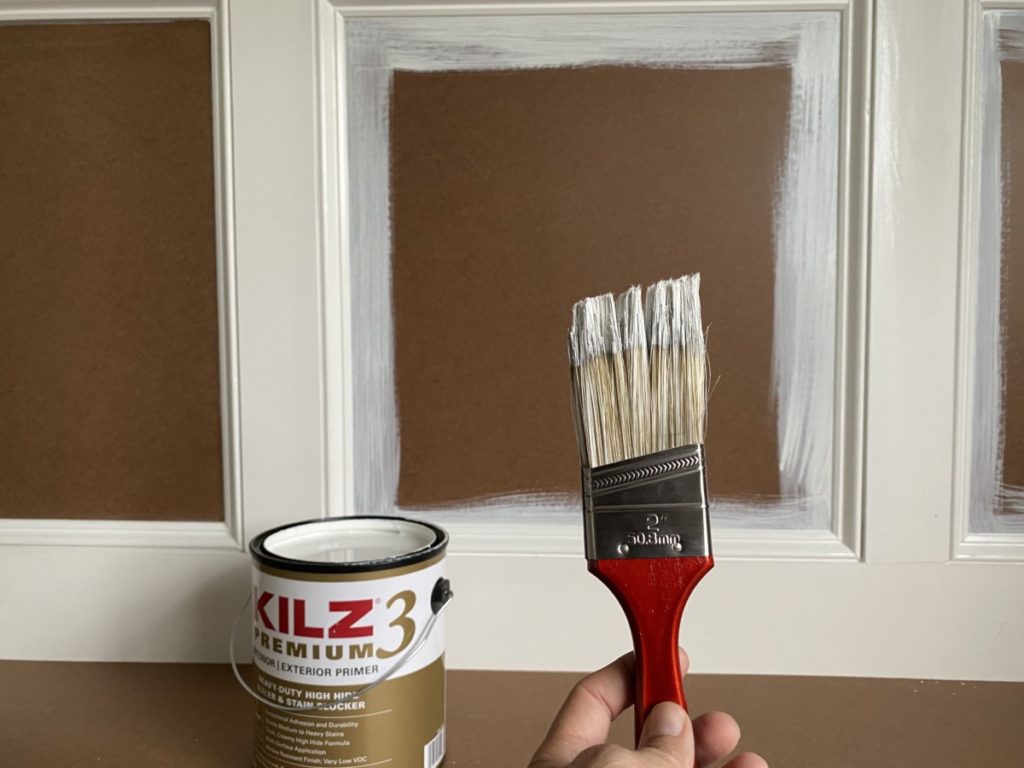
I suggest using a 2 1/2″ angled brush to apply KILZ 3 Premium primer to cut in all edges and paint all detailing trim. Take extra care to thoroughly paint all PVC trim. PVC trim is another excellent cost effective product but needs some extra help from KILZ primer to ensure proper paint adhesion.

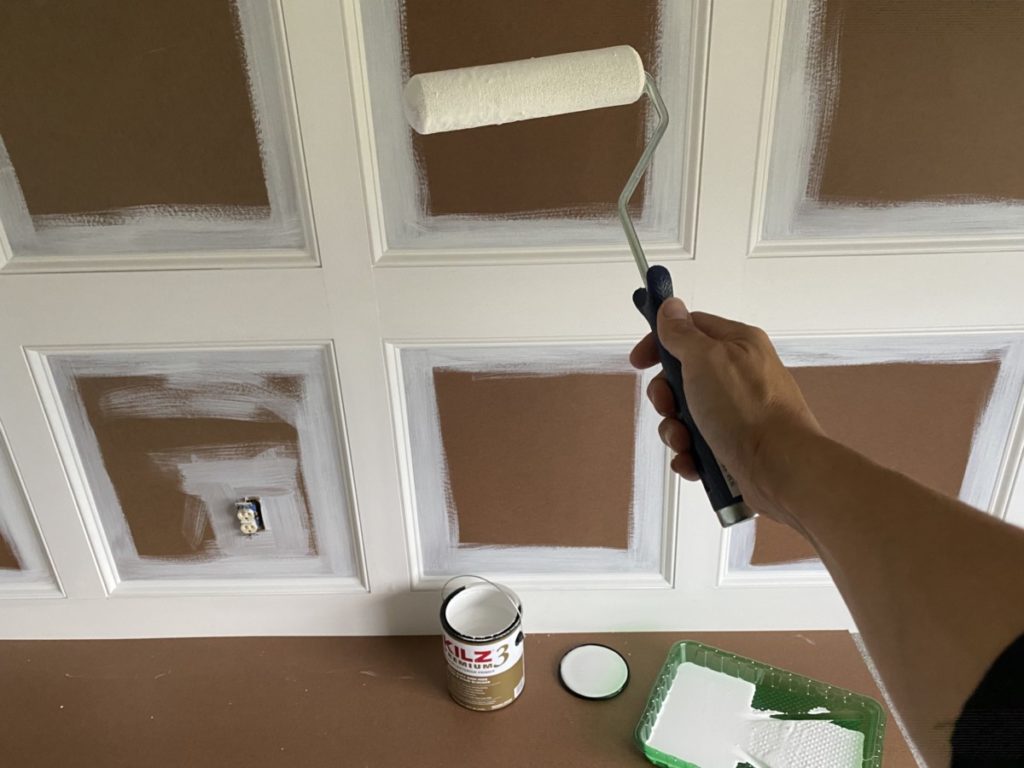
After all edges  are cut in and molding painted, it is  time to break out the big guns… it is time for a 6″ foam roller. While I am normally a huge advocate for spraying my paint and primer on I was absolutely amazed at how smooth this primer went on with a cheap sponge roller!

Now we wait… just kidding.  KILZ 3 Premium primer is ready to paint in one hour!  I cannot even begin to  tell you how happy that makes this stir-crazy, impatient DIYer.  By the time I had all my paint supplies gathered my primer was dry and ready to top coat!

Paint

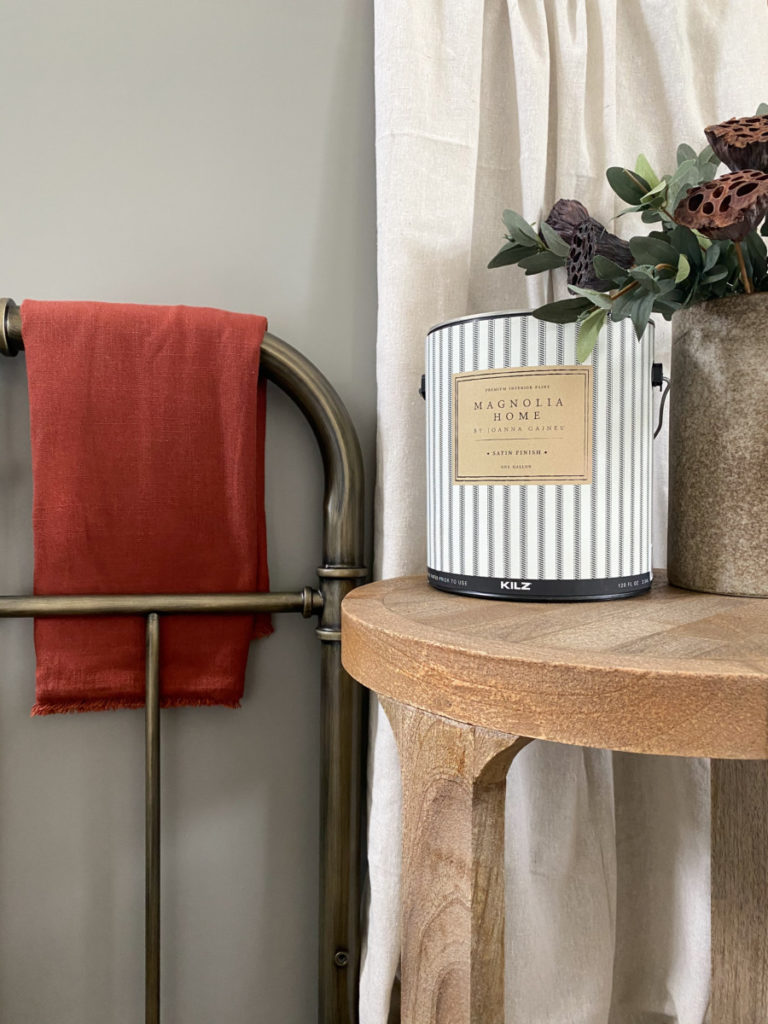
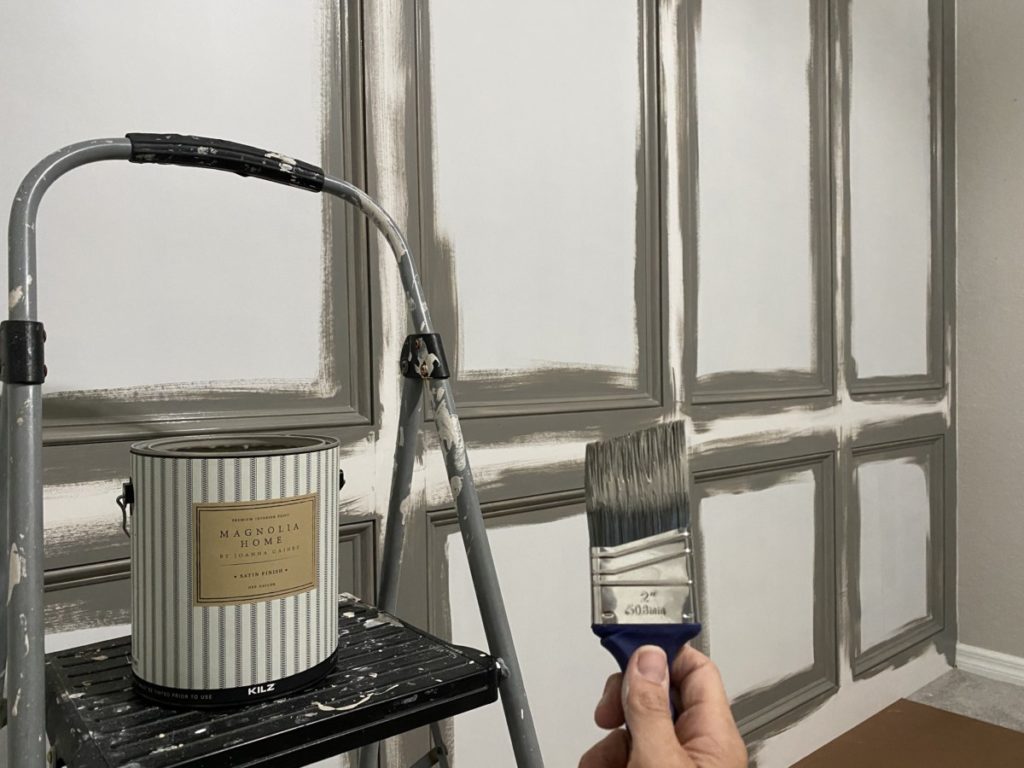
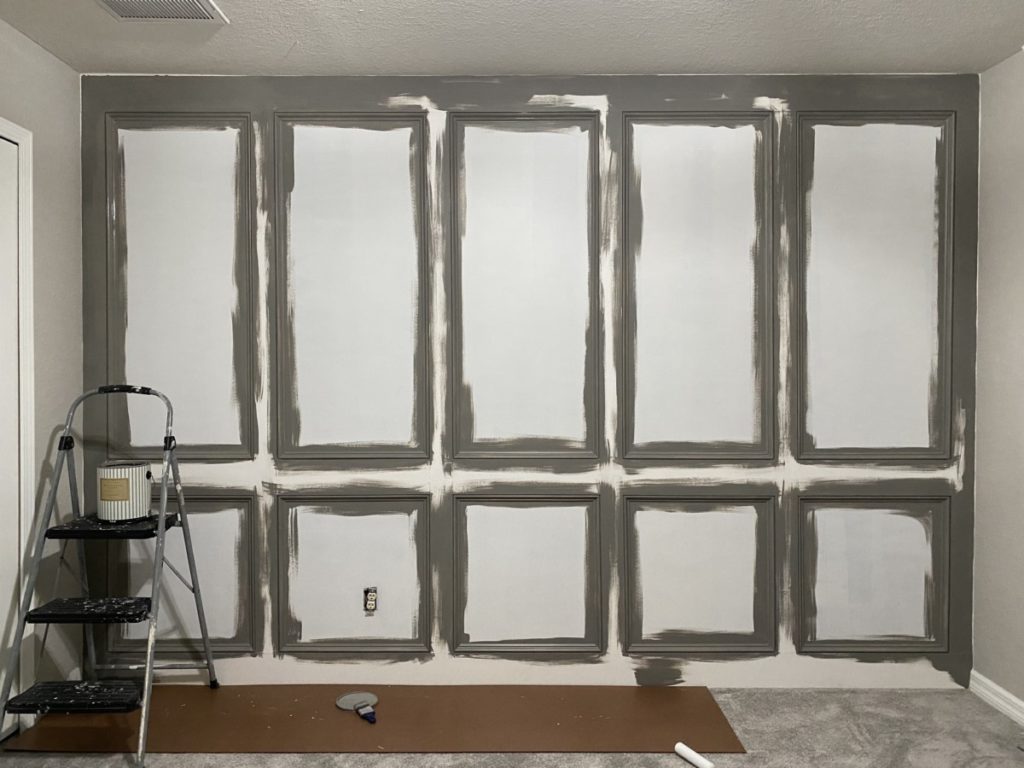
Following the same steps for priming, I applied my topcoat. As I mentioned at the very beginning of this project I wanted something a little dark and moody. I didn’t want it to feel like a cave,  but I wanted a moody feel. After scouring the internet for inspiration I found my muse. Magnolia Home by Joanna Gaines paint to the rescue! 

Browse All Magnolia Home colors Here

I mean how can you go wrong  when you combine KILZ quality with Joanna Gaines color selection!?  I was torn between several colors but ultimately decided on the color “Before & After” from the Magnolia Home by Joanna Gaines paint line.


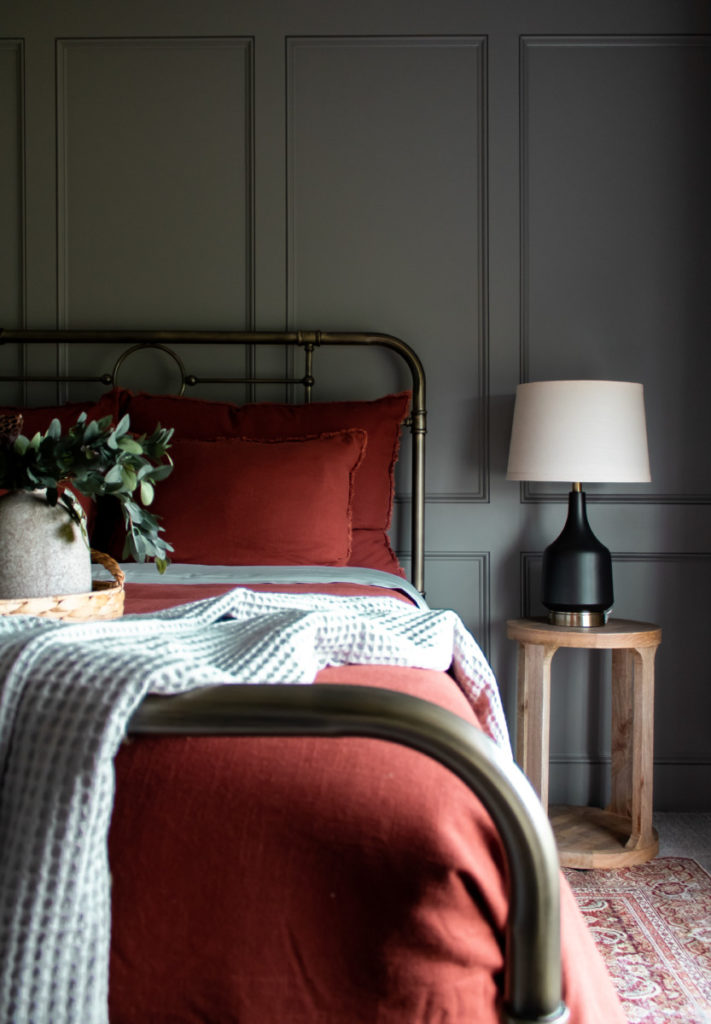
Just look at this color !?  It takes this beautiful accent wall to an entirely new level! I will admit, this is my first time using this particular paint and I am SOLD!  It went on buttery smooth. I honestly didn’t think it was possible to get this smooth of a finish unless you used a sprayer. The Magnolia Home paint went on perfectly and covered beautifully. I cannot wait to try more colors throughout my home!

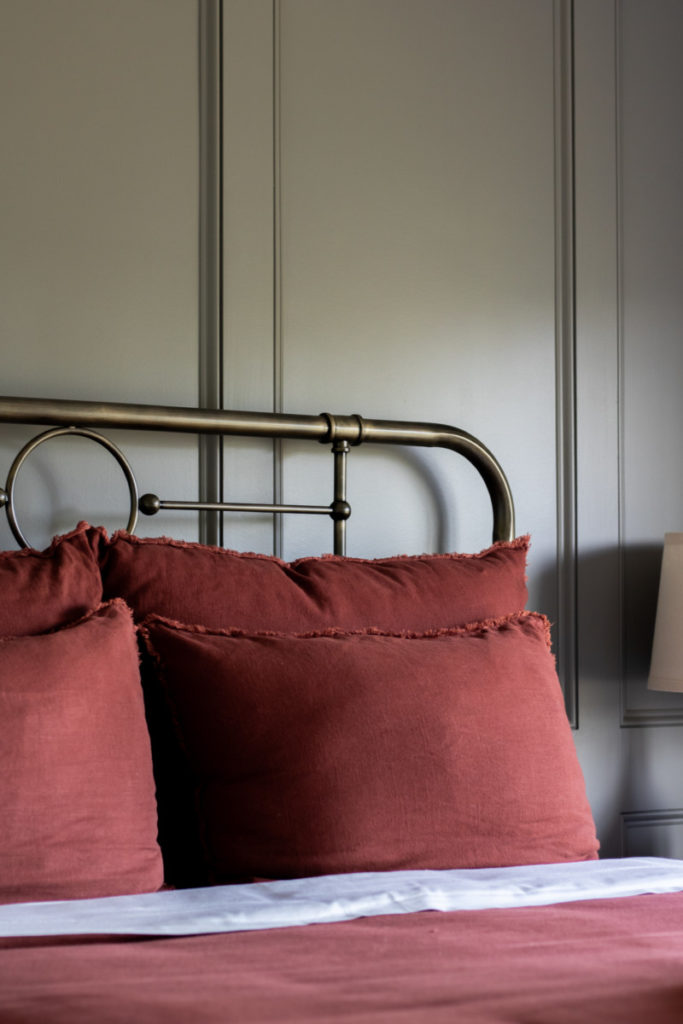
This room is absolutely transformed and I give full credit to this accent wall! Go ahead, try and imagine this room without  that wall.  It’s amazing how just one wall can change the entire feel of a room.

  • Paint- Magnolia Home by Joanna Gaines paint in  “Before & After”
  • Brass Bed- Amazon
  • Clay Bedding-Target
  • Bed Skirt- Amazon 
  • Light Fixture-Amazon
  • Throw- HomeGoods
  • Night Stand- Target
  • Rug- Amazon
  • Curtains-HomeGoods
  • Seagrass Tray- Target

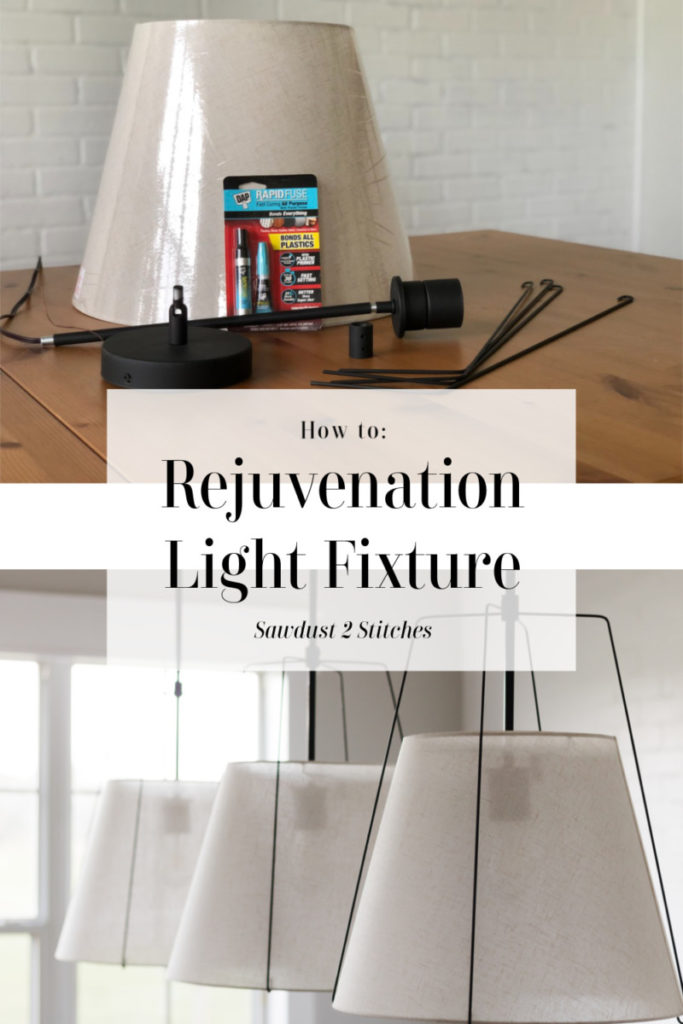
DIY Rejuvenation Light Fixture

November 18, 2020

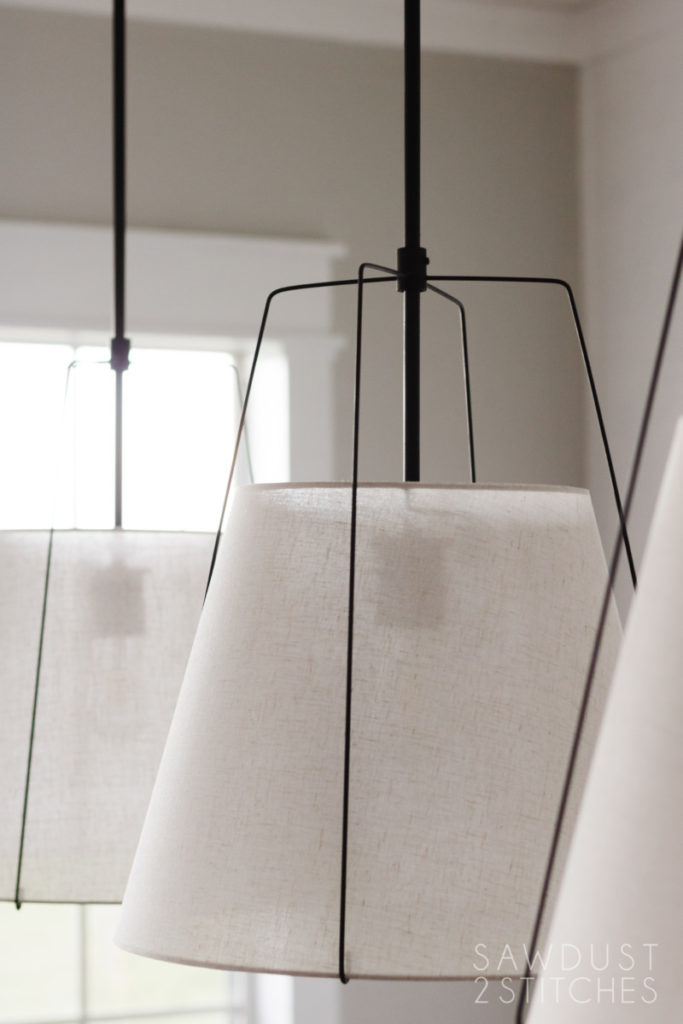
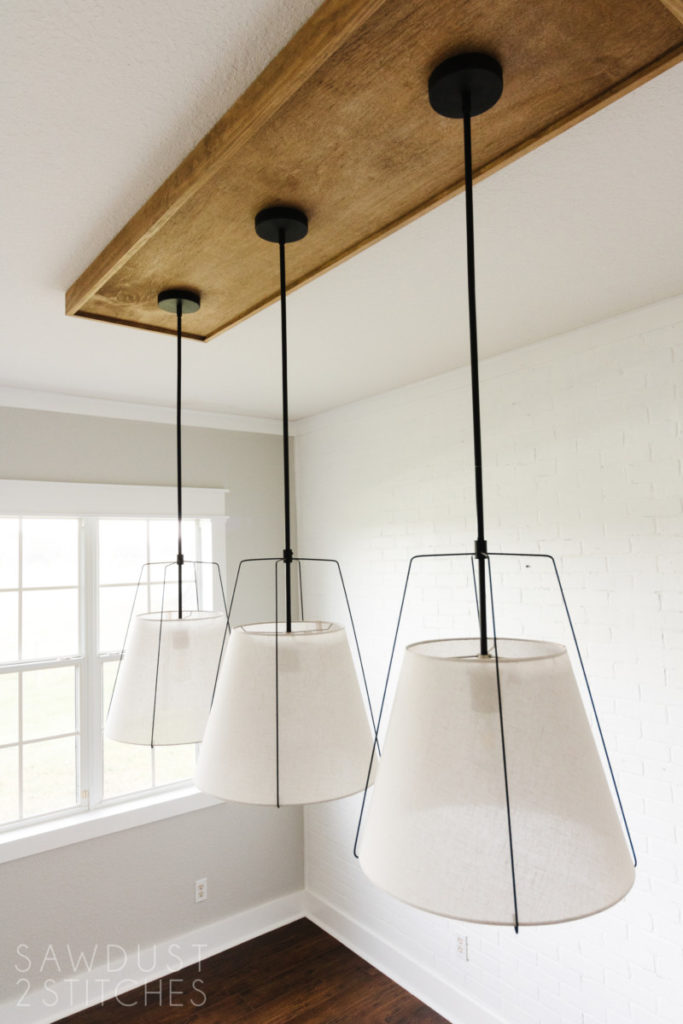
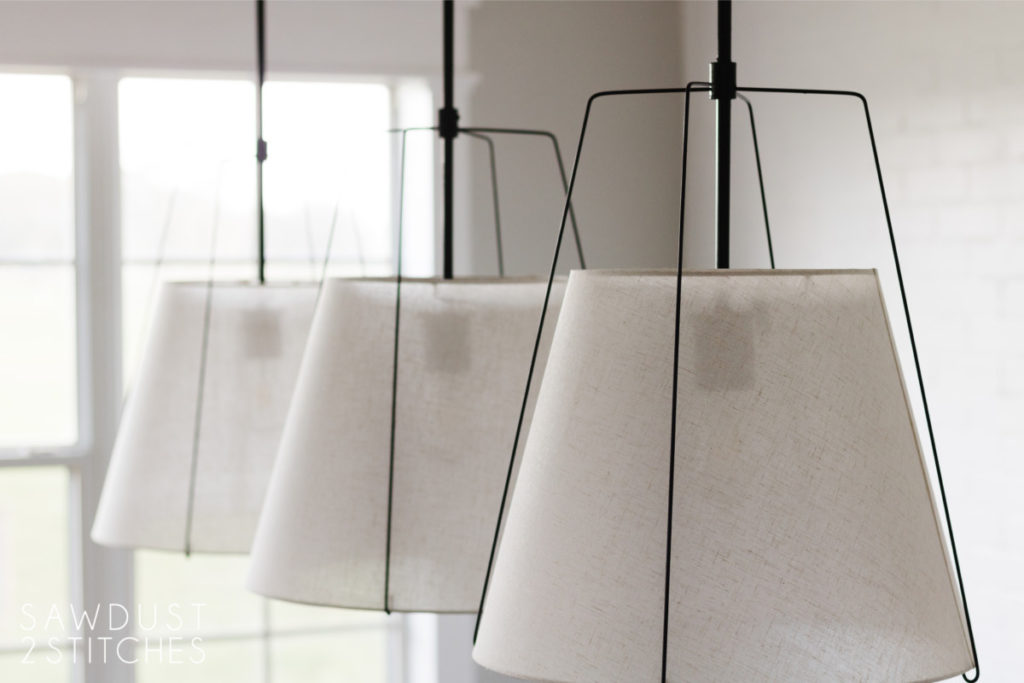
 DIY a rejuvenation light fixture.

Tools Used: 

  • Drill Press or Drill 
  • 1/8″ Drill Bit (for metal use) 
  • Dewalt Drill Tap Combo
    • Set Screws  1/4″- 20x 3/8″ (width x  thread per inch x length)
  • Threading Tool Set 
    •  
  • Multi-Use Pliers/Wire Cutters
  •  

Materials Used: 

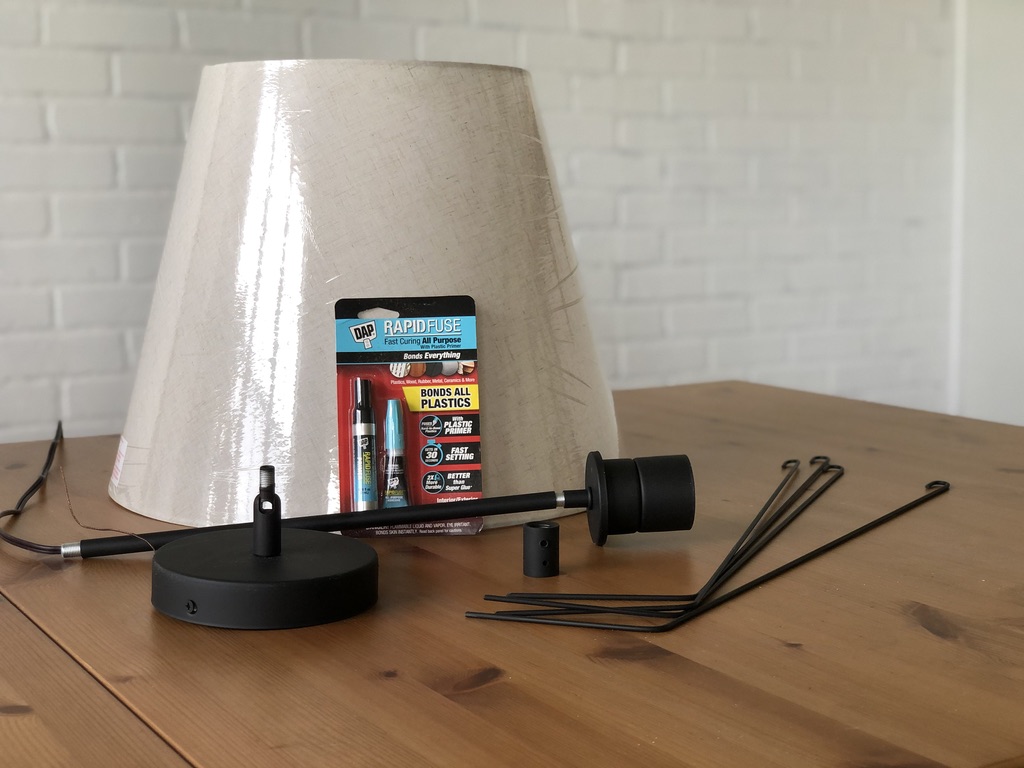
  • DAP Rapid Fuse 
  • Electrical Conduit Coupling  1/2″- (size preference may vary dependent on light fixture rod diameter.)
  • Stainless Steel Welding Rods – (4 per light fixture)
  • Matte Black Spray Paint 
  • Pendant Light Kit – Lowes  (What I used.)
  • Pendant Light Kit -Amazon (Similar) 
  • Lamp Shade – Lowes (What I used.) 
  • Lamp Shade– Amazon (Similar) 
  • (x1 sheet) 3/4″ plywood- (Optional Mounting Base)
  • (x2 boards) 1×4″ standard pine boards- (Optional Mounting Base)


Dang It Instagram

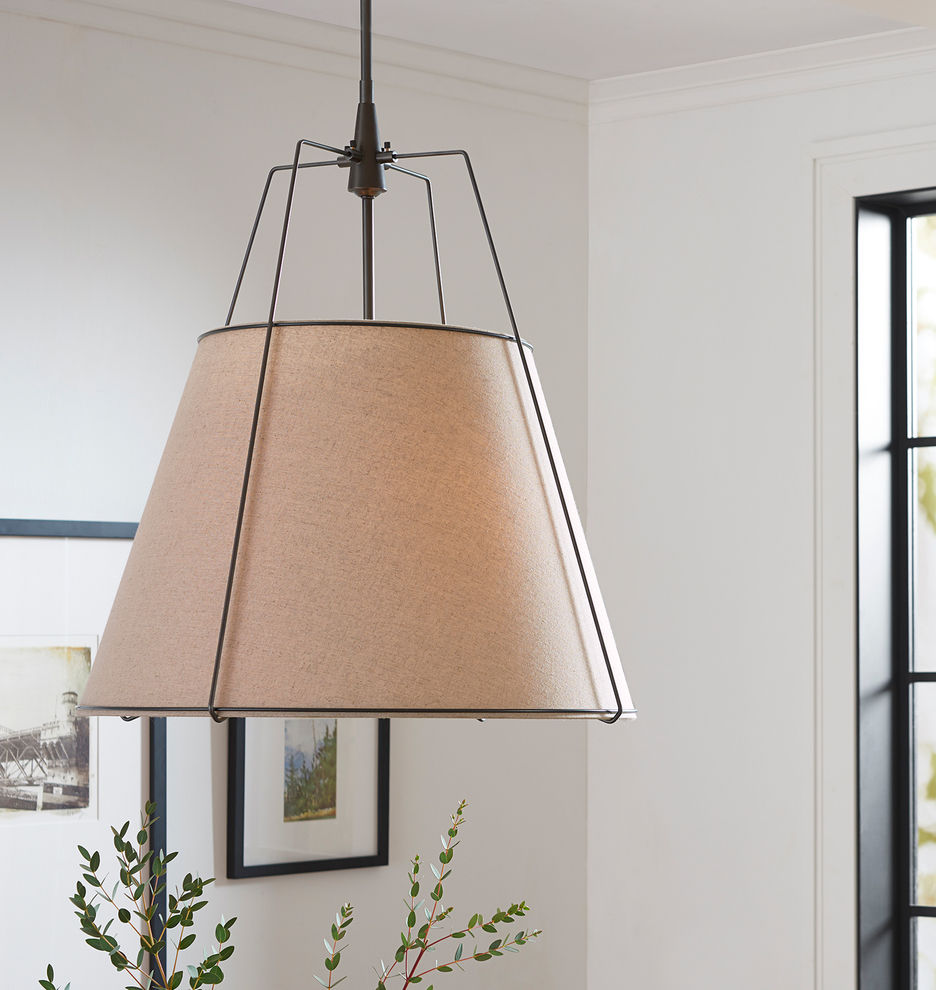
Recently I have noticed a truly gorgeous light fixture popping up all over Instagram. It’s gorgeous, sophisticated, a little edgy and REALLY expensive! Dang, hopes were really high as I followed the links to Rejuvenations website only to discover my dream light fixtures would cost me my first born and my right arm. Ok, maybe not my first born, but definitely a few appendages. DANG!

Image Credit: Rejuvenation

But wait… I am Corey freaking Decker. I can figure this out! Thus began a slow shopping trip that included every isle of Home Depot. I could figure this out. I just needed to think outside of the box.

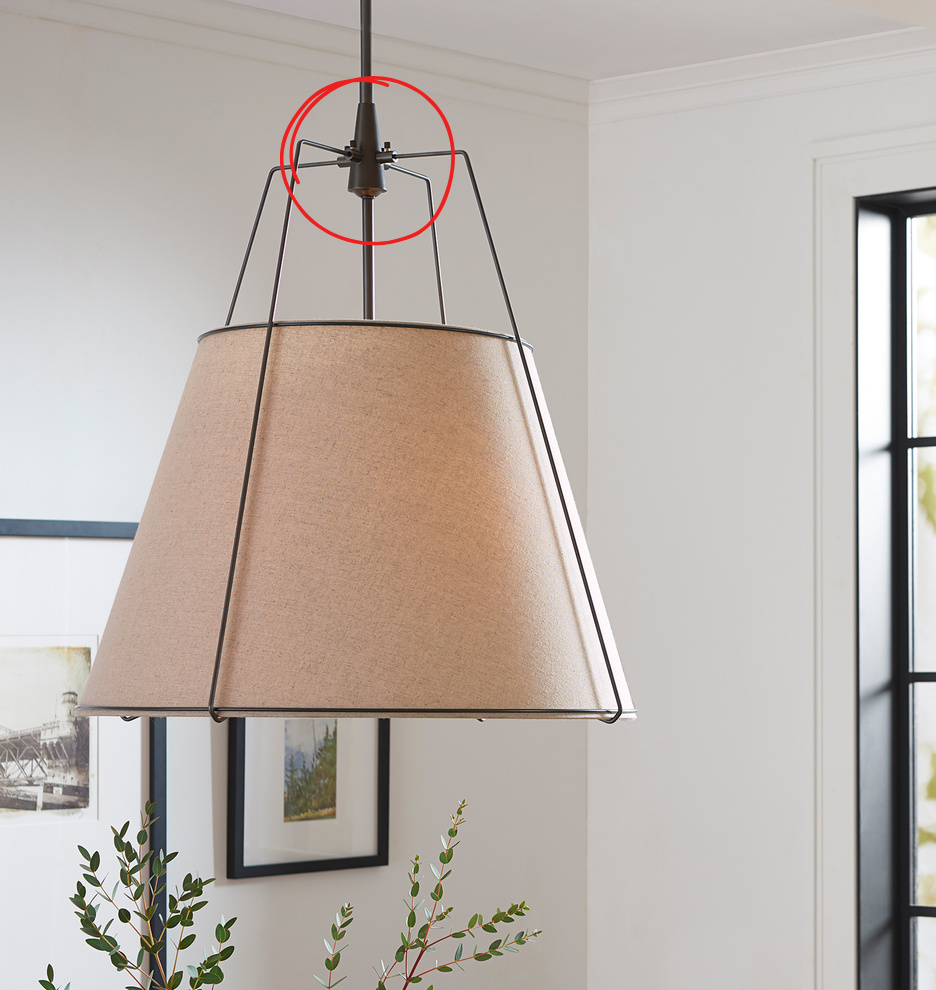
Creating Collar

After browsing every isle of every department of The Home Depot I had an idea. An idea that included a conduit coupling! Electrical department you have saved me again. An electrical coupling would totally work for the junction point on the light fixture, right !?

 DIY a rejuvenation light fixture.

Converting the coupling into a junction point was definitely the trickiest part of this project. I needed this small piece to hold the metal arms in place and it also needed to stay suspended on the rod, but I had a plan.

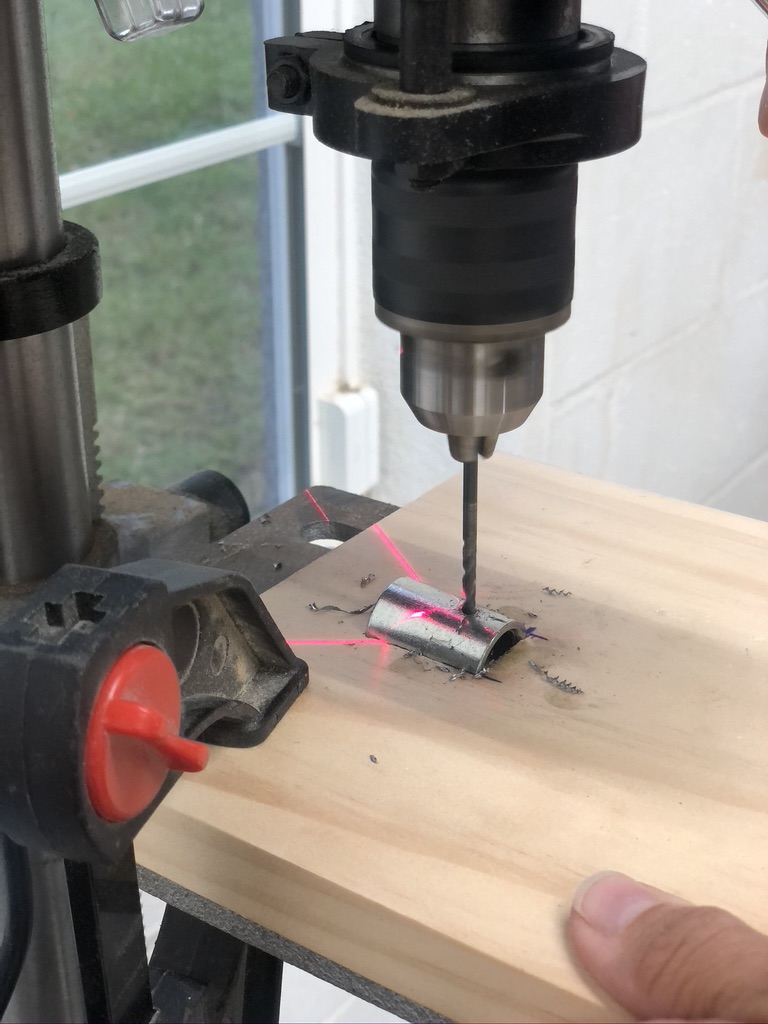
Did you know you can drill into metal? You can, in fact it is a fairly simple process. All you need is a drill bit intended for metal. I was planning on using 1/8″ welding metal rods for my arms so I used a 1/8″ metal bit to drill holes right through my conduit.

 DIY a rejuvenation light fixture.

Incase you are wondering what the contraption in the above picture is, it’s a drill press. It is definitely handy, but not necessary. You can easily use a standard drill for this step. The important thing is to make sure that you drill 4 evenly spaced holes are on the lower half of the coupling.

 DIY a rejuvenation light fixture.

Adding Set Screw

Have you ever heard of a set screw ? It is a nifty little piece of hardware that will make this project possible! Basically you can thread your own hole and use a tiny set screw to create tension. So let’s get started!

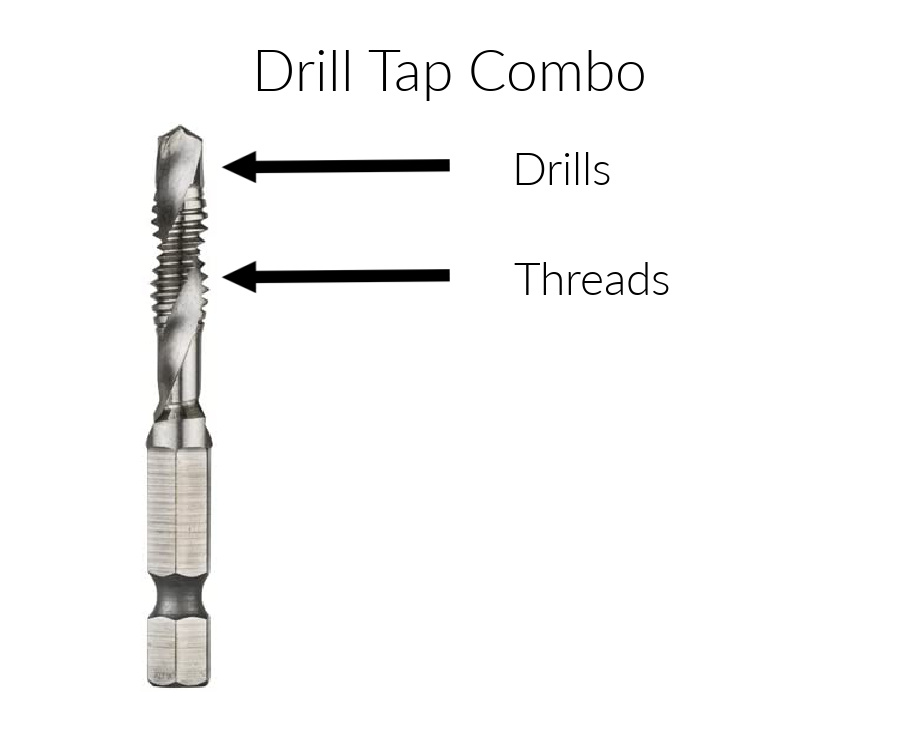
Adding a set screw will require some new tools, we will be using a drill and tap set. I already have a full set, but if you just need the tool for this project I would suggest either the Dewalt Drill Tap Combo or Drill, Tap and T-handle set.

Tool Thoughts:

Dewalt Drill Tap Combo– I have never actually used this but have heard good things. It is a drill bit that both drills and then taps/threads a hole. Again I cannot vouch for this system but it seems like a great concept.

Drill, Tap and T-handle set– This is the same basic style of system I used. It comes with a drill bit, which you follow-up with a tap that threads the hole. It comes with a hand grip that allows you to hand drive the tap.

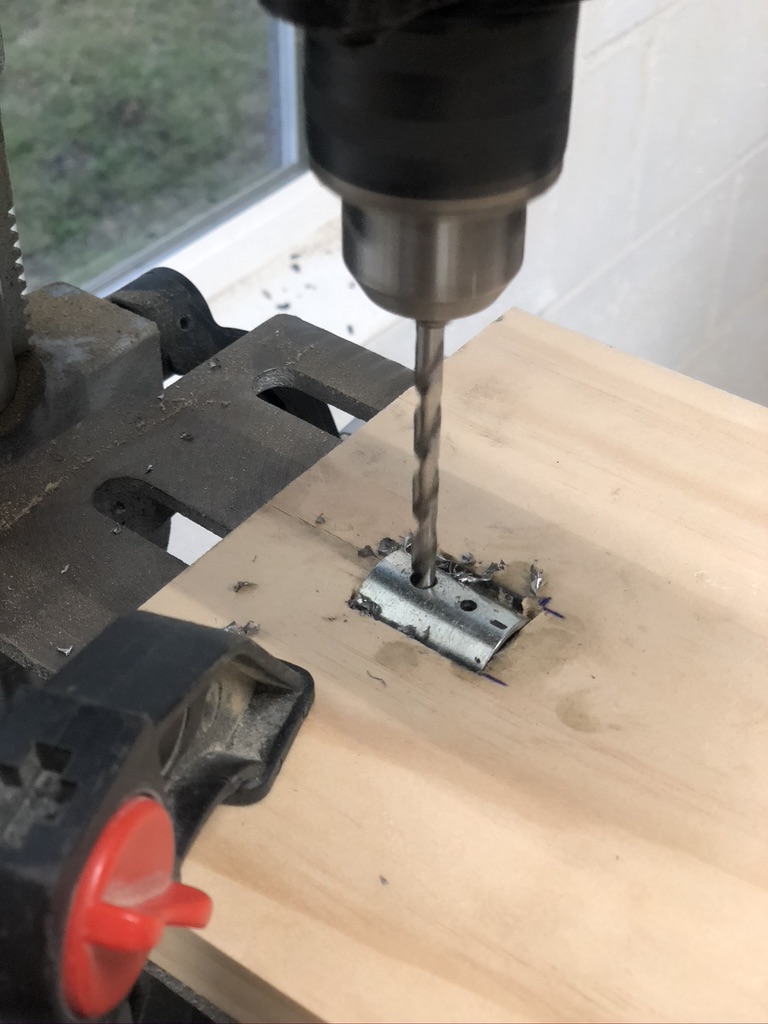
Just as before, I would need to drill two holes for my set screws in the coupling. To do this I used the 1/4″ drill bit . (This is included in both of the above mentioned kits.) These holes will need to be evenly space on the upper perimeter of the coupling. To make things easy on myself I simply drilled directly above my existing holes. Again, I used my drill press to make short order of the job, but it can easily be done using a standard drill.

 DIY a rejuvenation light fixture.

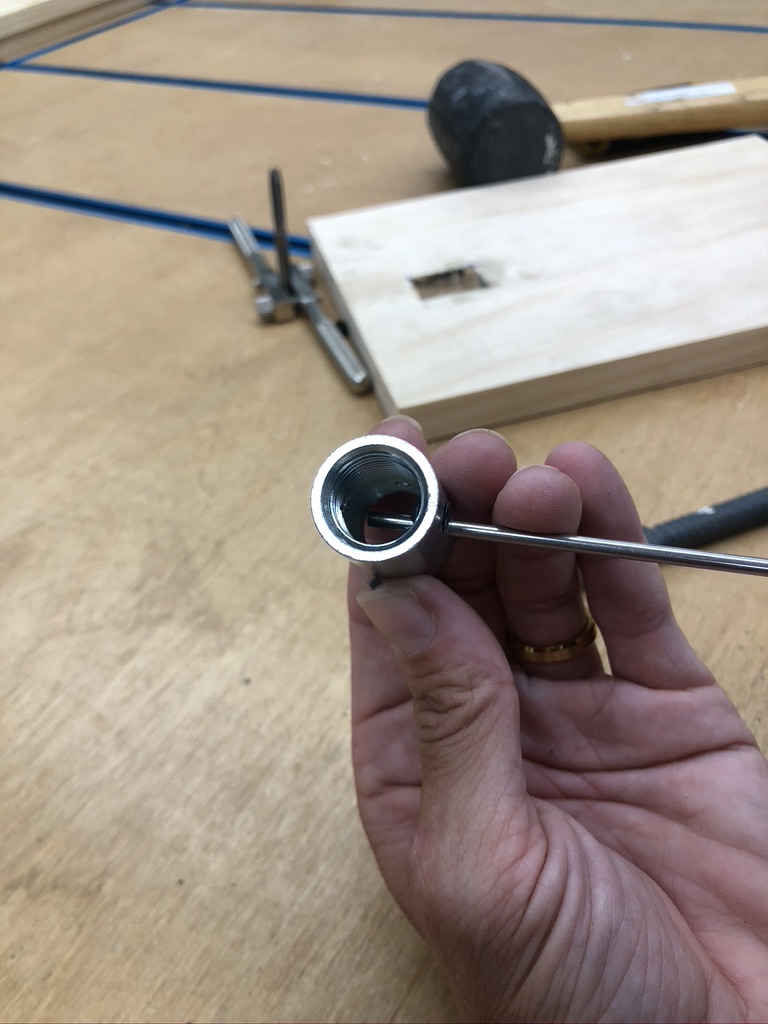
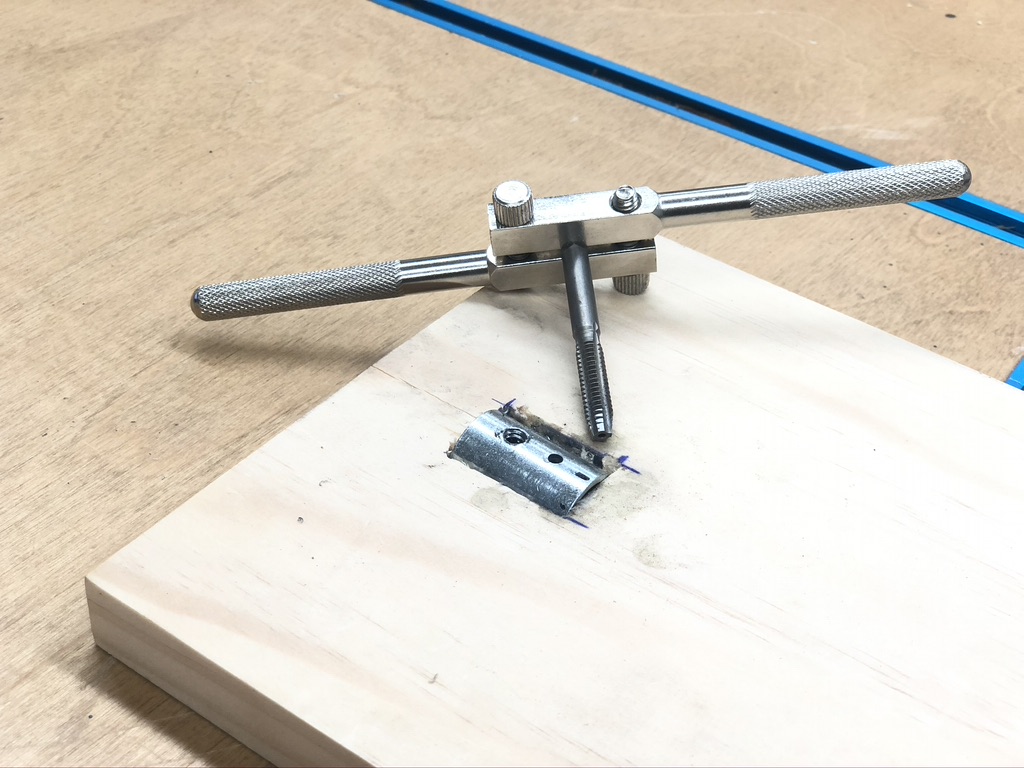
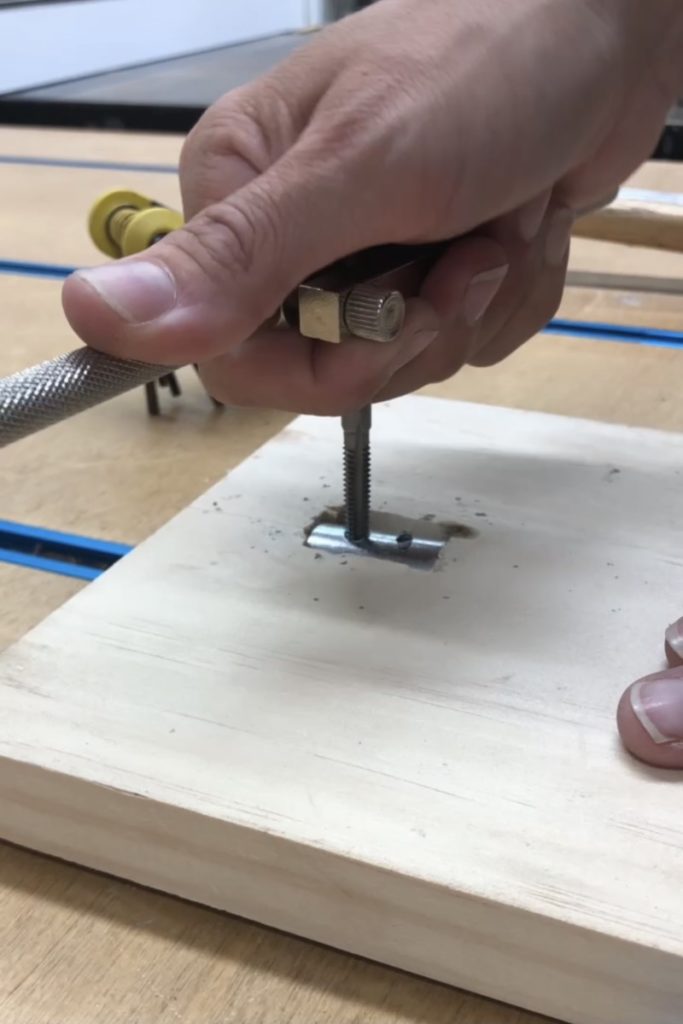
Once both 1/4″ holes are drilled through the coupling I am ready to thread it. In order to thread the hole I will need to use the tap bit. In the kit I used, I insert the coordinating tap pit (1/4″) into the hand tool. When threading a hole you will insert the tap in the pre-drilled hole. The key to threading properly is take make sure you are level, and drive/twist the tap in slowly. It will take a little bit of muscle.

 DIY a rejuvenation light fixture.
 DIY a rejuvenation light fixture.

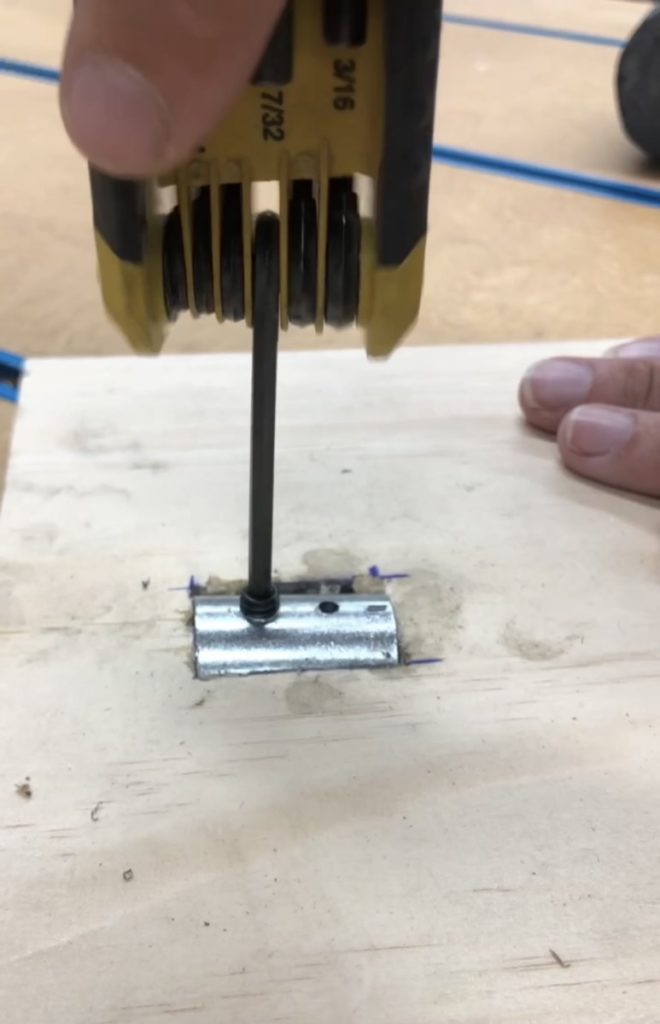
Once the hole is threaded, ensure the coordinating 1/4″ set screws fit.

 DIY a rejuvenation light fixture.

Making Arms/Supports

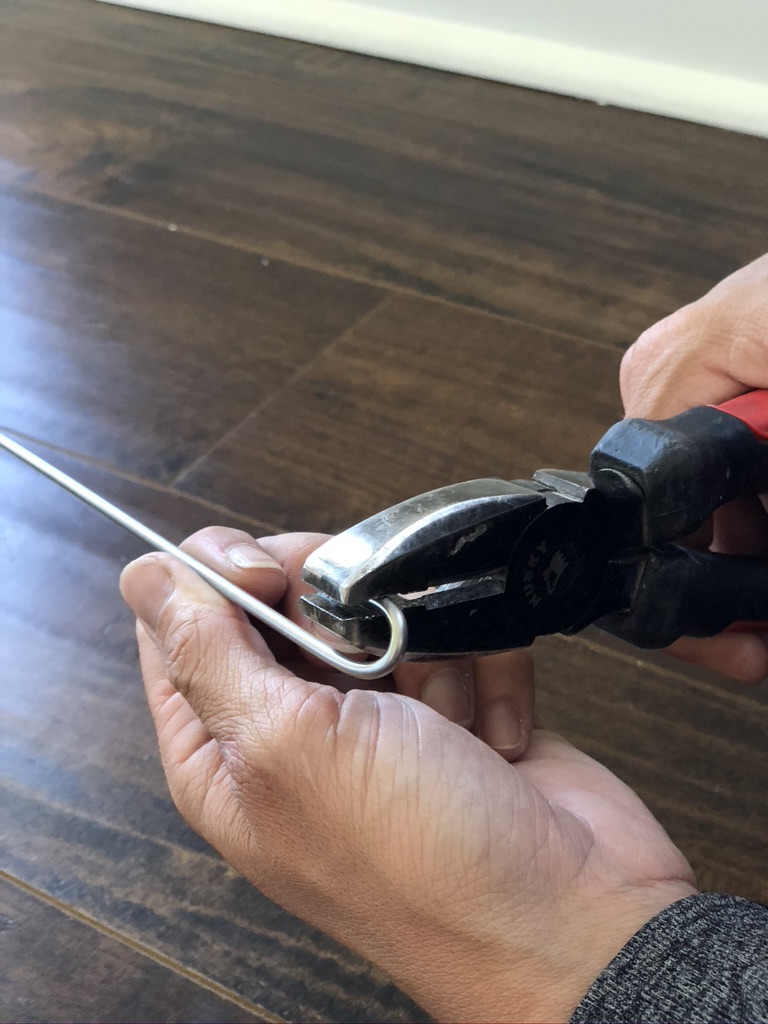
Next it is time to create the arms/supports. To do this I used 1/8″ x 36″ welding rods. To start I created a small “U” shaped hook at the bottom of four rods. These will hold/hook the bottom of the lamp shade.

(As a point of reference my lamp shade is top diameter is approximately 10″, the base diameter is approximately 16″ and the height is 14″.)

 DIY a rejuvenation light fixture.

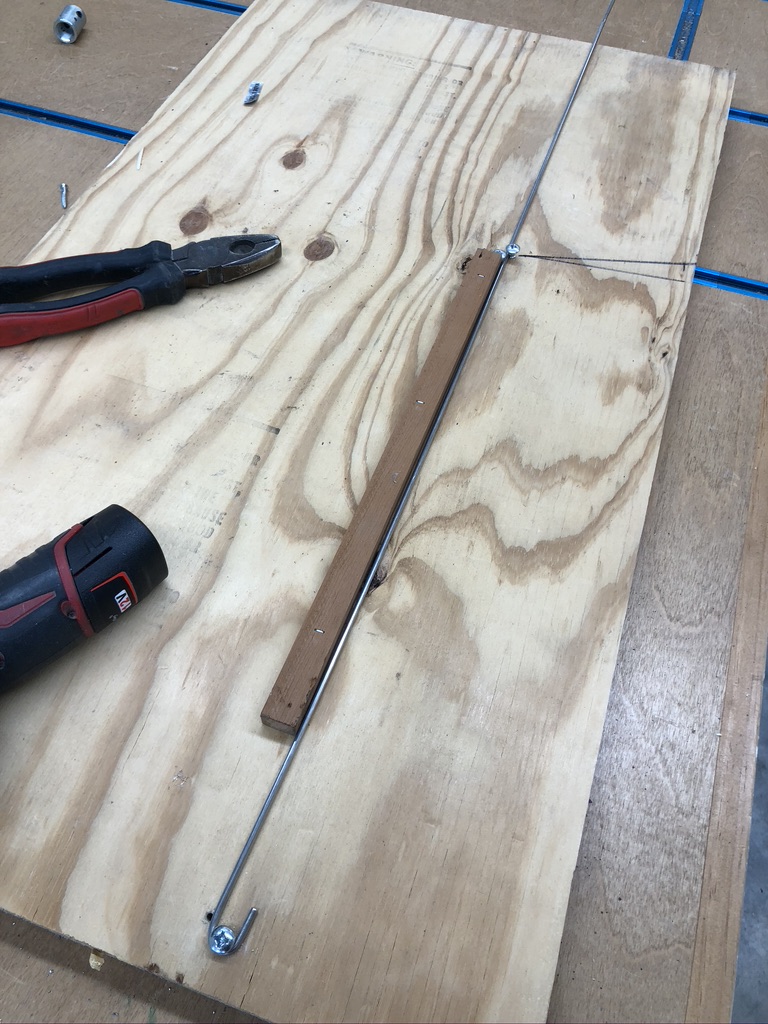
In order to create identical rods I would HIGHLY recommend creating a jig. The dimensions for a jig will be dependent on the size of your lamp shade. Before you create a jig, hook the “U” shape under the edge of your lamp shade, once the rod is in place mark where you think the bend in the rod should be. (As a point of reference my lamp shade is 13″ tall and my rods are 19″ from the end of the “u” to the bend.)

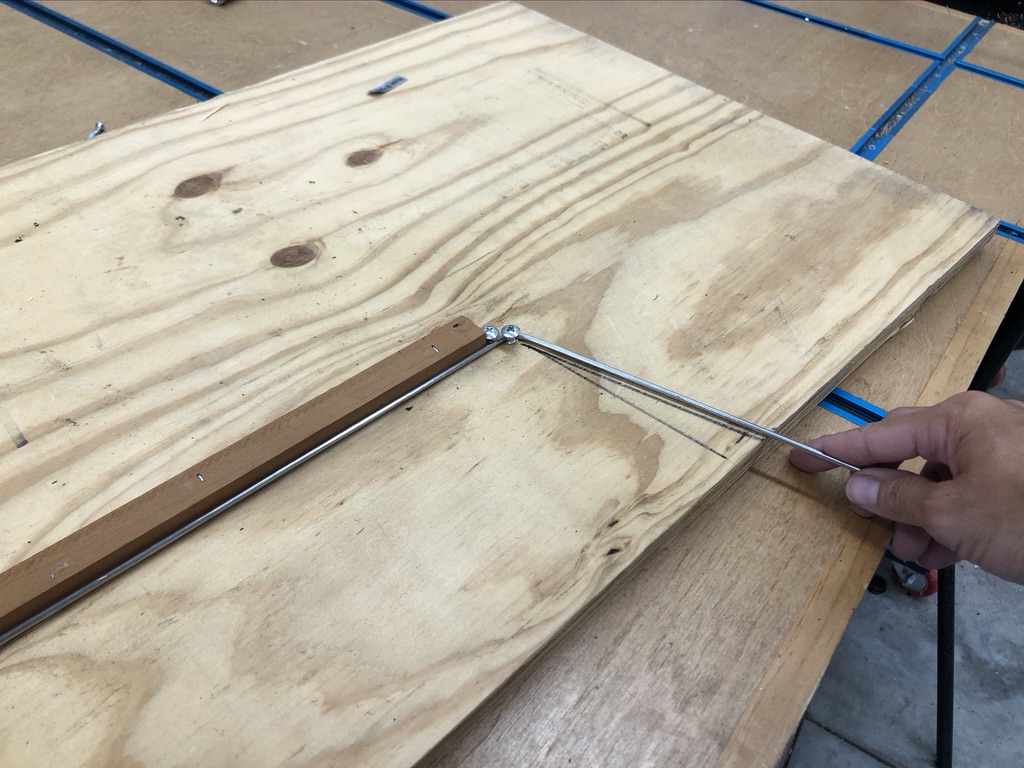
The jig is simple to create. It consists of 3 screws, a platform, and a straight edge. The goal is to hook the priorly created “u” on a single screw. This will hold the rod steady and will also help in continuity in the length of all the arms.

 DIY a rejuvenation light fixture.

There will need to be a second set of screws that the straight end of the rod will slide through. This will be the bending point in the rod. Again at this point I would hold the rod up to your lamp shade and see what feels right for the angle of the bend. Originally, I bent mine about 90 degrees, but it looked a little harsh, so relaxed it to more of a 105-ish degree. No matter what angle you settle on, mark the angle on your base board and make sure you use it as a template for all the rods.

 DIY a rejuvenation light fixture.

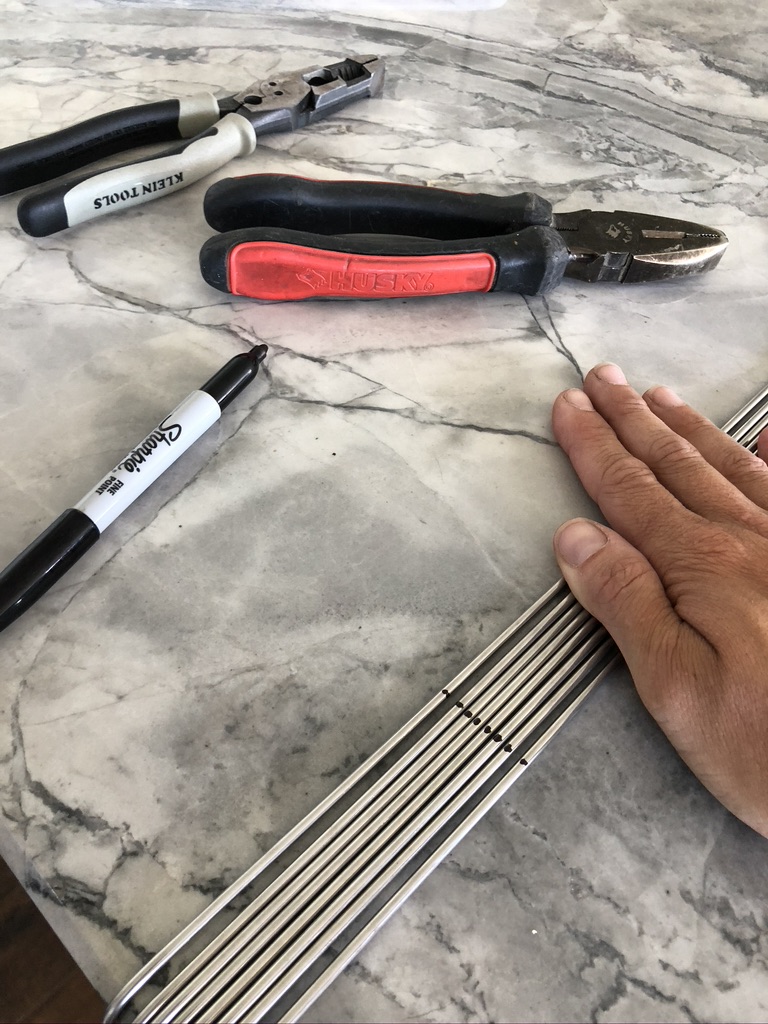
Alright, once the arms have a “u” hook, and elbow/bend we are ready to make our last reference to your lamp shade and rod. Hold the rod in place and mark where the rods will need to be cut in order to connect to the center rod and accompanying coupling.

As a point of reference, I cut mine 4.5″ from the bend.

If you want to play it safe you can first assemble your light fixture and install the coupling and then measure the distance you need from the elbow to the coupling.

Regardless of the measurement, make sure you mark all of your rods together. These all need to be identical for this to work. I used a sharpie to mark my rods.

 DIY a rejuvenation light fixture.

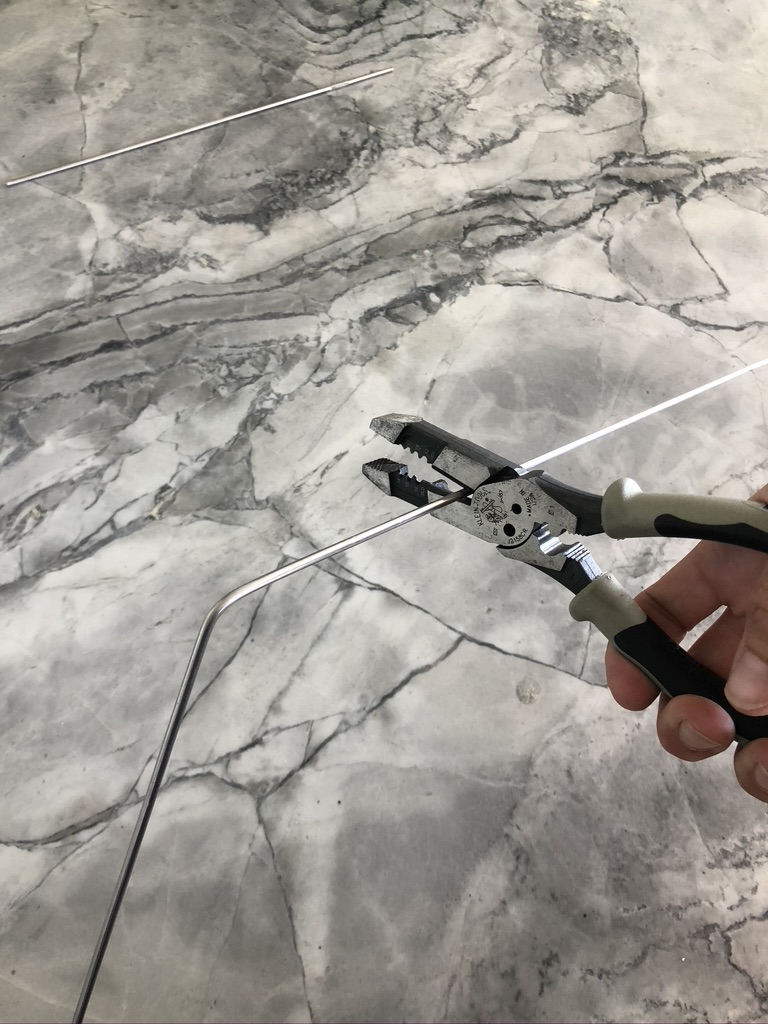
I then used wire cutters remove the excess rod.

 DIY a rejuvenation light fixture.

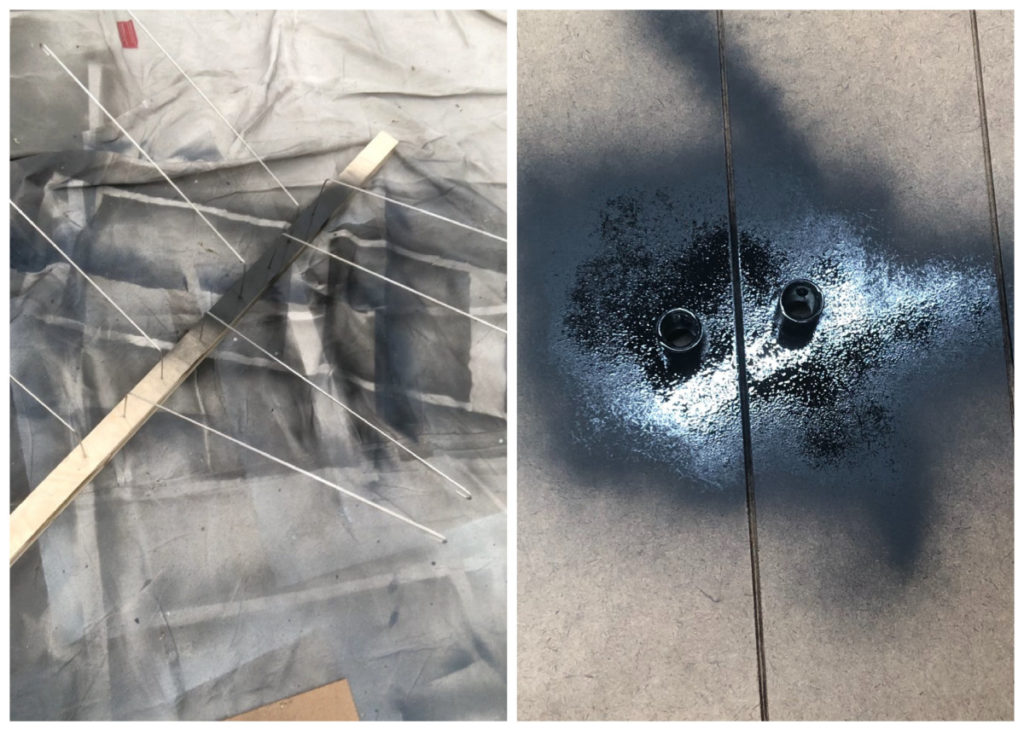
Before beginning the assembly process I spray painted all my components in a matte black. This will include your light fixture kit, the rods, and the coupling. (This could look absolutely stunning in a brass finish!

 DIY a rejuvenation light fixture.

Assembling Fixture

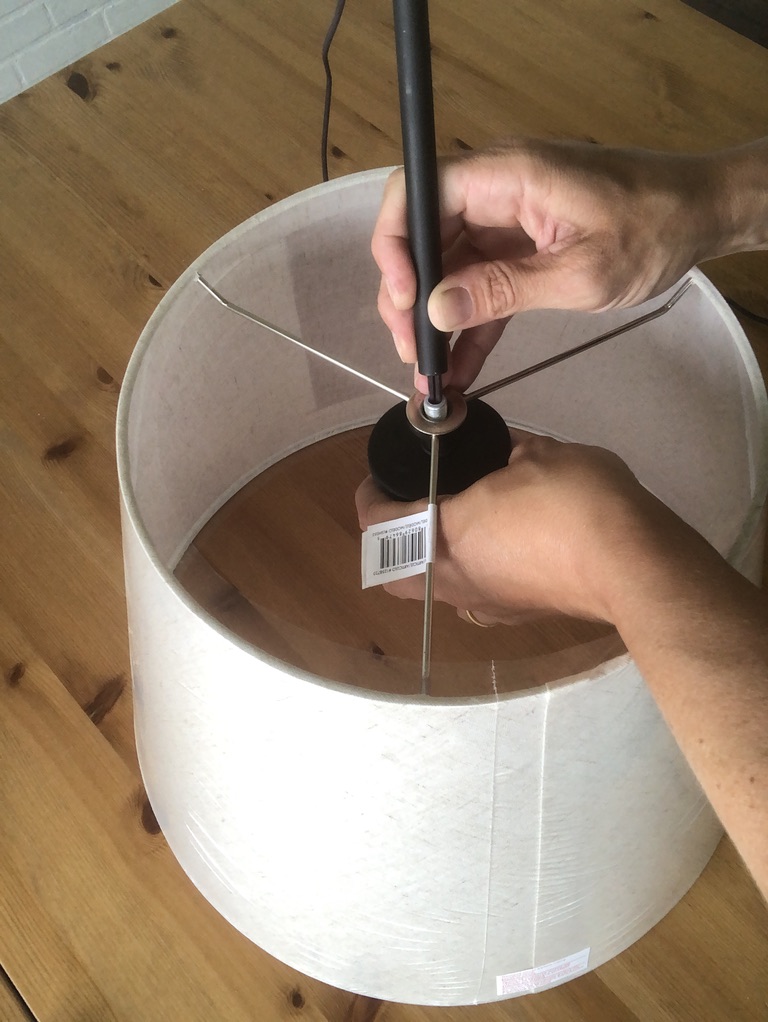
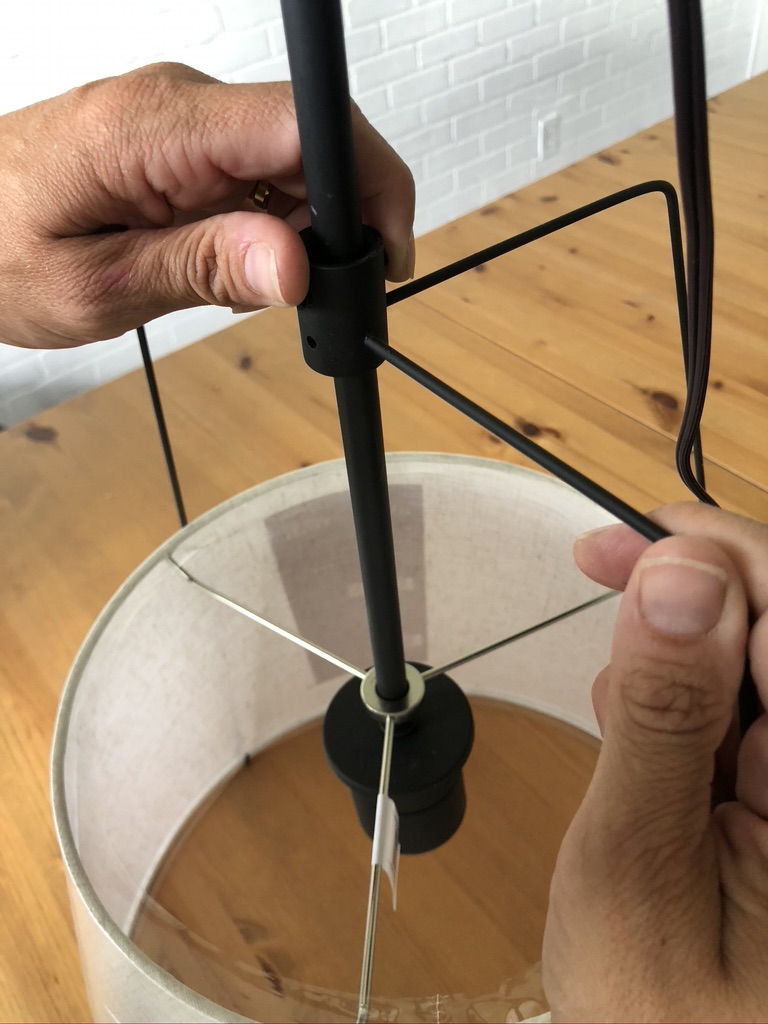
After the pieces have had adequate time to dry, it is time to assemble! Most light fixture kits disassemble as seen below. Thread the wiring through the circle in the center of the spider like legs that support the lamp shade. After, thread the wires through the accompanying rod, then screw them together.

How to assemble a DIY  Rejuvenation Light fixture

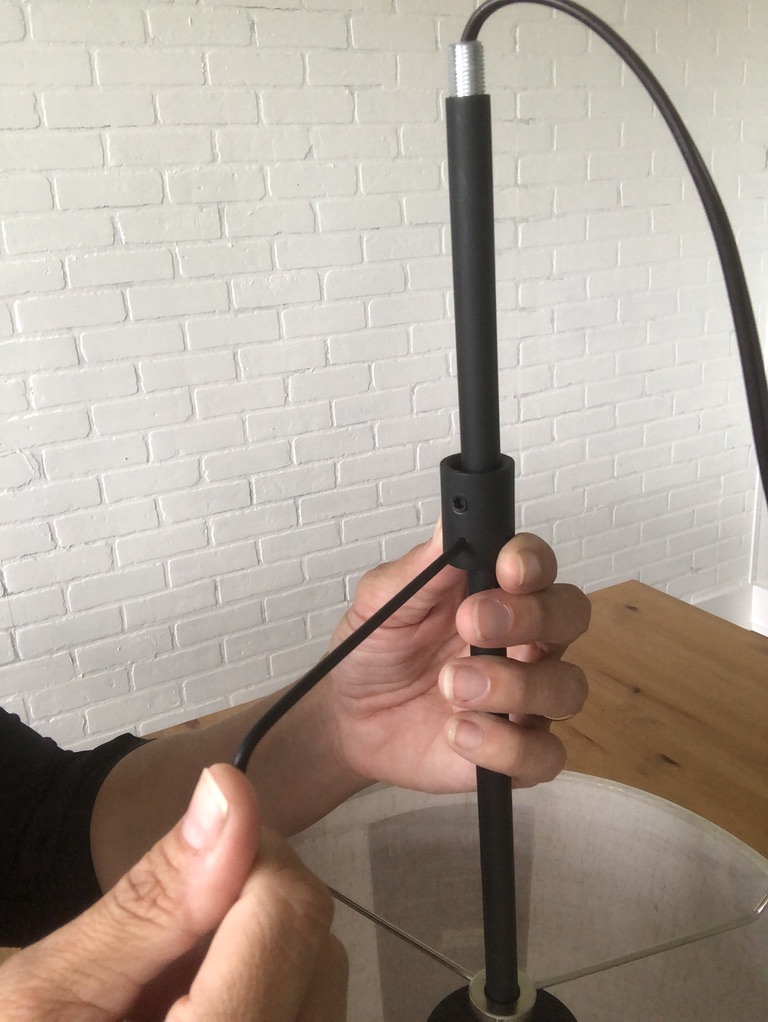
Next we will add our modified coupling to the rod. Tighten the setting screws so that the coupling will not slide freely on the rod. ( This is a temporary placement, so don’t tighten it too much, it may scuff your paint job.)

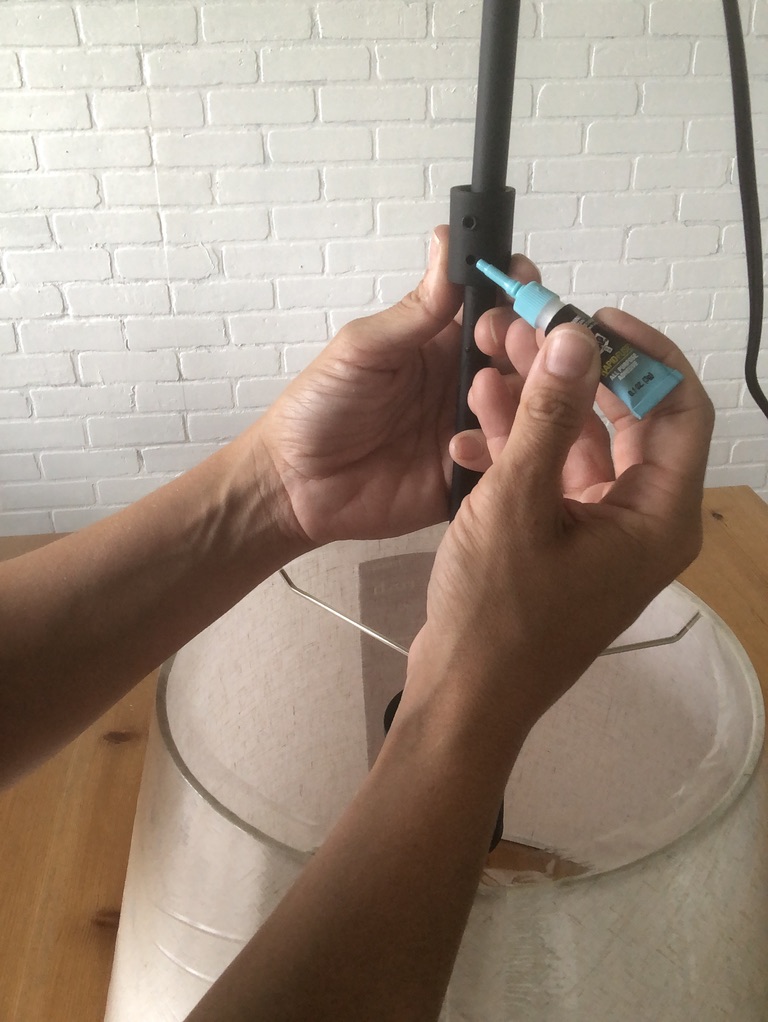
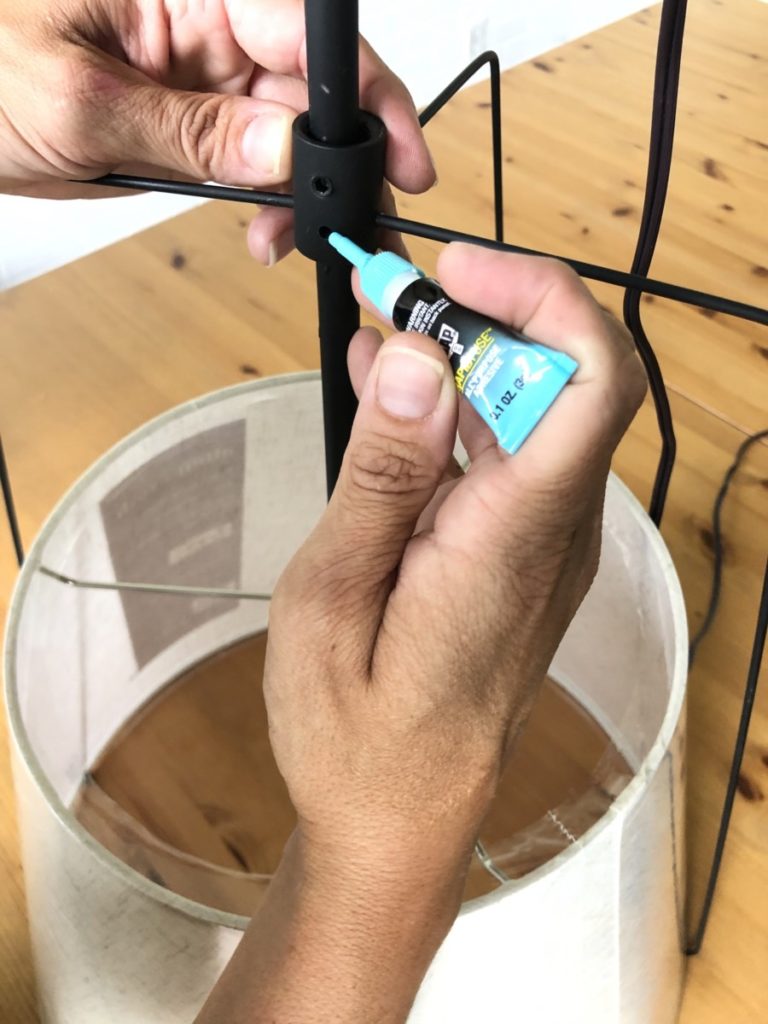
Now it is time to add the arms. While the arms are designed to fit snuggly in the previously drilled holes, I need to give them a little help. RapidFuse is just the ticket. To put it simply, it is like a SUPER glue for all sorts of surfaces, including metal surfaces! This will give the arms the staying power that this light fixture needs.

How to assemble a DIY  Rejuvenation Light fixture

A small dab of DAP RapidFuse is all that is needed. Just add a small amount to the interior of the pre-drilled hole intended for the arms/supports. Promptly after applying the glue insert the first support. When doing so ensure that the arm is sitting straight. You don’t want wonky arms!

DIY Rejuvenation Light Fixture

Repeat the above process on all four arms of the light fixture.

DIY Rejuvenation Light Fixture

Make sure you use RapidFuse on each of the arms, this is what is going to hold this whole contraption together.

DIY Rejuvenation Light Fixture

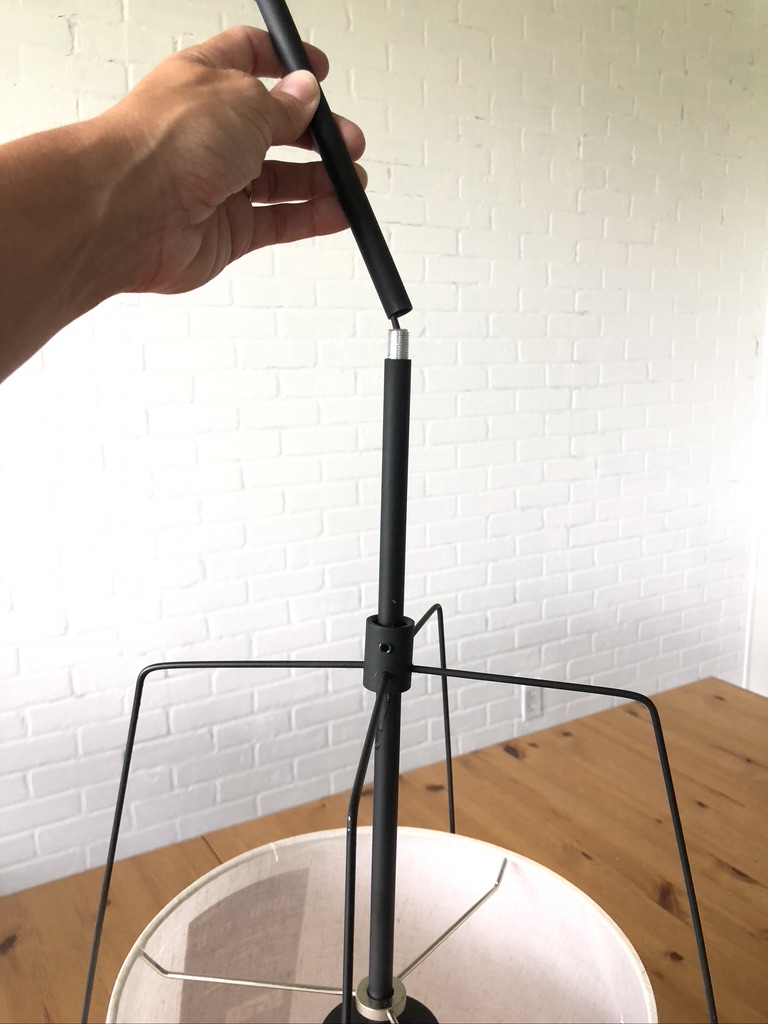
After each of the arms are snuggly fit and secured it is time to finish assembling the light fixture! Add the remaining/desired light fixture rods and the mounting plate. ( You can use the directions included in your light kit if further details are needed.)

DIY  Rejuvenation Light Fixture

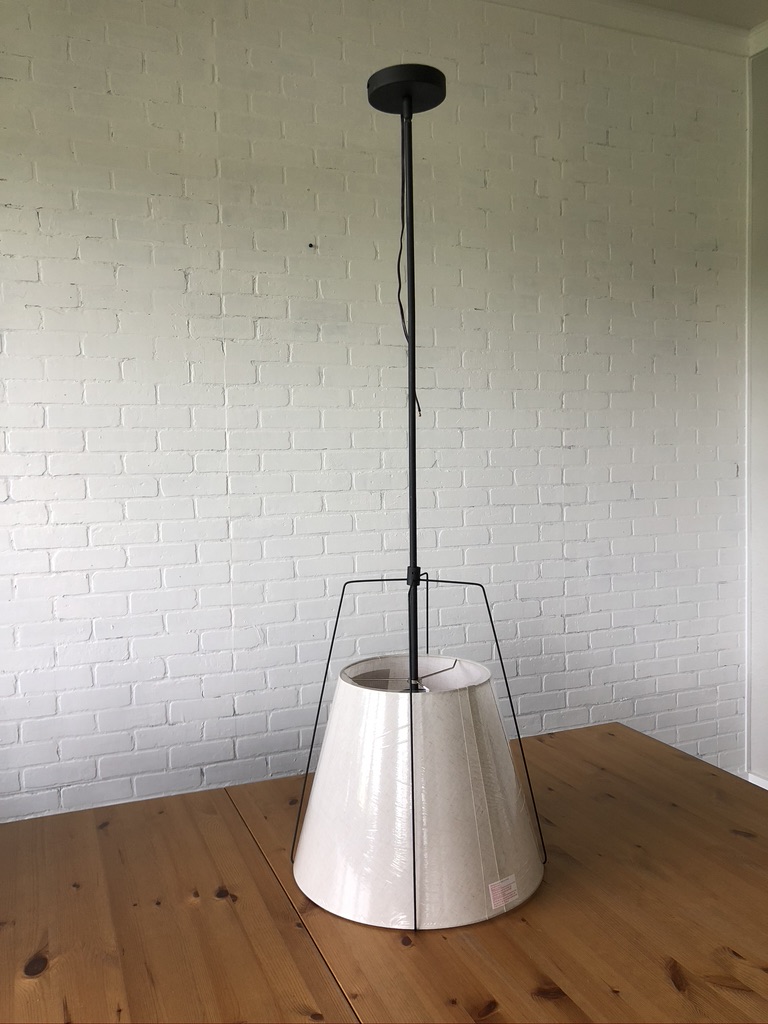
Remember how I mentioned that the set screw would only be a temporary hold? Now that all the arms are in place, loosen the set screws and if needed adjust the placement of the coupling. Ensure that all the “U’s” on the end of the supports are hooked under the bottom ledge of the lamp shade. Once the arms are sitting in place tighten both set screws tightly.

DIY Rejuvenation Light Fixture

Mounting Base- Optional

My dining room only has one light junction box, and seeing as I am more comfortable building than I am running electrical I decided to build a box that would allow me to mount multiple light fixtures and hide all the electrical behind the box.

Actually, that is partly true. I ORIGINALLY. used the box for the aforementioned reasoning. When I built my first kitchen light fixture I needed something to hide the wire. You can get all the details about my process here.

 Turning a pendant light into a chandelier.

However, with this light fixture my motives for the box were a little different. I had a vision and I wanted to bring some beautiful wood tones to the space, and a stained mounting box was just the ticket!

While I won’t go into the nitty-gritty details, here is a basic overview. The mounting box consists of 5 boards. The base which is. 3/4″ piece of plywood, and 1×4″ select pine boards.

DIY Rejuvenation Light Fixture.  Building the mounting box.

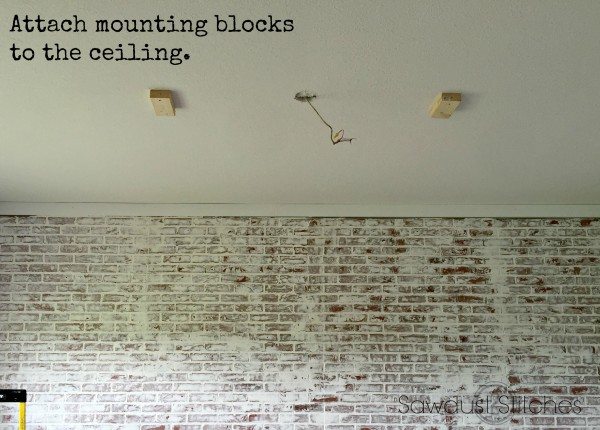
I cut my 3/4″ plywood to my desired dimension and then but my 1×4″ boards to fit the piece of plywood. (I mitered the corners.) The important thing to consider when assembling, you will need to leave space on the inside of the box for the wires and mounting blocks. I purposefully made my spacing behind the plywood 1 1/2″ deep so that it would accommodate a 2×4″ mounting block.

DIY Rejuvenation Light Fixture.  Building the mounting box.

Once the box was assembled I used a stain pre-treatment, followed by a layer of MinWax American Walnut. Once it was dry I applied a protectant top coat.

 Rejuvenation Light Fixture DIY  How to: build a mounting box.

If you would like to read more about the installation process I have a few more details here.

How to install light fixture box

There you have it folks, my own beautiful rendition of a gorgeous light fixture. Full design credit goes to the talented folks over at Rejuvenation. As much as it would be fun to simply buy these light fixtures there is something very satisfying in DIYing. Thanks so much for following along!

  • previous
  • Page 1
  • Interim pages omitted …
  • Page 3
  • Page 4
  • Page 5
  • Page 6
  • Page 7
  • Interim pages omitted …
  • Page 47
  • next

Primary Sidebar

  • Facebook
  • Instagram
  • Pinterest
  • Twitter
  • YouTube
IMG_9167 (1).jpg fd
DIY & Design

Meet Corey

Hi everyone, my name is Corey, and I have a problem. I can’t leave well enough alone… The best therapy usually involves a variety of power tools. So, in the few “spare” moments I am not entertaining my two beautiful, rambunctious, boys, I can typically be found hunched over a sewing machine and/or covered in sawdust. All in the efforts to create a perfect balance of aesthetics and practicality in our home.
read more

Join our mailing list!

DIY & design ideas - right in your inbox!

Featured

Stair Tread Makeover

Categories

  • 70's Ranch Home
  • Around the House
  • Build Plans
  • Crafts
  • Current Home
  • Decor Makeovers
  • Dresser
  • Exterior
  • Fall
  • First Home
  • Furniture Makeover
  • Hidden Compartment
  • Kitchen
  • Lighting
  • Makovers
  • Master Closet
  • Organization
  • R.V.
  • Room Makeovers
  • Seasonal
  • Seating
  • Sewing
  • Shelving
  • Small Builds
  • Smart Home
  • Spring
  • Summer
  • Tables
  • Tablescape
  • Tutorials
  • Uncategorized
  • Wall Art
  • Wall Decor
  • Winter
  • Workshop

Footer

Contact Me: Corey@Sawdust2Stitches.com

Latest ‘Grams

Follow on Instagram
2020 © Your Blog Name
theme by soleilflare
Enter your name and email and get the weekly newsletter... it's FREE!
Your information will *never* be shared or sold to a 3rd party.