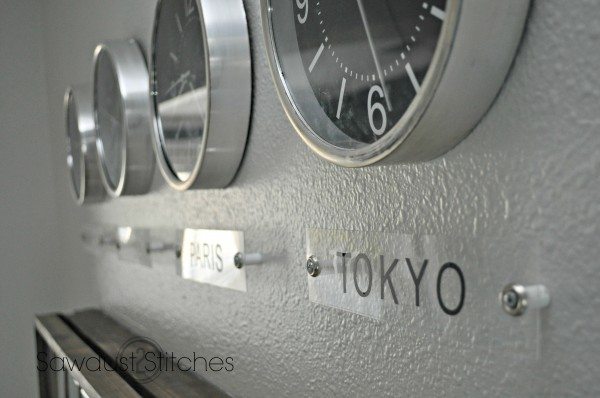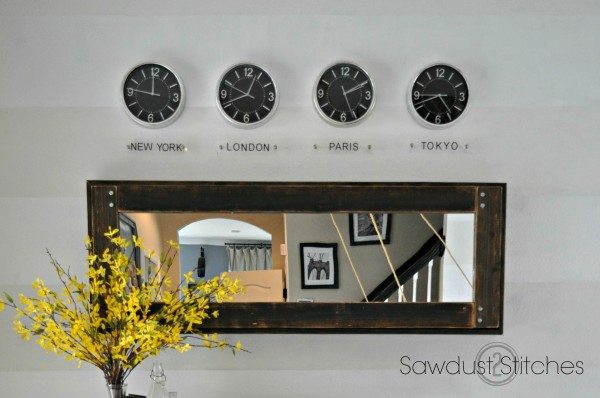
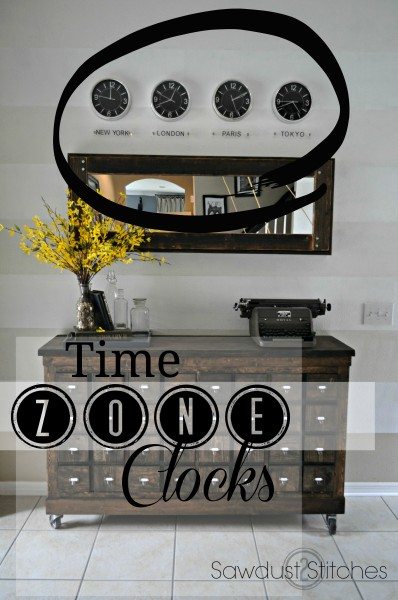
- Clocks
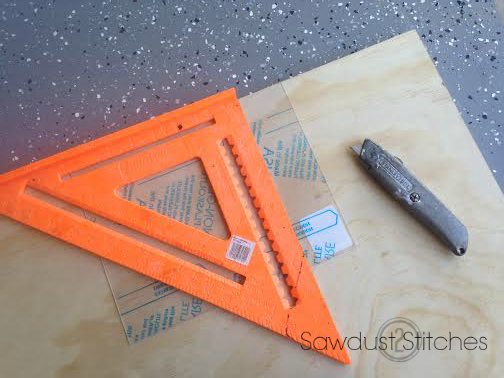
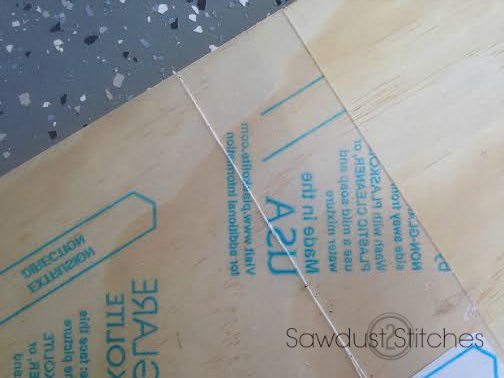
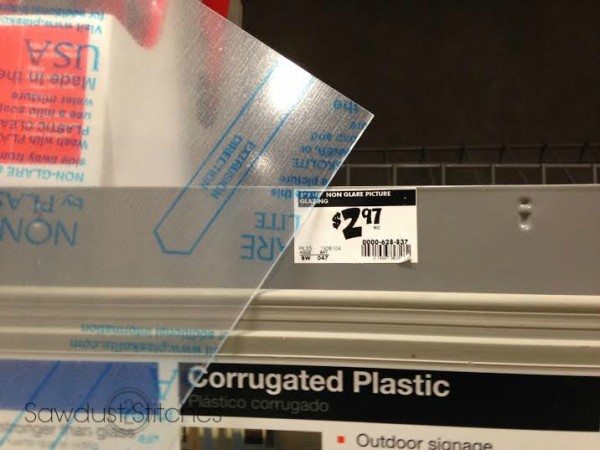
- Plexiglass
- Vinyl
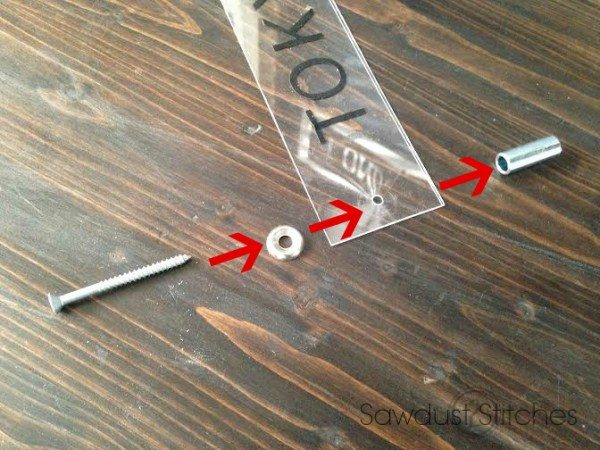
- Screws
- Spacers
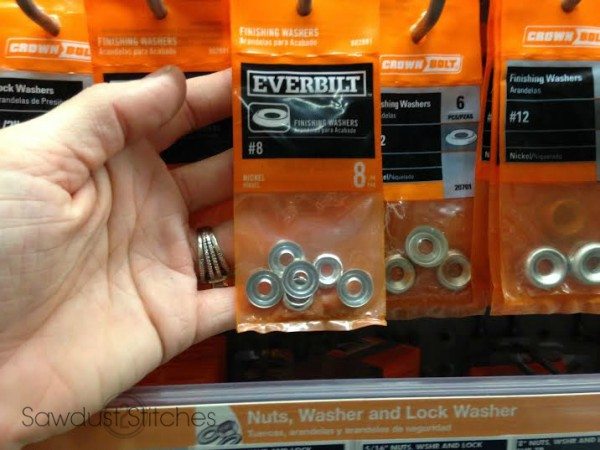
- Finishing Washers


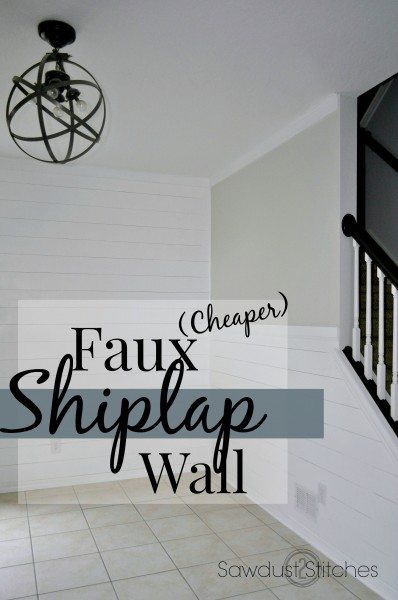
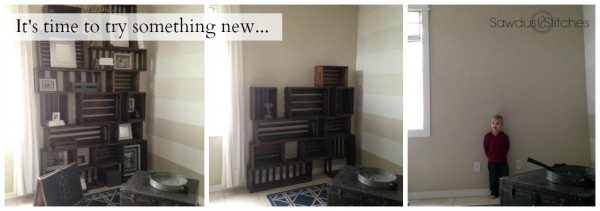
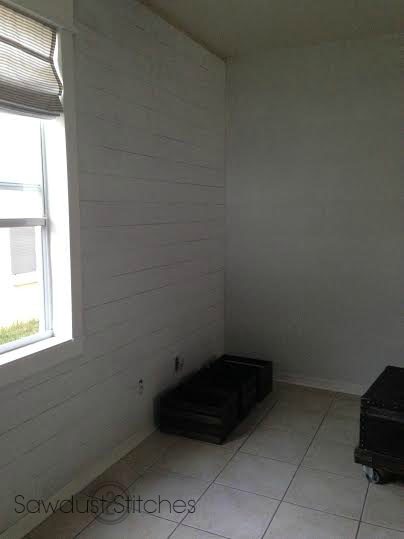
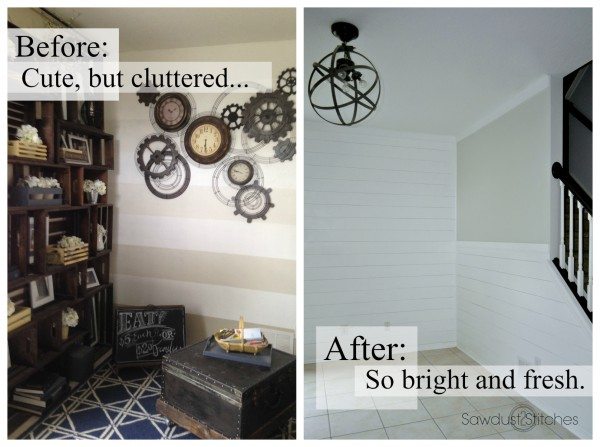
From time to time I would go into our front sitting room (seen below) and would try and figure out what was “off” I liked the room but never liked spending much time in it. I have always been a minimalist, so this room was always too busy for me, to the point that it was unsettling. It also felt a little cave-like. I kept dreaming of an open floor plan with a bright airy feeling and faux shiplap walls.
One typical Tuesday morning I was driving home from school drop-off and made a split second decision and turned left towards Home Depot… and this is a documentation of what occurred in the next 48 hours…
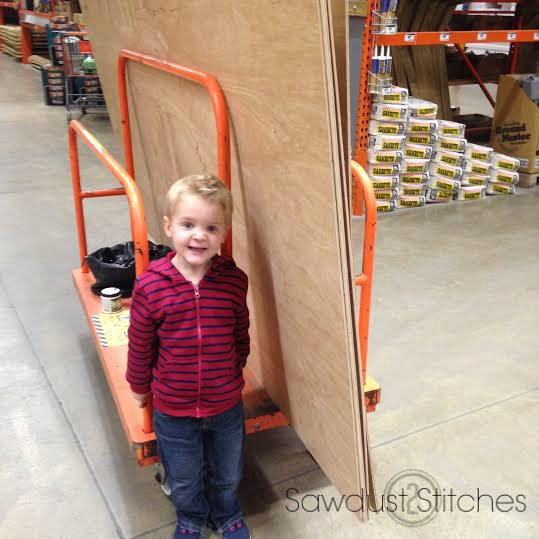
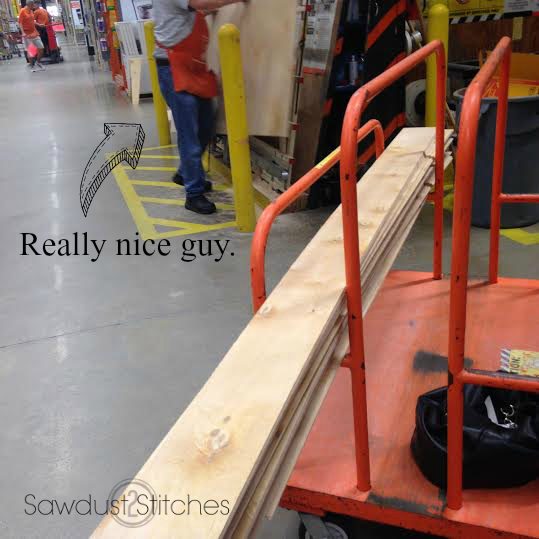
I walked straight to the paneling section in the lumber isle and started comparing board widths, finishes etc. I ultimately decided on a 7/32″ plywood. After some calculating I guesstimated I would need 6 sheets.

After our impromptu trip to Home Depot, this is what the rest of our day looked like…
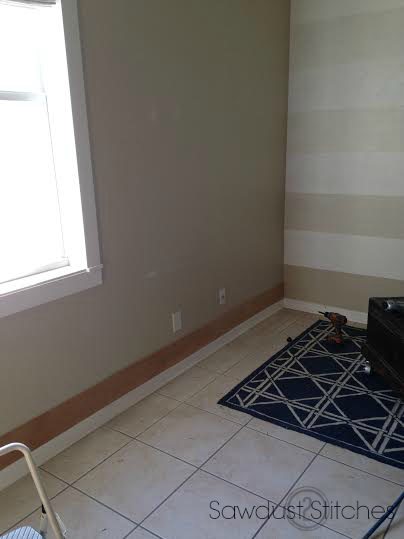
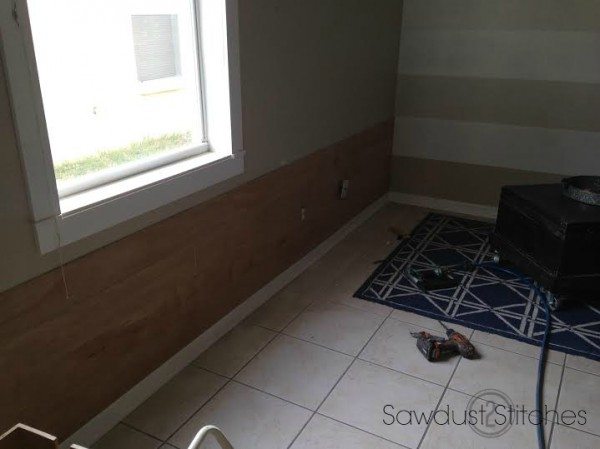
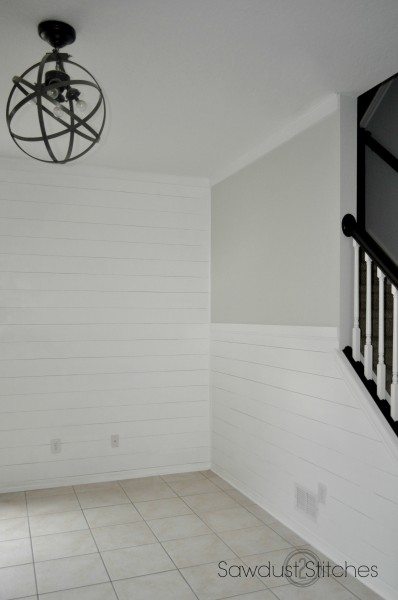
Within 25 minutes the front room looked a little like this…
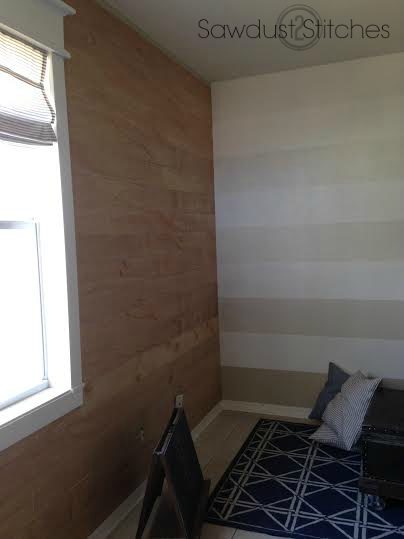
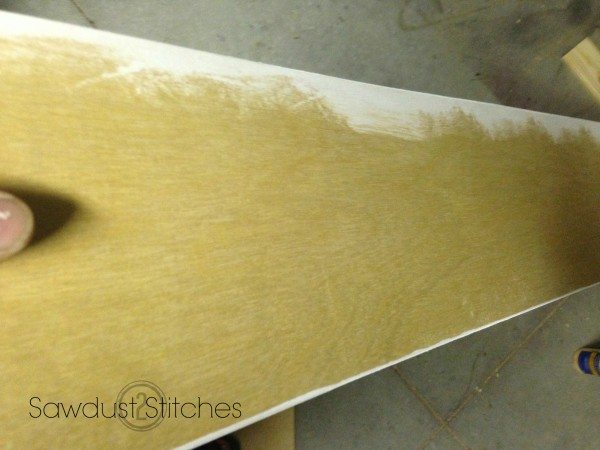
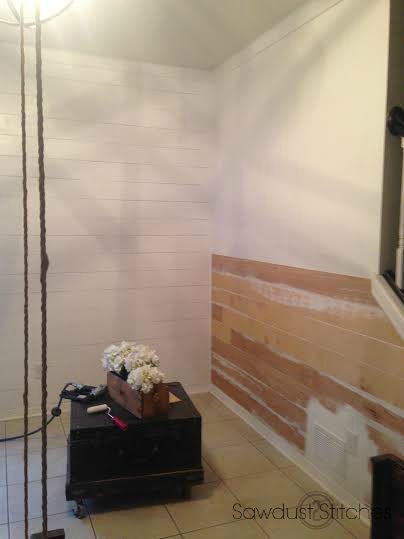
Here is what I did. I started by sanding the edges of the planks. I applied these planks to the wall using an 16 gauge nailer. Worked like a charm.
I cut all the pieces to fit. Making sure to cut out spaces for the outlet placement.

At this point, I used nail hole filler on all the nail holes. After the filler dried, I smoothed out the nail filler patches with a fine sandpaper.
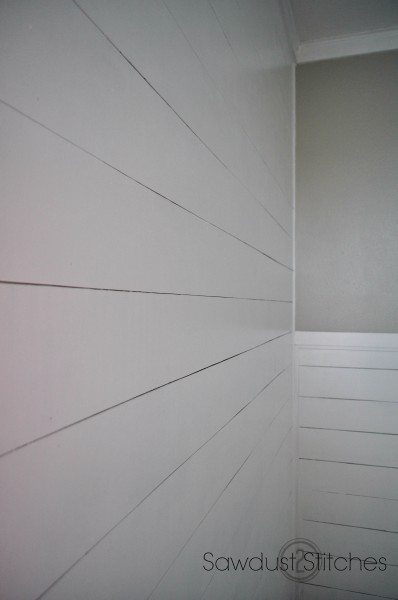
So NOW it’s time to prime! This was a rather time-consuming process. I didn’t want the cracks to be filled with paint, so in between coats I would used a box cutter blade to prevent the gap from filling. 
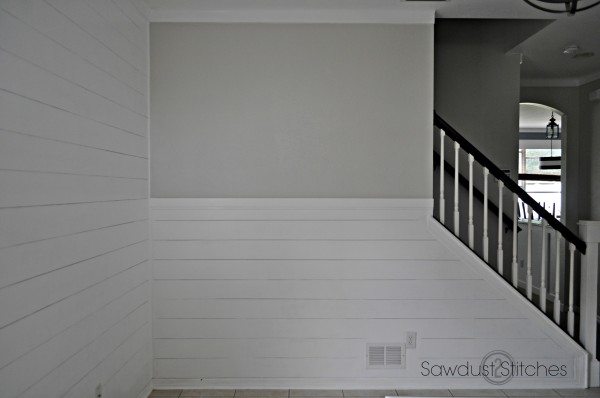
For the topcoat, I used Behr Ultra Pure White. I used a piece of trim on the edges in order to hide the end edges. I followed up with caulk, it creates a very finished look! Look how pretty! 


Corey
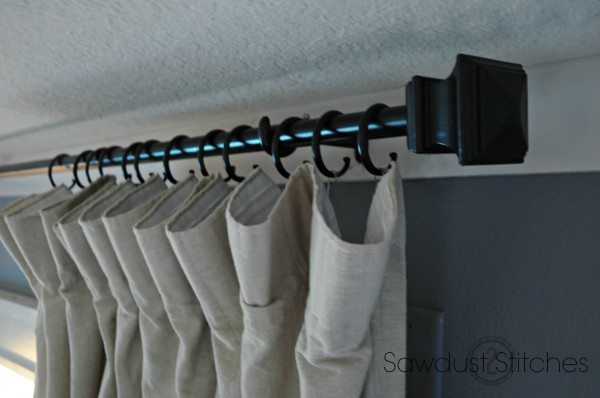
I know that the concept of a conduit curtain rod is not exactly an original idea. But, I may be able to shed a little light on how to add the finishing touches to said curtain rod.
In case you are new to this electrical conduit phenomena, I will do a quick little re-cap.
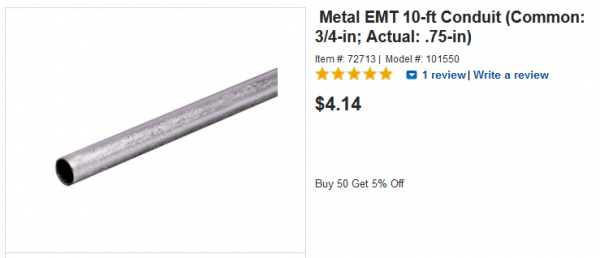
Basically, you can have a 10′ curtain rod for just a few dollars!
Supplies Used:
Tools Suggested:
First we will need to prepare the metal conduit for painting. I used a piece of steel wool, and lightly scuffed up the surface of the electrical conduit.
After that, I wiped down the rod with a wet rag in order to remove all the dust.
Once dry, I then appllied the spray paint. I propped mine up so that as I rolled it, it would not damage the painted side.
As with any spray painting project, I did multiple LIGHT coats (as opposed to one heavy coat). It always turns out better, and cures faster ! Promise.
While that is drying you can prep your end caps. YES, this tutorial will show you how to make it look like a real curtain rod, not just a spray painted rod!
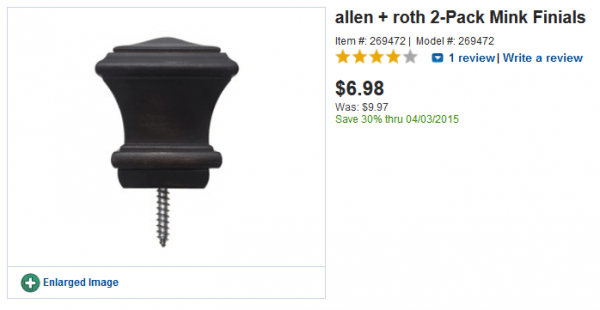
You can find screw on end-caps in the curtain rod section of most home improvement stores. I picked mine up for $6.98 at Lowes. One thing to remember when picking out your caps. They DO NOT need to match the rod! Remember spray paint is your friend! You will want to paint these to match your rod regardless.
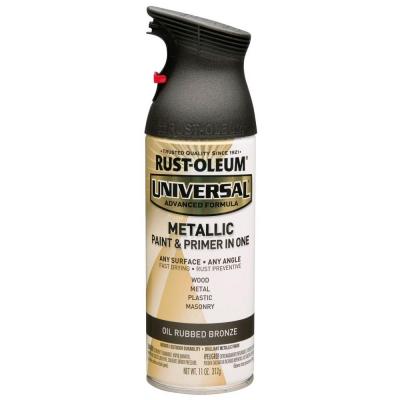
That being said, scuff up your end caps with steal wool or sandpaper. Again, wipe down with a wet rag to remove excess dust. Once dry, you can then proceed to paint.
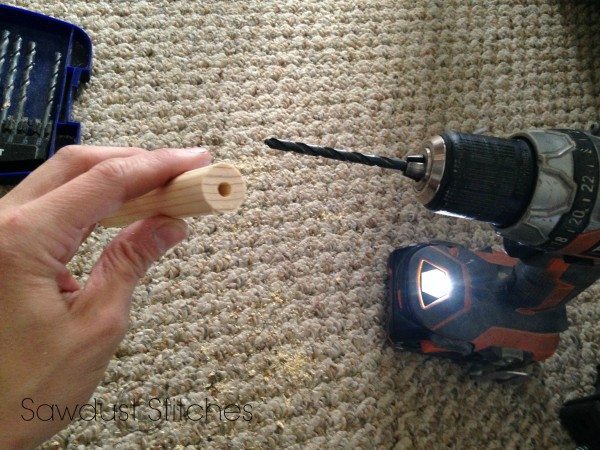
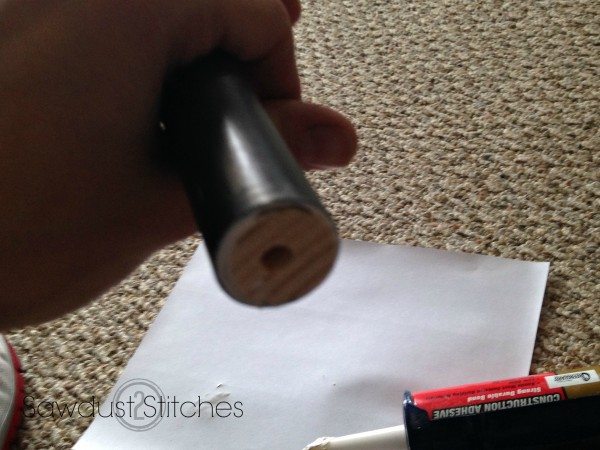
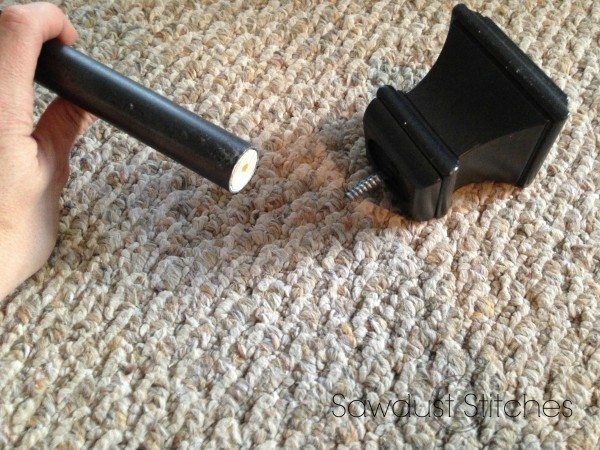
While that is drying you can move on to the next part of our project. Attaching the end caps! To do this I used (2) 6″ sections of 3/4″ dowel rod.

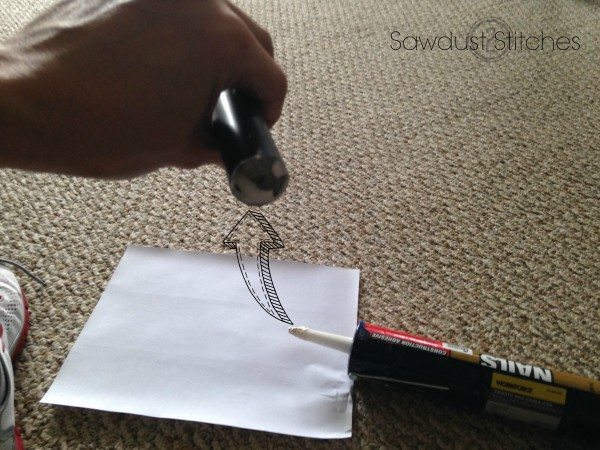
To secure the dowel rod, I used Liquid Nails, worked like a charm! I just put a VERY liberal mount inside the conduit.


So, take a look around, are you in need of curtain rods, or simply need to update, or replace bowing/short rods? This conduit curtain rod is the best bang for your buck, and it comes in countless finishes 🙂
Take Luck,
Corey


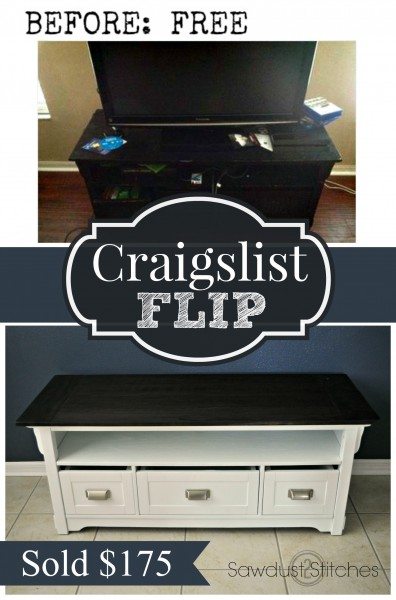
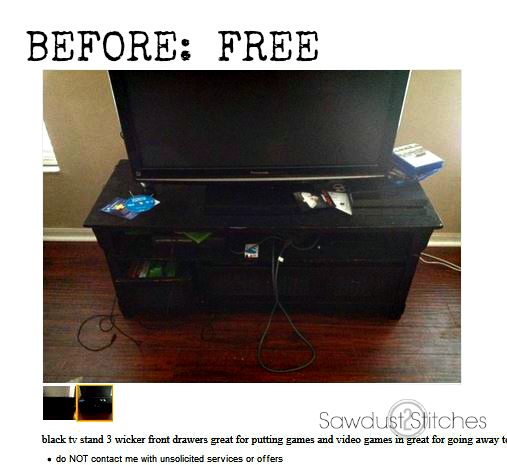
So Andrew (My Husband) brought it home, and I honestly didn’t touch it for a few days. I was not really sure if I wanted to completely change the entire thing, or go the easy route, and just refinish it. This time I opted for the easy easier route.
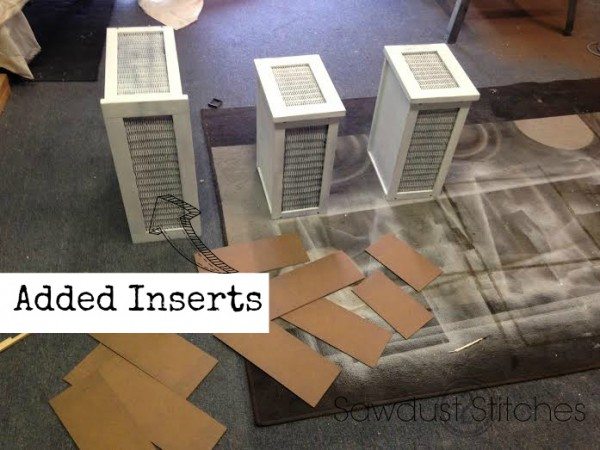
I was originally planning on simply painting all of the wicker drawers, but after a few coats, I realized it is NOT the look I was going for. So I re-grouped and decided to add paneling to the sides, and cover the wicker. I used construction glue, and caulked the edges to create a finished look. It worked like a charm. I then resumed priming the newly resurfaced bins.

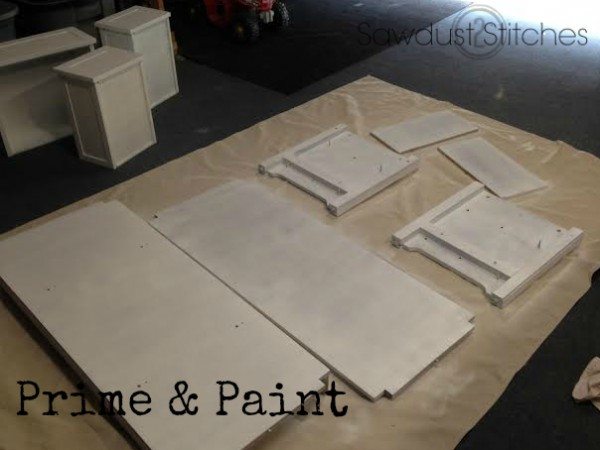
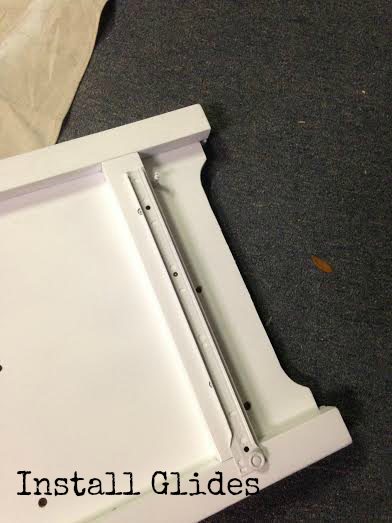
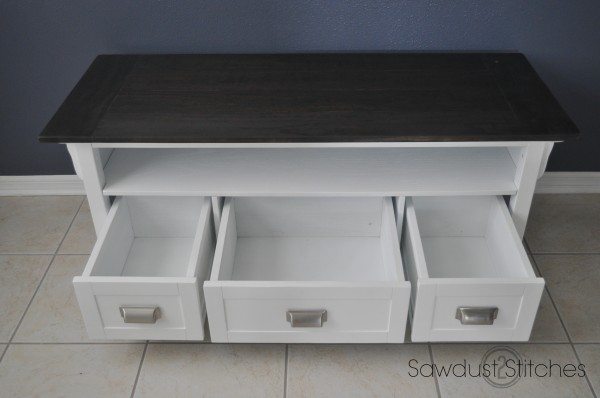
Once all of the paint dried, I re-attached all of the drawer-glides, and then reassembled.
At this point the whole unit was white, and looked very dull. It needed some two-tone action!
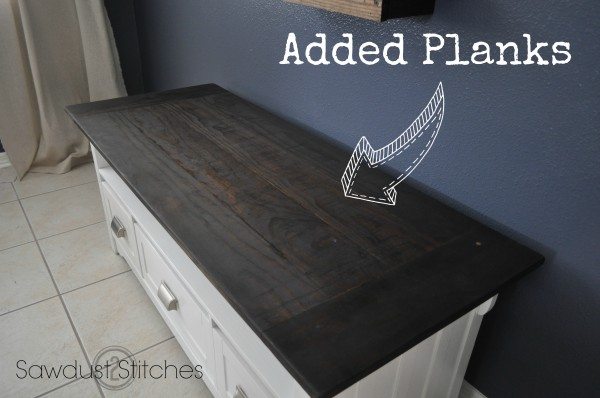
I opted for Minwax Jacobean Stain for the top, and followed up with a coat of Satin Polyurethane.


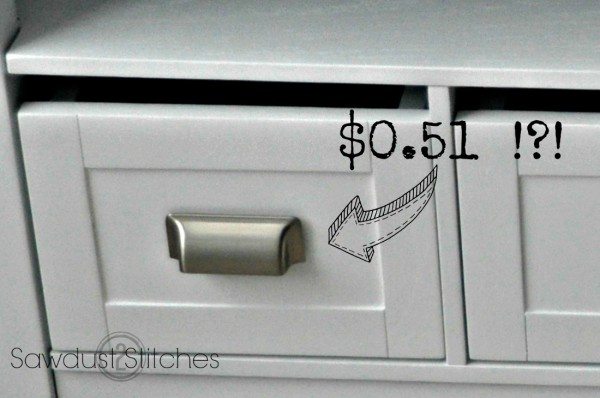
So let’s break it down..
I listed it on Craigslist and it sold within a day! All in all, I will call it a win!
Thanks for stopping by!
Corey
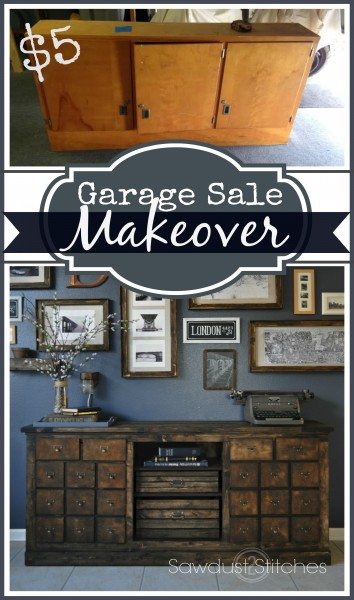
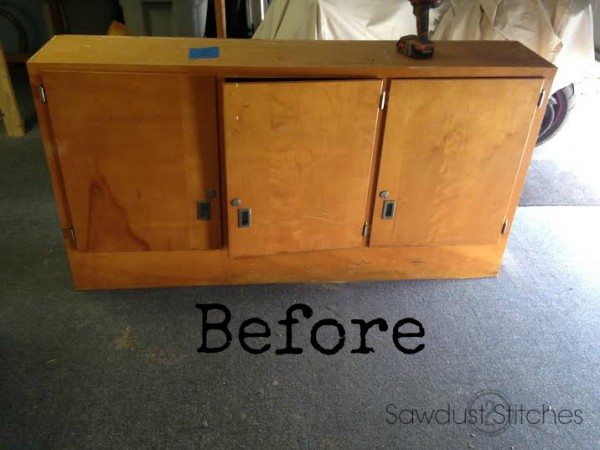
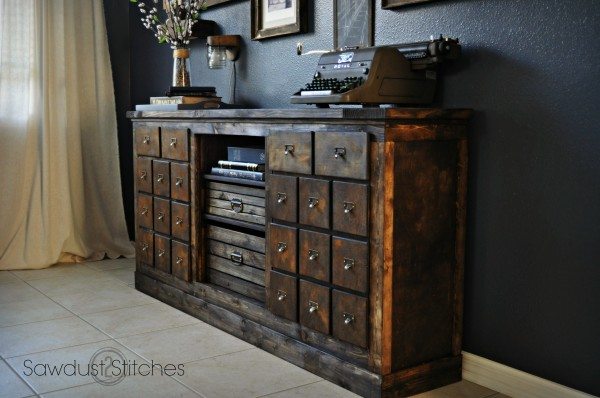
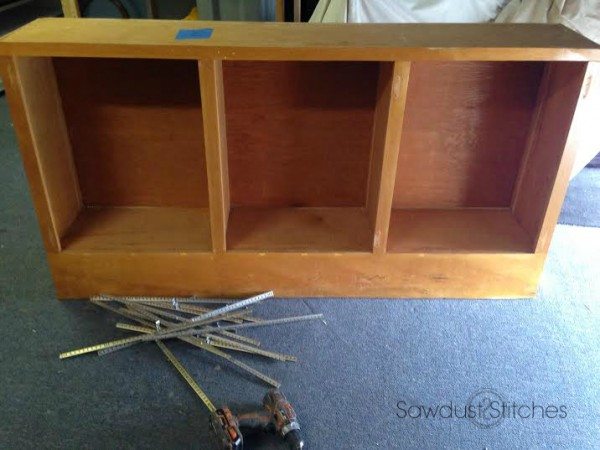
Picked up this beauty at a garage sale for $5.00 a while back. It wasn’t much to look at, but it was all wood, and a decent size and shape. In all honesty I had no clue what I was going to do with it, but I couldn’t just pass it up!
After a few weeks of walking past it in my garage, I started getting some ideas, and I really wanted my garage space back! So I jumped right in.
This is not really a tutorial per-Se , but you can follow along and see the steps I took to get there.
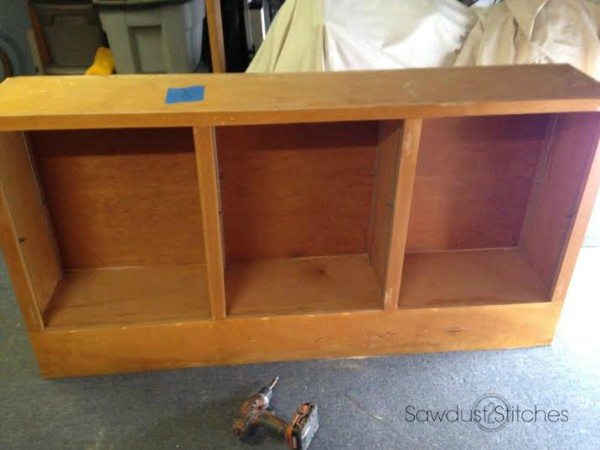
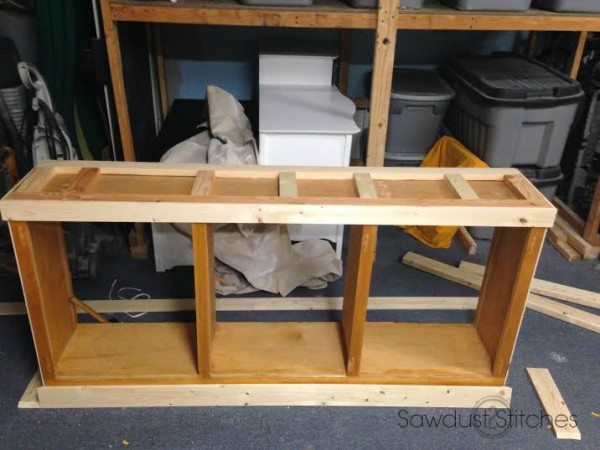
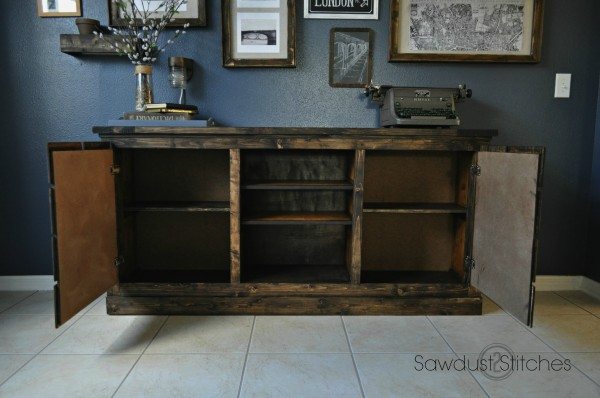
I started by dismantling the doors.
I then removed all the hardware. ( There was metal shelving brackets.)
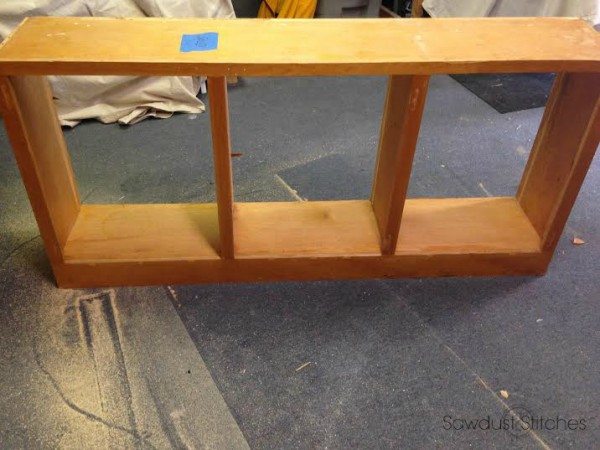
Next, I removed the back panel, and then sanded down the entire unit. 
I then started trimming out all the corners and edges. (Again, you can see more details about this process, here.)
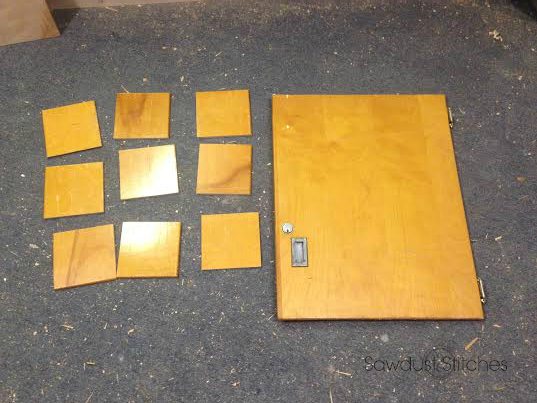
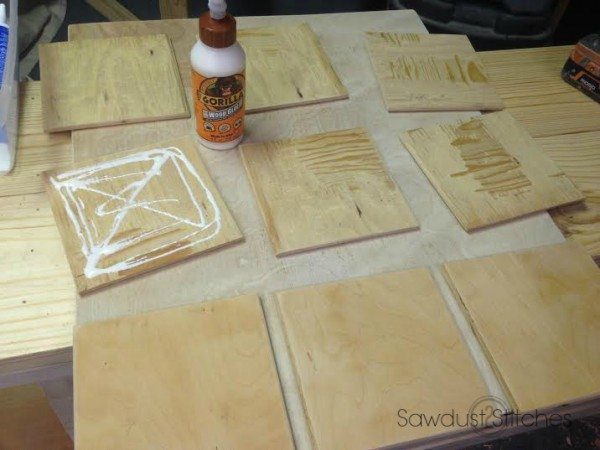
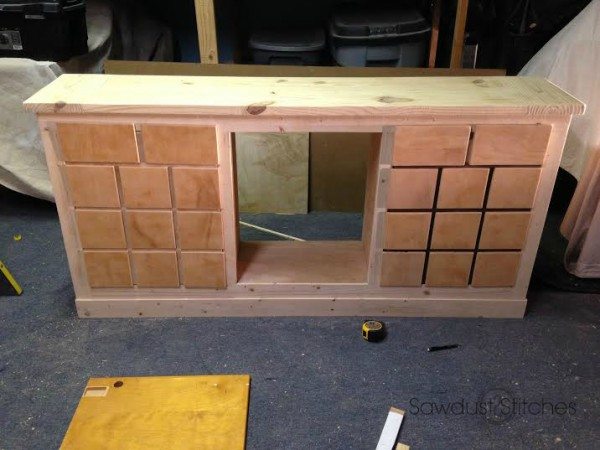
Next step was the doors. I opted to go with the “Apothecary Cabinet” style. 
They are just faux drawer fronts, made to look like functioning apothecary drawers. 
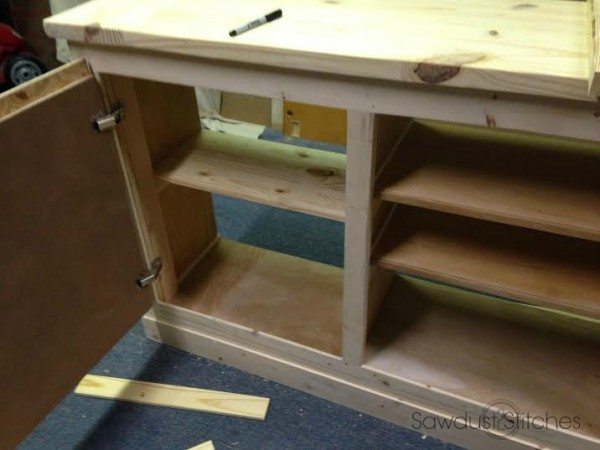
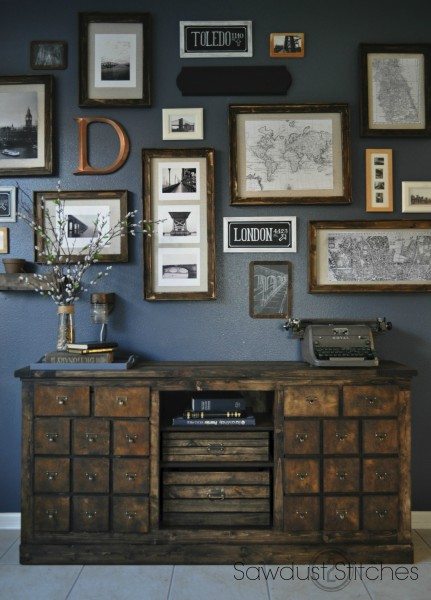
See look how pretty! I used concealed hinges so that it would hide the fact that they aren’t real drawers. If you want more info on installing the doors you can see my
“Apothecary Cabinet” tutorial.
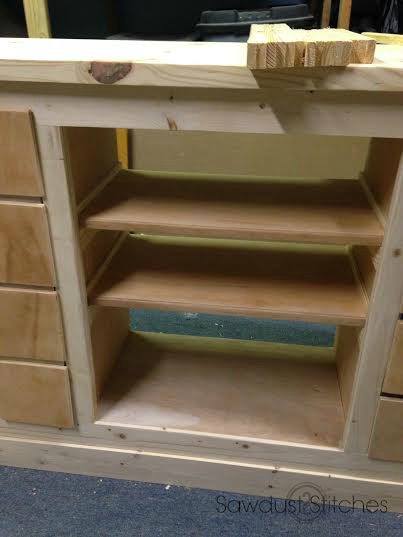
Instead of making the entire cabinet hidden, I decided to add some exposed shelving.
I also added interior shelving , for practicality purposes.
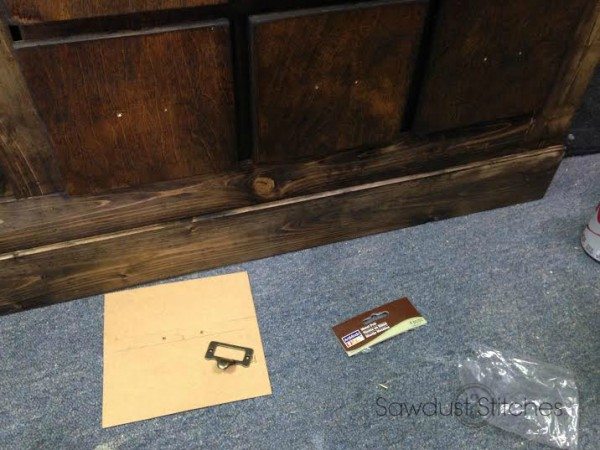
Now it’s time for the finishing touches. I stained it Jacobean by Minwax, and then added pulls that I found at Michaels! Nice, right ! ?
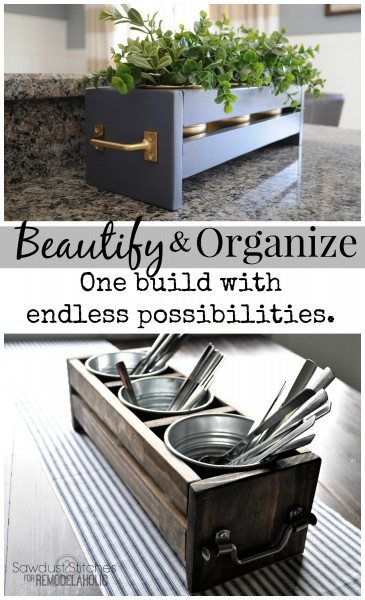
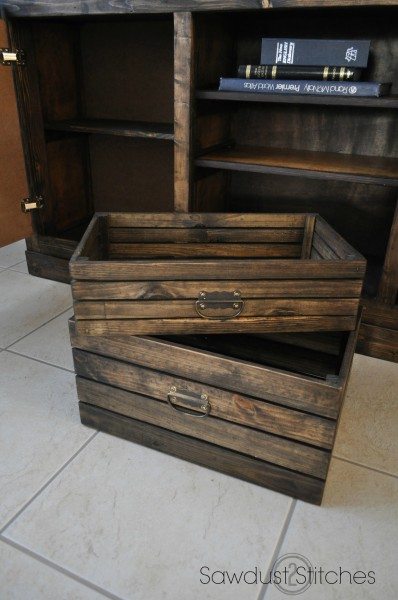
I decided it needed a few last finishing touches. It needed crates! Just a couple of 1×2’s, 1×3’s and handles! Voila, custom made crates.
Look how pretty! 
Cost Breakdown :
Total Cost $46.00! I flipped it, and sold it for $375. 00
Enjoy, and Happy Holidays!
Corey