• Blog
  • About
  • Press
  • Privacy

Let’s be social!

  • Skip to primary navigation
  • Skip to main content
  • Skip to primary sidebar
  • Skip to footer
Sawdust 2 Stitches

Sawdust 2 Stitches

  • Tutorials
    • Around the House
    • Organization
    • Wall Decor
    • Sewing
  • Makeovers
    • R.V.
    • Room Makeover
    • Furniture Makeover
    • Decor Makeover
  • Build Plans
    • Small Builds
    • Wall Decor
    • Dresser
    • Tables
    • Seating
    • Shelving
    • Hidden Compartment
  • Seasonal
    • Summer
    • Spring
    • Fall
    • Winter
  • Home Tours
    • First Home
    • Current Home
    • 70’s Ranch Home
  • Workshop

Blog

How to: Faux Brick Wall

June 14, 2016

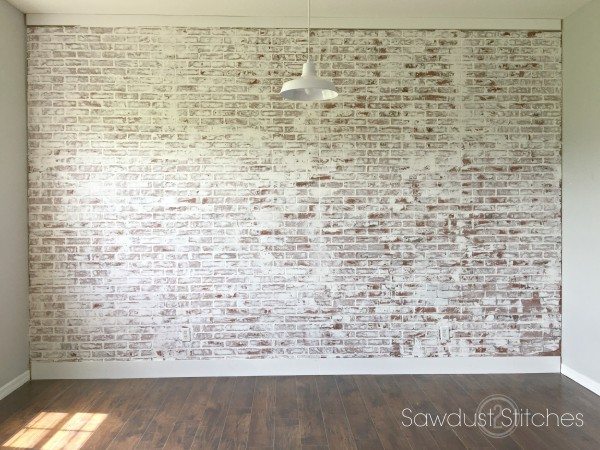
Hey all!  We did it, we moved!  I apologize for the delay in new projects, but we have been a touch busy. I am finally ready to share with you one of my very first projects in the new house, and I have got to say I am in LOVE with it.  It all started with this very large blank wall in out dining room/kitchen.  I really wanted the wall to make a statement without adding hanging wall decor.  My first instinct was shiplap,  but I wanted to try something new! Ever since I made my sons “Fire Station”  I have wanted to use the brick paneling elsewhere.  This was my chance a faux brick wall!

Sawdust2Stitches How to create a realistic Brick wall using faux paneling!

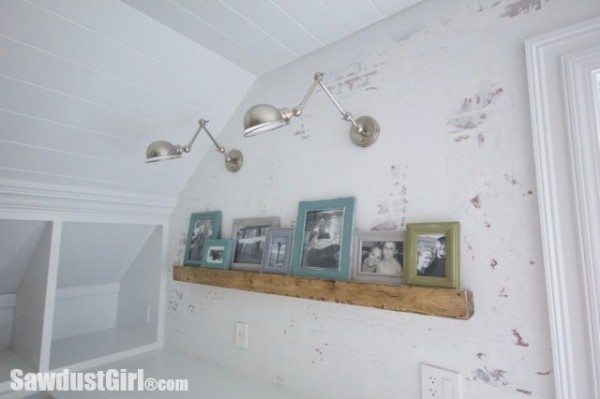
I wanted to white wash it, and my sister suggested I try a “German Schmear” technique.  I loved the idea!  Lucky for me Sandra AKA “Sawdust Girl” recently did something  a little different, with a TON of character, so if you like my wall, you will LOVE her faux brick wall!picture_rail_faux_reclaimed_beam20
 How to: Faux Brick Wall

Materials Used – Faux Brick Wall:

  • Brick Paneling ($25 a piece)
  • Wall Spackle ($6 per quart)
  • White Wash

(  It averaged out to be about 1 quart of spackle per 4’x 8′ panel.)

Tools Suggested – Faux Brick Wall:

  • Table Saw
  • Nail Gun
  • Spackle Knife
  • Paint Brush

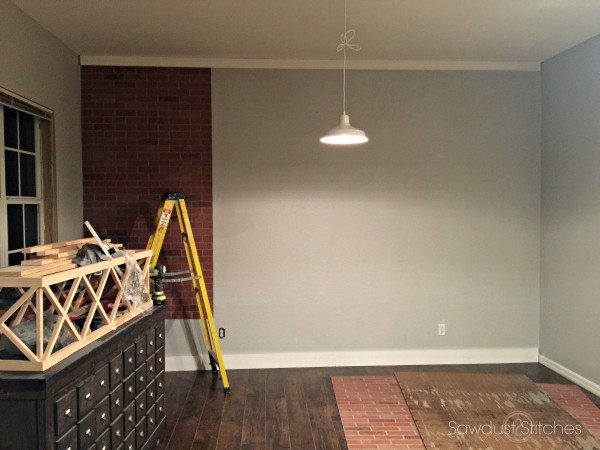
So here is the thing… I freaking love this house, it has nice tall ceilings! On the flip side the 8′ brick panels didn’t really cut it. So I kind of needed to puzzle piece my wall together.
How to Faux Brick Panel Wall

 How to: Faux Brick Wall – Attaching Brick Paneling

Initially, I had TRIED to cut the bricks in a zig-zag pattern so that none of the bricks would be cut in half where the panels ended. Again,  I TRIED!  (Look at the picture. Proof: one such panel is laying on the ground.)   It was not happening. I got mad and impatient and just slapped the entire panel up.

Here is the thing, the panels are made so that they will go together.  So no, it is not perfect, but it was good enough for me.  Plus, I knew I was planning on adding a few layers, and I crossed my fingers that it would cover the seams.

In order to attach the panel to the wall, I used finish nails.  I would suggest securing it with liquid nails or caulk, but  I change my mind with decor so much I wanted the option of taking this down. So,  I  just used the finish nails. ( A LOT of them.) When securing the panel to the wall, make sure you tack throughout the middle of the panel, as well as around the edges.
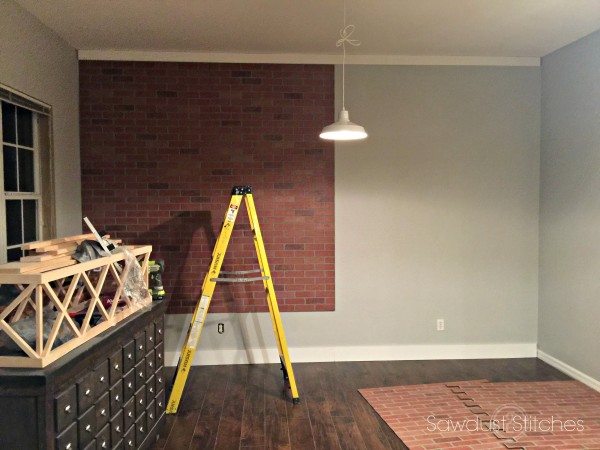
How to apply Faux Brick Panel

Even without adding my top layer of spackle and paint, I think that the seams are pretty well hidden.
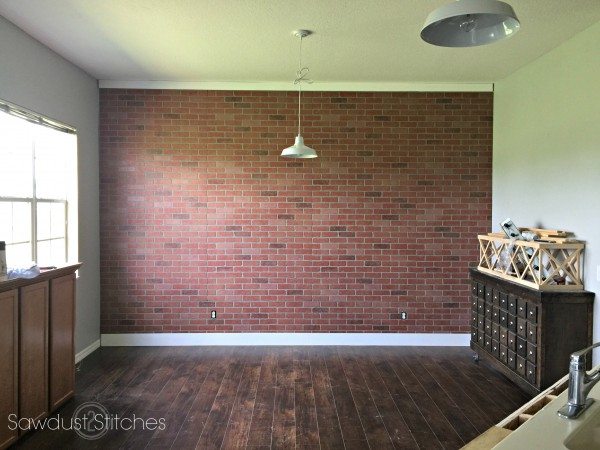
-How to Faux Brick wall Panel by Sawdust2stitches.com

How to: Faux Brick Wall – The Spackle

Now for the fun part!  Try as I may I didn’t know how to show you this technique without a video.  So here I am in all of my late night, all day work, glory.

I know this looks like it would take FOR-E-VER, but really it wasn’t too painful. Honest.  After a few hours of  DIRTY  work and 3 containers of spackle later, I had a gorgeous statement wall.
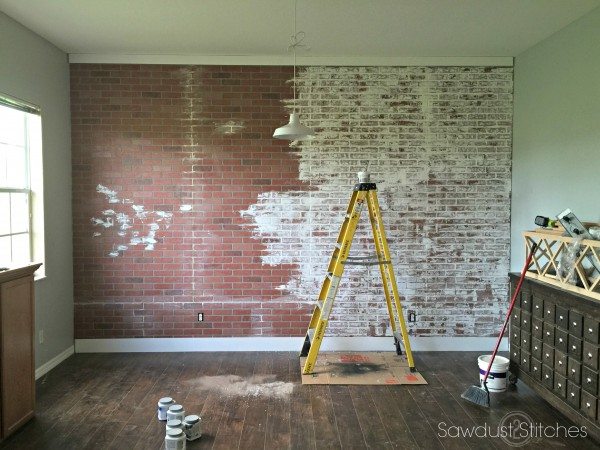
faux brick panel

Look at that texture, and would you ever guess I am taking a picture of the seam?!  Yup, that is a close up of the seam!
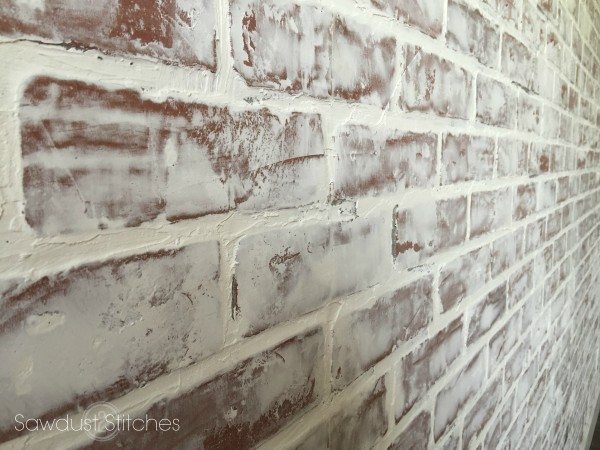
faux brick paneling by www.sawdust2stitches.com

How to: Faux Brick Wall – The Top Coat

Once the spackle had completely dried, I needed to top coat it. ( Plaster is a chalky consistency, and can rub off on clothing and little hands if it is not sealed.)  You can purchase a “white wash” from most home improvement stores, or you can make your own by watering down a white paint or primer.  (Which is what I did.)

I have gotten a lot of questions about the  top coat, so  I  made a sample  using different paint/water ratios.  IF you want more brick exposed, I THINK  that a “Acrylic Clear Poly”  would work.  Definitely  test an area before trying,  I am just giving you my BEST GUESS.
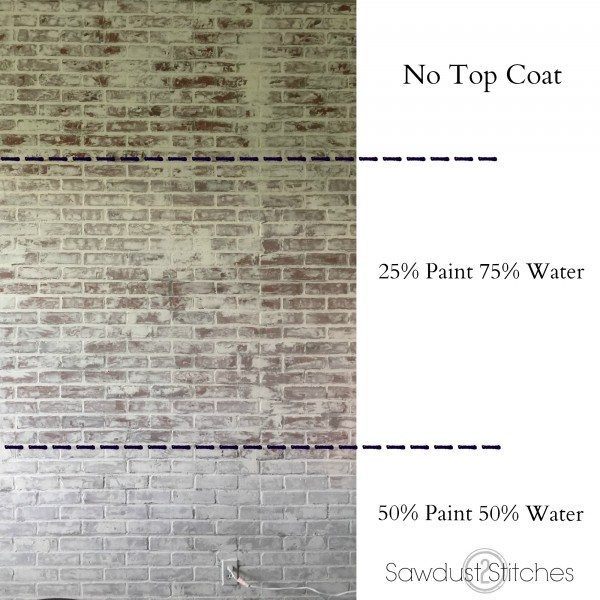
White Washing Brick Sawdust2Stitches.com
2016-06-05 11.35.032

 So there you have it folks, a gorgeous faux brick wall that adds a whole lot of character with zero clutter!

 Take Luck,
Corey
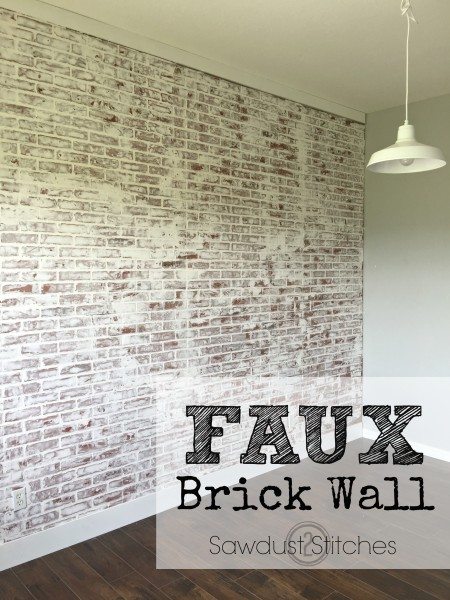
Sawdust2stitches How to create a realistic Faux Brick wall out of paneling.

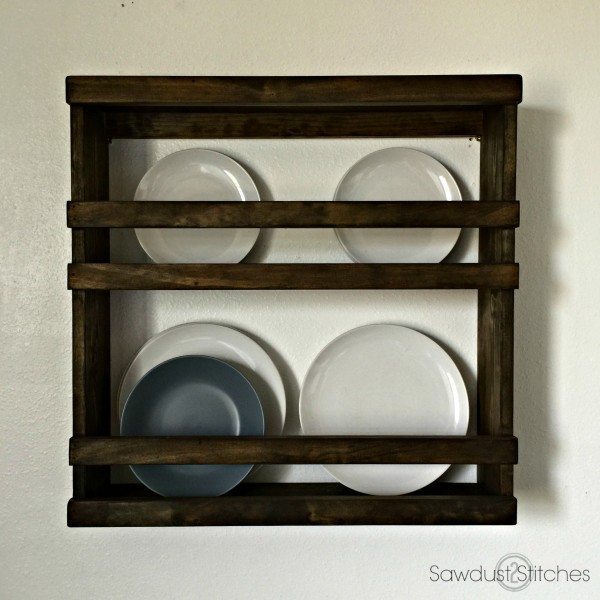
Pottery Barn Inspired Plate Rack

May 29, 2016

Hey there! Join us on Instagram and Facebook  to keep up with our most recent projects and sneak peeks!

Supplies Used:

  • (2) 1″ x 6″ boards (96″)
  • (2) 1″ x 2″ boards (96″)
  • Stain
  • Nail Filler
  • 2″ 16 Gauge Nails
  • Wood Glue


Tools Suggested:

  • Miter Saw
  • Nail Gun
  • Sander
  • Tape Measure

Disclosure: Some of the links provided  are affiliate links. By purchasing through these links it supports this site and helps keep content free. You can read more about how we do this with no extra cost to you.


Step 1. Prep Boards

 Cut List:

1″ x 6″ Board

  • (2) 25 1/2″
  • (3) 24

1″ x 2″ Board

  • (5) 25 1/2″
  • (1) 24″

 Step 2. Frame

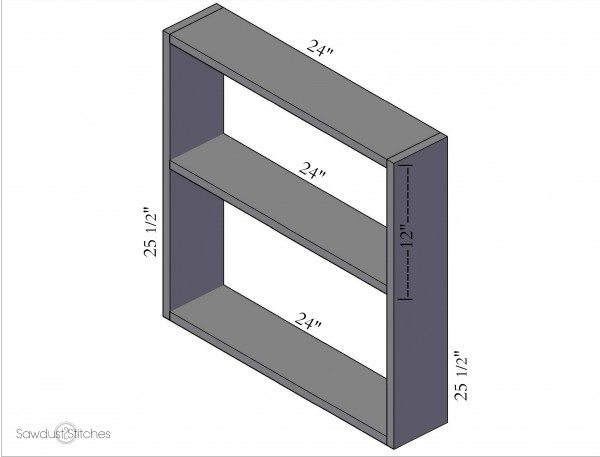
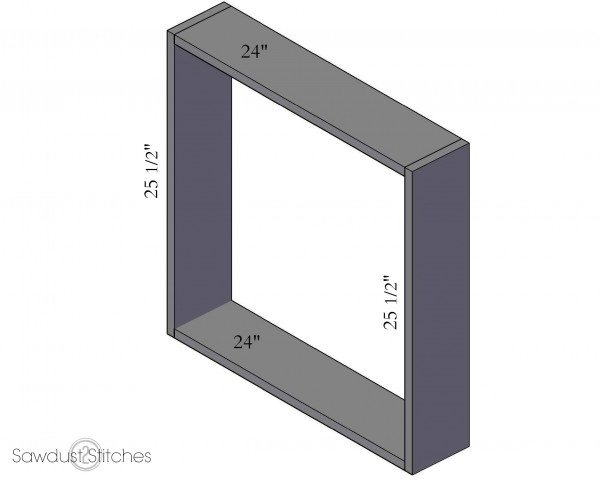
Join both 25 1/2″ and 24″ 1×6″ boards using wood glue and 2 inch, 16 gauge finishing nails. This will form a 25 1/2″ square. Insert remaining 24″ 1×6″ board so that the bottom of the board is 12″ from the top of the unit. Then secure using glue and 2″ 16 gauge finishing nails.

Plate Rack Step 1 by Sawdust 2 Stitches

Step 3. Front Rails

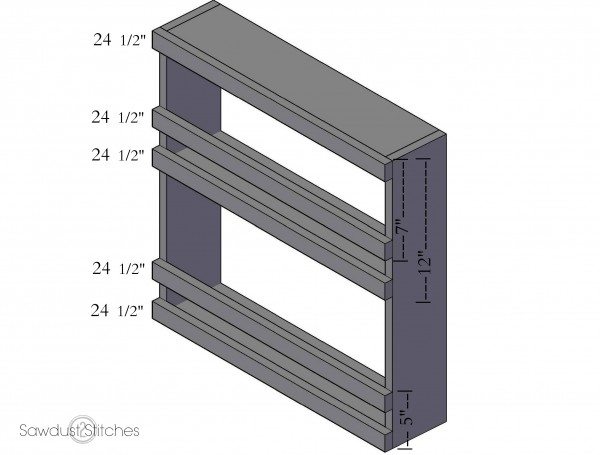
Attach the 25 1/2″ 1×2″ board(s) to the face of the unit using wood glue and 2 inch 16 gauge finishing nails.Plate Rack Step 2 Sawdust 2 Stitches

Step 4. Back Support

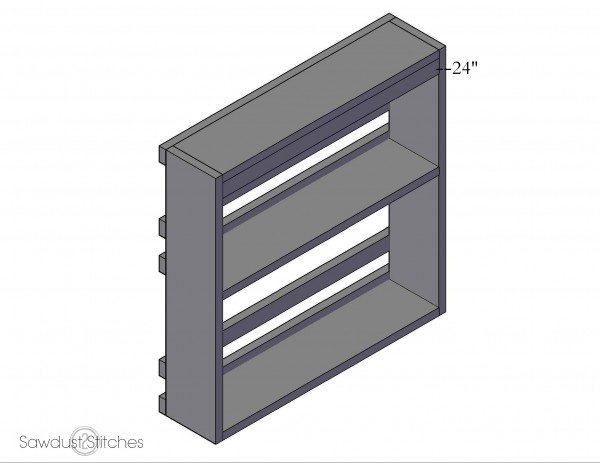
Attach the remaining 24″ 1×2″board using wood glue and 2 inch 16 gauge finishing nails. This is an ideal place to attach the unit to the wall, or you can attach hanging hardware to the back.

Plate Rack 3 by Sawdust 2 Stitches

Step 5. Finish

Fill all nail holes with wood filler. Sand smooth, then apply desire stain and/or paint.

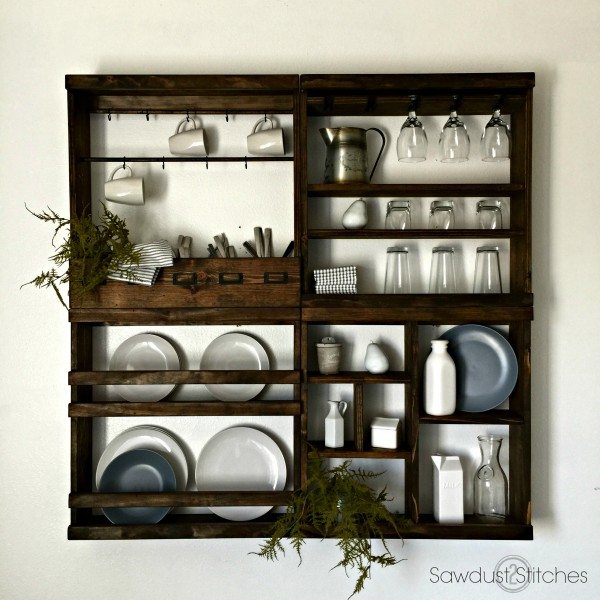
 That is all there is to it!  You can use it stand alone, or you can combine it with others !

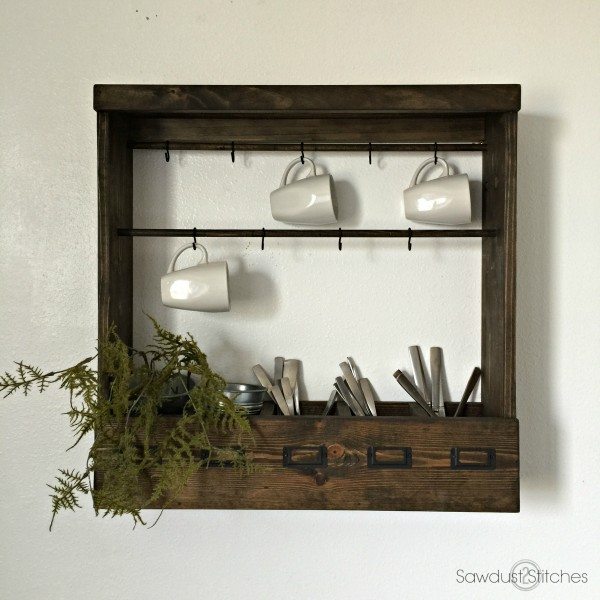
 Pottery Barn Inspired Mug RackMug Rack by Sawdust 2 Stitches

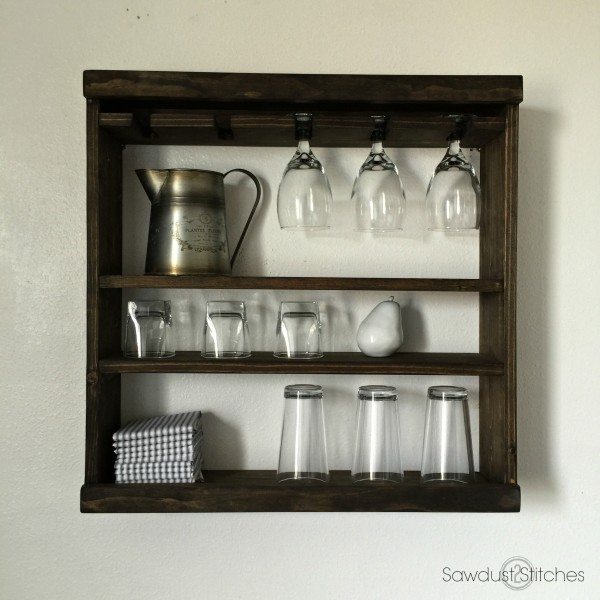
Pottery Barn Inspired Glass Rack Glass Rack Shelving by Sawdust 2 Stitches

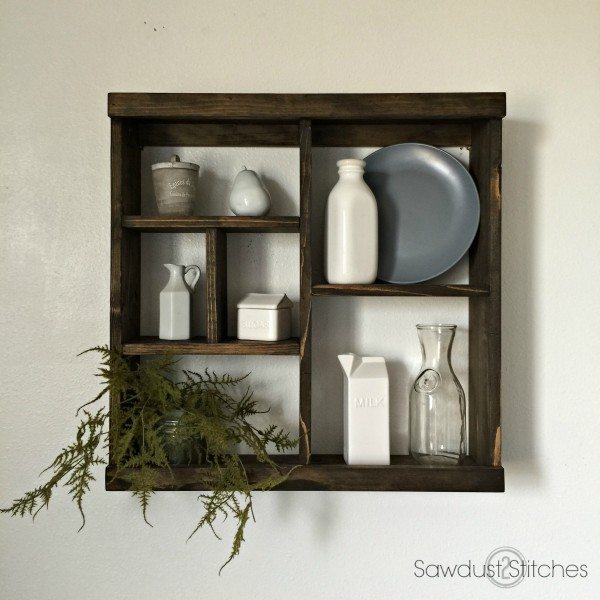
Pottery Barn Inspired Cubby Shelf Cubby Kitchen Rack by Sawdust 2 Stitches

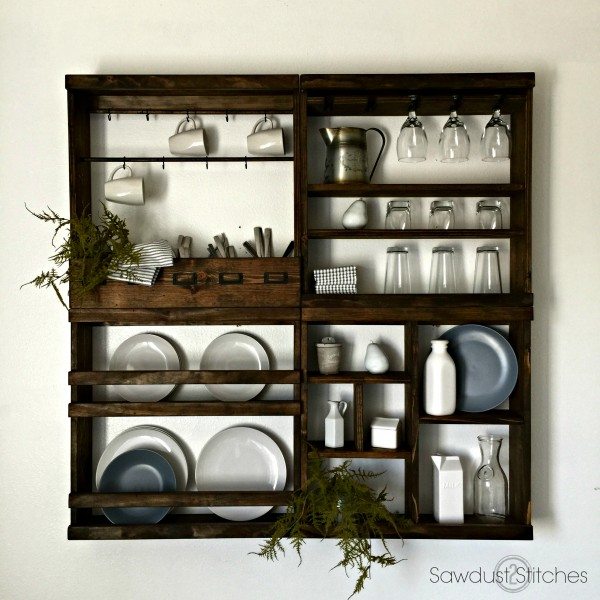
Modular Kitchen Shelving by Sawdust 2 stitches


For sneak peeks of my upcoming projects be sure to follow me on Facebook and Instagram. You can also, follow me on Pinterest to get tons of projects plans from all around the web!

Concrete Wall and Backsplash

May 5, 2016

Concrete Backsplash & Wall - Uncookie Cutter for Sawdust 2 StitchesHi all! It’s April back here again from Uncookie Cutter and I’m here to share another fun project with you this month. I’ve been busy working on my husbands office and it’s been interesting for sure. I’ve run into all kinds of setbacks – you can read more about the progress HERE. I’m trying to save as much money as possible, and I wanted a cheap way to finish the countertops and backsplash on the cabinet side of the office. Here’s a picture of what I started with.

Concrete Backsplash & Wall - Uncookie Cutter for Sawdust 2 Stitches

I had an extra bag of $5 concrete laying in the garage, and when I saw THIS bathroom vanity from Tasha at Designer Trapped in a Lawyer’s Body, it hit me! I don’t know why, but I decided to try and turn not only the countertop, but the backsplash and the entire back wall in concrete. So, I started out following Tasha’s directions. She has a great tutorial, but I had to do a few things differently. To start with, I couldn’t find any concrete that wasn’t filled with rocks. So, I sifted out the rocks. If you are going to do an overlay, the rocks won’t work. Make sure to wear a dust mask and goggles, this part is dusty!

Concrete Backsplash & Wall - Uncookie Cutter for Sawdust 2 Stitches


Then, to get a more grey color, as opposed to the tan natural color of concrete, I added some of this concrete color. The easiest way to use this concrete color mix is to mix it in the water first (just like the directions say), otherwise you’ll waste a lot of time trying to work the color through uniformly. I made sure to measure the concrete to water ratio, so I would get a uniform color each time I mixed some new concrete. This whole project took less than a bag of concrete, but you do have to work fast so it doesn’t dry out, or mix a little at a time.

Concrete Backsplash & Wall - Uncookie Cutter for Sawdust 2 Stitches

I started by trying to add the concrete directly to the top, but the laminate top had a little “bubble” in it and wouldn’t lay flat. So, I pulled it off. It was much easier to get the concrete to lay on the particle board than on the laminate top. The particle board also wasn’t as slick, so I got a better “grip”.

Concrete Backsplash & Wall - Uncookie Cutter for Sawdust 2 Stitches

Concrete Backsplash & Wall - Uncookie Cutter for Sawdust 2 Stitches

I did the countertop just like Tasha suggested, but when I got to the backsplash and wall, I started to have trouble. The best way I could find was to hold the concrete in my hand and just sort of rub it in, going in circular motion and being careful not to rub off the concrete already on. It would be a much better idea to wear gloves :).

Concrete Backsplash & Wall - Uncookie Cutter for Sawdust 2 Stitches

After the first layer, it was looking like this.

Concrete Backsplash & Wall - Uncookie Cutter for Sawdust 2 Stitches

Once I got one layer on, and let it dry, I started with the second. This was the hardest, because if I wasn’t careful, it would “pull” the first layer off. It took getting just the right consistency and lots of practice. Concrete Backsplash & Wall - Uncookie Cutter for Sawdust 2 Stitches

The great thing about concrete is, that it cleans up really nicely and easily. So, don’t worry so much about making a mess – I certainly made a huge one. But, clean up really is a breeze. A little tip is get up any big chunks while it’s still wet, but when the thin layers dry, it wipes off very easily with a dry cloth.


For the third layer, I went very, very thin. Almost like a water and scraped it on. Since the wall and backsplash are vertical, I had to keep moving until the concrete no longer dripped. I poured it onto the countertop and then scrapped it up the wall. This helped to fill in any gaps and even it out a little.

Concrete Backsplash & Wall - Uncookie Cutter for Sawdust 2 Stitches

I used one of these concrete smoother tools (official name) to smooth it all out.

Concrete Backsplash & Wall - Uncookie Cutter for Sawdust 2 Stitches

Once I was happy with the way it looked, I sealed it with a concrete sealer.

Concrete Backsplash & Wall - Uncookie Cutter for Sawdust 2 Stitches


Then, after sealing, I used about 3 coats of Polycrylic on top to really seal it all in, and give it a nice shiny, un-chipable surface.

Concrete Backsplash & Wall - Uncookie Cutter for Sawdust 2 Stitches

I only used the paint like Polycrylic on the countertop and backsplash. For the wall, I used the spray on polyurethane. I figure it wouldn’t have the same sort of traffic on the wall as I would in the middle area, and the spray paint is cheaper and easier.

Concrete Backsplash & Wall - Uncookie Cutter for Sawdust 2 Stitches

That’s pretty much it! I got this unique, masculine feature for under $25. The concrete was around $5, the color around $5 and I spent about $15 on Polycrylic and spray paint. I used leftover concrete sealer – it was such a small amount. I still have to finish painting the rest of the room and next week I’m going to attempt to lay porcelain tile! I’m a little nervous.

Concrete Backsplash & Wall - Uncookie Cutter for Sawdust 2 Stitches

Let me know if you have any questions!

Thanks Corey, for having me back and head over to my blog to see my other concrete project HERE. It’s becoming my new favorite medium!

April-Uncookie Cutter

Facebook Pinterest Instagram Twitter

Concrete Backsplash & Wall - Uncookie Cutter for Sawdust 2 Stitches


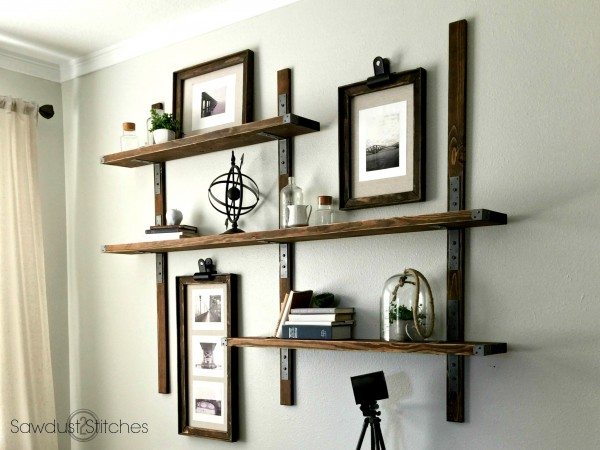
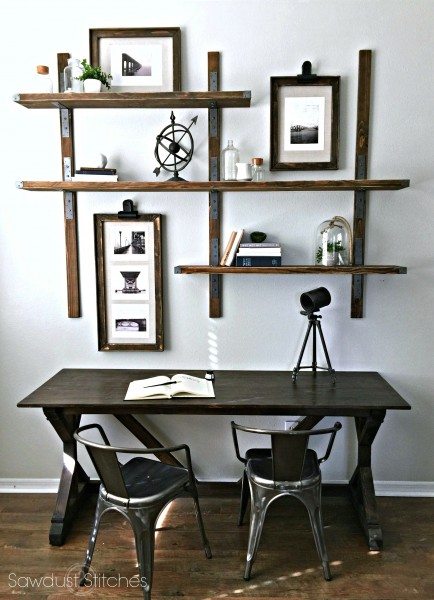
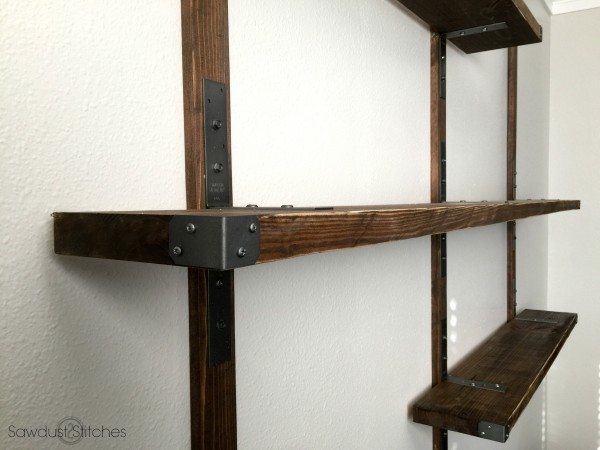
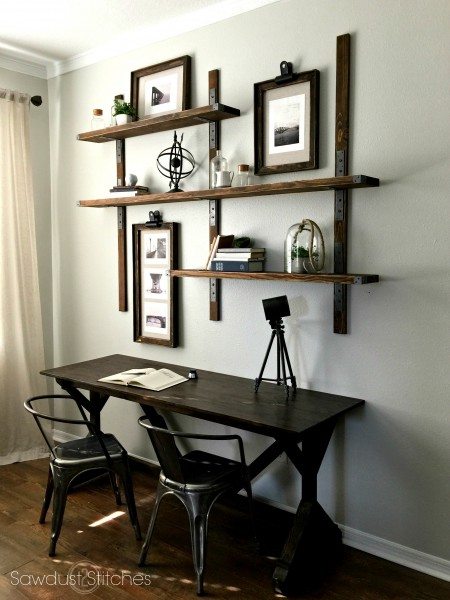
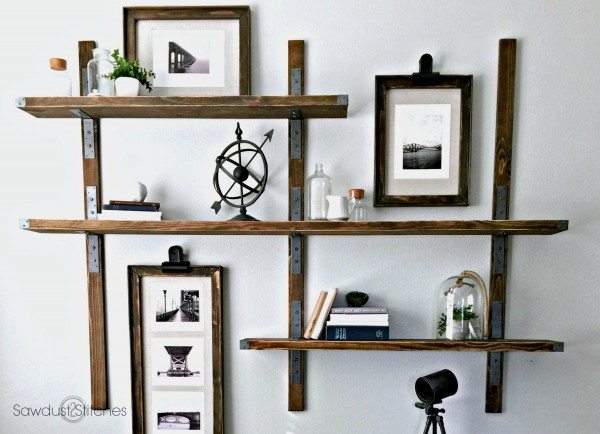
Simpson Strong-Tie Wall Mounted Shelves

April 29, 2016

DIY Industrial Style Shelving with Simpson Strong-tie 3


-Simpson Strong-tie rustic industrial 2shelves


It is no secret that I am a big fan of the “Industrial” style furniture sensation. I love the bold look of metal mixed with softer wood tones. It is just a perfect match! So when I decided to give my office a face lift I decided to bring in metal textures to create that perfect “Industrial meets Farmhouse” look. With a little help from Simpson Strong-tie,  I think I totally NAILED IT with these Industrial Style Shelves.
If you are not familiar with Simpson Strong-tie then you are in for a real treat! They have a large range of connectors and fasteners that can strengthen and add character to any build!  Make sure you check out many other ideas like this at DIY Done Right

Untitled

Supplies Used:

  • (3)- 1″x 3″ boards
  • (2)- 2″x 8″ boards
  • (14) A-66 Simpson Strong-Tie 6″x 6″
  • (6) A21Z Simpson Strong-Tie
  • (49) 3/4″ Hex Head Screws  (or you can use a finish washer and 3/4″ screws)
  • (7) 3″ Hex Head Screws  (or you can use a finish washer and 3/4″ screws)
  • (24) 3/4″ button screws
  • Spray Paint
  • Steel Wool
  • Stain
  • Sandpaper

Tools Suggested:

  • Miter Saw
  • Drill
  • Sander
  • Level
  • Tape Measure
  • Square
  • Pencil
  • Safety Glasses
  • Hearing Protection


Disclosure: Some of the links provided  are affiliate links. By purchasing through these links it supports this site and helps keep content free. You can read more about how we do this with no extra cost to you.


Step 1. Prep Boards

 Cut List:

(3) 1″x 3″ boards @ 58 1/2”

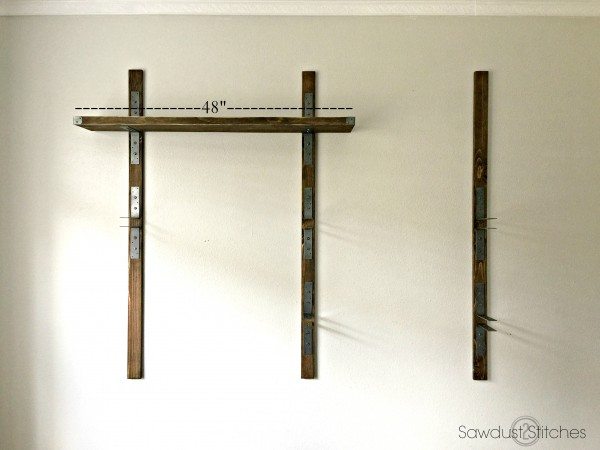
(2) 2″x 8″ boards @ 48″

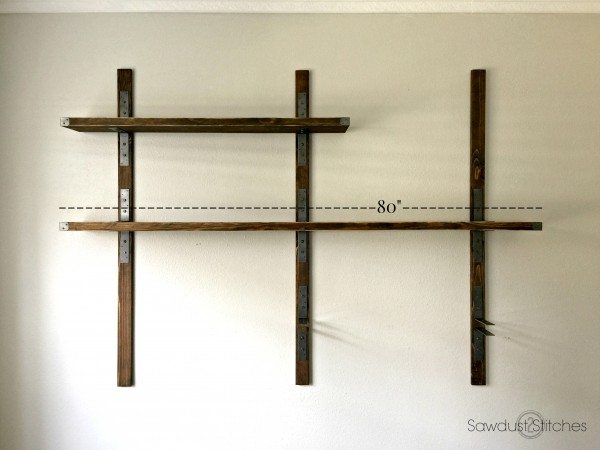
(1) 2″x 8″ boards @ 80″

Once cut, sand, and then finish with your preferred finish. I went with a “Dark Walnut”. Once it was completely dry I sanded down the edges a bit to give it a nice worn look.


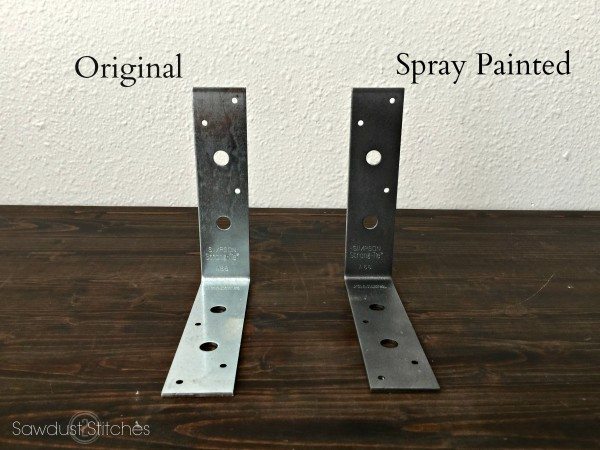
 Step 2. Paint Simpson Strong-tie connectors

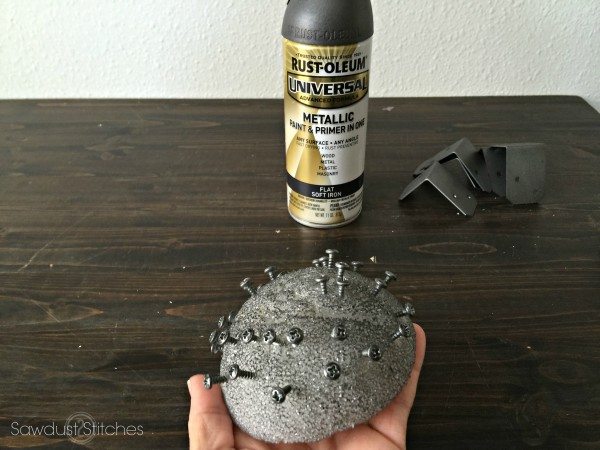
Next,  we are ready to give our hardware a little character! I wanted them to make a statement, but I still needed them to blend with the rest of the space. I opted for Rustoleum “Flat Iron Black”.  I spray painted all of my connectors and fasteners/screws all at once.

Industrial Style Shelving with Simpson Strong-tie

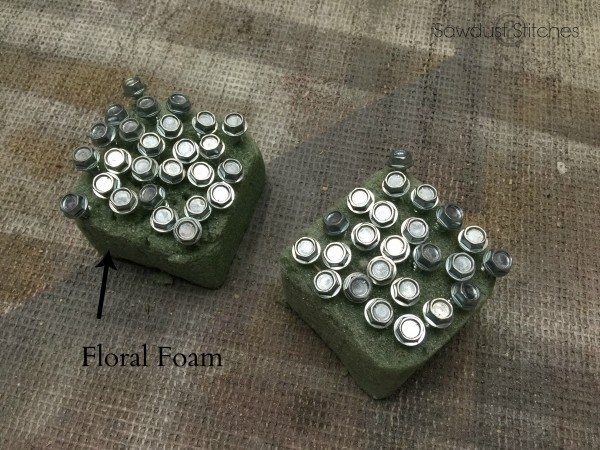
Here is a tip that I swear by; when painting screws, I like to enlist the help of craft/floral foam.  Simply push the screws/fasteners into the foam and go to town with spray paint! No rotating, flipping or chasing runaway screws. It is a total game changer!

Easy way to spray paint hardware

Easiest way to Spray paint your hardware


 Step 3. Attach Angle Connectors

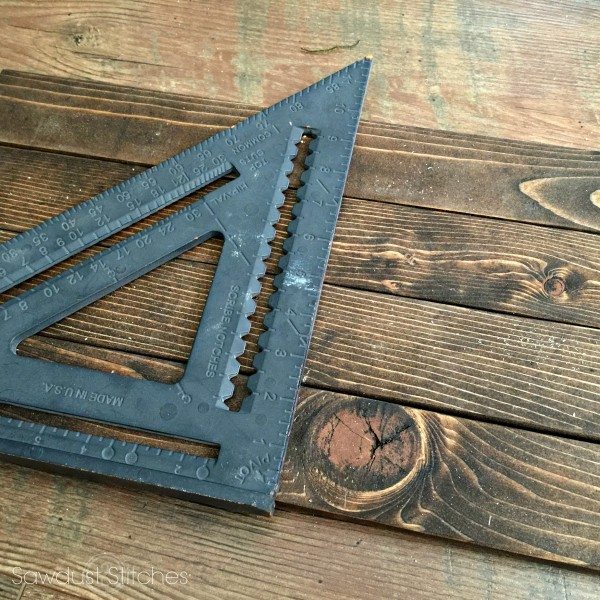
Begin by laying the 1″x 3″ boards next to each other. (Let’s pretend there are only 3 boards… I was planning on using 4 and then…plans changed alright ?!) Ok, so lay your 3  boards next to each other and use a contractors square to ensure they are all marked identically.

DIY industrial style shelves

03391e05-3e16-460f-9541-ff14ae2aa4ea

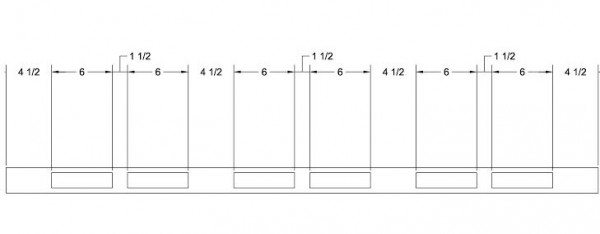
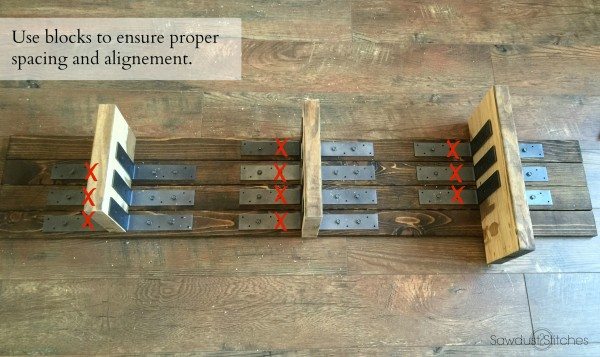
Using a hex head 3/4″ screw I attached the “A-66″ Simpson Strong-tie angle connectors to the 1″x 3″ boards. When attaching I did not fill some of the holes intended for screws.  I left them blank so that I could use them to secure them through the 1″x 3” and into the wall. (Basically don’t put hex screws in the red “x” ones. Reference the diagram below.)

2016-02-27 10.44.06 x

When installing I used a few pieces of cut off from my 2″x 8″ board to make sure:
1.) They all line up evenly, and

2.) That when I was ready to install the horizontal shelves they would fit! (If you have ever installed a joist hanger, you know what I am talking about:)


Step 4. Mount to Wall

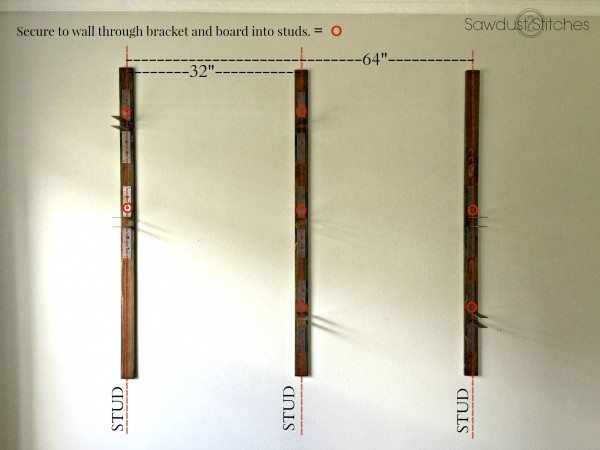
When mounting the 1″x 3″ boards to the wall, you want to make certain they are going into studs! Most standard walls have 16″ spaced studs. (Make sure you figure out your stud placement BEFORE planning your shelving configuration. Believe me I learned the hard way!)

Because my studs ARE 16″ from center to center, I chose to make my 1″x 3″ boards mounted 32″ apart. (16+16=32).
When attaching the 1″x 3″ boards to the wall I used 3″ hex head screws. (Although there are other options.) When installing make sure you have a level and tape measure hand to make sure you are installing them all level and uniformly!
Simpson Wall mounted industrial shelves

Now for the easy part,  installing the horizontal ledges.  I began with the top shelf first. I positioned in centered between the two wall mounts.  Then using the 3/4″ hex screws I secured the brackets to the top and the bottom of the 2″x 8″  board/shelf.

Simpson Industrial wall mounted shelves

Repeat the above step for the center shelf.

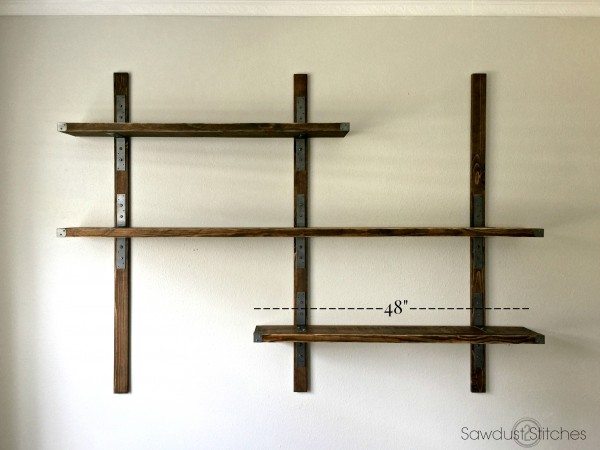
Simpson Industrial Wall mounted Shelves diy For the last one… I am guessing you can make some fairly accurate assumptions…

In the event you truly are really lost,  repeat the steps for the first two shelves.  Bless your heart.

Wall mounted industrial shelves with Simpson Brackets


Step 5. Make it PRETTY!

The last thing needed is the remaining Simpson Strong-tie angles. Using a small  3/4″ button screw I attached the angles to the end of all of the 2″x 8″ boards/shelves.

Industrial Style Floating Shelves using Simpson Strong-tie by Sawdust 2 Stitches

Just look at those corners, instant character!

Industrial Style Shelving using Simpson Strong-Tie connectors.

DIY Industrial Style Shelving with Simpson Strong-tie 4

Well, there you have it folks, the perfect blend of industrial, farmhouse, form, and function for the win!

If you love the this look be sure to check out other really great project ideas that use Simpson Strong-Tie hardware at DIYDoneRight!

You can also find Simpson Strong-Tie on Facebook, Twitter, and Instagram!

Rustic Industrial Shelves by Sawdust2stitches 5

For sneak peeks of my upcoming projects be sure to follow me on Facebook and Instagram. You can also, follow me on Pinterest to get tons of projects plans from all around the web!

 Take Luck,
Corey

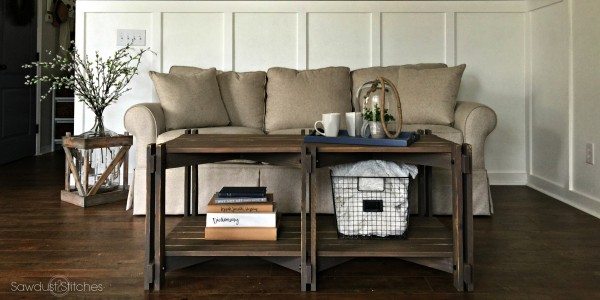
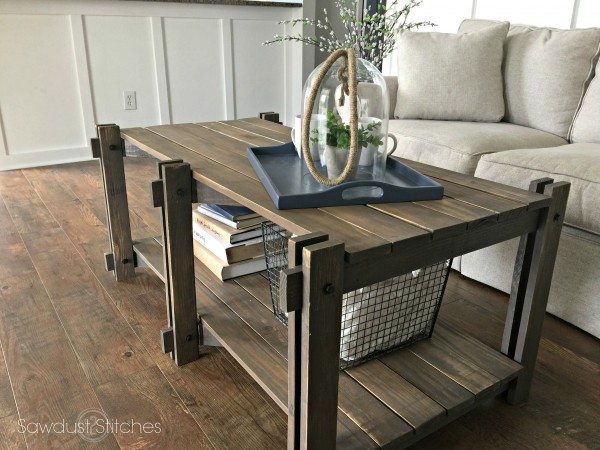
Rustic Farmhouse Coffee Table

April 14, 2016

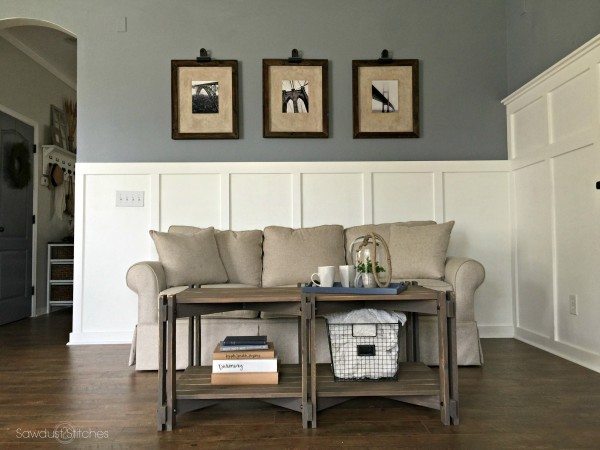
Rustic Coffee Table by Sawdust 2 Stitches

Hey there,  make sure you join  me on  Instagram and Facebook  to keep up with our most recent projects and sneak peeks!

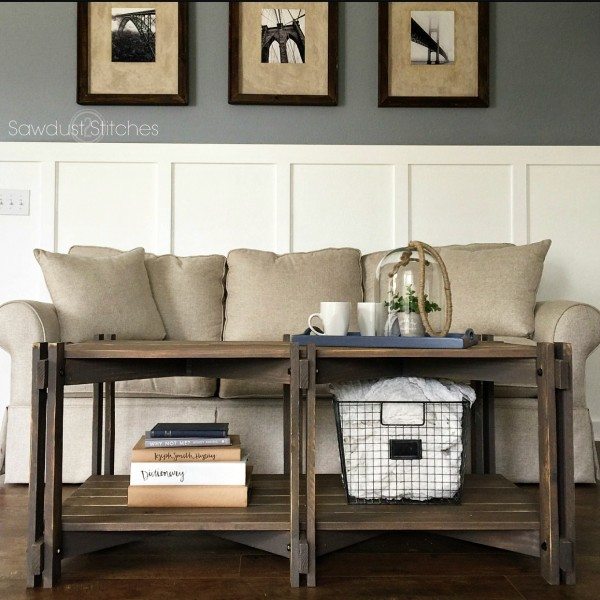
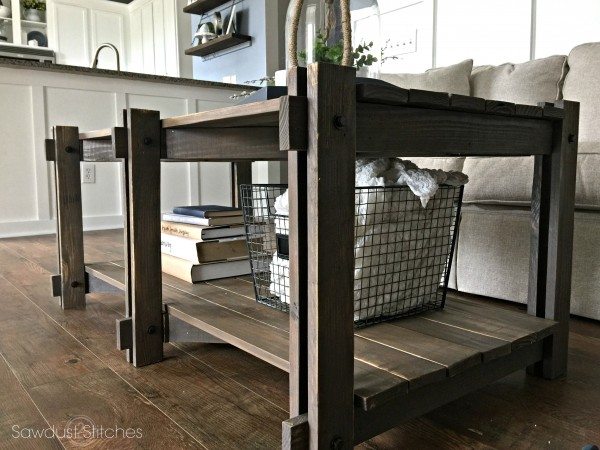
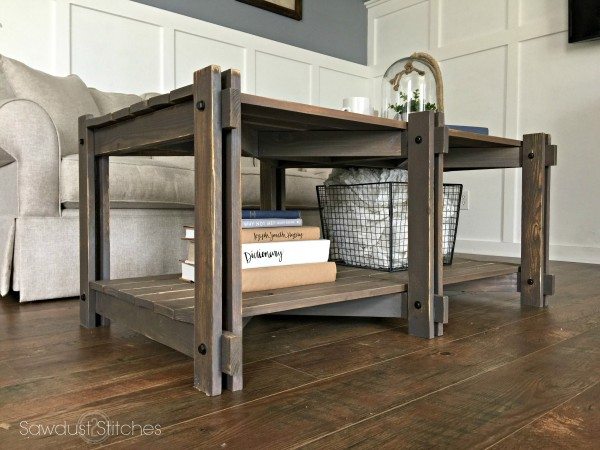
Today I am super excited to bring you some brand spankin’ new build plans!  Today I will be showing you how to build a Arhaus inspired Rustic Farmhouse Coffee Table.Rustic Farmhouse coffee table

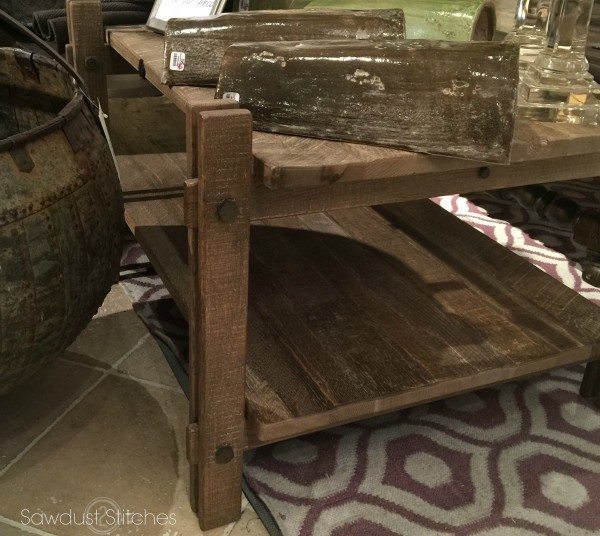
Recently,  I have been seeing a lot of pipe shelves and I  love the concept of boards/planks  spanning over the vertical pipe frames. So I got to thinking… I wanted to created the same concept using wood. Then one fateful day I came across an shelf that did just that! Arhaus has a discontinued line that embodied what my brain was trying to put together! (So stay tuned for accompanying pieces, because I have big plans!)

2016-02-23 11.19.28

I’m excited  to be  teaming  up with the great folks over at HomeRight on this  project! It is through  great companies like HomeRight and affiliate links that I can continue to provide all these tutorials at zero additional cost to my readers! So a big thank you to them!  (More info. available here.)  Make sure you enter to win your very own paint tent at the end of the post!Homeright Logo2

Rustic Farmhouse Coffee Table

Supplies Used:

  • (11 ) 1″x 3″ Boards
  • (6 ) 1″x 4″ Boards
  • (24)  3/4″ x 5/16″Hex Bolts (Optional)
  • (24) 5/16″ Washers
  • Spray Paint (Optional)
  • Stain and/or Paint
  • Wood Glue
  • 1 1/2″ Finish Nails
  • 1 1/4″ Wood Screws

Tools Suggested:

  • Drill
  • Drill Bit
  • Miter Saw
  • Nail Gun
  • Home Right Spray Tent
  • Home Right Finish Max Sprayer


Disclosure: Some of the links provided  are affiliate links. By purchasing through these links it supports this site and helps keep content free. You can read more about how we do this with no extra cost to you.


Step 1.

 Cut List:

1″x 3″=

  • (6)   @ 28″
  • (20) @ 21″
  • (4)   @ 20 1/2″
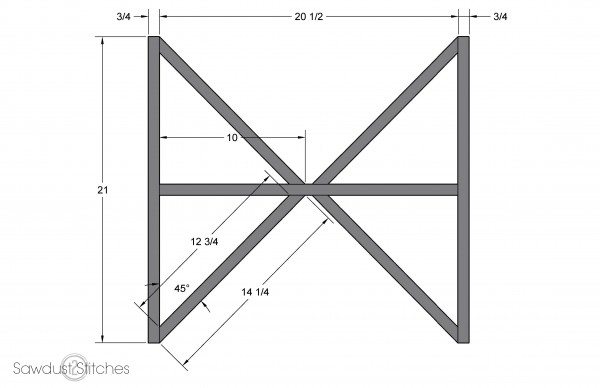
  • (16) @ 14 1/4″ with 45 degree angles (See Step 3. for more details)

1″x 4″=

  • (12) @ 48″

 Step 2.  Assemble Legs

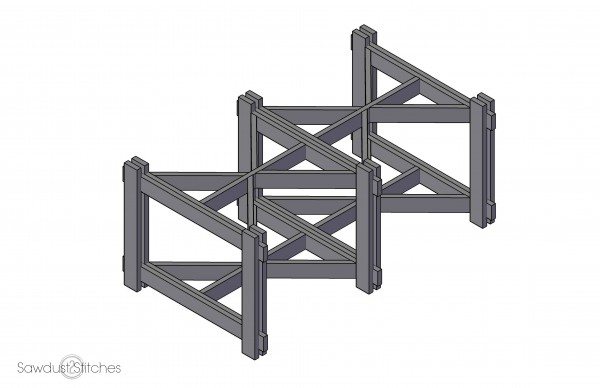
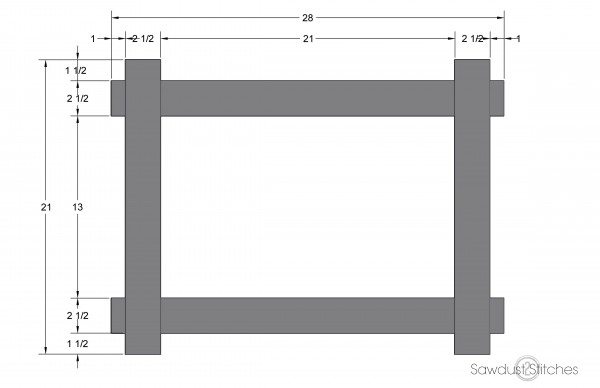
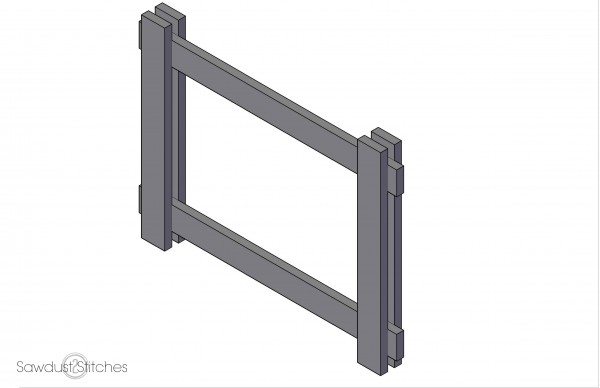
Sandwich the 28″ horizontal supports in-between the 21″ legs.  Use the diagram below to reference the correct spacing.   Use wood glue to secure and reinforce with 1 1/2″ finish nails. Repeat, and repeat. (You will need three of these.)
Rustic Farm House Coffee Table_Page_2

Rustic Farm House Coffee Table_Page_1


 Step 3.  Assemble “X” Supports

Assembling these are much easier than they look.  Use wood glue and and finish nails to secure all boards. When attaching the angle cut boards, first add glue, and then “toenail” it in place. (Essentially nail it at an angle.)  Then repeat, and repeat again, and again…  You are gonna need four of these suckers. Rustic Farm House Coffee Table_Page_3


  Step 4.  Spray Stain

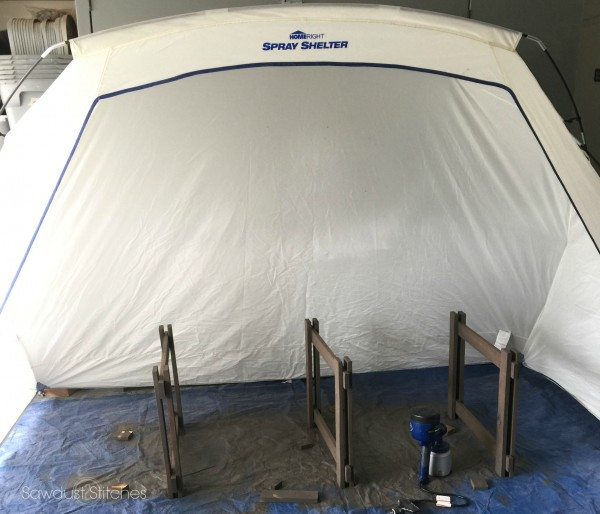
Time to add the finish.   For this project I knew I wanted it to be stained, but really  did not feel like getting in the all nooks and crannies of this build… and let’s face it, I am a touch impatient.  So I pulled out my trusty sprayer, and went to town. (Yes,  you can use stain in a sprayer!)  I just popped up my HomeRight Spray Shelter and was good to go.  Honestly, if you are at all a do-it-yourselfer this spray tent is ideal.  It is big enough to fit large projects but small enough to fit in a garage!

Rustic Farmhouse table

2016-03-25 11.58.32


  Step 5. Assemble Table

When adding the “X” supports to the legs, I first applied glue, and then used  1 1/4″ wood screws ensure the  “X” supports are securely attached to the legs.

Rustic Farm House Coffee Table_Page_4


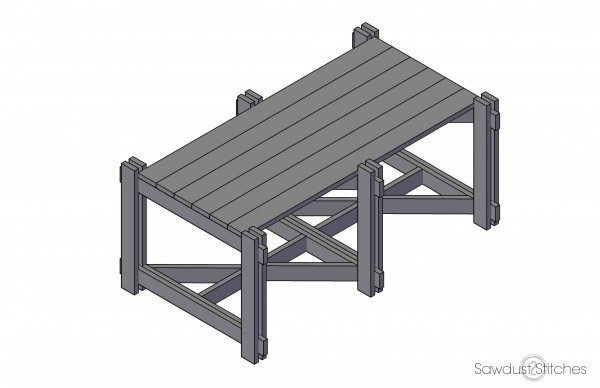
  Step 6. Add Planks

Last step of the build is to add the planks.  There will be a total of (6) boards on top , and (6) boards on the bottom. Secure with wood glue, and reinforce with 1 1/2″ finish nails.
Rustic Farm House Coffee Table_Page_5


 Step 7.  Add Hardware (optional)

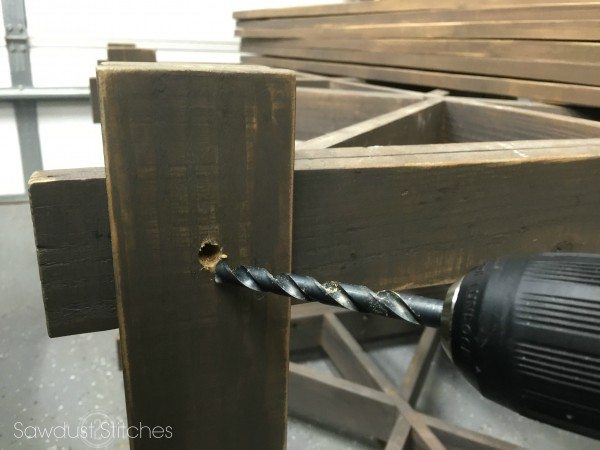
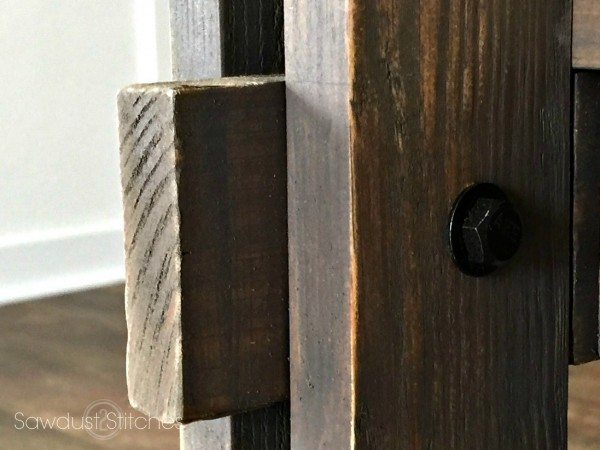
If you would like to add a little more character to this table, then try adding some hardware! I used 3/4″ hex bolts, and added washers to bulk up their  appearance. I simply  drilled 5/16″ holes through the center of the posts.

bolts

Before adding the bolts I decided to use spray paint to customize the color.(Pictured: Rust-oleum Soft Iron)  When inserting the bolts, I added a small dab of glue to the inside of the drilled hole. ( I wanted to make sure that the bolts didn’t mysteriously  go missing.)

2016-03-28 11.26.37


  Ta-da.  There you have it. A gorgeous piece that is completely functional and totally unique!  Stay tuned for coordinating pieces! IMG_0680


For sneak peeks of my upcoming projects be sure to follow me on Facebook and Instagram. You can also, follow me on Pinterest to get tons of projects plans from all around the web!

Rustic Farmhouse Coffee Table

Rustic Farmhouse coffee table Family Room Sawdust2Stitches Rustic Coffee Table Take Luck,

 Corey
a Rafflecopter giveaway


Pottery Barn Inspired Cubby Shelf (Modular)

March 30, 2016

Cubby Kitchen Rack by Sawdust 2 Stitches

Hey  friends,  I am sure  that many of you have organization on the brain.  I am a firm believer that you can create a organized space, AND make it beautiful at the same time.  In fact all of the pieces in my  home are aimed to be decorative while still serving a very useful purpose.  These new kitchen racks are no exception!  This Pottery Barn Inspired Cubby Rack is  intended to clear up some cupboard space and use these in the dining room and or kitchen!   Modular Kitchen Shelving by Sawdust 2 stitches

How t0:  Pottery Barn Inspired Cubby Shelf  

Supplies Used:

  • (2) 1×6,  8′ Board
  • (1) 1×2,  8″Board
  • (1) 2″ 16 gauge nails
  • (1) Wood Glue
  • (2) Mounting Brackets
  • Stain or Paint

Tools Suggested:

  • Miter Saw
  • Tape Measure
  • Nail Gun
  • Sander
  • Safety Goggles
  • Hearing Protection

Disclosure: Some of the links provided  are affiliate links. By purchasing through these links it supports this site and helps keep content free. You can read more about how we do this with no extra cost to you.


Step 1.

 Cut List:

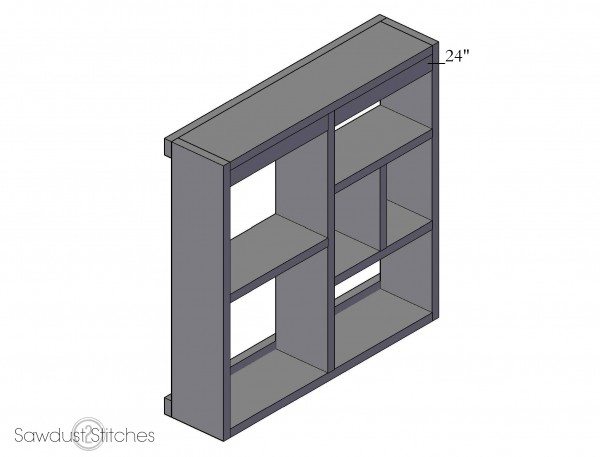
  • (2) Side Frame , 3/4″ x 5 1/2″ x 25 1/2″
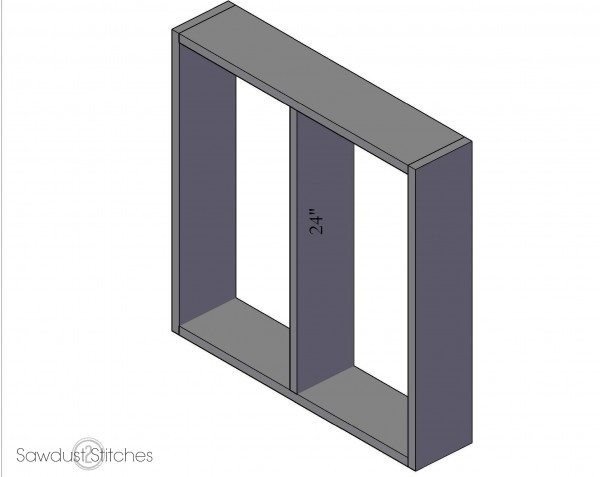
  • (1) Vertical Divider   3/4″ x 5 1/2″ x  24″
  • (2) Top and Bottom Frame, 3/4″x 5 1/2 ” x 24″
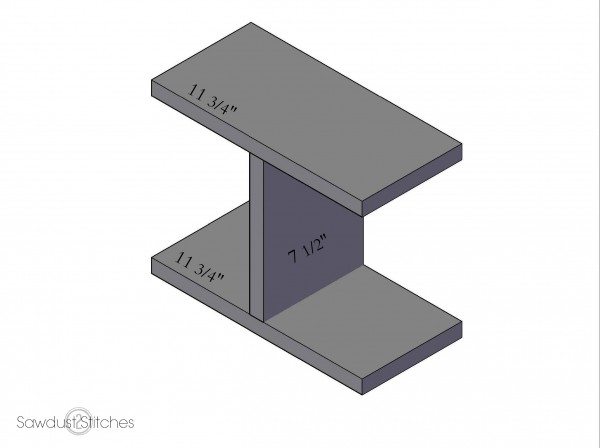
  • (3) Shelves, 3/4″ x 5 1/2″ x 11 3/4″
  • (1) Shelf Divider, 3/4″ x 5 1/2″ x 7 1/2″
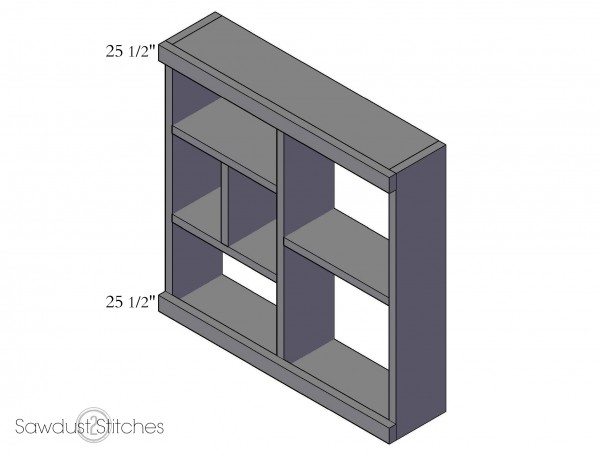
  • (2) Front Rails, 3/4″ x 1 1/2″ x 25 1/2″
  • (1) Back Support, 3/4″ x 1 1/2″ x 24″

 Step 2. Assemble Frame

Join both 25 1/2″ and 24″ 1×6″ boards using wood glue and 2 inch, 16 gauge finishing nails. This will form a 25 1/2″ square.
Modular Kitchen Cubby Step 1


Step 3. Vertical Divider

Insert remaining 1″x 6″x 24″ board centered vertically. Glue and secure using 2″ 18 gauge finish nails.Modular Kitchen Cubby Step 2


Step 4. Shelf Insert

Using (2) of the 1″x 6″x 11 3/4″ boards and the 1″x 6″x 7 1/2″ board, and form a “I”. Make sure that the 7 1/2″ board is centered on both 11 3/4″ boards. Use wood glue and reinforce with 2″ 16 gauge finish nails.cubby_Page_52


Step 5. Shelves

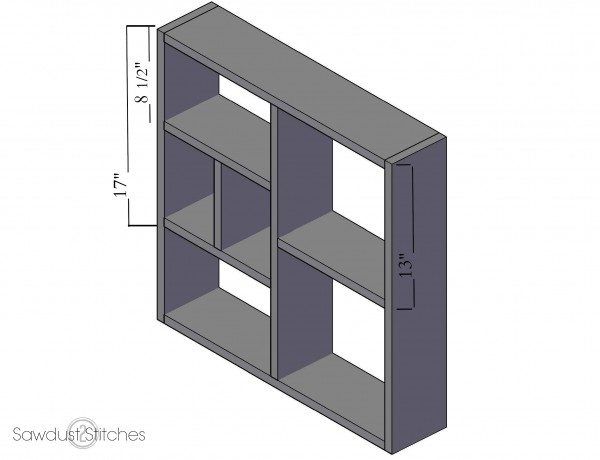
Insert the pre-assembled “I” shelf so that the base of the bottom board is 17″ from the top of the unit. On the right hand side, insert the remaining 1″x 6″x 11 3/4″ board. Position it so that the bottom of the board is 13″ from the top of the unit.Modular Kitchen Cubby Step 3


Step 6. Front Rails

Attach the 25 1/2″ 1×2″ board(s) to the face of the unit using wood glue and 2 inch 16 gauge finishing nails.Modular Kitchen Cubby step 4 by sawdust2stitches.com


Step 7 . Back Support

Attach the remaining 24″ 1×2″board using wood glue and 2 inch 16 gauge finishing nails. This is an ideal place to attach the unit to the wall, or you can attach hanging hardware to the back.Modular Kitchen Cubby Step 6


Step 8. Finish

Fill all nail holes with wood filler. Sand smooth, then apply desire stain and/or paint.


 That is all there is to it!  You can use it stand alone, or you can combine it with others !

 Pottery Barn Inspired Mug RackMug Rack by Sawdust 2 Stitches

Pottery Barn Inspired Glass Rack 

Glass Rack Shelving by Sawdust 2 Stitches

Pottery Barn Inspired Plate Rack (Coming Soon)

Plate Rack by Sawdust 2 Stitches

For sneak peeks of my upcoming projects be sure to follow me on Facebook and Instagram. You can also, follow me on Pinterest to get tons of projects plans from all around the web!

  • previous
  • Page 1
  • Interim pages omitted …
  • Page 23
  • Page 24
  • Page 25
  • Page 26
  • Page 27
  • Interim pages omitted …
  • Page 47
  • next

Primary Sidebar

  • Facebook
  • Instagram
  • Pinterest
  • Twitter
  • YouTube
IMG_9167 (1).jpg fd
DIY & Design

Meet Corey

Hi everyone, my name is Corey, and I have a problem. I can’t leave well enough alone… The best therapy usually involves a variety of power tools. So, in the few “spare” moments I am not entertaining my two beautiful, rambunctious, boys, I can typically be found hunched over a sewing machine and/or covered in sawdust. All in the efforts to create a perfect balance of aesthetics and practicality in our home.
read more

Join our mailing list!

DIY & design ideas - right in your inbox!

Featured

Stair Tread Makeover

Categories

  • 70's Ranch Home
  • Around the House
  • Build Plans
  • Crafts
  • Current Home
  • Decor Makeovers
  • Dresser
  • Exterior
  • Fall
  • First Home
  • Furniture Makeover
  • Hidden Compartment
  • Kitchen
  • Lighting
  • Makovers
  • Master Closet
  • Organization
  • R.V.
  • Room Makeovers
  • Seasonal
  • Seating
  • Sewing
  • Shelving
  • Small Builds
  • Smart Home
  • Spring
  • Summer
  • Tables
  • Tablescape
  • Tutorials
  • Uncategorized
  • Wall Art
  • Wall Decor
  • Winter
  • Workshop

Footer

Contact Me: Corey@Sawdust2Stitches.com

Latest ‘Grams

Follow on Instagram
2020 © Your Blog Name
theme by soleilflare
Enter your name and email and get the weekly newsletter... it's FREE!
Your information will *never* be shared or sold to a 3rd party.