• Blog
  • About
  • Press
  • Privacy

Let’s be social!

  • Skip to primary navigation
  • Skip to main content
  • Skip to primary sidebar
  • Skip to footer
Sawdust 2 Stitches

Sawdust 2 Stitches

  • Tutorials
    • Around the House
    • Organization
    • Wall Decor
    • Sewing
  • Makeovers
    • R.V.
    • Room Makeover
    • Furniture Makeover
    • Decor Makeover
  • Build Plans
    • Small Builds
    • Wall Decor
    • Dresser
    • Tables
    • Seating
    • Shelving
    • Hidden Compartment
  • Seasonal
    • Summer
    • Spring
    • Fall
    • Winter
  • Home Tours
    • First Home
    • Current Home
    • 70’s Ranch Home
  • Workshop

Blog

Headboard Makeover

June 12, 2013

When Andrew and I first got married we did what most newly weds did for furniture, we looked all over Craigslist for something affordable.  We found a set of all black furniture,  that was mildly contemporary.  It was a full set and an awesome price,  I want to say $175?
We were very happy with our little set for the first few years of marriage. After a while I realized I hated the black!  So what’s a girl to do ?
Time for a trip to Home Depot.

Guess what it’s LAMINATE, and YES you can paint it.

First step:  Scuff it up using sandpaper.  You do NOT need to take off the entire finish,  just make it so it is not glossy!

Step two:  Use a decent primer. I used this.  I have no complaints.

Step three:  Top coat.

With this particular project I did more than just painting. ..
I wanted to change the look of the bed completely,  I was going to change it from contemporary, to a clean cottage look.

I  first measured the openings and cut out bead board  to fit the openings.

I used liquid nails to set the newly cut bead boards panels in place.

 
Next Step:  I  used painters caulk, to  fill the edge seems.  There is a good tutorial here.
I then added a piece of trim to the front as well as a 1×3  on the top.

After  all of the edges had dried I was able to add a final coat of paint to hide the caulk lines.

  Ta- Da  Look at the difference it makes…  It’s like “black and white”!  (I’m hilarious).
 Now I understand the likely hood of  any of my readers having the exact same headboard is slim-to-none… but  you can take the same basic premise and apply it to any number of projects!
  (function(i,s,o,g,r,a,m){i[‘GoogleAnalyticsObject’]=r;i[r]=i[r]||function(){   (i[r].q=i[r].q||[]).push(arguments)},i[r].l=1*new Date();a=s.createElement(o),   m=s.getElementsByTagName(o)[0];a.async=1;a.src=g;m.parentNode.insertBefore(a,m)   })(window,document,’script’,’//www.google-analytics.com/analytics.js’,’ga’);   ga(‘create’, ‘UA-42109138-1’, ‘sawdust2stitches.com’);   ga(‘send’, ‘pageview’);
  (function(i,s,o,g,r,a,m){i[‘GoogleAnalyticsObject’]=r;i[r]=i[r]||function(){
(i[r].q=i[r].q||[]).push(arguments)},i[r].l=1*new Date();a=s.createElement(o),
m=s.getElementsByTagName(o)[0];a.async=1;a.src=g;m.parentNode.insertBefore(a,m)
})(window,document,’script’,’//www.google-analytics.com/analytics.js’,’ga’);

ga(‘create’, ‘UA-42131831-1’, ‘sewingandsanding.blogspot.com’);
ga(‘send’, ‘pageview’);

(function(i,s,o,g,r,a,m){i[‘GoogleAnalyticsObject’]=r;i[r]=i[r]||function(){ (i[r].q=i[r].q||[]).push(arguments)},i[r].l=1*new Date();a=s.createElement(o), m=s.getElementsByTagName(o)[0];a.async=1;a.src=g;m.parentNode.insertBefore(a,m) })(window,document,’script’,’//www.google-analytics.com/analytics.js’,’ga’); ga(‘create’, ‘UA-42131831-1’, ‘sewingandsanding.blogspot.com’); ga(‘send’, ‘pageview’);

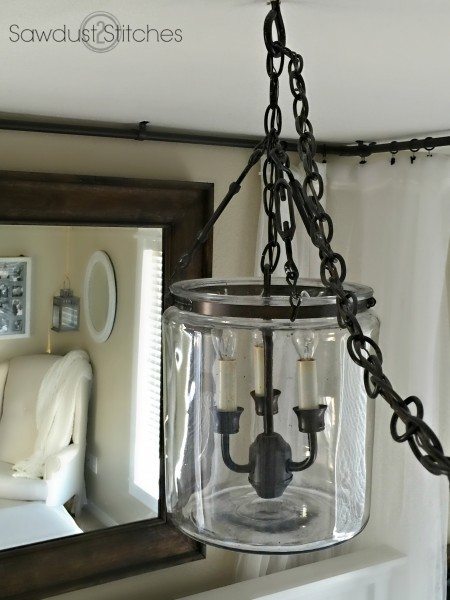
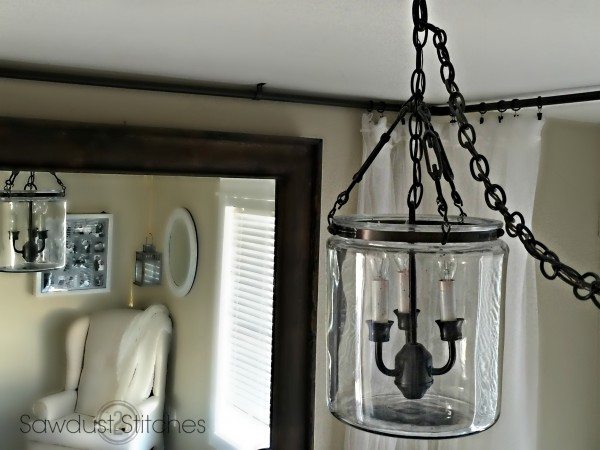
Pottery Barn Inspired Chandelier

May 31, 2013

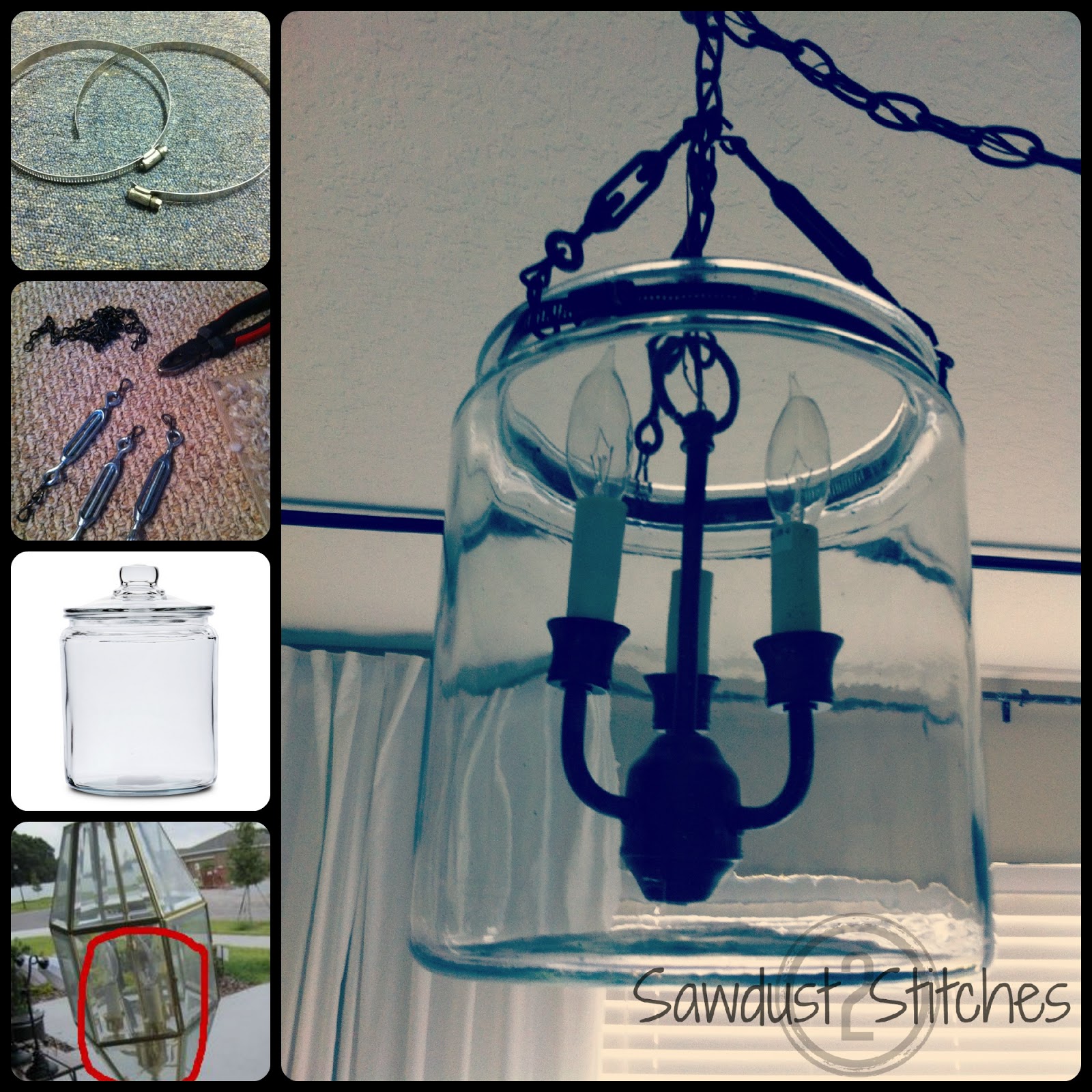
Make your own pottery barn inspired chandelier. www.sawdust2stitches.com
 

What happens when you combine these seemingly ordinary items?

Something Freaking SPECTACULAR!

I actually got my inspiration for this project from  “The Hand Me Down House” who does do a great tutorial which you can access here.

I did make some changes to mine to accommodate the larger, bulkier glass casing.  I also wanted to incorporate turnbuckles, simply because I think they are cool!

To refinish the different components I followed the basic premise of this chandelier

2015-08-25 17.11.44

I love the way it turned out, stay tuned it is just a small part of a new room makeover!

 2015-08-25 17.11.33 ss

How to Paint Paneled Doors

May 29, 2013

Painting doors can quickly, and cheaply add to the look of your home.

   I was sitting in the front room playing “tractors” with my boys the other day, I kept looking around  at the room and couldn’t  figure out what was missing… something was missing… It was kind of boring.

Then it hit me,  there was not any real transition to the very kakhi/white sitting room, into the very blue/white family room. So the very boring door would be an excellent transition area, and bring some more color into the front room.

So I went and grabbed –
Sander
Wash Rag
Screwdriver
Paint Brush
High Density Foam roller
Paint
and Paint Tray


Begin by removing the door knob.  There are typically only  two bolts that need to be loosed to remove the knob.

Next,  you will need to lightly sand the entire door.  Make sure you get in the recessed portions of your door  using either a foam sanding block, or a simple piece of sand paper.
Wipe down thoroughly, then allow to dry.


Then  grab your paint brush,  I love 2″ angled brushed myself.
With the brush you will first paint the recessed areas, also you will “cut in” around the hinges.  (I know lots of people prefer to just tape them off,  but I honestly think that sometimes prep work takes longer than simply being careful.)

You will now need  your roller and paint tray.  This part is fairly simple,  I have found that with the

high density rollers  you really don’t need to worry about streaks!  These little guys are awesome.

In the event that you are still nervous about painting, here is the what the professionals suggest.
I followed this same basic premise, but here is a diagram.

After it is dried, determine if it needs another coat, if not reinstall hardware.  If yes, slap on another coat!

Now stand back and admire the huge difference a coat of paint can make!


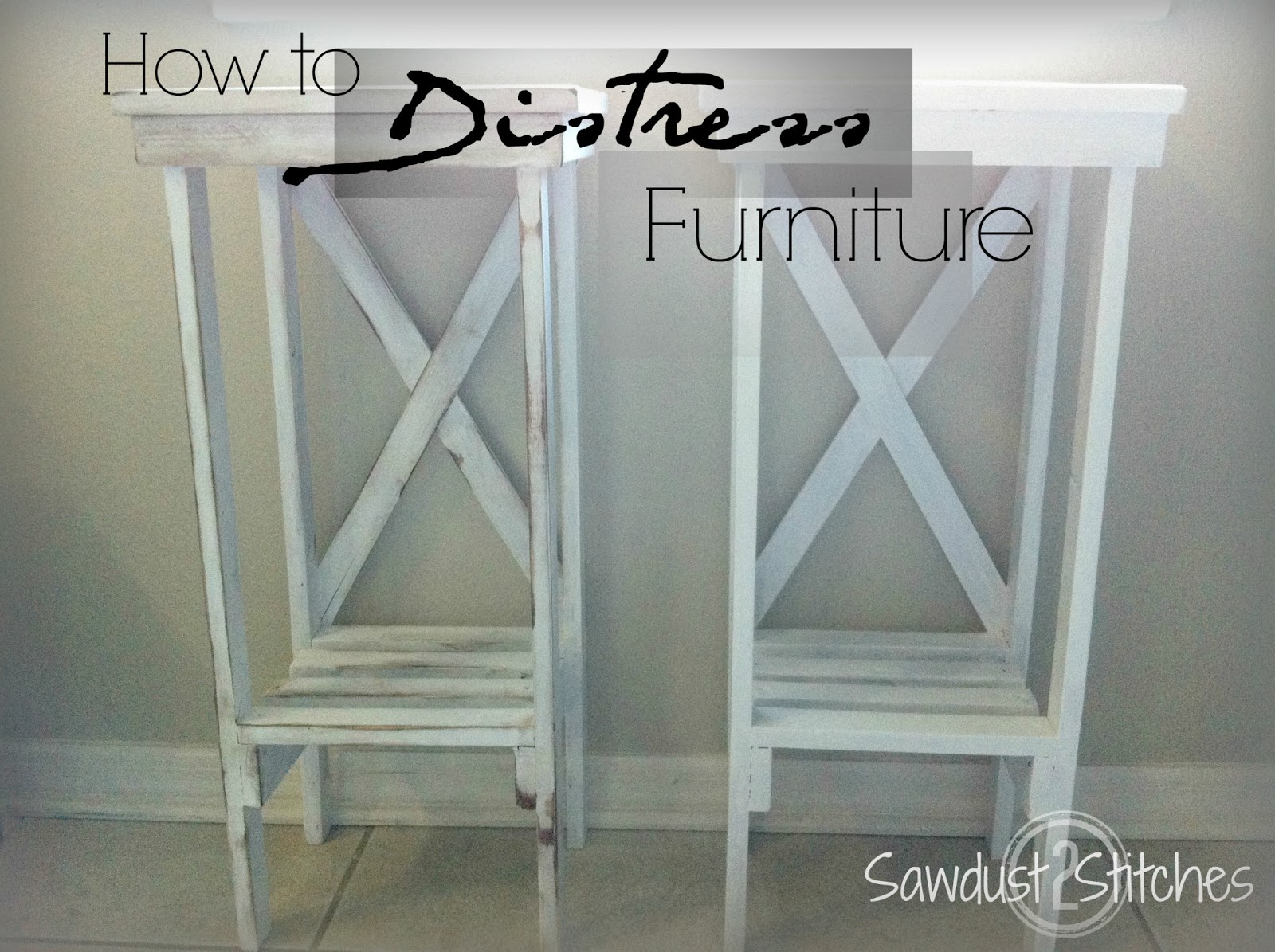
Distressing Furniture

May 25, 2013

  I make a lot of the furniture in my home, so a majority of the time they have  imperfections.  I have found the best way to mask imperfections is to make it look intentional! “It’s Shabby Chic”.
  Distressing furniture can add a lot of character and hide wood/paint imperfections!
Here is what  I do….
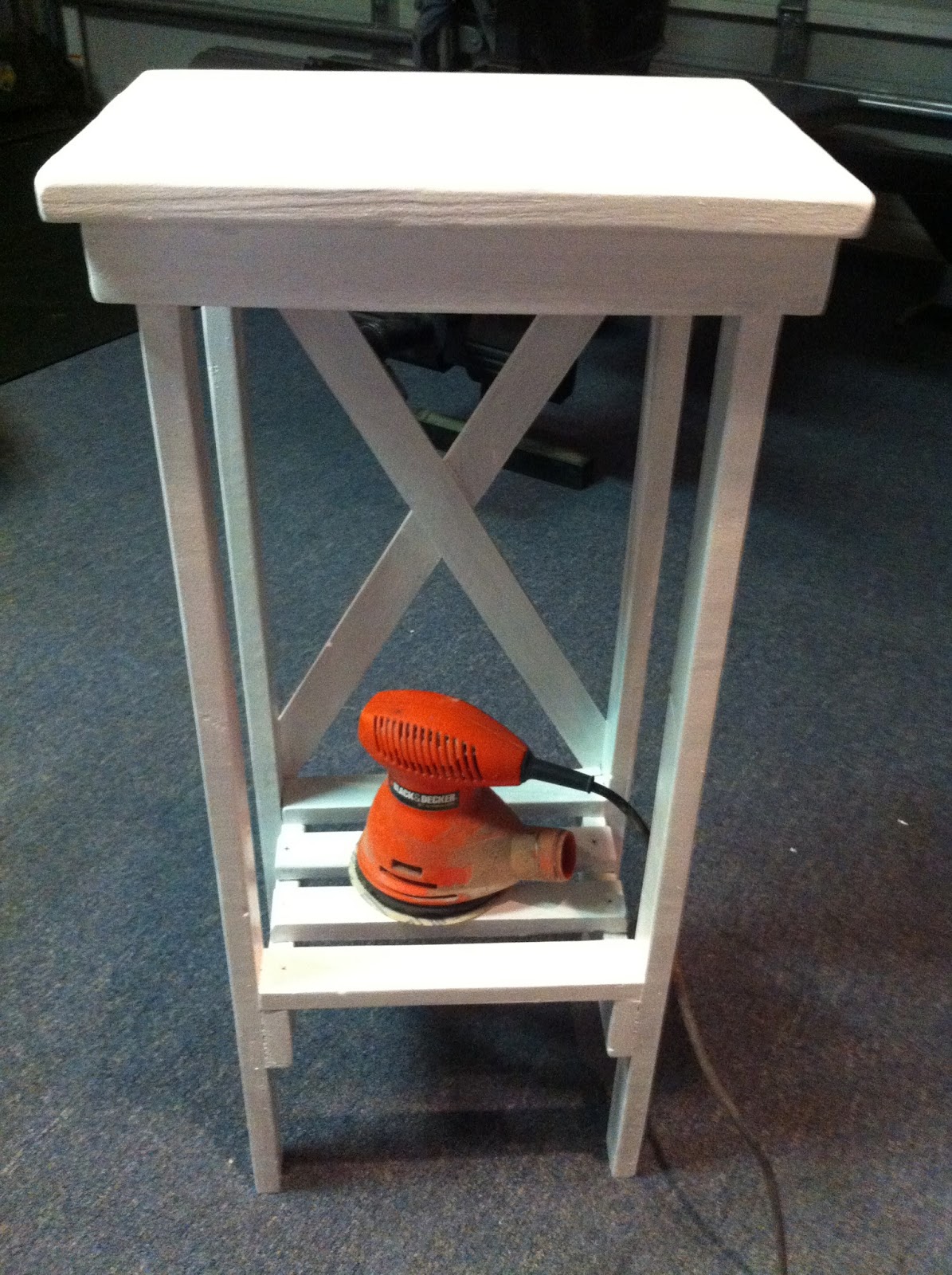
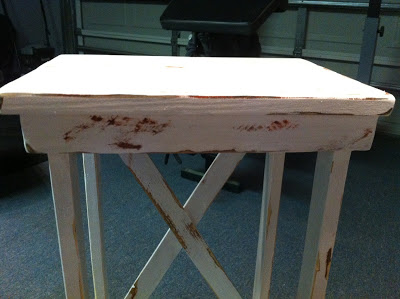
  Take either an electrical or hand sander and scuff the piece of furniture up. In my case I will be showcasing the side tables I made for the new guest room (Pictures coming soon.)
When sanding,  it is best to try and sand the areas  that would naturally get the most wear, ie. the edges.

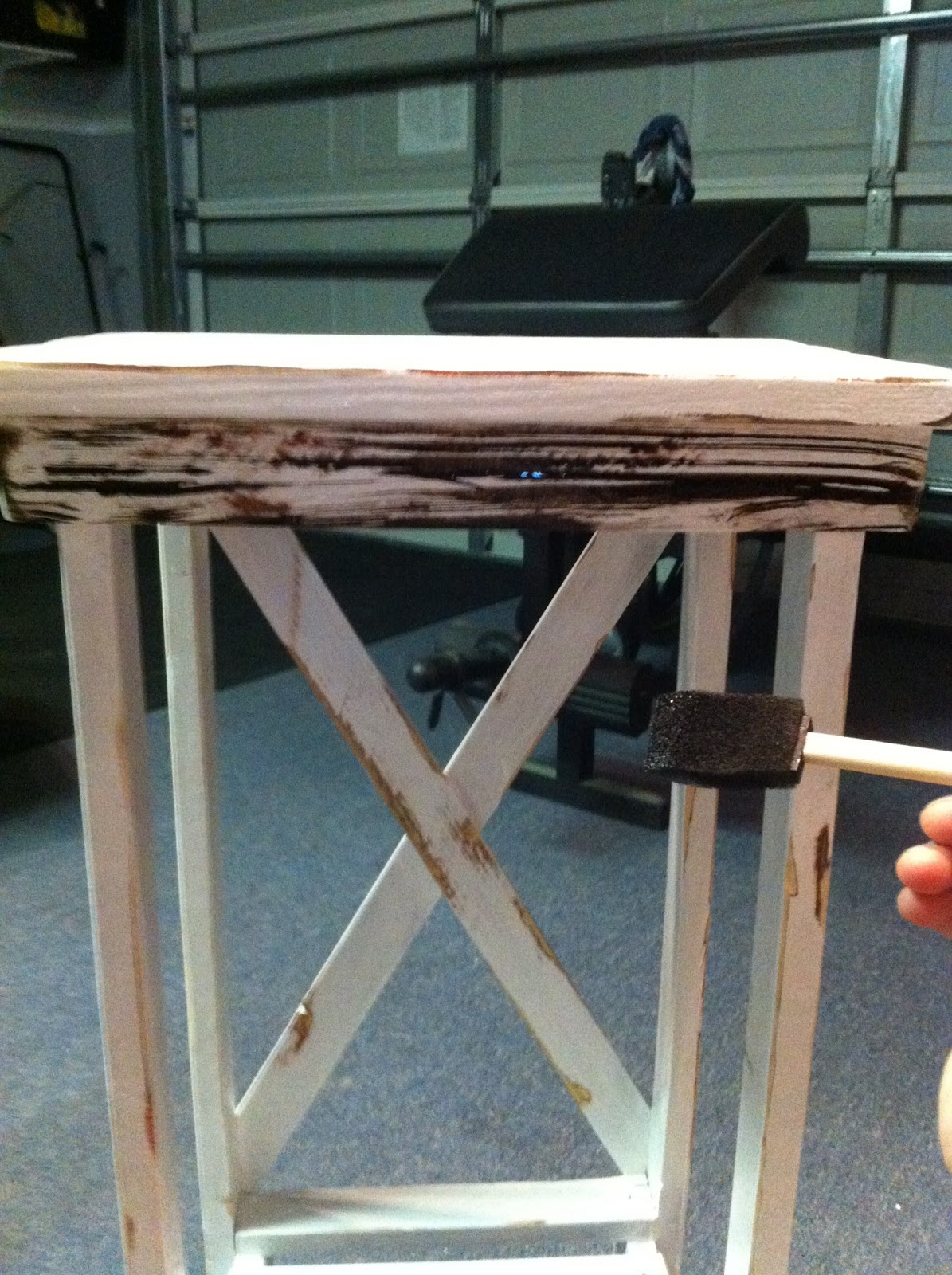
After sanding,  I take a LITTLE bit of stain and apply it  a small section of the table.  (Always work in small sections, the stain can dry very quickly and leave a streaky effect instead of “aged”.)

Then apply a little  bit of baby oil to an old rag and rub over the freshly applied stain. The baby oil makes the stain much easier to work with.

Continue the same process over and over until you have completed the entire project.

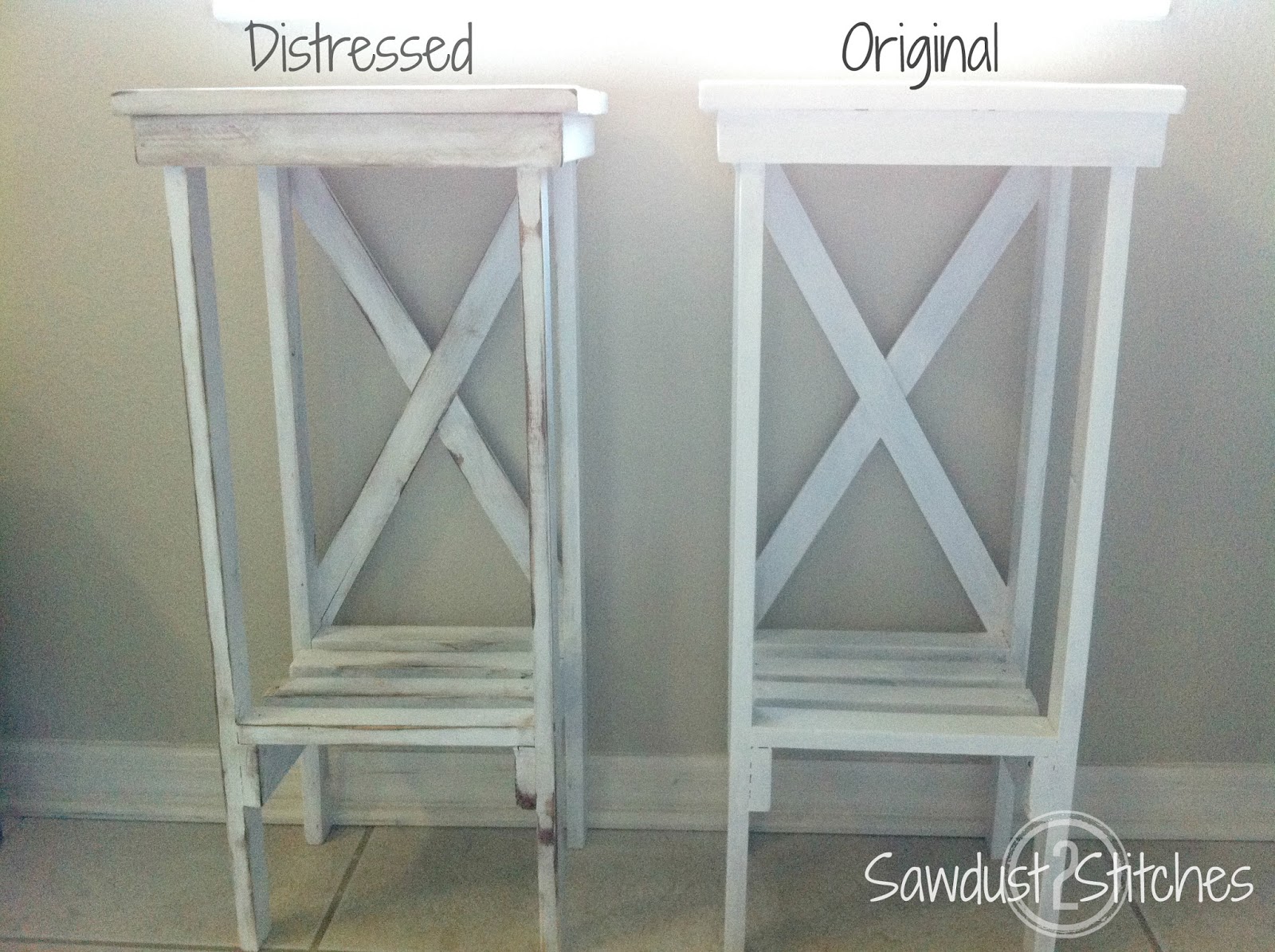
Here are both of the night stands,  one distressed and one original.  It is a subtle difference that make a big impact.

So if you have any old furniture that could use a “pick me up”  or a new paint job.  Consider distressing,  it can make the  old paint chipping look intentional!

Crib Makeover

May 18, 2013

We were given our crib by a good friend, and it was well “loved”  by Wyatt, as made evident by the many teeth marks all over it. When I was preparing the new nursery for Lincoln I decided that  new paint was not enough… it needed a new look.

Before:  

During:

First: I started by cutting the bead board paneling so that it would fit in the end caps.

Second: Then I cut off the rounded top of the end caps, and put a 1×3 across the top with a piece of trim under that.


Last Step: Sanded it completely down  followed by , 2 coats of primer, followed by a topcoat.


After:


Ta-Da  a little elbow grease and a sheet of  bead board go a long way!

(function(i,s,o,g,r,a,m){i[‘GoogleAnalyticsObject’]=r;i[r]=i[r]||function(){
(i[r].q=i[r].q||[]).push(arguments)},i[r].l=1*new Date();a=s.createElement(o),
m=s.getElementsByTagName(o)[0];a.async=1;a.src=g;m.parentNode.insertBefore(a,m)
})(window,document,’script’,’//www.google-analytics.com/analytics.js’,’ga’);

ga(‘create’, ‘UA-42131831-1’, ‘sewingandsanding.blogspot.com’);
ga(‘send’, ‘pageview’);

2 for 1 Ties!

April 29, 2013

 Confession,  I have a small obsession with dressing my boys to coordinate… Like everyday.

My addiction could be an expensive one,  but I have mastered a few tricks to keep  my boys dapper and my bank account (Husband) happy.

There are  quite a few tutorials available for making little boy ties from scratch,  this is not one.  Granted they are cute,  but I like them to look like a ” little mini man tie”, I am not a huge fan of the cotton.

Here’s how:
If it is true what they say “A picture is worth a 1000 words” then this would be a VERY long post.

#1  The Necktie:

 
 1. Use a stitch ripper and pull out the stitches on the back of the tie,  take out the stitches until it hits the “bottleneck”.

2.   The stabilizer  (white thick material)  will run through the whole tie, push it to the side (leave attached).

3.  Take an iron and create a new width,  simply  iron out the existing pressed edge and make the tie more narrow.

4. Do this on both sides so that the tie is even.

5. It should look like this now.

6.  Now is time to size down the stabilizer… ( the white piece seen in step 2)  You will use your new  ironed tie as a template.  Simply put the stabilizer under the tie and mark the new size.

7.  Now that it is marked,  cut down the stabilizer.

8.  Then put the stabilizer back  in the tie.

9.Now  use a blind stitch  to finish the seam in the back.  There is a great tutorial here.

10.  You  should now have a  adult length skinny tie…Simply tie a basic knot ,  either recruit your husband or follow this diagram.

11.   Your tie should now look similar to this,  (keep in mind you will want to tie it according to the height of the wearer).
Once you have it tied at the correct  length you will  cut off the excess about 2 inches above the knot.

12.  The excess will become the 2nd tie.

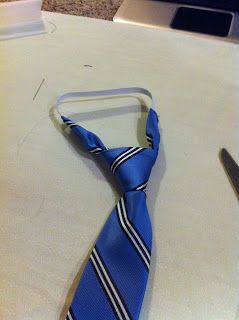
13. Fold in the edges of  the cut off ends and insert elastic.  Measure the recipients neck  to get the measurement  of the elastic needed.  For my son I only needed about 5″ of elastic.  Keep in mind this will need to fit over his head…
Repeat on the other side…

Congrats you have completed phase 1!
# 2 The Bow Tie
1.  You will now use the excess you cut off in step 12 of the first tie. 
First cut off approximately  6-10″ depending on the size of the child (for instance a  newborn would look like a clown in a 10 “tie)   You will  essentially  be dividing the tie in half, I would measure the general width you would like the bow tie to be on the recipient before cutting.
 
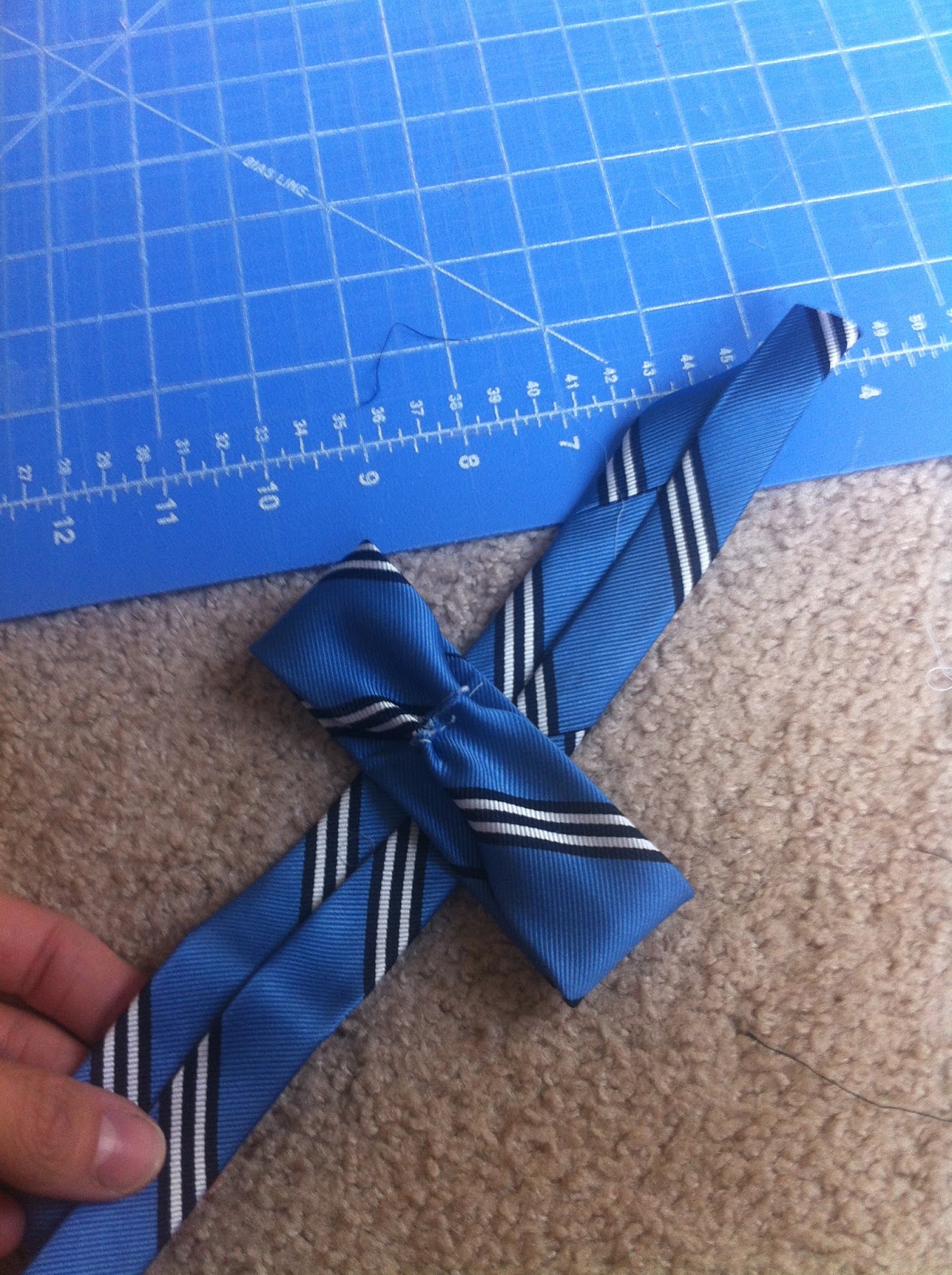
2.  Take the strip you just cut and make a loop and sew the two ends together. (It doesn’t need to be pretty,  it will be hidden.

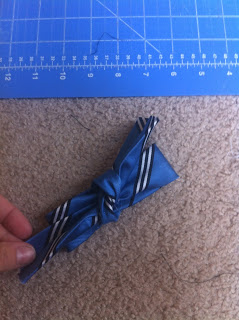
3. Now use the remainder of the original strip. Simply tie a knot around the loop you just created.

4. Ta da! Almost done!
.)

5.  Now repeat step 15 in the neck tie tutorial and you are done!  Booyah.


 6.  Your little men will look so dapper and you will get tons of compliments,  I guarantee it!


  (i[r].q=i[r].q||[]).push(arguments)},i[r].l=1*new Date();a=s.createElement(o),
m=s.getElementsByTagName(o)[0];a.async=1;a.src=g;m.parentNode.insertBefore(a,m)
})(window,document,’script’,’//www.google-analytics.com/analytics.js’,’ga’);

ga(‘create’, ‘UA-42131831-1’, ‘sewingandsanding.blogspot.com’);
ga(‘send’, ‘pageview’);

  • previous
  • Page 1
  • Interim pages omitted …
  • Page 43
  • Page 44
  • Page 45
  • Page 46
  • Page 47
  • next

Primary Sidebar

  • Facebook
  • Instagram
  • Pinterest
  • Twitter
  • YouTube
IMG_9167 (1).jpg fd
DIY & Design

Meet Corey

Hi everyone, my name is Corey, and I have a problem. I can’t leave well enough alone… The best therapy usually involves a variety of power tools. So, in the few “spare” moments I am not entertaining my two beautiful, rambunctious, boys, I can typically be found hunched over a sewing machine and/or covered in sawdust. All in the efforts to create a perfect balance of aesthetics and practicality in our home.
read more

Join our mailing list!

DIY & design ideas - right in your inbox!

Featured

Stair Tread Makeover

Categories

  • 70's Ranch Home
  • Around the House
  • Build Plans
  • Crafts
  • Current Home
  • Decor Makeovers
  • Dresser
  • Exterior
  • Fall
  • First Home
  • Furniture Makeover
  • Hidden Compartment
  • Kitchen
  • Lighting
  • Makovers
  • Master Closet
  • Organization
  • R.V.
  • Room Makeovers
  • Seasonal
  • Seating
  • Sewing
  • Shelving
  • Small Builds
  • Smart Home
  • Spring
  • Summer
  • Tables
  • Tablescape
  • Tutorials
  • Uncategorized
  • Wall Art
  • Wall Decor
  • Winter
  • Workshop

Footer

Contact Me: Corey@Sawdust2Stitches.com

Latest ‘Grams

Follow on Instagram
2020 © Your Blog Name
theme by soleilflare
Enter your name and email and get the weekly newsletter... it's FREE!
Your information will *never* be shared or sold to a 3rd party.